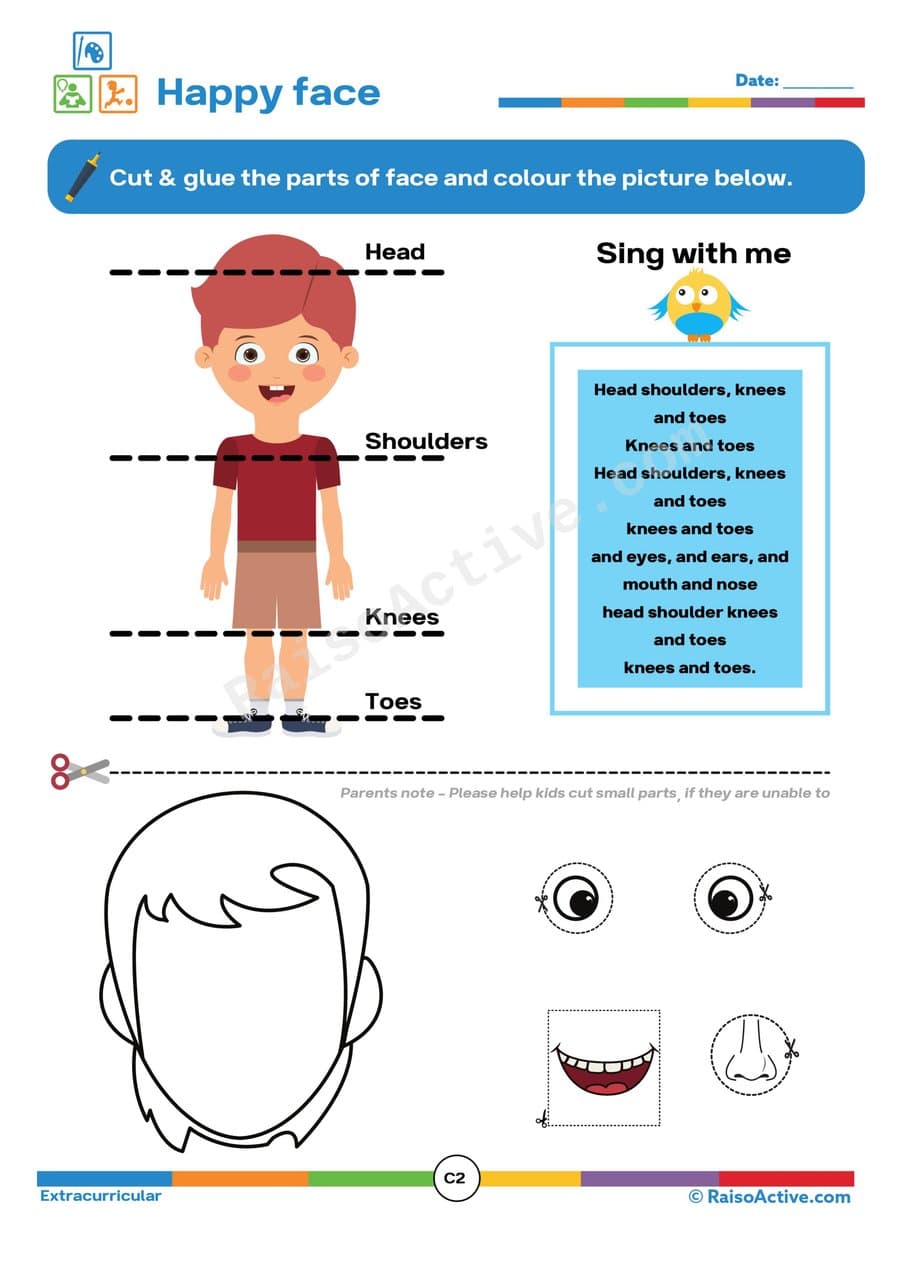
Happy Face Worksheet: Cut, Paste, and Sing!
Cutting out and placing facial features onto a face outline teaches children ages 3-5 the names and locations of basic face parts, like eyes, nose, and mouth, while building the same scissor and gluing skills practiced in other cut-and-paste activities. Pairing the craft with singing, as the title suggests, adds a rhythmic, repeated language element that helps body-part vocabulary stick.
Part of the pack
Month 1: Learning & Development | Ages 4-5Curriculum
How to use this worksheet
Cut out each facial feature piece with your child, working one at a time along the dotted lines. Lay the pieces near the blank face outline and ask your child where each one goes before gluing, naming the feature as they place it. Glue each piece down, checking that eyes are placed roughly level with each other and the nose and mouth are centered. Sing a simple body-parts song together while pointing to each feature on the finished face.
Materials needed
- Scissors
- Glue
- Crayons or colored pencils
Extension activities
- •Sing 'Head, Shoulders, Knees, and Toes' together, touching each body part as it's named.
- •Look in a mirror and name your own facial features, comparing them to the finished worksheet face.
- •Make a second happy face craft, then a sad or surprised one, to compare different expressions.
- •Play a simple guessing game, covering one facial feature at a time and asking your child to name what's missing.
- •Create a family portrait using the same cut-and-paste technique for each family member's face.
Tips for parents and teachers
If a feature ends up glued in an unusual spot, like an eye near the chin, use it as a lighthearted moment rather than a mistake to fix, since noticing 'that doesn't look right' on their own builds more understanding than a correction. Singing while pointing to real facial features afterward helps cement the vocabulary far more than the craft alone. Keep the tone playful, since a slightly silly-looking face is a normal and fun outcome at this age.

Written by
Hemsweta Jain · Teacher Cheena
MBA and Early Childhood Educator, teaching since 2014 · Founder of RaisoActive, Mumbai
Every RaisoActive worksheet is designed and checked by the founder before publishing.
Published · Last reviewed
Related worksheets
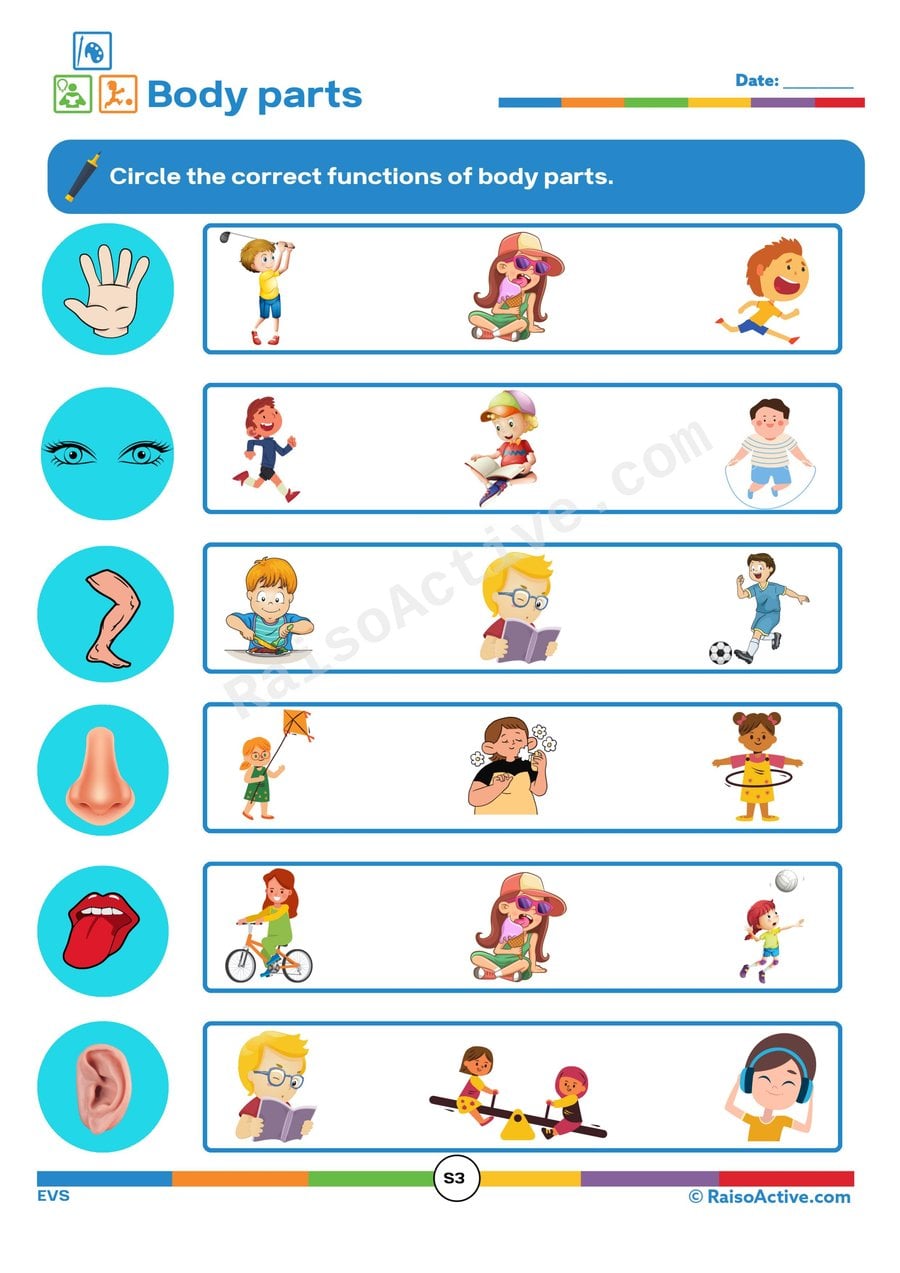
Body Parts Functions Worksheet for Kids
Children ages 3-5 practice connecting specific body parts to their real-world function, like eyes for seeing or ears for hearing, by circling the picture that shows what each body part is used for. This reinforces body awareness and vocabulary while building the reasoning skill of linking a body part to its purpose.

Trace the Numbers 1-9 Worksheet for Preschoolers
Tracing the numerals 1 through 9 gives children ages 3-5 repeated, guided practice with the specific pencil strokes each number requires, building the fine motor control and muscle memory needed for independent number writing. Because tracing follows a fixed, correct path, it also reinforces accurate numeral recognition, helping children tell visually similar digits apart.
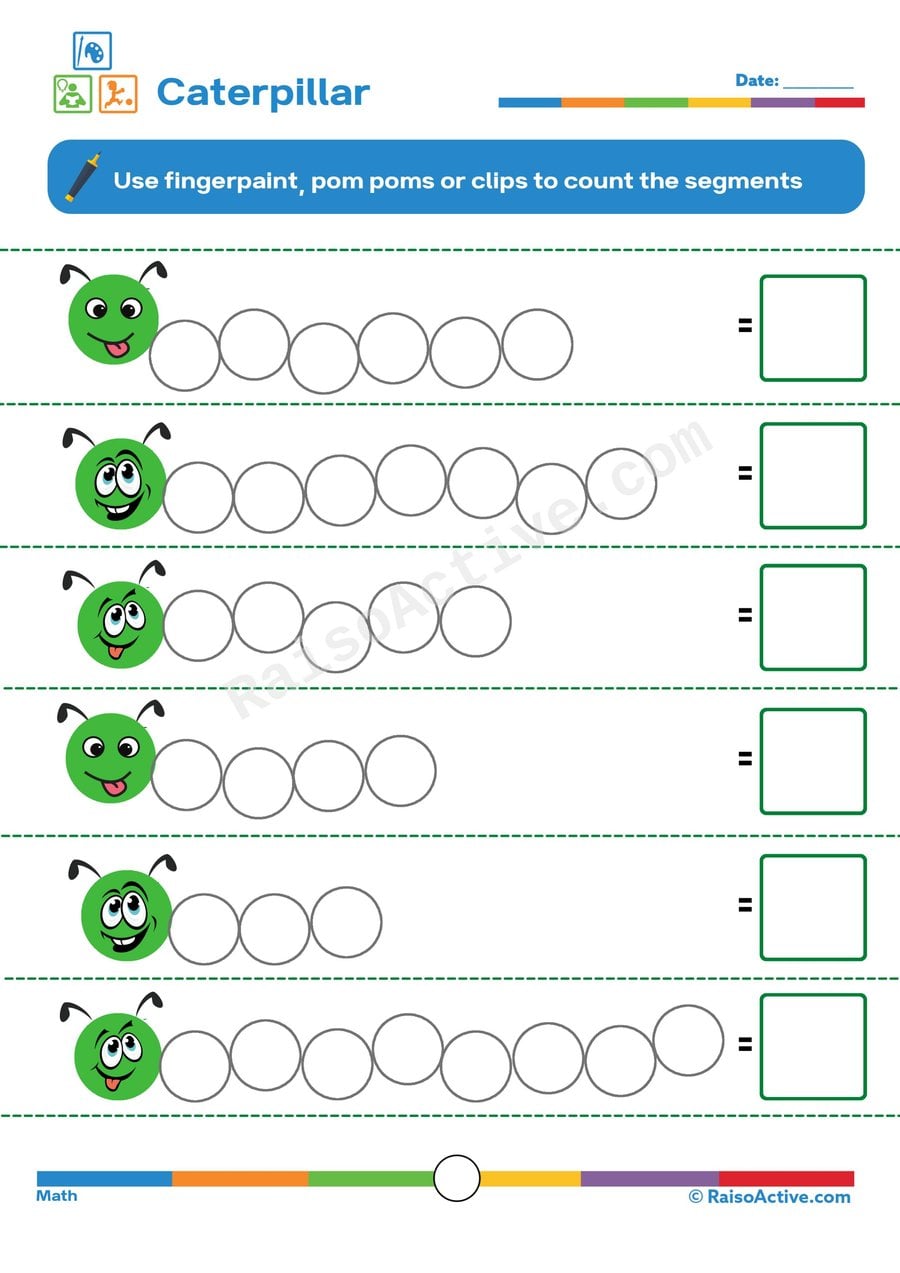
Caterpillar Counting Worksheet for Preschoolers
Counting the segments of each caterpillar teaches children ages 3-5 one-to-one correspondence — touching or marking each segment exactly once while saying a number — which is the core skill underlying accurate counting. Writing the final total in a box also connects the physical act of counting to its written numeral, reinforcing early number-writing practice.
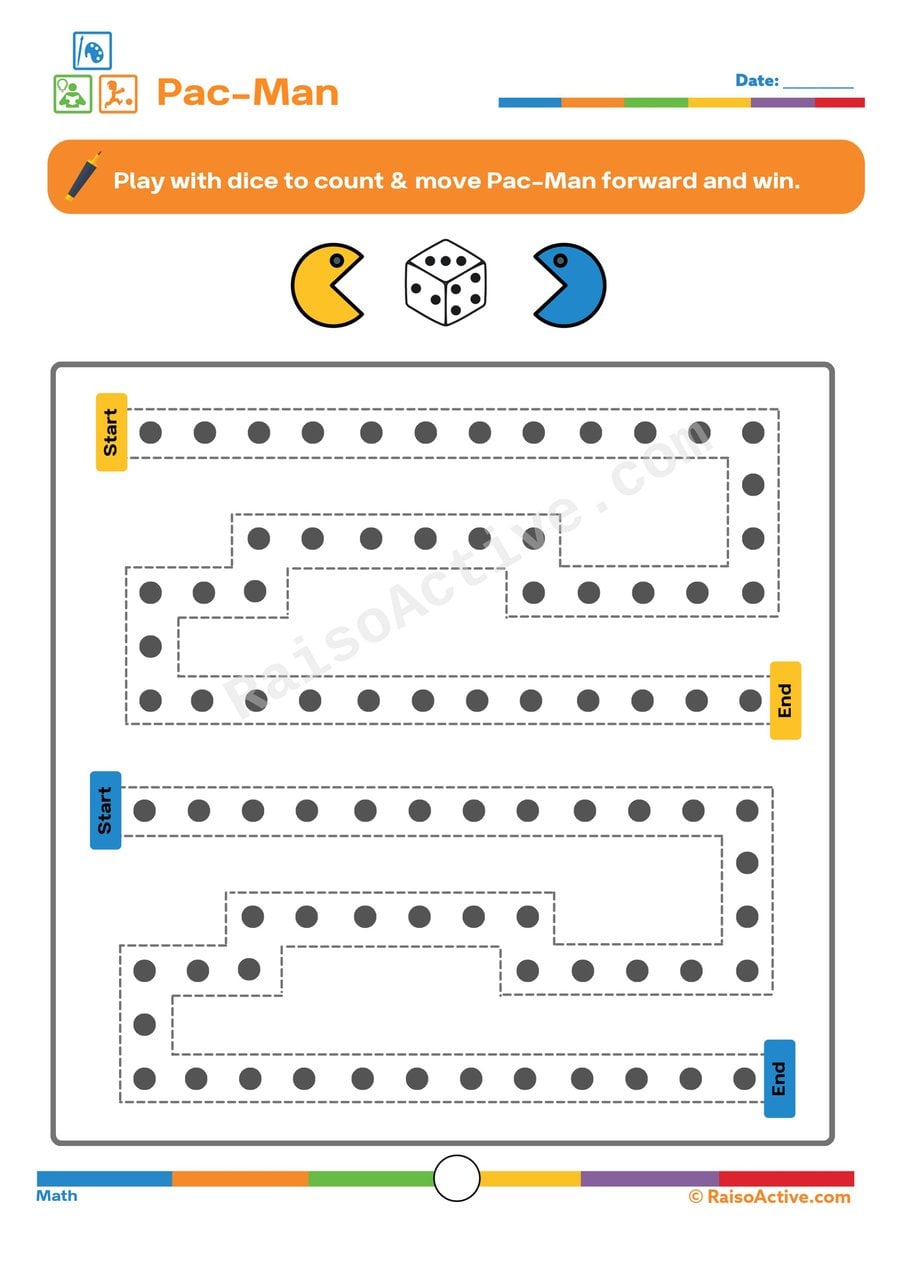
Pac-Man Maze Worksheet: Count and Move!
This dice-counting maze gives children ages 3-5 repeated practice matching a rolled number to the correct number of moves, reinforcing accurate counting under a bit of playful pressure. Tracking Pac-Man's current position after each roll also builds short-term spatial memory, since children must remember where they left off before moving again.

Stick Man Emotions Worksheet: Happy, Sad, Angry, and Surprised!
Children ages 4-6 practice reading facial expressions on this worksheet, matching stick-figure faces to their correct emotion labels by noticing details like mouth shape and eyebrow position. This strengthens emotional literacy — the ability to name and recognize feelings in others — which supports empathy and smoother social interactions as children move into more group play and classroom settings.
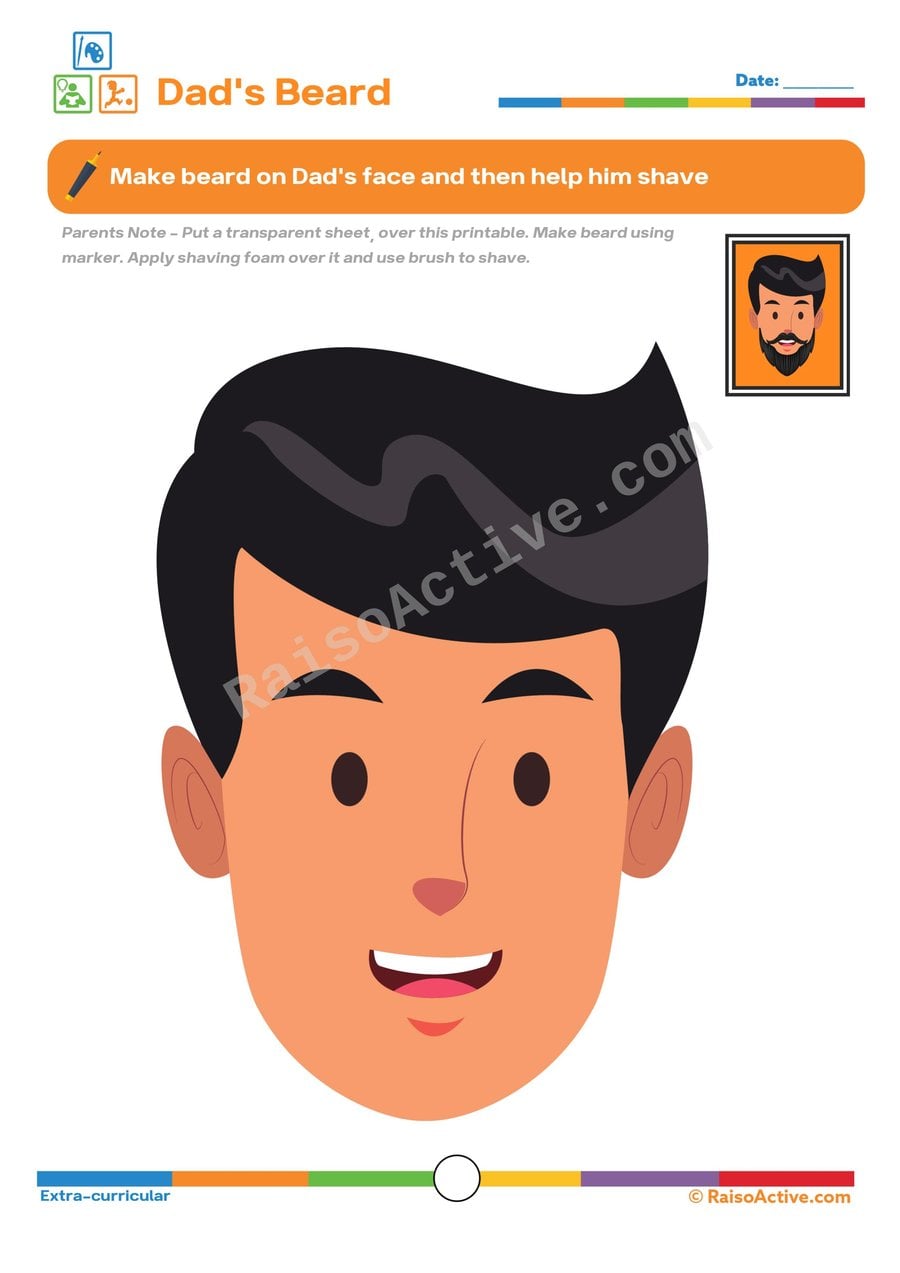
Dad's Beard: A Fun Shaving Activity for Kids!
This playful pretend-shaving activity builds fine motor control and bilateral coordination in children ages 3-5, as they draw a beard with a marker and then 'shave' it away using foam and a brush in careful, controlled strokes. It also introduces a simple science idea — that shaving foam can be applied and removed in layers — while giving children a hands-on, sensory way to imitate an everyday grown-up routine.
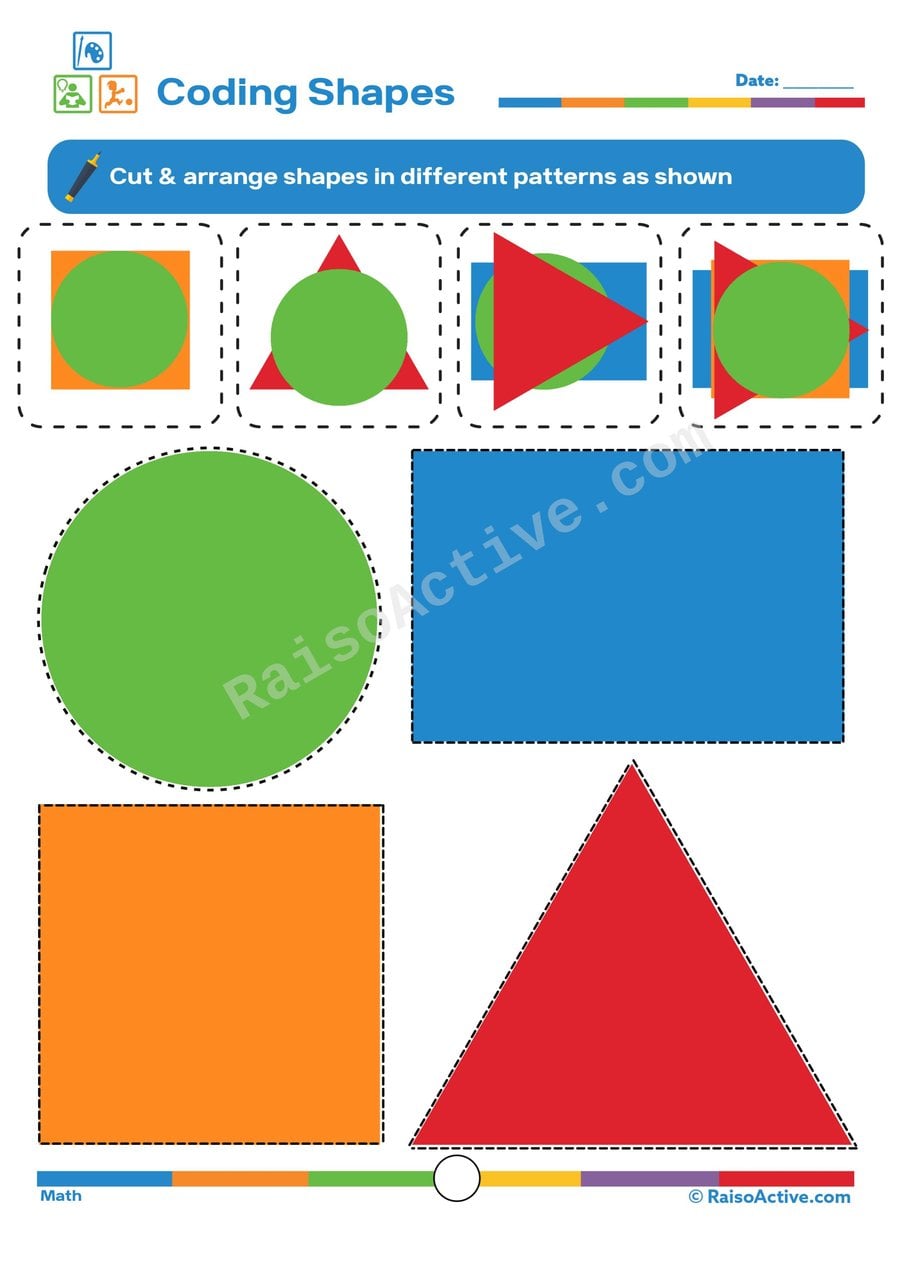
Coding Shapes Worksheet: Cut and Arrange Shapes!
This cut-and-paste worksheet has children ages 3-5 recreate example shape sequences by cutting out individual pieces and arranging them to match, combining shape recognition with the ordered, step-by-step thinking used in early coding and pattern logic. The physical act of cutting and precisely placing each piece also strengthens fine motor control and spatial planning.
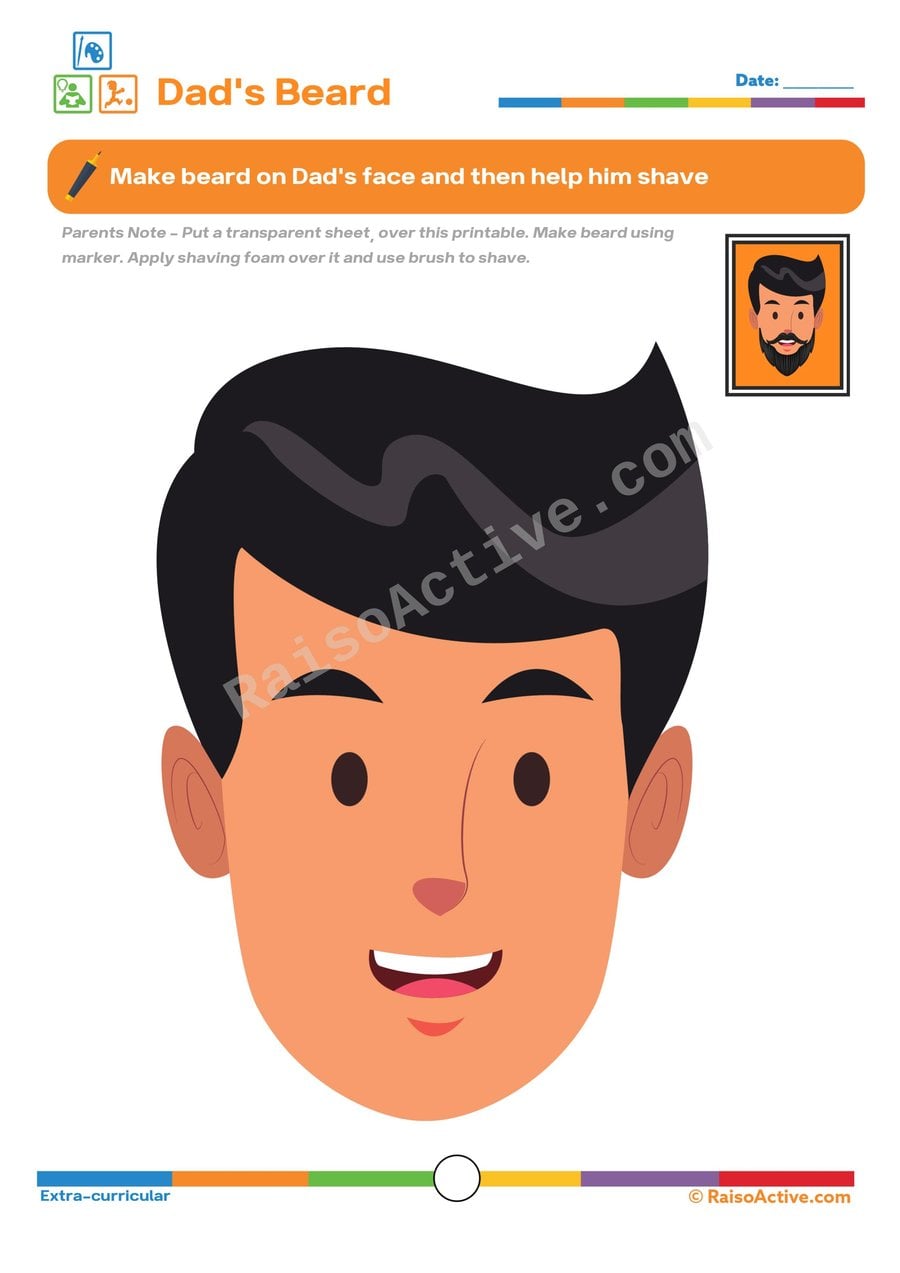
Dad's Beard: A Fun Shaving Activity for Kids!
This sensory pretend-shaving activity builds fine motor precision and hand control in children ages 3-5, as they draw a beard with a marker and then carefully brush away shaving foam in controlled strokes. Beyond motor skills, it gives children a playful, low-stakes way to imitate a grown-up grooming routine they've likely observed at home.
Guides for this topic
Celebrating Diversity: How to Incorporate Cultural Awareness in Learning Activities for Young Children
Practical cultural awareness activities for young children aged 2-8. Explore Indian festivals, world cultures, food, music, and crafts to teach diversity and inclusion.
How to Teach Cutting Skills to Your Preschooler: A Complete Guide for Parents and Teachers
Help your child master scissor skills safely. Expert guide covering readiness signs, scissor types, progression steps, pre-cutting exercises, and fun practice ideas for ages 2-6.
What Supplies Do You Need for Preschool Learning at Home: The Complete Essential Guide
Discover the essential supplies for preschool learning at home — from crayons and counting blocks to sensory bins. Affordable options available in India for ages 2–6.
Reviews
Every worksheet for ages 3–5, no watermark
Members download the full library of 1,000+ worksheets and every activity pack without watermarks or daily limits. One year costs ₹1,000 in India or $20 elsewhere.
See membership plansOr download any worksheet free with a watermark (5 a day).