Ordinal Numbers Worksheet: Cut and Paste the Community Helpers!
This worksheet introduces children ages 4-6 to ordinal numbers — first through tenth — by having them observe a line of community helpers and paste the correct ordinal label matching each one's position. Understanding position words like 'third' or 'seventh,' distinct from counting quantities, is an important early math and language skill used constantly in daily instructions and turn-taking.
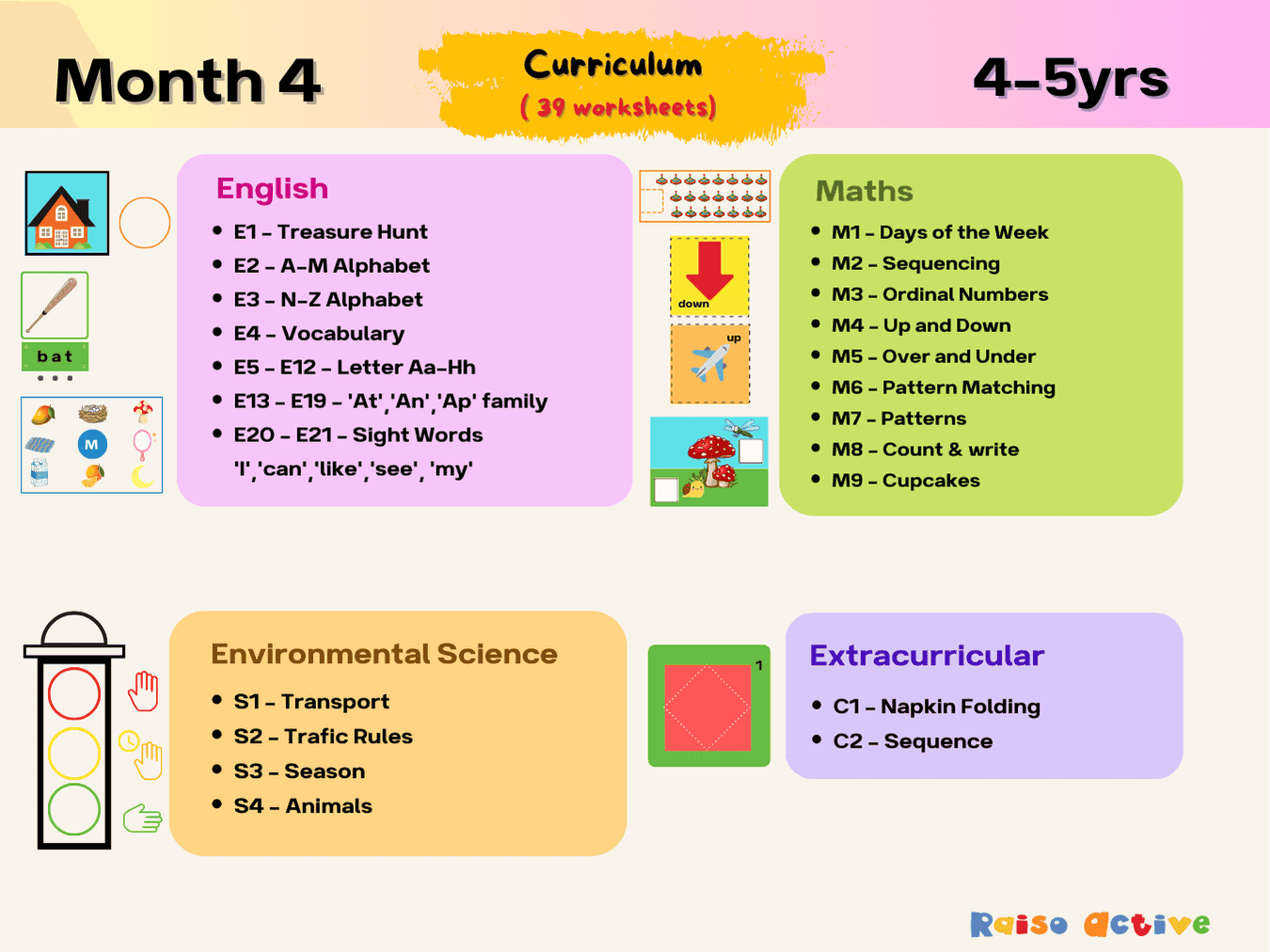
Part of the pack
Month 4: Learning & Development | Ages 4-5
This is page 30 of the pack. Ages 4-5 · Pre-KAges 4-5 · ReceptionAges 4-5 · LKGAges 4-5
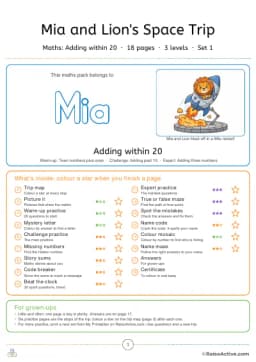
Made for your child
Counting to 10, made for your child
A maths pack with your child's name in it: pictures that explain, practice at three levels, puzzles and story sums about them. Print a new set whenever they finish.
Make a maths packFree preview · free for members
Curriculum
- Number Sense > Ordinal Numbers
How to use this worksheet
Look at the row of community helpers together and count them from left to right, saying 'first, second, third,' and so on as you point to each one. Have your child cut out the ordinal number labels at the bottom of the page. For each community helper, ask your child which position they hold in line, then have them glue the matching ordinal label into the correct box.
Materials needed
- Scissors
- Glue
- Pencil
Extension activities
- 1Have your child point to objects in the room and describe their position using ordinal numbers, like 'the second book on the shelf.'
- 2Line up toys and ask your child to identify the position of a specific one, like 'which toy is fourth?'
- 3Draw a race track and have your child color the racers, then identify their finishing positions with ordinal numbers.
- 4Practice ordinal numbers during a real lineup, like waiting for a turn at a game or in the kitchen.

Written by
Hemsweta Jain · Teacher Cheena
MBA and Early Childhood Educator, teaching since 2014 · Founder of RaisoActive, Mumbai
Every RaisoActive worksheet is designed and checked by the founder before publishing.
Published · Last reviewed
More from Month 4: Learning & Development | Ages 4-5

Napkin Folding Fun: Following Instructions Worksheet for Kids
Ages 3-5 · Preschool–Pre-KAges 3-5 · Nursery–ReceptionAges 3-5 · Nursery–LKGAges 3-5
This activity builds sequential following-directions skills and fine motor control as children fold a napkin step by step into a new shape. Because each fold depends on the one before it, children practice holding a multi-step instruction in mind and executing it in order — a skill that transfers directly to following recipes, craft instructions, and classroom directions later on.

Letter Aa Tracing and Matching Worksheet for Preschoolers
Ages 3-5 · Preschool–Pre-KAges 3-5 · Nursery–ReceptionAges 3-5 · Nursery–LKGAges 3-5
This worksheet combines tracing practice for the letter Aa with a letter-hunt task, where children ages 3-5 scan a grid to circle every instance of Aa before also identifying pictures that start with the letter. Practicing both uppercase and lowercase forms together, alongside visual search and picture matching, builds a rounded understanding of what the letter A looks like in its different appearances.

Treasure Hunt: Alphabetical Order Worksheet for Preschoolers
Ages 3-5 · Preschool–Pre-KAges 3-5 · Nursery–ReceptionAges 3-5 · Nursery–LKGAges 3-5
This connect-the-letters worksheet has children ages 3-5 trace a path from A to Z in strict alphabetical order to help a character find hidden treasure, combining full alphabet sequencing practice with sustained fine motor control as they draw one long connected line. Successfully sequencing the entire alphabet in order, rather than just naming letters individually, is a meaningful milestone in early literacy.
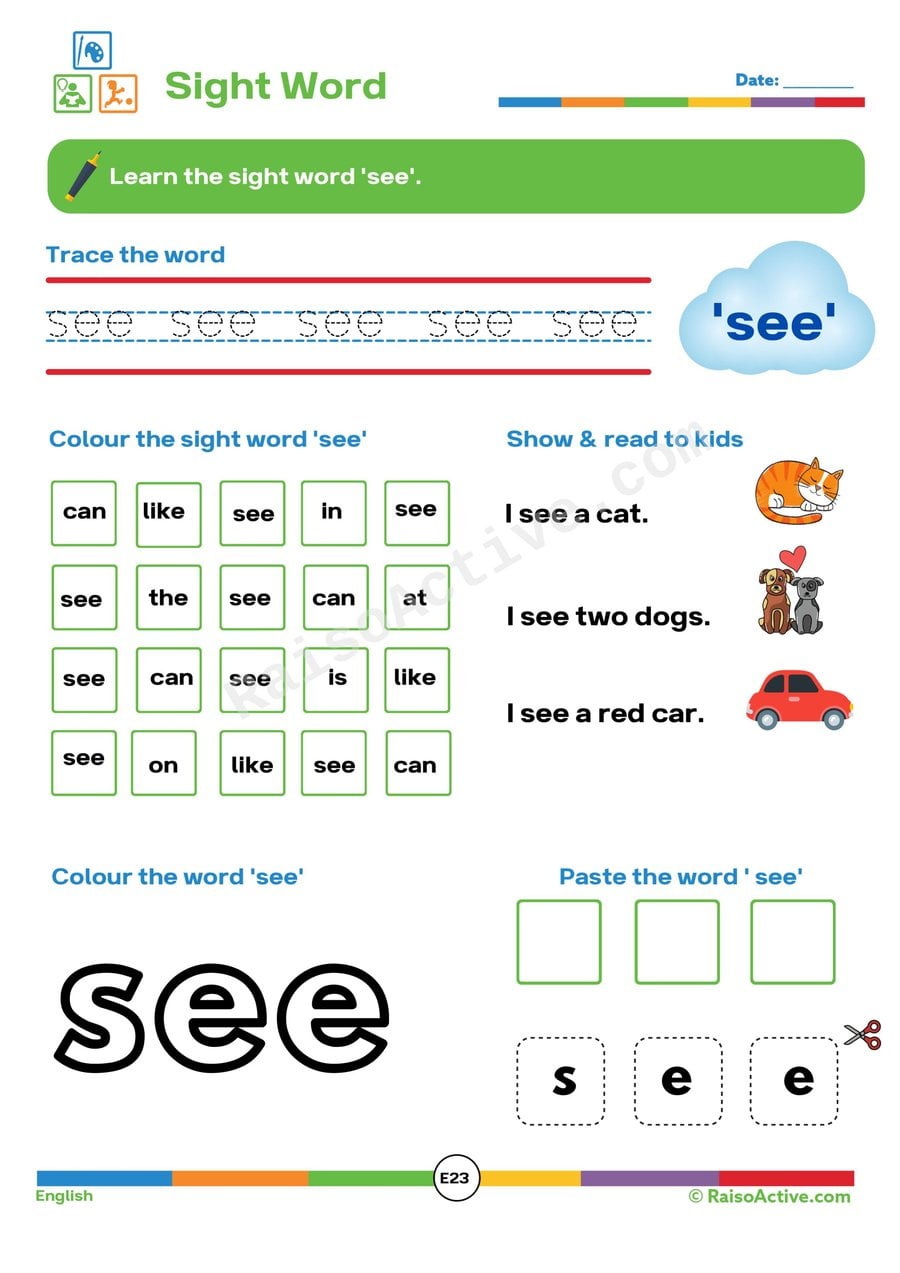
See Sight Word Worksheet: Trace, Color, and Paste!
Ages 3-5 · Preschool–Pre-KAges 3-5 · Nursery–ReceptionAges 3-5 · Nursery–LKGAges 3-5
Children ages 3-5 get repeated, varied practice with the high-frequency sight word 'see' through tracing, coloring, sentence reading, and a cut-and-paste spelling activity, building the instant word recognition that fluent reading depends on. Reading the accompanying sentences also gives early exposure to how the word functions in context, not just in isolation.
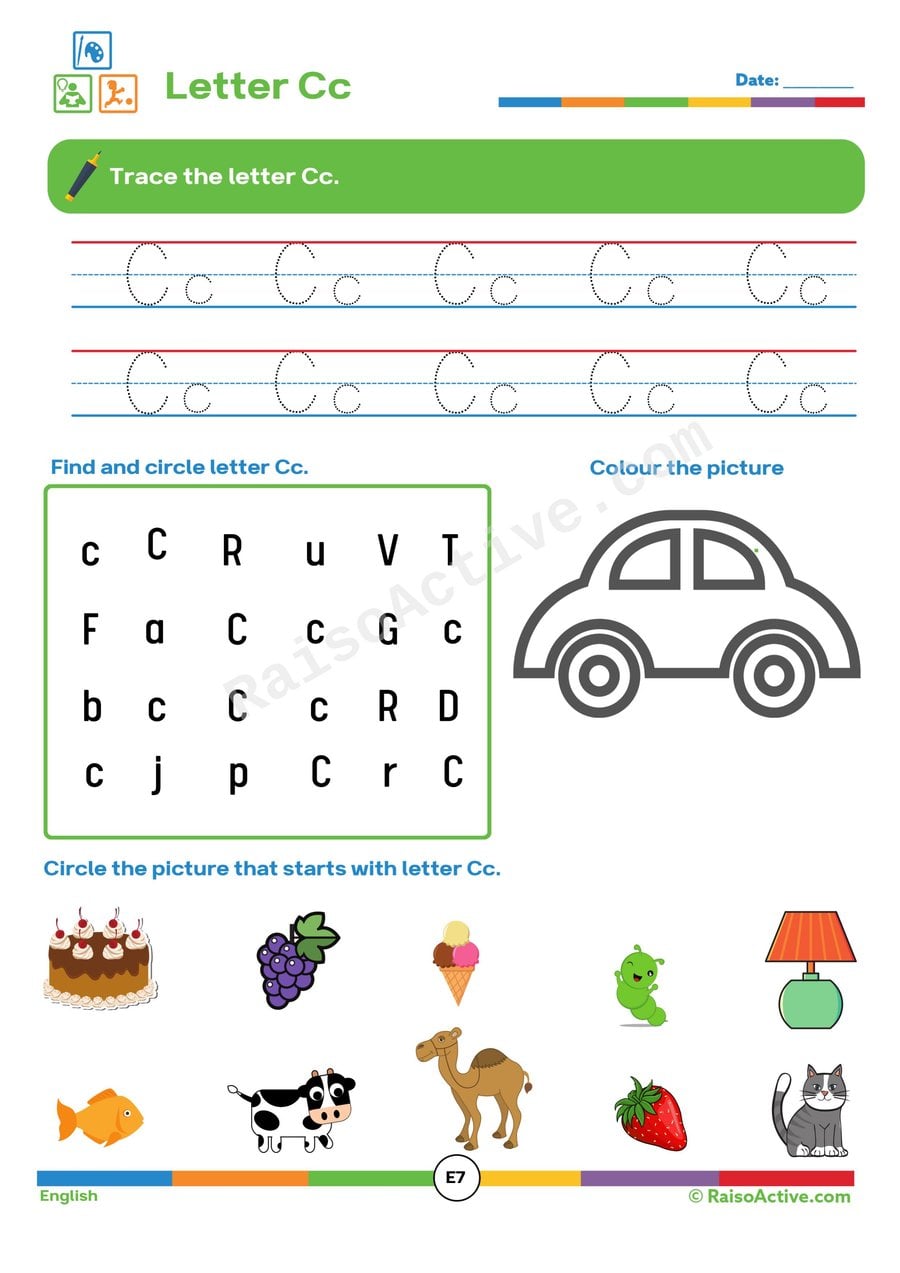
Letter Cc Worksheet: Trace, Find, and Color!
Ages 3-5 · Preschool–Pre-KAges 3-5 · Nursery–ReceptionAges 3-5 · Nursery–LKGAges 3-5
This worksheet has children ages 3-5 trace the letter Cc, search a grid to find and circle every instance of it, then color a picture of a car and identify other pictures that start with C. Layering tracing, visual search, and picture-sound matching in one worksheet gives repeated exposure to the same letter in several different formats, which builds stronger recognition than any single task alone.

A-M Alphabet Worksheet: Write and Paste the Correct Picture!
Ages 4-5 · Pre-KAges 4-5 · ReceptionAges 4-5 · LKGAges 4-5
This worksheet has children ages 4-5 identify and write the missing letters from A to M, then match each letter to a corresponding picture, combining alphabet sequencing with beginning-sound picture matching in one activity. Filling in missing letters, rather than tracing a complete alphabet, requires children to actively recall what comes next rather than simply copying a model.

Animal Skin Pattern Matching Worksheet for Preschoolers
Ages 3-5 · Preschool–Pre-KAges 3-5 · Nursery–ReceptionAges 3-5 · Nursery–LKGAges 3-5
Children ages 3-5 build visual discrimination and early biology awareness as they match animals to their distinctive skin patterns, like stripes on a zebra or spots on a leopard. Noticing and matching these patterns helps children practice careful visual comparison, a skill closely related to letter and word recognition, while also introducing the science idea that patterns serve a purpose for animals in the wild.
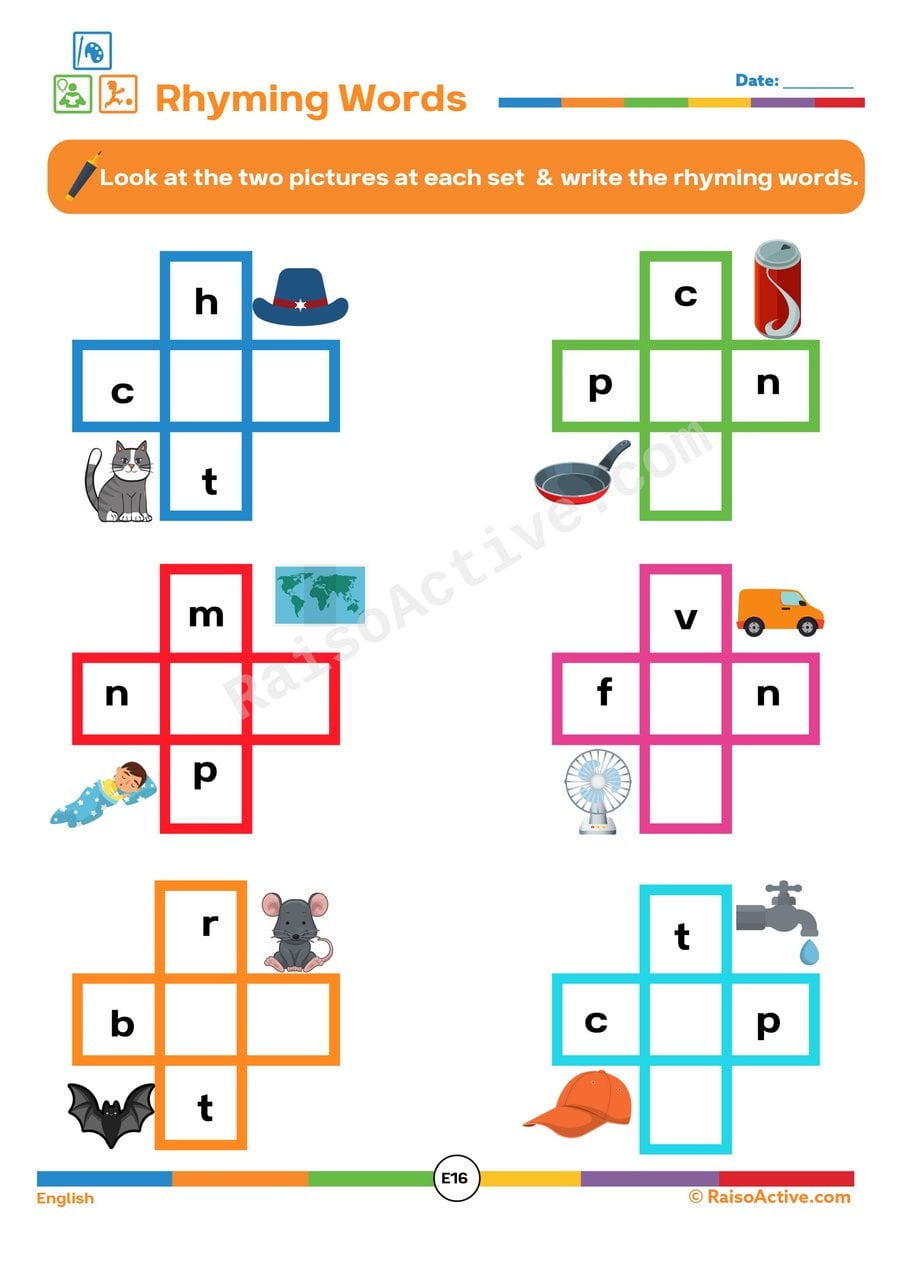
Rhyming Words Worksheet: Fun with Sounds!
Ages 4-5 · Pre-KAges 4-5 · ReceptionAges 4-5 · LKGAges 4-5
This worksheet has children ages 4-5 look at paired pictures, say the words aloud, and write the word that rhymes with its partner, building phonological awareness by focusing on matching ending sounds rather than beginning ones. Recognizing rhymes is one of the strongest early predictors of later reading success, since it trains children's ears to notice and manipulate the sounds within words.
Related worksheets
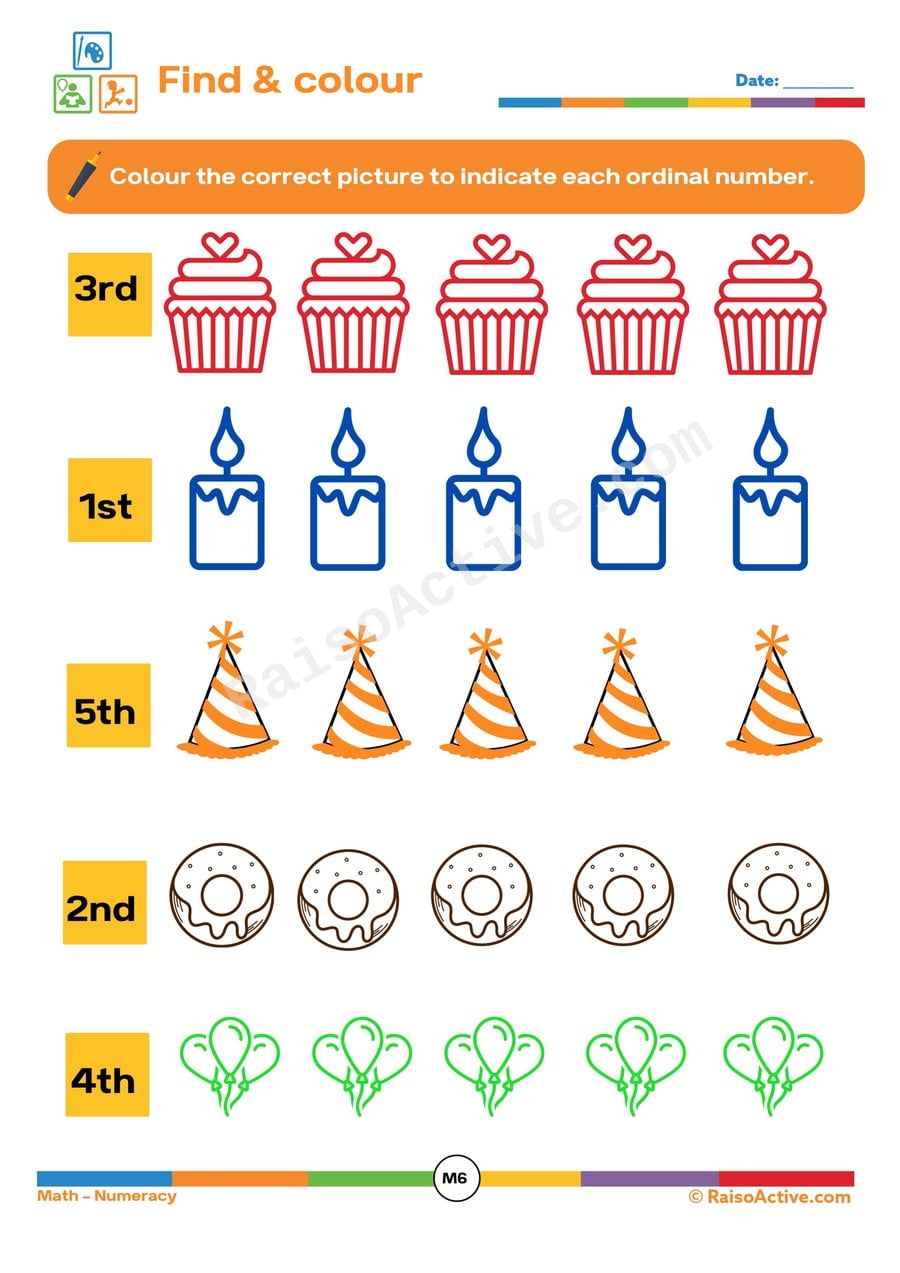
Find and Color Ordinal Numbers Worksheet
Ages 4-6 · Pre-K–KindergartenAges 4-6 · Reception–Year 1Ages 4-6 · LKG–UKGAges 4-6
Finding and coloring items based on their ordinal position, like the third balloon or the first star, teaches children ages 4-6 a different kind of counting than they may be used to. Ordinal numbers describe position in a sequence, first, second, third, rather than quantity, and this distinction is a genuinely tricky concept that takes deliberate practice to master, forming an important foundation for later math concepts like sequencing steps.

Ordinal Numbers Coloring Worksheet for Preschoolers
Ages 3-5 · Preschool–Pre-KAges 3-5 · Nursery–ReceptionAges 3-5 · Nursery–LKGAges 3-5
This coloring worksheet introduces children ages 3-5 to ordinal numbers — 1st, 2nd, 3rd, 4th, 5th — by having them identify and color the picture in a row that matches a given ordinal position. Ordinal numbers describe order and rank rather than quantity, which is a meaningfully different concept from the cardinal counting children usually practice first. This distinction is an important step toward understanding sequences, rankings, and everyday language like 'first place' or 'third in line.'

Ordinal Numbers Coloring Worksheet for Preschoolers
Ages 4-6 · Pre-K–KindergartenAges 4-6 · Reception–Year 1Ages 4-6 · LKG–UKGAges 4-6
This worksheet introduces children ages 4-6 to ordinal numbers from sixth to tenth, teaching them that position in a sequence, like 'which one is 6th,' is a different idea from counting how many items there are in total. Coloring the correctly positioned picture in each row also reinforces left-to-right tracking, an important pre-reading skill.
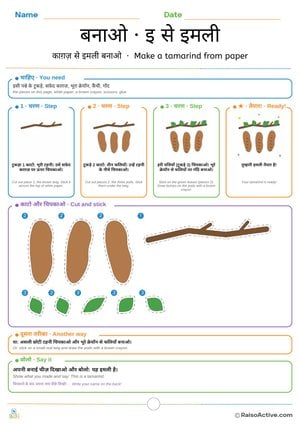
Make a Paper Tamarind: Hindi Letter इ Craft | बनाओ · इ से इमली
Ages 3-7 · Preschool–Grade 1Ages 3-7 · Nursery–Year 2Ages 3-7 · Nursery–Class 1Ages 3-7
Children cut out the pieces, put them together following three step pictures and make a paper tamarind. Saying the word इमली as they make it links the sound इ to something they built themselves.

Rocking Santa Card Craft Worksheet for Preschoolers
Ages 3-5 · Preschool–Pre-KAges 3-5 · Nursery–ReceptionAges 3-5 · Nursery–LKGAges 3-5
This rocking Santa card craft has children ages 3-5 cut out individual shape pieces and assemble them onto a folded card base, combining scissor control with an early understanding of how folding creates movement, since the 'rocking' effect comes from the card's fold. Following the assembly steps in order also reinforces sequencing and attention to visual instructions.
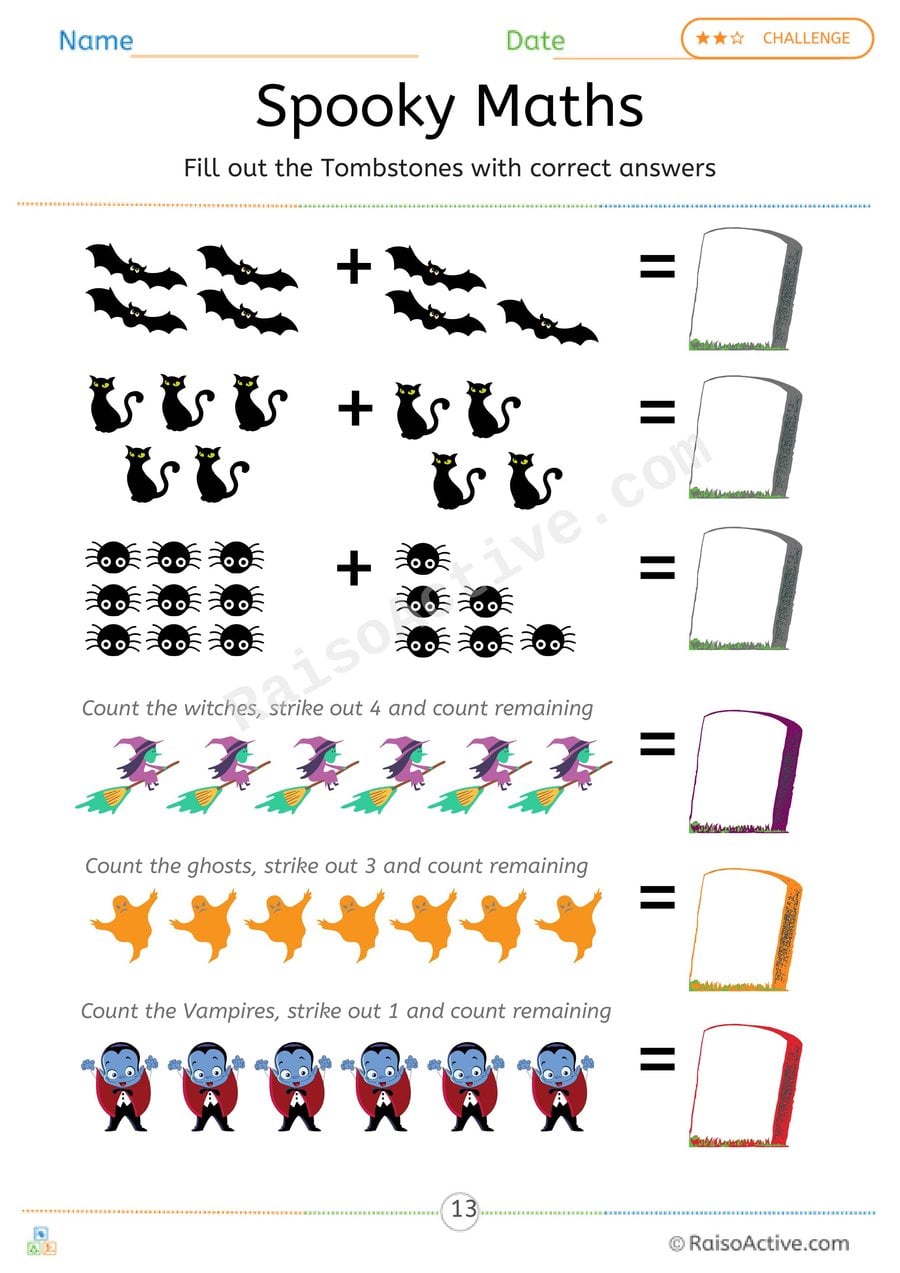
Spooky Math Worksheet: Halloween Counting Fun!
Ages 4-5 · Pre-KAges 4-5 · ReceptionAges 4-5 · LKGAges 4-5
This Halloween math worksheet has children ages 4-5 count grouped pictures and then solve simple addition and subtraction problems, moving from concrete counting toward the more abstract skill of combining or taking away quantities. Writing each answer inside a tombstone shape keeps the seasonal theme playful while practicing genuine early arithmetic.

Identify Flags: Cut and Paste Matching Worksheet for Kids
Ages 4-6 · Pre-K–KindergartenAges 4-6 · Reception–Year 1Ages 4-6 · LKG–UKGAges 4-6
Children ages 4-6 continue building flag recognition and matching skills with this worksheet, practicing the fine motor precision of cutting small flag shapes accurately before pairing them with the correct country. Repeated matching activities like this one help move flag recognition from a one-time exercise into lasting visual memory.

Easter Egg Color Code Worksheet for Preschoolers
Ages 3-5 · Preschool–Pre-KAges 3-5 · Nursery–ReceptionAges 3-5 · Nursery–LKGAges 3-5
Matching numbers on each Easter egg section to a color key builds number recognition and color-word association in children ages 3-5, since they must hold both a numeral and its assigned color in mind while coloring. This kind of coded coloring activity also strengthens visual scanning, as children need to locate the small numbers printed inside each egg section before choosing the right crayon. Completing the code correctly gives an immediate, visible reward when a colorful, patterned egg emerges from the numbered outline.
Guides for this topic

Number Formation Rhymes 0–9 and How to Fix Reversals
Original number formation rhymes for 0–9, the correct stroke order for each digit, why 3, 5 and 7 get reversed most often, and multisensory fixes that work.

Christmas and Winter Activities That Combine Fun and Learning: Creating Magical Educational Experiences
Discover Christmas and winter activities that combine festive fun with real learning. Crafts, counting, literacy, and printable worksheets for ages 2 to 8 — perfect for home and school.
Creating Engaging Themed Learning Units for Young Children: A Complete Guide to Integrated Learning
Discover how to create engaging themed learning units for young children that integrate literacy, maths, science, and art — with practical examples and free worksheets.
Reviews
Every worksheet for ages 4–6, no watermark
Members download the full library of 1,000+ worksheets and every activity pack without watermarks or daily limits. One year costs ₹999 in India or $20 elsewhere.
See membership plansOr download any worksheet free with a watermark (5 a day).