Looking for a structured learning path?
Explore our age-wise monthly curriculum with 4 subjects per month
Free Printable Worksheets
Browse Worksheets
Download free educational worksheets for children ages 1-8. Perfect for preschool, kindergarten, and early elementary learning activities.
Filters
Age Range
Curriculum
Tags

Taste Bud Sorting Worksheet: Identify and Sort Foods by Taste!
This worksheet introduces children ages 4-6 to four basic taste categories — salty, sour, bitter, and sweet — by having them sort pictured foods into the correct group. Beyond taste vocabulary, sorting foods by an invisible property like flavor (rather than an obvious one like color or shape) pushes children to draw on memory and prior experience, building more advanced classification skills.
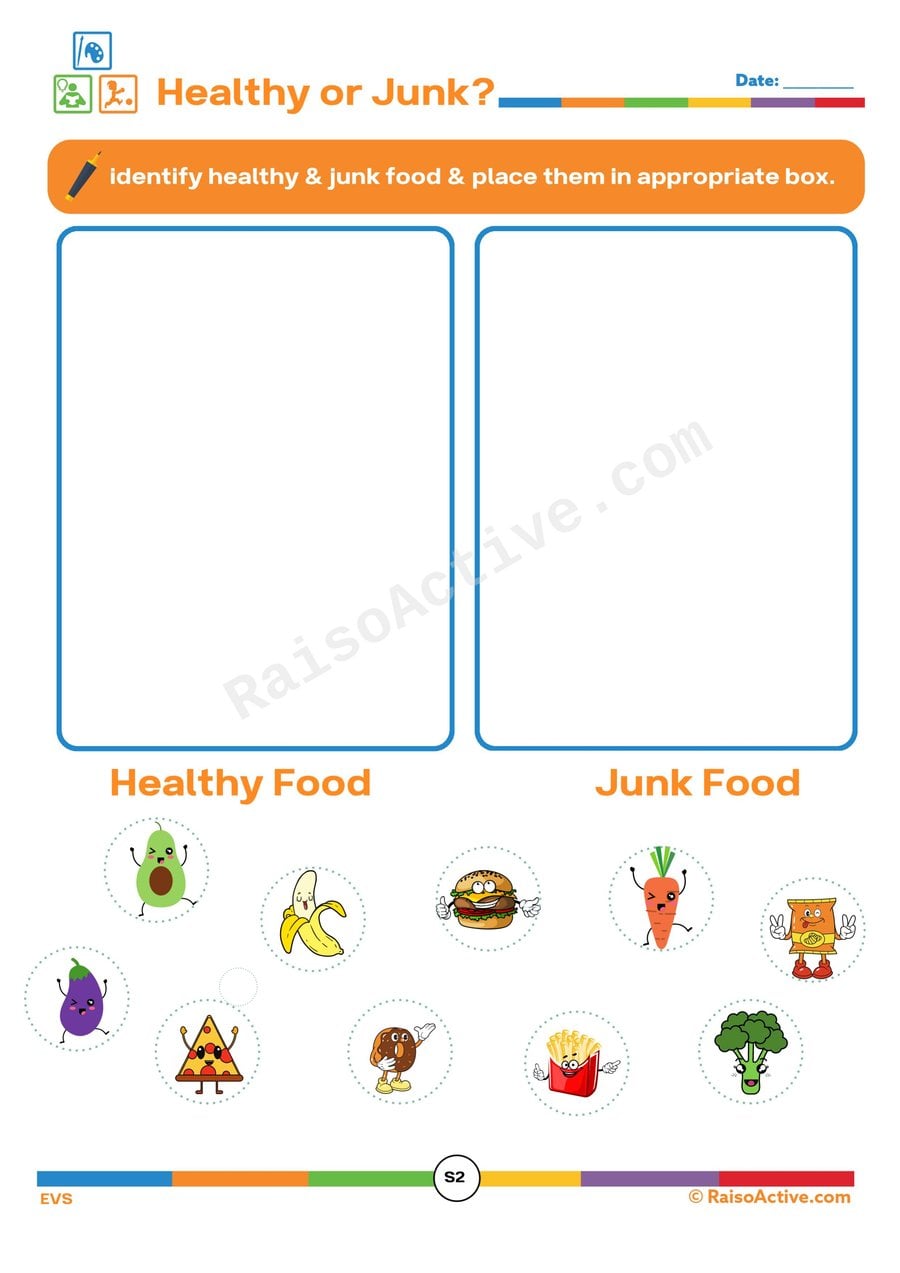
Healthy Food Sorting Worksheet for Preschoolers
Sorting food pictures into 'Healthy' and 'Junk Food' boxes teaches children ages 3-5 to classify items by a shared characteristic, an early categorization skill that underlies later science and math thinking. At the same time, it introduces basic nutrition concepts — that fruits, vegetables, and whole foods nourish the body differently than sugary or fried treats. Talking through each choice also builds vocabulary around food and health.

Healthy Eating Worksheet: Fruit Salad and Vegetable Soup!
This matching worksheet helps children ages 3-5 build food vocabulary by identifying pictures of fruits and vegetables and sorting them into the correct category — fruit salad ingredients or vegetable soup ingredients. Learning to classify foods by type, not just by whether they're healthy, supports early categorization skills that apply across many other subjects, from animals to shapes. The cooking-themed framing also connects the sorting task to a familiar, everyday context children may have experienced at home.

Healthy Maze Worksheet for Kids: Help the Girl Find Healthy Food!
This maze worksheet combines fine motor path-tracing with healthy-eating awareness for children ages 3-5, as they guide a character through a maze while avoiding unhealthy food obstacles to reach a healthy treat. Embedding a decision-making theme into the maze, rather than a neutral path, gives children a reason to think about food choices while also practicing visual scanning and planning. This combination makes an abstract nutrition lesson feel like part of a fun, goal-directed game.

Healthy vs. Unhealthy Eating Habits Worksheet for Kids
This worksheet helps children ages 3-5 begin distinguishing between healthy and unhealthy food choices by matching specific foods to a healthy or unhealthy person, building early awareness of how eating habits connect to wellbeing. Making this connection concrete and visual, rather than abstract, gives young children a first foothold in nutrition concepts well before they can understand more detailed health information.
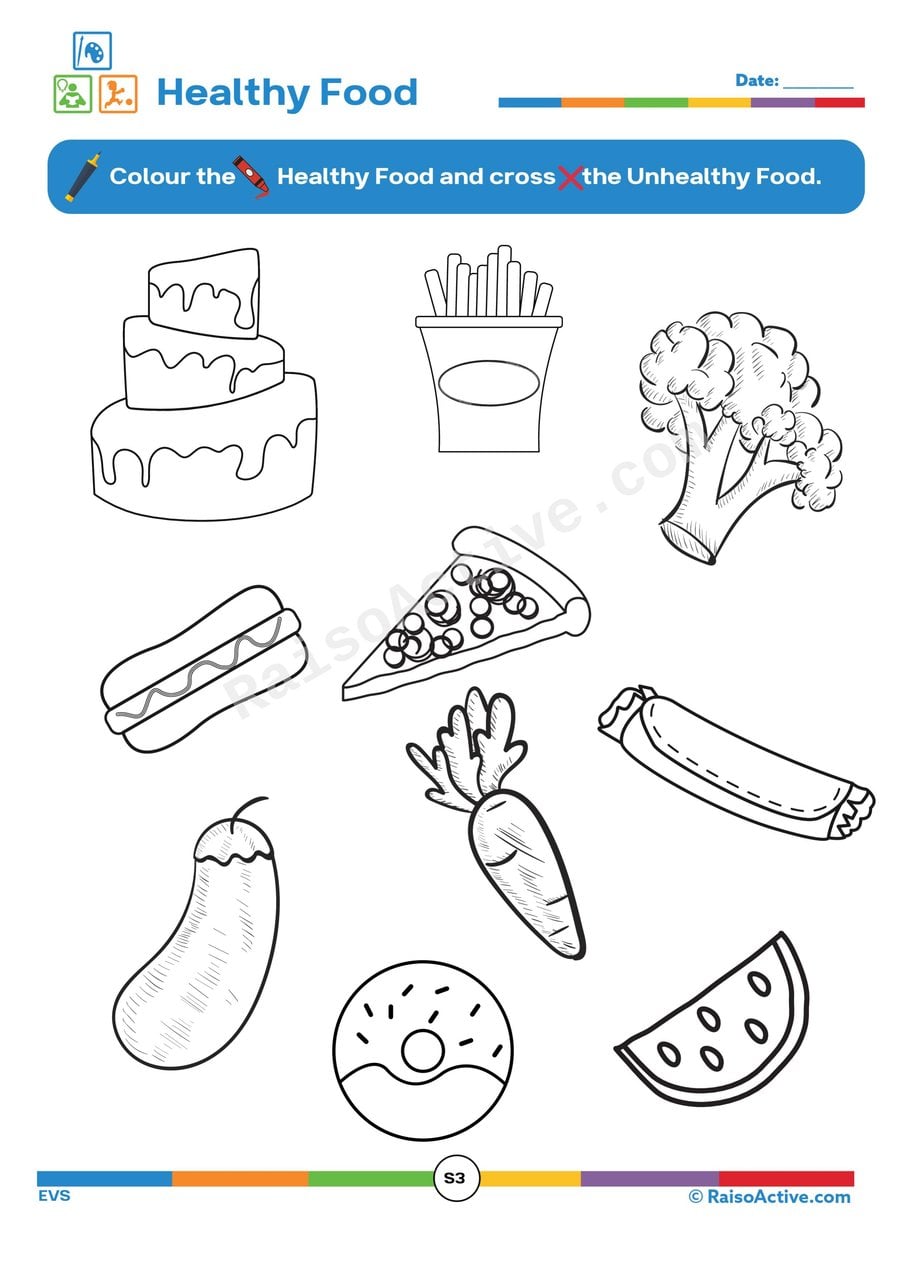
Healthy Food Fun: Color and Cross Out Worksheet
This worksheet builds nutrition awareness in children ages 3-5 by having them make an active choice about each pictured food — coloring the healthy ones and crossing out the unhealthy ones — rather than passively looking at a list. Requiring two different physical responses for two categories reinforces the distinction more strongly than a single sorting action would. Talking through the reasoning behind each choice also builds early critical thinking about cause and effect between food choices and health.

Food Group Sorting Worksheet for Kids: Cut and Paste!
Children ages 3-5 learn to sort familiar foods into the five major food groups — vegetables, fruits, dairy, meat and fish, and grains — building an early foundation for understanding balanced nutrition. Cutting and gluing each food item into its correct category also strengthens scissor control and hand-eye coordination alongside the health and classification learning.

Food Bingo Worksheet: Identify Healthy and Unhealthy Foods!
This bingo-style activity helps children ages 3-5 practice distinguishing healthy foods from unhealthy ones by physically placing tokens on matching pictures, turning nutrition education into an active game rather than a lecture. Scanning the board for matches also reinforces visual search skills similar to those used in matching and memory games. Because bingo requires a full row to win, children stay motivated to keep scanning and comparing even after finding a few matches.

Food Pyramid Worksheet: Learn About Healthy Eating!
This worksheet introduces children ages 3-5 to the food pyramid as a visual guide for balanced eating, helping them understand that different food groups should be eaten in different amounts. Filling in the blanks about food groups and serving sizes builds early nutrition literacy and reinforces the idea that a healthy diet includes variety, not just favorite foods.
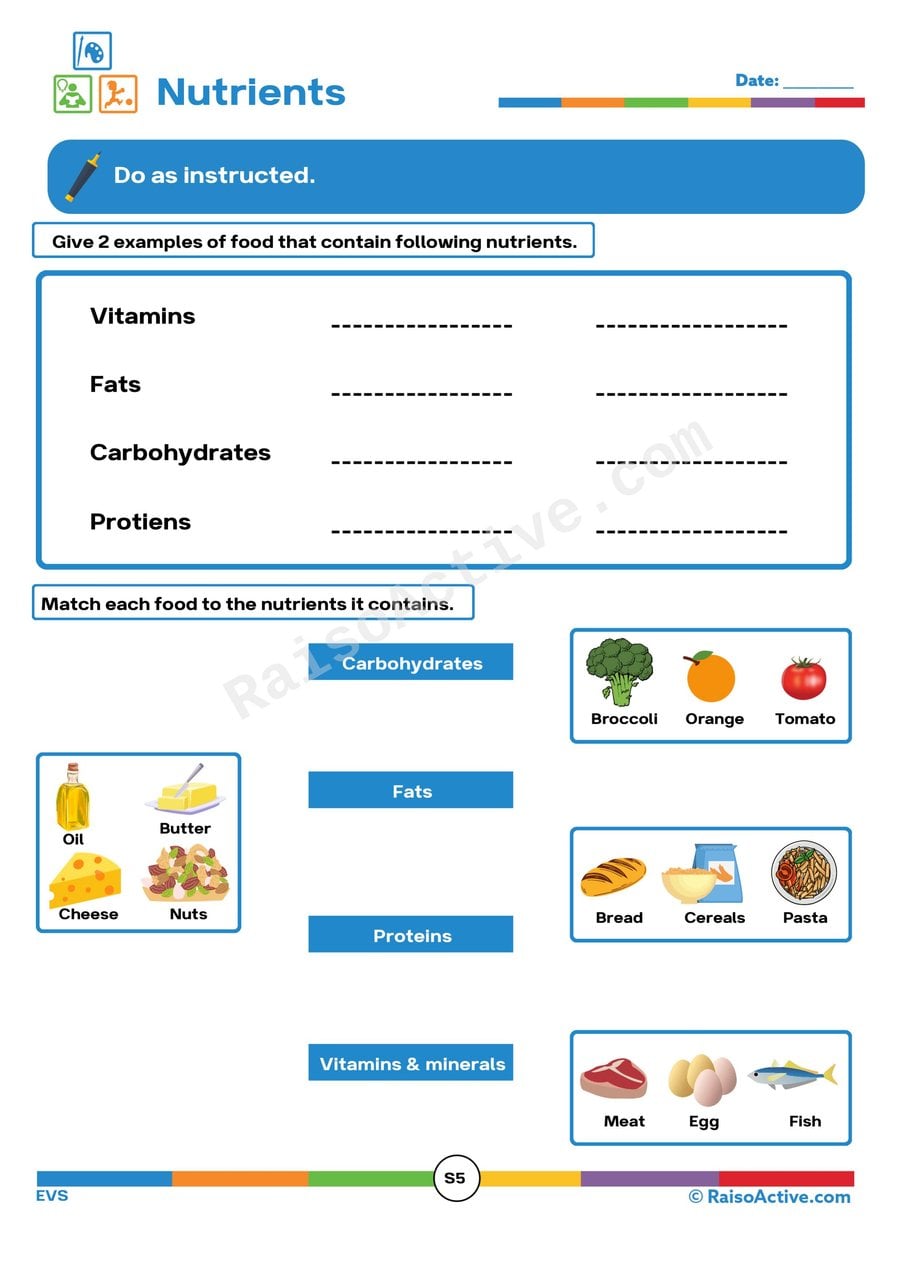
Nutrient Match: Food Examples Worksheet for Kids
This worksheet introduces children ages 4-6 to basic nutrition concepts by having them match food items to the nutrient category they belong to — vitamins, fats, carbohydrates, or proteins — and then name additional food examples for each. Going beyond a simple healthy/unhealthy sort, this task builds a more detailed understanding of why different foods matter for the body, an early foundation for lifelong healthy eating habits.

Fruit and Vegetable Sorting Worksheet for Preschoolers
This worksheet helps children ages 3-5 practice identifying and categorizing fruits and vegetables by coloring circles next to each pictured food item. Learning to tell fruits and vegetables apart, and eventually name specific ones, builds early categorization skills alongside healthy eating awareness, since recognizing food groups is a foundation for later nutrition education.
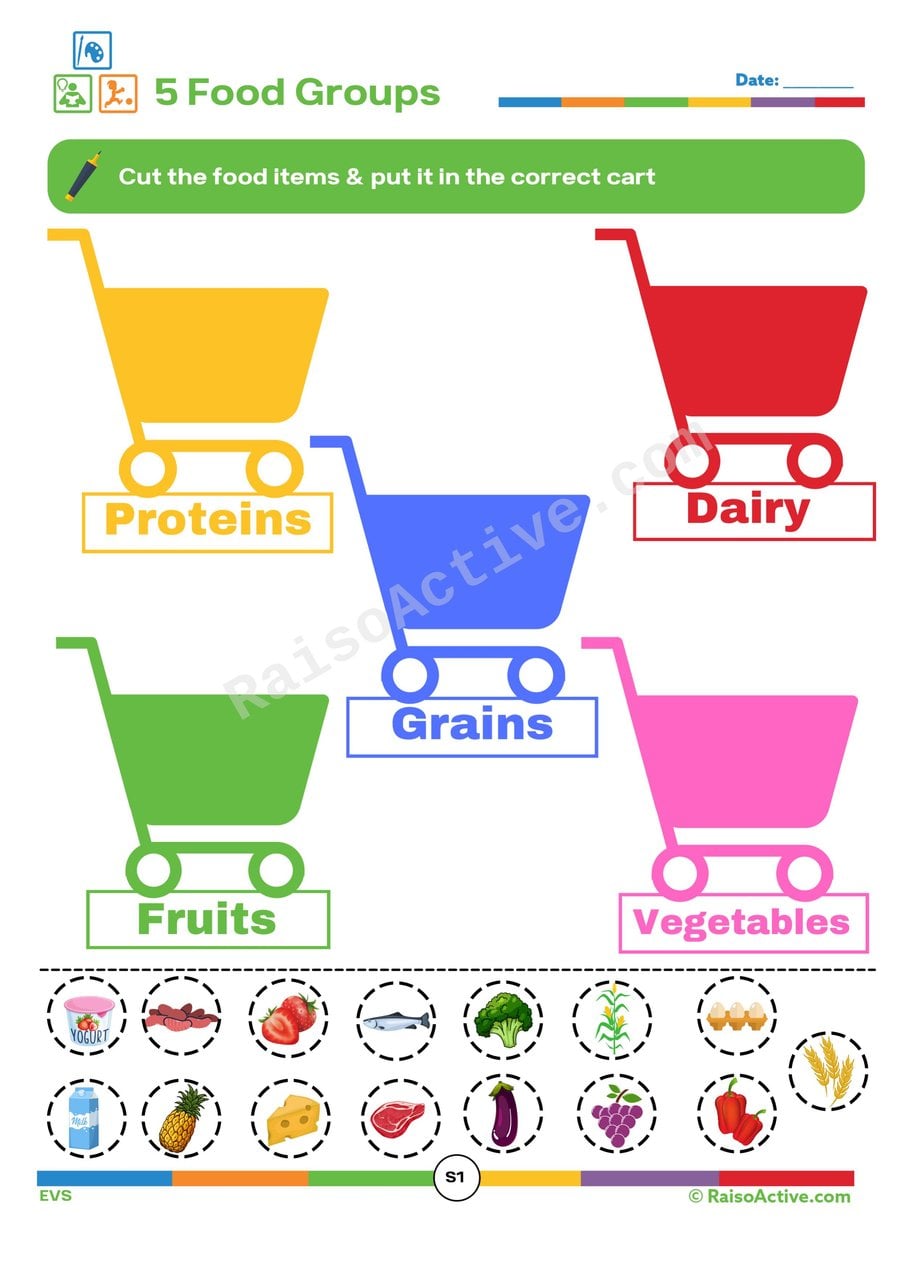
Food Groups Sorting Worksheet for Preschoolers
This worksheet helps children ages 3-5 learn about the different food groups and practice categorizing food items by cutting out pictures and pasting them into the correct group. Sorting foods this way builds early classification skills while also introducing the idea that different foods serve different purposes for the body, laying groundwork for healthy eating habits.
Want Unlimited Downloads?
Subscribe to get unlimited access to all worksheets without watermarks
View Subscription Plans