Fruit and Vegetable Sorting Worksheet for Preschoolers
This worksheet helps children ages 3-5 practice identifying and categorizing fruits and vegetables by coloring circles next to each pictured food item. Learning to tell fruits and vegetables apart, and eventually name specific ones, builds early categorization skills alongside healthy eating awareness, since recognizing food groups is a foundation for later nutrition education.

Part of the pack
Month 11: Learning & Development | Ages Up to 4
This is page 24 of the pack. Ages 2-4 · PreschoolAges 2-4 · NurseryAges 2-4
Made for your child
A whole activity pack made with their name
60 pages to spot, build, trace and write their own name, plus pages about their favourites, feelings and family. See a free preview with their name.
Make an All About Me packFree preview · free for members
Or start free: a name tracing sheet with their nameCurriculum
- Cognitive - Attention > Observation Skills
How to use this worksheet
Look at the pictures on the page together and name each fruit or vegetable, discussing whether it's a fruit or a vegetable and why. Have your child color the circle next to each item, choosing colors that could even match the real food's color for extra reinforcement. Move through the whole page this way, encouraging your child to describe the taste or texture of foods they recognize. Once finished, count how many fruits and how many vegetables appear on the page.
Materials needed
- Crayons or colored pencils
Extension activities
- 1Go on a nature walk or trip to a farmers market and identify fruits and vegetables in person.
- 2Prepare a simple healthy snack together using a fruit and a vegetable from the worksheet.
- 3Sort real or play-food items into 'fruit' and 'vegetable' baskets.
- 4Talk about which fruits and vegetables are your child's favorites and why.

Written by
Hemsweta Jain · Teacher Cheena
MBA and Early Childhood Educator, teaching since 2014 · Founder of RaisoActive, Mumbai
Every RaisoActive worksheet is designed and checked by the founder before publishing.
Published · Last reviewed
More from Month 11: Learning & Development | Ages Up to 4

Connect the Dots: Mushroom House Worksheet for Kids (Numbers 26-50)
Ages 4-6 · Pre-K–KindergartenAges 4-6 · Reception–Year 1Ages 4-6 · LKG–UKGAges 4-6
Extending number sequencing into the 26-50 range pushes children ages 4-6 past the more familiar 1-20 span while reinforcing the fine motor control needed to draw controlled connecting lines that reveal a mushroom house picture.

Alphabet Adventures: Write the First Letter - A to T Worksheet
Ages 4-5 · Pre-KAges 4-5 · ReceptionAges 4-5 · LKGAges 4-5
This worksheet builds early phonemic awareness in children ages 4-5 by asking them to identify a pictured object, say its name aloud, and isolate the very first sound to write as a letter. Practicing this across a wide range of letters, A through T, gives children repeated exposure to the letter-sound connection that underlies all future reading and spelling. It also strengthens letter formation as children physically write each capital letter.
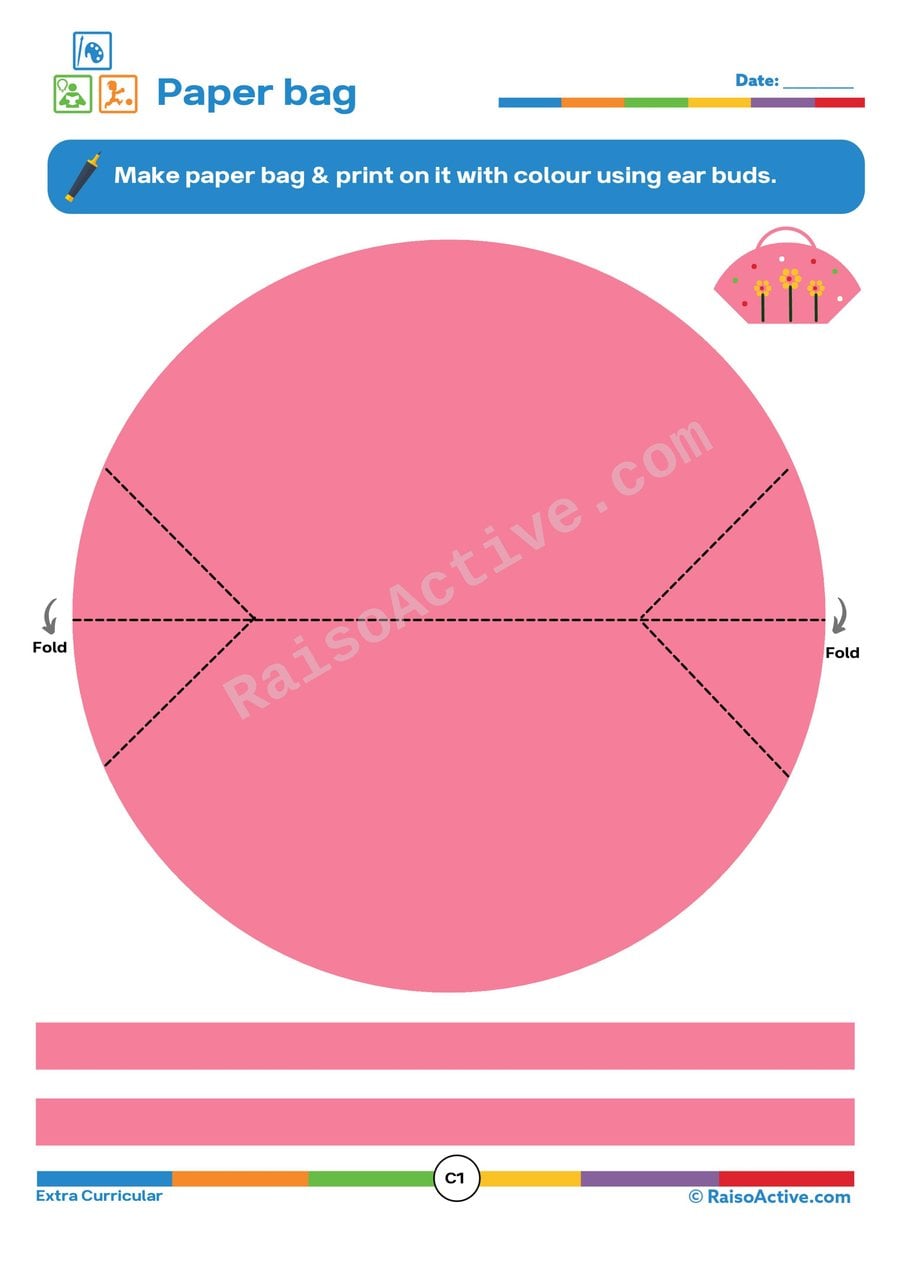
Paper Bag Craft Worksheet for Kids
Ages 3-5 · Preschool–Pre-KAges 3-5 · Nursery–ReceptionAges 3-5 · Nursery–LKGAges 3-5
Children ages 3-5 practice fine motor control and following multi-step craft instructions by folding a paper bag and decorating it using a cotton swab dipped in color, an unusual painting tool that builds hand control and creative expression at the same time. Following each folding and coloring step in order also strengthens early sequencing and listening skills.

Four Seasons Coloring Worksheet for Preschoolers
Ages 3-5 · Preschool–Pre-KAges 3-5 · Nursery–ReceptionAges 3-5 · Nursery–LKGAges 3-5
This worksheet introduces children ages 3-5 to the four seasons — spring, summer, fall, and winter — by having them color a tree differently to reflect each season's distinct features, like bare branches in winter or green leaves in summer. Choosing appropriate colors based on seasonal knowledge, rather than coloring freely, builds observational science thinking alongside creative expression and fine motor control.
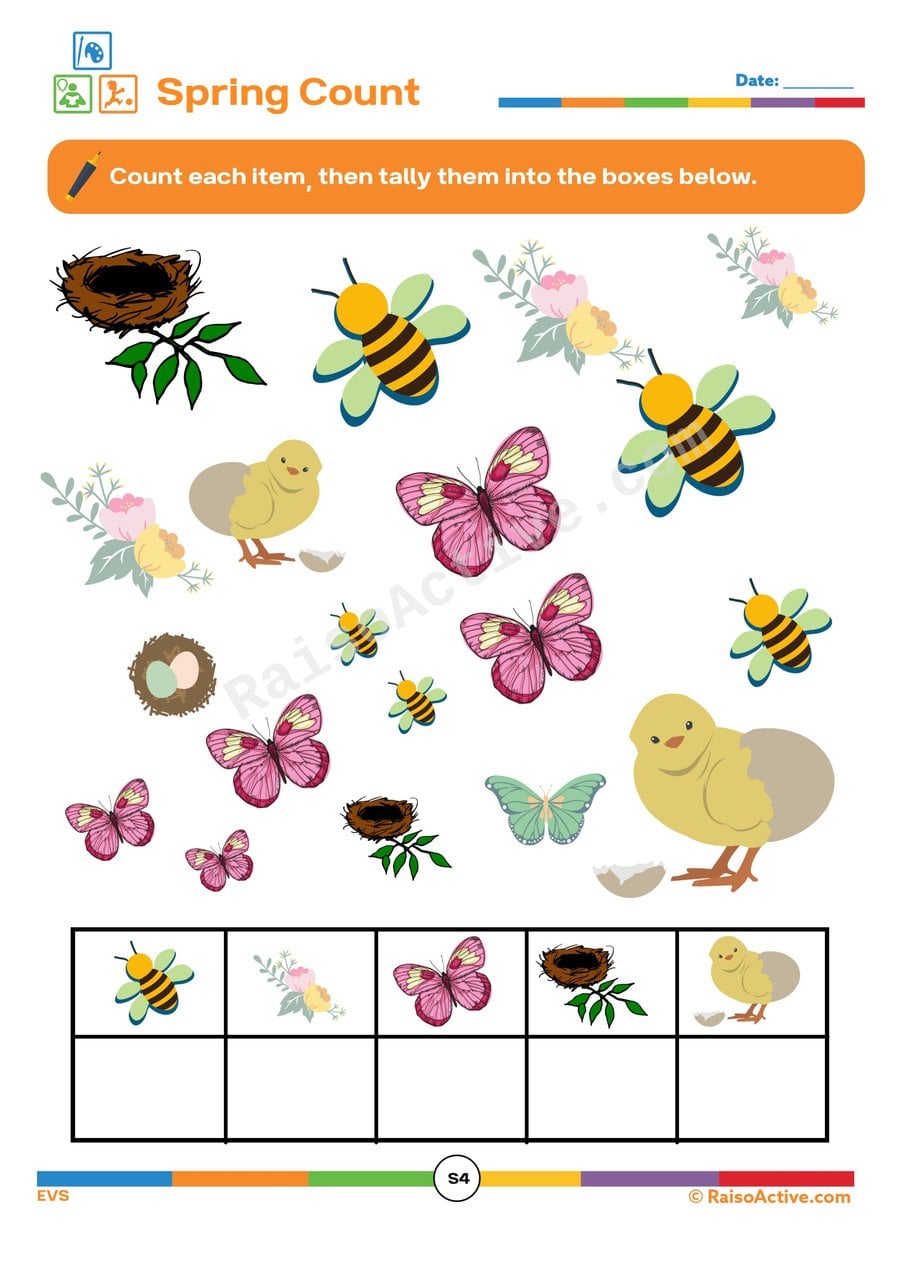
Spring Count: Tally the Spring Items Worksheet
Ages 3-5 · Preschool–Pre-KAges 3-5 · Nursery–ReceptionAges 3-5 · Nursery–LKGAges 3-5
Introduces tally marks as a way of recording a count, teaching children ages 3-5 to count spring-themed objects and represent the total visually in groups of five — an early step toward understanding how numbers can be organized.

Alphabet U-Z Worksheet: Find the Letter and Count!
Ages 4-6 · Pre-K–KindergartenAges 4-6 · Reception–Year 1Ages 4-6 · LKG–UKGAges 4-6
This worksheet extends alphabet mastery to the less-practiced letters U through Z for children ages 4-6, combining beginning-sound identification with a counting task for each object pictured. Because letters at the end of the alphabet appear less often in early reading material, dedicated practice here helps round out full alphabet fluency, while the counting component keeps numeracy skills active alongside literacy.
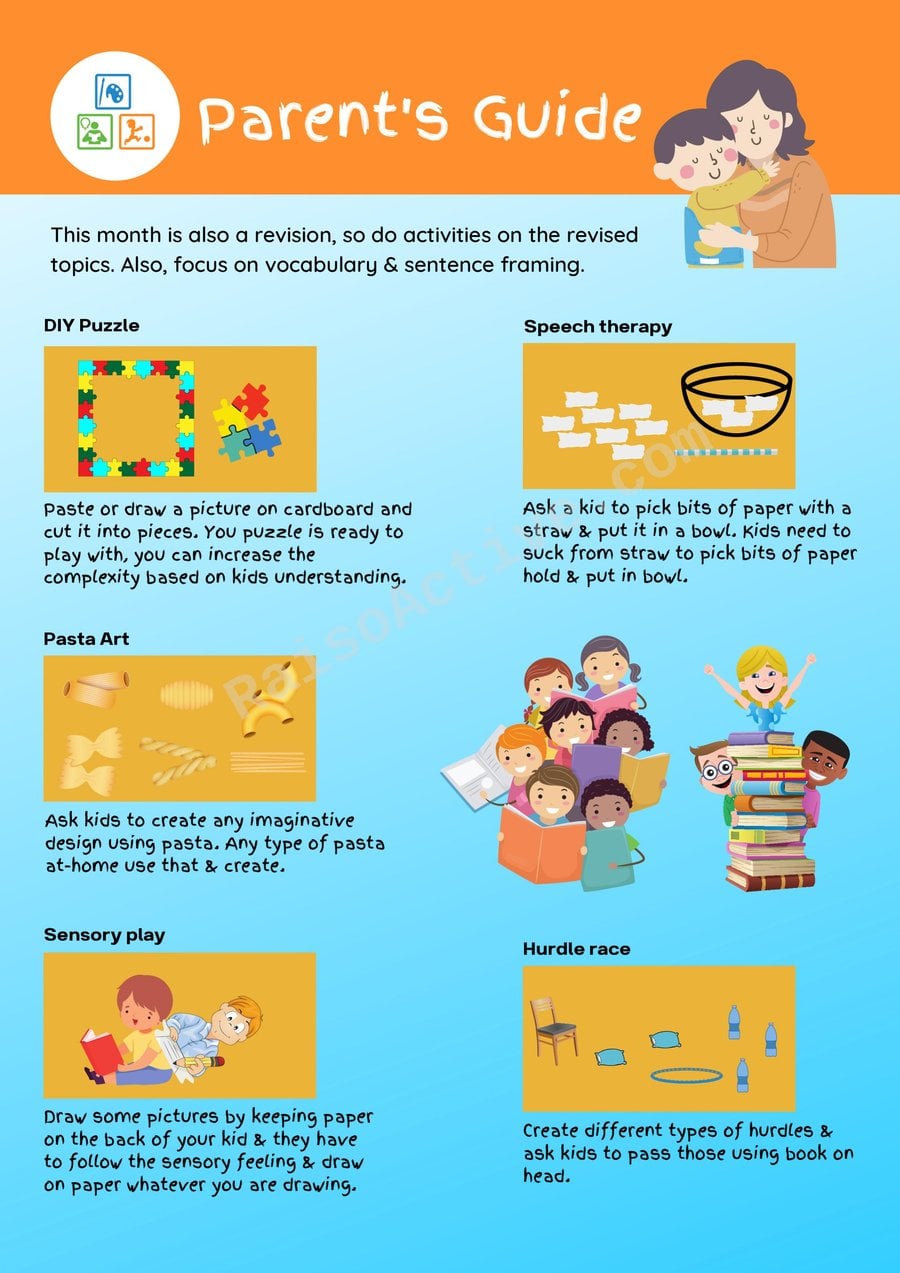
Parent's Guide: Fun Activities for Kids!
Ages 3-5 · Preschool–Pre-KAges 3-5 · Nursery–ReceptionAges 3-5 · Nursery–LKGAges 3-5
This parent's guide brings together a set of simple, no-prep activities that support early literacy, counting, and sequencing skills for children ages 3-5 outside of a single structured worksheet. Because the activities are designed to be adapted to your child's current interests and skill level, they build flexible thinking and real-world application of skills like counting and sequencing, rather than isolated worksheet practice.
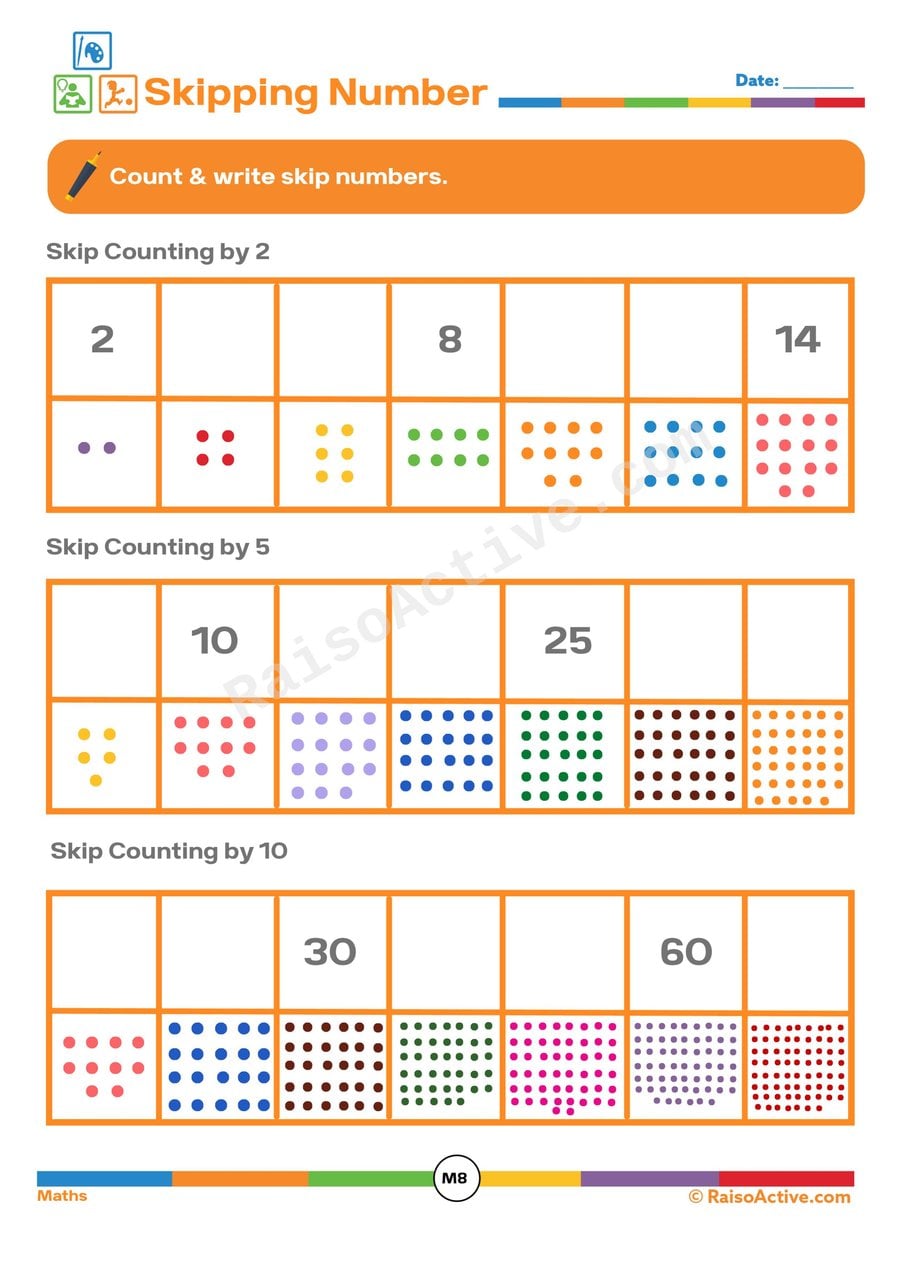
Skip Counting Adventure: Counting by 2, 5, and 10!
Ages 4-6 · Pre-K–KindergartenAges 4-6 · Reception–Year 1Ages 4-6 · LKG–UKGAges 4-6
Children ages 4-6 practice skip counting by 2s, 5s, and 10s, recognizing the repeating number patterns that let them count large groups faster than counting one by one. Skip counting is an early stepping stone toward multiplication and a genuinely useful shortcut children can apply well beyond this worksheet.
Related worksheets

Sound Energy Worksheet: Identifying Sound Producers!
Ages 4-6 · Pre-K–KindergartenAges 4-6 · Reception–Year 1Ages 4-6 · LKG–UKGAges 4-6
This worksheet asks children to identify which objects produce sound and to think about how the ear allows us to hear those sounds, introducing basic science vocabulary around sound energy at an age when they're ready to start reasoning about cause and effect. Circling and matching sound-producing objects also sharpens observation, since children must consider whether an object truly makes noise or is simply pictured near something that does.

Near and Far Worksheet: Identifying Distance for Preschoolers
Ages 3-5 · Preschool–Pre-KAges 3-5 · Nursery–ReceptionAges 3-5 · Nursery–LKGAges 3-5
Judging whether an object is near or far and connecting objects based on that positional relationship builds spatial vocabulary for children ages 3-5, an early skill that supports understanding distance, maps, and following directional instructions.

Help the Boy Get Home! A Fun Maze Worksheet for Kids
Ages 3-5 · Preschool–Pre-KAges 3-5 · Nursery–ReceptionAges 3-5 · Nursery–LKGAges 3-5
Tracing a path through a maze to help a boy get home builds visual tracking and route-planning skills for children ages 3-5, since they must scan ahead and mentally test paths before committing to one. This kind of trial-and-error problem solving also strengthens the fine motor control needed to keep a pencil line steady along a winding path.

Indian Cities Crossword Puzzle Worksheet for Kids
Ages 4-6 · Pre-K–KindergartenAges 4-6 · Reception–Year 1Ages 4-6 · LKG–UKGAges 4-6
This crossword challenges children ages 4-6 to identify famous Indian cities from picture clues of their landmarks and then spell out each city's name in the puzzle grid, combining observation skills with early geography knowledge. Counting the crossword boxes to match each city's letter count also reinforces attention to word length before writing.
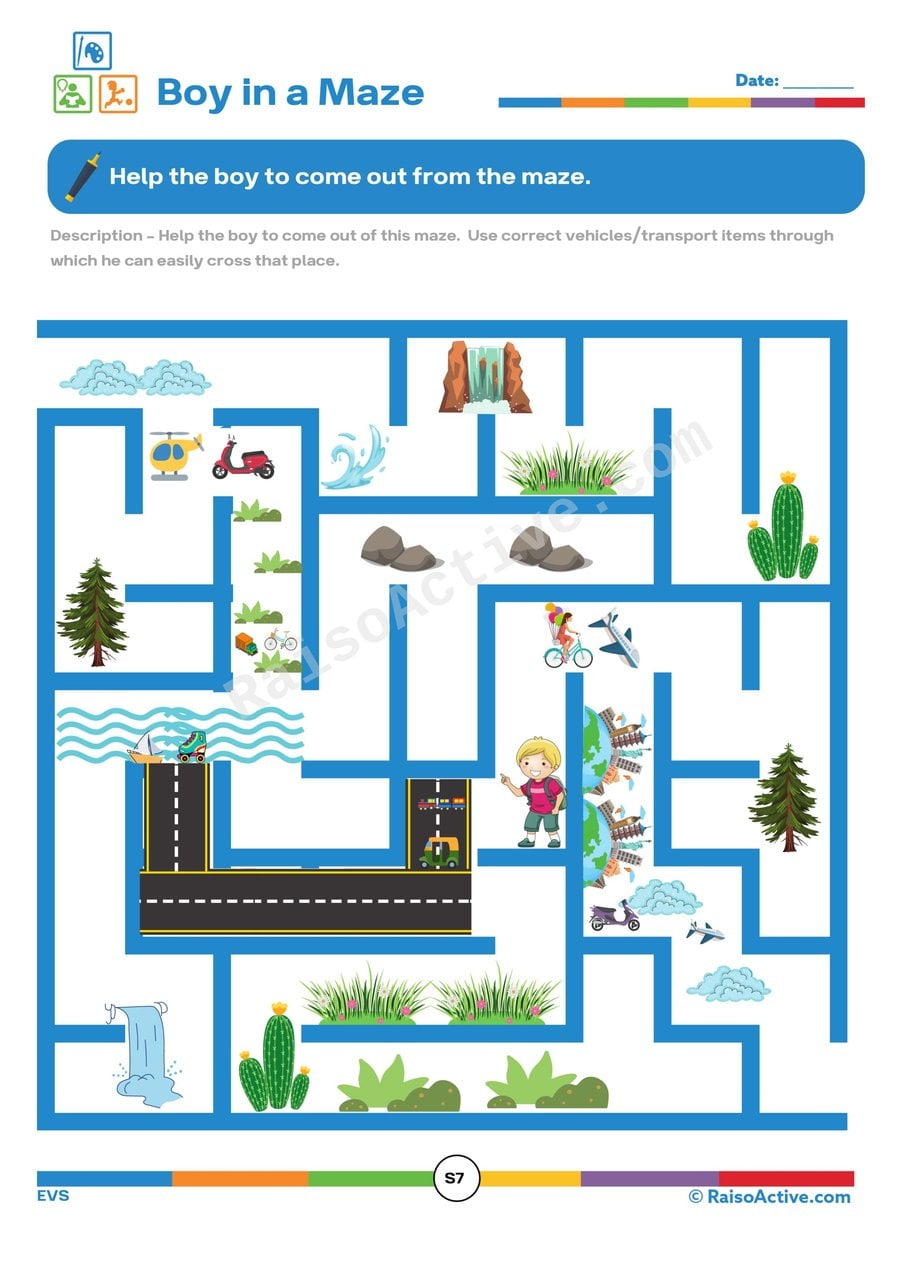
Help the Boy Escape the Maze Worksheet
Ages 3-5 · Preschool–Pre-KAges 3-5 · Nursery–ReceptionAges 3-5 · Nursery–LKGAges 3-5
This maze worksheet builds visual tracking, planning, and fine motor control as children ages 3-5 trace a path for a boy to escape, using different vehicles to get past obstacles along the way. Scanning ahead to choose a workable route before committing to a path develops early problem-solving and forward-planning skills, while the pencil control needed to stay within the maze lines strengthens hand strength for later handwriting.

Light Energy Worksheet: Connect the Sun to Light Sources!
Ages 3-5 · Preschool–Pre-KAges 3-5 · Nursery–ReceptionAges 3-5 · Nursery–LKGAges 3-5
Connecting the sun to other objects that produce light builds early science reasoning for children ages 3-5, introducing the concept that light comes from specific sources rather than simply existing everywhere.

Match the Countries with Their Symbols Worksheet
Ages 4-6 · Pre-K–KindergartenAges 4-6 · Reception–Year 1Ages 4-6 · LKG–UKGAges 4-6
Children ages 4-6 build early social studies awareness by matching country flags to their well-known national symbols, connecting visual recognition with basic geography and cultural knowledge. This kind of matching exercise strengthens careful observation, since children must compare colors, shapes, and details across both the flag and the symbol image. It also plants the seed for understanding that different countries have distinct identities and traditions.

Spot the Differences! Fun Picture Puzzle Worksheet for Kids
Ages 3-5 · Preschool–Pre-KAges 3-5 · Nursery–ReceptionAges 3-5 · Nursery–LKGAges 3-5
This spot-the-differences puzzle sharpens visual discrimination in children ages 3-5 by requiring them to compare two nearly identical pictures and notice small changes in detail, color, or position. Scanning systematically for differences also builds sustained visual attention and patience, both important pre-academic skills that support later tasks like proofreading and careful reading.
Guides for this topic

Best Worksheets for 3-Year-Olds: What Works and What to Avoid
What works on worksheets for 3-year-olds: short sessions, crayons, tracing lines, matching, cutting, a free weekly plan, and signs one is too advanced.

Age-Appropriate Problem-Solving Activities: Building Critical Thinkers from the Ground Up
Discover fun, age-appropriate problem-solving activities for children ages 1-8. Build critical thinking, logic, and reasoning skills through play-based learning.
Fostering Creativity in Structured Learning: The Perfect Balance for Young Minds
Learn how to blend creativity with structured learning for children ages 1-8. Practical strategies, activities, and printable worksheets for parents and teachers.
Reviews
Every worksheet for ages 3–5, no watermark
Members download the full library of 1,000+ worksheets and every activity pack without watermarks or daily limits. One year costs ₹999 in India or $20 elsewhere.
See membership plansOr download any worksheet free with a watermark (5 a day).