3 R's Worksheet: Reduce, Reuse, Recycle!
This worksheet introduces the three R's, reduce, reuse, and recycle, as concrete categories for sorting everyday actions, helping children ages 4-6 build environmental vocabulary and classification skills. Decoding a secret message using a number code adds a layer of early math and logic practice, linking numeral recognition to problem-solving.
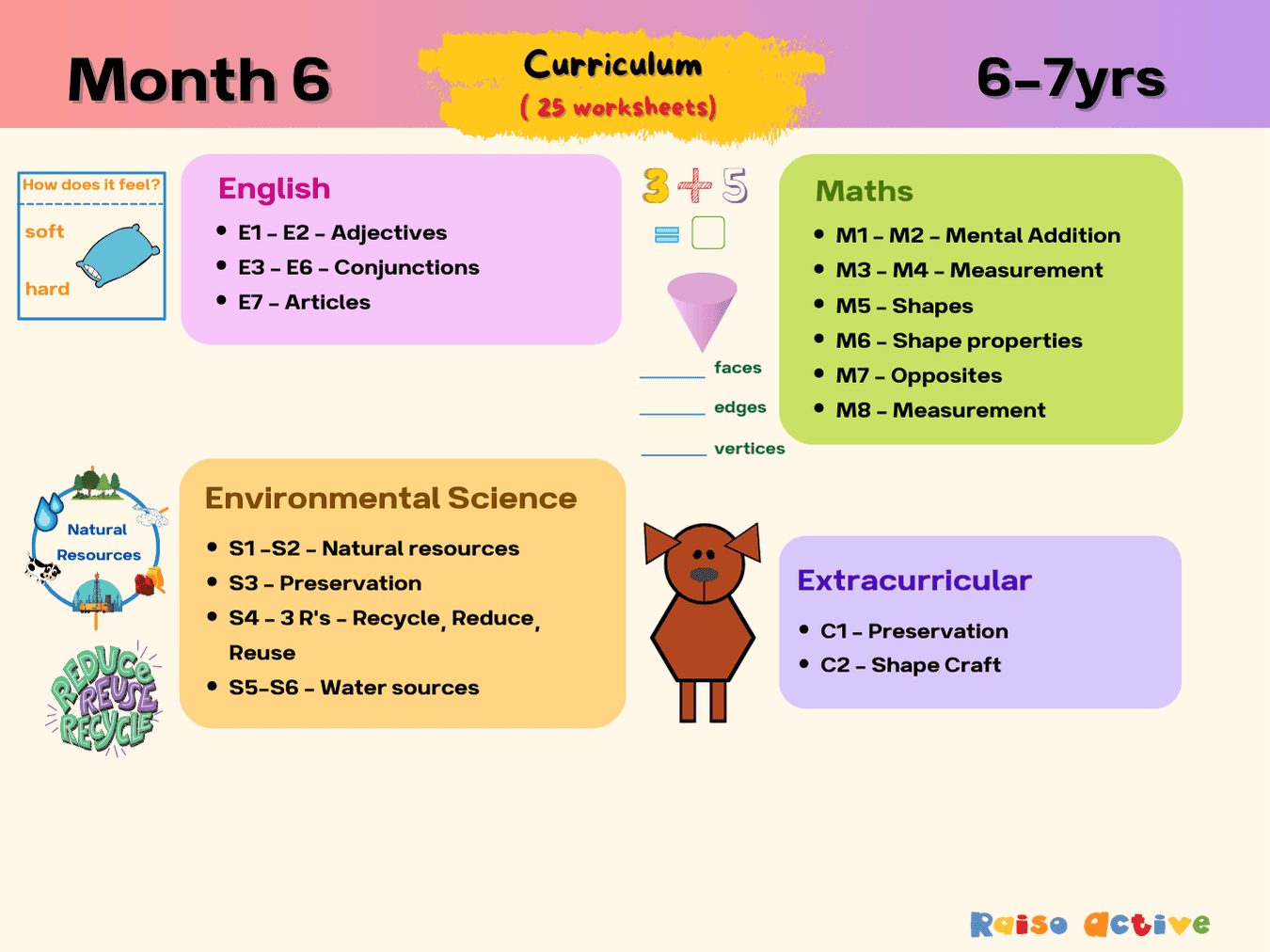
Part of the pack
Month 6: Grammar, Math, Environmental Science | Ages 6-7
This is page 22 of the pack. Ages 6-7 · Grade 1Ages 6-7 · Year 2Ages 6-7 · Class 1Ages 6-7
Curriculum
- Earth & Environment > Recycling & Preservation
How to use this worksheet
Start by discussing what reduce, reuse, and recycle each mean using simple, real examples from your home, like reusing a jar or recycling a cardboard box. Have your child brainstorm and write five items or actions under each category in the spaces provided, helping them sound out words as needed. Once the lists are complete, move to the number code activity, where your child matches each number to its corresponding letter to reveal a secret message. Read the decoded message together at the end and talk about what it means.
Materials needed
- Pencil
- Crayons
Extension activities
- 1Go through the recycling bin at home together and sort items into reduce, reuse, and recycle categories.
- 2Turn an item you would normally throw away into a simple reused craft, like a decorated cereal box organizer.
- 3Create a classroom or bedroom poster listing five household items and which 'R' category they belong to.
- 4Practice number-to-letter decoding with a new secret message your child creates for a family member to solve.
- 5Visit a local recycling center or watch a short video about what happens to recycled materials.

Written by
Hemsweta Jain · Teacher Cheena
MBA and Early Childhood Educator, teaching since 2014 · Founder of RaisoActive, Mumbai
Every RaisoActive worksheet is designed and checked by the founder before publishing.
Published · Last reviewed
More from Month 6: Grammar, Math, Environmental Science | Ages 6-7

Conjunctions Worksheet: Practice with 'and', 'but', 'so', and 'yet'
Ages 4-6 · Pre-K–KindergartenAges 4-6 · Reception–Year 1Ages 4-6 · LKG–UKGAges 4-6
This worksheet introduces four common coordinating conjunctions, teaching children to notice how 'and,' 'but,' 'so,' and 'yet' each connect ideas differently, whether adding information, showing contrast, or indicating a result. For ages 4-6, this is an early step toward writing compound sentences and understanding that word choice changes the meaning and flow of a sentence.
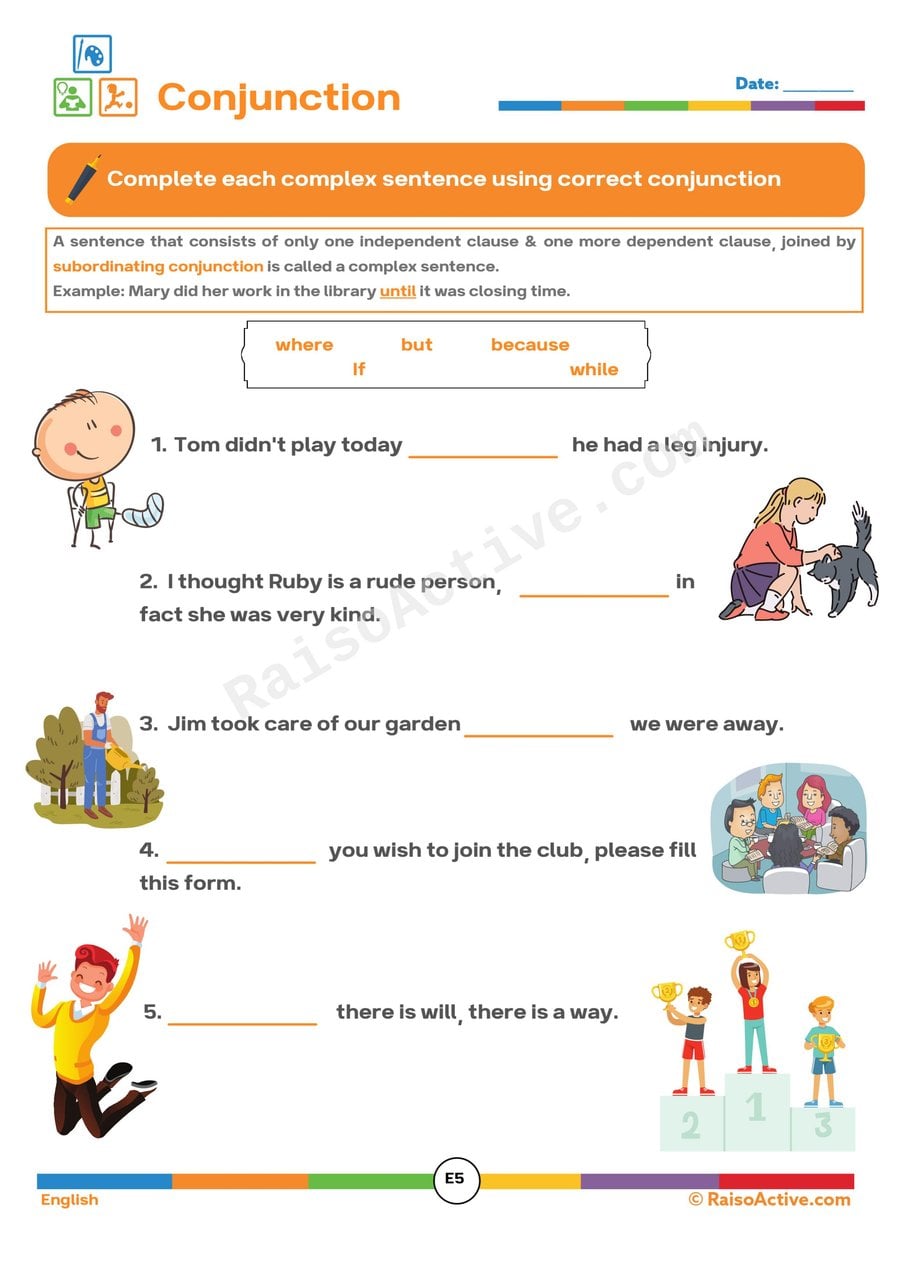
Conjunctions Worksheet: Complete the Sentences!
Ages 4-6 · Pre-K–KindergartenAges 4-6 · Reception–Year 1Ages 4-6 · LKG–UKGAges 4-6
Building on basic conjunction recognition, this worksheet asks children to select the correct conjunction from a word bank and use it to complete a sentence, practicing both comprehension and application rather than just identification. This step toward independent sentence construction helps 4-6 year-olds start forming more complex, connected ideas in both speaking and early writing.

Shape Craft Dog Worksheet: Count, Write, Colour, Cut & Glue!
Ages 3-5 · Preschool–Pre-KAges 3-5 · Nursery–ReceptionAges 3-5 · Nursery–LKGAges 3-5
Building a dog out of separate shape pieces gives children ages 3-5 hands-on practice recognizing basic shapes like circles, triangles, and squares while also strengthening the fine motor control needed for cutting and gluing. Counting and writing the number of each shape before assembling the dog adds an early math layer, connecting shape recognition directly to quantity. This kind of multi-step craft — count, write, color, cut, glue — also builds the sequencing and attention span children need for more complex classroom projects later on.

Adjective Adventure: Coloring and Sentence Fun Worksheet for Kids
Ages 3-5 · Preschool–Pre-KAges 3-5 · Nursery–ReceptionAges 3-5 · Nursery–LKGAges 3-5
Coloring only the adjectives in a set of words teaches children ages 3-5 to recognize descriptive words as their own grammatical category, distinct from naming words or action words, a foundational step toward understanding how sentences are built. Writing a sentence using a chosen adjective afterward pushes the recognition skill into active use, requiring children to apply what they identified rather than just spot it.
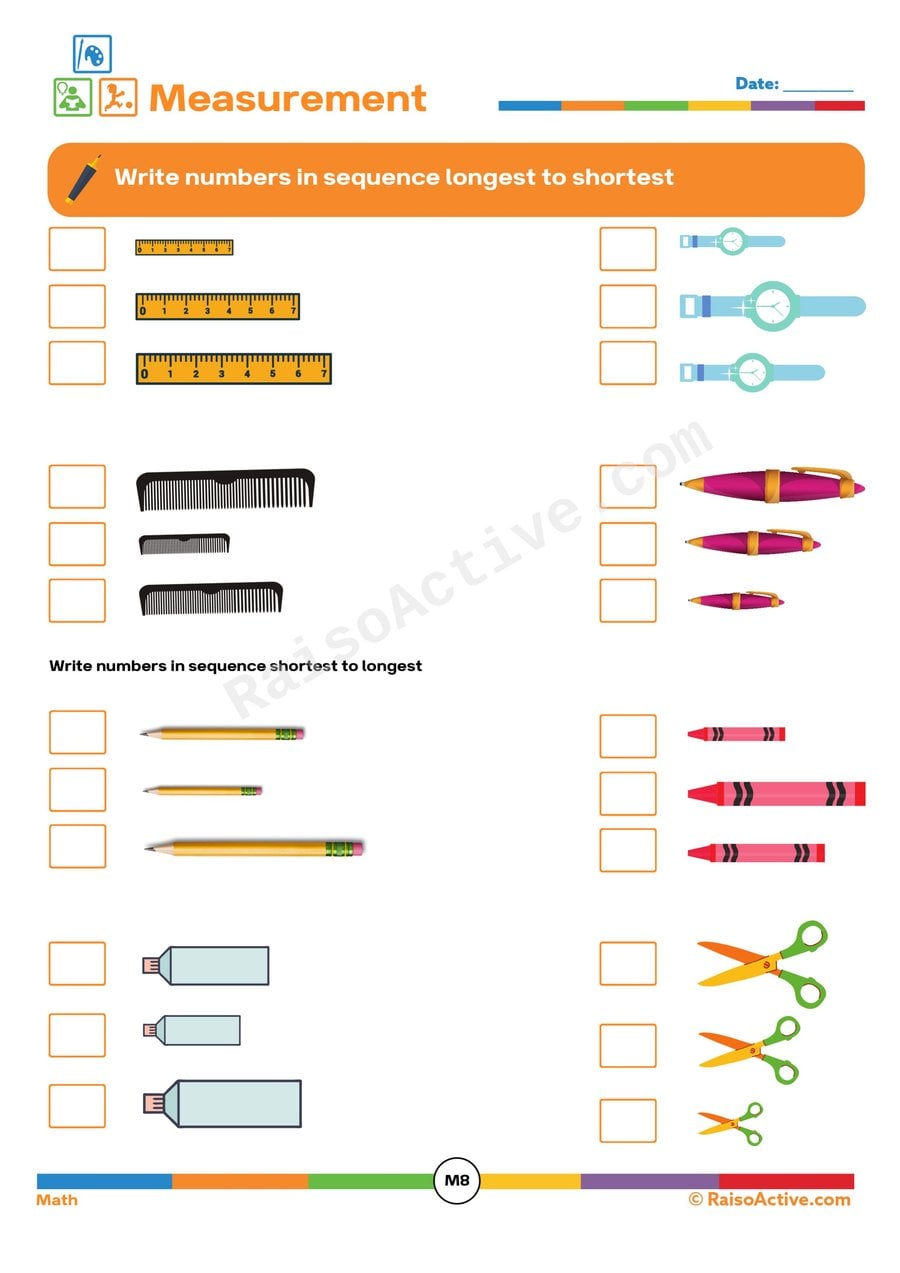
Measurement Worksheet: Longest to Shortest!
Ages 4-6 · Pre-K–KindergartenAges 4-6 · Reception–Year 1Ages 4-6 · LKG–UKGAges 4-6
This worksheet builds comparative measurement skills by having children visually assess and rank three objects from longest to shortest and again from shortest to longest, reinforcing that length can be ordered, not just measured in isolation. For ages 4-6, this kind of ordinal comparison is an important stepping stone before children begin measuring with actual units like inches or centimeters.

Non-Standard Measurement Worksheet for Kids: Comparing Objects
Ages 4-6 · Pre-K–KindergartenAges 4-6 · Reception–Year 1Ages 4-6 · LKG–UKGAges 4-6
This worksheet extends measurement practice using multiple non-standard units, cubes, buttons, and paper clips, so children see that the same object can be measured different ways depending on the tool used. For ages 4-6, comparing capacity by counting how many glasses fill a bottle adds an early introduction to volume alongside length, broadening their measurement vocabulary.

Parent's Guide: Fun Activities for Adjectives, Conjunctions, and More!
Ages 3-5 · Preschool–Pre-KAges 3-5 · Nursery–ReceptionAges 3-5 · Nursery–LKGAges 3-5
This parent's guide bundles hands-on activities around adjectives, conjunctions, measurement, and recycling, giving children ages 3-5 exposure to both language concepts and early science-adjacent skills within everyday, low-prep activities. Combining grammar practice with physical tasks like measuring height or building a planter helps abstract concepts, like what a conjunction is, become grounded in something concrete and memorable.

Shape Properties Worksheet: Identify Faces, Edges, and Vertices!
Ages 4-6 · Pre-K–KindergartenAges 4-6 · Reception–Year 1Ages 4-6 · LKG–UKGAges 4-6
This worksheet introduces the specific vocabulary of 3D geometry, faces, edges, and vertices, asking children to count each feature on shapes like cubes, cones, and spheres. For ages 4-6, learning to describe shapes by their properties rather than just their names builds an early foundation for more formal geometry later in school.
Related worksheets

Soap & Pepper Science Experiment Worksheet for Preschoolers
Ages 3-5 · Preschool–Pre-KAges 3-5 · Nursery–ReceptionAges 3-5 · Nursery–LKGAges 3-5
This simple experiment introduces children ages 3-5 to the basic science of surface tension and how soap breaks it, using pepper flakes sprinkled on water as a visual demonstration. Watching the pepper scatter away the instant soap touches the water gives children a concrete, memorable example of cause and effect, an early building block for scientific thinking.
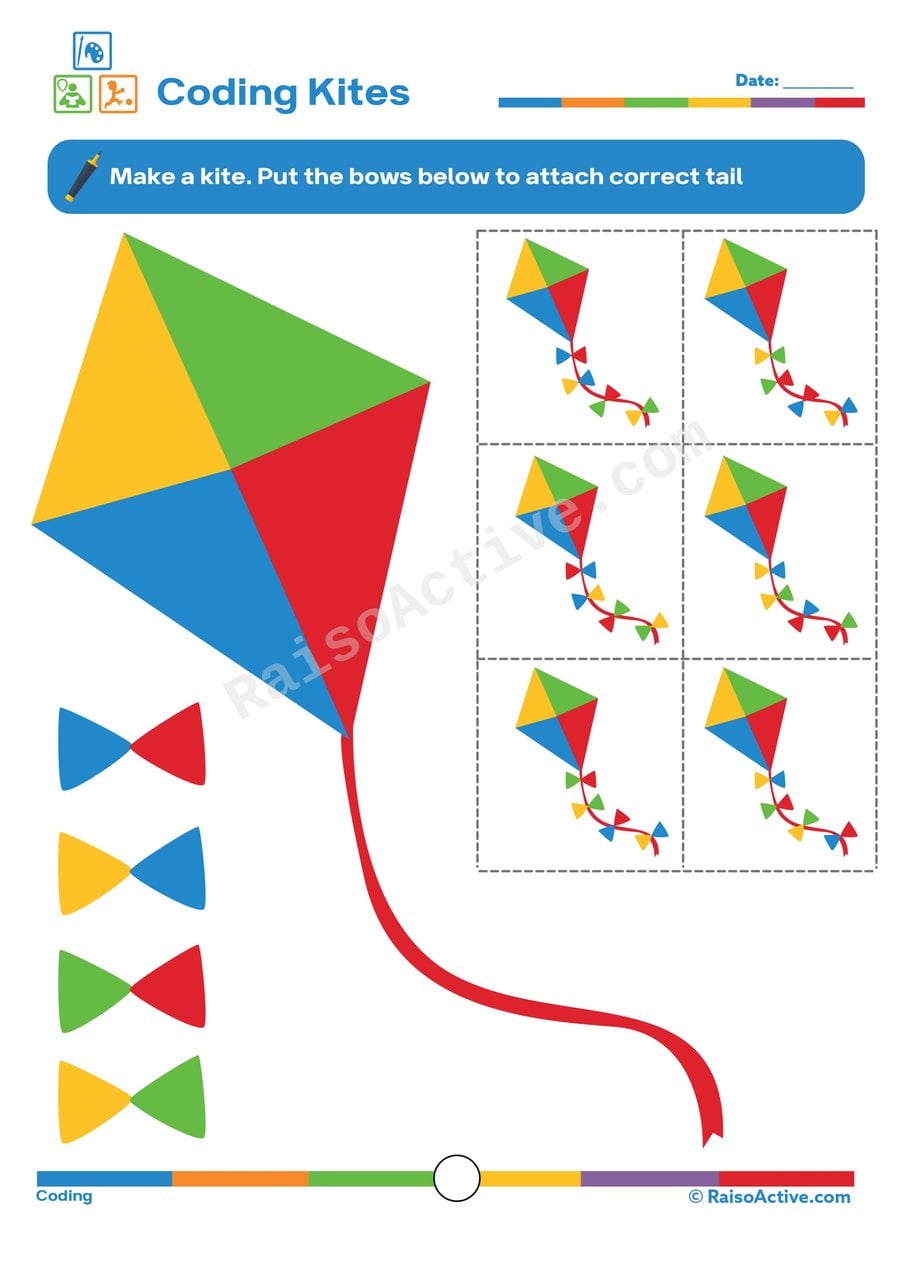
Coding Kites Worksheet: Match the Bows!
Ages 3-5 · Preschool–Pre-KAges 3-5 · Nursery–ReceptionAges 3-5 · Nursery–LKGAges 3-5
This activity sharpens visual observation in children ages 3-5 as they compare color sequences on each kite to a set of loose bows and find the exact match. Careful, systematic comparison — checking each color in order rather than glancing quickly — builds an attention-to-detail habit that transfers directly to early reading and number work.

Indian Cities Crossword Puzzle Worksheet for Kids
Ages 4-6 · Pre-K–KindergartenAges 4-6 · Reception–Year 1Ages 4-6 · LKG–UKGAges 4-6
This crossword challenges children ages 4-6 to identify famous Indian cities from picture clues of their landmarks and then spell out each city's name in the puzzle grid, combining observation skills with early geography knowledge. Counting the crossword boxes to match each city's letter count also reinforces attention to word length before writing.

Easter Egg Color by Hints Worksheet for Preschoolers
Ages 3-5 · Preschool–Pre-KAges 3-5 · Nursery–ReceptionAges 3-5 · Nursery–LKGAges 3-5
This worksheet has children ages 3-5 listen to or read simple written hints describing shapes and colors, then apply that information correctly while coloring each Easter egg, building early reading comprehension and the ability to follow multi-step verbal instructions. Because the hints must be followed precisely rather than colored freely, children also practice patience and careful attention to detail.
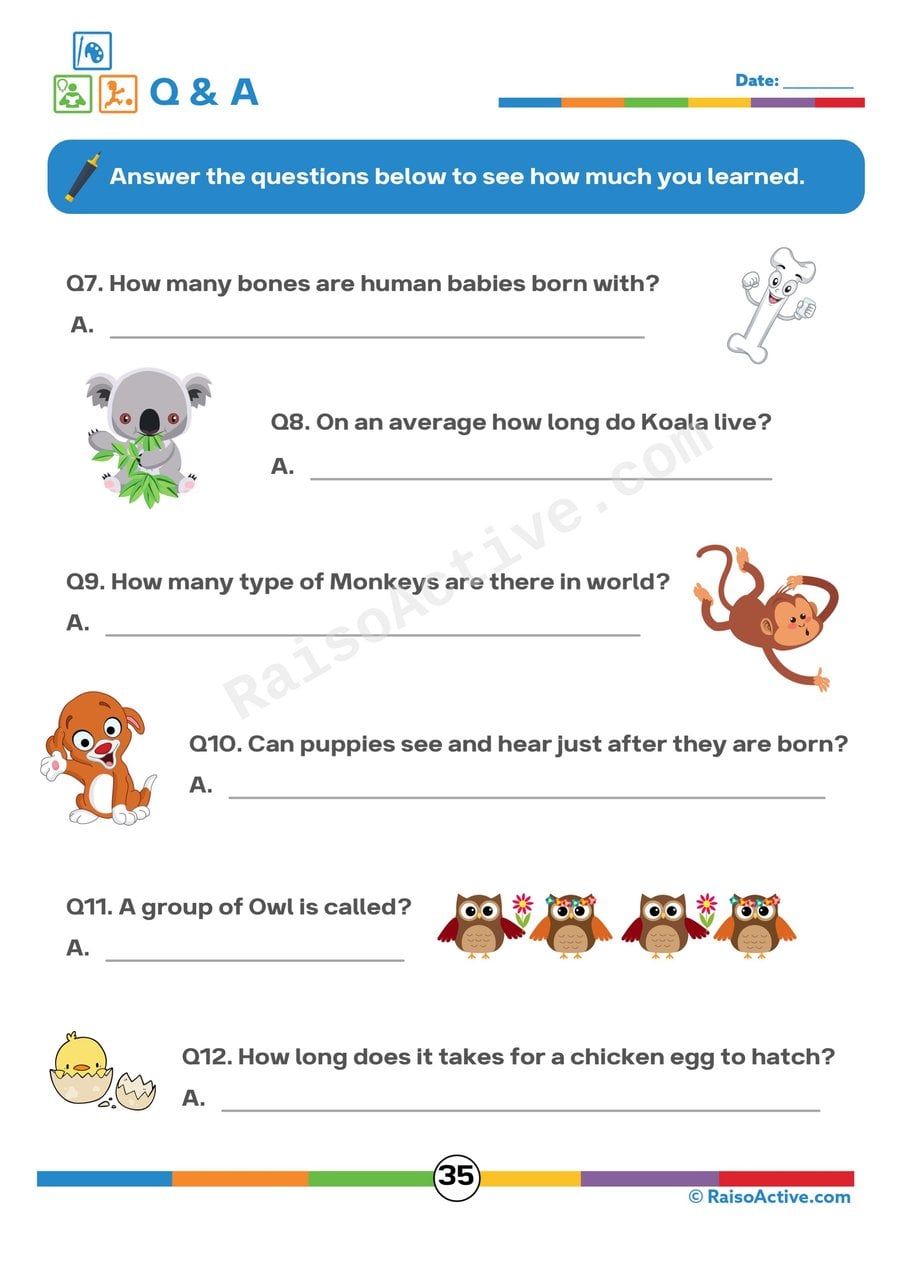
Animal Facts Worksheet for Kids: Fun Q&A!
Ages 3-5 · Preschool–Pre-KAges 3-5 · Nursery–ReceptionAges 3-5 · Nursery–LKGAges 3-5
Children ages 3-5 practice early reading comprehension and recall as they answer simple questions about animal characteristics using picture clues. This worksheet builds the foundational skill of connecting a written question to a visual answer, a key step before children can read fact-based text independently.

Balloon Pattern Matching Worksheet for Preschoolers
Ages 3-5 · Preschool–Pre-KAges 3-5 · Nursery–ReceptionAges 3-5 · Nursery–LKGAges 3-5
This worksheet strengthens pattern recognition in children ages 3-5 by having them study a repeating sequence of colored balloons and locate the matching arrangement elsewhere on the page. Recognizing and reproducing a pattern is an early pre-algebra skill, laying groundwork for later number patterns and logical sequencing.
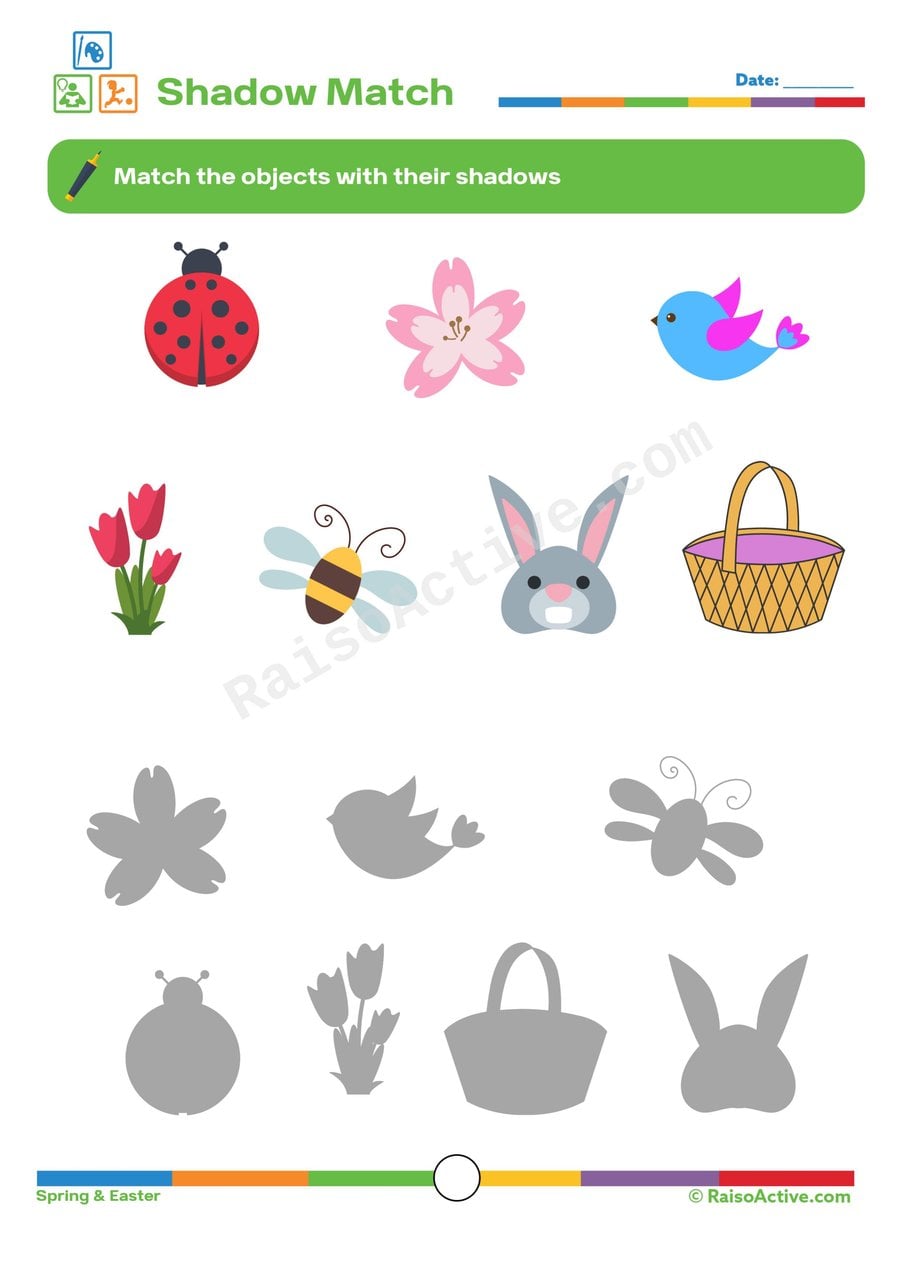
Spring Shadow Match Worksheet for Preschoolers
Ages 3-5 · Preschool–Pre-KAges 3-5 · Nursery–ReceptionAges 3-5 · Nursery–LKGAges 3-5
Children ages 3-5 practice visual discrimination by matching spring-themed objects to their correct silhouette shadows. Because shadows strip away color and detail, leaving only outline shape, this activity sharpens a child's ability to focus on form alone — a more advanced visual skill than matching by color or pattern.

States of Matter Worksheet: Exploring Solids, Liquids, and Gases!
Ages 4-6 · Pre-K–KindergartenAges 4-6 · Reception–Year 1Ages 4-6 · LKG–UKGAges 4-6
This worksheet introduces children ages 4-6 to the three states of matter — solid, liquid, and gas — by having them examine images and sort each one into its correct category. Learning to classify familiar objects (like ice, water, and steam) by their physical state builds early scientific reasoning, since children must look past an object's identity and focus on its underlying properties.
Guides for this topic

Age-Appropriate Problem-Solving Activities: Building Critical Thinkers from the Ground Up
Discover fun, age-appropriate problem-solving activities for children ages 1-8. Build critical thinking, logic, and reasoning skills through play-based learning.
Critical Thinking Activities That Actually Work for Young Children: Building Tomorrow's Thinkers Today
Discover proven critical thinking activities for young children. Age-wise logic games, questioning techniques, and hands-on ideas to build thinking skills at home.

Preparing Your Child for a Rapidly Changing World: Essential Skills for Future Success
Discover the essential 21st century skills your child needs for future success. Practical tips on creativity, critical thinking, digital literacy & emotional intelligence for ages 1-8.
Reviews
Every worksheet for ages 4–6, no watermark
Members download the full library of 1,000+ worksheets and every activity pack without watermarks or daily limits. One year costs ₹999 in India or $20 elsewhere.
See membership plansOr download any worksheet free with a watermark (5 a day).