Animal Homes and Babies: A Parent's Guide Worksheet
This parent's guide combines learning about where animals live and what their babies are called with an observation puzzle and number-identification practice, weaving science vocabulary together with counting and attention-to-detail skills. For ages three to five, connecting an animal to both its home, like a 'den' or 'nest', and its baby's name, like a 'cub' or 'chick', builds a richer, more memorable set of animal facts than either detail alone.
Part of the pack
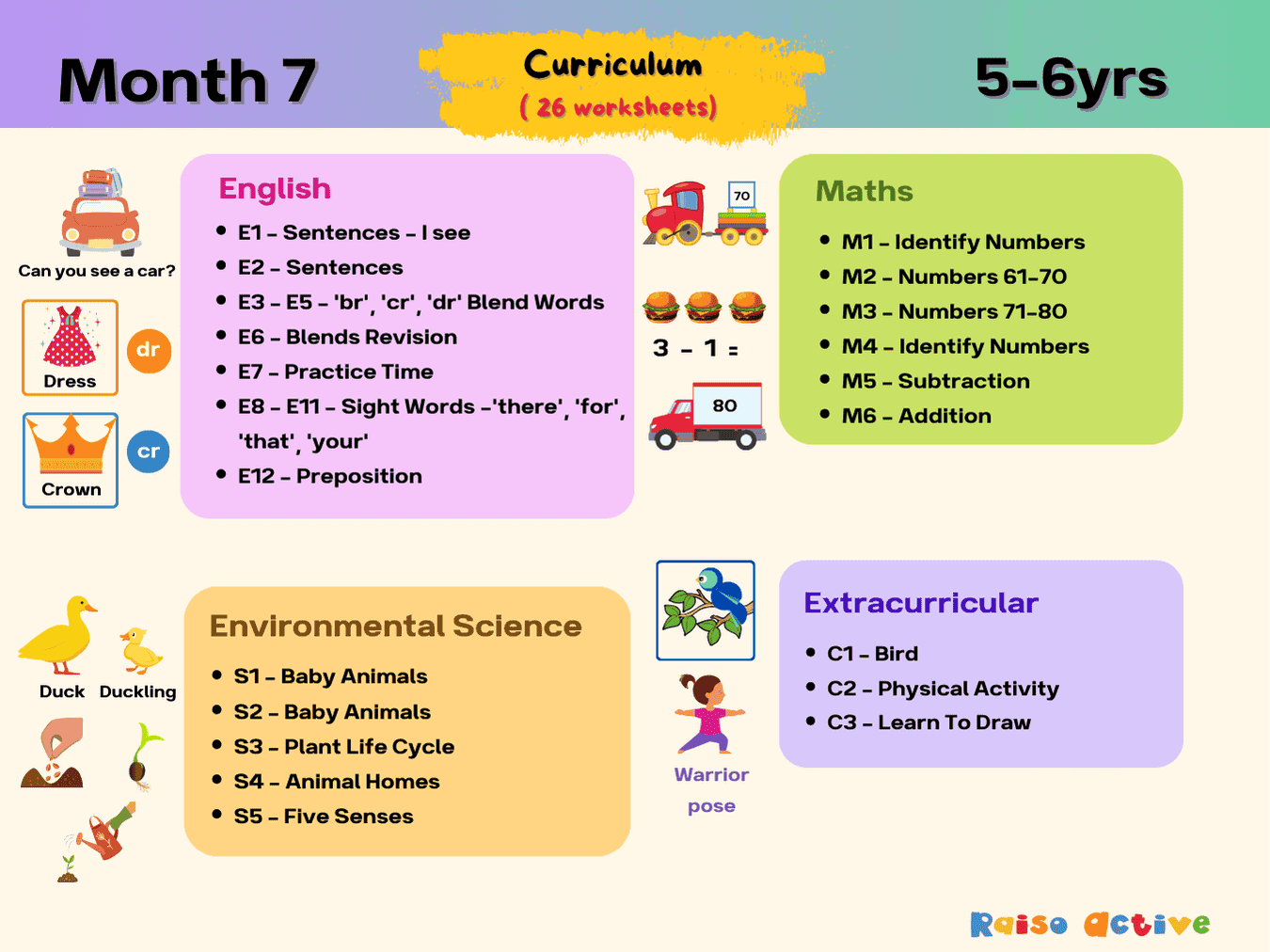
Month 7: Holistic Kindergarten Curriculum | Ages 5-6
This is page 2 of the pack. Ages 5-6 · KindergartenAges 5-6 · Year 1Ages 5-6 · UKGAges 5-6
Made for your child
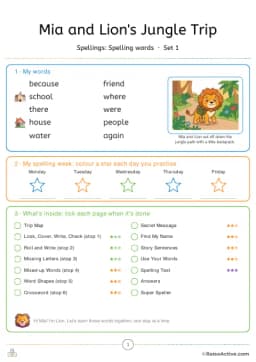
Spelling practice, made for your child
Their own spelling words turned into a pack: trace or look-cover-write-check, roll and write, a secret picture code, a word search, a crossword and a test, with their name in it.
Make a spelling packFree preview · free for members
Or start free: a word search with sight wordsCurriculum
- Living Things - Animals > Animals & Habitats
How to use this worksheet
Start with the puzzle activity, working together to piece it together while talking about which animal is shown and where it might live. Move to the observation activity, asking your child to look around their surroundings and describe what they notice using full sentences. For the number activity, use the provided flashcards or objects to practice identifying numbers your child is currently working on. Weave in animal-home and animal-baby facts throughout, asking questions like 'Where does a bear live?' or 'What is a baby cow called?'
Materials needed
- Pencil
- Flashcards (optional)
Extension activities
- 1Create your own animal flashcards, drawing the adult animal on one side and its baby on the other.
- 2Go on a nature walk and observe any animal homes you can find, like a bird's nest or an anthill.
- 3Play a matching game, pairing pictures of animals with their correct home and baby name.
- 4Read a book about animal families and talk about what makes each baby name different (calf, cub, kit).

Written by
Hemsweta Jain · Teacher Cheena
MBA and Early Childhood Educator, teaching since 2014 · Founder of RaisoActive, Mumbai
Every RaisoActive worksheet is designed and checked by the founder before publishing.
Published · Last reviewed
Related worksheets
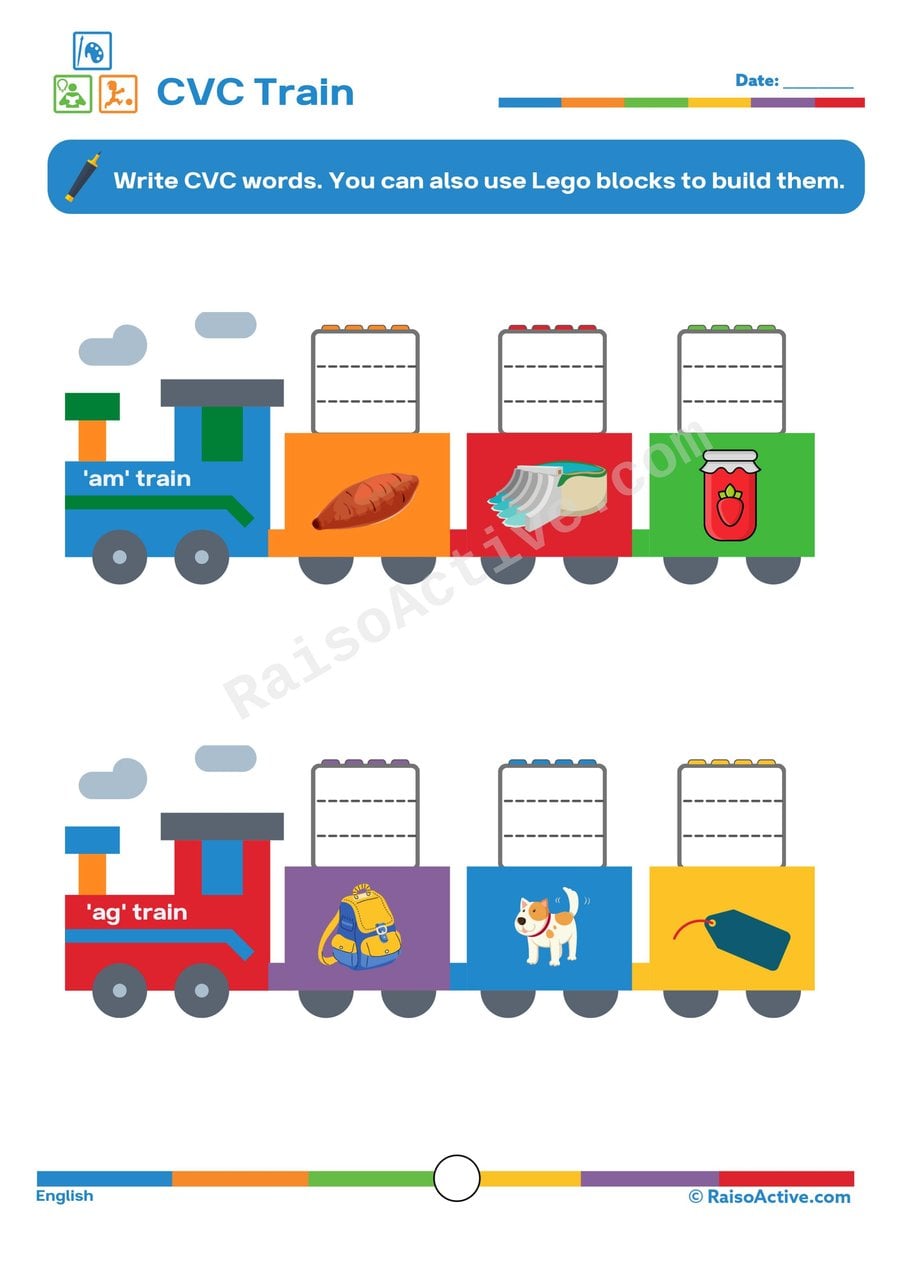
CVC Train Worksheet: Write CVC Words!
Ages 4-6 · Pre-K–KindergartenAges 4-6 · Reception–Year 1Ages 4-6 · LKG–UKGAges 4-6
Writing consonant-vowel-consonant words like 'cat,' 'sun,' or 'pig' under matching pictures gives children ages 4-6 direct practice with letter-sound blending, a core phonics skill that underpins independent reading. Because each train car pairs a picture clue with a blank space, children also practice translating a spoken word they can sound out into its correctly spelled written form.

Easter Egg Color by Hints Worksheet for Preschoolers
Ages 3-5 · Preschool–Pre-KAges 3-5 · Nursery–ReceptionAges 3-5 · Nursery–LKGAges 3-5
This worksheet has children ages 3-5 listen to or read simple written hints describing shapes and colors, then apply that information correctly while coloring each Easter egg, building early reading comprehension and the ability to follow multi-step verbal instructions. Because the hints must be followed precisely rather than colored freely, children also practice patience and careful attention to detail.
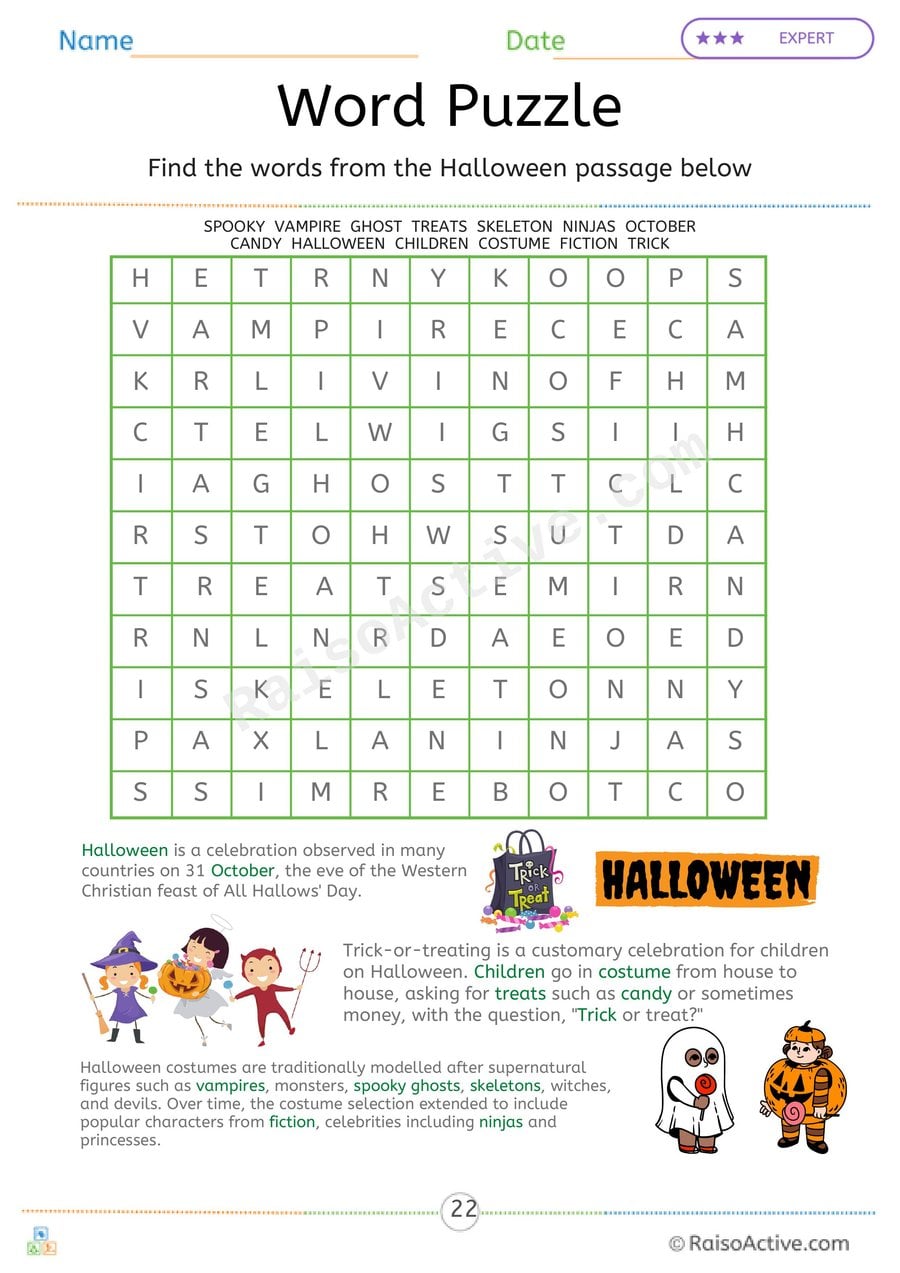
Halloween Word Search Worksheet for Kids
Ages 4-6 · Pre-K–KindergartenAges 4-6 · Reception–Year 1Ages 4-6 · LKG–UKGAges 4-6
This Halloween word search has children ages 4-6 scan a grid of letters to locate seasonal vocabulary words, building visual tracking skills and reinforcing the spelling of words like 'pumpkin,' 'ghost,' or 'witch' that they can recognize from the picture-based worksheets in this set. Searching systematically through rows and columns also strengthens the left-to-right, top-to-bottom scanning pattern used in reading.

Fall Crossword Puzzle Worksheet for Preschoolers
Ages 3-5 · Preschool–Pre-KAges 3-5 · Nursery–ReceptionAges 3-5 · Nursery–LKGAges 3-5
This fall-themed crossword uses pictures instead of written clues, helping children ages 3-5 connect an image directly to its written word while practicing early letter formation. Counting the boxes in each answer also builds an intuitive sense of word length before formal spelling instruction begins.
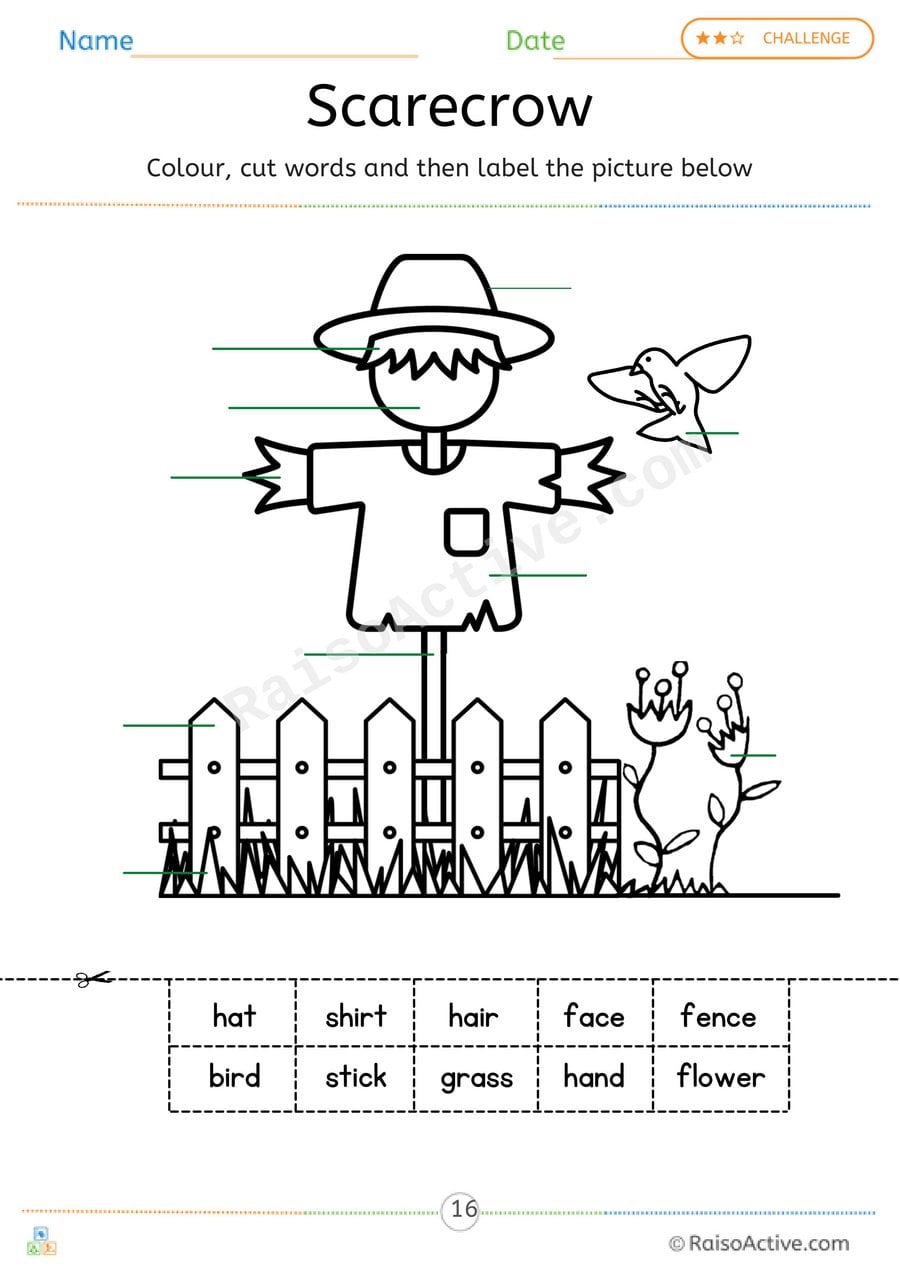
Scarecrow Labeling Worksheet for Preschoolers
Ages 3-5 · Preschool–Pre-KAges 3-5 · Nursery–ReceptionAges 3-5 · Nursery–LKGAges 3-5
This worksheet has children ages 3-5 color a scarecrow, then cut out word labels for its parts, hat, straw, shirt, gloves, and glue each label onto the correct spot, connecting written words directly to the objects they name. Tracing the labels afterward adds letter-formation practice on top of the vocabulary-building label matching.

Lifecycle Circle Book: Cut & Paste Activity for Young Learners
Ages 3-5 · Preschool–Pre-KAges 3-5 · Nursery–ReceptionAges 3-5 · Nursery–LKGAges 3-5
This activity has children ages 3-5 cut out circular pages and assemble them into a small 'circle book' that flips through different animals' life cycles, combining fine motor cutting and gluing with the concept that a book can hold information in sequence. Matching each animal to its correct life stage across several circles also reinforces the idea that different animals go through different growth patterns.
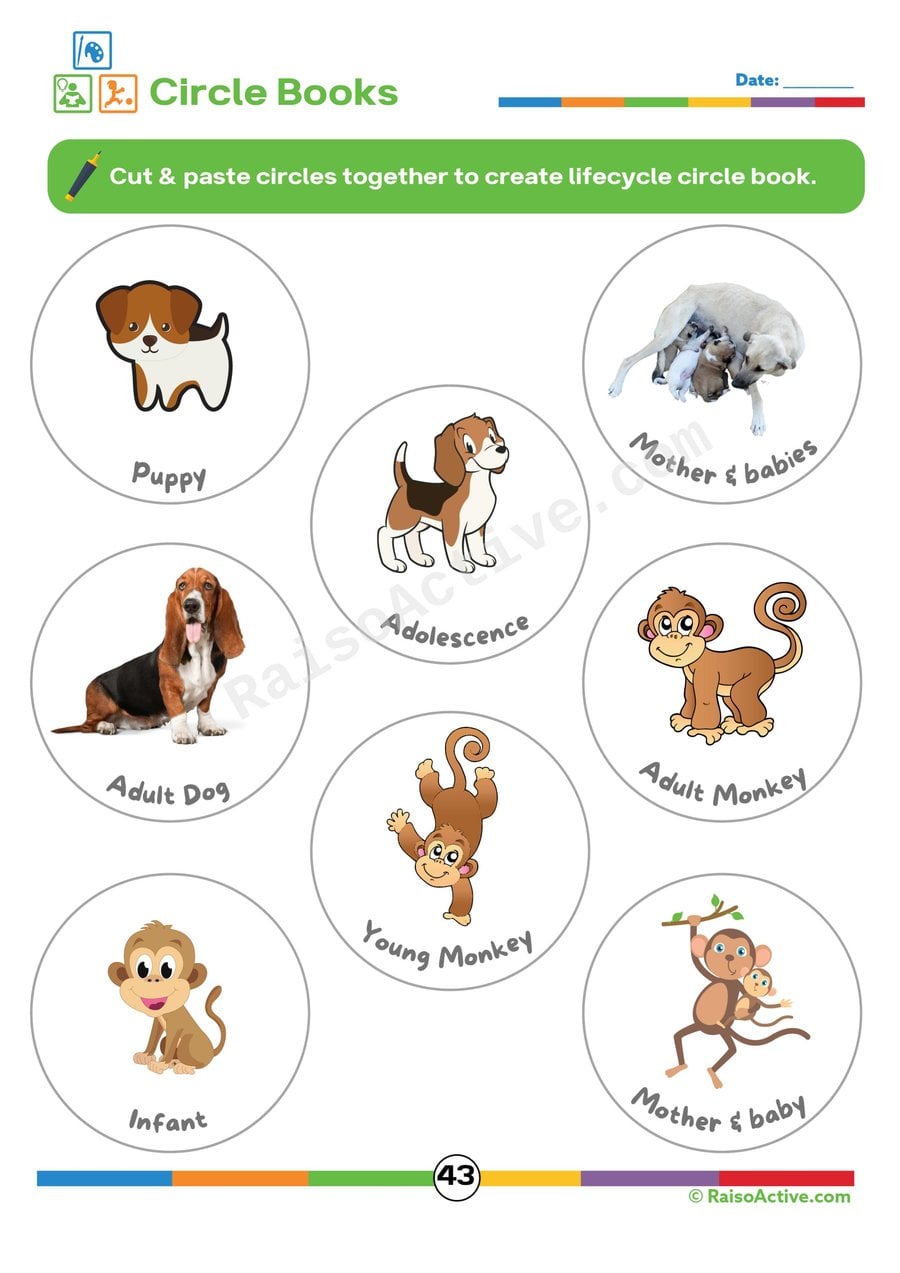
Lifecycle Circle Book: Cut and Paste Fun!
Ages 3-5 · Preschool–Pre-KAges 3-5 · Nursery–ReceptionAges 3-5 · Nursery–LKGAges 3-5
This worksheet gives children ages 3-5 more practice assembling a rotating lifecycle circle book, reinforcing the skills of sequencing, cutting, and gluing built in earlier lifecycle activities. Repeating this hands-on format with new content helps the process itself — cut, sequence, glue, review — become a familiar and confident routine.

Chicken Lifecycle Cut and Paste Worksheet for Preschoolers
Ages 3-5 · Preschool–Pre-KAges 3-5 · Nursery–ReceptionAges 3-5 · Nursery–LKGAges 3-5
This worksheet has children ages 3-5 cut out circular images representing a chicken's life stages, egg, chick, and adult hen or rooster, and glue them in the correct growing order, building sequencing skills alongside scissor and gluing practice. Working with round shapes specifically also gives children extra scissor practice on curves, which are trickier to cut than straight lines.
Guides for this topic

Documenting Learning Without Drowning in Data: A Practical Guide for Parents and Teachers
Learn practical ways to document your child's learning without overwhelm. Simple portfolios, observation tips, and printable trackers for ages 1-8.

Creating Engaging Themed Learning Units for Young Children: A Complete Guide to Integrated Learning
Discover how to create engaging themed learning units for young children that integrate literacy, maths, science, and art — with practical examples and free worksheets.

When Should My Child Learn to Read? Is Kindergarten Too Early? A Complete Guide to Reading Readiness
Discover the research-backed optimal age for reading, key readiness signs, and why pushing too early can backfire. A complete guide for parents of children aged 3-8.
Reviews
Every worksheet for ages 3–5, no watermark
Members download the full library of 1,000+ worksheets and every activity pack without watermarks or daily limits. One year costs ₹999 in India or $20 elsewhere.
See membership plansOr download any worksheet free with a watermark (5 a day).