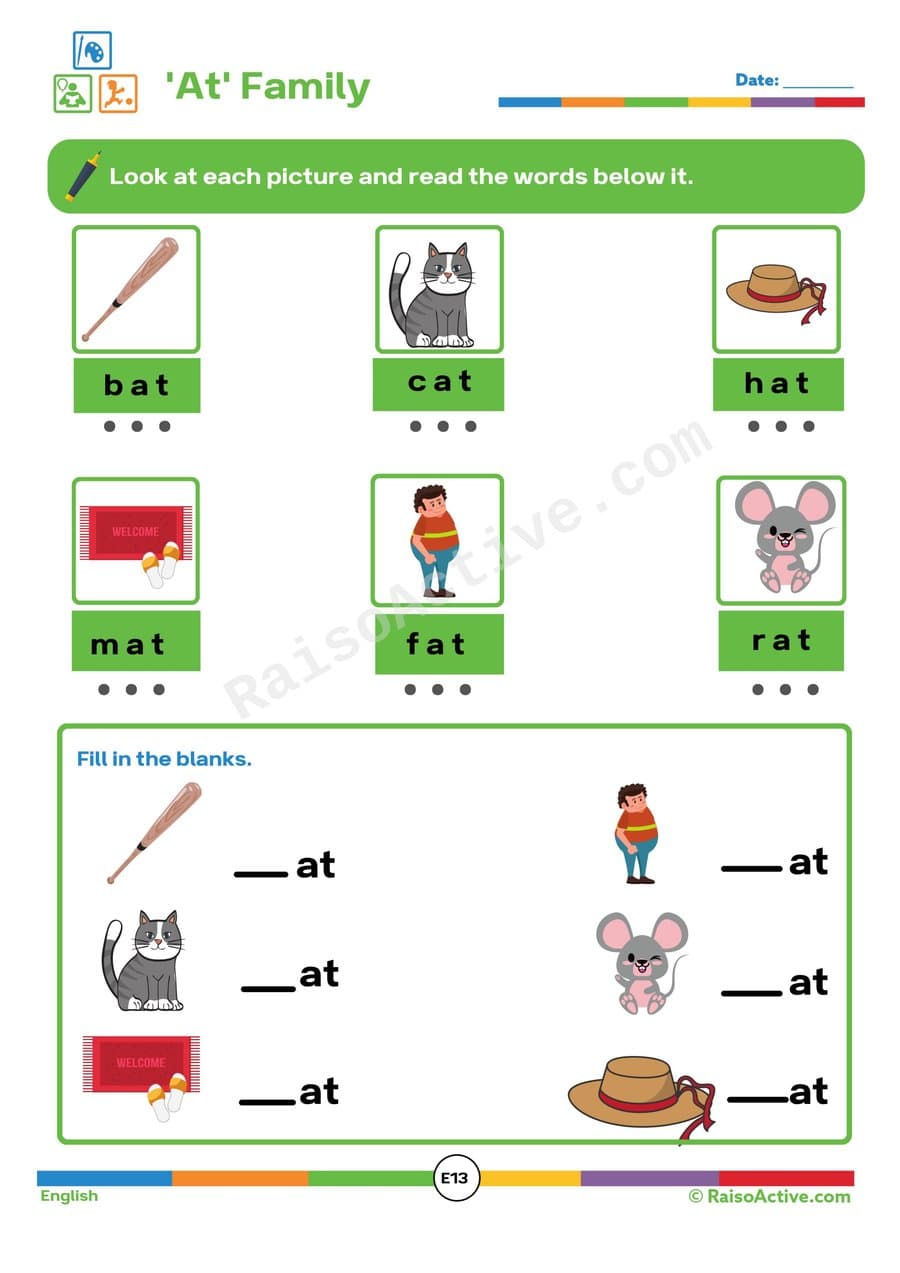
At Family Word Worksheet: Read, Match, and Write!
This worksheet introduces children ages 4-5 to the 'at' word family — words like cat, hat, and mat that share the same ending sound — helping them notice how changing just the first letter creates a new word. Recognizing word families is one of the most effective early strategies for decoding new words, since it lets children apply a pattern instead of sounding out every letter individually.
Part of the pack
Month 4: Learning & Development | Ages 4-5Curriculum
How to use this worksheet
Look at the first picture together and say its name aloud, stretching out the sounds, like 'c-at, cat.' Point out that the word ends in 'at,' then have your child write the missing letter to complete the word. Continue through each picture the same way, reading the finished word aloud together each time. Finish by rereading all the completed 'at' words in a row.
Materials needed
- Pencil
- Crayons
Extension activities
- •Brainstorm as many 'at' words as you can together and write them on a list.
- •Play a rhyming game, saying an 'at' word and having your child think of one that rhymes.
- •Draw a picture for each new 'at' word your child comes up with.
- •Build 'at' words using magnetic letters or letter tiles, swapping the first letter each time.
Tips for parents and teachers
Emphasize the shared 'at' chunk when sounding out each word, since recognizing that chunk as a unit is faster and more useful than sounding out letter by letter. If your child blends smoothly on one word but struggles on the next, go back to the rhyme — most 'at' family words will follow once they hear the pattern. Keep it light and game-like rather than a formal reading lesson.

Written by
Hemsweta Jain · Teacher Cheena
MBA and Early Childhood Educator, teaching since 2014 · Founder of RaisoActive, Mumbai
Every RaisoActive worksheet is designed and checked by the founder before publishing.
Published · Last reviewed
Related worksheets
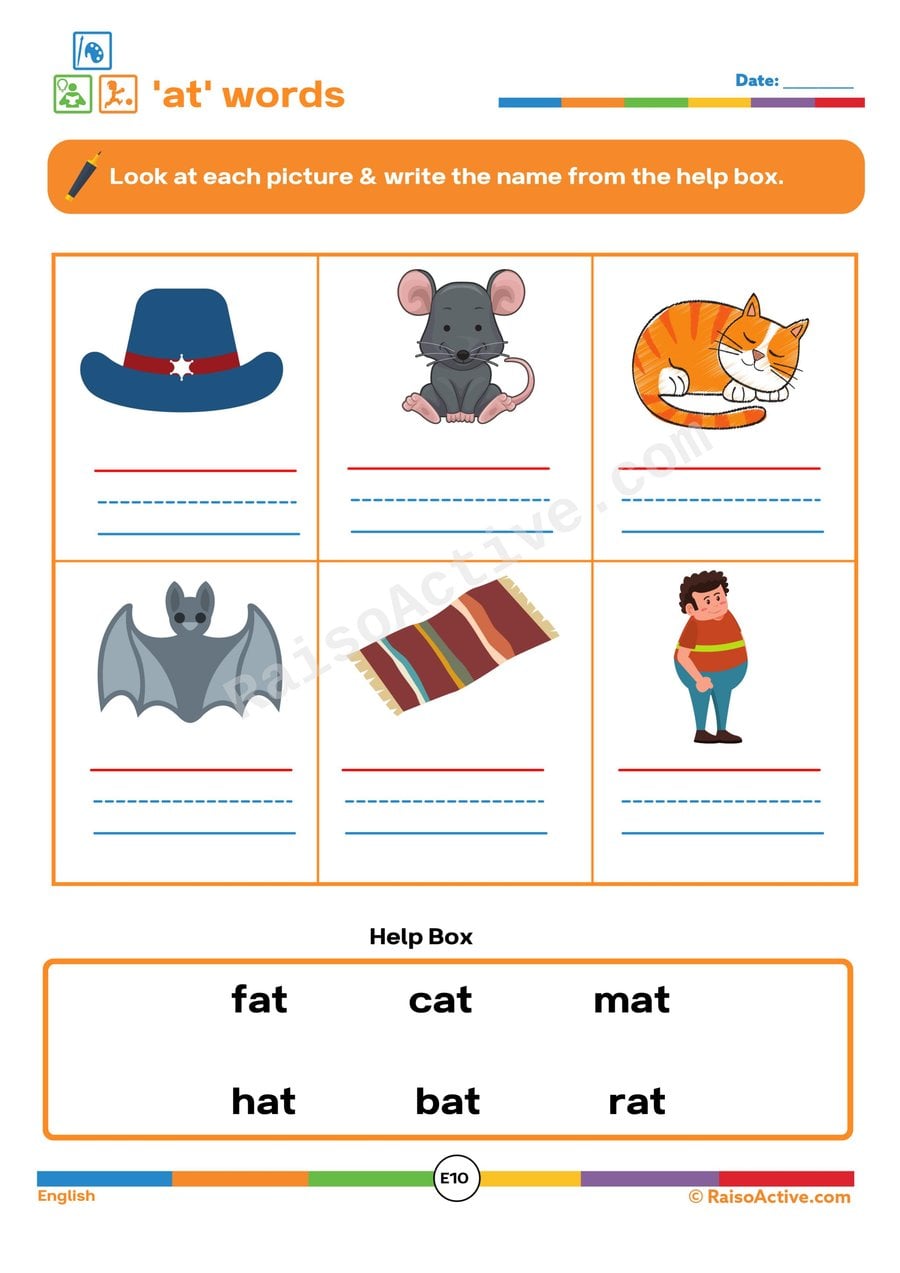
Fun 'at' Word Worksheet for Preschoolers
The 'at' word family (cat, hat, bat) is often one of the very first CVC patterns children ages 4-5 encounter, and this worksheet asks them to go a step further than simple reading by identifying and writing the correct word to match each picture themselves. Choosing the right word from a word bank and writing it out, rather than just reading a word that's already printed, requires children to actively recall spelling rather than passively recognize it. This active recall step is an important bridge between reading CVC words and eventually spelling them independently from memory.
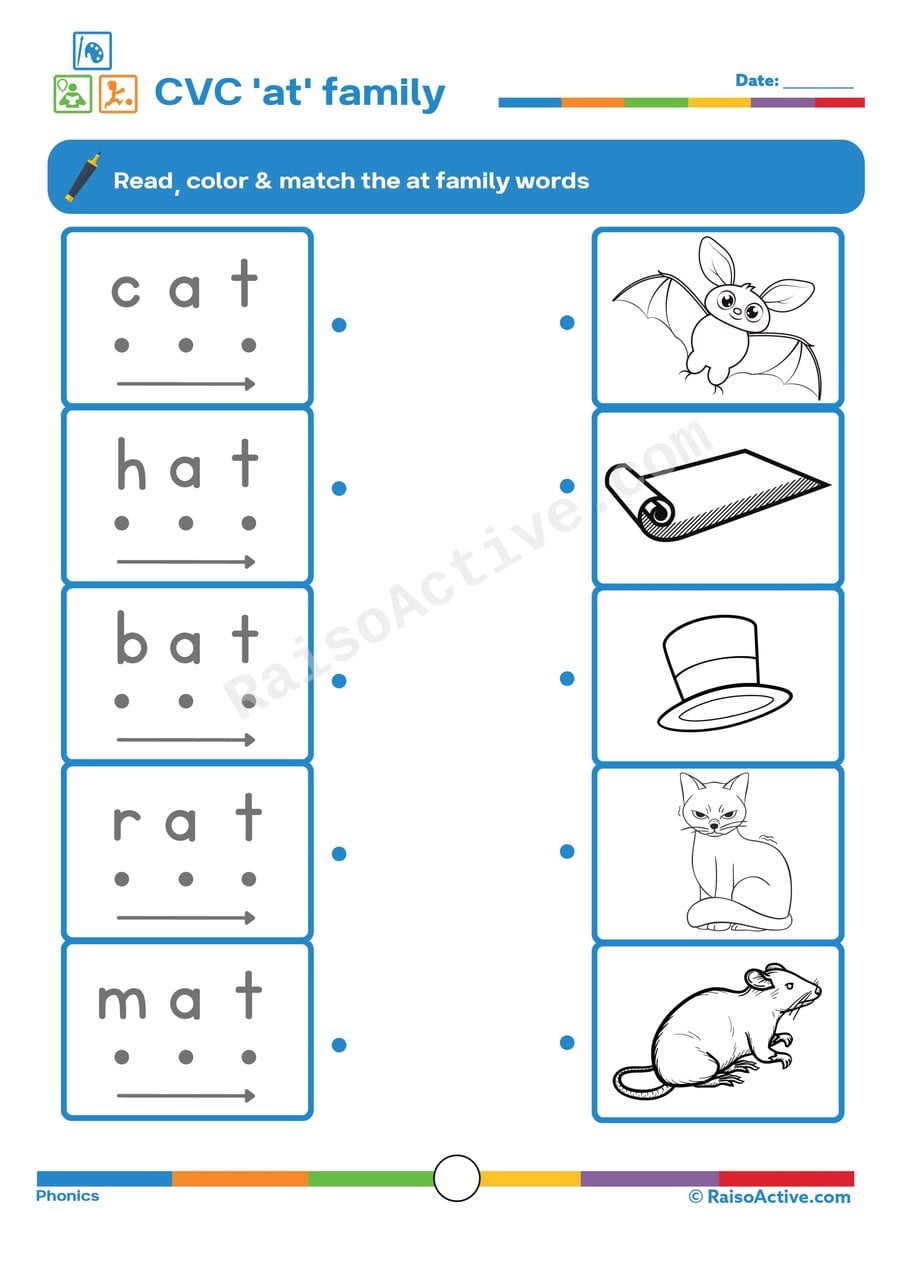
CVC 'at' Family Words Matching Worksheet for Kids
This worksheet introduces children ages 3-5 to the 'at' word family — cat, bat, hat, mat, and similar words that share the same ending sound — helping them notice that once they know how 'at' sounds, they can read many new words just by swapping the first letter. Word family practice is one of the most efficient ways young readers build a large sight vocabulary quickly, since the pattern transfers across dozens of words. Matching each word to its picture confirms real understanding, not just mechanical sounding-out.
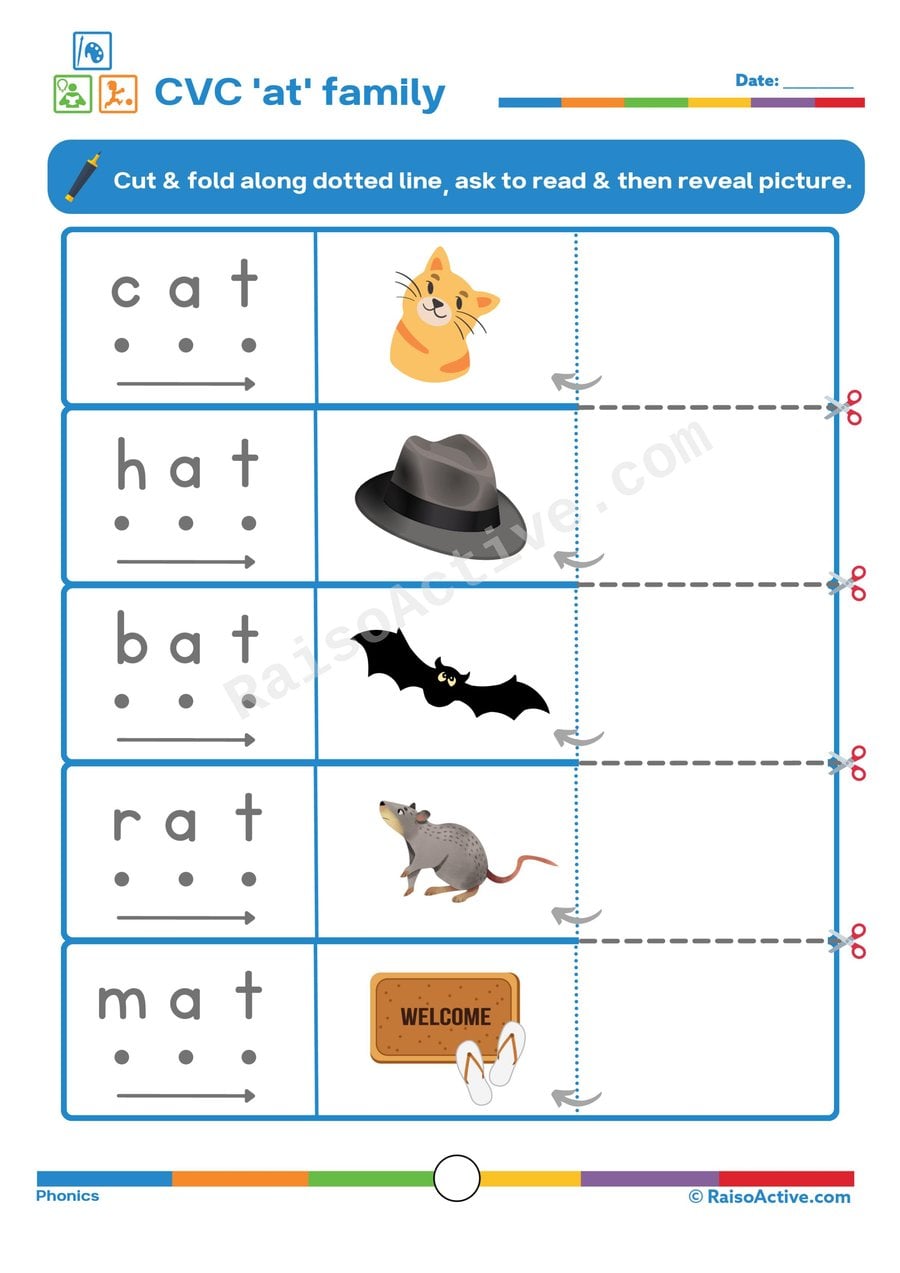
CVC 'at' Family Worksheet: Read, Match, and Reveal!
This worksheet has children ages 4-5 read CVC words from the 'at' family — like 'cat', 'hat', and 'mat' — then match and reveal pictures to check their reading. Because every word ends in the same 'at' chunk, children begin to recognize the pattern as a whole unit, which speeds up decoding and builds the confidence needed to tackle new word families.

Clothing Pattern Match Worksheet for Preschoolers
This worksheet has children ages 3-5 study repeating patterns on clothing items — stripes, polka dots, or checks — and match each item to its identical twin, building visual discrimination and early pattern-sequencing skills. Distinguishing between similar-looking patterns also sharpens attention to detail, a skill that later supports letter and word recognition.

Trace the Numbers 1-9 Worksheet for Preschoolers
Tracing the numerals 1 through 9 gives children ages 3-5 repeated, guided practice with the specific pencil strokes each number requires, building the fine motor control and muscle memory needed for independent number writing. Because tracing follows a fixed, correct path, it also reinforces accurate numeral recognition, helping children tell visually similar digits apart.
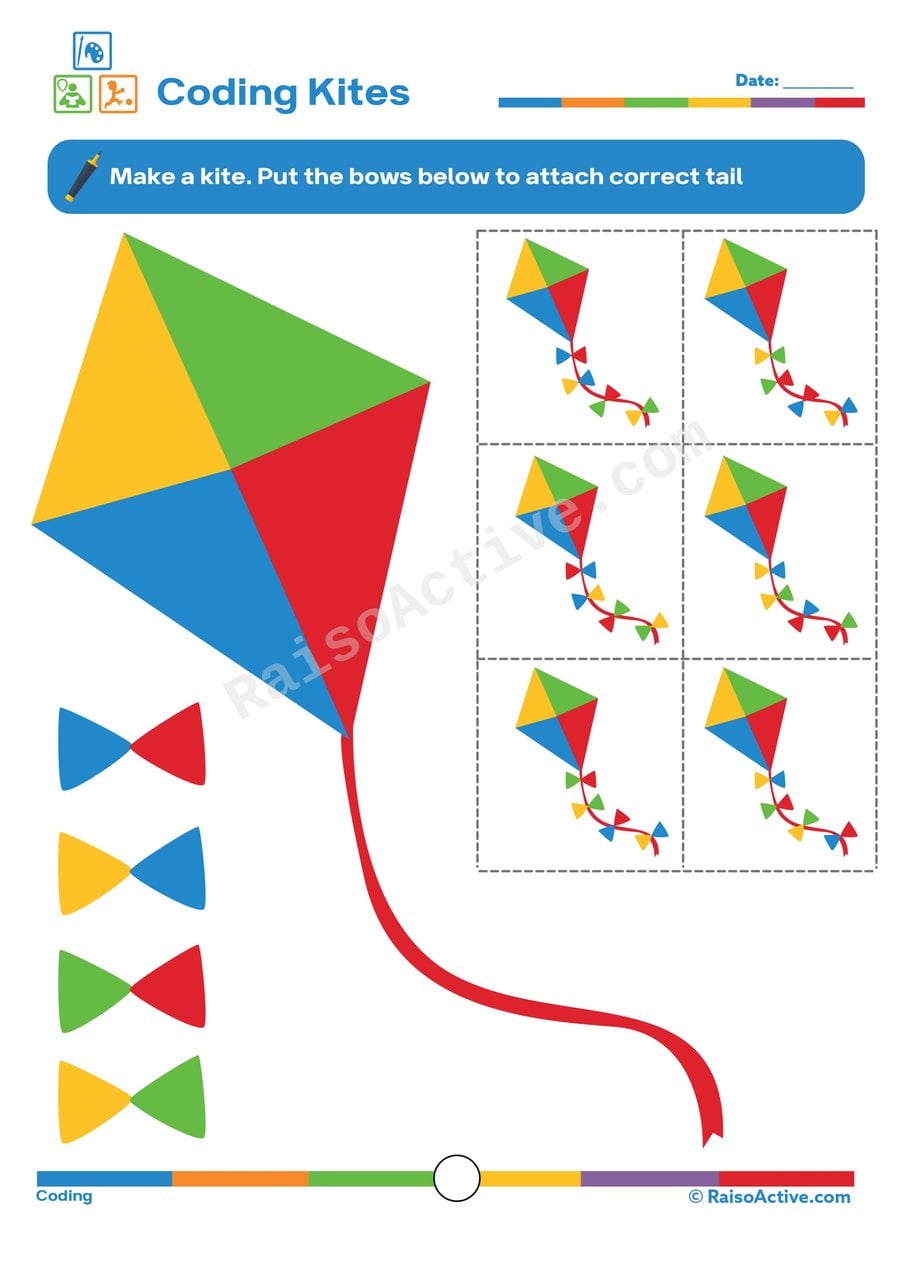
Coding Kites Worksheet: Match the Bows!
This activity sharpens visual observation in children ages 3-5 as they compare color sequences on each kite to a set of loose bows and find the exact match. Careful, systematic comparison — checking each color in order rather than glancing quickly — builds an attention-to-detail habit that transfers directly to early reading and number work.
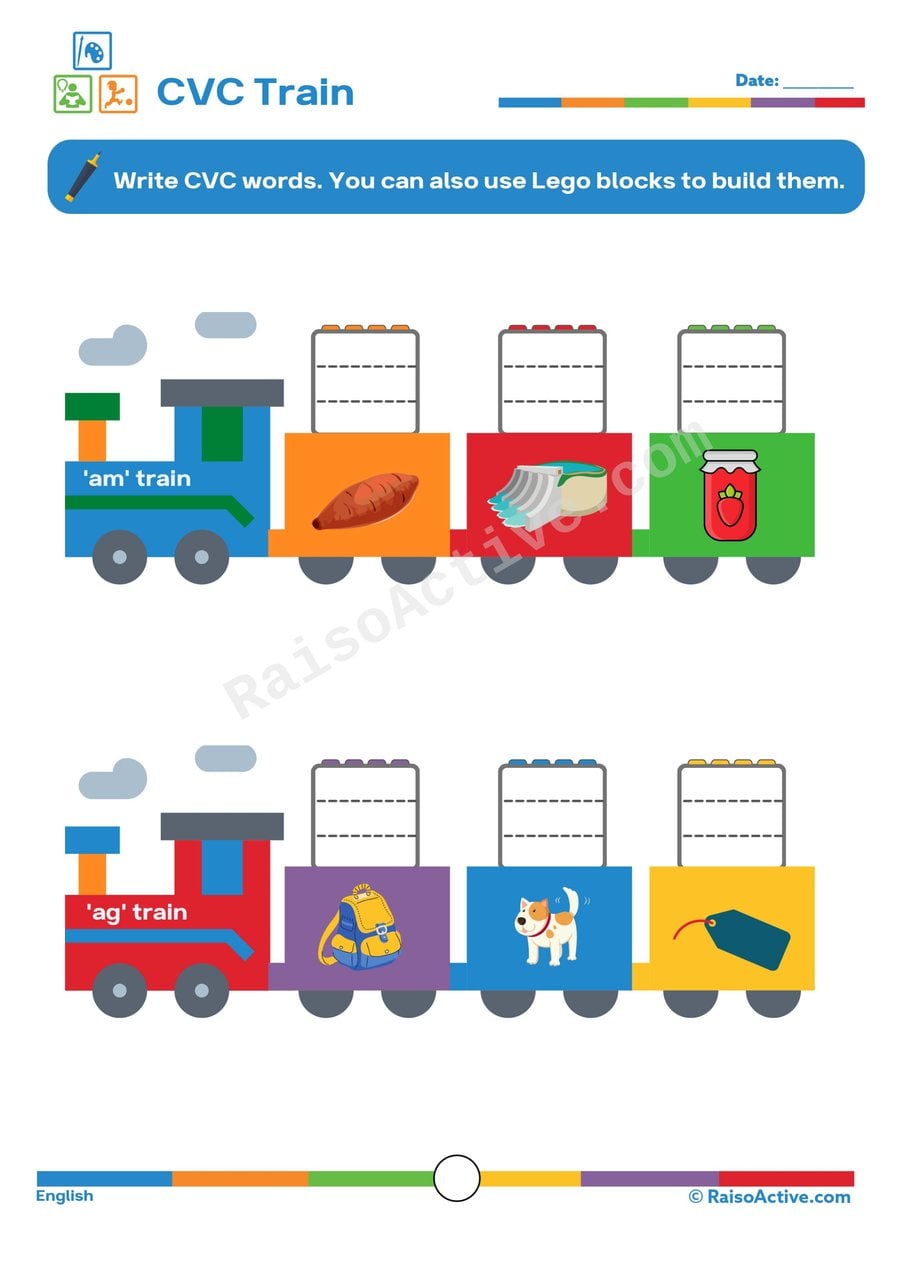
CVC Train Worksheet: Write and Build CVC Words!
This worksheet gives children ages 4-6 focused practice blending letter sounds into consonant-vowel-consonant words, using train-car pictures as clues for words like 'dog,' 'hen,' or 'cup.' Because children both write the word and can optionally build it with Lego blocks, this worksheet reinforces the same phonics skill through two different physical actions — handwriting and hands-on construction — which helps the spelling patterns stick.

Stick Man Emotions Worksheet: Happy, Sad, Angry, and Surprised!
Children ages 4-6 practice reading facial expressions on this worksheet, matching stick-figure faces to their correct emotion labels by noticing details like mouth shape and eyebrow position. This strengthens emotional literacy — the ability to name and recognize feelings in others — which supports empathy and smoother social interactions as children move into more group play and classroom settings.
Guides for this topic
How to Teach CVC Blending: A Step-by-Step Method That Works in Two Weeks
A step-by-step method for teaching CVC blending, covering continuous sounds, word families, common errors, and a 14-day plan that most children finish reading CVC words.
Best Worksheets for 3-Year-Olds: What Works and What to Avoid
What works on worksheets for 3-year-olds: short sessions, crayons, tracing lines, matching, cutting, a free weekly plan, and signs one is too advanced.
Phase 2 Phonics at Home: Sound Order, Blending Games, Worksheets
Phase 2 phonics at home: the five sound sets in order, oral blending, tricky words, a two-week routine, common mistakes, and free worksheets.
Reviews
Every worksheet for ages 4–5, no watermark
Members download the full library of 1,000+ worksheets and every activity pack without watermarks or daily limits. One year costs ₹1,000 in India or $20 elsewhere.
See membership plansOr download any worksheet free with a watermark (5 a day).