Possessive Noun Worksheet for Kids: Practice with Apostrophes!
Children ages 4-6 practice forming possessive nouns by choosing the correct apostrophe-s form to complete a sentence, building an understanding that an apostrophe signals ownership ('the dog's bone' rather than 'the dogs bone'). This is an early but important punctuation skill that sets the foundation for more advanced grammar and writing clarity later on.
Part of the pack
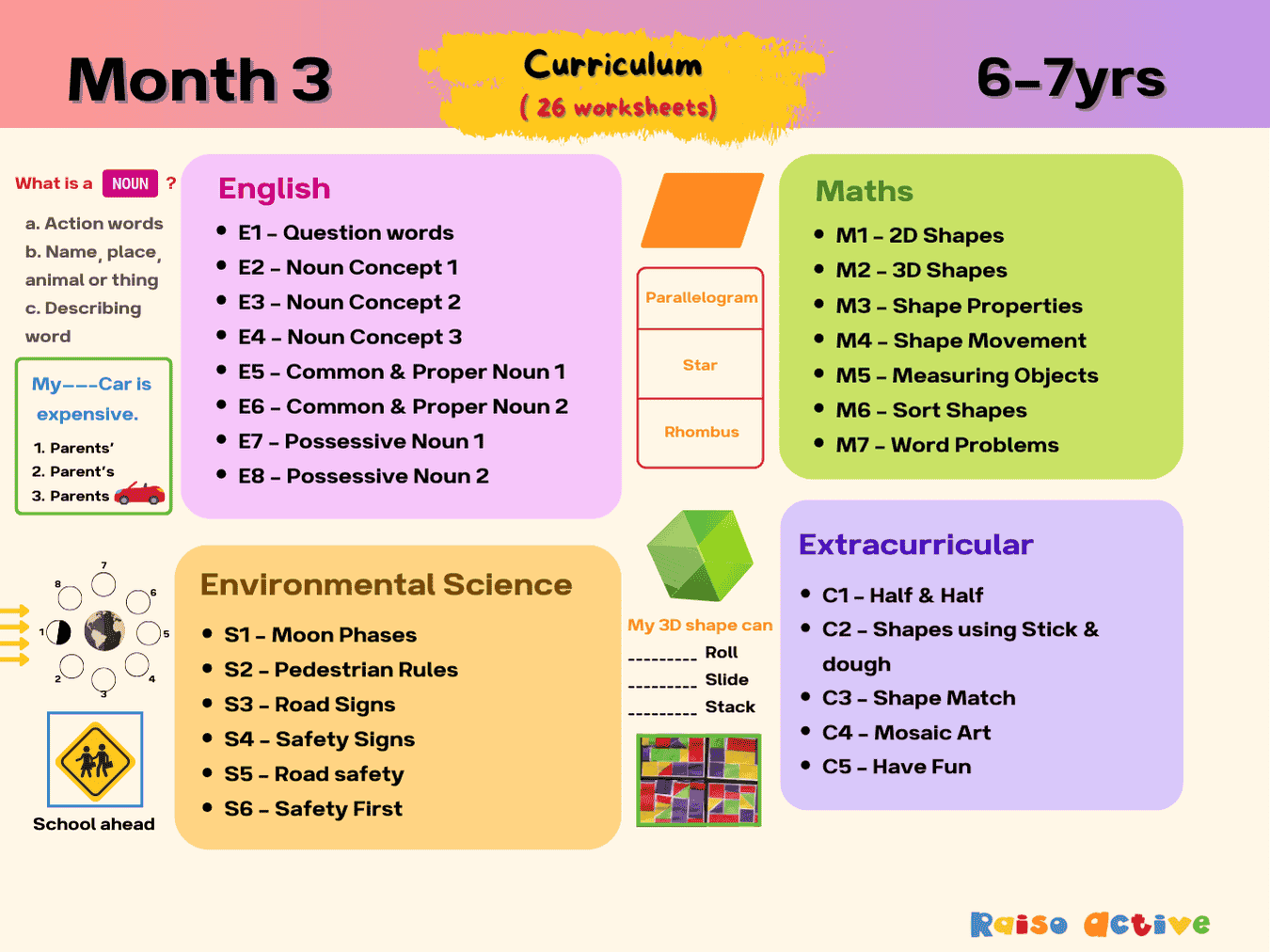
Month 3: Learning & Development | Ages 6-7
This is page 10 of the pack. Ages 6-7 · Grade 1Ages 6-7 · Year 2Ages 6-7 · Class 1Ages 6-7
Made for your child
A whole activity pack made with their name
60 pages to spot, build, trace and write their own name, plus pages about their favourites, feelings and family. See a free preview with their name.
Make an All About Me packFree preview · free for members
Or start free: a name tracing sheet with their nameCurriculum
- Grammar > Nouns & Grammar
How to use this worksheet
Read each sentence aloud together and point out the missing word. Say both possible answer choices out loud so your child can hear how the apostrophe changes the sound and meaning. Have your child circle or write the correct possessive form of the noun in the blank space. After each answer, ask 'who does that belong to?' to check understanding rather than just correctness.
Materials needed
- Pencil
Extension activities
- 1Make up your own possessive sentences about family members' belongings, like 'Mom's keys' or 'Dad's shoes.'
- 2Draw a picture illustrating one of the possessive sentences from the worksheet.
- 3Play a scavenger hunt where your child finds an item and names its owner using a possessive noun, such as 'sister's book.'
- 4Look through a picture book together and point out any possessive nouns you spot on the page.
- 5Create labels for items around the house using possessive nouns, like 'Emma's chair.'

Written by
Hemsweta Jain · Teacher Cheena
MBA and Early Childhood Educator, teaching since 2014 · Founder of RaisoActive, Mumbai
Every RaisoActive worksheet is designed and checked by the founder before publishing.
Published · Last reviewed
More from Month 3: Learning & Development | Ages 6-7
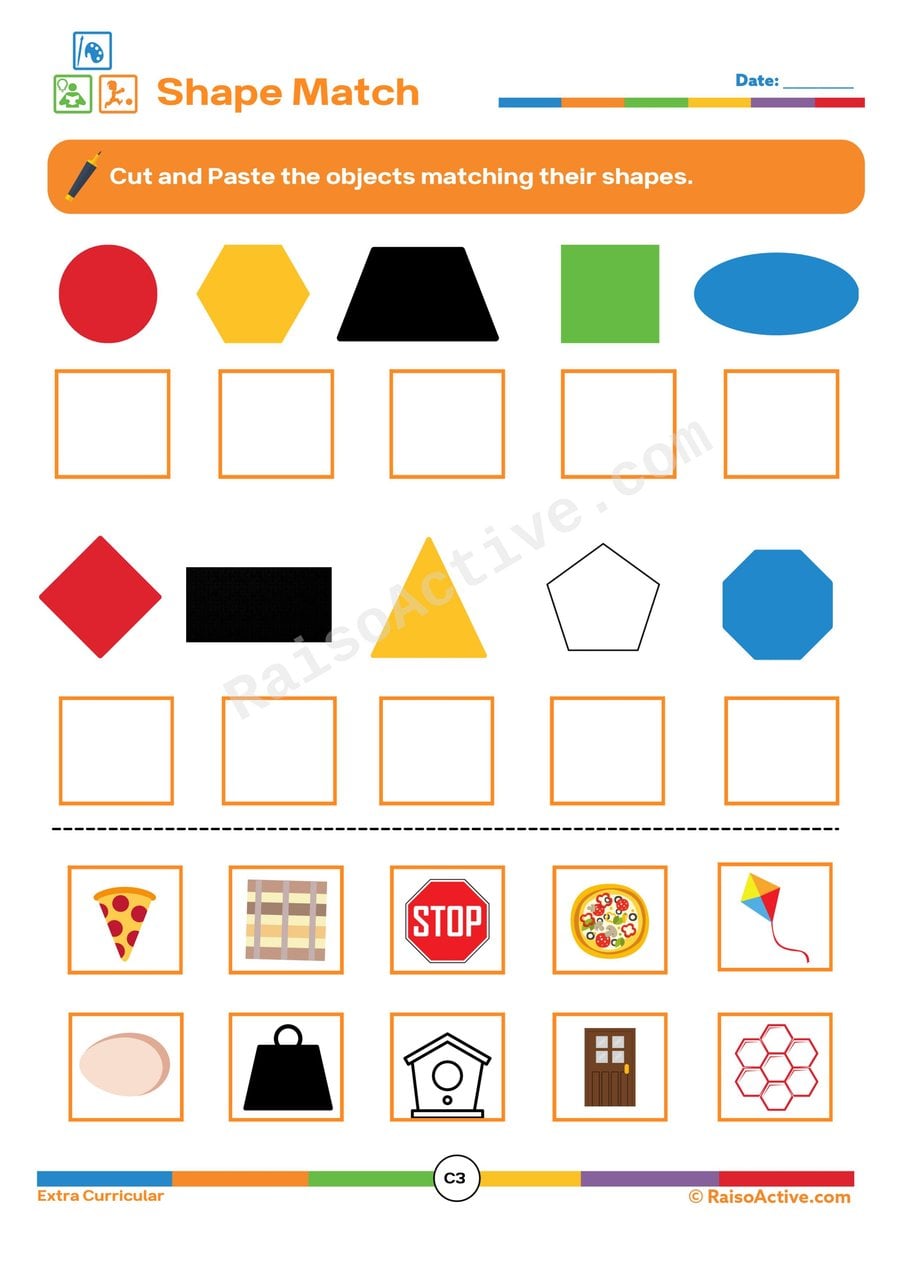
Shape Match Worksheet: Cut and Paste Shapes!
Ages 3-5 · Preschool–Pre-KAges 3-5 · Nursery–ReceptionAges 3-5 · Nursery–LKGAges 3-5
Children ages 3-5 practice shape recognition and visual discrimination as they cut out everyday objects and match each one to the 2D shape it most closely resembles, reinforcing that shapes exist all around them, not just on a worksheet page. This kind of real-world shape matching builds a stronger foundation than memorizing shape names in isolation.

Safety First Worksheet for Kids: Identifying Safe and Unsafe Behaviors
Ages 4-6 · Pre-K–KindergartenAges 4-6 · Reception–Year 1Ages 4-6 · LKG–UKGAges 4-6
This worksheet builds safety awareness by asking children to look at everyday scenes and judge whether the behavior shown is safe or unsafe, such as crossing a road correctly versus running into traffic. For four- to six-year-olds, practicing this kind of visual judgment call, rather than just being told rules, helps the safety concepts actually transfer to real situations they'll encounter outside the home.

Safety Signs Matching Worksheet for Early Learners
Ages 4-6 · Pre-K–KindergartenAges 4-6 · Reception–Year 1Ages 4-6 · LKG–UKGAges 4-6
This worksheet has children ages 4-6 cut and paste safety signs to match their correct descriptions and fill in blanks identifying travel and safety symbols, deepening the recognition skill of reading signs by their shape, color, and symbol rather than by words alone. Building fluency in reading safety signs is a genuinely practical life skill that supports children's growing independence as pedestrians.

Froggy Fun: Word Problems Worksheet for Early Learners
Ages 4-6 · Pre-K–KindergartenAges 4-6 · Reception–Year 1Ages 4-6 · LKG–UKGAges 4-6
This worksheet introduces basic addition word problems using a frog theme, teaching children to translate a short story into a math equation they can solve. For four- to six-year-olds, this is a critical bridge skill — moving from simply adding numbers on a page to understanding what a real-world situation like '3 frogs on a lily pad, 2 more hop on' is actually asking them to find.
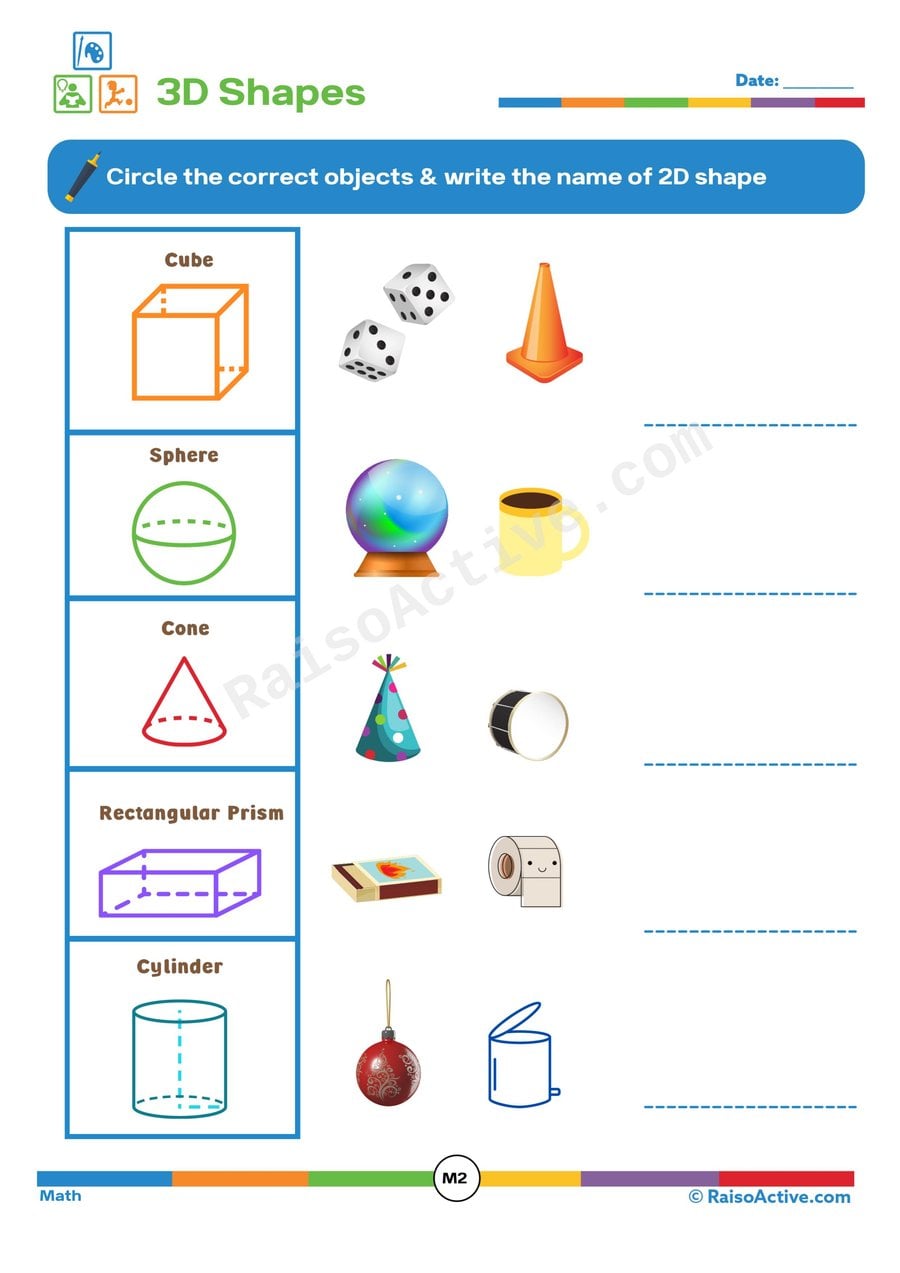
3D Shapes Worksheet: Circle and Name the Shapes!
Ages 4-6 · Pre-K–KindergartenAges 4-6 · Reception–Year 1Ages 4-6 · LKG–UKGAges 4-6
This worksheet helps children ages 4-6 identify common 3D shapes like spheres, cubes, and cylinders by matching them to real objects, then connects each 3D shape to its related 2D shape, such as a cube's square face or a sphere's circular outline. Understanding that 3D shapes are built from 2D shapes is an important early geometry concept that supports later spatial reasoning and measurement skills.
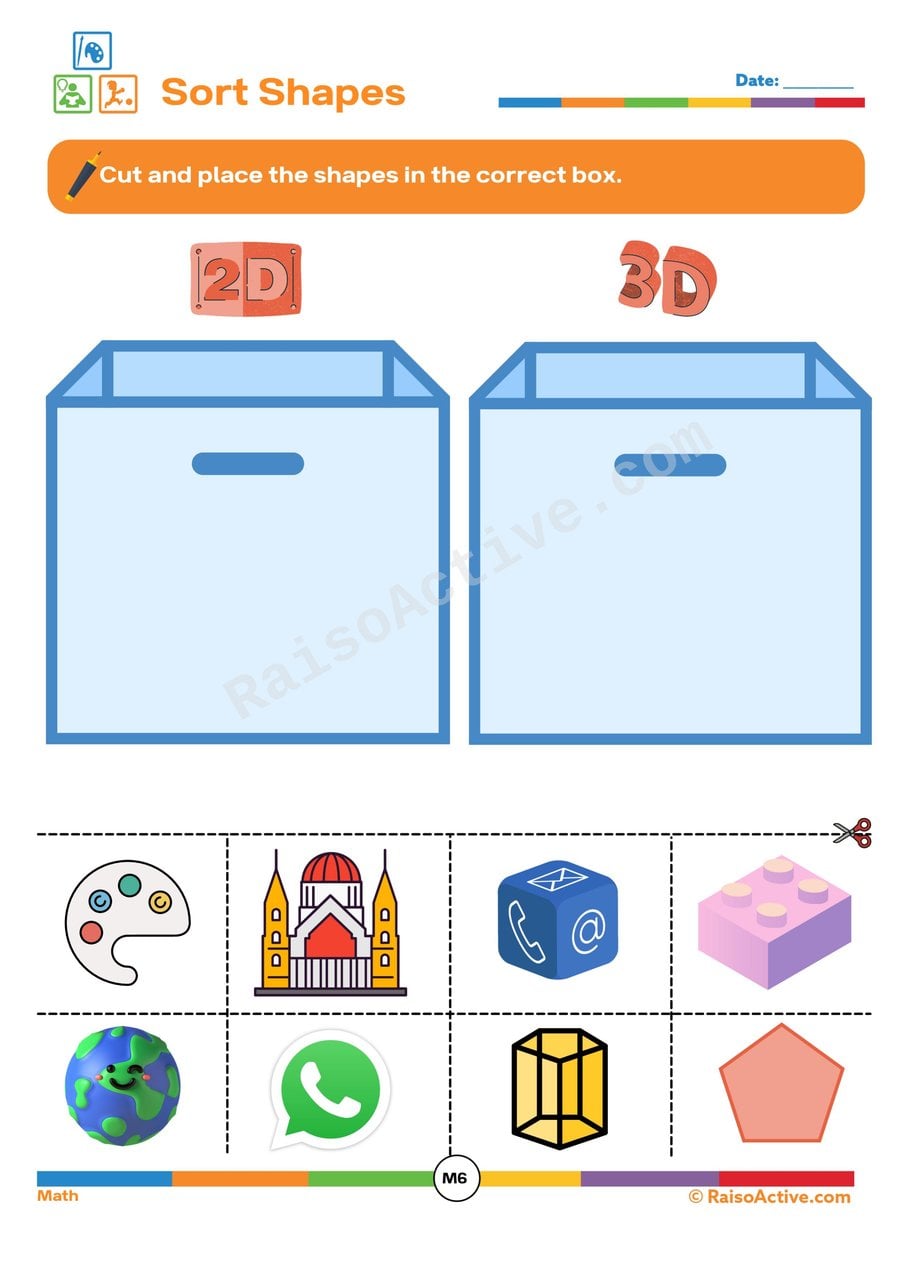
Month 3: Learning & Development | Ages 6-7 - Page 17
Ages 6-7 · Grade 1Ages 6-7 · Year 2Ages 6-7 · Class 1Ages 6-7
As part of a structured monthly learning sequence, this page gives children ages 6-7 continued practice across reading, observation, and critical thinking skills, building on the concepts introduced earlier in the Month 3 program. Working through a numbered page within a longer curriculum also helps children build the stamina and consistency needed for sustained, sequential learning.

3D Shapes Worksheet: Explore Faces, Vertices, and Edges!
Ages 4-6 · Pre-K–KindergartenAges 4-6 · Reception–Year 1Ages 4-6 · LKG–UKGAges 4-6
This worksheet pushes children ages 4-6 beyond simply naming 3D shapes into analyzing their structural properties — counting faces, vertices, and edges — while also connecting those properties to how each shape moves (rolling, sliding, or stacking). Understanding that a shape's number of flat surfaces and corners directly determines its physical behavior is an early but genuine geometric reasoning skill.

Shape Properties Worksheet: Identify and Match Shapes!
Ages 4-6 · Pre-K–KindergartenAges 4-6 · Reception–Year 1Ages 4-6 · LKG–UKGAges 4-6
This worksheet moves beyond simply naming 3D shapes to analyzing their properties — counting faces, edges, and vertices — which builds the early geometric reasoning children need before formal geometry lessons. For four- to six-year-olds, learning that a cube has 6 faces while a sphere has none introduces the idea that shapes can be described by measurable features, not just their overall look.
Related worksheets
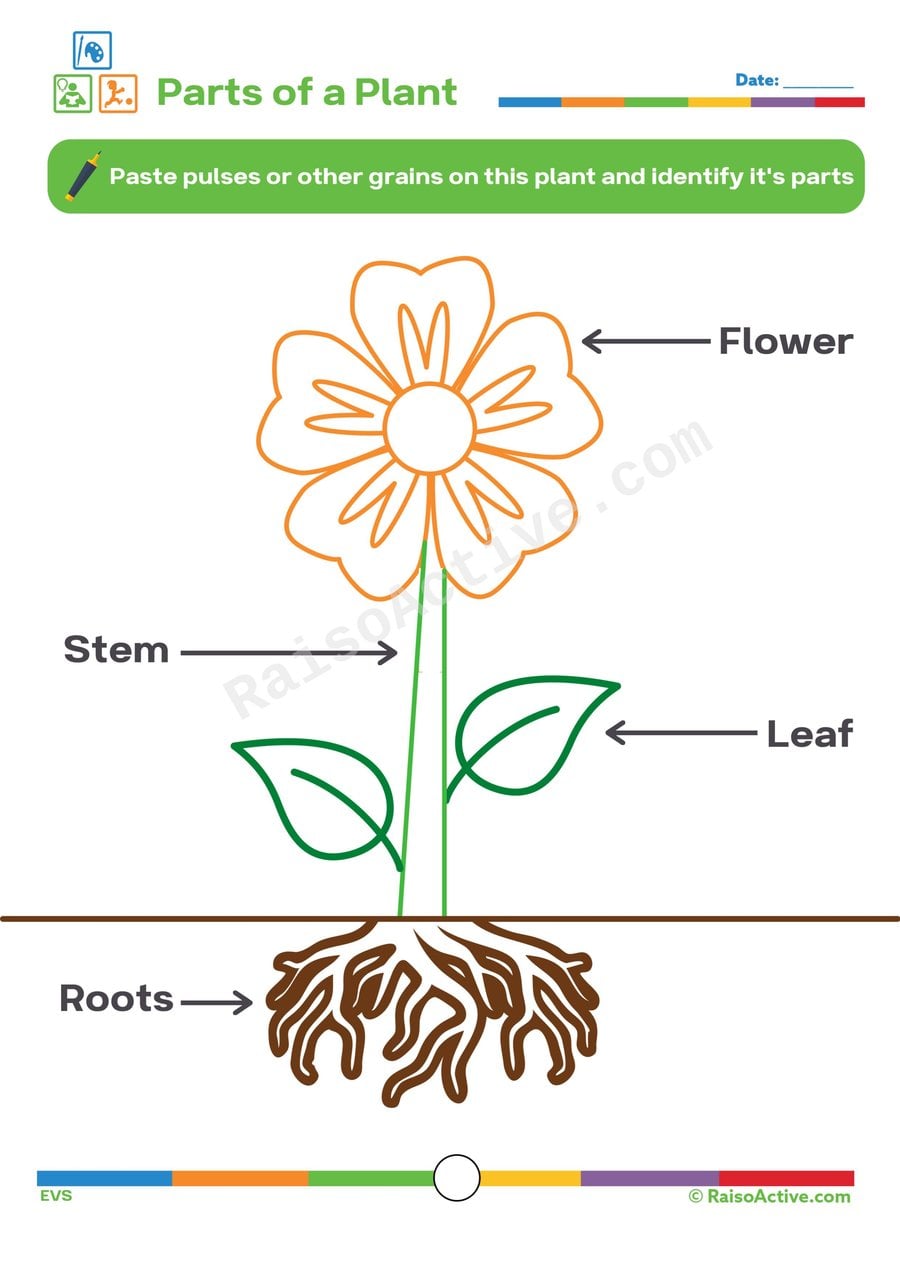
Parts of a Plant Worksheet: Identify and Label!
Ages 3-5 · Preschool–Pre-KAges 3-5 · Nursery–ReceptionAges 3-5 · Nursery–LKGAges 3-5
This activity teaches children ages 3-5 the basic parts of a plant — flower, stem, leaf, and roots — by having them label a diagram and add texture using real pulses or grains glued onto the plant shape. Combining a tactile material with each labeled part helps young children retain the vocabulary better than labeling alone, since touch and sight reinforce the same information.
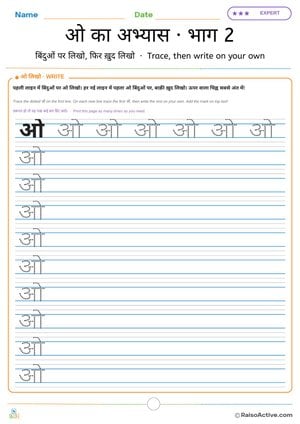
Hindi Letter ओ (o) Practice 2: Trace, then Write on Your Own | ओ का अभ्यास · भाग 2
Ages 5-7 · Kindergarten–Grade 1Ages 5-7 · Year 1–Year 2Ages 5-7 · UKG–Class 1Ages 5-7
An expert page for confident writers: trace the dotted ओ on the first line, then on each new line trace the first ओ and write the rest on your own, adding the mark on top last.
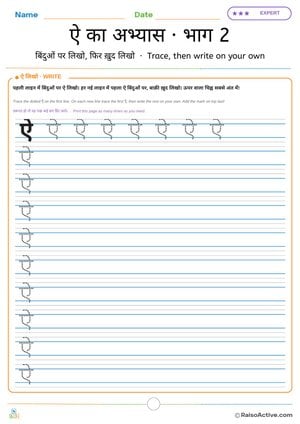
Hindi Letter ऐ (ai) Practice 2: Trace, then Write on Your Own | ऐ का अभ्यास · भाग 2
Ages 5-7 · Kindergarten–Grade 1Ages 5-7 · Year 1–Year 2Ages 5-7 · UKG–Class 1Ages 5-7
An expert page for confident writers: trace the dotted ऐ on the first line, then on each new line trace the first ऐ and write the rest on your own, adding the mark on top last.
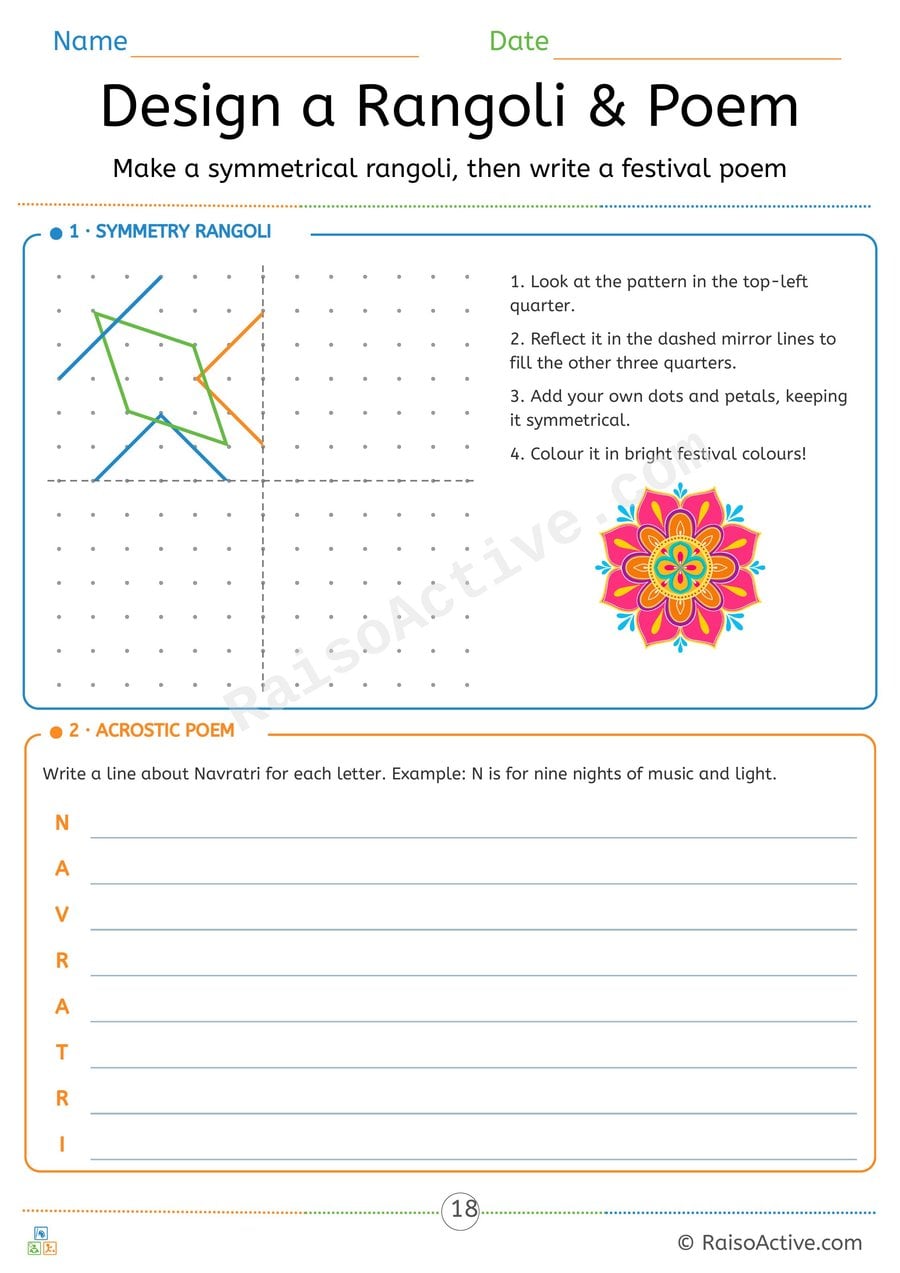
Navratri Symmetry Rangoli and Acrostic Poem
Ages 7-11 · Grade 2–Grade 3Ages 7-11 · Year 3–Year 4Ages 7-11 · Class 2–Class 3Ages 7-11
Children reflect a pattern in two mirror lines to complete a four-way symmetrical rangoli on a dot grid, add their own symmetrical details, and write an acrostic poem with one line for each letter of NAVRATRI.
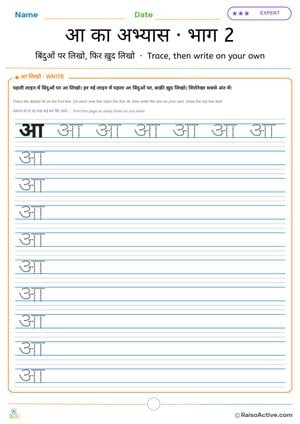
Hindi Letter आ Practice Part 2: Trace and Write on Your Own | आ का अभ्यास · भाग 2
Ages 3-7 · Preschool–Grade 1Ages 3-7 · Nursery–Year 2Ages 3-7 · Nursery–Class 1Ages 3-7
Children build writing fluency by tracing the dotted line आ on the first line and then writing the letter on their own, line after line, as the dotted help fades. The headline (शिरोरेखा) is drawn last, as in Hindi handwriting.
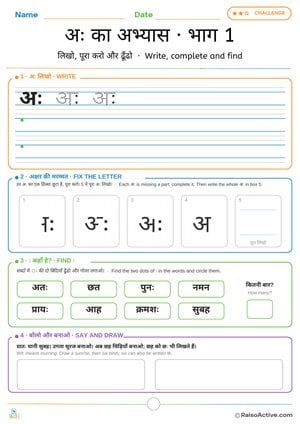
Hindi Visarga अः (ah) Practice 1: Write, Fix the Letter and Find | अः का अभ्यास · भाग 1
Ages 4-7 · Pre-K–Grade 1Ages 4-7 · Reception–Year 2Ages 4-7 · LKG–Class 1Ages 4-7
A challenge page: write अः between the lines, complete four letters each missing a part and write the whole अः in box 5, find the two dots ः in words such as अतः, पुनः, प्रायः and क्रमशः, and draw a sunrise with six birds (छः can also be written छह).

My Address Worksheet: Color the State and Fill in Your Details!
Ages 3-5 · Preschool–Pre-KAges 3-5 · Nursery–ReceptionAges 3-5 · Nursery–LKGAges 3-5
This worksheet introduces children ages 3-5 to their personal address as a piece of core safety knowledge, while the map-coloring task builds early geography skills by having them physically locate and color their home state within India. Practicing house number, street, city, and PIN code also gives meaningful, motivated handwriting practice since the words are personally relevant.
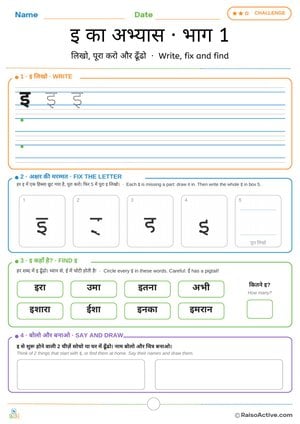
Hindi Letter इ Practice Part 1: Write, Fix and Find | इ का अभ्यास · भाग 1
Ages 3-7 · Preschool–Grade 1Ages 3-7 · Nursery–Year 2Ages 3-7 · Nursery–Class 1Ages 3-7
Children write इ on guide lines, complete four partly drawn letters, circle इ in eight words (while avoiding its look-alike ई), count how many they found, then think of two more words at home that start with इ and draw them.
Guides for this topic

Documenting Learning Without Drowning in Data: A Practical Guide for Parents and Teachers
Learn practical ways to document your child's learning without overwhelm. Simple portfolios, observation tips, and printable trackers for ages 1-8.

How to Help Your Child with Letter Reversals: A Complete Guide for Parents and Teachers
Letter reversals are normal until age 7-8. Learn the best multisensory strategies, anchor letter tricks, and activities to help children write b, d, p, and q correctly.

Activities That Help with Pencil Grip Development: A Complete Guide for Parents and Teachers
Discover fun, research-backed activities to develop pencil grip in young children. Age-wise exercises, play ideas, and expert tips for parents and teachers.
Reviews
Every worksheet for ages 4–6, no watermark
Members download the full library of 1,000+ worksheets and every activity pack without watermarks or daily limits. One year costs ₹999 in India or $20 elsewhere.
See membership plansOr download any worksheet free with a watermark (5 a day).