Word Structure Worksheet: Choose the Correct Word!
Reading a sentence with a missing word and selecting the correct option from a word bank builds vocabulary and context-clue reasoning for children ages 4-6, both essential for early reading fluency and comprehension.
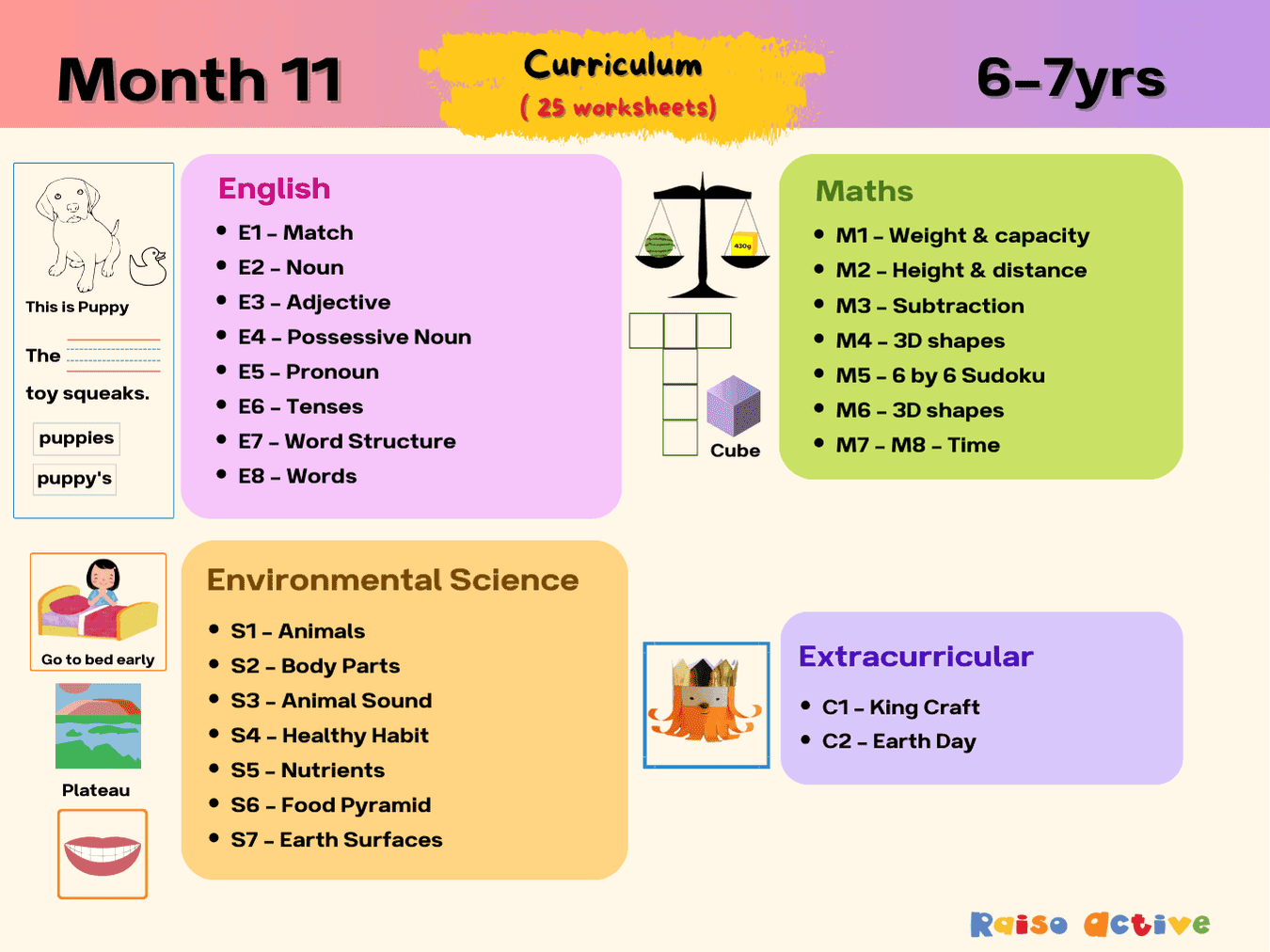
Part of the pack
Month 11: Learning & Development | Ages 6-7
This is page 10 of the pack. Ages 6-7 · Grade 1Ages 6-7 · Year 2Ages 6-7 · Class 1Ages 6-7
Made for your child
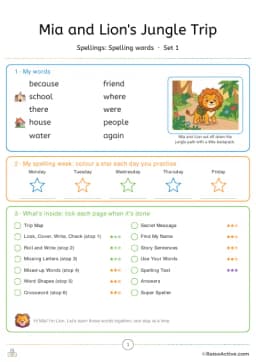
Spelling practice, made for your child
Their own spelling words turned into a pack: trace or look-cover-write-check, roll and write, a secret picture code, a word search, a crossword and a test, with their name in it.
Make a spelling packFree preview · free for members
Or start free: a word search with sight wordsCurriculum
- Vocabulary > Vocabulary Building
How to use this worksheet
Read the first sentence aloud together, pausing at the blank space. Try each word choice from the bottom of the page in the sentence to see which one makes sense. Have your child write the correct word in the box, then repeat for each remaining sentence, sounding out unfamiliar words as needed.
Materials needed
- Pencil
- Eraser
Extension activities
- 1Make up new sentences using the leftover word choices that weren't used on the page.
- 2Play a 'silly sentence' game by placing an obviously wrong word in a sentence for your child to spot.
- 3Create flashcards from the word bank and practice spelling them.
- 4Ask your child to draw a picture illustrating one completed sentence.

Written by
Hemsweta Jain · Teacher Cheena
MBA and Early Childhood Educator, teaching since 2014 · Founder of RaisoActive, Mumbai
Every RaisoActive worksheet is designed and checked by the founder before publishing.
Published · Last reviewed
More from Month 11: Learning & Development | Ages 6-7
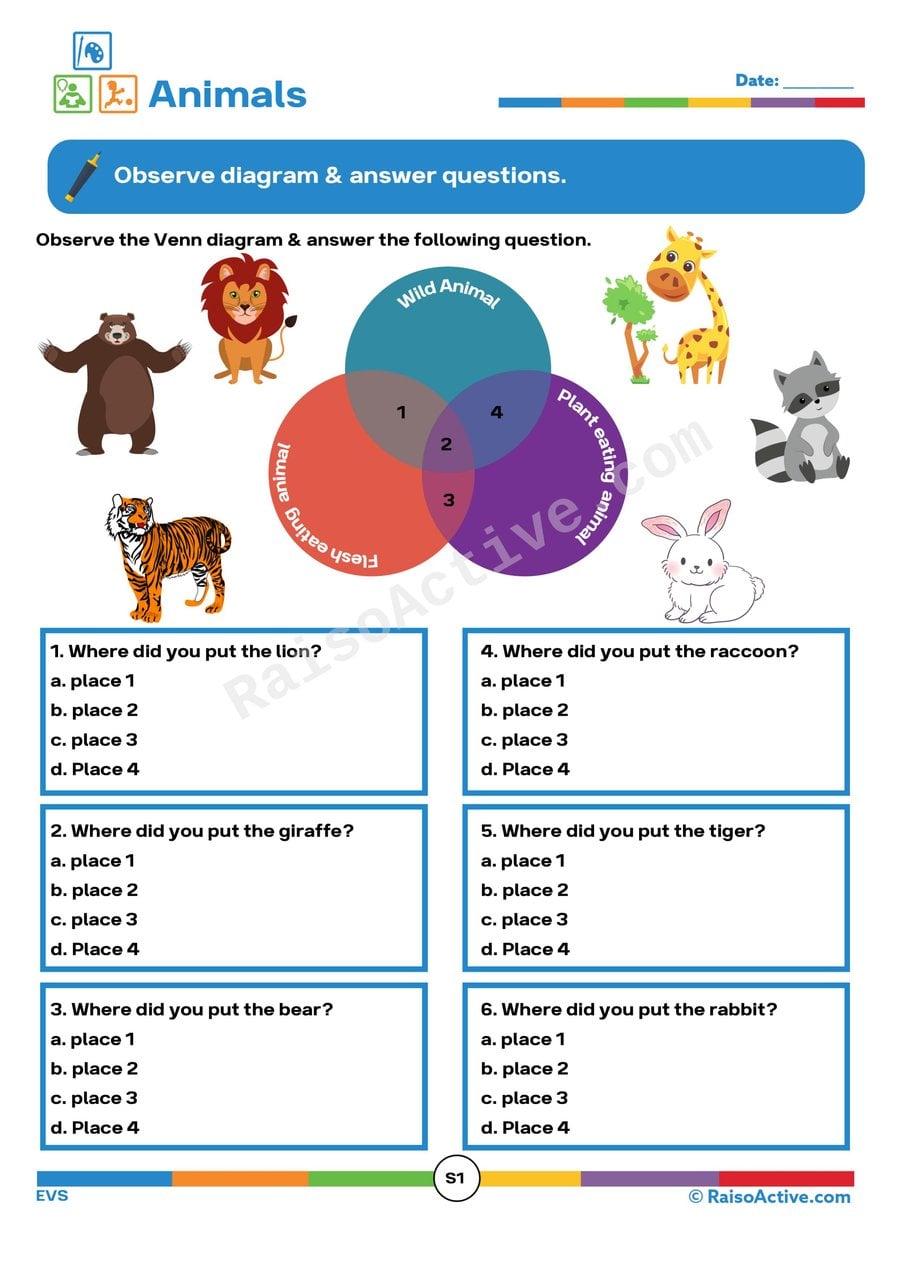
Animal Venn Diagram Worksheet for Kids
Ages 4-6 · Pre-K–KindergartenAges 4-6 · Reception–Year 1Ages 4-6 · LKG–UKGAges 4-6
This worksheet introduces children ages 4-6 to the Venn diagram as a tool for classifying animals by shared and distinct characteristics, such as habitat, number of legs, or covering (fur, feathers, scales). Deciding where an animal belongs — in one circle, the other, or the overlapping middle — builds comparative reasoning and categorization skills that are foundational to later scientific classification work.
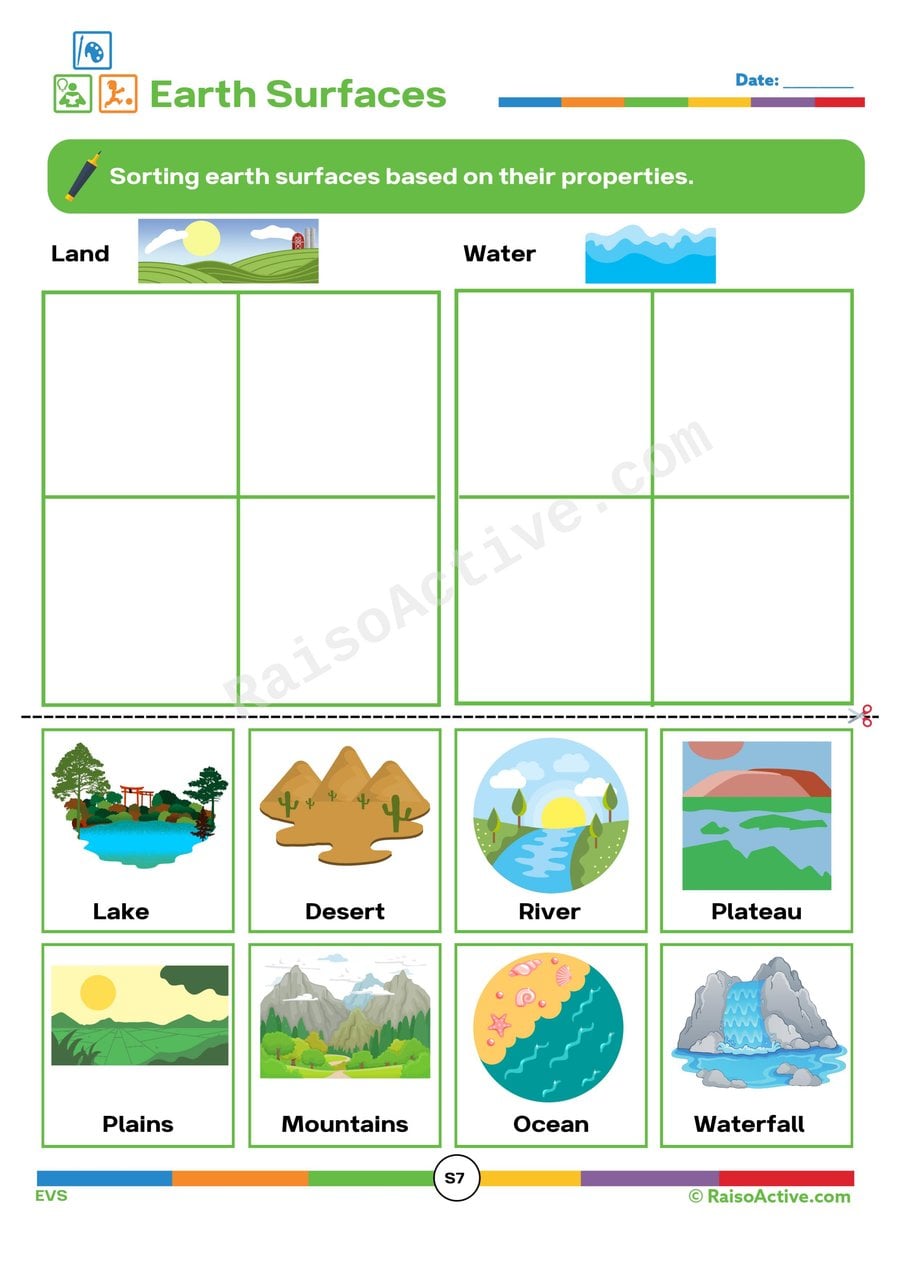
Earth Surfaces Sorting Worksheet for Kids
Ages 4-6 · Pre-K–KindergartenAges 4-6 · Reception–Year 1Ages 4-6 · LKG–UKGAges 4-6
Sorting pictures into 'land' and 'water' categories builds early classification skills and basic earth science vocabulary for children ages 4-6, helping them notice physical differences between surfaces they see in daily life.

Pronoun Power: Cut & Paste Matching Worksheet for Preschoolers
Ages 4-6 · Pre-K–KindergartenAges 4-6 · Reception–Year 1Ages 4-6 · LKG–UKGAges 4-6
Children ages 4-6 practice recognizing and applying pronouns — he, she, it, they, and similar words — by reading a short sentence, deciding which pronoun fits the picture, and physically placing it in the right spot. Cutting and pasting adds a fine motor and sequencing component on top of the grammar skill, since children must locate, cut, and correctly position each pronoun piece. This hands-on format helps pronoun concepts stick better than reading alone.
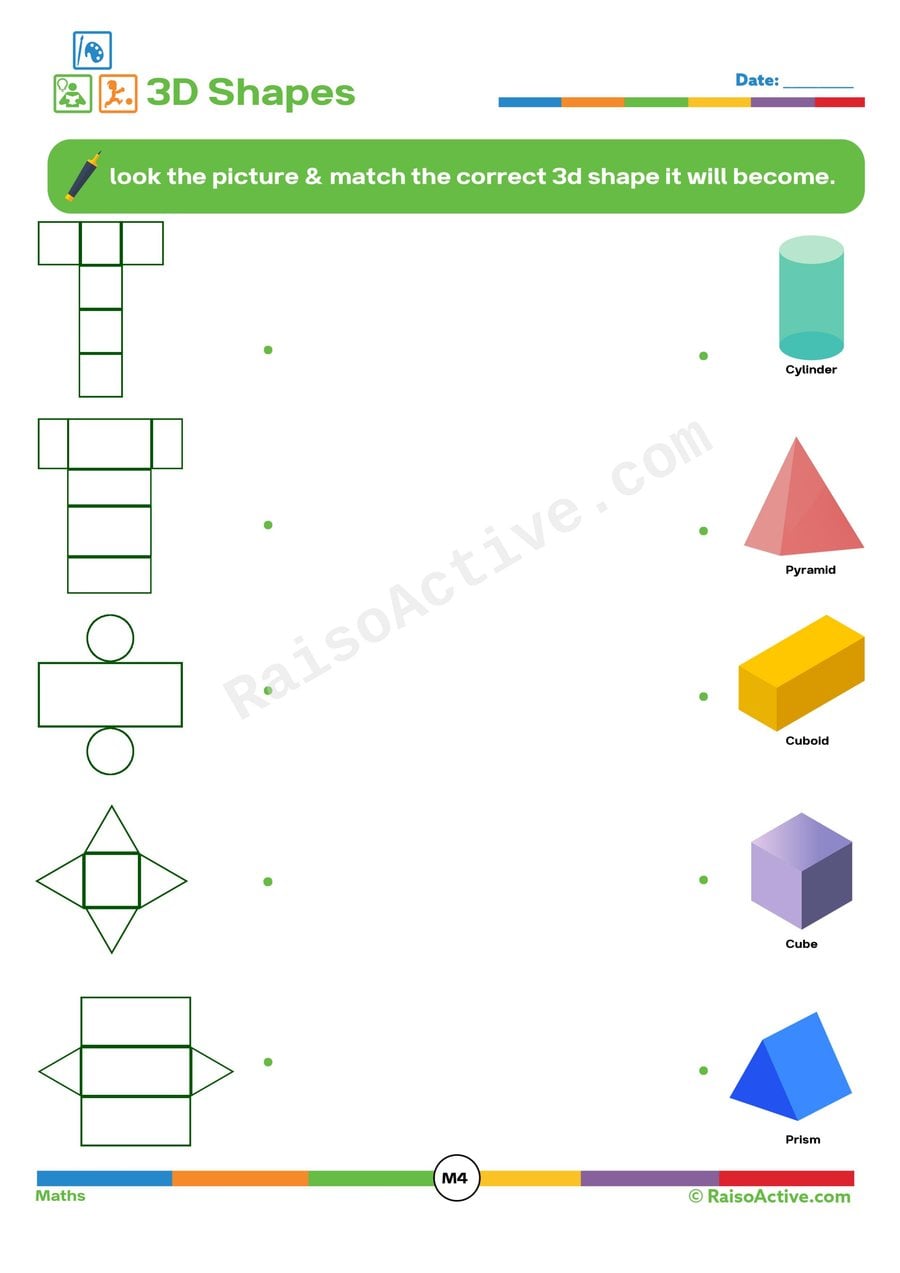
3D Shapes Matching Worksheet for Preschoolers
Ages 3-5 · Preschool–Pre-KAges 3-5 · Nursery–ReceptionAges 3-5 · Nursery–LKGAges 3-5
Connecting a flat, unfolded 2D net to the 3D shape it forms when folded builds spatial reasoning for children ages 3-5, an early introduction to geometry that helps them visualize how flat surfaces combine into solid forms like cubes and cones.

Earth Day Sorting Worksheet: Good vs. Bad for the Environment!
Ages 4-6 · Pre-K–KindergartenAges 4-6 · Reception–Year 1Ages 4-6 · LKG–UKGAges 4-6
Sorting pictures of everyday actions into 'good for the environment' and 'bad for the environment' introduces children ages 4-6 to cause-and-effect reasoning about human impact, an early building block for environmental awareness and responsible habits.

Healthy Habits Worksheet for Kids: Sorting Activities
Ages 3-5 · Preschool–Pre-KAges 3-5 · Nursery–ReceptionAges 3-5 · Nursery–LKGAges 3-5
This worksheet helps children ages 3-5 build early health literacy by looking at pictures of daily habits, like brushing teeth or eating vegetables, and deciding whether each one is healthy or unhealthy. Making this judgment requires applying general knowledge about wellbeing to a specific picture, which builds reasoning skills alongside foundational health awareness that supports good routines.

Animal Sounds Matching Worksheet for Preschoolers
Ages 3-5 · Preschool–Pre-KAges 3-5 · Nursery–ReceptionAges 3-5 · Nursery–LKGAges 3-5
This worksheet strengthens vocabulary and auditory-visual association in children ages 3-5 as they connect each animal picture to the written word for the sound it makes, like 'moo' or 'quack.' Matching sounds to animals also supports early literacy by pairing a familiar spoken word with its printed form, giving children an early, low-pressure introduction to reading words in context.
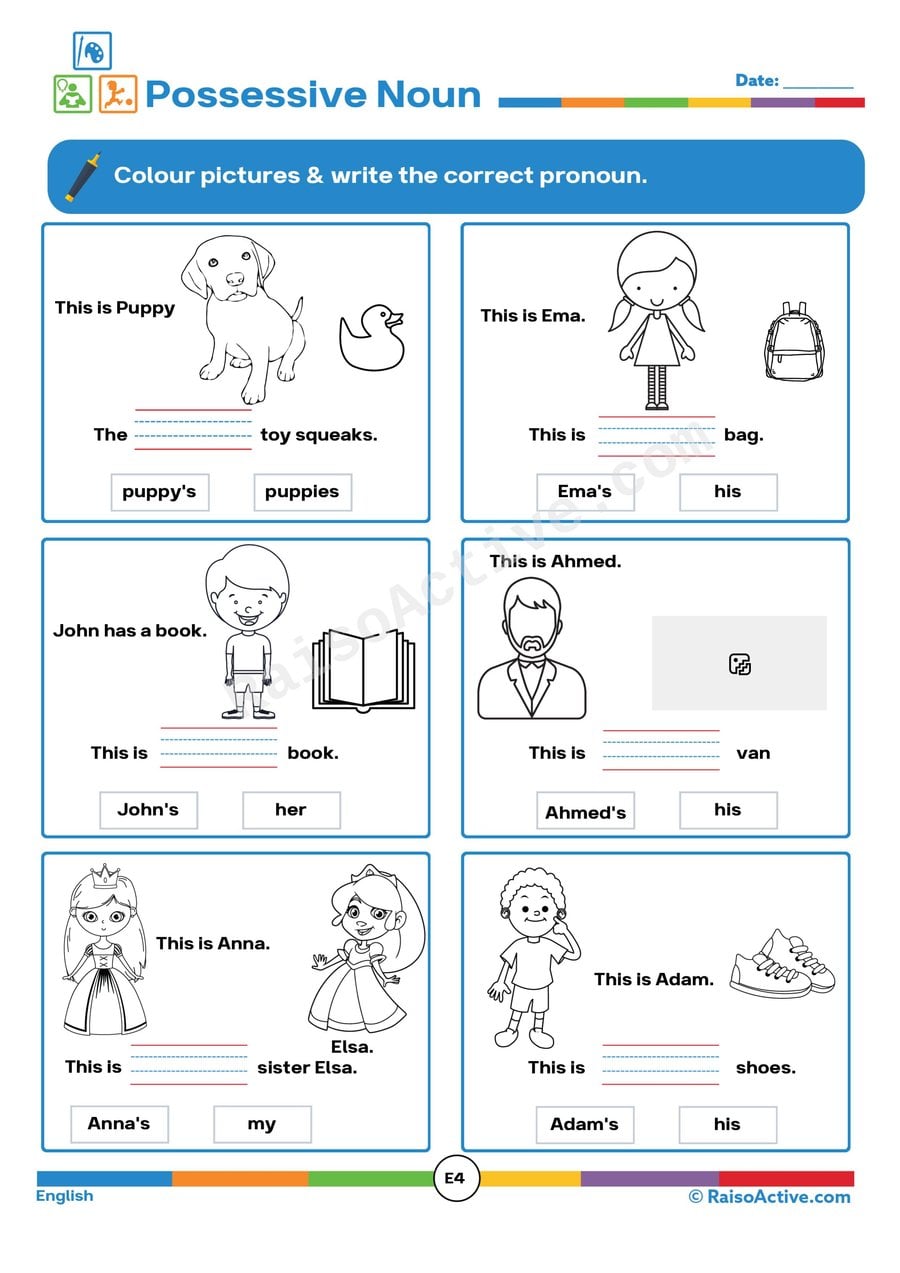
Possessive Nouns Worksheet: Color and Write!
Ages 4-6 · Pre-K–KindergartenAges 4-6 · Reception–Year 1Ages 4-6 · LKG–UKGAges 4-6
Children ages 4-6 practice forming possessive nouns, learning to add an apostrophe and 's' to show that something belongs to someone, like 'the dog's bone.' This is a specific grammar rule that children will use constantly once they start writing about ownership in their own sentences.
Related worksheets
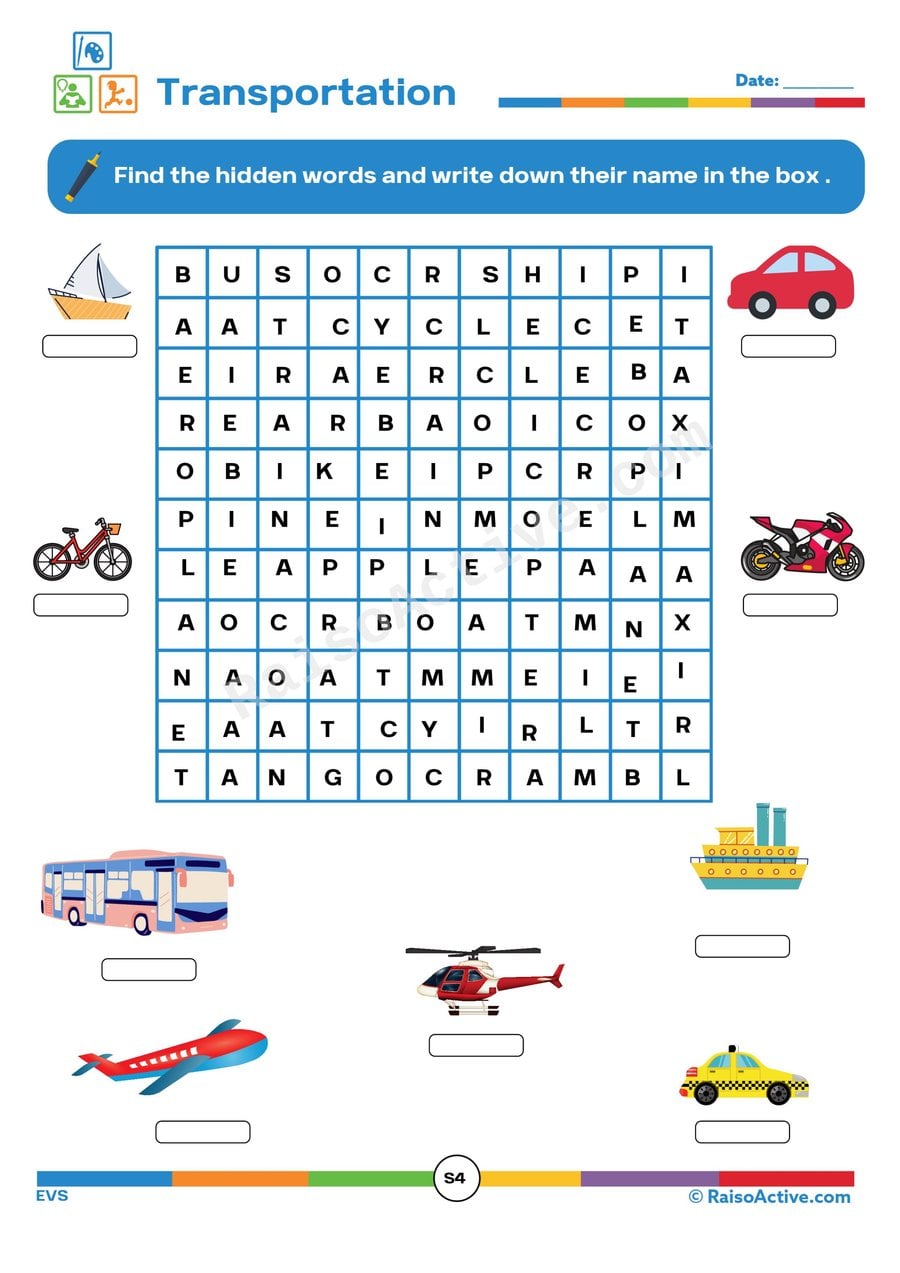
Transportation Word Search Worksheet for Kids
Ages 4-6 · Pre-K–KindergartenAges 4-6 · Reception–Year 1Ages 4-6 · LKG–UKGAges 4-6
This word search worksheet builds sight-word recognition and spelling awareness for children ages 4-6 as they scan a letter grid to find transportation-related vocabulary. Searching for a specific sequence of letters within a larger grid strengthens visual tracking and letter-pattern recognition, skills that support both reading fluency and spelling as children learn to recognize whole words at a glance.
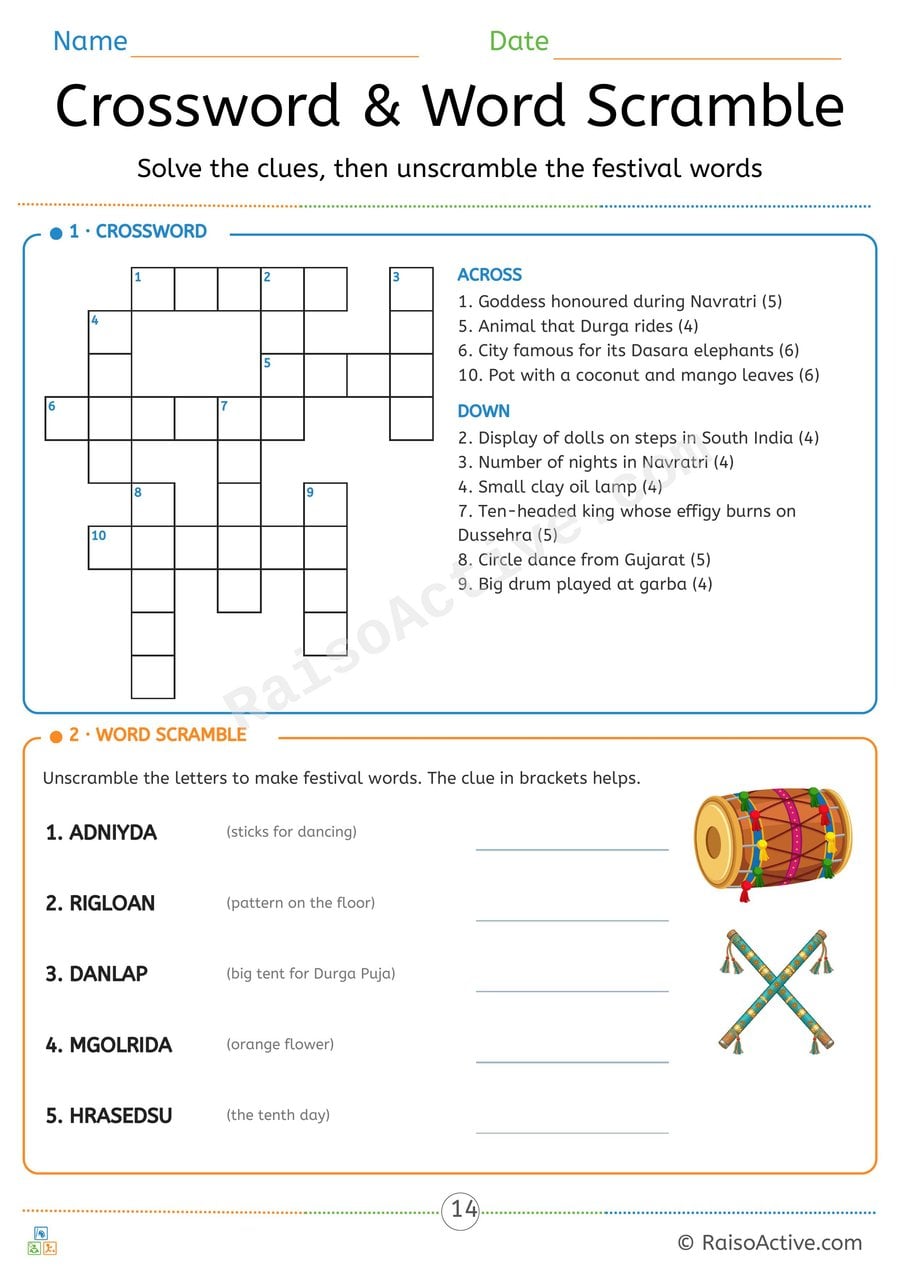
Navratri Crossword and Word Scramble
Ages 7-11 · Grade 2–Grade 3Ages 7-11 · Year 3–Year 4Ages 7-11 · Class 2–Class 3Ages 7-11
Children solve 10 crossword clues about the goddess, the lion, Mysuru, the kalash, Golu, diyas, Ravan, garba and the dhol, and unscramble five festival words with a clue for each.

Fall Vocabulary Unscramble Worksheet for Preschoolers
Ages 4-6 · Pre-K–KindergartenAges 4-6 · Reception–Year 1Ages 4-6 · LKG–UKGAges 4-6
This unscrambling activity asks children ages 4-6 to rearrange jumbled letters into correctly spelled fall vocabulary words, building letter-sound awareness and an early sense of correct spelling patterns. Because each word relates to a picture clue, children also practice connecting spoken vocabulary to its written form, a key step on the road to independent reading.
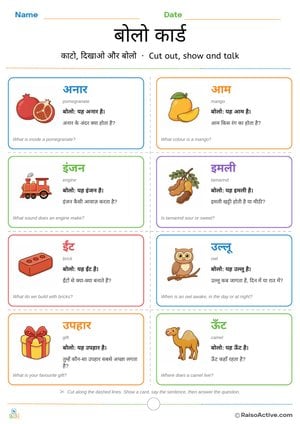
Hindi Bolo Cards: Cut-Out Speaking Cards for Vowels Part 1 | बोलो कार्ड
Ages 3-7 · Preschool–Grade 1Ages 3-7 · Nursery–Year 2Ages 3-7 · Nursery–Class 1Ages 3-7
Eight picture cards (अनार, आम, इंजन, इमली, ईंट, उल्लू, उपहार, ऊँट), each with the sentence बोलो: यह ___ है! and a question to talk about, for example what colour is a mango? Children practise speaking in full sentences.
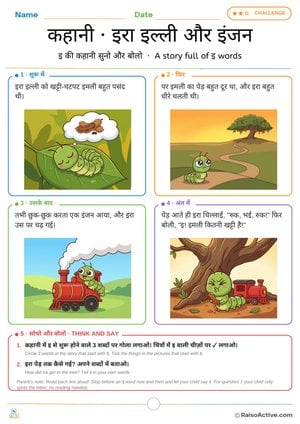
Letter इ Story: Ira Illi and the Engine | कहानी इरा इल्ली और इंजन
Ages 3-7 · Preschool–Grade 1Ages 3-7 · Nursery–Year 2Ages 3-7 · Nursery–Class 1Ages 3-7
Ira the caterpillar loves sour tamarind but the tree is far away, until a chugging engine carries her there. Children listen, look at the four pictures, spot the words that start with इ and retell what happened in their own words.
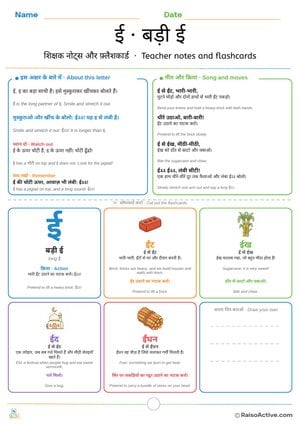
Hindi Letter ई (ee) Teacher Notes and Flashcards | ई · बड़ी ई
Ages 3-7 · Preschool–Grade 1Ages 3-7 · Nursery–Year 2Ages 3-7 · Nursery–Class 1Ages 3-7
Children meet the long vowel ई with a short note for adults, a song with actions and cut-out flashcards for ईंट (brick), ईख (sugarcane), ईद (Eid), ईंधन (fuel). They hear the sound at the start of real words and link it to a hand action.

Easter Egg Color by Hints Worksheet for Preschoolers
Ages 3-5 · Preschool–Pre-KAges 3-5 · Nursery–ReceptionAges 3-5 · Nursery–LKGAges 3-5
This worksheet has children ages 3-5 listen to or read simple written hints describing shapes and colors, then apply that information correctly while coloring each Easter egg, building early reading comprehension and the ability to follow multi-step verbal instructions. Because the hints must be followed precisely rather than colored freely, children also practice patience and careful attention to detail.

Complete the Words: Identify the Animals Worksheet for Preschoolers
Ages 3-5 · Preschool–Pre-KAges 3-5 · Nursery–ReceptionAges 3-5 · Nursery–LKGAges 3-5
This worksheet helps children ages 3-5 practice early letter recognition and spelling by filling in missing letters to complete animal names using picture clues. Working from a picture to a partially completed word builds phonics skills gradually, since children only need to identify one or two missing sounds rather than spelling an entire word from scratch.
Guides for this topic

Sight Words by Age: The First 50 Words and How to Teach Them Without Flashcard Fatigue
Which sight words to teach first and why, the heart-word method, a read-trace-write-find routine, games, and a by-age table of typical sight-word progress.
How to Teach CVC Blending: A Step-by-Step Method That Works in Two Weeks
A step-by-step method for teaching CVC blending, covering continuous sounds, word families, common errors, and a 14-day plan that most children finish reading CVC words.

Documenting Learning Without Drowning in Data: A Practical Guide for Parents and Teachers
Learn practical ways to document your child's learning without overwhelm. Simple portfolios, observation tips, and printable trackers for ages 1-8.
Reviews
Every worksheet for ages 4–6, no watermark
Members download the full library of 1,000+ worksheets and every activity pack without watermarks or daily limits. One year costs ₹999 in India or $20 elsewhere.
See membership plansOr download any worksheet free with a watermark (5 a day).