Adapting Worksheets for Children with Special Needs: A Complete Guide for Parents and Educators
Author
RaisoActive - Kids Activities and Fun Learning
Published
Updated
Reading Time
18 min read

- Why standard worksheets create unnecessary barriers for children with ADHD, dyslexia, dysgraphia, and sensory differences — and how to fix them
- Targeted, low-cost adaptations for each learning profile that you can apply at home or in the classroom today
- A step-by-step process for modifying any existing worksheet without creating new materials from scratch
- How to work with Indian schools, request CBSE accommodations, and when to seek occupational therapy support
- Ready-to-use inclusive worksheet resources designed with accessibility built in from the start
Why Adapting Worksheets Is One of the Most Powerful Things You Can Do for Your Child
Picture this: your child sits down with a worksheet that their classmates complete without trouble. Within minutes, the pencil is thrown down, the tears start, or the child simply stares at the page in silence. As a parent or teacher, that moment can feel helpless — and confusing. After all, you know this child is bright, curious, and capable.
Here is what most people do not realise: the problem is almost never the child's intelligence — it is the worksheet's design. Standard worksheets are built for a narrow band of learners: those who can decode small text, write neatly in tiny boxes, hold attention across a dense page, and process visual information without distraction. For children with ADHD, dyslexia, dysgraphia, autism, sensory processing differences, or physical disabilities, each of those assumptions is a barrier.
Adapting worksheets means removing those barriers without lowering expectations. A child with dysgraphia who struggles to write in a 5 mm answer box may have a masterful grasp of the concept being tested — they just need more space. A child with ADHD who cannot sustain attention across 30 problems in a row may sail through the same content when it is broken into four chunks of seven. When the format matches how a child actually processes the world, their true abilities become visible.
Whether you are a parent navigating homework every evening, a teacher differentiating for twenty-five children at once, a homeschooling parent designing your own curriculum, or a therapist supporting young learners — this guide will walk you through practical, research-backed strategies to adapt any worksheet for children aged one to eight. We cover the Indian school context, CBSE accommodations, and the signs that a referral to an occupational therapist (OT) may be helpful.
Get inclusive learning resources in your inbox
Free adapted worksheets, activity ideas, and expert strategies for supporting every kind of learner — delivered straight to your inbox.
Understanding Why Standard Worksheets Fail Many Children
Before we explore solutions, it is worth mapping the exact barriers that typical worksheets create. Most are designed with a single type of learner in mind, and they make several implicit assumptions that simply do not hold true for a significant number of children.
- Visual clutter — decorative borders, multiple fonts, and competing images overwhelm children with sensory processing differences or visual perception difficulties
- Small text and tight line spacing — genuinely difficult for children with dyslexia, low vision, or convergence insufficiency
- Long, multi-step instructions — a challenge for children with ADHD, language processing delays, or working memory difficulties
- Excessive items on a single page — overwhelming for children who need information chunked into manageable sections
- Tiny response spaces — a significant barrier for children with dysgraphia or fine motor difficulties who need more room to form letters
- Single response format — accepting only written answers excludes children who can demonstrate understanding through drawing, pointing, or oral response
- No visual anchors — missing picture cues, colour coding, or worked examples that many children rely on to understand what is expected
children has a learning or attention difference that affects how they engage with printed materials. Adapting worksheets is not a niche concern — it is relevant to millions of families across India and the world.
Source: National Centre for Learning Disabilities, USA, 2023
When a child struggles with a worksheet, ask one question first: is the barrier in the **content** (what they need to learn) or the **format** (how it is presented)? In the vast majority of cases, it is the format — and that is entirely within your power to change.
Targeted Adaptations for Specific Learning Profiles
Every child is unique, but certain adaptation strategies are consistently effective for specific learning profiles. The sections below provide targeted modifications organised by need. Many of these strategies benefit all children — not just those with a formal diagnosis — so feel free to use them broadly.
Adapting Worksheets for Children with ADHD and Attention Difficulties
Children with ADHD often have strong intellectual abilities but find it difficult to sustain attention, regulate impulses, and manage executive function across a long task. The goal of adaptation is not to reduce the learning content — it is to present that content in rhythm with how their attention actually works, rather than against it.
- **Chunk the worksheet:** Divide a 20-problem sheet into four mini-sections of five. Print each on a separate strip or half-page. The sense of completion after each section provides a natural dopamine reward that fuels the next.
- **Use a window card:** Cut a rectangular hole in a piece of card so only one or two problems are visible at a time. This single low-cost tool can transform a child's ability to focus.
- **Build in movement breaks:** Write "Stand and stretch!" or "Do 5 star jumps!" between sections. Physical movement genuinely improves sustained attention for children with ADHD.
- **Mark the start and end visually:** Use a green dot for "begin here" and a red dot for "finished." Clear visual boundaries reduce the anxiety of not knowing where to begin or how much is left.
- **Offer a timer challenge:** Many children with ADHD thrive on short, timed bursts. Reframe the worksheet as a game: challenge them to finish a section within a set time. This sense of playful challenge keeps motivation high.
- **Reduce visual noise:** Remove decorative borders and unnecessary clip art from the worksheet. A clean white page with only the task visible is far less distracting.
Adapting Worksheets for Children with Dyslexia and Reading Difficulties
Dyslexia affects the way the brain processes written language, but it says absolutely nothing about a child's intelligence. Children with dyslexia often have exceptional creative thinking, spatial reasoning, and problem-solving skills. Worksheet adaptations should minimise reading barriers while creating space for those strengths to come through.
- Use sans-serif fonts such as Arial, Verdana, or OpenDyslexic at a minimum of 14-point size
- Increase line spacing to 1.5 or double — crowded text is significantly harder to decode for children with dyslexia
- Print on cream or light pastel paper rather than bright white, which can cause glare and visual stress
- Add picture cues alongside written instructions so children can understand what is expected without relying entirely on reading
- Provide a word bank with key vocabulary so children can recognise and select words rather than spelling from memory under pressure
- Read instructions aloud or record short audio clips that children can replay using a tablet or phone
- Avoid fully justified text — left-aligned text is easier to track across the page for children with dyslexia
improvement in reading task completion was observed when children with dyslexia used worksheets with increased spacing, larger fonts, and reduced visual clutter — without any change to the actual learning content.
Source: British Dyslexia Association Research Review, 2022
Adapting Worksheets for Children with Dysgraphia and Fine Motor Difficulties
Writing is one of the most complex fine motor tasks we ask young children to perform. For a child with dysgraphia or underdeveloped fine motor skills, the physical act of forming letters can be so effortful that it completely overshadows the learning content. The child spends every ounce of cognitive energy controlling the pencil and has nothing left for thinking about the actual maths problem or comprehension question.
- **Enlarge response spaces significantly** — answer boxes should be at least two to three times the standard size. If in doubt, go bigger.
- **Offer multiple response formats:** circling an answer, placing a sticker, stamping, ticking a box, or giving a verbal response alongside or instead of writing.
- **Provide pencil grips** (triangular or ergonomic) and consider thicker writing tools such as triangular pencils or jumbo crayons that are easier for small hands to control.
- **Use raised-line paper or tactile guidelines** that provide physical feedback when the child strays outside the writing area.
- **Allow typing for older children** (ages six to eight) when the learning goal is content knowledge, not handwriting. Oral responses recorded on a voice memo app are equally valid.
- **Try hand-over-hand support** for younger children during tracing activities, gradually reducing your assistance as the child's confidence and strength build.
Adapting Worksheets for Children with Autism and Sensory Processing Differences
Children on the autism spectrum often thrive with predictability, visual structure, and clear expectations. Sensory processing differences mean that a worksheet's visual layout, the texture of the paper, the smell of fresh ink, or even the fluorescent lighting above the desk can all affect a child's ability to engage with what is on the page.
- Use consistent, predictable layouts — the same format, the same position for instructions, and the same type of response area across all worksheets in a series
- Provide a visual schedule showing the worksheet steps before starting: "First read, then circle, then colour, then give to Mama"
- Reduce visual clutter ruthlessly — remove decorative borders, unnecessary images, and competing colours that do not serve the learning objective
- Include a clear "finished" indicator — a box to tick, a star to colour, or a simple checklist so the child knows exactly when they are done
- Offer sensory accommodations during the activity — a wobble cushion to sit on, noise-cancelling headphones, or a small fidget tool to hold in the non-writing hand
- Use the child's special interests as the worksheet theme — a child fascinated by trains will engage far more readily with a counting worksheet featuring trains than one featuring random objects
The most powerful adaptation is often the simplest: ask the child what helps them. Even young children can tell you — or show you through their behaviour — whether they prefer bigger text, fewer problems at a time, or a quieter space to work.
Involving children in the adaptation process, even partially, gives them a sense of ownership over how they learn. That ownership is one of the most reliable predictors of motivation and perseverance.
Worksheet Adaptations in the Indian School Context
Parents in India often wonder whether requesting worksheet adaptations is realistic within the Indian school system. The answer is: more realistic than most people think, and increasingly supported by law and policy.
The Rights of Persons with Disabilities Act (RPWD) 2016 mandates that children with specified disabilities receive reasonable accommodations in educational institutions, including modifications to assessment formats. The National Education Policy 2020 further emphasises inclusive education and flexible assessment for all learners. CBSE provides formal accommodations in board examinations — including extra time, larger font papers, scribes, and exemption from specific sections — for students with documented disabilities.
- **Start with the class teacher.** Share specific examples of adaptations that work at home and bring evidence of your child's understanding when the format is adjusted. Teachers are more likely to try strategies that come with proof of success.
- **Put the request in writing.** A brief letter or email outlining your child's needs and the specific adaptations you are requesting creates a record and makes follow-up easier.
- **Offer to help with preparation.** Many teachers want to adapt materials but do not have time. Offer to modify worksheets at home and send them in, or create a reusable adaptation template the teacher can print for your child's copies.
- **Connect with the school's special educator** (also called a resource room teacher or learning support teacher). They can formally advocate for accommodations and train classroom teachers.
- **Request a formal assessment if needed.** A psycho-educational evaluation from a clinical psychologist or special educator produces documentation that schools and CBSE require to grant official accommodations.
- **Be patient and persistent.** Change moves slowly in large schools. Celebrate small wins, maintain a positive relationship with the teacher, and keep the communication channel open.
In India, formal accommodations for examinations (extra time, enlarged print, scribes) are available through CBSE for children with documented disabilities. Start the paperwork early — the assessment and approval process can take several months.
Contact your nearest government-recognised assessment centre, government hospital, or a qualified clinical psychologist to obtain the documentation CBSE requires. Your school special educator can guide you through this process.
When to Seek Occupational Therapy Support
Worksheet adaptations are something any parent or teacher can implement independently. But certain signs suggest that a referral to a paediatric occupational therapist (OT) would add significant value on top of what you are already doing at home.
- **Extreme pencil pressure or very light grip:** The child either presses so hard they tear the paper or holds the pencil so loosely they cannot make a mark — both can indicate underlying proprioceptive processing differences that an OT can address.
- **Persistent avoidance of all writing or drawing tasks** despite adaptations, low-pressure practice, and positive reinforcement. This goes beyond worksheet frustration into a broader pattern that needs specialist assessment.
- **Difficulty with tasks that involve two-hand coordination** such as stabilising paper while writing, using scissors, or managing buttons — signs of bilateral coordination difficulties.
- **Sensory responses that interfere significantly with learning** — for example, refusing to touch certain textures of paper, becoming distressed by classroom noise to a degree that prevents engagement, or seeking so much sensory input (rocking, spinning) that seated tasks are impossible.
- **Regression in fine motor skills** after previously mastering them. This is always worth discussing with a paediatrician first, and an OT can then assess and support.
In India, paediatric OTs are available through government hospitals, private clinics, and some schools in larger cities. Organisations such as the Developmental Paediatrics Network and special schools often provide OT as part of their support services. Telehealth OT consultations are also increasingly available for families in smaller towns and rural areas.
How to Adapt Any Worksheet: A Step-by-Step Process
You do not need to create worksheets from scratch to make them accessible. With a few deliberate modifications, you can adapt almost any existing worksheet to remove barriers while keeping the learning objective intact.
Six Steps to Adapting Any Worksheet
Identify the core learning objective
Ask yourself: what is this worksheet actually trying to teach? Separate the learning goal from the delivery format. If it is a maths worksheet, the goal is number skills — not handwriting, reading fluency, or the ability to manage a dense page layout.
Observe where the breakdown happens
Watch the child attempt the worksheet without intervening. Does the refusal happen before they even start (visual overwhelm)? Do they begin well but fade halfway through (attention or stamina)? Do they make many errors despite understanding the concept (reading, fine motor, or visual processing barrier)? The point of breakdown tells you exactly where to intervene.
Select two or three targeted modifications
Choose adaptations that address the specific barrier you observed. Resist the temptation to change everything at once. Two or three well-chosen modifications — for example, enlarging the font, cutting the page into strips, and adding a picture cue — are more effective and easier to evaluate than a wholesale redesign.
Modify the physical worksheet
Enlarge on a photocopier (A4 to A3 works brilliantly and is available at any local print shop for a few rupees). Cut the worksheet into strips or half-pages to create chunks. Cover distracting sections with blank paper or sticky notes. Add colour coding with highlighters. Use a thick marker to re-draw tiny answer boxes as larger ones.
Add visual supports before handing it over
Include a completed model example at the top showing exactly what a finished answer looks like. Add picture cues next to written instructions. Place a green arrow at the starting point and a star or tick box at the end. These additions take sixty seconds and can completely change the child's experience.
Try it, observe, and refine
Try the adapted worksheet with the child and watch what changes. Are they more engaged? Less frustrated? Completing more of the work? Producing answers that better reflect their actual understanding? Use those observations to refine your approach for next time. Adaptation is an iterative process, not a one-time fix.
Worksheet Adaptation: What Works and What Doesn't
- +Reduce items per page while keeping the same learning objective and level of difficulty
- +Use colour coding purposefully — one colour per concept or instruction type
- +Offer multiple response formats: circle, draw, point, stick, or speak
- +Break multi-step instructions into numbered single steps, one per line
- +Build in a visual example of a completed item at the top of each page
- +Keep adaptations consistent across a series so the child knows what to expect
- +Celebrate effort, strategy, and progress — not only correct answers
- -Simply give fewer problems and assume the child "can't handle" the full content
- -Use five or six colours at once, creating a new layer of visual overwhelm
- -Insist on written responses when the learning goal is content knowledge
- -Give all instructions together and expect the child to hold them all in working memory
- -Compare the child's output directly to neurotypical peers doing the standard version
- -Change the format every session, creating unpredictability and anxiety
- -Remove adaptations suddenly once the child shows improvement
Your Low-Cost Adaptation Toolkit
You do not need expensive specialist materials to adapt worksheets effectively. Most of the best tools are items you probably already have at home, or can pick up for a few rupees at any local stationery shop.
- **Highlighters (3-4 colours)** — for colour coding instructions, marking key words, and creating visual section boundaries
- **Sticky notes** — to cover distracting sections, create moveable answer spaces, or break instructions into steps that the child reveals one at a time
- **A photocopier or home printer** — to enlarge worksheets from A4 to A3, print on pastel-coloured paper, or produce multiple copies for practice
- **Window card** — cut a rectangular hole in a piece of card; the single most effective focus tool for reducing visual overwhelm, and it costs nothing
- **Pencil grips** (triangular or ergonomic) — available at any stationery shop across India for under fifty rupees
- **Stickers and rubber stamps** — for alternative response formats, marking completion, and instant positive reinforcement
- Avoid making adaptations that visibly single out the child in a classroom setting. The most sustainable adaptations look like good design — clean, clear, and generous — rather than a special version that announces a child's difficulty.
- If a child resists using an adapted worksheet, they may be feeling embarrassed. Frame changes positively: "I found a brilliant new layout for this!" rather than "You need this because the normal one is too hard for you."
- Never remove adaptations abruptly. If a child has been working with enlarged worksheets, reduce the size gradually over several weeks rather than switching back to the standard format overnight.
Inclusive Worksheets, Free Every Week
Join thousands of parents and educators who believe every child deserves learning materials that work for them. Get free adapted worksheets and inclusion strategies delivered to your inbox.
Frequently Asked Questions
Do I need a formal diagnosis before adapting worksheets for my child?
Won't adapted worksheets make my child dependent on accommodations?
How do I know which adaptations to try first?
Can I request worksheet adaptations from my child's CBSE school in India?
What are the best worksheet adaptations for children under four years of age?
How do I adapt digital worksheets or worksheets on a tablet?
Free worksheets for this topic
Browse all worksheets
Pumpkin Lines Dice Game: Halloween Pre-Writing Worksheet
Ages 4-8 · Pre-K–Grade 2Ages 4-8 · Reception–Year 3Ages 4-8 · LKG–Class 2Ages 4-8
Children practise wavy, zigzag and looped pre-writing lines while playing a simple dice game.
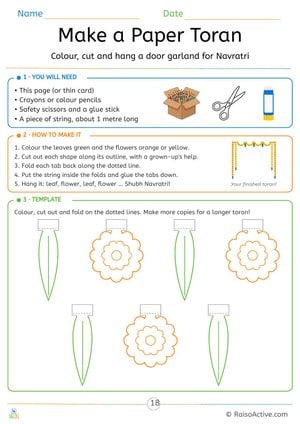
Make a Paper Toran: Navratri Craft Template
Ages 4-6 · Pre-K–KindergartenAges 4-6 · Reception–Year 1Ages 4-6 · LKG–UKGAges 4-6
Children follow step-by-step instructions to colour, cut, fold and glue a festival decoration, building scissor skills and fine motor control.
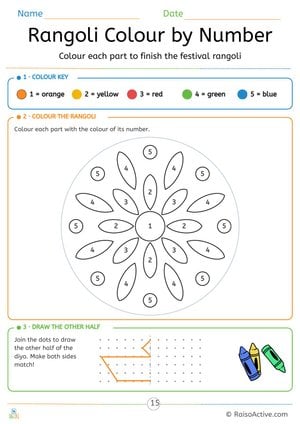
Navratri Rangoli Colour by Number and Symmetry Diya
Ages 4-6 · Pre-K–KindergartenAges 4-6 · Reception–Year 1Ages 4-6 · LKG–UKGAges 4-6
Children match numbers to colours using a key, colour a rangoli pattern carefully and draw the other half of a shape so both sides match.

Navratri Nine Colours Colouring Page: Colour the Garba Dancers
Ages 4-6 · Pre-K–KindergartenAges 4-6 · Reception–Year 1Ages 4-6 · LKG–UKGAges 4-6
Children learn the colour linked with each of the nine days of Navratri 2026 and practise colouring inside the lines.

Written by
Hemsweta Jain · Teacher Cheena
MBA and Early Childhood Educator, teaching since 2014 · Founder of RaisoActive, Mumbai
Published · Last reviewed
Related Resources
Printable Resources(10)
View all

Pattern Writing Pre-writing Skills Activity Book for 3-4 Year Olds
Ages 3-4 · PreschoolAges 3-4 · NurseryAges 3-4 · 44 pages
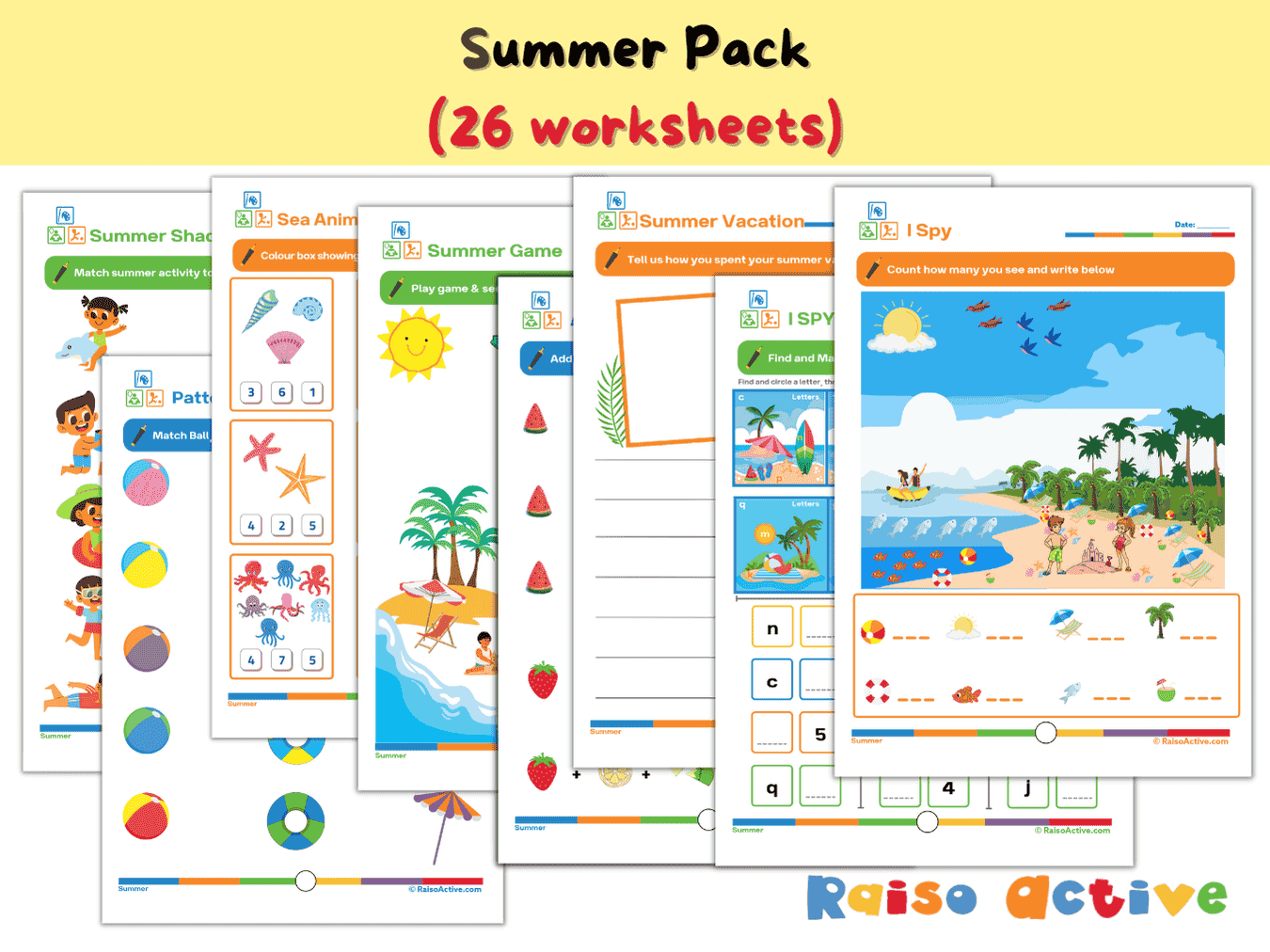

Summer Activity Pack: Math, Literacy, Puzzles & More for Preschool & Kindergarten
Ages 3-7 · Preschool–Grade 1Ages 3-7 · Nursery–Year 2Ages 3-7 · Nursery–Class 1Ages 3-7 · 26 pages
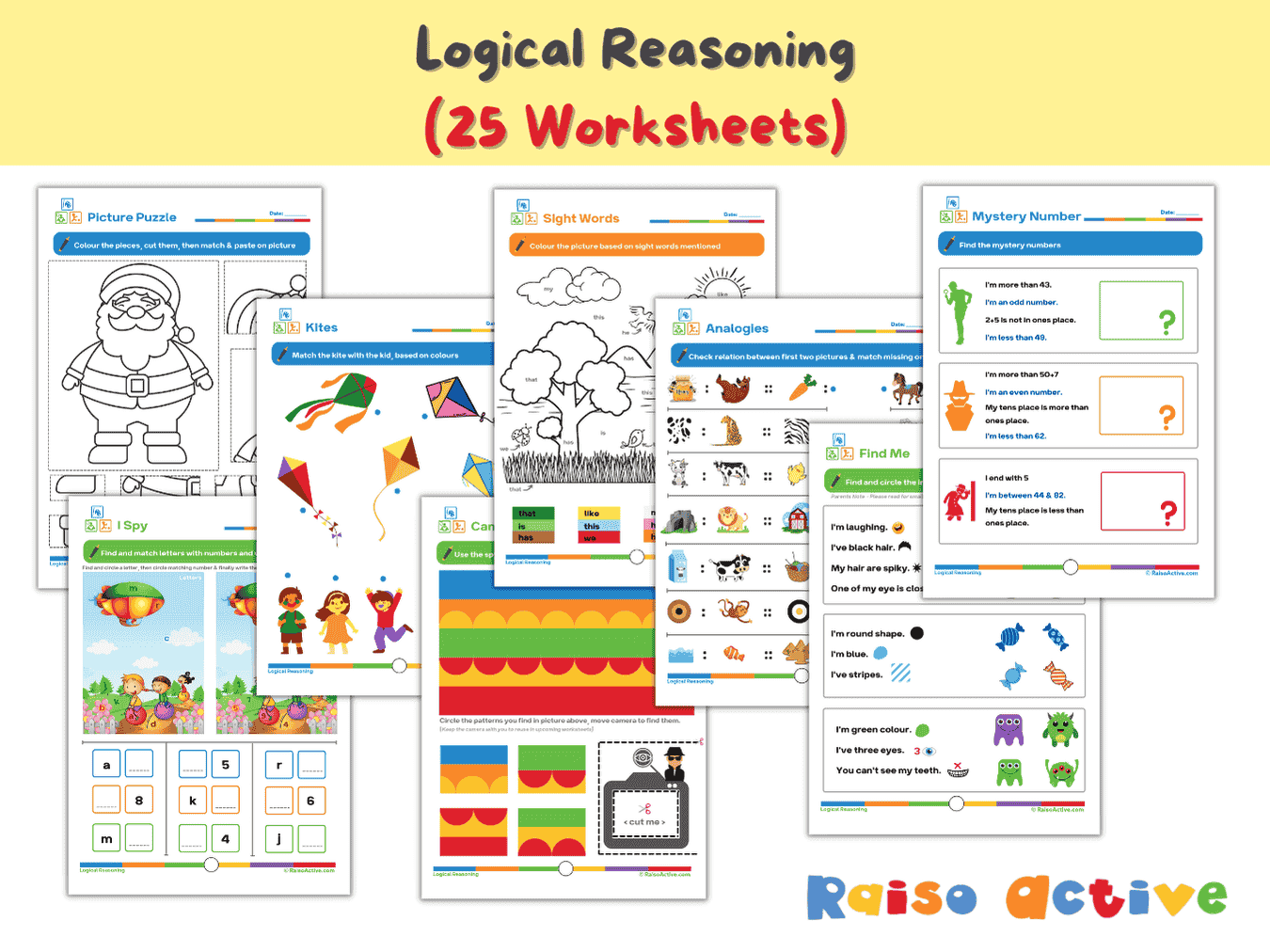

Logical Reasoning Activity Book for Preschool & Kindergarten | Patterns, Puzzles & Analogies
Ages 4-7 · Pre-K–Grade 1Ages 4-7 · Reception–Year 2Ages 4-7 · LKG–Class 1Ages 4-7 · 26 pages
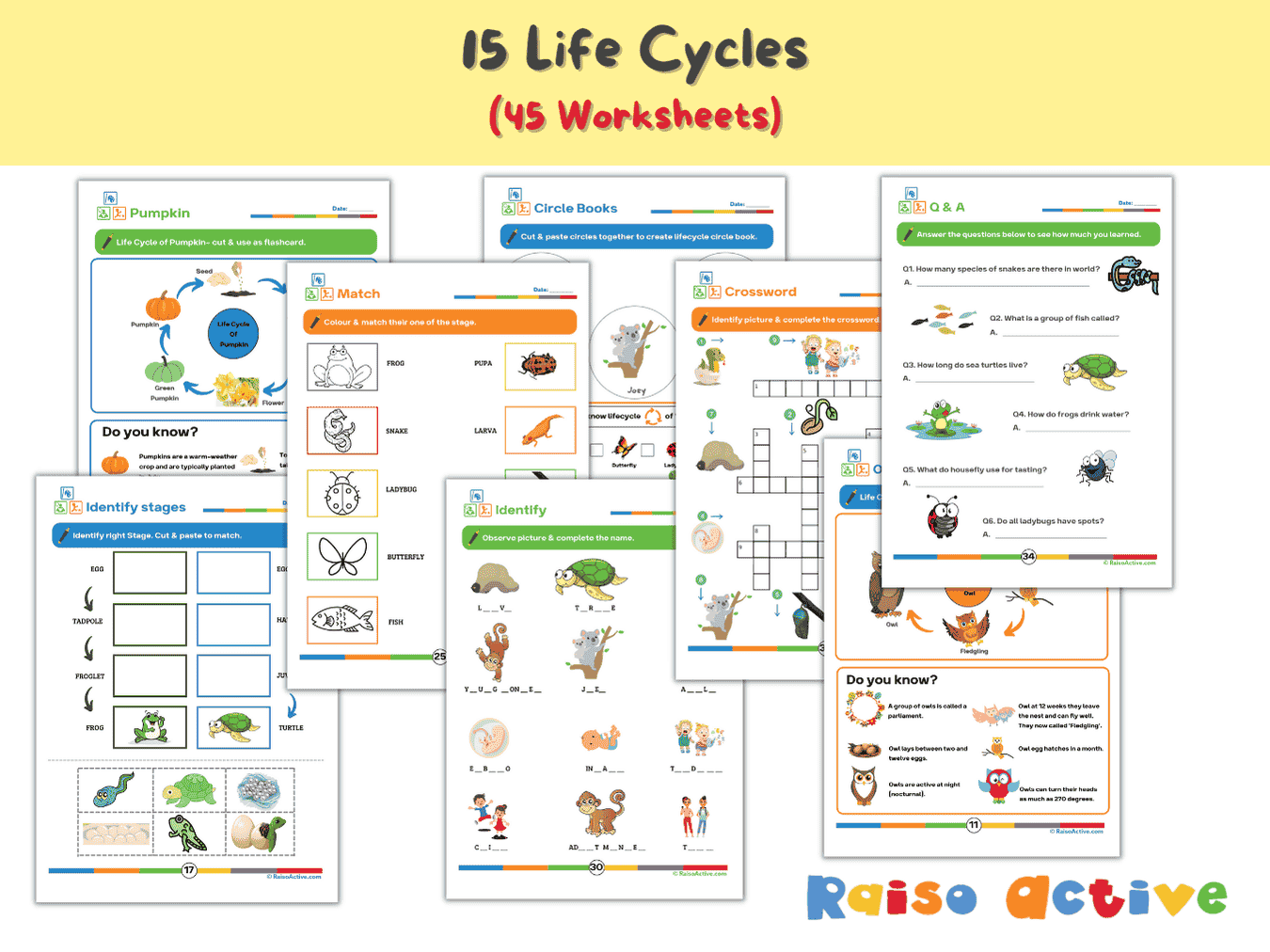

Lifecycles Activity Book & Flashcards for Preschool & Early Elementary
Ages 3-8 · Preschool–Grade 2Ages 3-8 · Nursery–Year 3Ages 3-8 · Nursery–Class 2Ages 3-8 · 46 pages
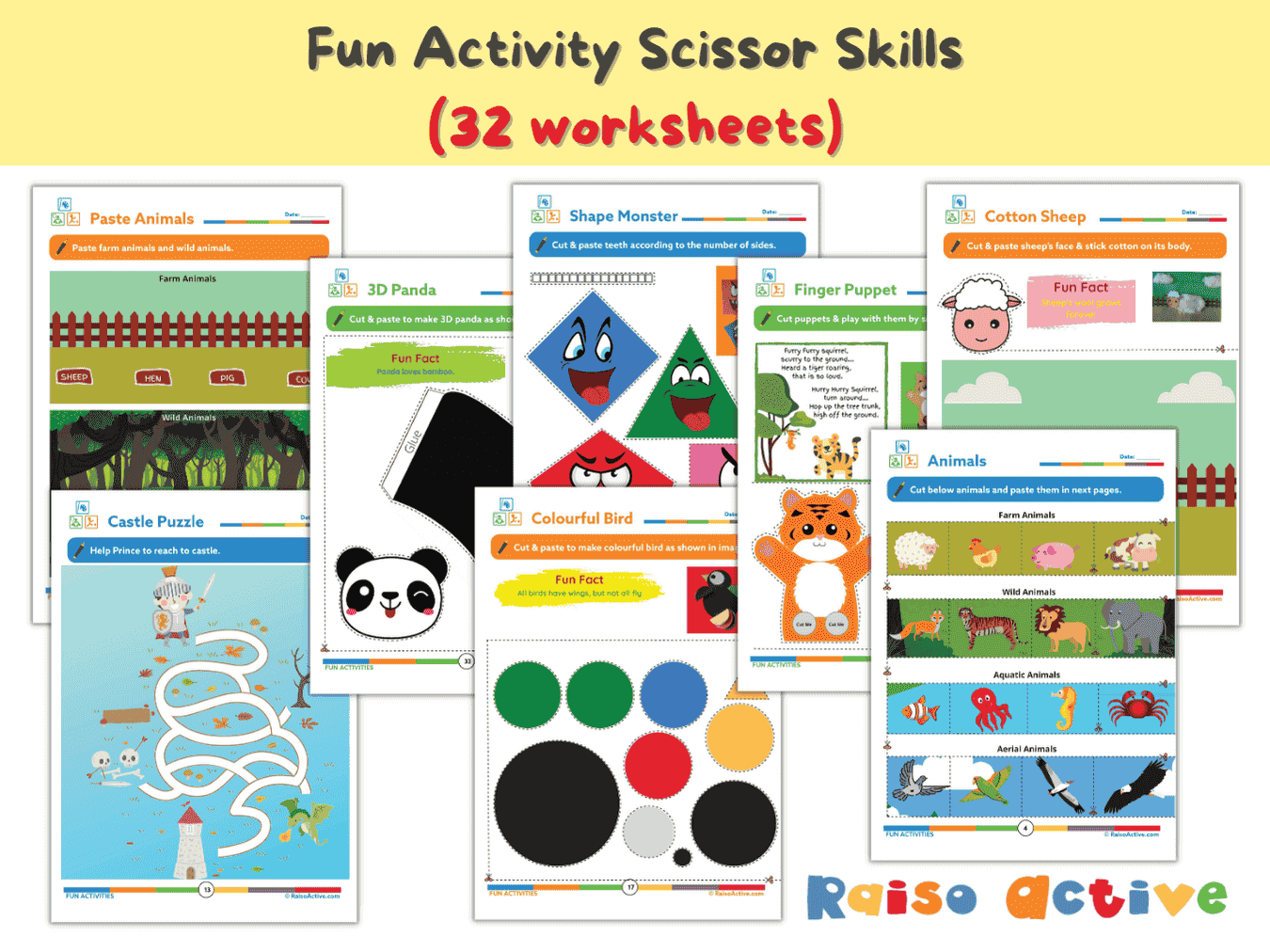
Preschool Scissor Skills Activity Book: Fine Motor & Craft Fun for Ages 3-6
Ages 3-6 · Preschool–KindergartenAges 3-6 · Nursery–Year 1Ages 3-6 · Nursery–UKGAges 3-6 · 35 pages
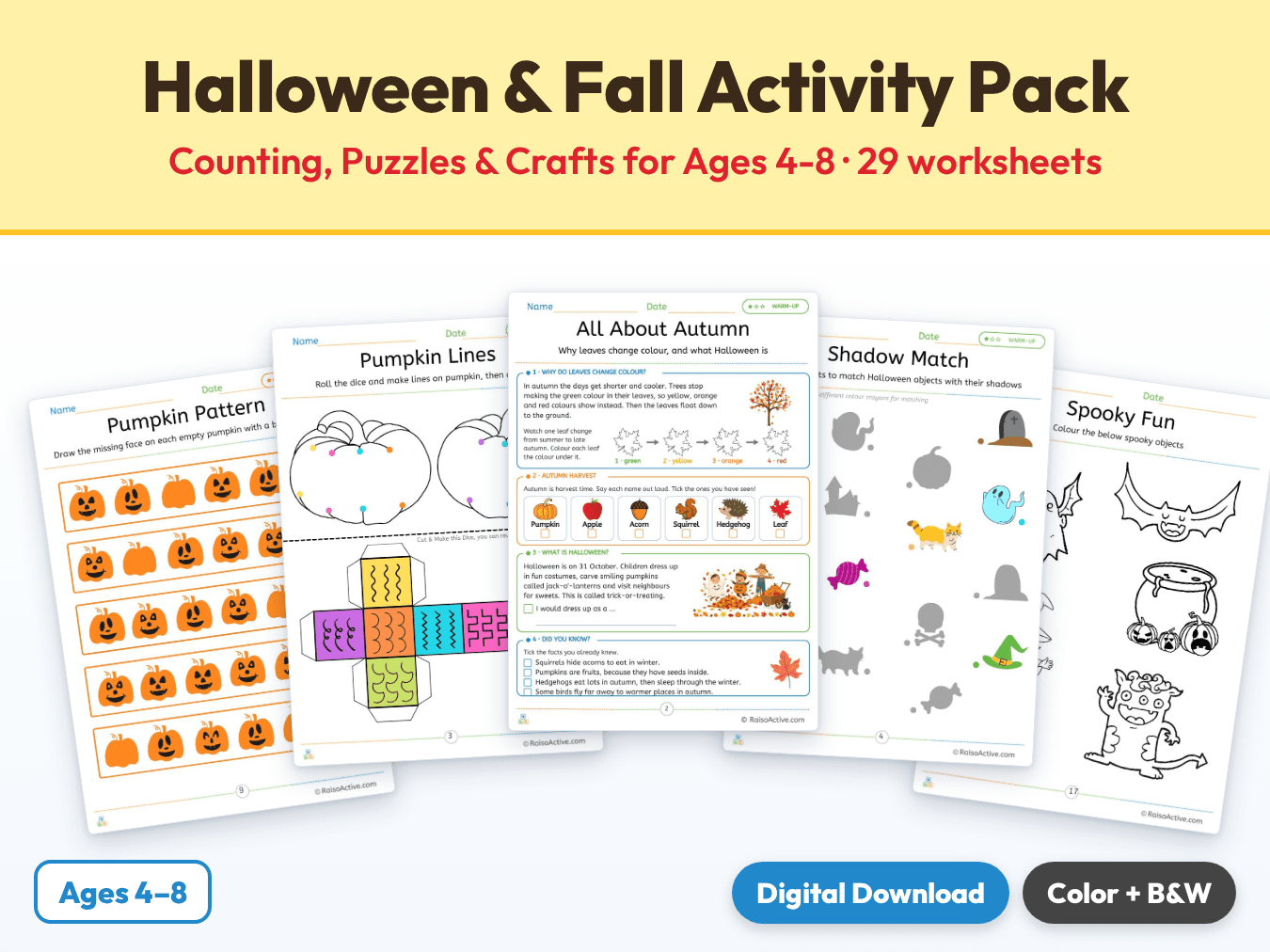
Halloween & Fall Activity Pack: Counting, Puzzles & Crafts for Ages 4-8
Ages 4-8 · Pre-K–Grade 2Ages 4-8 · Reception–Year 3Ages 4-8 · LKG–Class 2Ages 4-8 · 30 pages
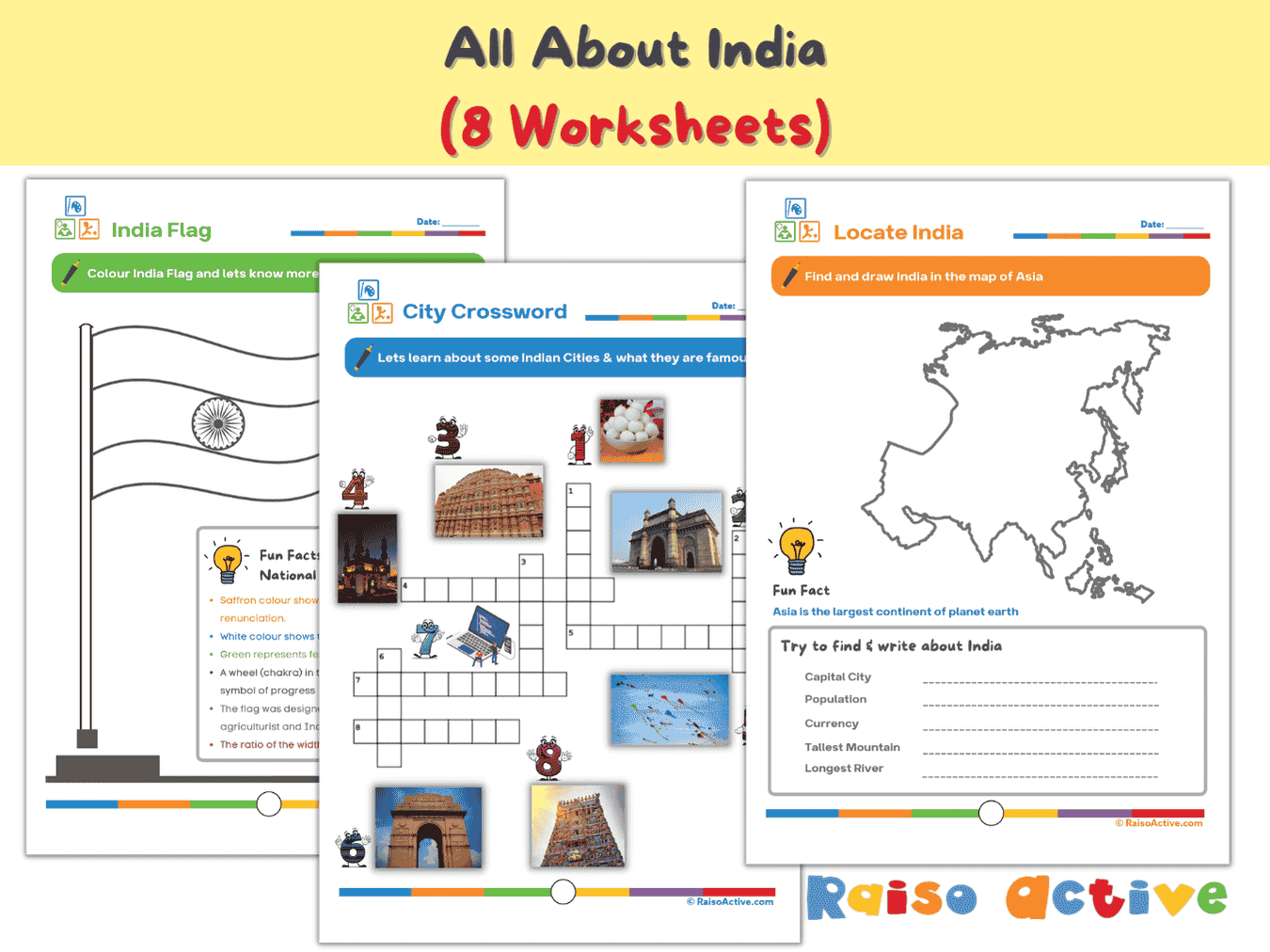
India Activity Book for Kids: Explore Geography, Culture & Symbols (Ages 5-8)
Ages 5-8 · Kindergarten–Grade 2Ages 5-8 · Year 1–Year 3Ages 5-8 · UKG–Class 2Ages 5-8 · 8 pages
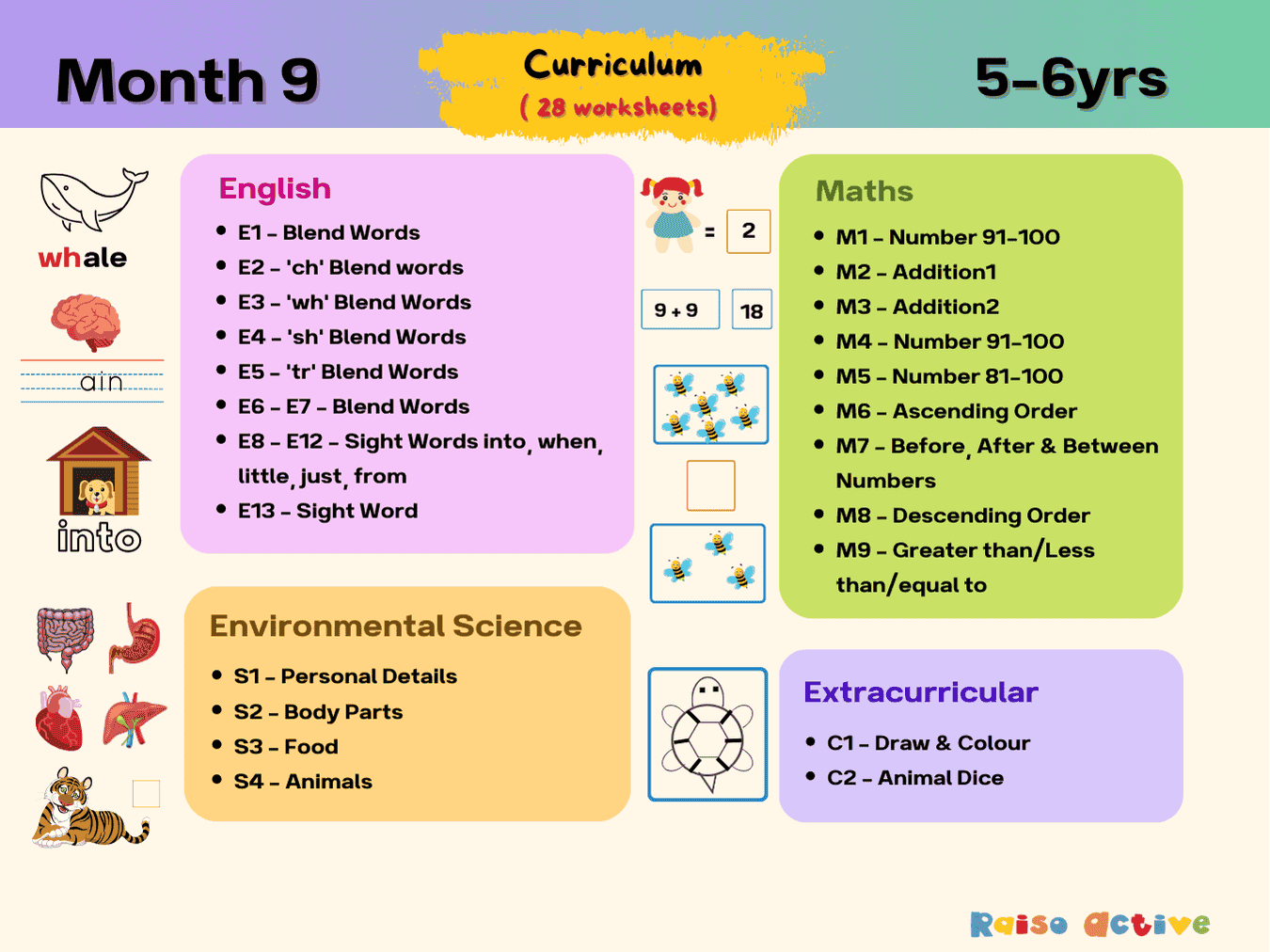
Month 9: Early Learning English Math Science | Ages 5-6
Ages 5-6 · KindergartenAges 5-6 · Year 1Ages 5-6 · UKGAges 5-6 · 31 pages
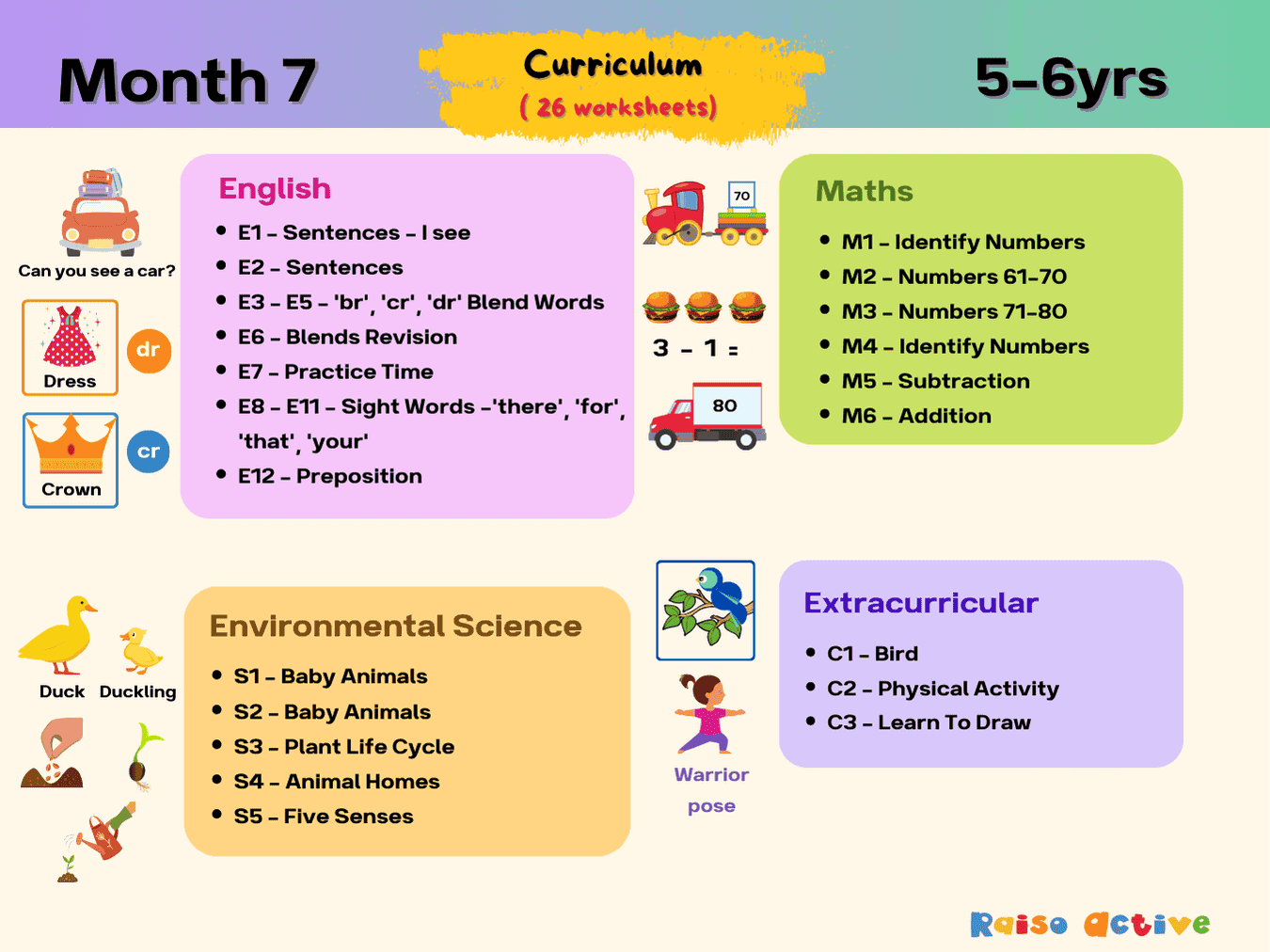
Month 7: Holistic Kindergarten Curriculum | Ages 5-6
Ages 5-6 · KindergartenAges 5-6 · Year 1Ages 5-6 · UKGAges 5-6 · 29 pages
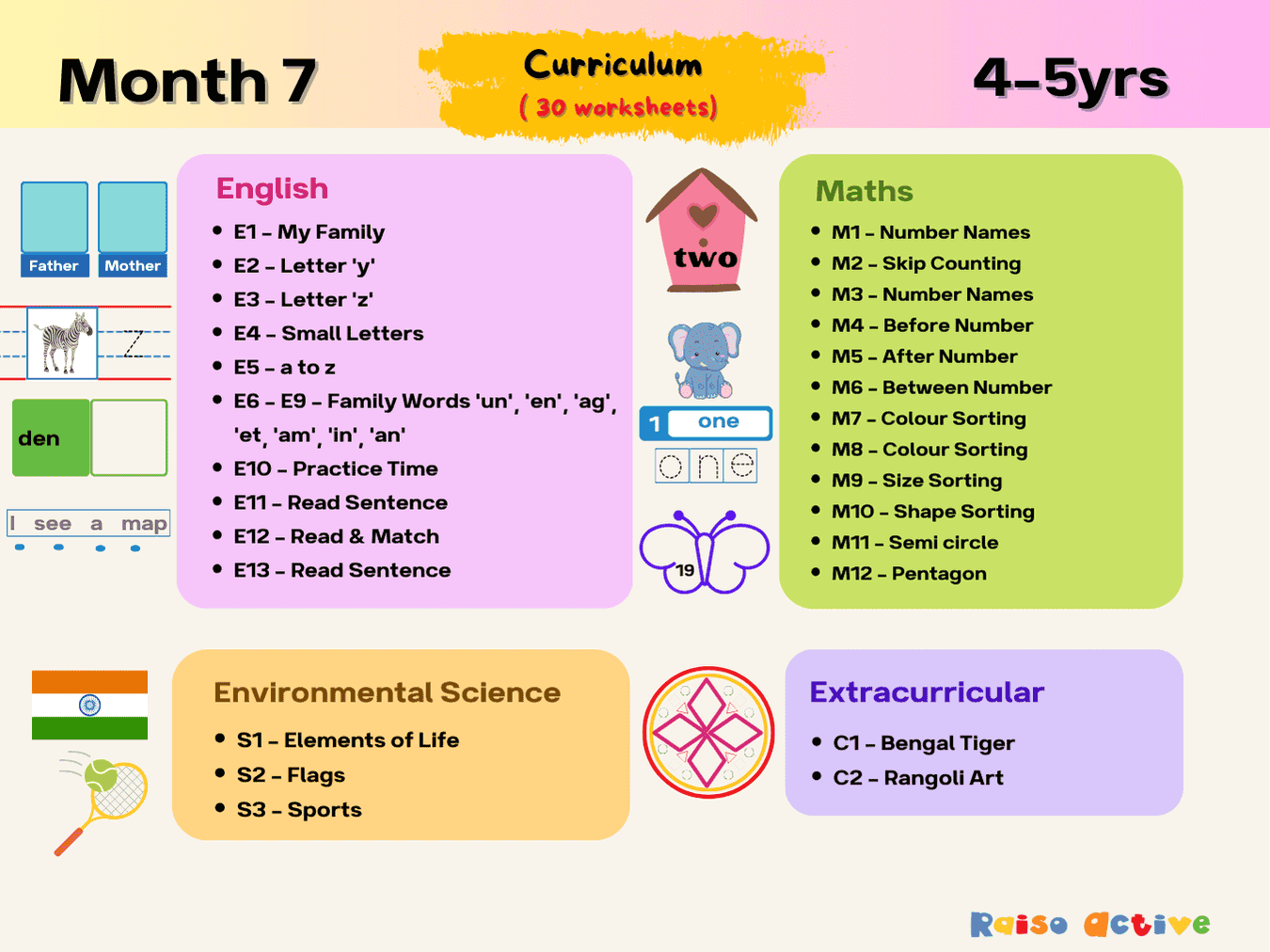
Month 7: Preschool Skills Through Play | Ages 4-5
Ages 4-5 · Pre-KAges 4-5 · ReceptionAges 4-5 · LKGAges 4-5 · 33 pages