Family Word Search Worksheet for Kids
Searching a grid for hidden family member words like mother, father, and sister builds vocabulary and visual scanning skills for children ages 4-6, requiring them to track letters carefully across rows, columns, and sometimes diagonals. This kind of focused letter tracking is excellent early practice for the visual attention reading fluency depends on later.
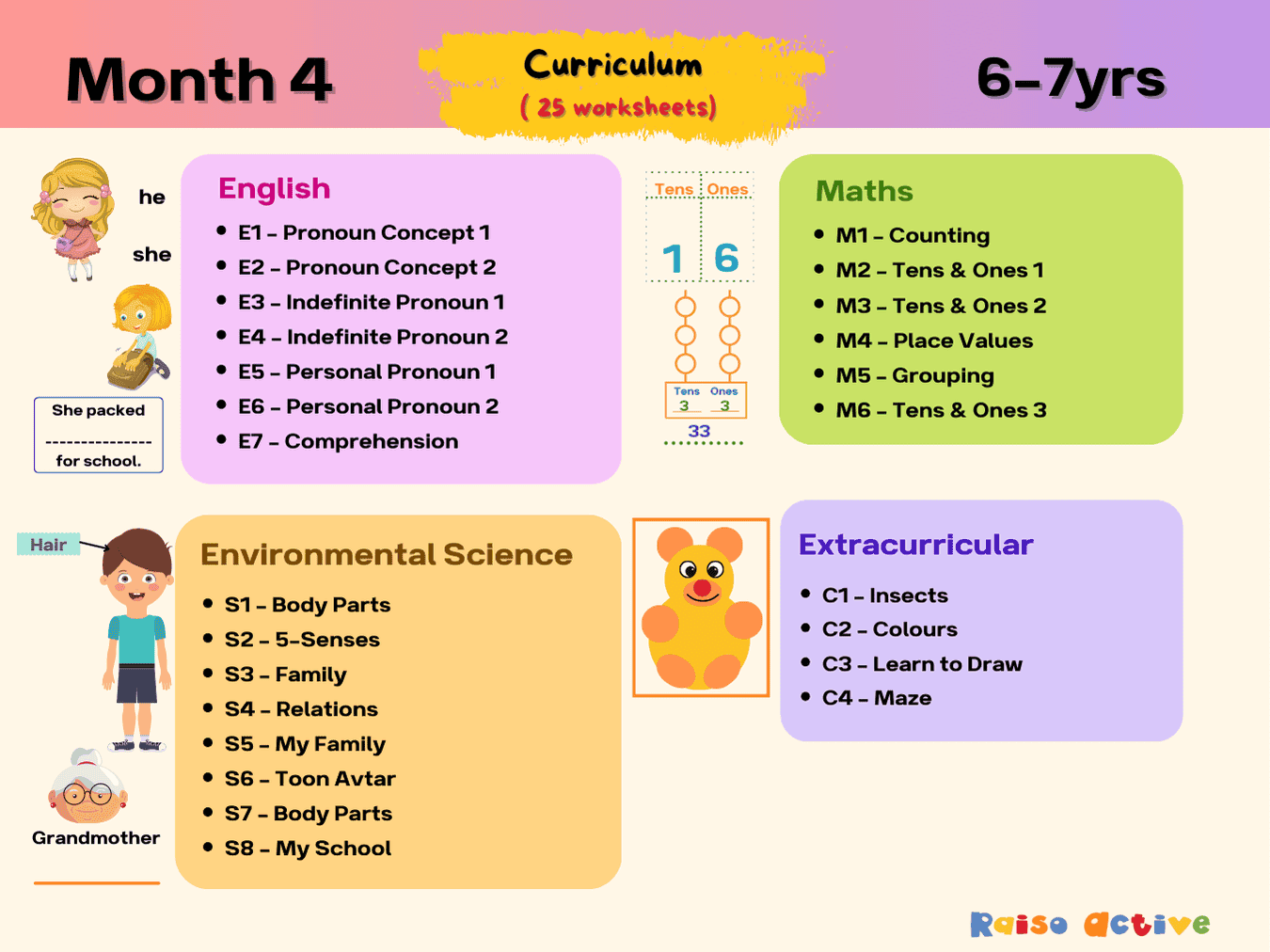
Part of the pack
Month 4: Learning & Development | Ages 6-7
This is page 19 of the pack. Ages 6-7 · Grade 1Ages 6-7 · Year 2Ages 6-7 · Class 1Ages 6-7
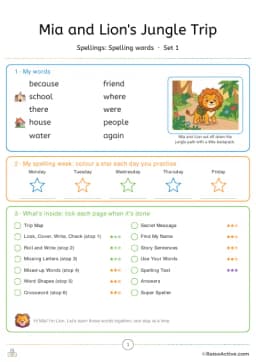
Made for your child
Spelling practice, made for your child
Their own spelling words turned into a pack: trace or look-cover-write-check, roll and write, a secret picture code, a word search, a crossword and a test, with their name in it.
Make a spelling packFree preview · free for members
Or start free: a word search with sight wordsCurriculum
- Earth & Environment > Environment Awareness
How to use this worksheet
Read through the list of family words together before starting, sounding out each one. Have your child scan the grid row by row, looking for the first letter of each word, then trace forward to see if the rest of the word matches. When they find a word, have them circle it in the grid and cross it off the list.
Materials needed
- Pencil
- Crayons
Extension activities
- 1Draw a picture of your own family and label each person.
- 2Write out the names of family members and try spelling them from memory.
- 3Make simple family word flashcards to review together during the week.
- 4Create your own mini word search using just two or three family words.
- 5Interview a family member and write down a fact they share.

Written by
Hemsweta Jain · Teacher Cheena
MBA and Early Childhood Educator, teaching since 2014 · Founder of RaisoActive, Mumbai
Every RaisoActive worksheet is designed and checked by the founder before publishing.
Published · Last reviewed
More from Month 4: Learning & Development | Ages 6-7

Color Mixing Worksheet for Preschoolers: Learn Primary and Secondary Colors!
Ages 4-6 · Pre-K–KindergartenAges 4-6 · Reception–Year 1Ages 4-6 · LKG–UKGAges 4-6
Identifying primary colors and predicting which two combine to create each secondary color introduces children ages 4-6 to basic color theory, an early scientific concept about how colors interact. This worksheet builds the vocabulary and reasoning skills needed to understand color mixing before testing it out with real paint or crayons.
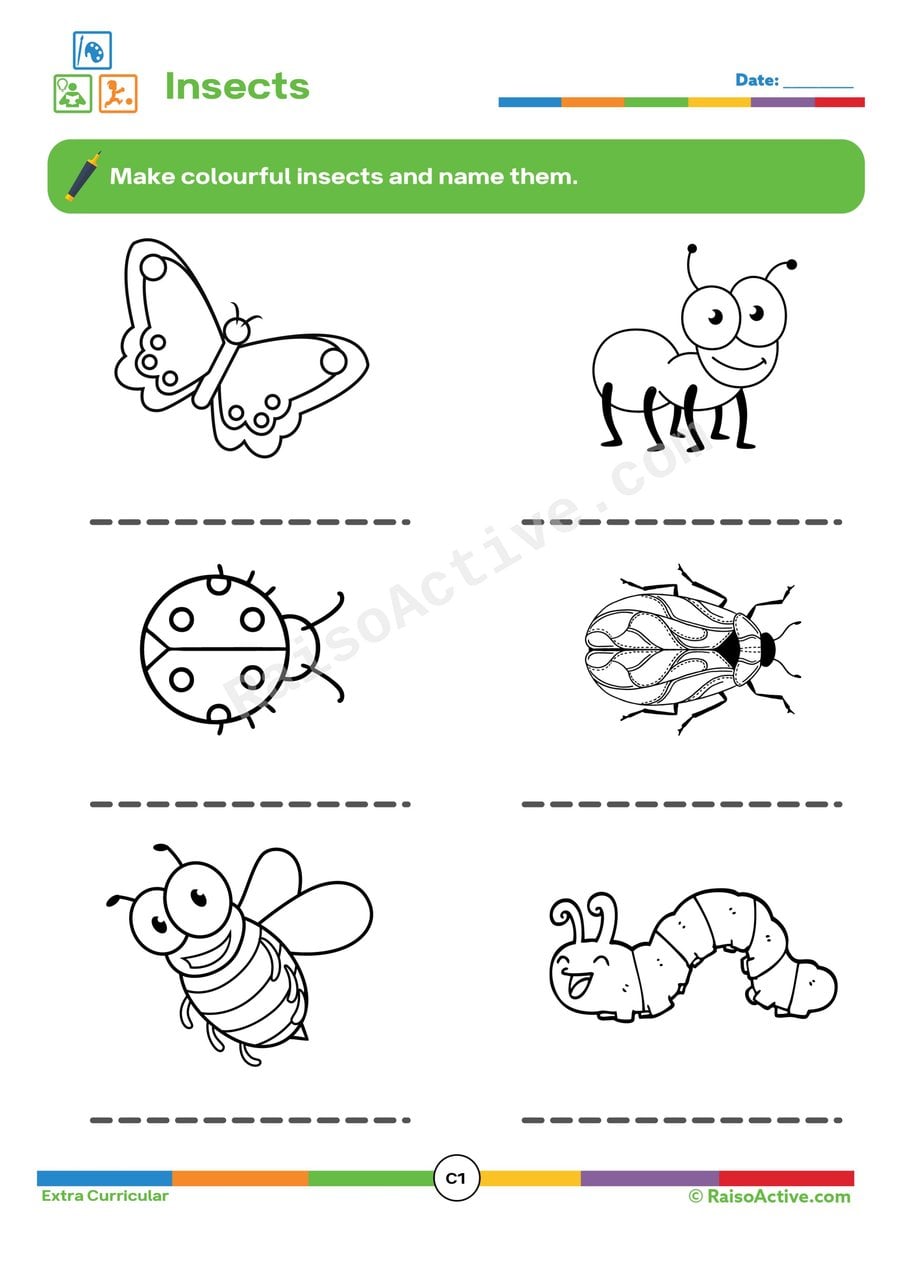
Color the Insects Worksheet for Preschoolers
Ages 3-5 · Preschool–Pre-KAges 3-5 · Nursery–ReceptionAges 3-5 · Nursery–LKGAges 3-5
Coloring a set of insects and writing their names afterward helps children ages 3-5 build insect vocabulary while practicing fine motor coloring control and connecting a picture to its written word. This combination of art and labeling reinforces new vocabulary more effectively than looking at pictures alone.

Parent's Guide: Learning Pronouns, Place Value, and More!
Ages 4-6 · Pre-K–KindergartenAges 4-6 · Reception–Year 1Ages 4-6 · LKG–UKGAges 4-6
This parent's guide brings together pronoun flashcards, tens-and-ones block arranging, family tree drawing, and a simple taste exploration, giving children ages 4-6 varied practice across grammar, place value, and sensory vocabulary in one flexible session. Because each section targets a different skill, the guide lets you follow whatever your child is most curious about that day.

Tens and Ones Worksheet: Counting and Place Value Practice!
Ages 4-6 · Pre-K–KindergartenAges 4-6 · Reception–Year 1Ages 4-6 · LKG–UKGAges 4-6
This worksheet introduces children ages 4-6 to place value by having them look at a two-digit number, break it into groups of ten and single ones, and represent each group by drawing the matching number of crayons. Understanding that '23' means two full groups of ten plus three more is a foundational concept for all later multi-digit addition, subtraction, and number sense.

Personal Pronouns Worksheet for Kids: Matching and Writing
Ages 3-5 · Preschool–Pre-KAges 3-5 · Nursery–ReceptionAges 3-5 · Nursery–LKGAges 3-5
Children ages 3-5 practice choosing and writing the correct personal pronoun — I, you, she, it, we, or they — for a picture or phrase, building an early grammar skill that makes their spoken and written sentences sound natural. Matching a pronoun to who or what it refers to also strengthens reading comprehension, since pronouns require tracking who is being talked about.

My School Cut and Paste Worksheet for Preschoolers
Ages 3-5 · Preschool–Pre-KAges 3-5 · Nursery–ReceptionAges 3-5 · Nursery–LKGAges 3-5
Cutting out school-related pictures and pasting them into the correct spaces on a school building teaches children ages 3-5 vocabulary for familiar school spaces, like a classroom or playground, while also strengthening spatial matching and fine motor cutting and pasting skills. This activity helps children who are new to school, or preparing to start, connect words to places they'll actually encounter.

Pronoun Power: Circle the Correct Pronoun Worksheet
Ages 4-6 · Pre-K–KindergartenAges 4-6 · Reception–Year 1Ages 4-6 · LKG–UKGAges 4-6
This worksheet helps children ages 4-6 practice using the pronouns 'he' and 'she' correctly by looking at a picture of a person and circling the pronoun that matches. Correctly substituting a pronoun for a person's name is an early grammar milestone that makes spoken and written sentences smoother and less repetitive.
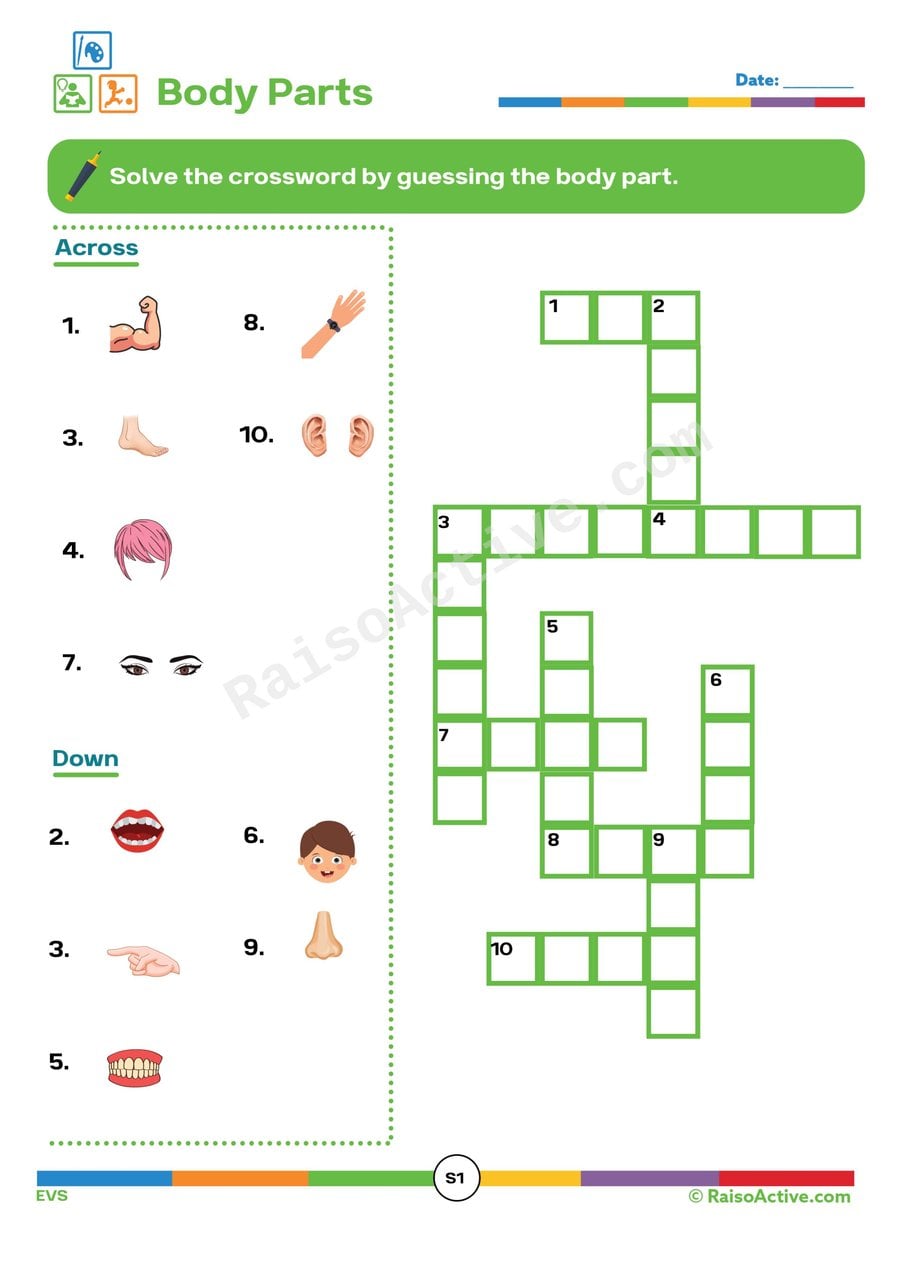
Body Parts Crossword Puzzle Worksheet for Kids
Ages 3-5 · Preschool–Pre-KAges 3-5 · Nursery–ReceptionAges 3-5 · Nursery–LKGAges 3-5
Solving a crossword using body part picture clues teaches children ages 3-5 to connect a visual image with its written name, building both vocabulary and early spelling skills. Working through the crossword's number grid also introduces the format of organizing answers into specific boxes, a small but useful pre-literacy skill.
Related worksheets

Earth Day Sorting Worksheet: Good vs. Bad for the Environment!
Ages 4-6 · Pre-K–KindergartenAges 4-6 · Reception–Year 1Ages 4-6 · LKG–UKGAges 4-6
Sorting pictures of everyday actions into 'good for the environment' and 'bad for the environment' introduces children ages 4-6 to cause-and-effect reasoning about human impact, an early building block for environmental awareness and responsible habits.
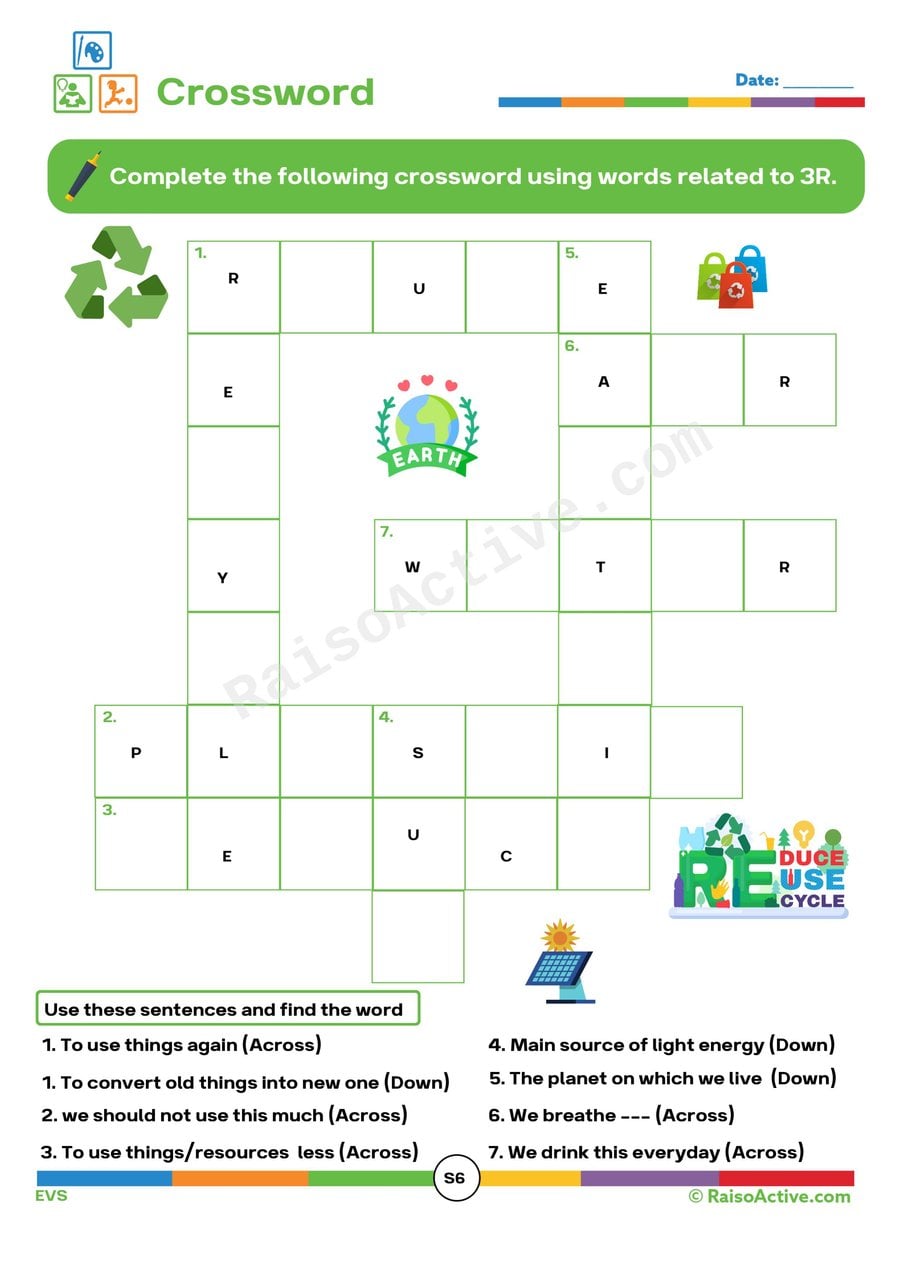
3R Crossword Puzzle Worksheet for Kids
Ages 4-6 · Pre-K–KindergartenAges 4-6 · Reception–Year 1Ages 4-6 · LKG–UKGAges 4-6
This crossword puzzle challenges children ages 4-6 to connect vocabulary about reducing, reusing, and recycling to its written spelling, reinforcing environmental concepts through reading and word-building rather than picture matching alone. Using clues to determine the correct word and then filling in letter boxes practices phonics, spelling, and logical deduction together, since letters that cross with other answers must match on both words.

Keeping Our Environment Clean Worksheet for Kids
Ages 3-5 · Preschool–Pre-KAges 3-5 · Nursery–ReceptionAges 3-5 · Nursery–LKGAges 3-5
This worksheet builds early environmental awareness in children ages 3-5 by having them evaluate pictured actions — like throwing litter in a bin versus littering on the ground — and mark each one as good or bad for the environment. Making this judgment call requires children to connect a specific action to a broader consequence, an early form of cause-and-effect reasoning applied to environmental responsibility. Introducing this concept young helps normalize caring for shared spaces as a natural part of daily behavior rather than an abstract adult concern.
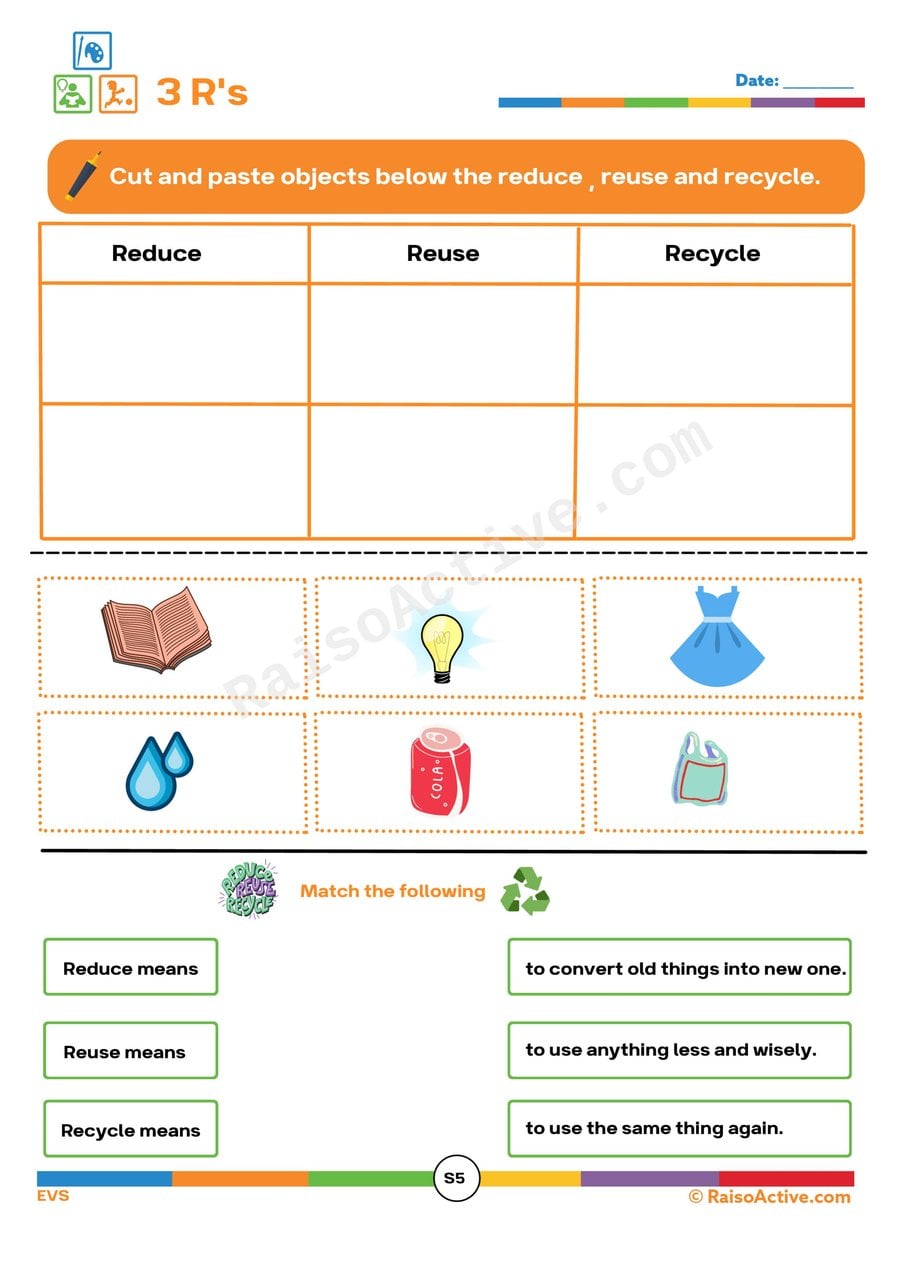
Reduce, Reuse, Recycle Worksheet for Kids
Ages 4-6 · Pre-K–KindergartenAges 4-6 · Reception–Year 1Ages 4-6 · LKG–UKGAges 4-6
Children ages 4-6 learn the three pillars of environmental responsibility — reduce, reuse, and recycle — by sorting pictures of everyday items into the correct category and matching each term to its definition. This worksheet builds early environmental literacy and categorical thinking, asking children to consider not just what an item is, but what should happen to it once it's no longer needed. It's a concrete entry point into sustainability concepts that will expand in later grades.
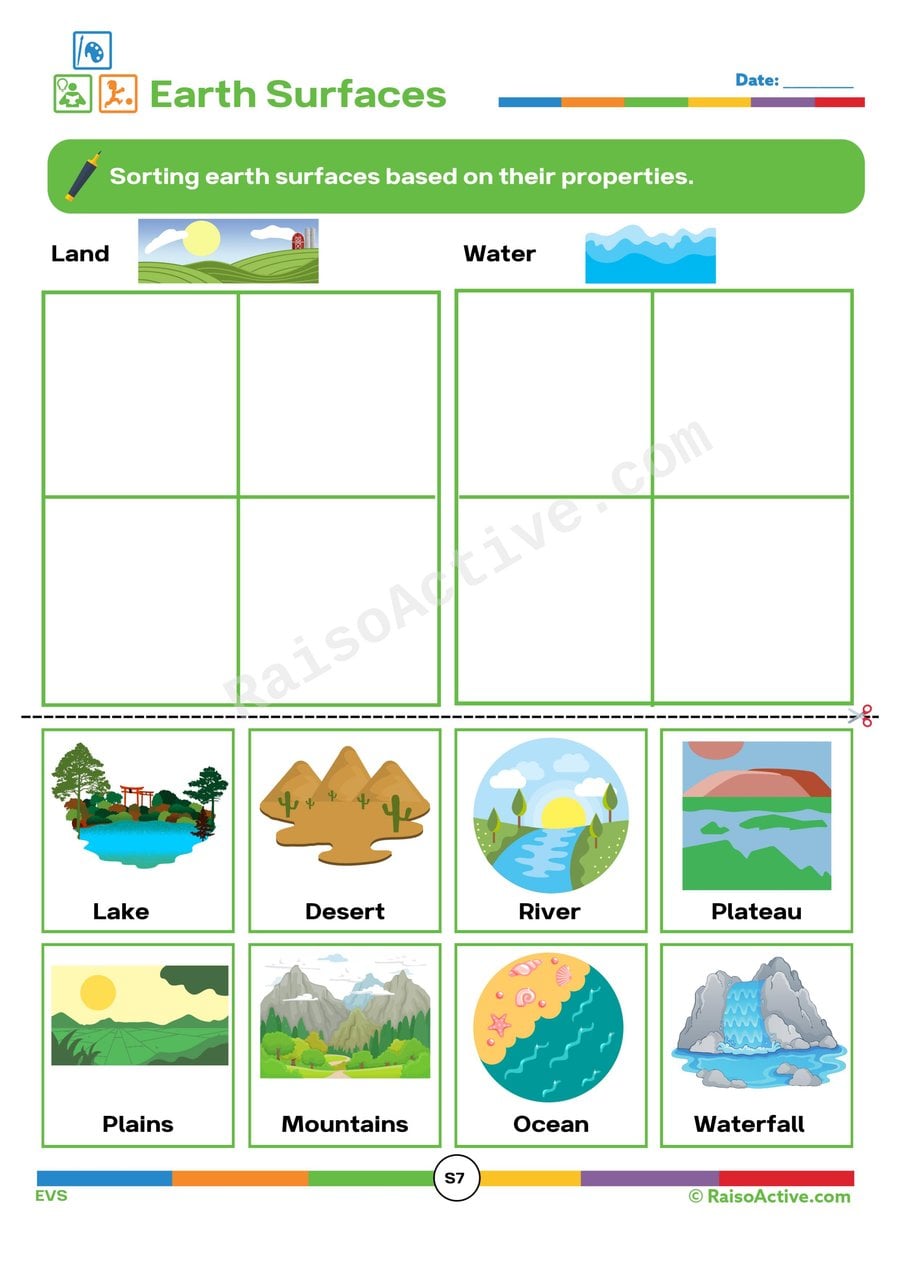
Earth Surfaces Sorting Worksheet for Kids
Ages 4-6 · Pre-K–KindergartenAges 4-6 · Reception–Year 1Ages 4-6 · LKG–UKGAges 4-6
Sorting pictures into 'land' and 'water' categories builds early classification skills and basic earth science vocabulary for children ages 4-6, helping them notice physical differences between surfaces they see in daily life.

Phonics Level 3 Long Vowels Certificate of Achievement
Ages 5-7 · Kindergarten–Grade 1Ages 5-7 · Year 1–Year 2Ages 5-7 · UKG–Class 1Ages 5-7
Children celebrate finishing Phonics Level 3 and look back at the five long vowel sounds they can now read: long a, e, i, o and u.
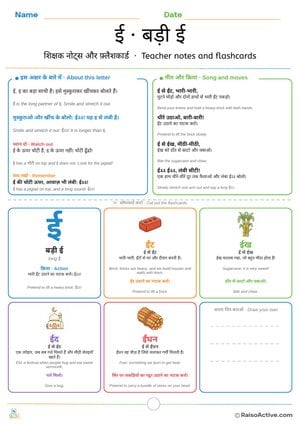
Hindi Letter ई (ee) Teacher Notes and Flashcards | ई · बड़ी ई
Ages 3-7 · Preschool–Grade 1Ages 3-7 · Nursery–Year 2Ages 3-7 · Nursery–Class 1Ages 3-7
Children meet the long vowel ई with a short note for adults, a song with actions and cut-out flashcards for ईंट (brick), ईख (sugarcane), ईद (Eid), ईंधन (fuel). They hear the sound at the start of real words and link it to a hand action.
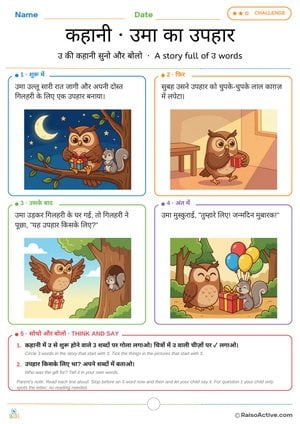
Letter उ Story: Uma's Birthday Gift | कहानी उमा का उपहार
Ages 3-7 · Preschool–Grade 1Ages 3-7 · Nursery–Year 2Ages 3-7 · Nursery–Class 1Ages 3-7
Uma the owl stays up all night to make a gift for her friend the squirrel, then flies to her home and says it is a birthday present just for her. Children listen, look at the four pictures, spot the words that start with उ and retell what happened in their own words.
Guides for this topic

Sight Words by Age: The First 50 Words and How to Teach Them Without Flashcard Fatigue
Which sight words to teach first and why, the heart-word method, a read-trace-write-find routine, games, and a by-age table of typical sight-word progress.
How to Teach CVC Blending: A Step-by-Step Method That Works in Two Weeks
A step-by-step method for teaching CVC blending, covering continuous sounds, word families, common errors, and a 14-day plan that most children finish reading CVC words.

Documenting Learning Without Drowning in Data: A Practical Guide for Parents and Teachers
Learn practical ways to document your child's learning without overwhelm. Simple portfolios, observation tips, and printable trackers for ages 1-8.
Reviews
Every worksheet for ages 4–6, no watermark
Members download the full library of 1,000+ worksheets and every activity pack without watermarks or daily limits. One year costs ₹999 in India or $20 elsewhere.
See membership plansOr download any worksheet free with a watermark (5 a day).