Fun Activities Book for Kids: Develop Fine Motor Skills!
Because this book strings together cutting, tracing mazes, and simple puzzles in one place, children ages 3-5 get repeated practice across several fine motor skills in a single sitting rather than just one — which mirrors how occupational therapists structure real fine-motor sessions. Moving between different task types (snip, trace, solve) also builds attention and task-switching stamina appropriate for this age.
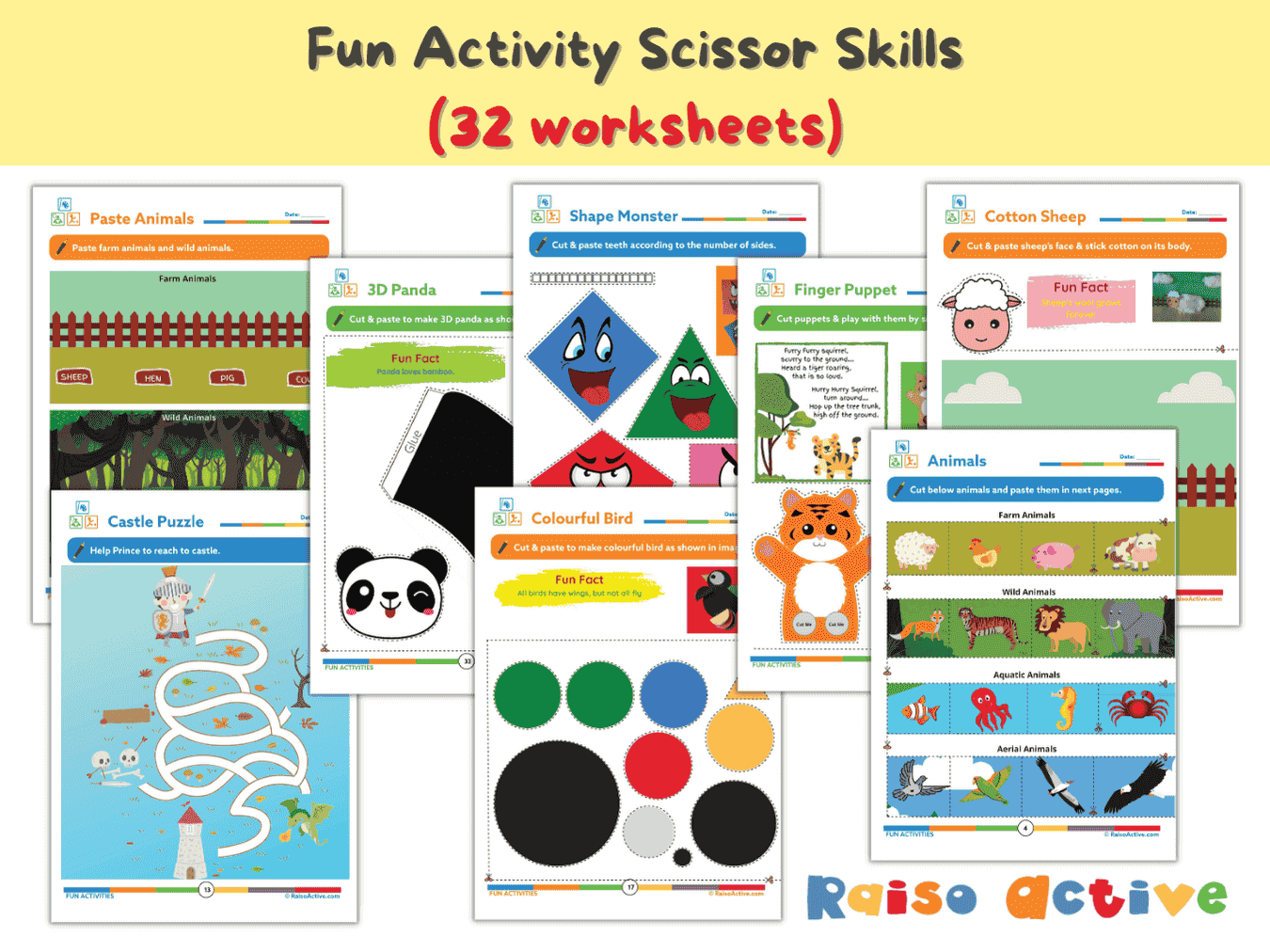
Part of the pack
Preschool Scissor Skills Activity Book: Fine Motor & Craft Fun for Ages 3-6
This is page 35 of the pack. Ages 3-6 · Preschool–KindergartenAges 3-6 · Nursery–Year 1Ages 3-6 · Nursery–UKGAges 3-6
Curriculum
- Fine Motor > Scissor Skills & Cutting
How to use this worksheet
Look through the book together first so your child knows what kind of activities are coming up. Work through the pages in order, starting with an easier cutting page to warm up their hand before moving to a maze or puzzle page. Keep scissors, glue, pencils, and crayons within reach so you aren't stopping mid-activity to search for supplies. Let your child choose which page to do next once the first few are finished, to keep their interest up.
Materials needed
- Scissors
- Glue
- Pencils
- Crayons
Extension activities
- 1Set a timer for 10-15 minutes of 'activity book time' each day to build a short, steady practice habit.
- 2Create a simple fine motor basket at home with tongs, clothespins, and beads for extra between-page practice.
- 3Have your child pick their favorite page from the book and explain why they liked it.
- 4Turn leftover cut-out pieces into a collage on a blank sheet of paper.
- 5Time how long a maze or cutting page takes and see if your child gets faster with practice.

Written by
Hemsweta Jain · Teacher Cheena
MBA and Early Childhood Educator, teaching since 2014 · Founder of RaisoActive, Mumbai
Every RaisoActive worksheet is designed and checked by the founder before publishing.
Published · Last reviewed
More from Preschool Scissor Skills Activity Book: Fine Motor & Craft Fun for Ages 3-6

Funny Clown Craft: Cut and Paste Worksheet for Kids
Ages 3-5 · Preschool–Pre-KAges 3-5 · Nursery–ReceptionAges 3-5 · Nursery–LKGAges 3-5
Curling colorful paper strips into loops and gluing the ends together builds a different kind of fine motor control than straight cutting — bending, holding, and pinching paper into a curved shape while applying glue — which strengthens hand coordination in a new way. Assembling the finished clown from these loops also reinforces color recognition and the idea of building something bigger from repeated smaller pieces.

Giraffe Cut and Paste Worksheet for Preschoolers
Ages 3-5 · Preschool–Pre-KAges 3-5 · Nursery–ReceptionAges 3-5 · Nursery–LKGAges 3-5
Assembling a giraffe from separate cut-out parts and gluing them onto a background gives children practice with proportion and placement — a giraffe's long neck and small head need to be positioned correctly relative to its body — which is a slightly more advanced spatial task than assembling rounder, simpler animals. This craft at ages 3-5 builds scissor control alongside basic animal knowledge.

Parent's Guide to Scissor Skills: Fun Activities for Preschoolers
Ages 3-5 · Preschool–Pre-KAges 3-5 · Nursery–ReceptionAges 3-5 · Nursery–LKGAges 3-5
This guide walks through the progression of scissor skills that most children move through between ages 3 and 5 — from squeezing to snip fringe, to cutting straight lines, to curves — rather than a single activity, so it teaches adults how to sequence practice rather than teaching a single skill directly. Following the staged activities (tearing, spraying water, punching holes, snipping with chopsticks) builds the specific hand-strength and bilateral coordination that true scissor cutting depends on before a child is even handed scissors.
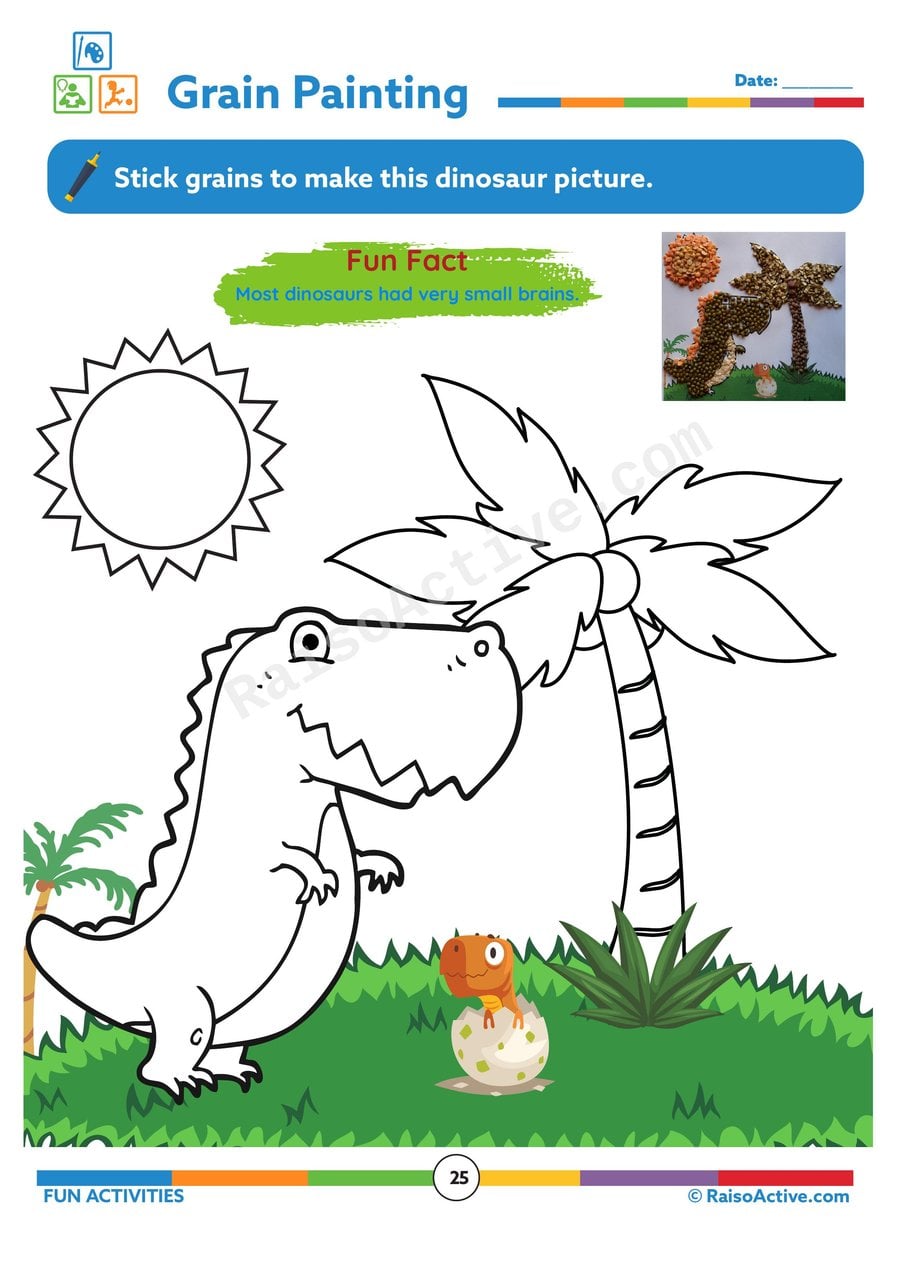
Dinosaur Grain Painting Worksheet for Kids
Ages 3-5 · Preschool–Pre-KAges 3-5 · Nursery–ReceptionAges 3-5 · Nursery–LKGAges 3-5
Sticking individual grains like rice or lentils onto a dinosaur outline is a sensory-rich fine motor task that asks for a precise pinch-and-place motion very different from painting or crayon coloring, building the same small-muscle control used later for holding scissors and a pencil. The tactile variety of different grains also gives young children valuable sensory input that supports attention and focus.

Snow Maze Adventure: Help the Girl Reach the Igloo!
Ages 3-5 · Preschool–Pre-KAges 3-5 · Nursery–ReceptionAges 3-5 · Nursery–LKGAges 3-5
This worksheet helps young learners develop crucial pre-writing skills by guiding a pencil through a visual path. Children will practice fine motor control and hand-eye coordination as they navigate the snow maze. They'll also engage in early critical thinking, planning a route to help the girl reach the igloo.

Community Helpers Transport Match Worksheet for Preschoolers
Ages 3-5 · Preschool–Pre-KAges 3-5 · Nursery–ReceptionAges 3-5 · Nursery–LKGAges 3-5
Cutting out vehicles and matching them to the correct community helper builds scissor control in children ages 3-5 while reinforcing social studies knowledge about which vehicle goes with which job, like a fire truck for a firefighter or a mail truck for a mail carrier. This pairing task asks children to reason about real-world associations rather than simply matching identical pictures, a small step up in thinking from basic matching.
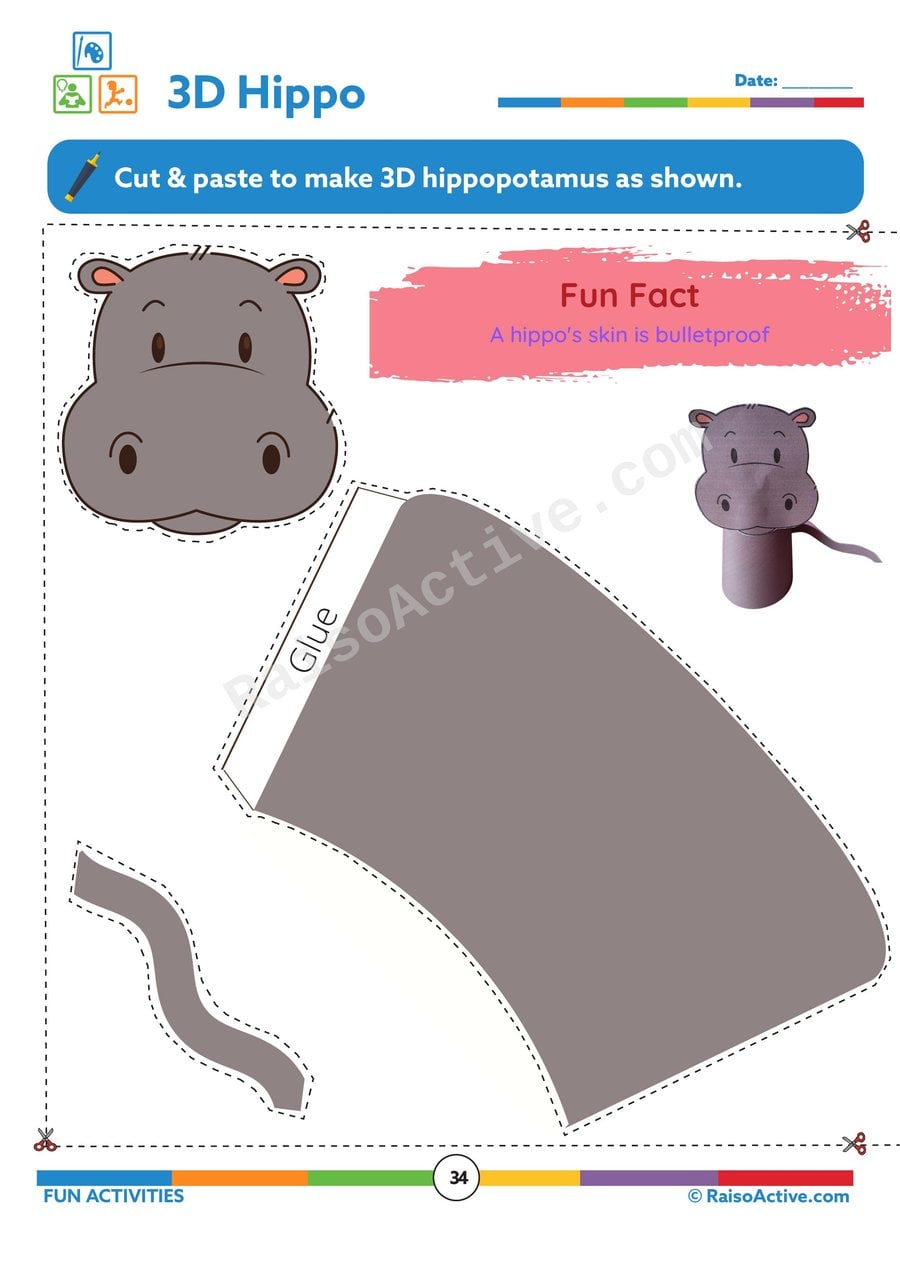
3D Hippo Cut & Paste Worksheet for Preschoolers
Ages 3-5 · Preschool–Pre-KAges 3-5 · Nursery–ReceptionAges 3-5 · Nursery–LKGAges 3-5
Like other 3D paper crafts, building this hippo from flat cut pieces that fold and glue into a standing shape helps 3-5 year olds grasp that paper can be transformed from flat to solid, while the multi-step process — cut, fold, glue — builds sequencing skills beyond a single-action worksheet. The hippo theme also gives an easy hook for a fun animal fact conversation.
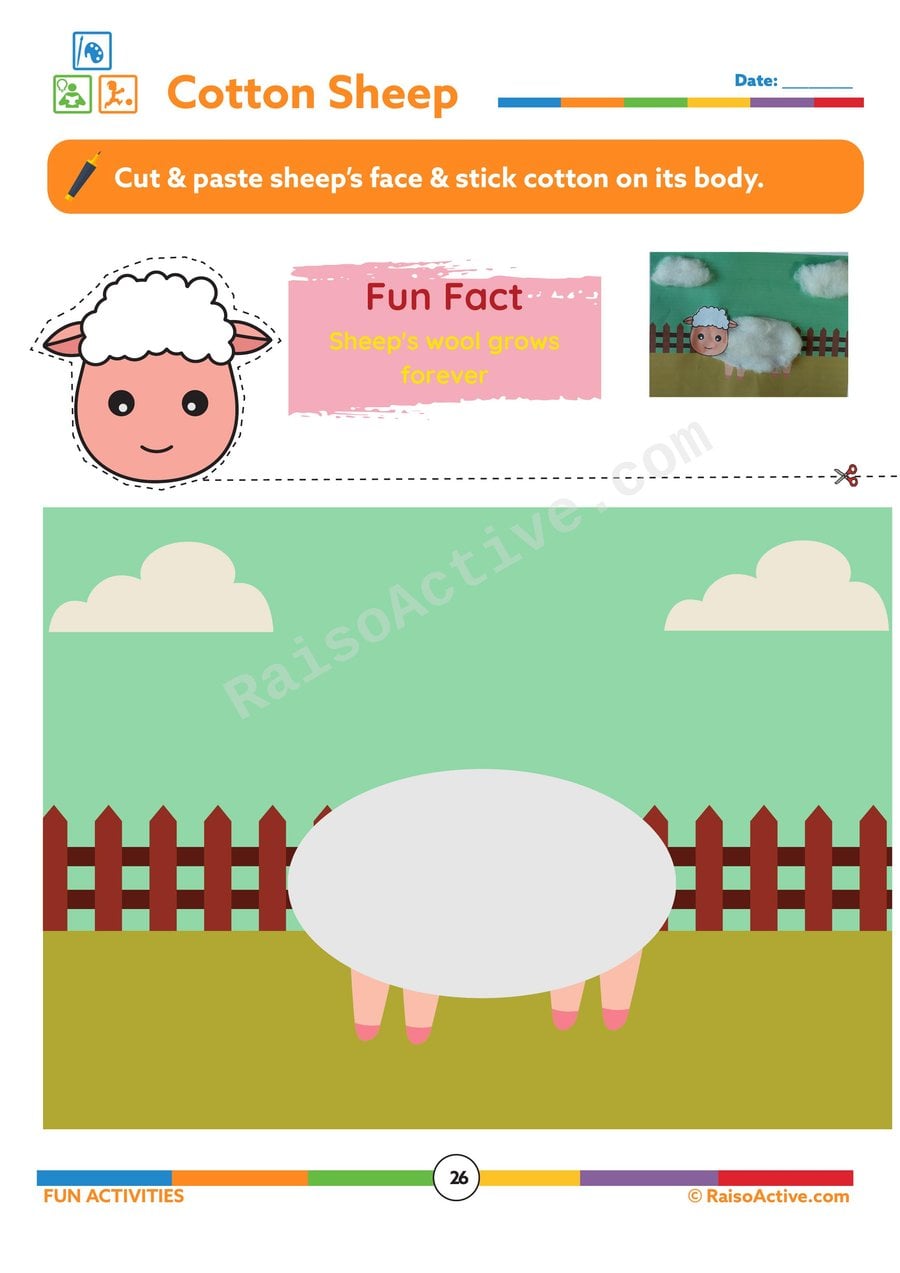
Cotton Sheep Craft Worksheet for Preschoolers
Ages 3-5 · Preschool–Pre-KAges 3-5 · Nursery–ReceptionAges 3-5 · Nursery–LKGAges 3-5
Cutting out the sheep's face and body and then pressing on individual cotton balls to build up its wool gives children a satisfying sensory contrast — the crisp, controlled cut of paper versus the soft, pinch-and-place texture of cotton — while practicing pincer grip strength needed for holding a pencil. The sheep theme also opens up simple, concrete conversation about where wool comes from.
Related worksheets

Fine Motor Skills Activities for Kids: Parent's Guide
Ages 3-5 · Preschool–Pre-KAges 3-5 · Nursery–ReceptionAges 3-5 · Nursery–LKGAges 3-5
This guide gives parents and teachers of children ages 3-5 a set of hands-on activities — using grains, flowers, textured cloth, and salt or sugar — that build the small hand muscles and finger control needed for holding a pencil correctly and writing later on. Working with varied, everyday materials rather than a single worksheet page exposes children to different grips, pressures, and textures, which develops fine motor strength more broadly than pencil-and-paper practice alone.
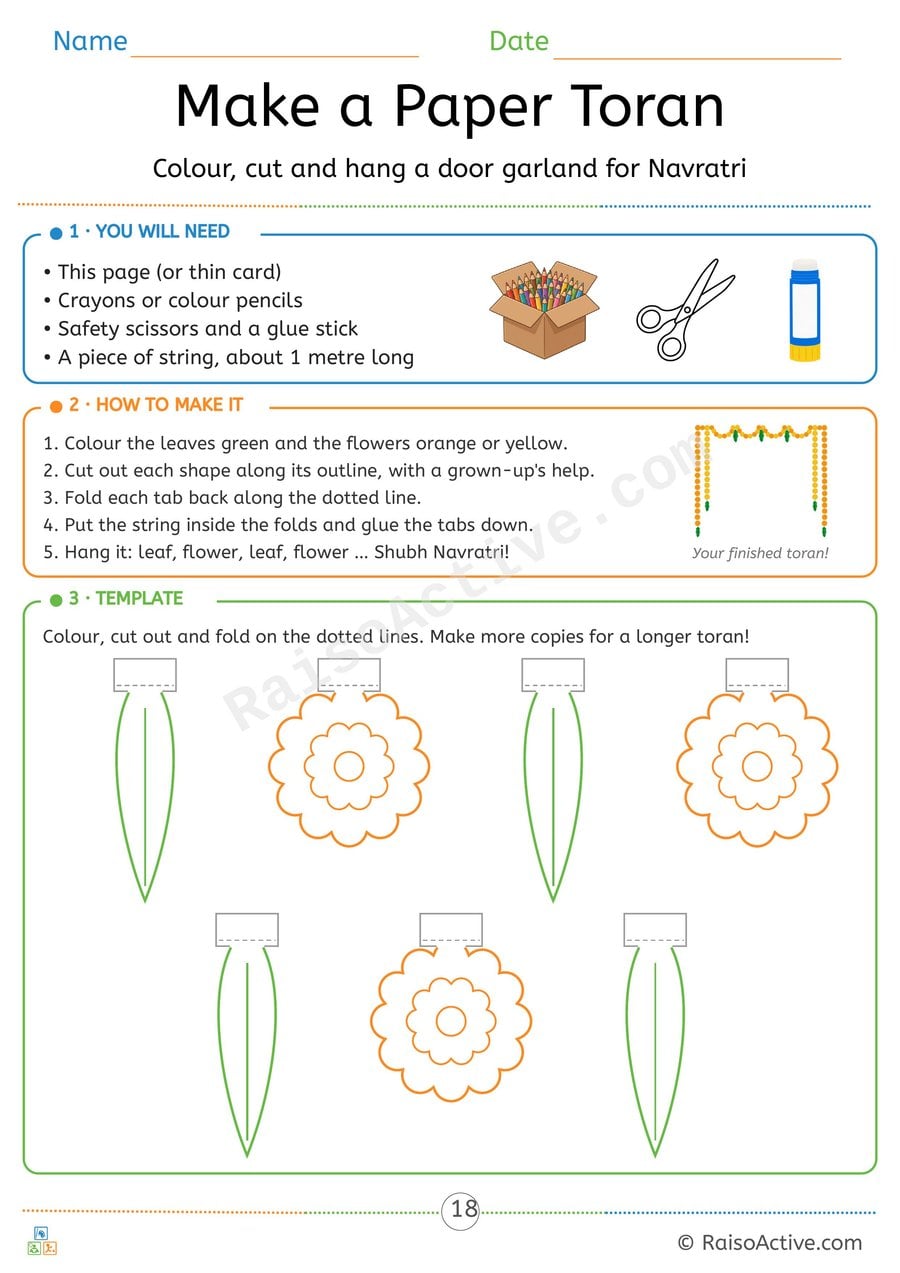
Make a Paper Toran: Navratri Craft Template
Ages 4-6 · Pre-K–KindergartenAges 4-6 · Reception–Year 1Ages 4-6 · LKG–UKGAges 4-6
Children follow step-by-step instructions to colour, cut, fold and glue a festival decoration, building scissor skills and fine motor control.
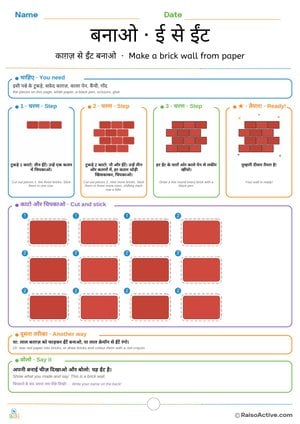
Make a Paper Brick Wall: Hindi Letter ई Craft | बनाओ · ई से ईंट
Ages 3-7 · Preschool–Grade 1Ages 3-7 · Nursery–Year 2Ages 3-7 · Nursery–Class 1Ages 3-7
Children cut out the pieces, put them together following three step pictures and make a paper brick wall. Saying the word ईंट as they make it links the sound ई to something they built themselves.

Learn India's National Symbols: A Dot-to-Dot Worksheet
Ages 3-5 · Preschool–Pre-KAges 3-5 · Nursery–ReceptionAges 3-5 · Nursery–LKGAges 3-5
Connecting numbered dots to reveal each national symbol builds fine motor control and number-sequence recognition in children ages 3-5, since they must find and connect dots in the correct numerical order to form a recognizable picture. As each symbol emerges from the dots, children also gain early familiarity with important national imagery and its name.

Spooky Fun Coloring Worksheet for Preschoolers
Ages 3-5 · Preschool–Pre-KAges 3-5 · Nursery–ReceptionAges 3-5 · Nursery–LKGAges 3-5
This Halloween-themed coloring page gives children ages 3-5 practice with crayon grip, color choice, and staying within outlines as they bring a collection of spooky objects to life. Naming each object as they color, like a ghost, a pumpkin, or a bat, also builds seasonal vocabulary tied directly to what they're seeing and creating.
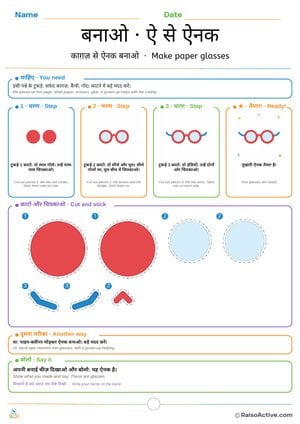
Make Paper Glasses: Hindi Letter ऐ (ai) Cut and Stick Craft | बनाओ · ऐ से ऐनक
Ages 4-7 · Pre-K–Grade 1Ages 4-7 · Reception–Year 2Ages 4-7 · LKG–Class 1Ages 4-7
Children cut out the numbered pieces and stick them in order to make a pair of glasses with two red rims, two lenses and two arms, then show it and say a full sentence about it. It links the letter ऐ with a real picture word, ऐनक, and practises scissor control and following steps.

Identify Flags Worksheet: Cut and Paste Matching Activity
Ages 4-6 · Pre-K–KindergartenAges 4-6 · Reception–Year 1Ages 4-6 · LKG–UKGAges 4-6
This worksheet helps children ages 4-6 practice matching a country's flag to its written name, building both visual discrimination and early geography vocabulary. Pairing a flag's specific colors and pattern with a country name strengthens the same visual-matching skill children later use for letter and word recognition.

Stick Man Emotions Worksheet: Happy, Sad, Angry, and Surprised!
Ages 4-6 · Pre-K–KindergartenAges 4-6 · Reception–Year 1Ages 4-6 · LKG–UKGAges 4-6
Children ages 4-6 practice reading facial expressions on this worksheet, matching stick-figure faces to their correct emotion labels by noticing details like mouth shape and eyebrow position. This strengthens emotional literacy — the ability to name and recognize feelings in others — which supports empathy and smoother social interactions as children move into more group play and classroom settings.
Guides for this topic

Celebrating Diversity: How to Incorporate Cultural Awareness in Learning Activities for Young Children
Practical cultural awareness activities for young children aged 2-8. Explore Indian festivals, world cultures, food, music, and crafts to teach diversity and inclusion.
How to Teach Cutting Skills to Your Preschooler: A Complete Guide for Parents and Teachers
Help your child master scissor skills safely. Expert guide covering readiness signs, scissor types, progression steps, pre-cutting exercises, and fun practice ideas for ages 2-6.
What Supplies Do You Need for Preschool Learning at Home: The Complete Essential Guide
Discover the essential supplies for preschool learning at home — from crayons and counting blocks to sensory bins. Affordable options available in India for ages 2–6.
Reviews
Every worksheet for ages 3–5, no watermark
Members download the full library of 1,000+ worksheets and every activity pack without watermarks or daily limits. One year costs ₹999 in India or $20 elsewhere.
See membership plansOr download any worksheet free with a watermark (5 a day).