Sunlight Worksheet: Learn About the Sun and Seasons!
This worksheet introduces children ages 3-5 to the idea that the sun's warmth and position change across the year, giving rise to the four seasons. By matching descriptions to pictures and completing sentences about the sun's daily movement, children build early scientific observation skills and the vocabulary needed to describe weather and time of day.
Part of the pack
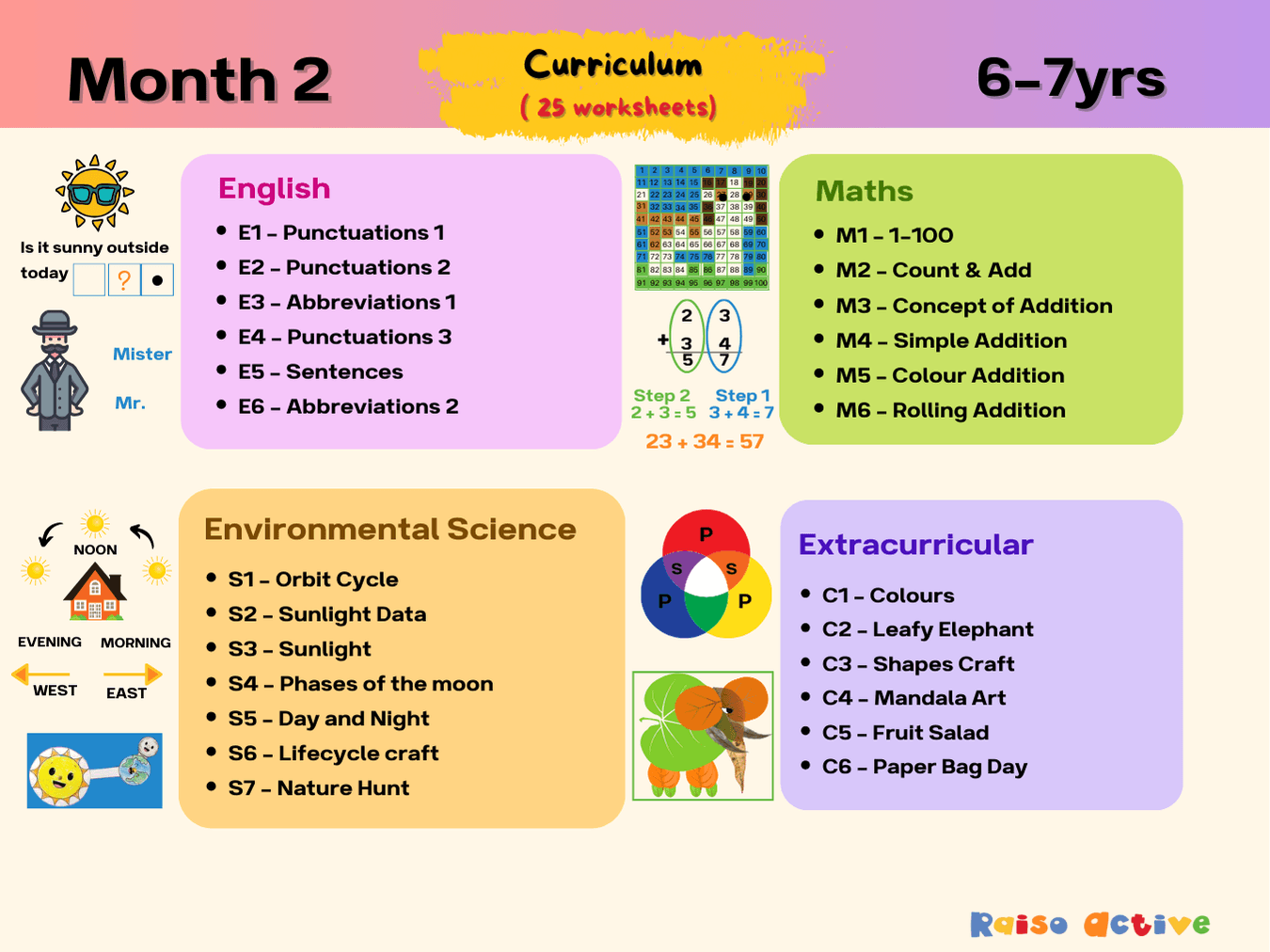
Month 2: Learning & Development | Ages 6-7
This is page 18 of the pack. Ages 6-7 · Grade 1Ages 6-7 · Year 2Ages 6-7 · Class 1Ages 6-7

Made for your child
Counting to 10, made for your child
A maths pack with your child's name in it: pictures that explain, practice at three levels, puzzles and story sums about them. Print a new set whenever they finish.
Make a maths packFree preview · free for members
Curriculum
- Earth & Environment > Seasons & Weather
How to use this worksheet
Start by looking at the season pictures together and naming what's happening in each one, such as snow, blooming flowers, or falling leaves. Read the season descriptions aloud and have your child draw a line matching each description to its picture. Then move to the fill-in-the-blank sentences about the sun, reading each sentence together and helping your child choose the missing word from context or a word bank. Finish by having them color the completed scene.
Materials needed
- Pencil
- Crayons
Extension activities
- 1Step outside at the same time on different days and note whether the sun feels warmer or cooler, and where shadows fall.
- 2Make a simple seasons wheel from a paper plate, drawing one season's weather in each quarter.
- 3Track the weather on a calendar for a week, using pictures for sunny, cloudy, and rainy days.
- 4Read a picture book about the seasons and predict what season comes next in the story.

Written by
Hemsweta Jain · Teacher Cheena
MBA and Early Childhood Educator, teaching since 2014 · Founder of RaisoActive, Mumbai
Every RaisoActive worksheet is designed and checked by the founder before publishing.
Published · Last reviewed
More from Month 2: Learning & Development | Ages 6-7
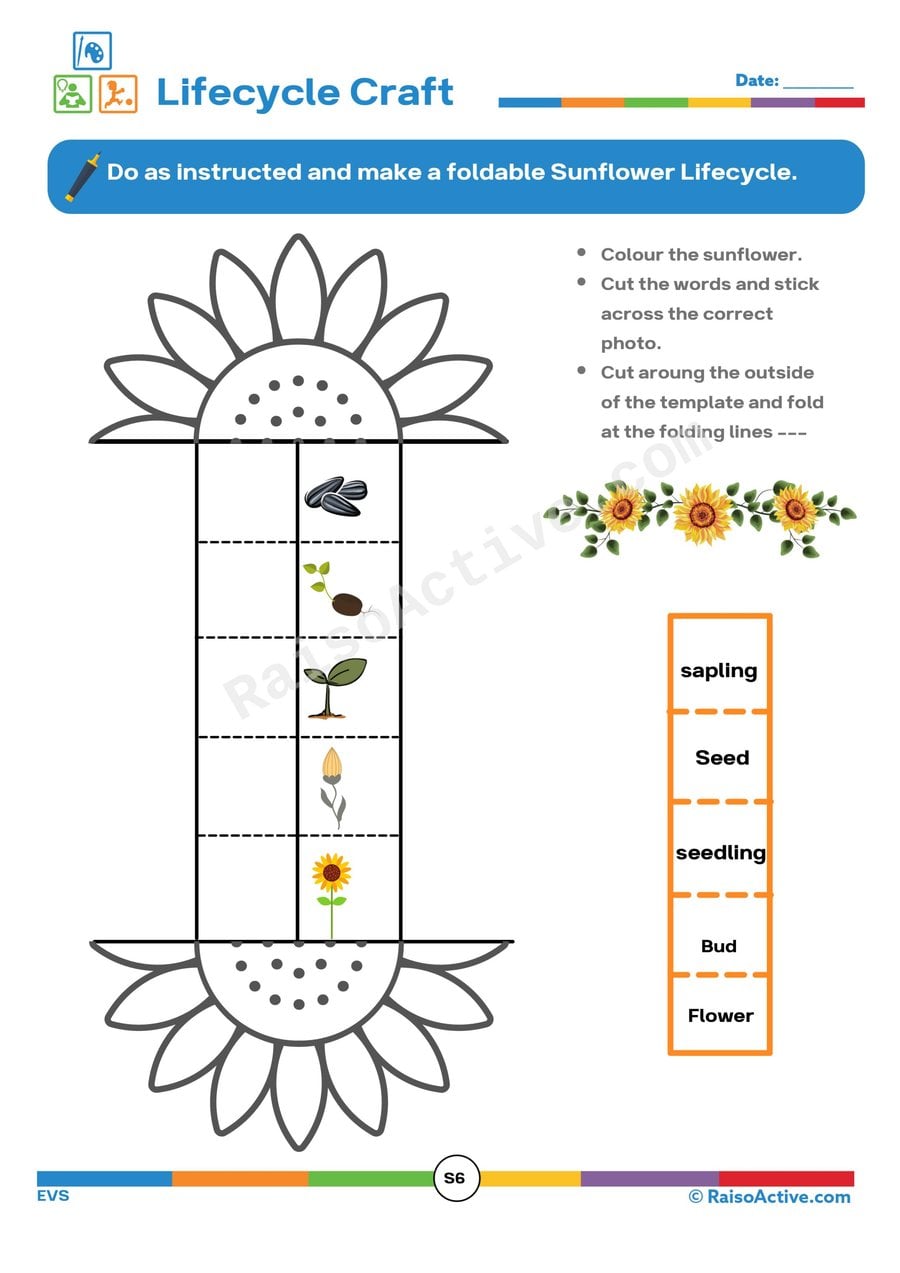
Sunflower Life Cycle Worksheet: Learn and Fold!
Ages 4-6 · Pre-K–KindergartenAges 4-6 · Reception–Year 1Ages 4-6 · LKG–UKGAges 4-6
This worksheet introduces the plant life cycle by walking children through the sequential stages a sunflower passes through — from seed, to sprout, to full bloom — using coloring, labeling, and folding. For four- to six-year-olds, understanding that living things grow through a fixed, ordered set of stages is a foundational science concept that also applies to animals, insects, and their own growth.

Sunlight Data Worksheet: Exploring Seasons and Sunlight Hours!
Ages 3-5 · Preschool–Pre-KAges 3-5 · Nursery–ReceptionAges 3-5 · Nursery–LKGAges 3-5
This worksheet introduces the science concept that daylight hours change with the seasons by having children record estimated sunlight hours for winter and summer dates and compare the two. For three- to five-year-olds, comparing two simple data points side by side is an early introduction to the idea of collecting and reading information, well before formal data or graphing skills are taught.

Sentence Fun: Find the Subject and Predicate Worksheet for Kids!
Ages 4-6 · Pre-K–KindergartenAges 4-6 · Reception–Year 1Ages 4-6 · LKG–UKGAges 4-6
This worksheet introduces basic sentence structure by teaching children to identify the subject (who or what the sentence is about) and the predicate (what the subject does or is) in simple sentences. For four- to six-year-olds, breaking a sentence into these two core parts is an early foundation for grammar and sentence-writing, helping them understand that every complete sentence needs both a 'who' and a 'what happens.'
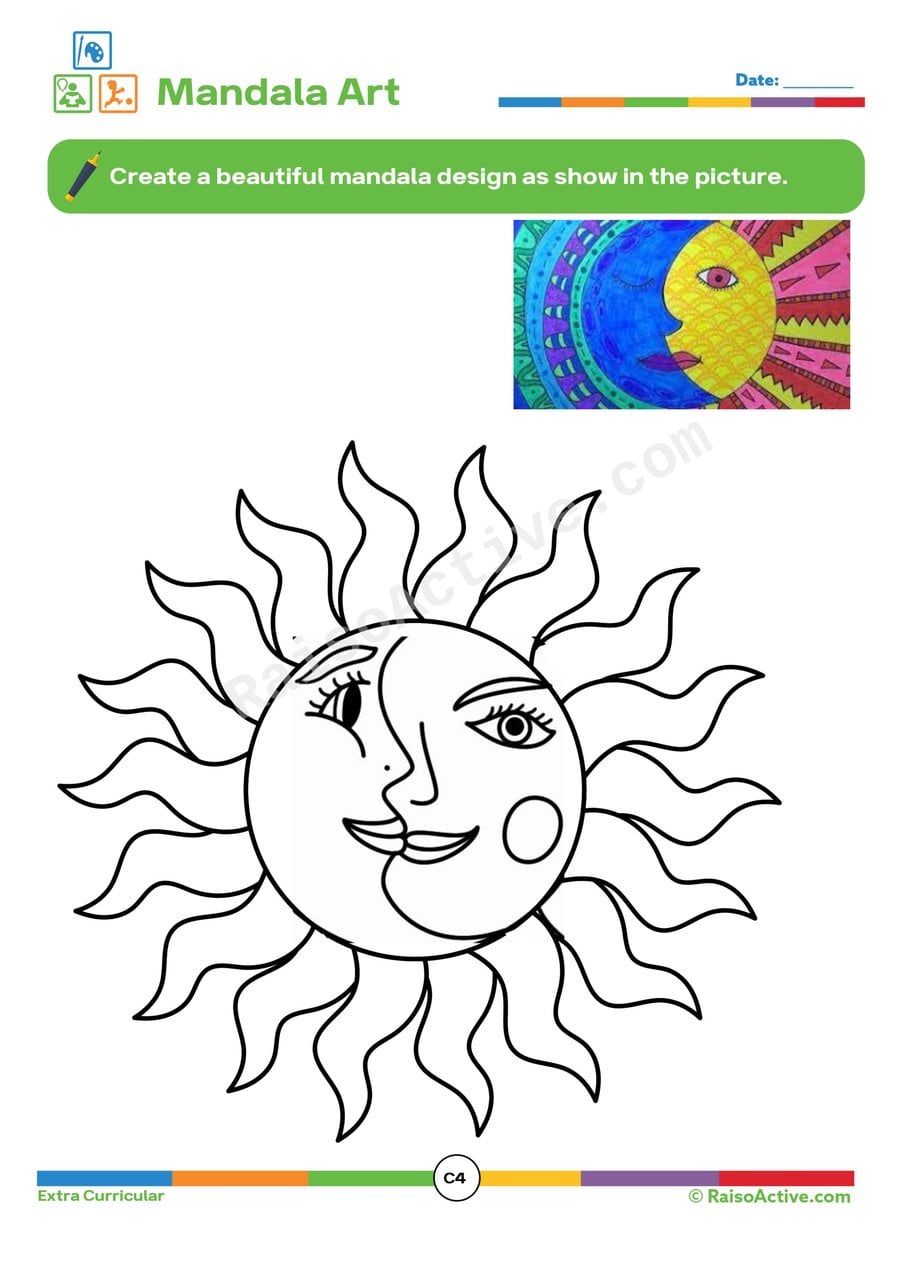
Mandala Art Worksheet: Create a Beautiful Design!
Ages 3-5 · Preschool–Pre-KAges 3-5 · Nursery–ReceptionAges 3-5 · Nursery–LKGAges 3-5
This worksheet builds fine motor control and color choice as children fill in a symmetrical mandala design, a repeating pattern radiating out from a central point. For three- to five-year-olds, coloring a mandala introduces an early sense of symmetry and pattern, since the repeating sections encourage children to notice and often repeat color choices around the design.
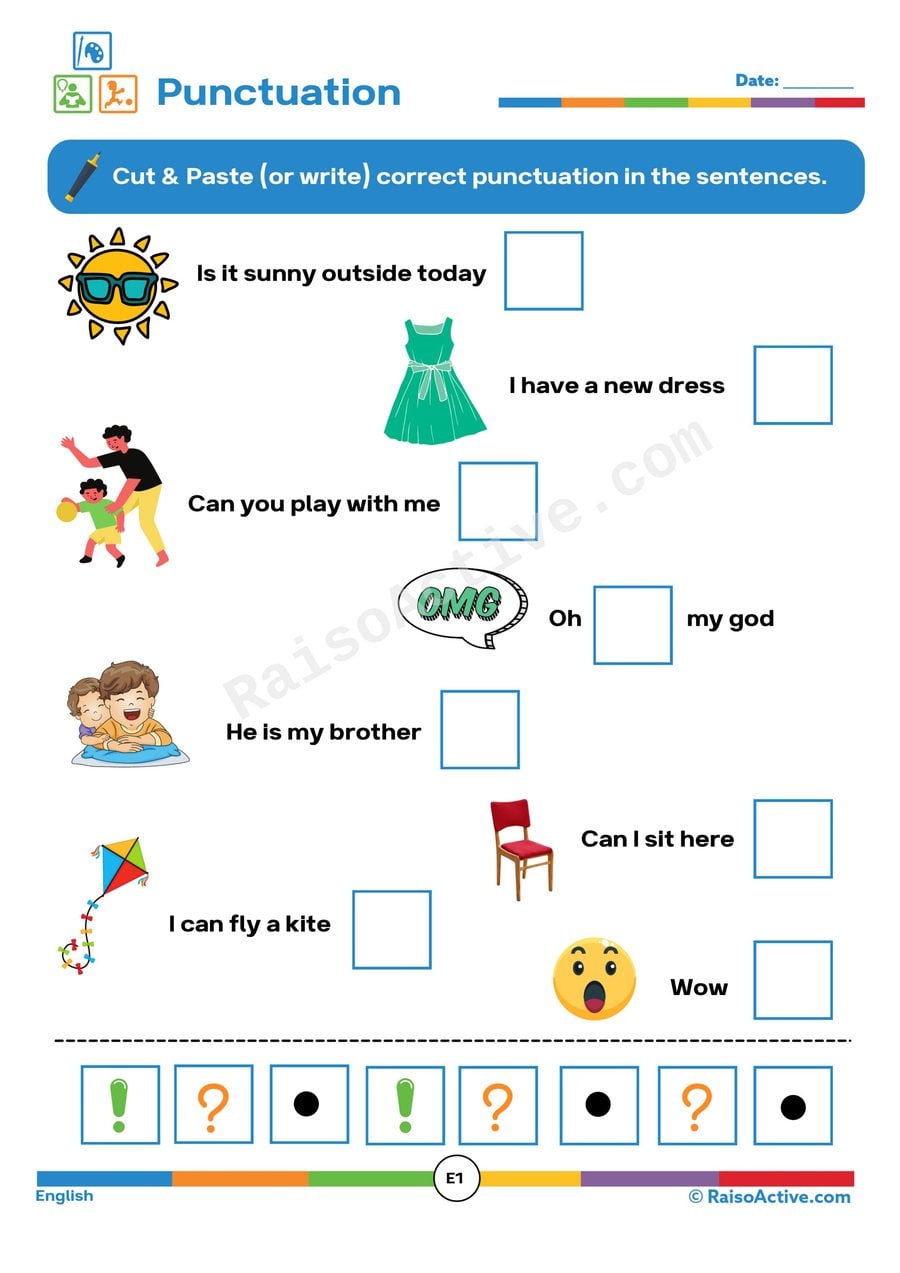
Punctuation Fun: Cut & Paste Punctuation Worksheet
Ages 4-6 · Pre-K–KindergartenAges 4-6 · Reception–Year 1Ages 4-6 · LKG–UKGAges 4-6
This worksheet teaches children to recognize and apply correct end punctuation — periods, question marks, and exclamation points — by reading simple sentences and choosing the punctuation mark that fits each one's tone. For four- to six-year-olds, connecting a sentence's meaning (a statement, a question, an exclamation) to its correct punctuation mark is an early step toward understanding that punctuation changes how a sentence should be read and understood.

Orbit Cycle Worksheet: Learn About Earth, Sun, and Moon!
Ages 3-5 · Preschool–Pre-KAges 3-5 · Nursery–ReceptionAges 3-5 · Nursery–LKGAges 3-5
This hands-on craft worksheet introduces children ages 3-5 to the basic idea that the Earth orbits the Sun while the Moon orbits the Earth, an early astronomy concept made concrete through building a working model. Assembling the pieces themselves, rather than just looking at a picture, helps very young children grasp a concept that is otherwise entirely abstract.

Count and Add: Fruits, Vehicles, and Sweets Worksheet for Preschoolers
Ages 3-5 · Preschool–Pre-KAges 3-5 · Nursery–ReceptionAges 3-5 · Nursery–LKGAges 3-5
This worksheet practices counting and basic addition by having children count several different groups of everyday objects — fruits, vehicles, and sweets — and then add the totals together. For three- to five-year-olds, varying the objects being counted across different sections keeps the counting practice fresh while reinforcing that the process of counting and adding works the same way no matter what's being counted.
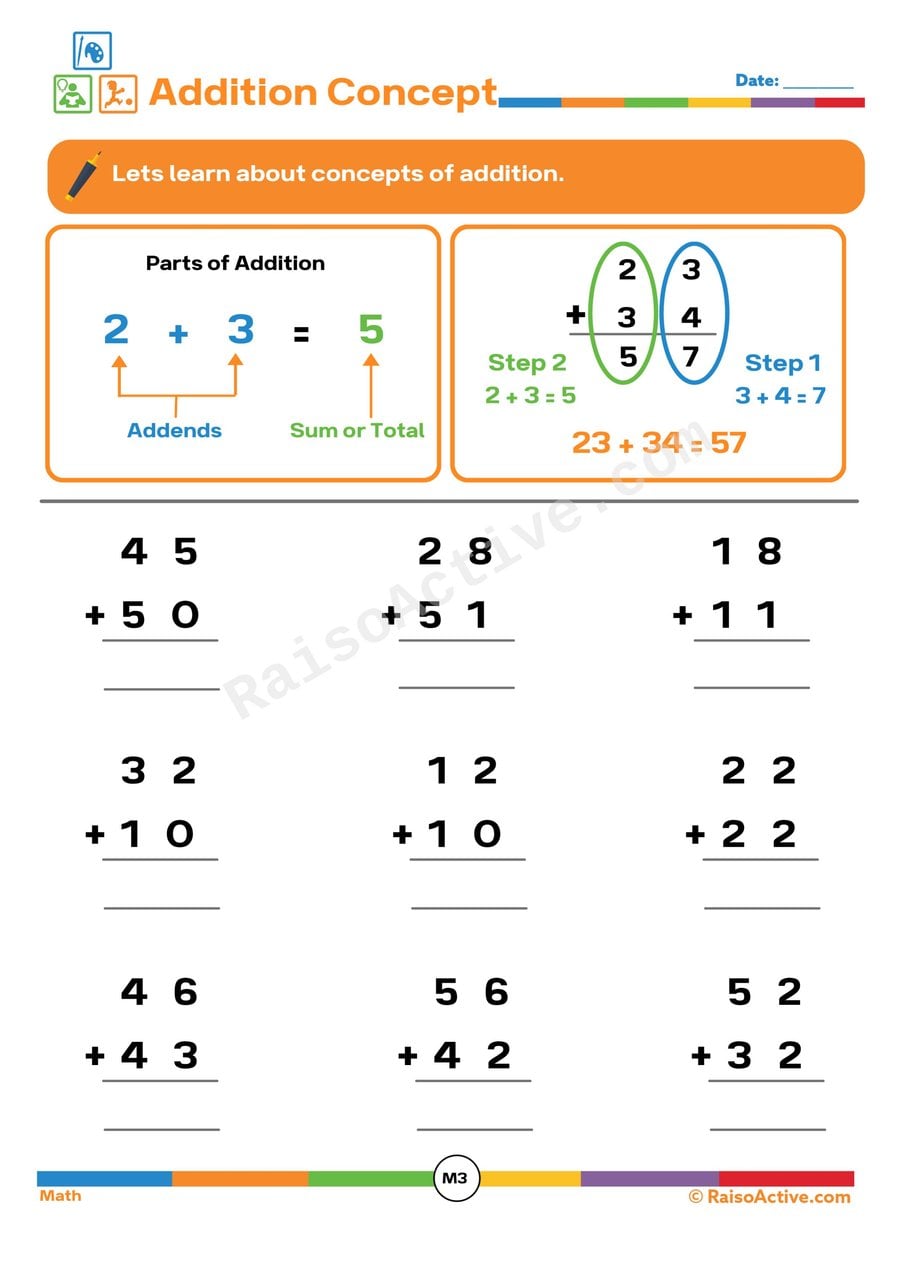
Addition Concepts Worksheet for Preschoolers
Ages 4-6 · Pre-K–KindergartenAges 4-6 · Reception–Year 1Ages 4-6 · LKG–UKGAges 4-6
Preschoolers ages 4-6 build early number sense by visually combining two small groups into one total, the concrete foundation every later addition fact depends on. Seeing objects physically joined together, rather than just numbers on a page, helps children grasp that addition means 'putting together' before they ever memorize a sum.
Related worksheets

Feelings Faces Worksheet: Match, Trace and Circle the Happy Faces
Ages 4-6 · Pre-K–KindergartenAges 4-6 · Reception–Year 1Ages 4-6 · LKG–UKGAges 4-6
Children link everyday moments (bubbles, ice cream, blocks, a storm, a gift) to the face that shows the feeling, trace four feelings words and count happy faces.
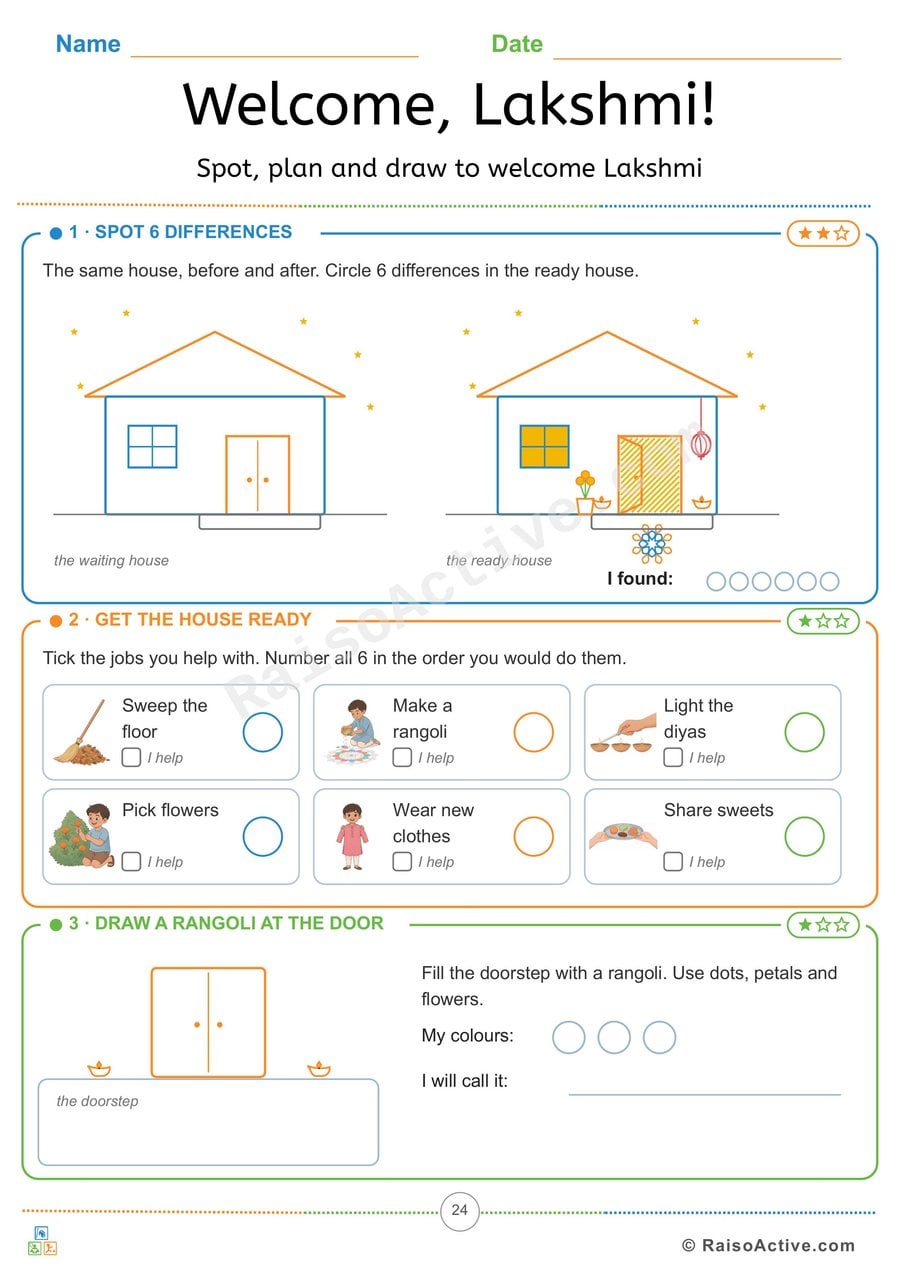
Welcome, Lakshmi! Spot the Differences and Doorstep Rangoli
Ages 4-6 · Pre-K–KindergartenAges 4-6 · Reception–Year 1Ages 4-6 · LKG–UKGAges 4-6
Children compare two pictures of a house before and after getting ready for Diwali and circle six differences. They tick the jobs they help with, number them in order and draw a doorstep rangoli.

Harvests & New Years: One Harvest, Many Names Across India
Ages 4-8 · Pre-K–Grade 2Ages 4-8 · Reception–Year 3Ages 4-8 · LKG–Class 2Ages 4-8
Children learn that the same winter harvest is celebrated with different names across India, and that many states have their own New Year festival.

Easter Egg Color Match Worksheet for Preschoolers
Ages 3-5 · Preschool–Pre-KAges 3-5 · Nursery–ReceptionAges 3-5 · Nursery–LKGAges 3-5
This worksheet builds on color recognition by asking children ages 3-5 to color a full row of eggs so they all match one another, reinforcing visual discrimination alongside color vocabulary. Rather than following a printed key, children must compare their own work egg to egg, which adds a self-checking element to the coloring task.
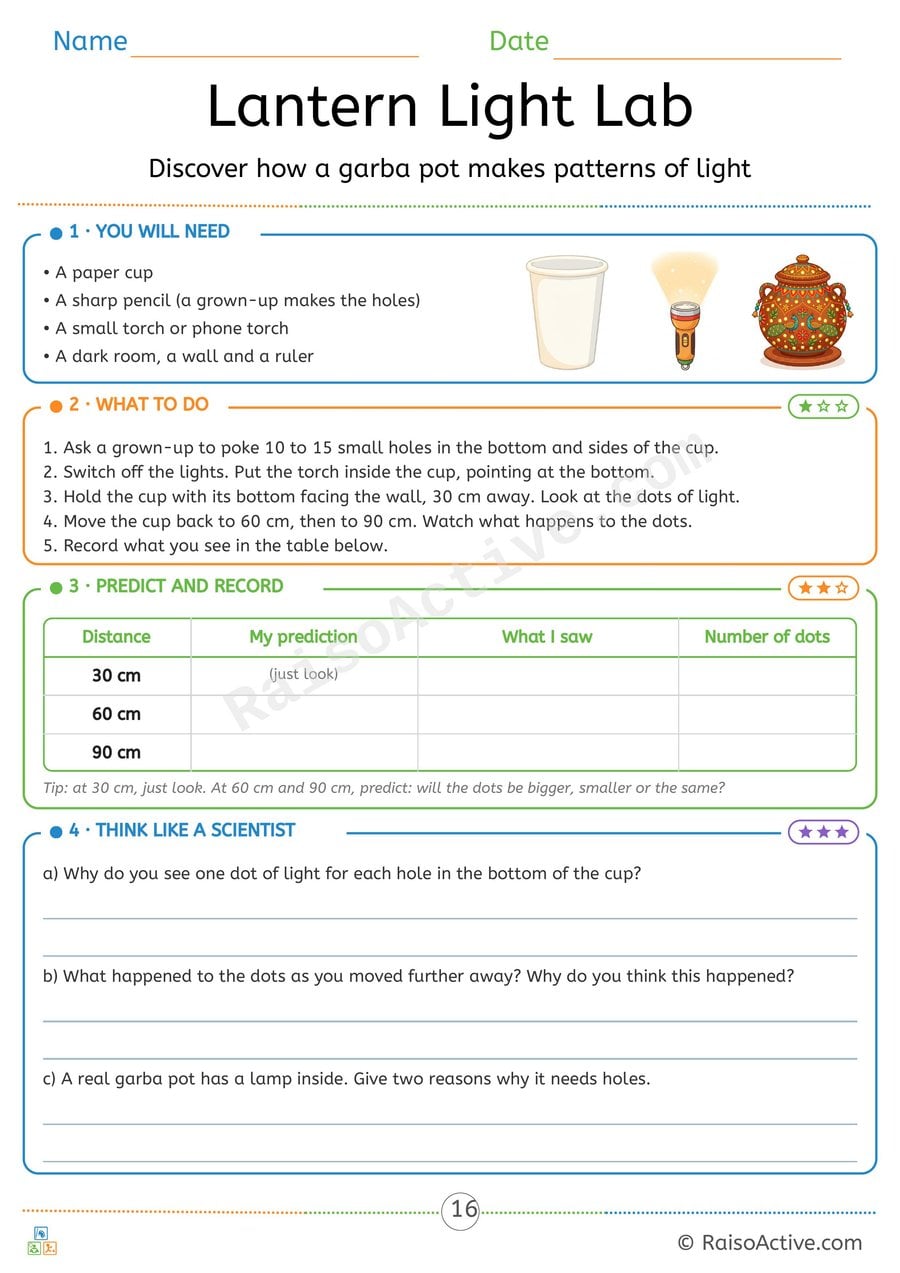
Lantern Light Lab: Navratri Garba Pot Light Experiment
Ages 7-11 · Grade 2–Grade 3Ages 7-11 · Year 3–Year 4Ages 7-11 · Class 2–Class 3Ages 7-11
Children make holes in a paper cup, shine a torch through it and see one spot of light for each hole. They predict and record what happens as they move further from the wall, and explain the results and why a real garba pot needs holes.

I Spy Letters and Numbers Worksheet: Find, Match, and Write!
Ages 4-5 · Pre-KAges 4-5 · ReceptionAges 4-5 · LKGAges 4-5
This worksheet blends letter and number recognition for children ages 4-5, asking them to spot a hidden letter within a picture, find its matching number, and then write both symbols down, combining visual search with early literacy and numeracy in a single activity. Working with letters and numbers side by side reinforces that both are symbols that carry specific meaning and can be found, matched, and recorded.

Taste Bud Sorting Worksheet: Identify and Sort Foods by Taste!
Ages 4-6 · Pre-K–KindergartenAges 4-6 · Reception–Year 1Ages 4-6 · LKG–UKGAges 4-6
This worksheet introduces children ages 4-6 to four basic taste categories — salty, sour, bitter, and sweet — by having them sort pictured foods into the correct group. Beyond taste vocabulary, sorting foods by an invisible property like flavor (rather than an obvious one like color or shape) pushes children to draw on memory and prior experience, building more advanced classification skills.

Diwali Night Seek-and-Find: Colour the Street and Spot 8 Things
Ages 4-6 · Pre-K–KindergartenAges 4-6 · Reception–Year 1Ages 4-6 · LKG–UKGAges 4-6
Children colour a big line-art Diwali street with lanterns, garlands, diyas and rangoli, then find eight pictured things in the scene: a cat, sweets, a rangoli, a garland, a lantern, a star, a plant pot and diyas. They tick each one and count the paper lanterns hanging over the street.
Guides for this topic

Best Worksheets for 3-Year-Olds: What Works and What to Avoid
What works on worksheets for 3-year-olds: short sessions, crayons, tracing lines, matching, cutting, a free weekly plan, and signs one is too advanced.

Discovering Wonder: Nature-Based Learning Activities That Captivate Young Children
Explore nature-based learning activities for children ages 2–7 — leaf rubbings, bug hunts, nature journals, and seasonal Indian outdoor ideas that spark wonder.
Spring and Summer Learning Activities: Harnessing Nature's Classroom for Year-Round Growth
Discover heat-safe outdoor activities, monsoon science experiments, and summer holiday learning plans for young children in India. Prevent summer slide with fun ideas for ages 1-8.
Reviews
Every worksheet for ages 3–5, no watermark
Members download the full library of 1,000+ worksheets and every activity pack without watermarks or daily limits. One year costs ₹999 in India or $20 elsewhere.
See membership plansOr download any worksheet free with a watermark (5 a day).