
Table of Contents - English, Maths, Environmental Science and Extracurricular Activities
This table of contents page teaches children ages 4-6 to navigate a structured document, an early information-literacy skill that helps them understand how a workbook or book is organized into sections. Reviewing the listed subjects — English, Maths, Environmental Science, and Extracurricular Activities — previews the range of topics ahead and builds anticipation for what's coming. Learning to scan a list for a specific topic also supports early reading comprehension beyond just decoding individual words.
Part of the pack
Month 8: English, Math, Science Foundations | Ages 4-5Curriculum
How to use this worksheet
Sit down together and read through the table of contents from top to bottom, pointing to each subject heading as you say it aloud. Ask your child which subject or activity they're most excited to start with, encouraging them to point to it on the page. Explain briefly what each section will cover, connecting it to something familiar, like 'Maths will have counting and shapes, just like we practice at home.' Use this page as a quick reference to return to whenever your child wants to choose their next activity.
Extension activities
- •Create your own simple table of contents for a family activity book or scrapbook.
- •Practice flipping to a specific page number referenced in the table of contents.
- •Talk about the order the sections are listed in and why that order might make sense.
- •Make a checklist together to track which sections have been completed.
- •Compare this table of contents to one from a favorite storybook to notice similarities.
Tips for parents and teachers
Use this page as a planning tool, letting your child have some choice in which section to tackle next, which builds ownership over their own learning. Revisiting the table of contents periodically helps reinforce the idea that a workbook has structure and isn't just a random pile of pages. This is a good moment to model the practical skill of using a reference tool, something children will rely on throughout their schooling.

Written by
Hemsweta Jain · Teacher Cheena
MBA and Early Childhood Educator, teaching since 2014 · Founder of RaisoActive, Mumbai
Every RaisoActive worksheet is designed and checked by the founder before publishing.
Published · Last reviewed
Related worksheets
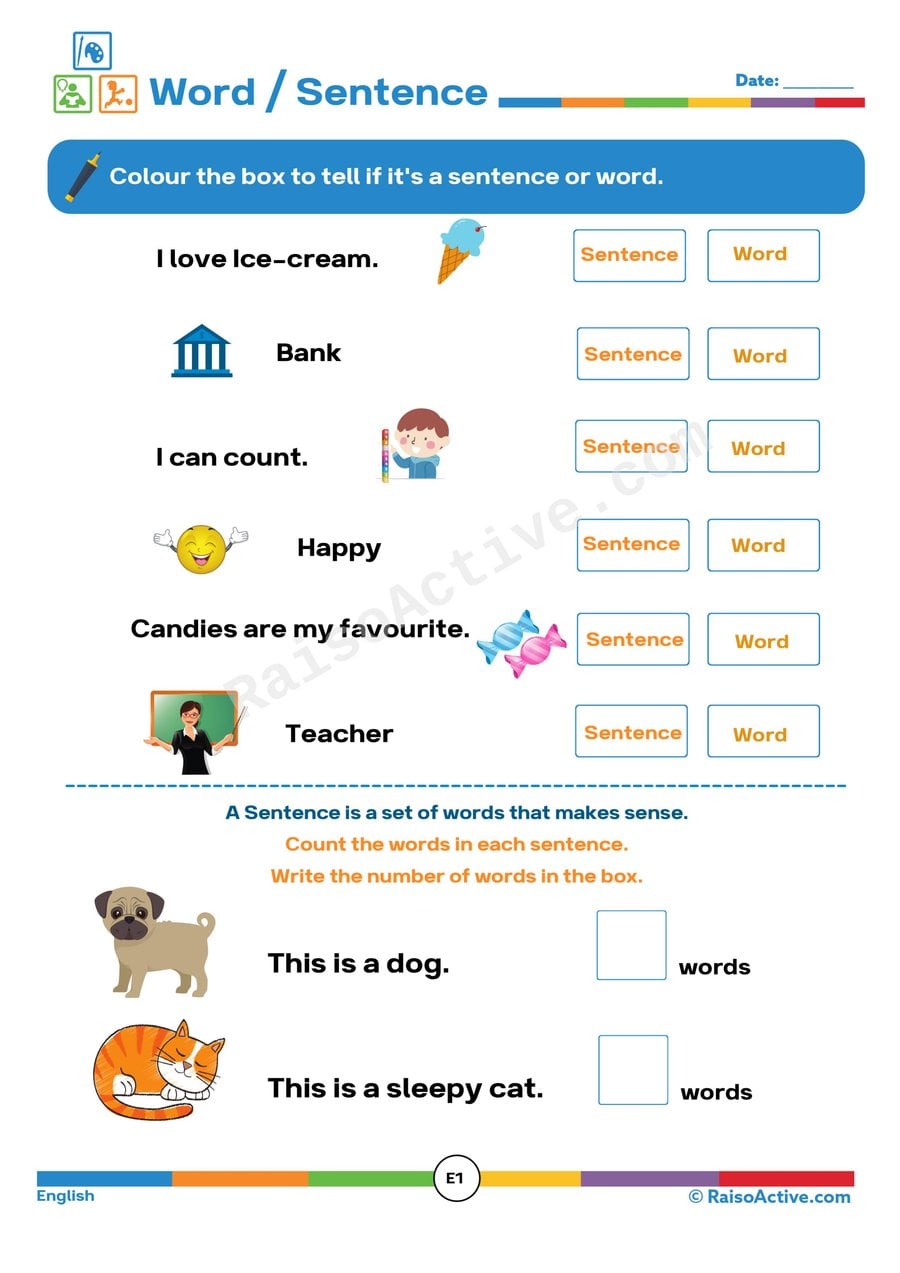
Month 1: Learning & Development | Ages 6-7 - Page 4
This overview page maps out everything covered in Month 1 of the ages 6-7 learning program, giving both children and parents a clear picture of what skills, from reading comprehension to number work to critical thinking, will be practiced across the month. Previewing a table of contents like this helps children ages 6-7 build early organizational awareness, understanding that learning happens in a structured sequence rather than as one-off, disconnected activities. Knowing what's coming also builds anticipation and motivation heading into each week's worksheets.
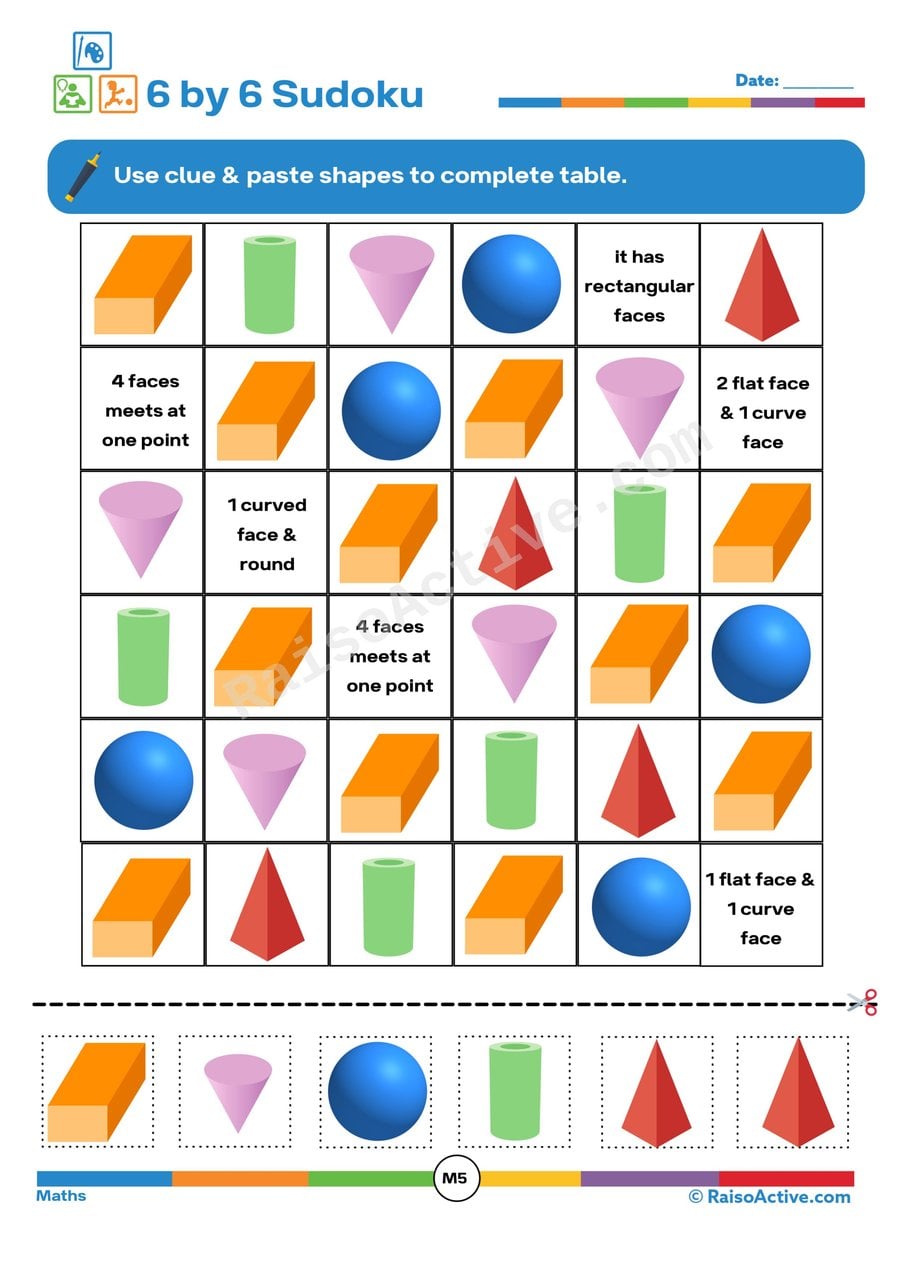
Month 11: Learning & Development | Ages 6-7 - Page 16
This page serves as the table of contents for Month 11 of the Ages 6-7 Learning & Development plan, giving parents and teachers a clear map of the skills and worksheets covered that month, from literacy and math practice to critical thinking activities. Reviewing it first sets expectations for the pacing and variety of learning a 6-7 year old will encounter across the month.
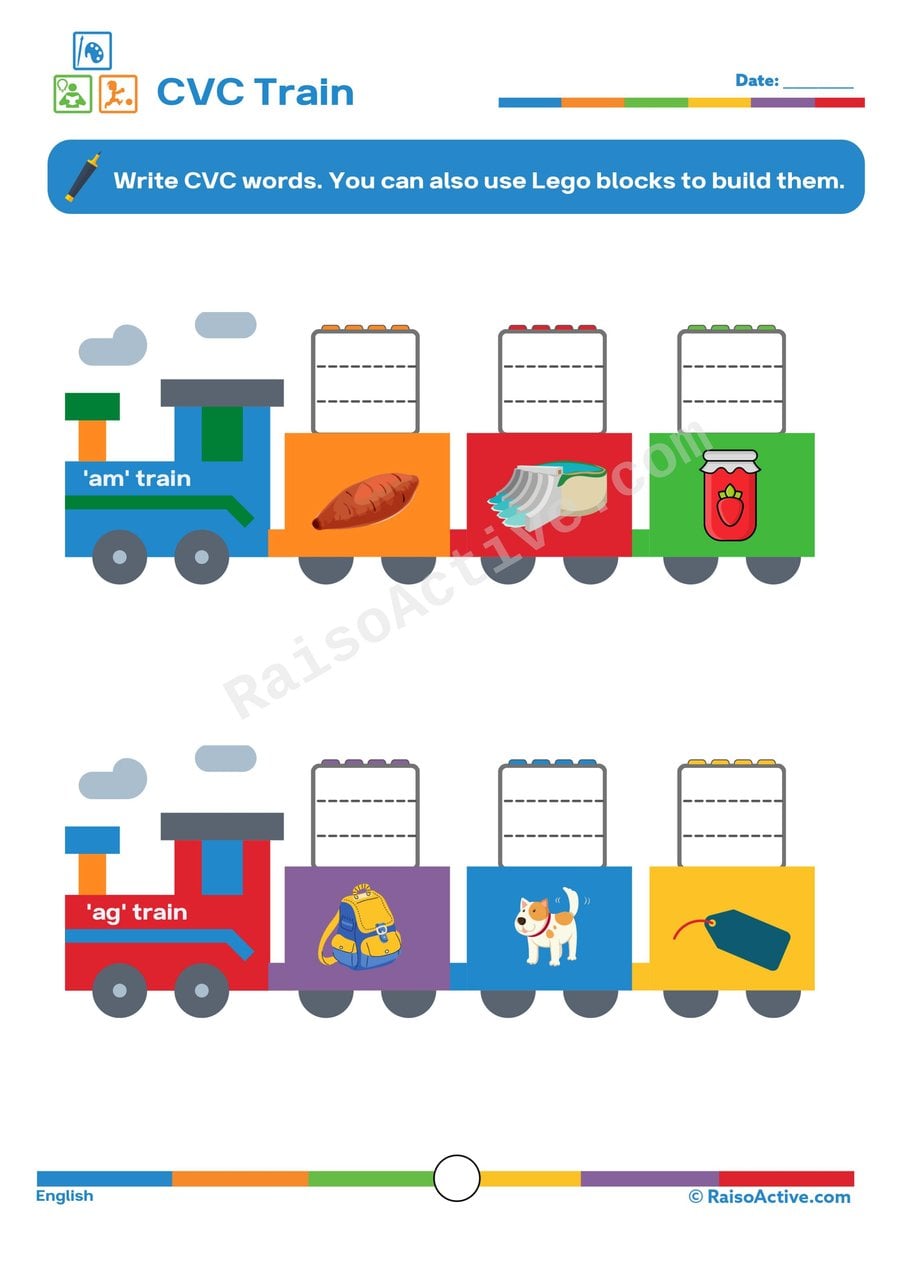
CVC Train Worksheet: Write CVC Words!
Writing consonant-vowel-consonant words like 'cat,' 'sun,' or 'pig' under matching pictures gives children ages 4-6 direct practice with letter-sound blending, a core phonics skill that underpins independent reading. Because each train car pairs a picture clue with a blank space, children also practice translating a spoken word they can sound out into its correctly spelled written form.

Easter Egg Color by Hints Worksheet for Preschoolers
This worksheet has children ages 3-5 listen to or read simple written hints describing shapes and colors, then apply that information correctly while coloring each Easter egg, building early reading comprehension and the ability to follow multi-step verbal instructions. Because the hints must be followed precisely rather than colored freely, children also practice patience and careful attention to detail.
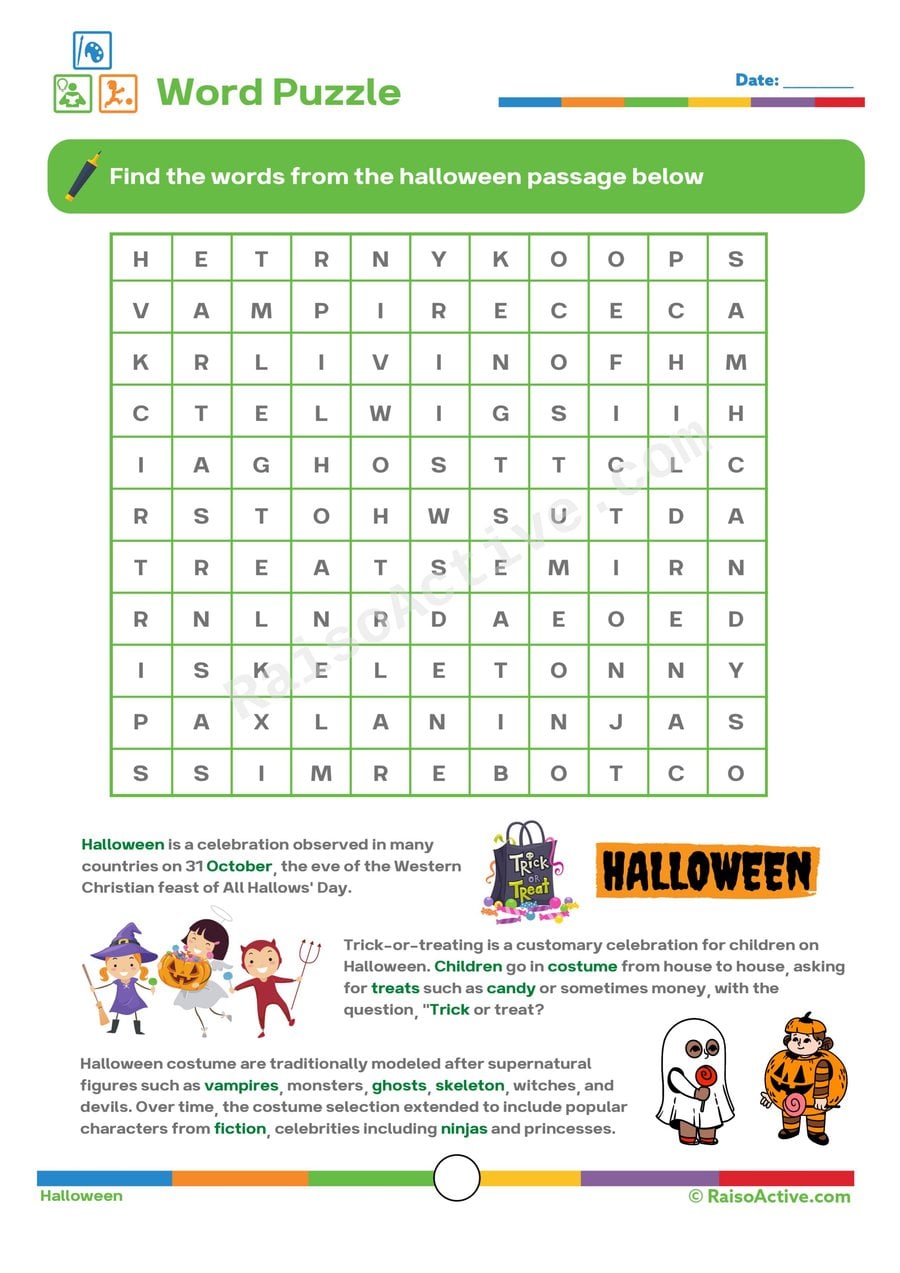
Halloween Word Search Worksheet for Kids
This Halloween word search has children ages 4-6 scan a grid of letters to locate seasonal vocabulary words, building visual tracking skills and reinforcing the spelling of words like 'pumpkin,' 'ghost,' or 'witch' that they can recognize from the picture-based worksheets in this set. Searching systematically through rows and columns also strengthens the left-to-right, top-to-bottom scanning pattern used in reading.

Fall Crossword Puzzle Worksheet for Preschoolers
This fall-themed crossword uses pictures instead of written clues, helping children ages 3-5 connect an image directly to its written word while practicing early letter formation. Counting the boxes in each answer also builds an intuitive sense of word length before formal spelling instruction begins.
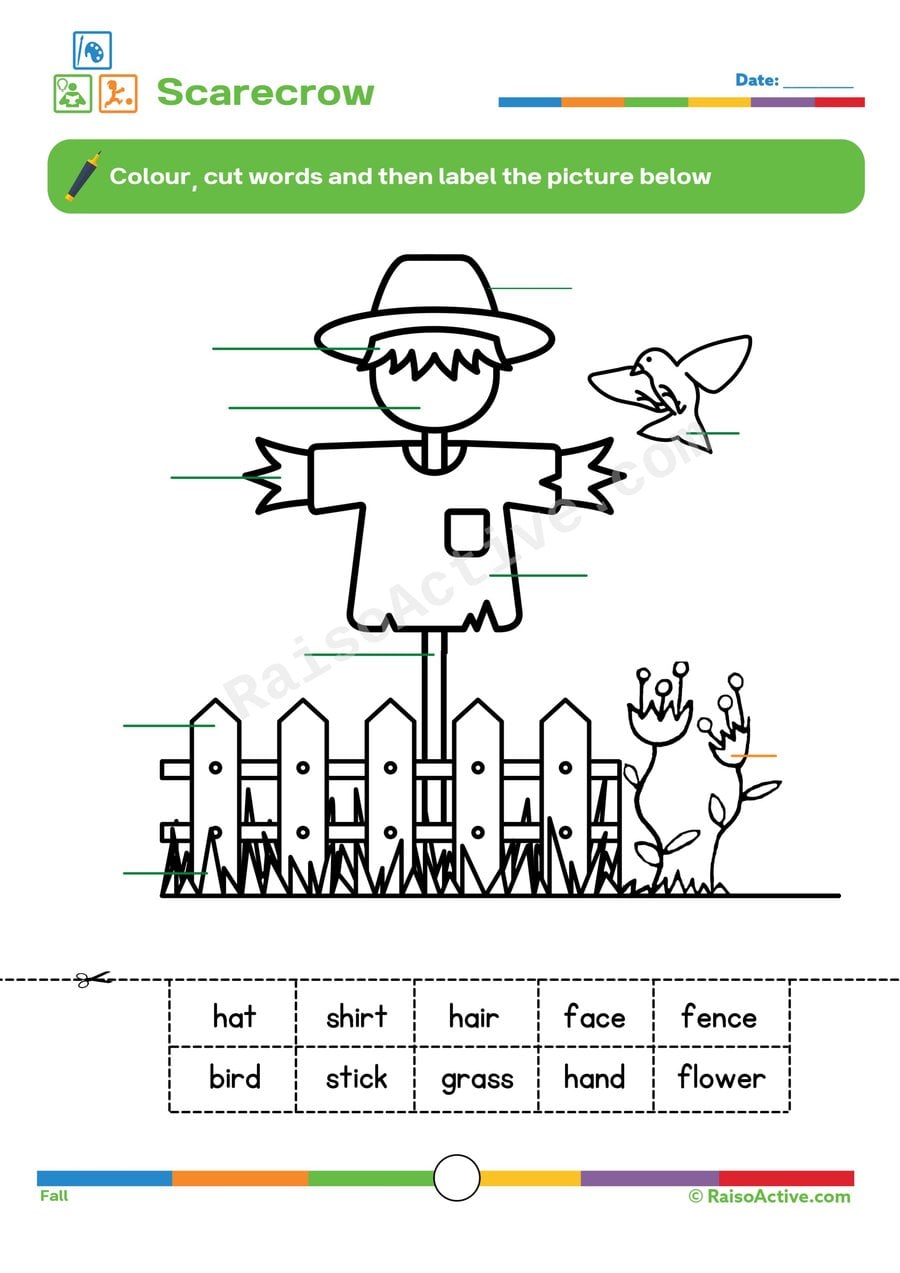
Scarecrow Labeling Worksheet for Preschoolers
This worksheet has children ages 3-5 color a scarecrow, then cut out word labels for its parts, hat, straw, shirt, gloves, and glue each label onto the correct spot, connecting written words directly to the objects they name. Tracing the labels afterward adds letter-formation practice on top of the vocabulary-building label matching.
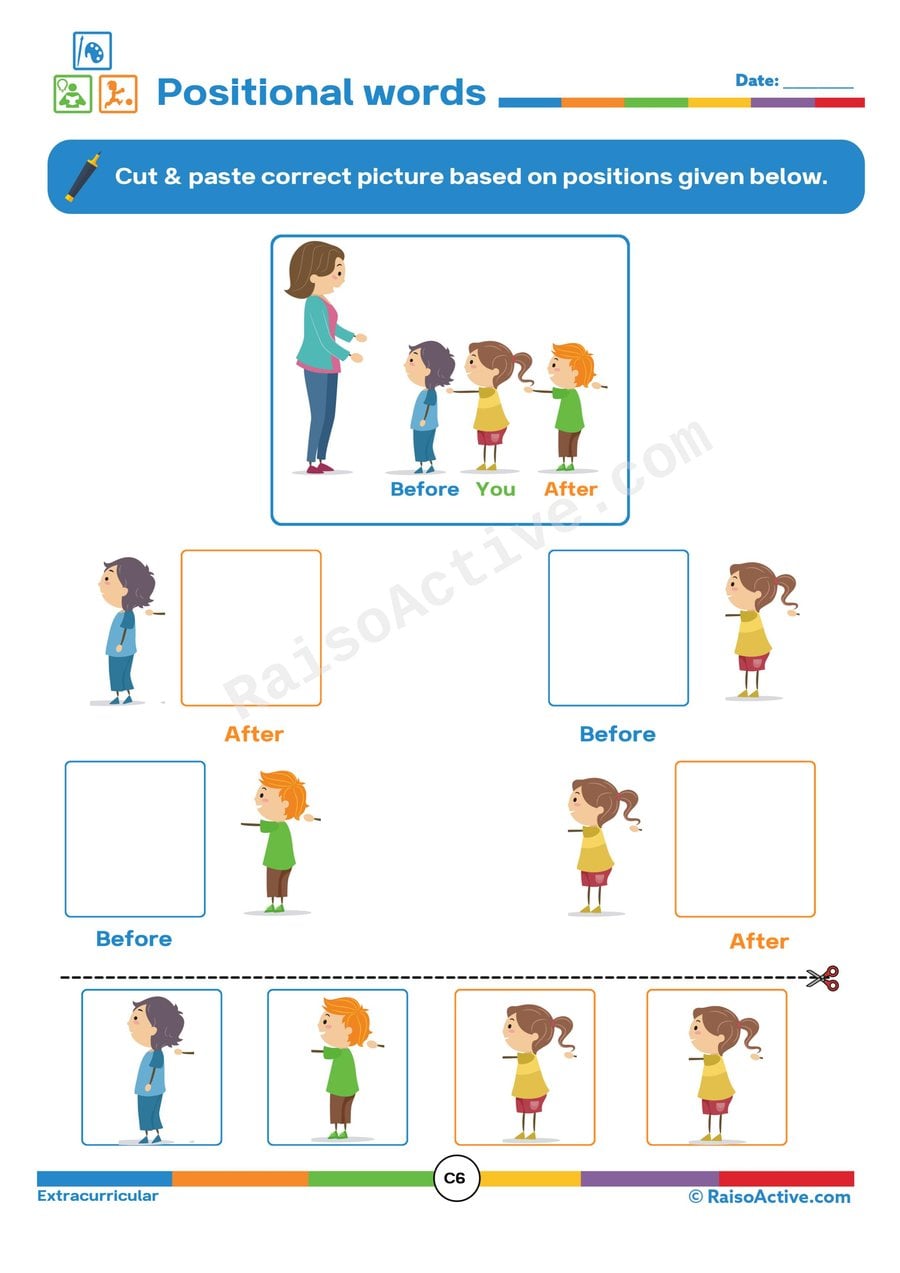
Positional Words Worksheet: Before, You, and After!
This cut-and-paste worksheet teaches children ages 3-5 to apply the positional words 'before' and 'after' to a sequence of objects or people, connecting an abstract language concept to a visual, hands-on task. Understanding order words like these is an important building block for later skills such as retelling stories in sequence and understanding time concepts like yesterday and tomorrow. Choosing and placing the correct picture also reinforces careful listening and following two-step directions.
Guides for this topic
Documenting Learning Without Drowning in Data: A Practical Guide for Parents and Teachers
Learn practical ways to document your child's learning without overwhelm. Simple portfolios, observation tips, and printable trackers for ages 1-8.
When Should My Child Learn to Read? Is Kindergarten Too Early? A Complete Guide to Reading Readiness
Discover the research-backed optimal age for reading, key readiness signs, and why pushing too early can backfire. A complete guide for parents of children aged 3-8.
What Phonics Program Works Best for Homeschooling? A Complete Guide to Choosing the Right Approach
Compare top phonics programs for homeschooling — Jolly Phonics, Read Write Inc, Explode the Code — plus a DIY approach with worksheets. Find what works for your child.
Reviews
Every worksheet for ages 4–6, no watermark
Members download the full library of 1,000+ worksheets and every activity pack without watermarks or daily limits. One year costs ₹1,000 in India or $20 elsewhere.
See membership plansOr download any worksheet free with a watermark (5 a day).