Butterfly Life Cycle Worksheet for Kids
This worksheet introduces children ages 3-5 to the four stages of a butterfly's life cycle — egg, caterpillar, chrysalis, and butterfly — by having them number the pictures in the correct sequence. Understanding a life cycle as an ordered sequence of changes is an early but genuine science skill, building the sequencing and cause-and-effect thinking children need for later scientific reasoning.
Part of the pack
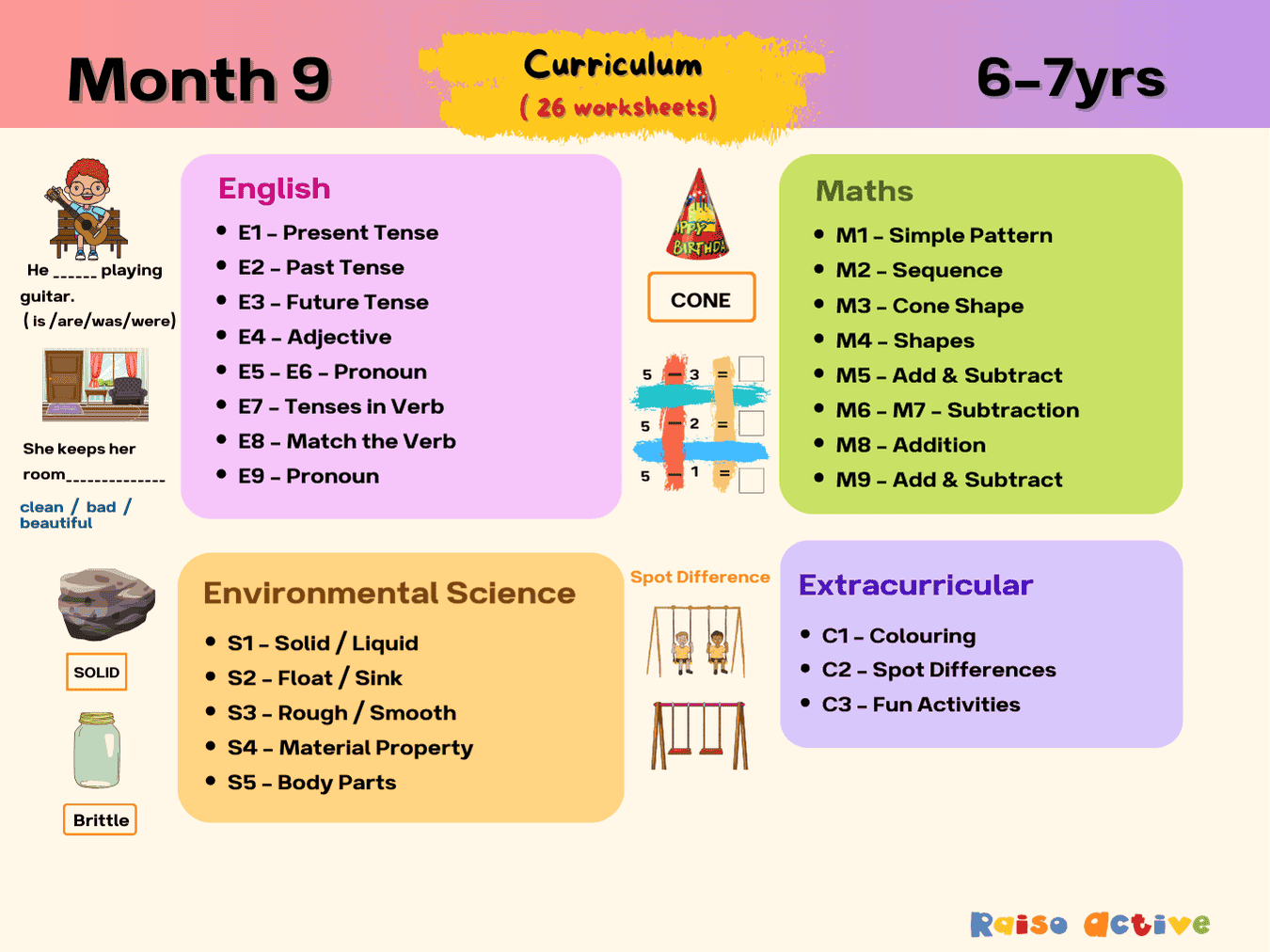
Month 9: Multi-Subject Early Learning | Ages 6-7
This is page 29 of the pack. Ages 6-7 · Grade 1Ages 6-7 · Year 2Ages 6-7 · Class 1Ages 6-7
Curriculum
- Living Things - Insects > Insect Life Cycles
How to use this worksheet
Look at the pictures of each life cycle stage together and talk through what's happening at each one — first the tiny egg, then the caterpillar eating leaves, then the still chrysalis, and finally the butterfly emerging. Have your child number the pictures in the correct order based on this sequence. Once the life cycle is numbered, move to the shapes section and have them circle the shapes found within the box.
Materials needed
- Pencil
- Crayons
Extension activities
- 1Draw your own four-panel butterfly life cycle, one stage per box, and describe what's happening in each.
- 2Read a picture book about caterpillars and butterflies together to reinforce the sequence with a story.
- 3Act out each life cycle stage with your body — curling up as an egg, wiggling as a caterpillar, staying still as a chrysalis, and flying as a butterfly.
- 4Look up a photo of a real chrysalis or caterpillar together and talk about what you notice.

Written by
Hemsweta Jain · Teacher Cheena
MBA and Early Childhood Educator, teaching since 2014 · Founder of RaisoActive, Mumbai
Every RaisoActive worksheet is designed and checked by the founder before publishing.
Published · Last reviewed
More from Month 9: Multi-Subject Early Learning | Ages 6-7

Adjective Worksheet: Circle and Fill in the Blanks!
Ages 4-6 · Pre-K–KindergartenAges 4-6 · Reception–Year 1Ages 4-6 · LKG–UKGAges 4-6
Working from a picture and a sentence together, children ages 4-6 practice choosing an adjective that accurately describes what they see and then writing it into the sentence - a skill that strengthens both vocabulary and the understanding that descriptive words add detail and meaning to a sentence. This bridges picture comprehension with written language, an important step as children move from purely oral vocabulary to using descriptive words in their own writing.

Match the Verb: Action Verbs Worksheet for Preschoolers
Ages 3-5 · Preschool–Pre-KAges 3-5 · Nursery–ReceptionAges 3-5 · Nursery–LKGAges 3-5
Action verbs are some of the first 'doing words' children learn to recognize in print, and this worksheet asks children ages 3-5 to spot the verb within a simple sentence and connect it to a picture showing that action. Circling the verb first trains children to identify the part of a sentence that describes an action, an early grammar skill, while matching it to a picture reinforces comprehension of the word's meaning. This combination builds both reading and vocabulary skills using content — running, jumping, eating — that's naturally engaging to young children.

Rough vs. Smooth Worksheet: Sorting and Counting Objects
Ages 3-5 · Preschool–Pre-KAges 3-5 · Nursery–ReceptionAges 3-5 · Nursery–LKGAges 3-5
Rough and smooth are texture words a 3-5 year old usually understands through touch long before they can reliably identify them just by looking at a picture, so this worksheet bridges that gap by pairing the visual sorting task with counting practice. Counting how many rough versus smooth objects appear afterward layers basic data skills — 'which group has more?' — on top of the classification.
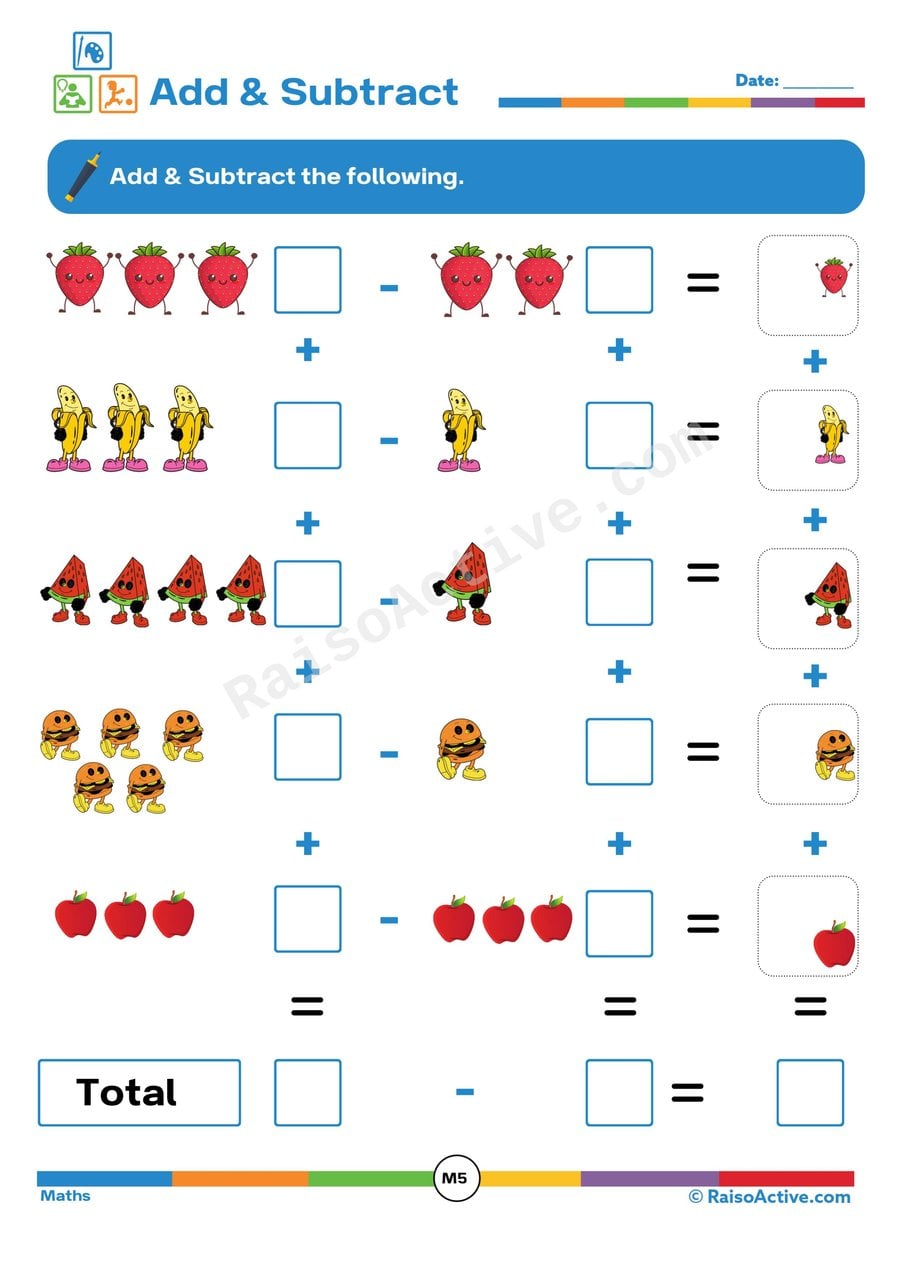
Fun Add & Subtract Worksheet for Preschoolers!
Ages 4-6 · Pre-K–KindergartenAges 4-6 · Reception–Year 1Ages 4-6 · LKG–UKGAges 4-6
This worksheet introduces children ages 4-6 to the basics of addition and subtraction by having them count pictured objects, record the quantities, and then combine or take away groups to find a total. Working with visual objects rather than abstract numbers alone helps children build a concrete understanding of what addition and subtraction actually mean before they're expected to solve equations using numbers only.

Future Tense Fun: Fill-in-the-Blanks Worksheet for Kids
Ages 4-6 · Pre-K–KindergartenAges 4-6 · Reception–Year 1Ages 4-6 · LKG–UKGAges 4-6
This worksheet introduces children ages 4-6 to the future tense, having them choose and write the correct verb form to complete sentences about things that 'will' happen. Understanding that verbs change to reflect when an action takes place — past, present, or future — is a foundational grammar concept that helps children communicate more precisely as their sentences grow longer and more complex.

Cut and Paste Body Parts Worksheet for Preschoolers
Ages 4-6 · Pre-K–KindergartenAges 4-6 · Reception–Year 1Ages 4-6 · LKG–UKGAges 4-6
This worksheet helps children ages 4-6 learn to name and correctly place major body parts by cutting them out and pasting each one onto the right location on a body outline. Physically assembling a body diagram builds body awareness and vocabulary at the same time, while the cutting and gluing sharpens fine motor precision that supports later handwriting.
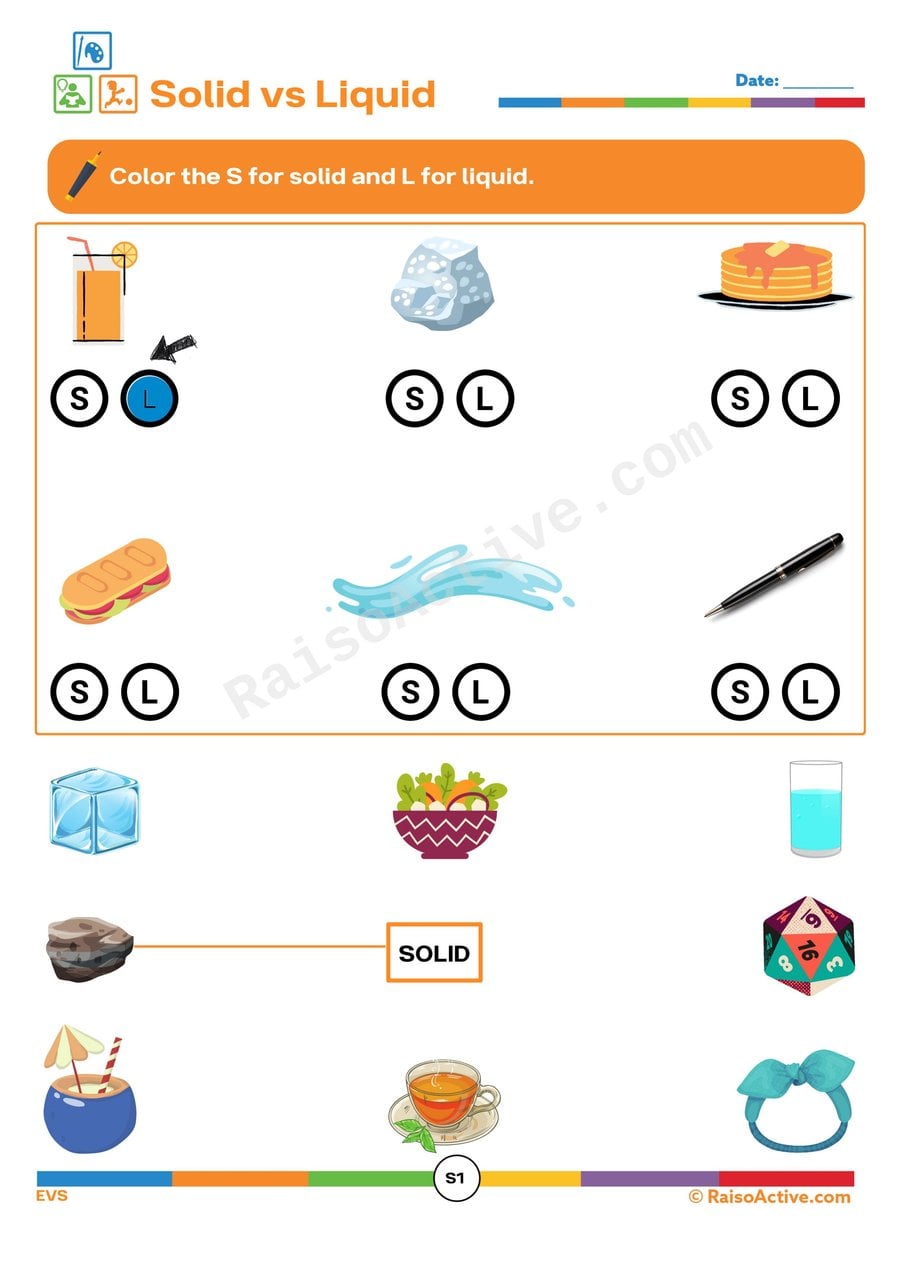
Solid vs. Liquid Worksheet: Color and Learn!
Ages 3-5 · Preschool–Pre-KAges 3-5 · Nursery–ReceptionAges 3-5 · Nursery–LKGAges 3-5
This worksheet introduces children ages 3-5 to the basic science concept of states of matter by having them sort pictured items into solids and liquids and color a corresponding letter, 'S' or 'L'. Early classification of the physical world — noticing that some things hold their shape while others flow and take the shape of their container — is an important first step in scientific thinking and observation.

Present Tense Worksheet: Fill in the Blanks and Identify Sentences!
Ages 4-6 · Pre-K–KindergartenAges 4-6 · Reception–Year 1Ages 4-6 · LKG–UKGAges 4-6
This worksheet gives children ages 4-6 focused practice with present tense verbs, both producing them correctly in fill-in-the-blank sentences and recognizing them when identifying whether a given sentence is written in the present tense. Distinguishing tense is an important grammar milestone that helps children communicate clearly about what is happening right now versus what already happened, a distinction they're actively sorting out in their own speech at this age.
Related worksheets

Life Cycle Match: Frog, Snake, Ladybug, Butterfly, and Fish Worksheet
Ages 4-6 · Pre-K–KindergartenAges 4-6 · Reception–Year 1Ages 4-6 · LKG–UKGAges 4-6
This matching worksheet helps children ages 4-6 compare life cycle stages across five very different animals: frogs, snakes, ladybugs, butterflies, and fish. By matching each animal to its correct stage picture, children start to notice that not all animals grow the same way — some hatch from eggs looking like miniature adults, while others go through dramatic transformations like metamorphosis. This comparative thinking builds a deeper foundation in life science than studying just one animal alone.

Life Cycle Stages Worksheet: Identify and Sequence!
Ages 4-6 · Pre-K–KindergartenAges 4-6 · Reception–Year 1Ages 4-6 · LKG–UKGAges 4-6
This worksheet asks children ages 4-6 to identify what life-cycle stage is shown in each individual picture and then number a whole set of pictures into the correct growth sequence, moving beyond simple matching into independent ordering and logical reasoning. Because the worksheet likely mixes several different animals' or plants' stages, it also asks children to recognize what type of life cycle a picture belongs to before sequencing it.

Match the Life Cycle Stages Worksheet for Preschoolers
Ages 3-5 · Preschool–Pre-KAges 3-5 · Nursery–ReceptionAges 3-5 · Nursery–LKGAges 3-5
Children ages 3-5 practice matching animals and plants to their correct life cycle stage, reinforcing the broader science concept that all living things grow and change over time. Working across multiple types of living things — not just one animal — helps children recognize life cycles as a general pattern in nature rather than a fact specific to a single creature.
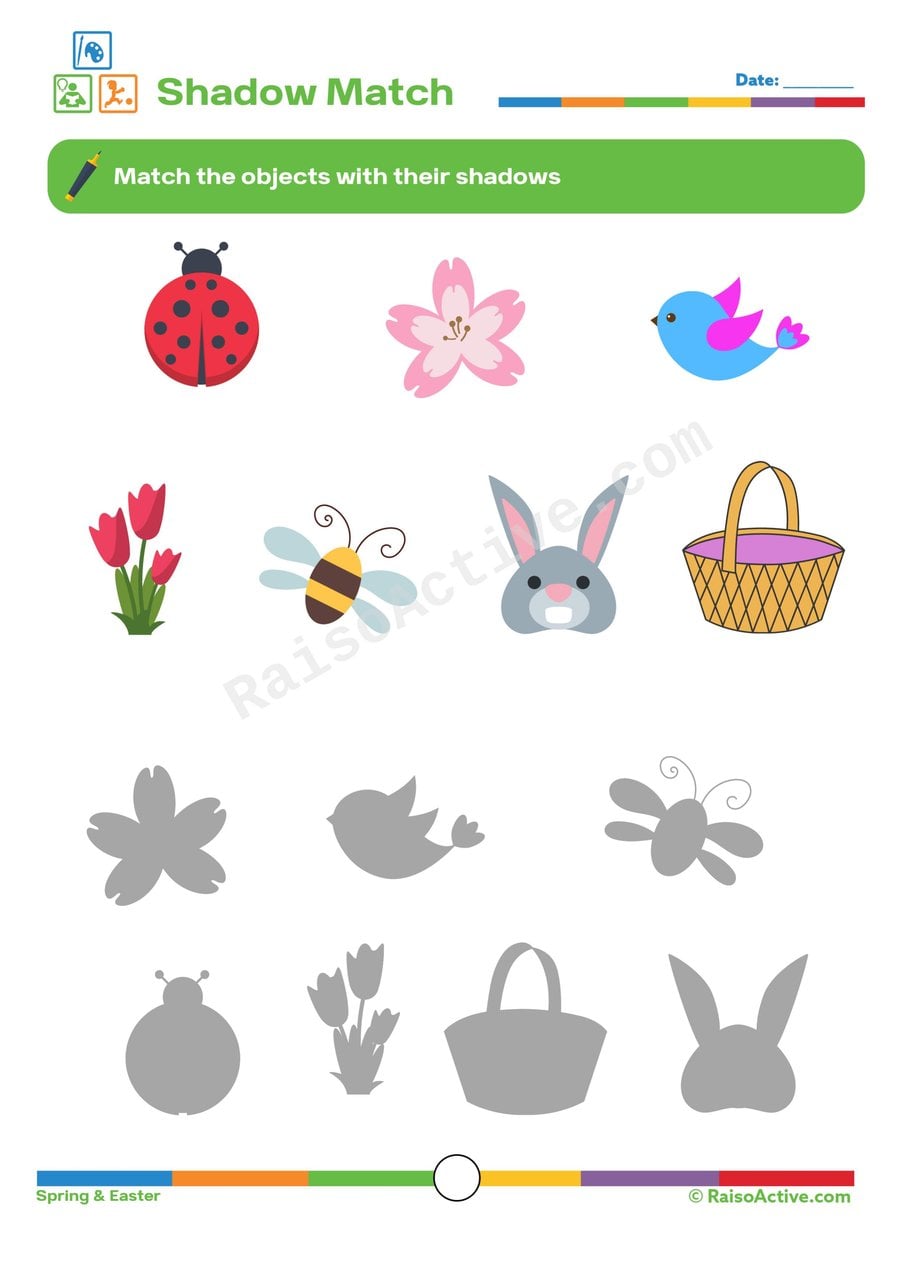
Spring Shadow Match Worksheet for Preschoolers
Ages 3-5 · Preschool–Pre-KAges 3-5 · Nursery–ReceptionAges 3-5 · Nursery–LKGAges 3-5
Children ages 3-5 practice visual discrimination by matching spring-themed objects to their correct silhouette shadows. Because shadows strip away color and detail, leaving only outline shape, this activity sharpens a child's ability to focus on form alone — a more advanced visual skill than matching by color or pattern.
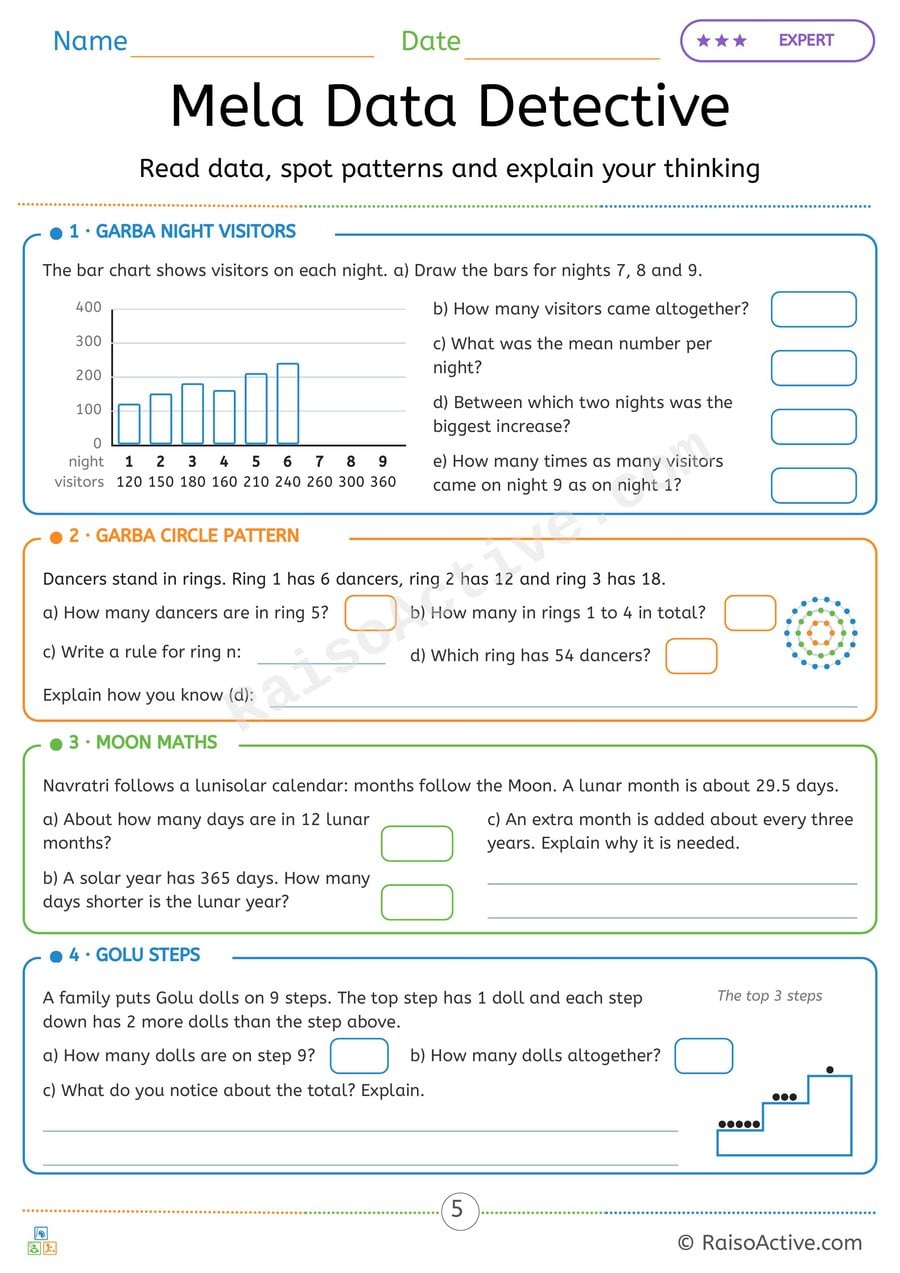
Mela Data Detective: Navratri Bar Chart, Patterns and Moon Maths
Ages 7-11 · Grade 2–Grade 3Ages 7-11 · Year 3–Year 4Ages 7-11 · Class 2–Class 3Ages 7-11
Children complete a bar chart of nine nights of visitors, find the total, the mean and the biggest increase, find and explain the rule for a growing pattern of dancers, compare a lunar year with a solar year, and add the dolls on nine Golu steps to discover a square number.
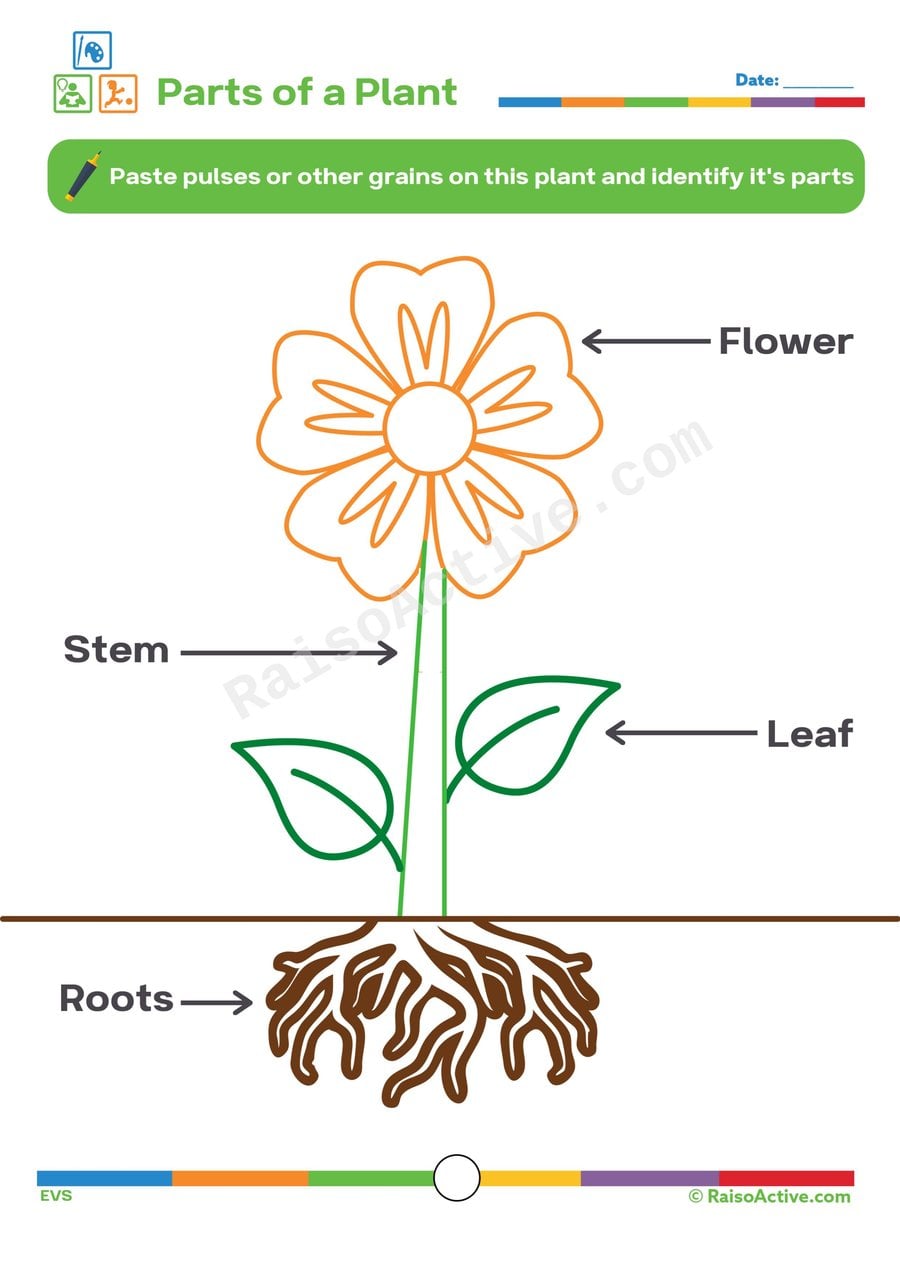
Parts of a Plant Worksheet: Identify and Label!
Ages 3-5 · Preschool–Pre-KAges 3-5 · Nursery–ReceptionAges 3-5 · Nursery–LKGAges 3-5
This activity teaches children ages 3-5 the basic parts of a plant — flower, stem, leaf, and roots — by having them label a diagram and add texture using real pulses or grains glued onto the plant shape. Combining a tactile material with each labeled part helps young children retain the vocabulary better than labeling alone, since touch and sight reinforce the same information.

Indian Cities Crossword Puzzle Worksheet for Kids
Ages 4-6 · Pre-K–KindergartenAges 4-6 · Reception–Year 1Ages 4-6 · LKG–UKGAges 4-6
This crossword challenges children ages 4-6 to identify famous Indian cities from picture clues of their landmarks and then spell out each city's name in the puzzle grid, combining observation skills with early geography knowledge. Counting the crossword boxes to match each city's letter count also reinforces attention to word length before writing.
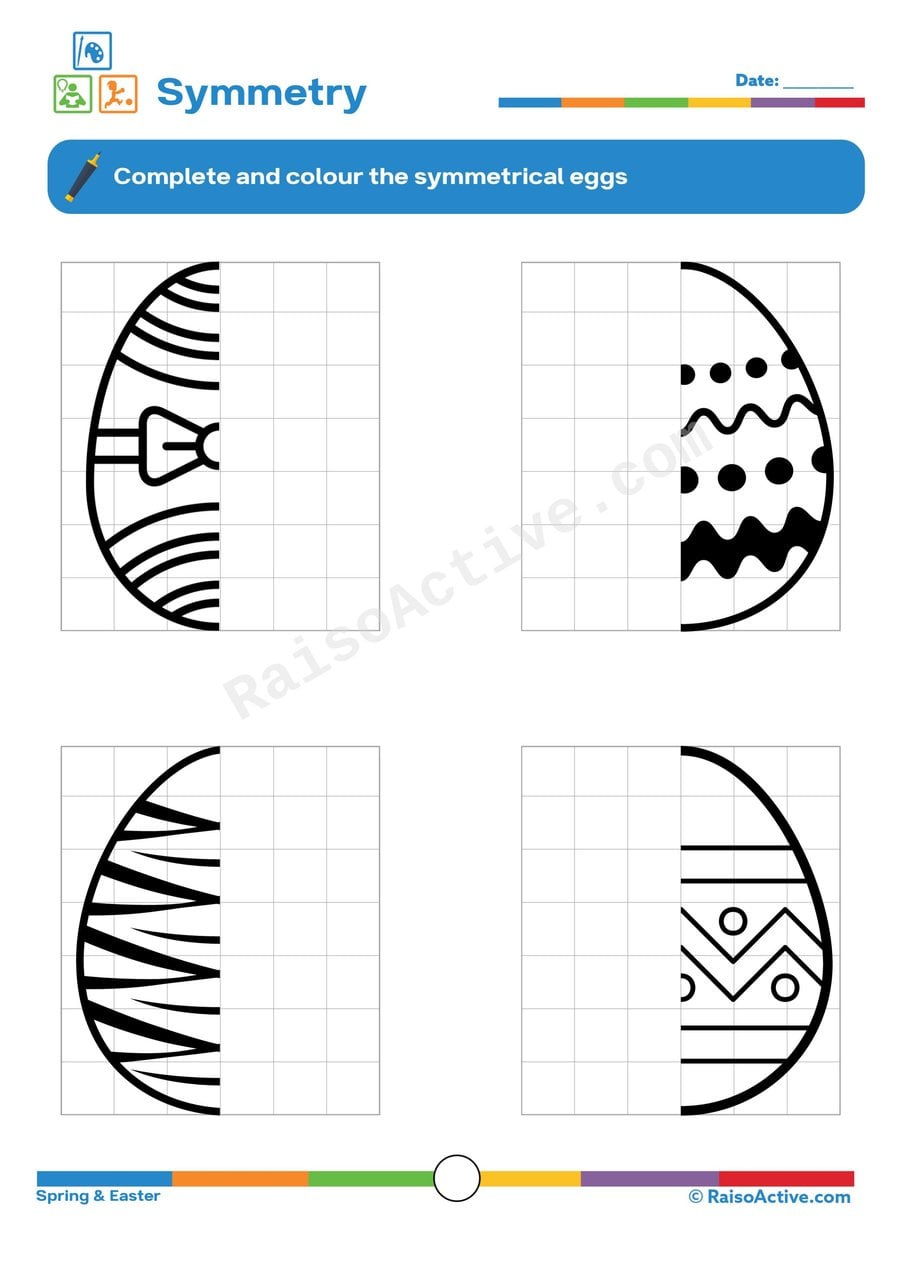
Symmetry Eggs Worksheet for Preschoolers
Ages 4-6 · Pre-K–KindergartenAges 4-6 · Reception–Year 1Ages 4-6 · LKG–UKGAges 4-6
This worksheet introduces children ages 4-6 to the concept of symmetry by having them complete the missing mirrored half of an egg design. Drawing a matching reflection requires children to closely observe shape, size, and placement on one side and reproduce it accurately on the other — an early geometry skill that also sharpens visual attention to detail.
Guides for this topic

Age-Appropriate Problem-Solving Activities: Building Critical Thinkers from the Ground Up
Discover fun, age-appropriate problem-solving activities for children ages 1-8. Build critical thinking, logic, and reasoning skills through play-based learning.
Critical Thinking Activities That Actually Work for Young Children: Building Tomorrow's Thinkers Today
Discover proven critical thinking activities for young children. Age-wise logic games, questioning techniques, and hands-on ideas to build thinking skills at home.

Preparing Your Child for a Rapidly Changing World: Essential Skills for Future Success
Discover the essential 21st century skills your child needs for future success. Practical tips on creativity, critical thinking, digital literacy & emotional intelligence for ages 1-8.
Reviews
Every worksheet for ages 3–5, no watermark
Members download the full library of 1,000+ worksheets and every activity pack without watermarks or daily limits. One year costs ₹999 in India or $20 elsewhere.
See membership plansOr download any worksheet free with a watermark (5 a day).