Life Cycle Stages Worksheet: Identify and Sequence!
This worksheet asks children ages 4-6 to identify what life-cycle stage is shown in each individual picture and then number a whole set of pictures into the correct growth sequence, moving beyond simple matching into independent ordering and logical reasoning. Because the worksheet likely mixes several different animals' or plants' stages, it also asks children to recognize what type of life cycle a picture belongs to before sequencing it.
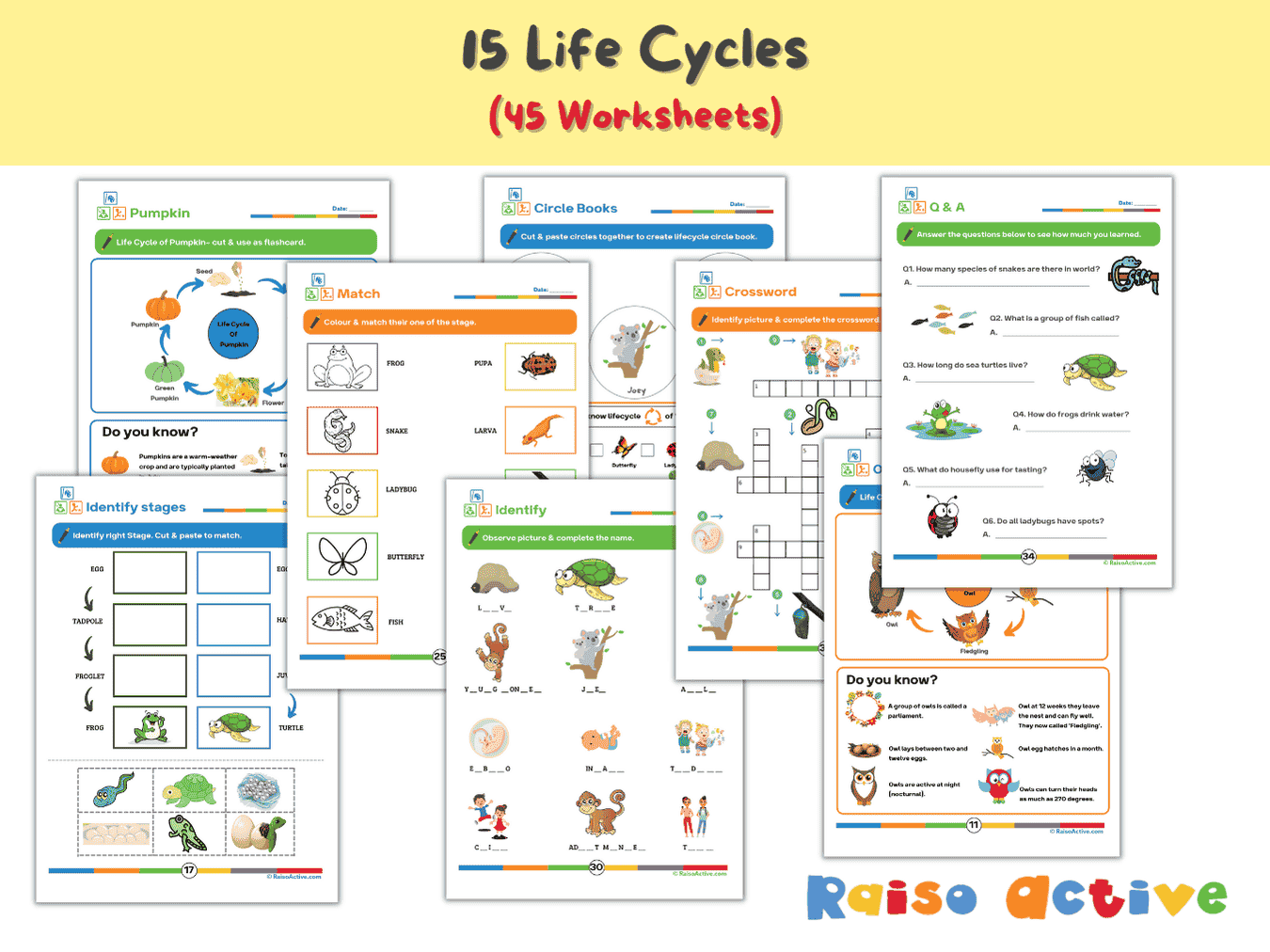
Part of the pack
Lifecycles Activity Book & Flashcards for Preschool & Early Elementary
This is page 25 of the pack. Ages 3-8 · Preschool–Grade 2Ages 3-8 · Nursery–Year 3Ages 3-8 · Nursery–Class 2Ages 3-8
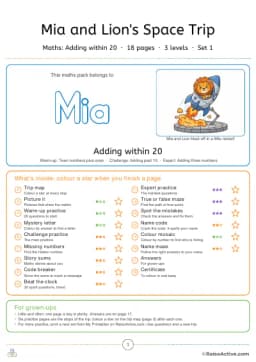
Made for your child
Numbers to 20, made for your child
A maths pack with your child's name in it: pictures that explain, practice at three levels, puzzles and story sums about them. Print a new set whenever they finish.
Make a maths packFree preview · free for members
Curriculum
- Living Things - Animals > Animal Life Cycles
How to use this worksheet
Look at each picture on the page individually and name what stage it shows: egg, baby, or adult, for example. Ask your child which picture they think comes first in the life cycle and why, encouraging them to explain their reasoning. Have them write the number 1 next to the first stage, then continue numbering each picture in growing order through to the final stage. Once numbered, read back through the sequence together to check it makes sense.
Materials needed
- Pencil
Extension activities
- 1Draw your own life cycle for an animal or plant of your choice.
- 2Research a life cycle not shown on the worksheet, like a butterfly's.
- 3Cut the pictures apart and physically reorder them before numbering.
- 4Create a simple timeline poster showing a chosen life cycle stage by stage.
- 5Quiz each other by describing a stage and guessing which number it is.

Written by
Hemsweta Jain · Teacher Cheena
MBA and Early Childhood Educator, teaching since 2014 · Founder of RaisoActive, Mumbai
Every RaisoActive worksheet is designed and checked by the founder before publishing.
Published · Last reviewed
More from Lifecycles Activity Book & Flashcards for Preschool & Early Elementary

Turtle Life Cycle Flashcard Worksheet for Preschoolers
Ages 3-5 · Preschool–Pre-KAges 3-5 · Nursery–ReceptionAges 3-5 · Nursery–LKGAges 3-5
This flashcard set introduces children ages 3-5 to the stages of a turtle's life, egg, hatchling, and adult, helping them understand that turtles start life very small and vulnerable before growing into their familiar shelled adult form. Discussing where turtles lay their eggs and how hatchlings behave also builds early awareness of animal habitats and instincts.

Lifecycle Circle Book: Cut & Paste Activity for Young Learners
Ages 3-5 · Preschool–Pre-KAges 3-5 · Nursery–ReceptionAges 3-5 · Nursery–LKGAges 3-5
Children ages 3-5 compare and sequence the life cycles of two different animals — frogs and turtles — by assembling circular 'lifecycle books' for each. This side-by-side approach helps children notice that not all animals grow the same way, building early skills in comparison and scientific observation.

Life Cycle Crossword Puzzle for Kids: Identify and Complete!
Ages 4-6 · Pre-K–KindergartenAges 4-6 · Reception–Year 1Ages 4-6 · LKG–UKGAges 4-6
This crossword challenges children ages 4-6 to connect a picture clue to its written word, strengthening both vocabulary recall and early spelling of life cycle terms like egg, caterpillar, or tadpole. Fitting letters into the numbered crossword boxes also builds letter-space awareness, helping children understand that each box holds exactly one letter. Together these skills bridge picture recognition and independent word writing, a key step for pre-readers moving toward reading fluency.

Ladybug Lifecycle Circle Book Worksheet for Preschoolers
Ages 3-5 · Preschool–Pre-KAges 3-5 · Nursery–ReceptionAges 3-5 · Nursery–LKGAges 3-5
This hands-on worksheet teaches children ages 3-5 the four stages of a ladybug's life cycle — egg, larva, pupa, and adult ladybug — while building fine motor precision through cutting circular shapes and assembling them into a rotating 'circle book.' Creating a physical, movable model helps young children grasp the idea of a repeating cycle rather than a straight line of events.

Lifecycle Circle Book: Cut & Paste Activity for Early Learners
Ages 3-5 · Preschool–Pre-KAges 3-5 · Nursery–ReceptionAges 3-5 · Nursery–LKGAges 3-5
Children ages 3-5 explore the stages of human growth — baby, child, teenager, and adult — by building a hands-on circular lifecycle book. Applying the same 'lifecycle' concept they may know from animals to people themselves helps children make a meaningful, personal connection to the idea of growing and changing over time.

Animal Q&A Worksheet for Kids: Learn About Snakes, Fish, and More!
Ages 3-5 · Preschool–Pre-KAges 3-5 · Nursery–ReceptionAges 3-5 · Nursery–LKGAges 3-5
This worksheet builds early reading comprehension and animal knowledge in children ages 3-5 as they answer simple questions about snakes, fish, and other animals using picture clues. Answering varied questions about multiple animals, rather than one, helps children practice applying the same comprehension skill flexibly across different content.
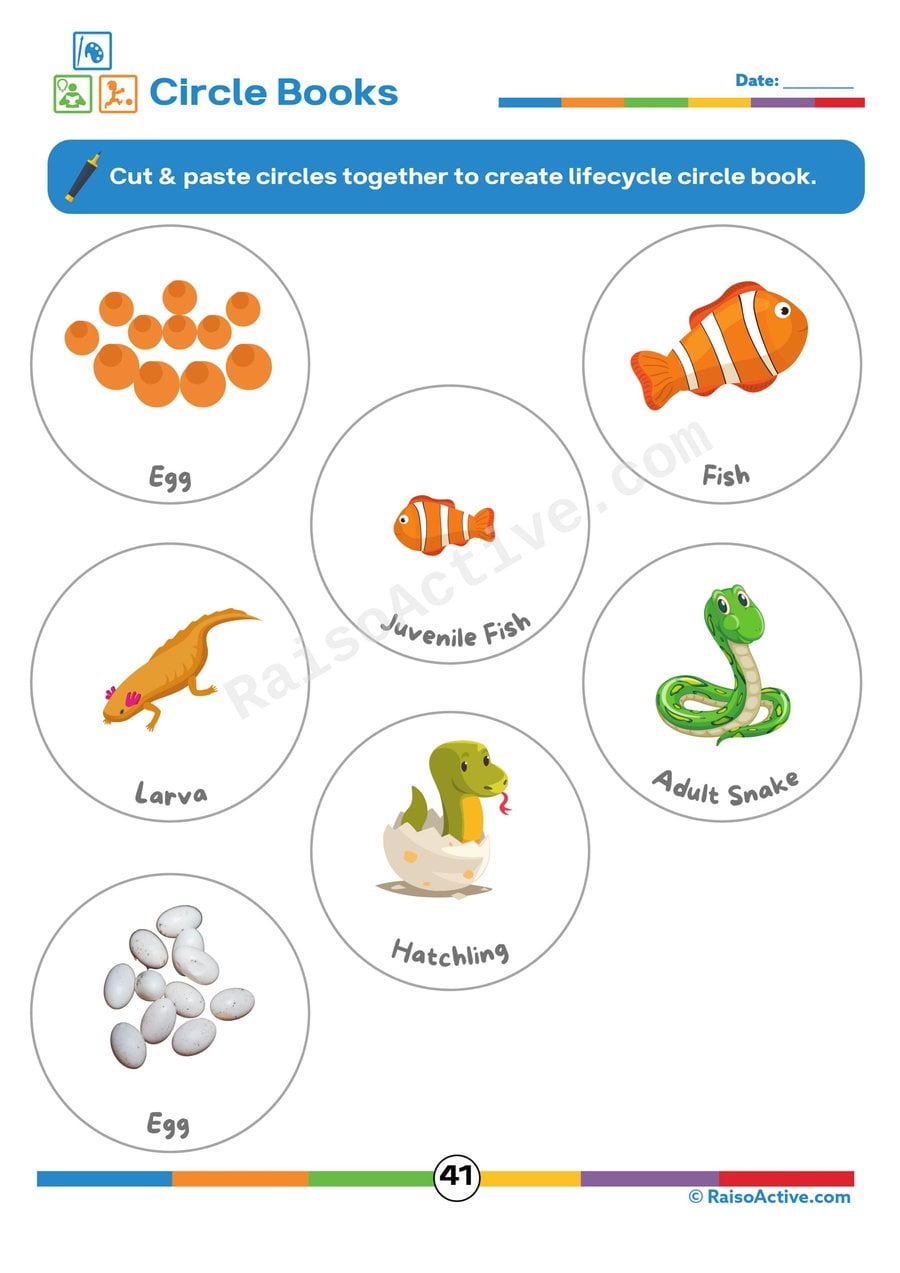
Lifecycle Circle Book: Cut and Paste Worksheet
Ages 3-5 · Preschool–Pre-KAges 3-5 · Nursery–ReceptionAges 3-5 · Nursery–LKGAges 3-5
This worksheet gives children ages 3-5 practice matching pictures to the correct stage of an animal's life cycle while assembling a hands-on circular book. Beyond sequencing, the rotating format helps children internalize that growth is a continuous, repeating process rather than a fixed line from start to finish.

Complete the Words: A Fun Worksheet for Early Readers!
Ages 3-5 · Preschool–Pre-KAges 3-5 · Nursery–ReceptionAges 3-5 · Nursery–LKGAges 3-5
This worksheet helps children ages 3-5 practice early letter recognition and phonics as they look at a picture and fill in the missing letters to complete an animal-themed word. Saying the finished word aloud after writing it connects the written letters to their spoken sounds, reinforcing the link between reading and speaking that underlies early literacy.
Related worksheets
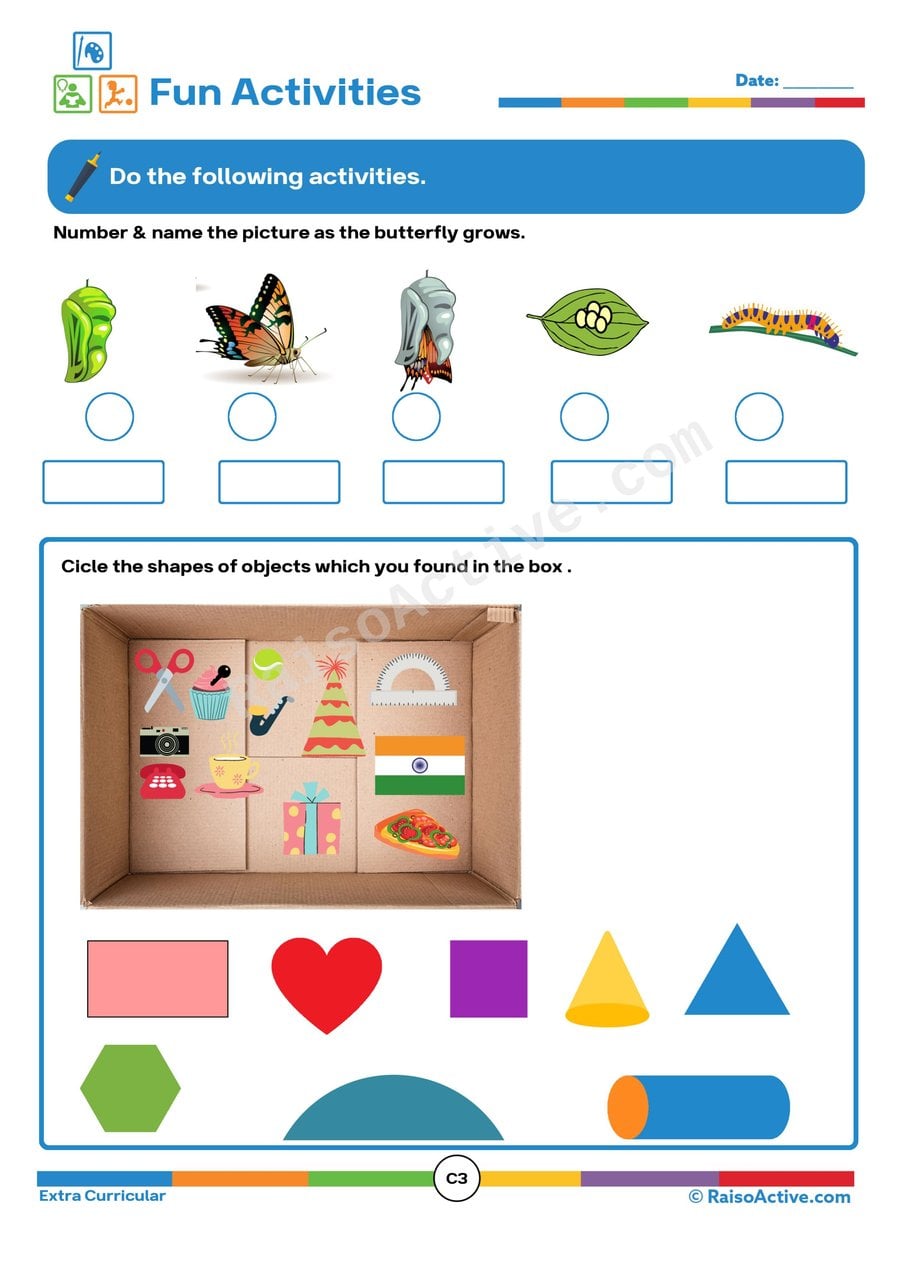
Butterfly Life Cycle Worksheet for Kids
Ages 3-5 · Preschool–Pre-KAges 3-5 · Nursery–ReceptionAges 3-5 · Nursery–LKGAges 3-5
This worksheet introduces children ages 3-5 to the four stages of a butterfly's life cycle — egg, caterpillar, chrysalis, and butterfly — by having them number the pictures in the correct sequence. Understanding a life cycle as an ordered sequence of changes is an early but genuine science skill, building the sequencing and cause-and-effect thinking children need for later scientific reasoning.

Clothing Pattern Matching Worksheet for Preschoolers
Ages 3-5 · Preschool–Pre-KAges 3-5 · Nursery–ReceptionAges 3-5 · Nursery–LKGAges 3-5
By comparing clothing items and connecting each one to its pattern match, children ages 3-5 build visual discrimination skills, learning to notice fine differences in stripes, dots, or repeated shapes. This close-looking practice supports the same attention-to-detail children will later need to tell similar-looking letters and numbers apart.
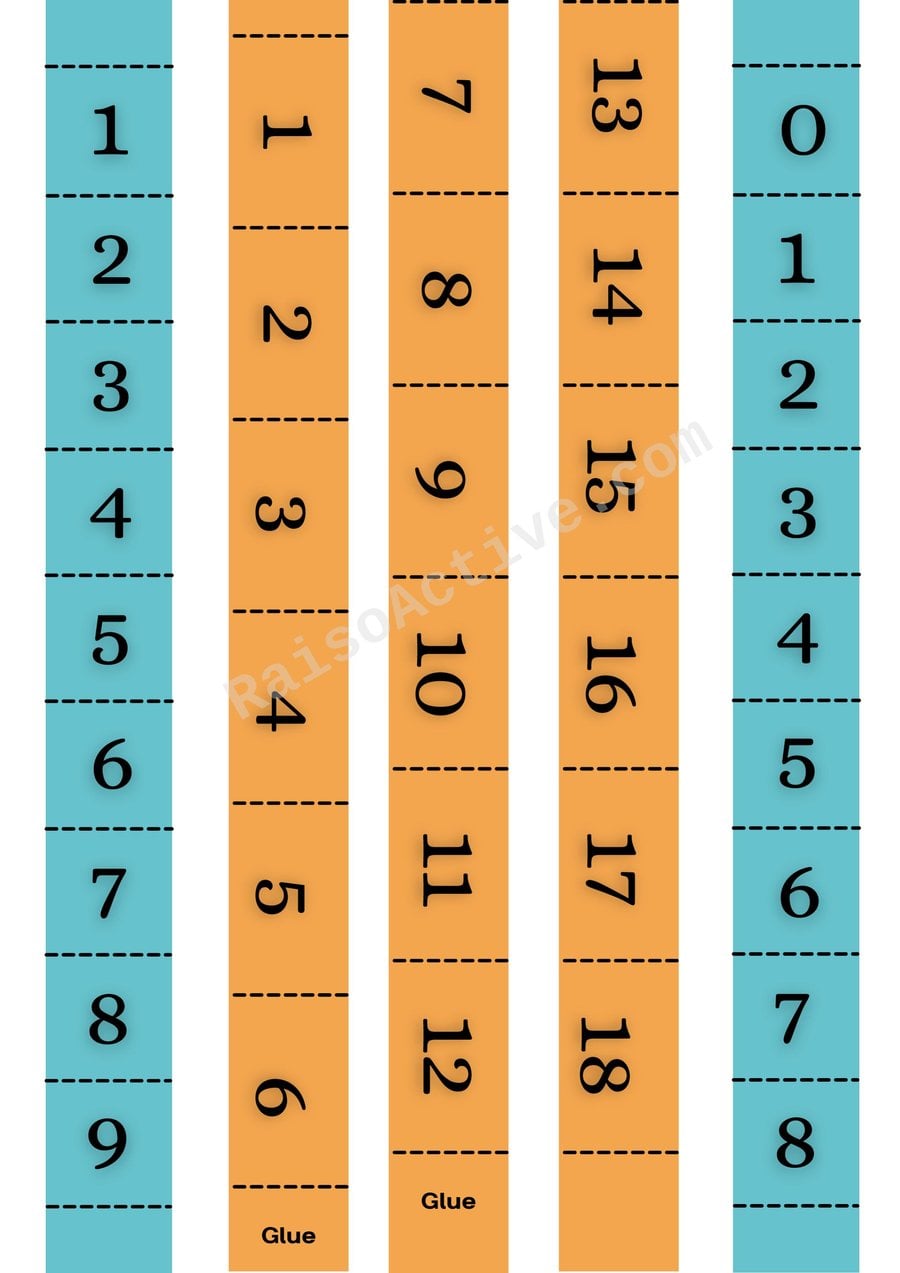
Number Matching Worksheet: 0-18
Ages 3-5 · Preschool–Pre-KAges 3-5 · Nursery–ReceptionAges 3-5 · Nursery–LKGAges 3-5
This activity strengthens numeral recognition for children ages 3-5 by having them find and pair matching numbers from 0 to 18 printed on separate strips. Because the numbers are scattered rather than in order, children must recognize each digit shape on its own rather than relying on counting sequence, which builds true number recognition instead of rote list-reciting.
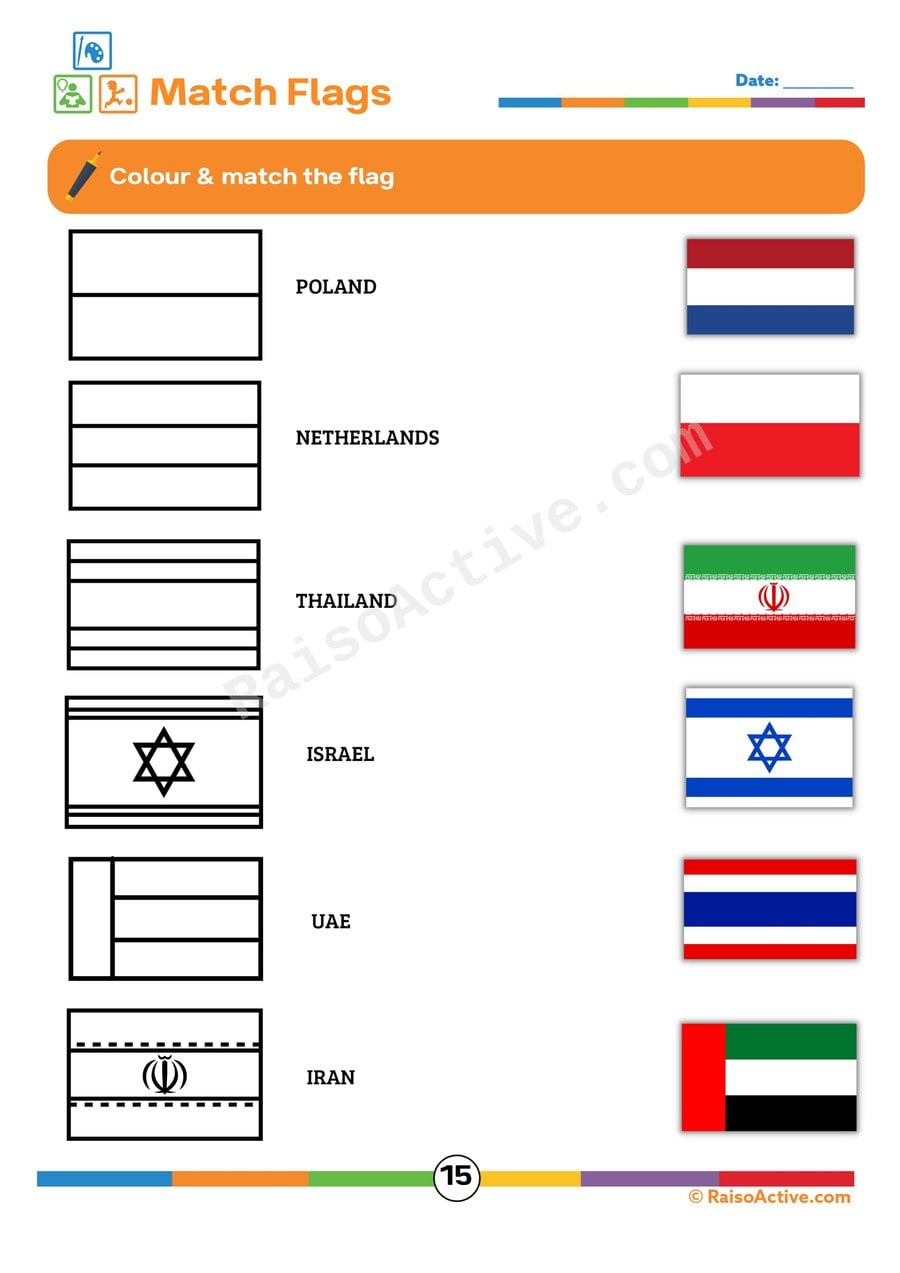
Match the Flags Worksheet: Color and Learn!
Ages 3-5 · Preschool–Pre-KAges 3-5 · Nursery–ReceptionAges 3-5 · Nursery–LKGAges 3-5
This worksheet asks children ages 3-5 to color a set of country flags and then match each one to its printed name, combining fine motor coloring practice with early visual-word association. Matching a colored flag to text also builds pre-reading skills, since children learn to recognize whole words as symbols tied to a picture even before they can sound them out.
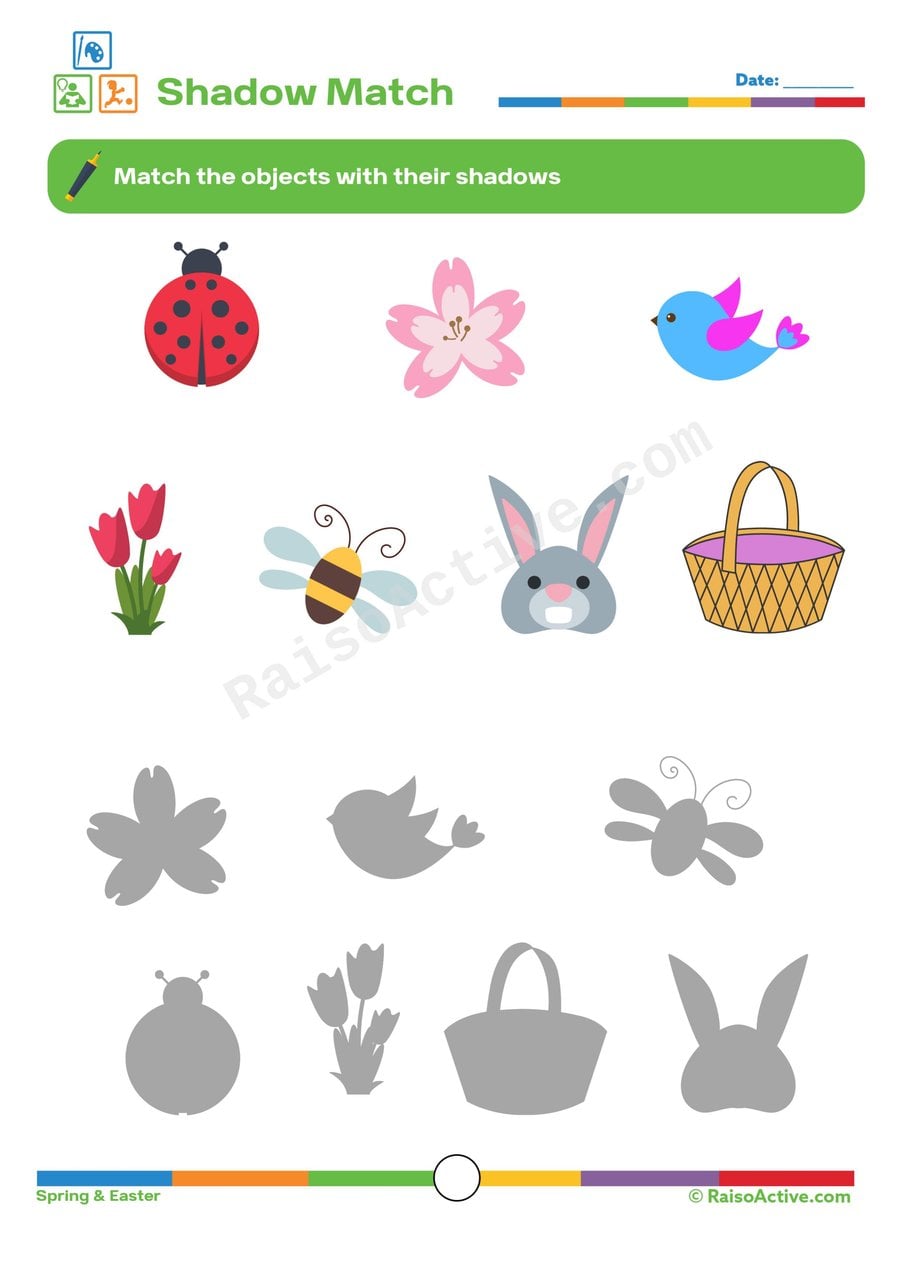
Spring Shadow Match Worksheet for Preschoolers
Ages 3-5 · Preschool–Pre-KAges 3-5 · Nursery–ReceptionAges 3-5 · Nursery–LKGAges 3-5
Children ages 3-5 practice visual discrimination by matching spring-themed objects to their correct silhouette shadows. Because shadows strip away color and detail, leaving only outline shape, this activity sharpens a child's ability to focus on form alone — a more advanced visual skill than matching by color or pattern.

Easter Egg Color Match Worksheet for Preschoolers
Ages 3-5 · Preschool–Pre-KAges 3-5 · Nursery–ReceptionAges 3-5 · Nursery–LKGAges 3-5
Children ages 3-5 practice color recognition and following a visual code as they color Easter eggs to match a key provided at the top of the page. Using a color-coded key rather than free coloring adds an instruction-following element, teaching children to check a reference and apply it consistently across a whole page.

Match the Flags! A Fun Coloring Worksheet for Kids
Ages 3-5 · Preschool–Pre-KAges 3-5 · Nursery–ReceptionAges 3-5 · Nursery–LKGAges 3-5
This worksheet combines coloring with flag recognition, helping children ages 3-5 practice fine motor control while learning to match a colored flag to its correct blank outline. Coloring the flags first, then matching them, adds an extra layer of visual processing as children must recall the colors they just used to complete the matching step.

Navratri Picture Cards: Cut-Out Memory Match Game
Ages 4-6 · Pre-K–KindergartenAges 4-6 · Reception–Year 1Ages 4-6 · LKG–UKGAges 4-6
Children learn six Navratri words, match each picture to its word and clue, and practise memory and cutting skills.
Guides for this topic

Best Worksheets for 3-Year-Olds: What Works and What to Avoid
What works on worksheets for 3-year-olds: short sessions, crayons, tracing lines, matching, cutting, a free weekly plan, and signs one is too advanced.

Coding Activities for Preschoolers: Building Tomorrow's Thinkers Today
Discover 15+ unplugged and screen-based coding activities for preschoolers that build sequencing, logic, and problem-solving skills through play. NEP 2020 aligned.

Discovering Wonder: Nature-Based Learning Activities That Captivate Young Children
Explore nature-based learning activities for children ages 2–7 — leaf rubbings, bug hunts, nature journals, and seasonal Indian outdoor ideas that spark wonder.
Reviews
Every worksheet for ages 4–6, no watermark
Members download the full library of 1,000+ worksheets and every activity pack without watermarks or daily limits. One year costs ₹999 in India or $20 elsewhere.
See membership plansOr download any worksheet free with a watermark (5 a day).