Easter Egg Patterns Worksheet for Preschoolers
This worksheet asks children ages 3-5 to study a sequence of patterned Easter eggs and figure out what design should come next, then draw it into the empty egg themselves. Predicting and completing a pattern, rather than just matching an existing one, pushes children a step further into the kind of what-comes-next reasoning that underlies early math and logic.
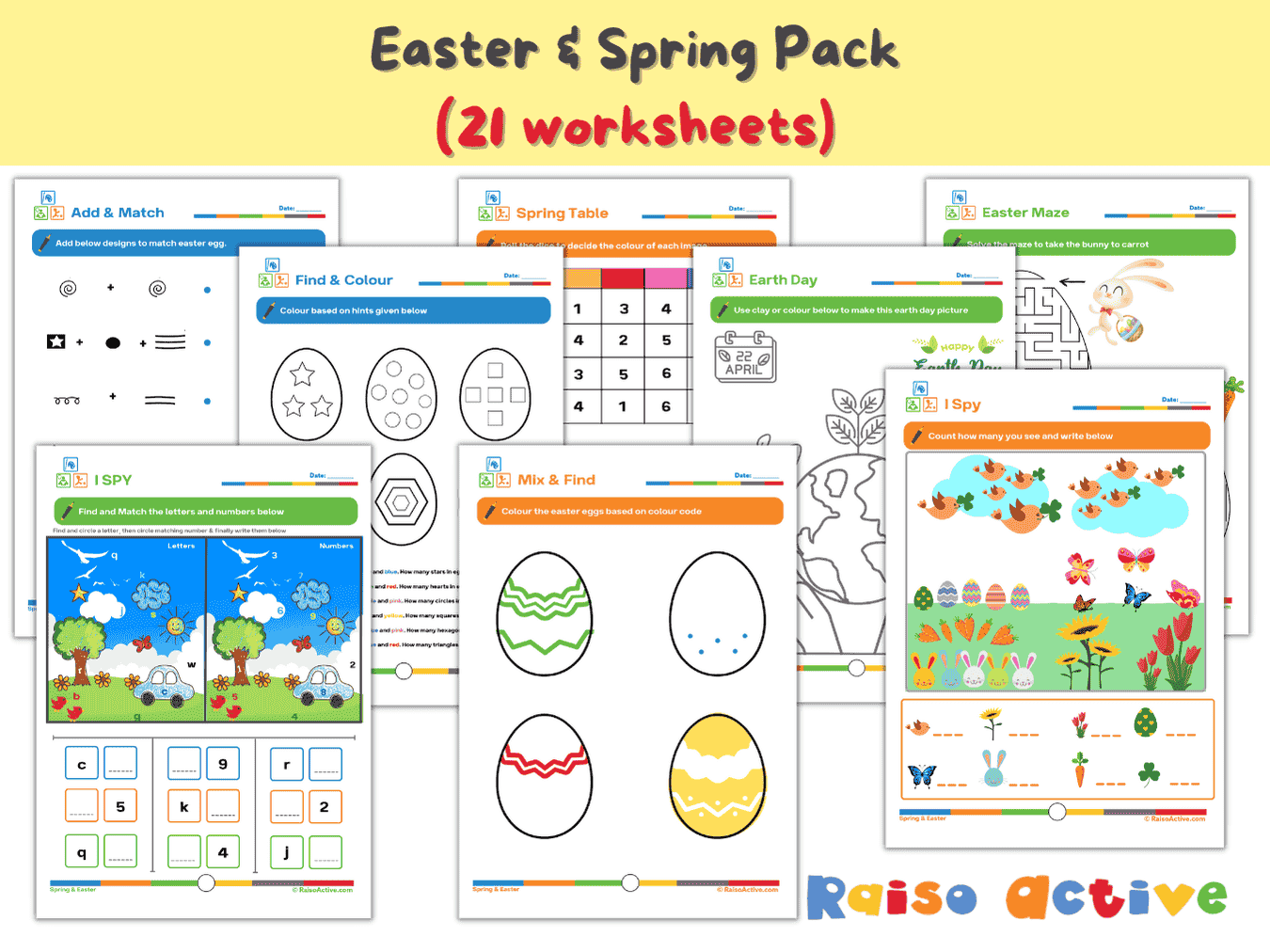
Part of the pack
Spring & Easter Activity Book: Counting, Patterns, & Mazes for Preschool & Kindergarten
This is page 12 of the pack. Ages 3-7 · Preschool–Grade 1Ages 3-7 · Nursery–Year 2Ages 3-7 · Nursery–Class 1Ages 3-7

Made for your child
Counting to 10, made for your child
A maths pack with your child's name in it: pictures that explain, practice at three levels, puzzles and story sums about them. Print a new set whenever they finish.
Make a maths packFree preview · free for members
Curriculum
- Patterns > Patterns
How to use this worksheet
Look at the row of patterned eggs together and describe what repeats, stripes, dots, or a specific color order. Ask your child what they think should go in the empty egg at the end of the row based on that pattern. Have them draw the predicted design into the empty egg using a pencil first, then color it to match the established pattern. Move through each row on the page, describing the pattern fresh each time since the designs change.
Materials needed
- Pencil
- Crayons
Extension activities
- 1Create your own patterns using different shapes or colors on a blank sheet.
- 2Use real Easter eggs or plastic eggs and decorate them with patterns to match the worksheet.
- 3Extend a pattern started by an adult using building blocks or beads.
- 4Play a clapping or stomping pattern game and have your child predict what comes next.
- 5Look for repeating patterns on clothing or wallpaper around the house.

Written by
Hemsweta Jain · Teacher Cheena
MBA and Early Childhood Educator, teaching since 2014 · Founder of RaisoActive, Mumbai
Every RaisoActive worksheet is designed and checked by the founder before publishing.
Published · Last reviewed
More from Spring & Easter Activity Book: Counting, Patterns, & Mazes for Preschool & Kindergarten

Easter Egg Match: Add and Find the Matching Designs!
Ages 3-5 · Preschool–Pre-KAges 3-5 · Nursery–ReceptionAges 3-5 · Nursery–LKGAges 3-5
This worksheet blends early addition with visual matching as children ages 3-5 combine two separate shape groups and then search for the Easter egg design that shows the same total. Because the 'answer' is a picture rather than a written number, children practice quantity comparison and pattern-matching without needing to know written numerals yet.

Spring Sudoku Worksheet: Cut and Paste Puzzle for Kids
Ages 4-6 · Pre-K–KindergartenAges 4-6 · Reception–Year 1Ages 4-6 · LKG–UKGAges 4-6
Placing cut-out pictures into a sudoku-style grid so that no image repeats in any row, column, or box teaches children ages 4-6 early logical reasoning and systematic thinking, since they must check multiple directions before deciding where each piece belongs. Cutting out the small picture squares beforehand also builds scissor control and hand-eye coordination. Together, this combines a pre-math logic puzzle with fine motor practice in a single spring-themed activity.

Easter Egg Color Code Worksheet for Preschoolers
Ages 3-5 · Preschool–Pre-KAges 3-5 · Nursery–ReceptionAges 3-5 · Nursery–LKGAges 3-5
Matching numbers on each Easter egg section to a color key builds number recognition and color-word association in children ages 3-5, since they must hold both a numeral and its assigned color in mind while coloring. This kind of coded coloring activity also strengthens visual scanning, as children need to locate the small numbers printed inside each egg section before choosing the right crayon. Completing the code correctly gives an immediate, visible reward when a colorful, patterned egg emerges from the numbered outline.

Easter Egg Color Match Worksheet for Preschoolers
Ages 3-5 · Preschool–Pre-KAges 3-5 · Nursery–ReceptionAges 3-5 · Nursery–LKGAges 3-5
This worksheet builds on color recognition by asking children ages 3-5 to color a full row of eggs so they all match one another, reinforcing visual discrimination alongside color vocabulary. Rather than following a printed key, children must compare their own work egg to egg, which adds a self-checking element to the coloring task.
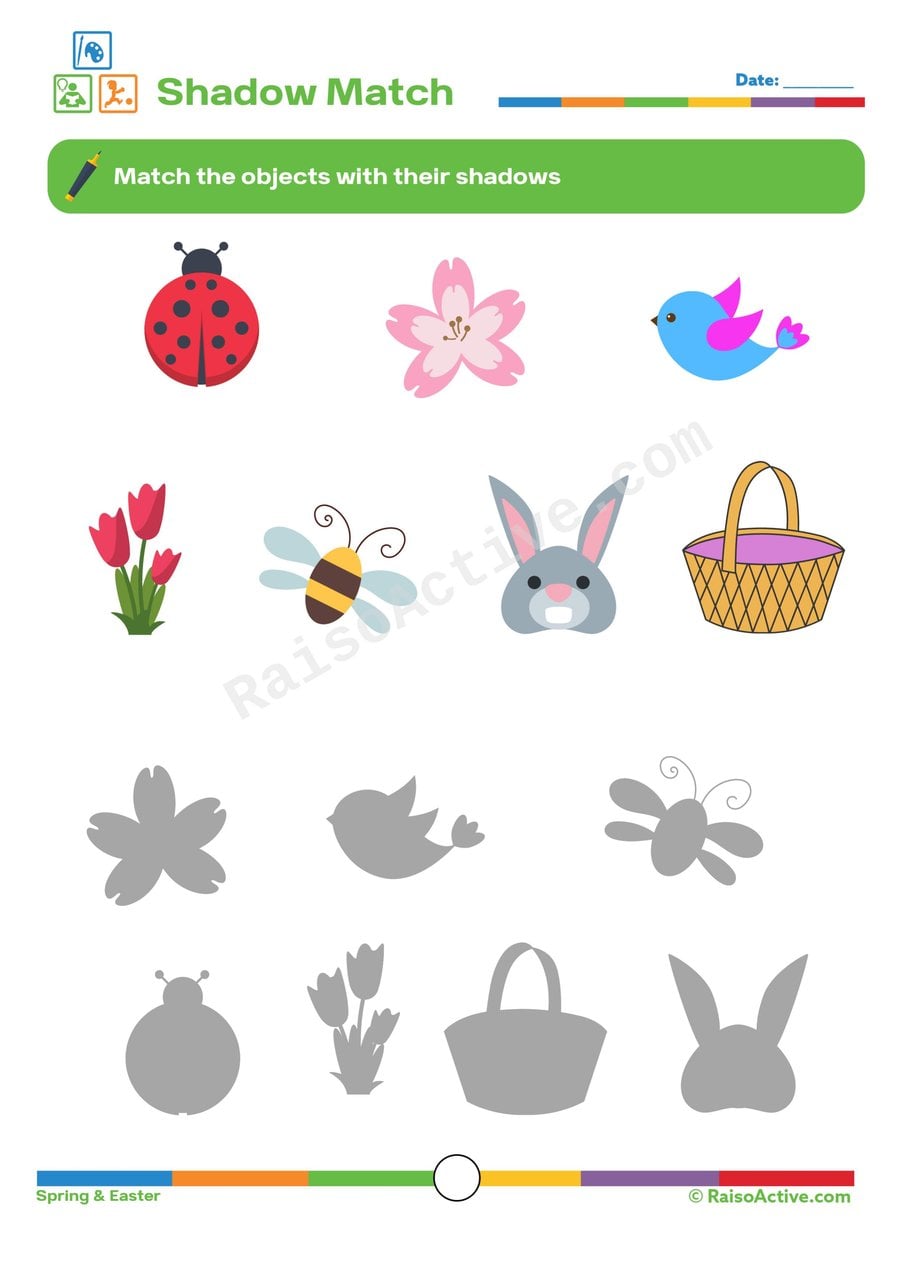
Spring Shadow Match Worksheet for Preschoolers
Ages 3-5 · Preschool–Pre-KAges 3-5 · Nursery–ReceptionAges 3-5 · Nursery–LKGAges 3-5
Children ages 3-5 practice visual discrimination by matching spring-themed objects to their correct silhouette shadows. Because shadows strip away color and detail, leaving only outline shape, this activity sharpens a child's ability to focus on form alone — a more advanced visual skill than matching by color or pattern.
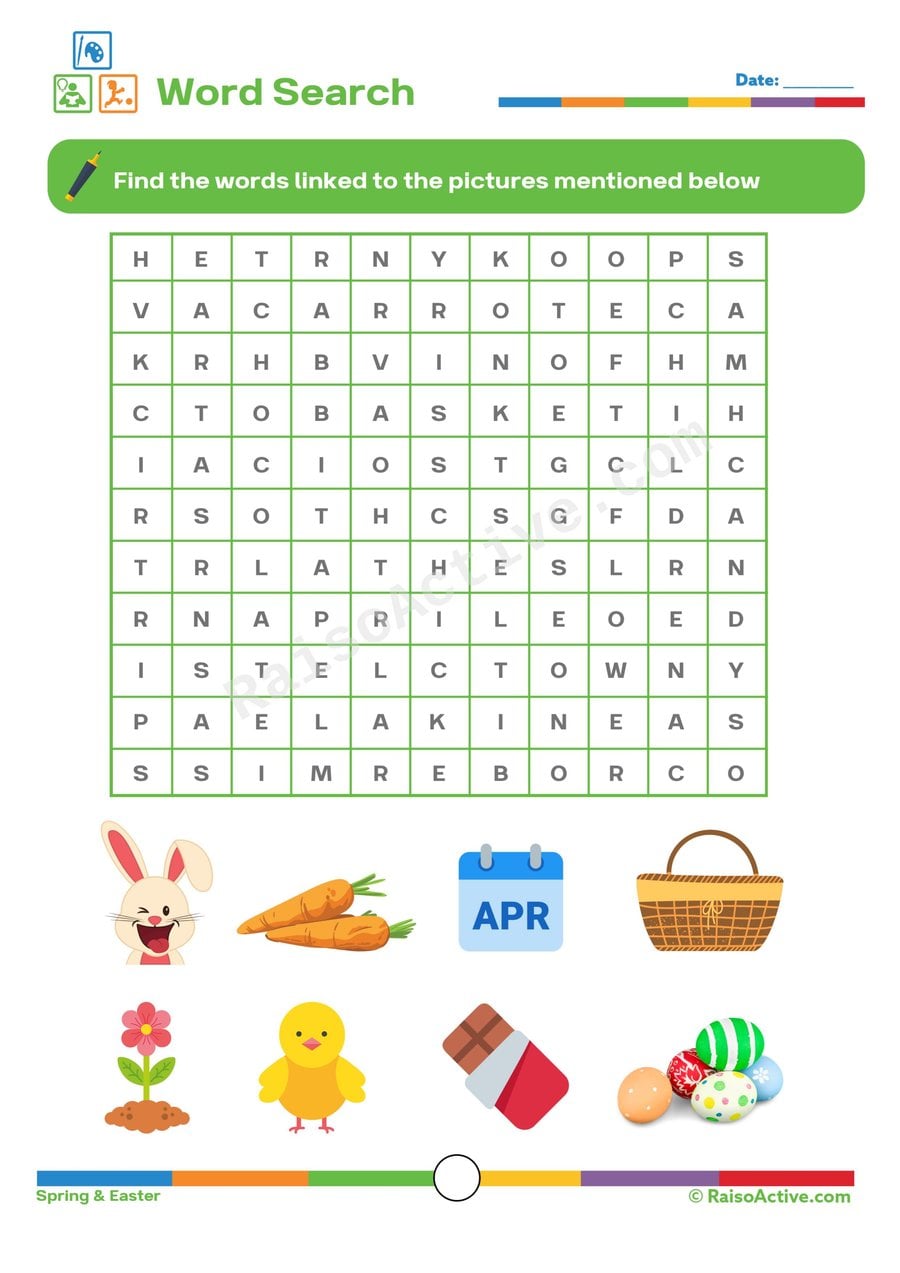
Spring Word Search Worksheet for Preschoolers
Ages 3-5 · Preschool–Pre-KAges 3-5 · Nursery–ReceptionAges 3-5 · Nursery–LKGAges 3-5
This Spring Word Search sharpens visual scanning and letter-tracking skills for children ages 3-5 as they hunt for season words hidden inside a grid of letters. Searching row by row and diagonally builds the same left-to-right tracking habit needed for reading, while recognizing whole words like 'FLOWER' or 'RAIN' strengthens early sight-word memory and spring vocabulary.

Easter Maze Adventure: Help the Bunny Find the Carrot!
Ages 3-5 · Preschool–Pre-KAges 3-5 · Nursery–ReceptionAges 3-5 · Nursery–LKGAges 3-5
Tracing a path from the bunny to the carrot builds fine motor control and pencil steadiness in children ages 3-5, since staying within the maze's narrow lines requires more precision than open coloring. Navigating around dead ends also develops early problem-solving and planning skills, as children learn to look ahead and backtrack when a path doesn't work out. This kind of visual-spatial puzzle strengthens the ability to plan a route mentally before committing it to paper, a skill that supports later map-reading and logical thinking.

Spring Vocabulary Unscramble Worksheet for Preschoolers
Ages 4-5 · Pre-KAges 4-5 · ReceptionAges 4-5 · LKGAges 4-5
This unscrambling worksheet has children ages 4-5 rearrange jumbled letters into correctly spelled spring vocabulary words, strengthening letter-sound awareness and reinforcing the idea that letters have a fixed, meaningful order. Working from a picture clue to a written word also builds the bridge between spoken vocabulary and early spelling.
Related worksheets

Pongal Pot Design and Coloring Worksheet for Kids
Ages 4-8 · Pre-K–Grade 2Ages 4-8 · Reception–Year 3Ages 4-8 · LKG–Class 2Ages 4-8
Children cut and fold a pattern dice, roll it and copy the patterns onto two pongal pots, practising pattern drawing, pencil control and turn-taking.

Feelings Puzzles: Spot 5 Differences, Odd One Out and Face Patterns
Ages 4-6 · Pre-K–KindergartenAges 4-6 · Reception–Year 1Ages 4-6 · LKG–UKGAges 4-6
Children practise looking closely with a spot-the-difference picture, find the face that shows a different feeling in each row, and finish simple face patterns (AB, AAB and ABC).
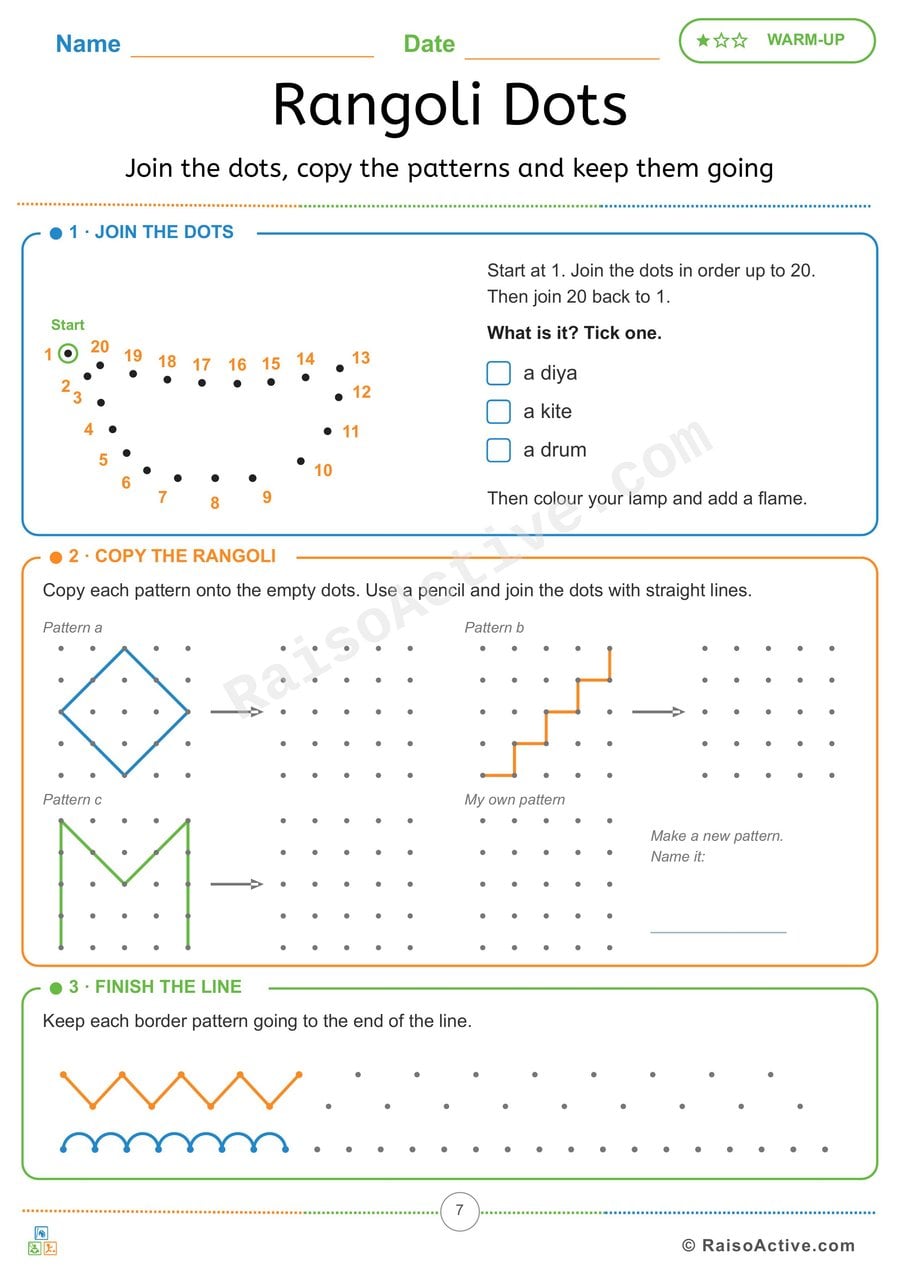
Rangoli Dot Pictures: Join the Dots, Copy Patterns and Finish the Line
Ages 4-6 · Pre-K–KindergartenAges 4-6 · Reception–Year 1Ages 4-6 · LKG–UKGAges 4-6
Children join numbered dots from 1 to 20 to reveal a diya, copy three dot-grid patterns with straight lines, and keep two border patterns going. It builds number order, pencil control and pattern sense.

Pumpkin Lines Dice Game: Halloween Pre-Writing Worksheet
Ages 4-8 · Pre-K–Grade 2Ages 4-8 · Reception–Year 3Ages 4-8 · LKG–Class 2Ages 4-8
Children practise wavy, zigzag and looped pre-writing lines while playing a simple dice game.

Inside My Brain: Guard Dog and Wise Owl Hand-Brain Activity
Ages 7-10 · Grade 2–Grade 3Ages 7-10 · Year 3–Year 4Ages 7-10 · Class 2–Class 3Ages 7-10
Children meet two story helpers: the guard dog, who keeps us safe fast, and the wise owl, who thinks and chooses. They make a hand model, sort eight thoughts and choose calm tools that help the owl come back.
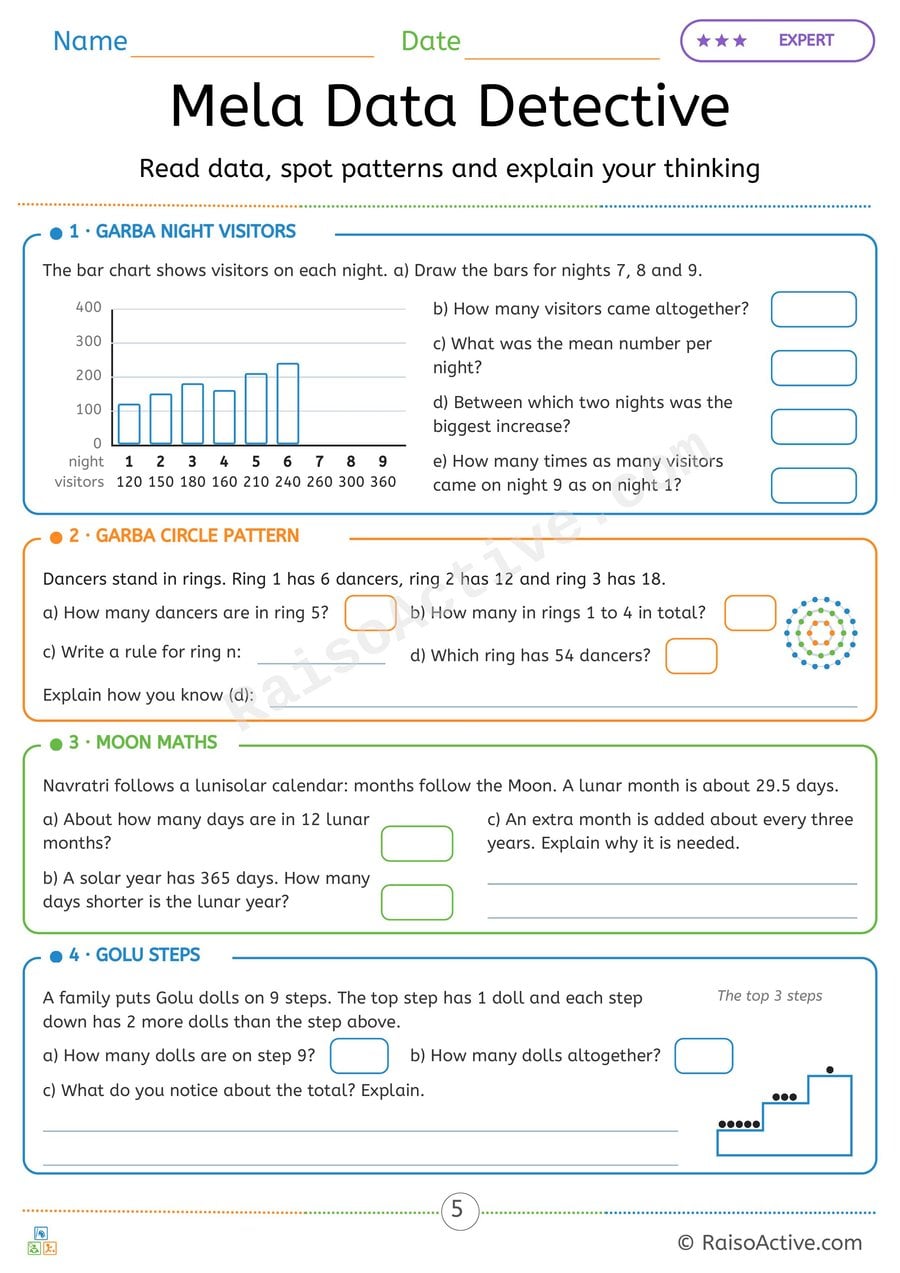
Mela Data Detective: Navratri Bar Chart, Patterns and Moon Maths
Ages 7-11 · Grade 2–Grade 3Ages 7-11 · Year 3–Year 4Ages 7-11 · Class 2–Class 3Ages 7-11
Children complete a bar chart of nine nights of visitors, find the total, the mean and the biggest increase, find and explain the rule for a growing pattern of dancers, compare a lunar year with a solar year, and add the dolls on nine Golu steps to discover a square number.

Problem Solvers: Stop, Think, Choose, Try and Matching the Right Calm Tool
Ages 7-10 · Grade 2–Grade 3Ages 7-10 · Year 3–Year 4Ages 7-10 · Class 2–Class 3Ages 7-10
Children use four steps, Stop, Think, Choose and Try, to help Nia after a spill. They match calm tools to places (class, bed, field, shop) and brainstorm three ideas for a friend who wants a different game.
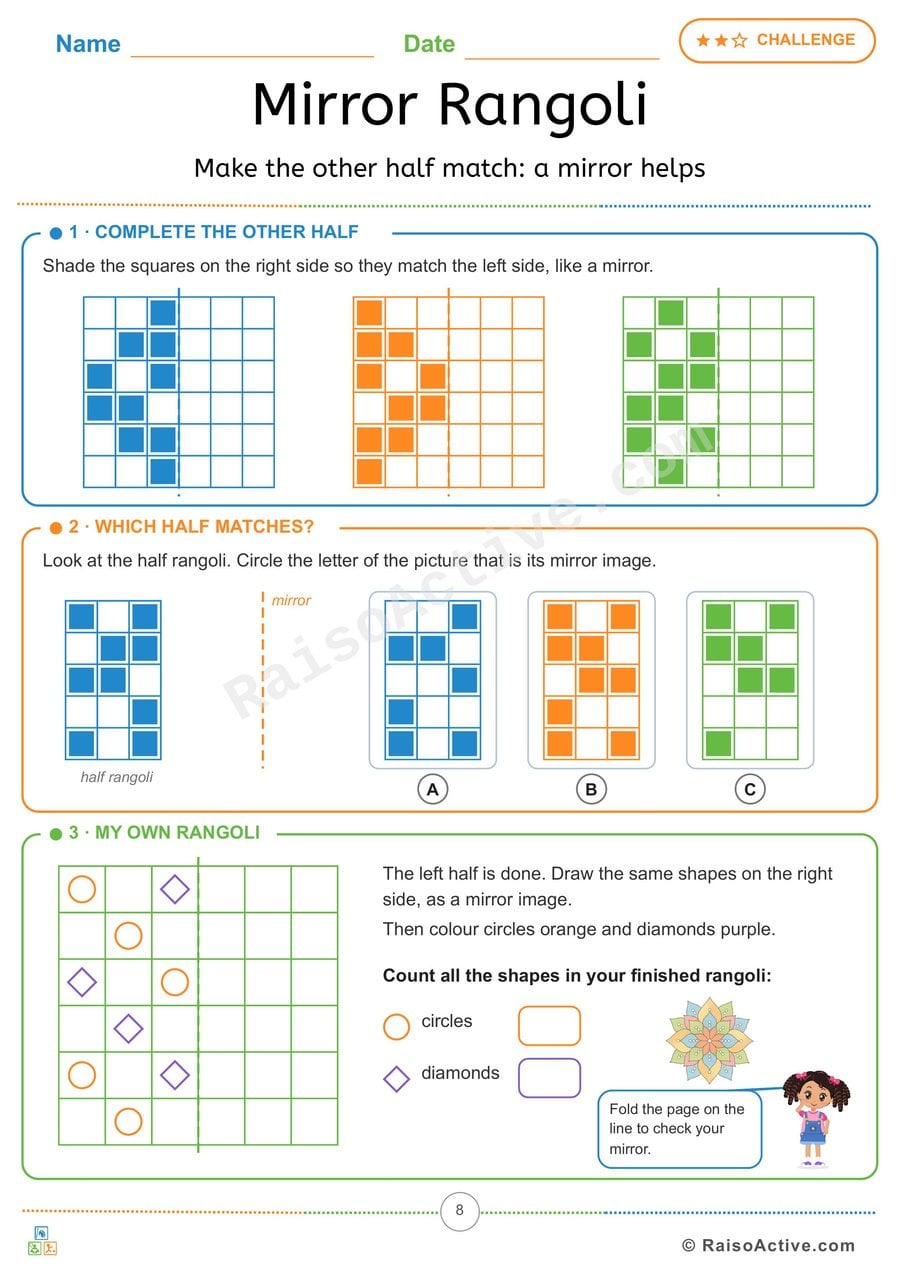
Mirror Rangoli: Symmetry Worksheet for Little Learners
Ages 4-6 · Pre-K–KindergartenAges 4-6 · Reception–Year 1Ages 4-6 · LKG–UKGAges 4-6
Children complete the other half of a rangoli so both sides match, choose which picture is the true mirror image, and then draw circles and diamonds on a grid and count them.
Guides for this topic

Pre-Writing Strokes in Order: From Standing Lines to Loops (With Printable Patterns)
The developmental order of pre-writing strokes, from vertical lines to loops, and why practicing them in sequence makes letter formation much easier to learn.

Age-Appropriate Problem-Solving Activities: Building Critical Thinkers from the Ground Up
Discover fun, age-appropriate problem-solving activities for children ages 1-8. Build critical thinking, logic, and reasoning skills through play-based learning.

Fostering Creativity in Structured Learning: The Perfect Balance for Young Minds
Learn how to blend creativity with structured learning for children ages 1-8. Practical strategies, activities, and printable worksheets for parents and teachers.
Reviews
Every worksheet for ages 3–5, no watermark
Members download the full library of 1,000+ worksheets and every activity pack without watermarks or daily limits. One year costs ₹999 in India or $20 elsewhere.
See membership plansOr download any worksheet free with a watermark (5 a day).