Fun Activities for Early Learners: Parent's Guide
This parent's guide walks through hands-on activities that introduce early grammar concepts — nouns, pronouns, and adjectives — through play rather than worksheets, helping children ages 3-5 absorb language structure naturally before they're ready for formal writing.
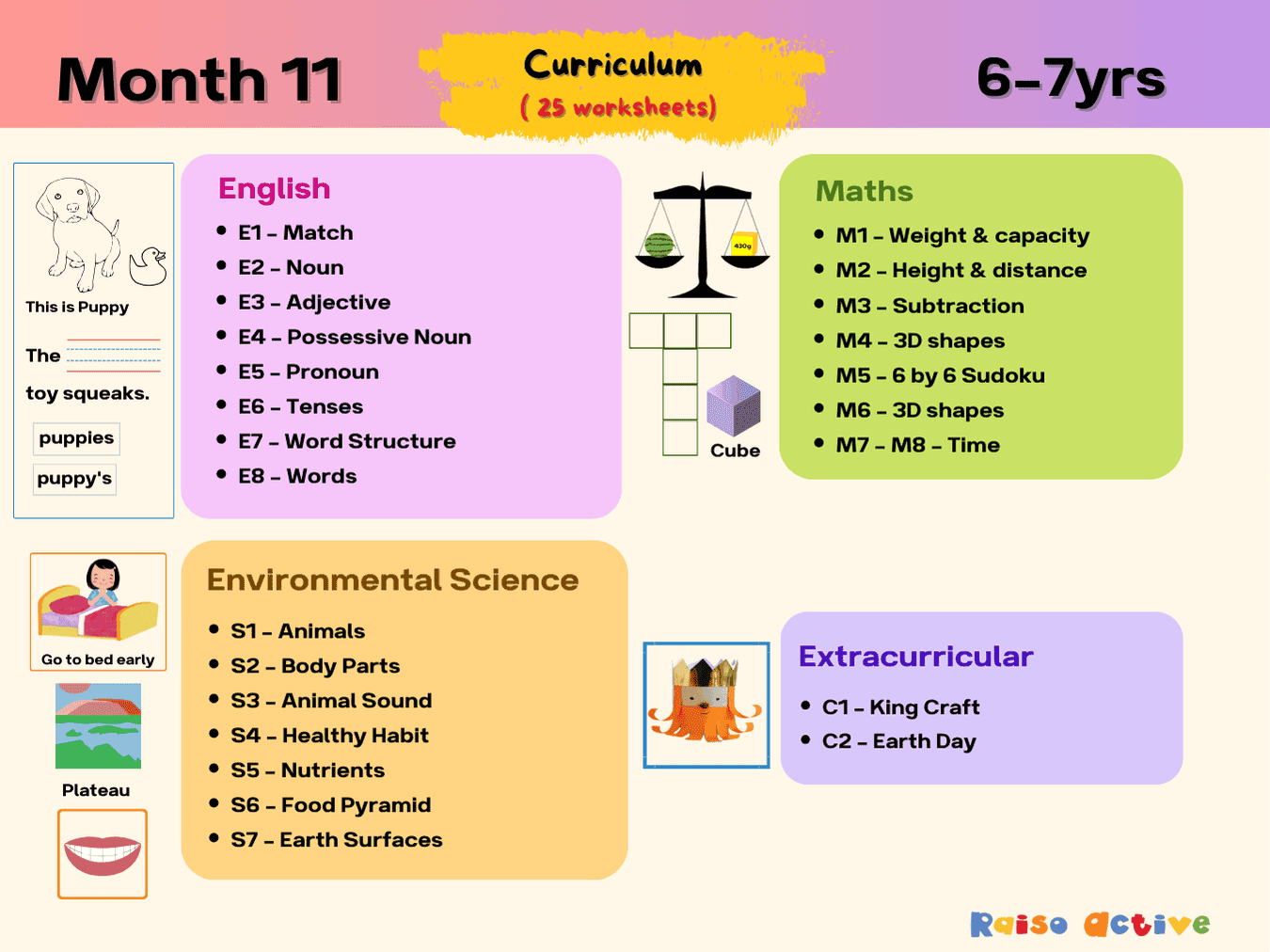
Part of the pack
Month 11: Learning & Development | Ages 6-7
This is page 2 of the pack. Ages 6-7 · Grade 1Ages 6-7 · Year 2Ages 6-7 · Class 1Ages 6-7
Made for your child
Counting to 10, made for your child
A maths pack with your child's name in it: pictures that explain, practice at three levels, puzzles and story sums about them. Print a new set whenever they finish.
Make a maths packFree preview · free for members
Curriculum
- Reading Comprehension - Literature > Reading Comprehension
How to use this worksheet
Read through the suggested activities together and pick one that matches your child's current mood or interest. Gather any simple household materials the activity calls for, then follow the steps, naming nouns, pronouns, or describing words as they come up naturally in conversation. Rotate through different activities across the week rather than doing them all at once, letting your child lead follow-up questions.
Extension activities
- 1Play 'I Spy' using descriptive adjectives, like 'I spy something round and red.'
- 2Make a simple picture book together, labeling nouns and adding one adjective per page.
- 3Practice swapping names for pronouns in conversation, like 'Mom' becoming 'she.'
- 4Create a family scavenger hunt list using only noun clues.

Written by
Hemsweta Jain · Teacher Cheena
MBA and Early Childhood Educator, teaching since 2014 · Founder of RaisoActive, Mumbai
Every RaisoActive worksheet is designed and checked by the founder before publishing.
Published · Last reviewed
More from Month 11: Learning & Development | Ages 6-7

Tenses Worksheet: Identifying Past, Present, and Future Verbs
Ages 4-6 · Pre-K–KindergartenAges 4-6 · Reception–Year 1Ages 4-6 · LKG–UKGAges 4-6
Identifying whether an underlined verb describes something that already happened, is happening now, or will happen later introduces children ages 4-6 to verb tense, an important step toward constructing grammatically correct sentences of their own.
Earth Surfaces Sorting Worksheet for Kids
Ages 4-6 · Pre-K–KindergartenAges 4-6 · Reception–Year 1Ages 4-6 · LKG–UKGAges 4-6
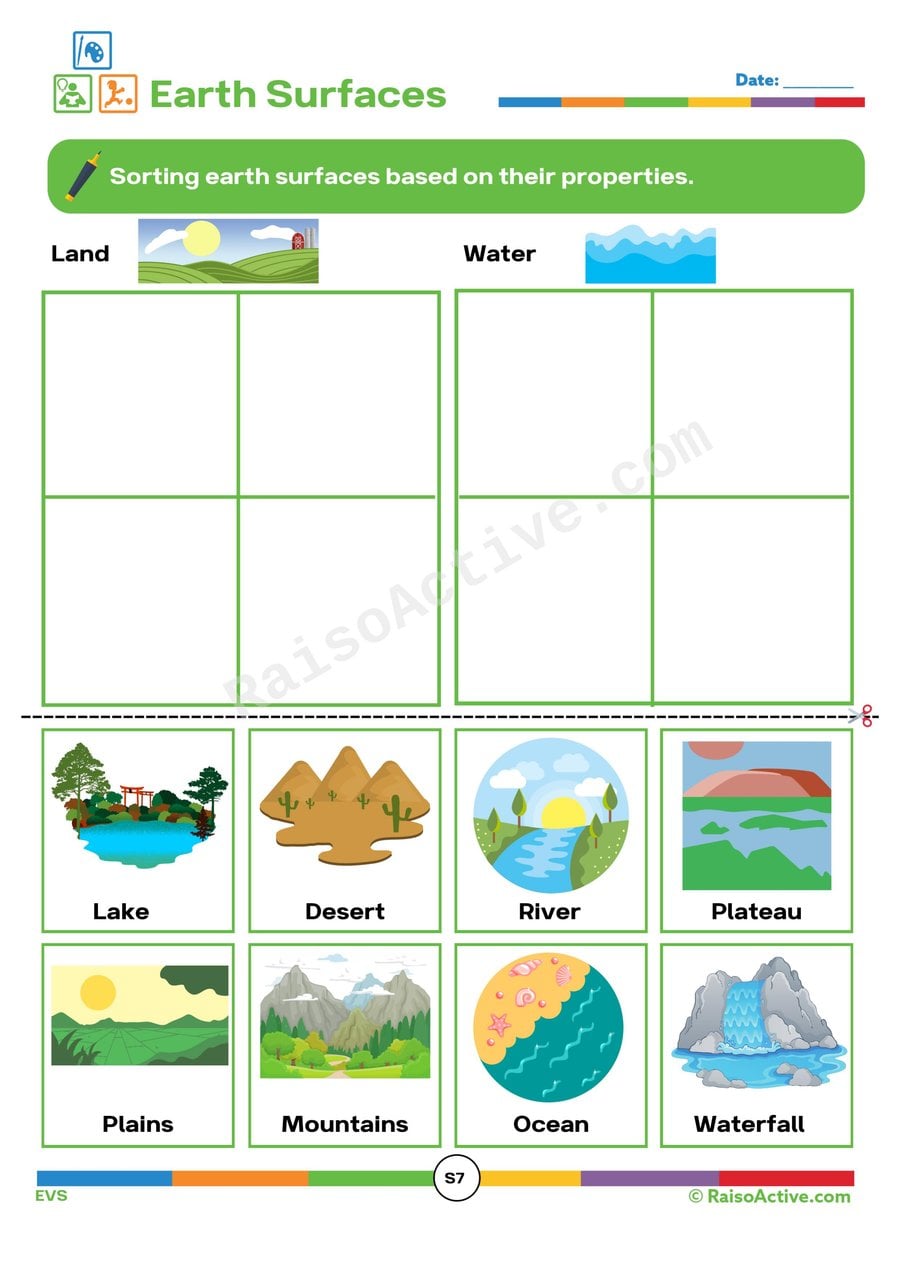
Sorting pictures into 'land' and 'water' categories builds early classification skills and basic earth science vocabulary for children ages 4-6, helping them notice physical differences between surfaces they see in daily life.

Time Worksheet: Observe Events and Find the Duration!
Ages 4-6 · Pre-K–KindergartenAges 4-6 · Reception–Year 1Ages 4-6 · LKG–UKGAges 4-6
Children ages 4-6 practice an early concept of time and duration by reading about a series of daily events and calculating how long an activity lasted by adding up time spent. This introduces the idea that time can be measured and combined, a stepping stone toward reading clocks and understanding schedules later on.

Subtraction Fun: Practice Problems for Early Learners
Ages 4-6 · Pre-K–KindergartenAges 4-6 · Reception–Year 1Ages 4-6 · LKG–UKGAges 4-6
This worksheet gives children ages 4-6 repeated practice with basic subtraction, working through simple equations and word problems that build number sense before formal arithmetic instruction begins. Filling in missing numbers within equations also introduces the idea that subtraction is reversible and connected to addition, an early step toward flexible number thinking. Repeated, varied practice like this helps subtraction facts move from effortful counting to quick recall.
Color the 3D Shapes Worksheet for Kids
Ages 3-5 · Preschool–Pre-KAges 3-5 · Nursery–ReceptionAges 3-5 · Nursery–LKGAges 3-5
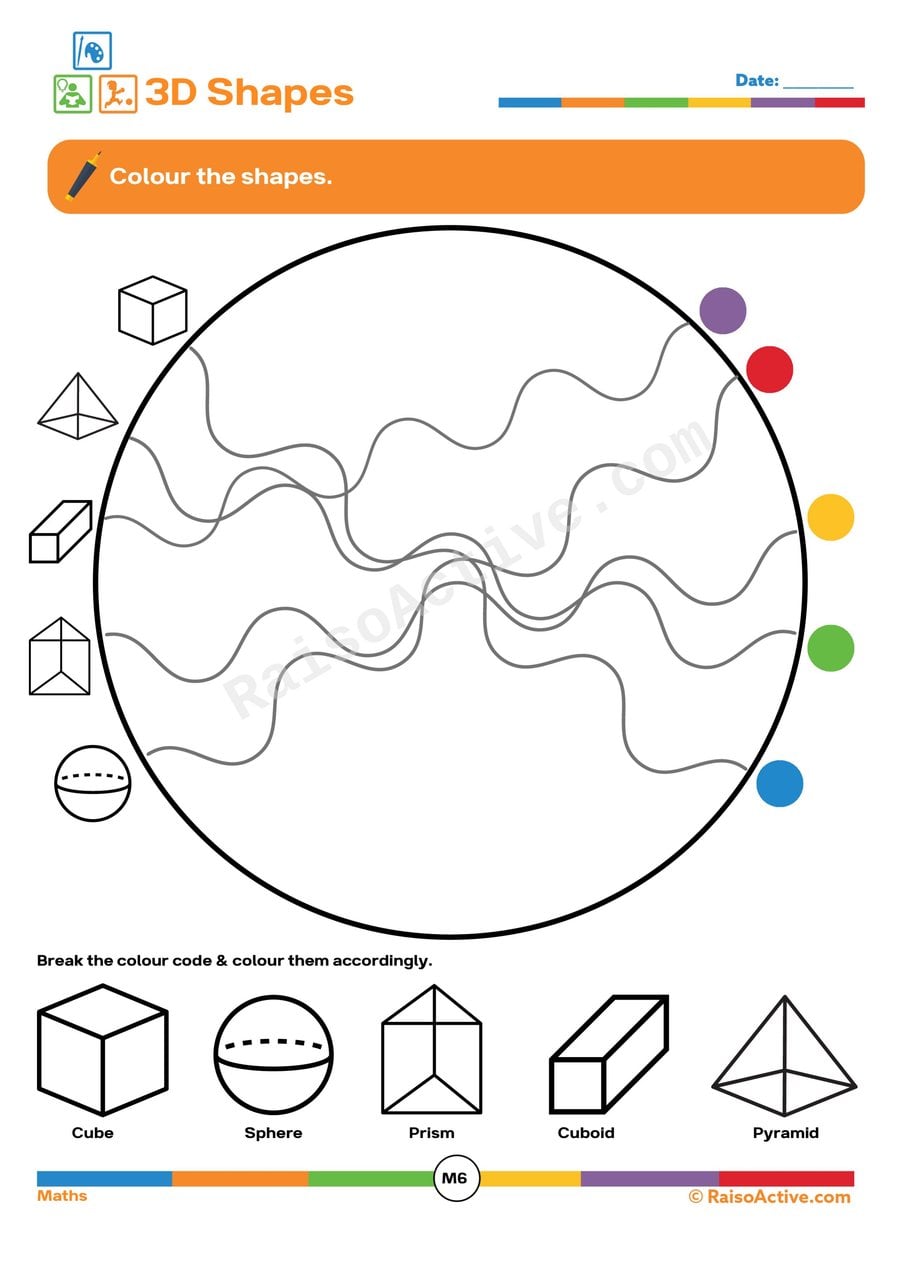
Children ages 3-5 build early geometry vocabulary by learning to name and visually recognize five 3D shapes — cube, sphere, prism, cuboid, and pyramid — a step beyond the flat 2D shapes most preschool worksheets cover. Following a color-code instruction while coloring also strengthens their ability to hold and apply a rule, and the repeated coloring motion builds hand strength and control useful for future writing.

Word Structure Worksheet: Choose the Correct Word!
Ages 4-6 · Pre-K–KindergartenAges 4-6 · Reception–Year 1Ages 4-6 · LKG–UKGAges 4-6
Reading a sentence with a missing word and selecting the correct option from a word bank builds vocabulary and context-clue reasoning for children ages 4-6, both essential for early reading fluency and comprehension.
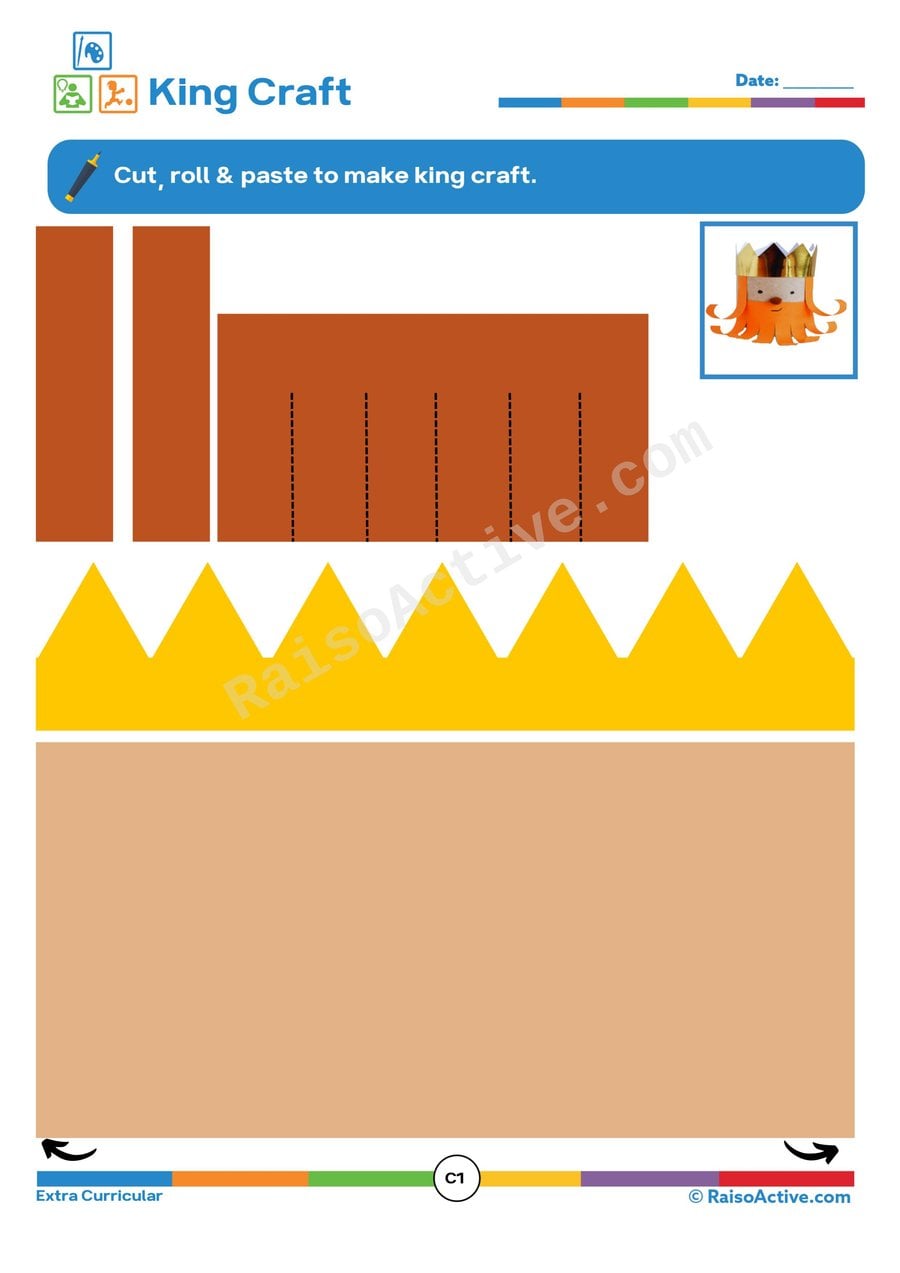
King Craft Worksheet: Cut, Roll, and Paste Fun!
Ages 3-5 · Preschool–Pre-KAges 3-5 · Nursery–ReceptionAges 3-5 · Nursery–LKGAges 3-5
Making a king craft gives children ages 3-5 hands-on practice with three distinct fine motor actions in one project — cutting along lines, rolling paper into a cylindrical shape, and pasting pieces into place. Combining these steps in sequence also builds early planning skills, since the craft only comes together correctly if the pieces are assembled in the right order. It's a playful way to strengthen the hand muscles children need for writing.
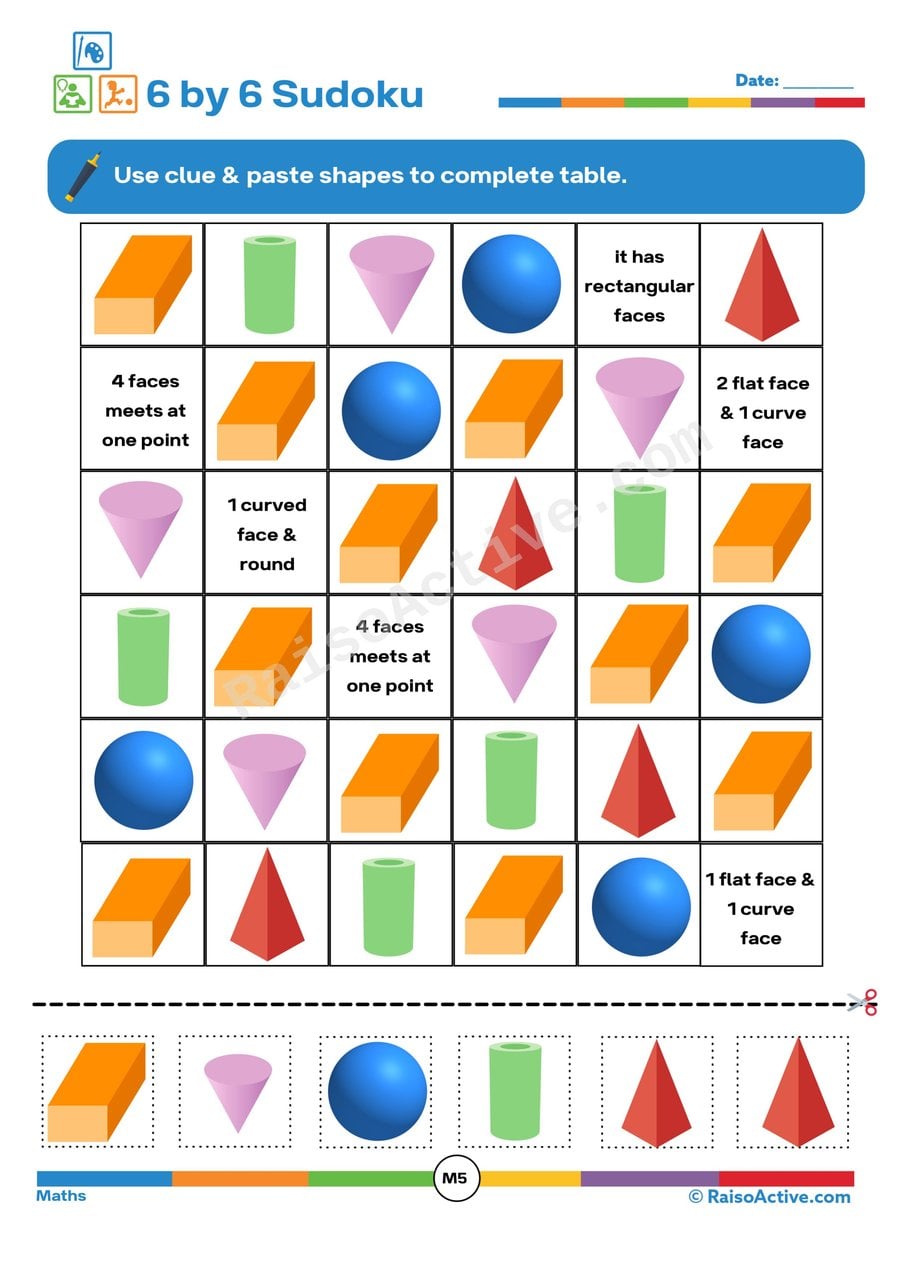
Month 11: Learning & Development | Ages 6-7 - Page 16
Ages 6-7 · Grade 1Ages 6-7 · Year 2Ages 6-7 · Class 1Ages 6-7
This page serves as the table of contents for Month 11 of the Ages 6-7 Learning & Development plan, giving parents and teachers a clear map of the skills and worksheets covered that month, from literacy and math practice to critical thinking activities. Reviewing it first sets expectations for the pacing and variety of learning a 6-7 year old will encounter across the month.
Related worksheets
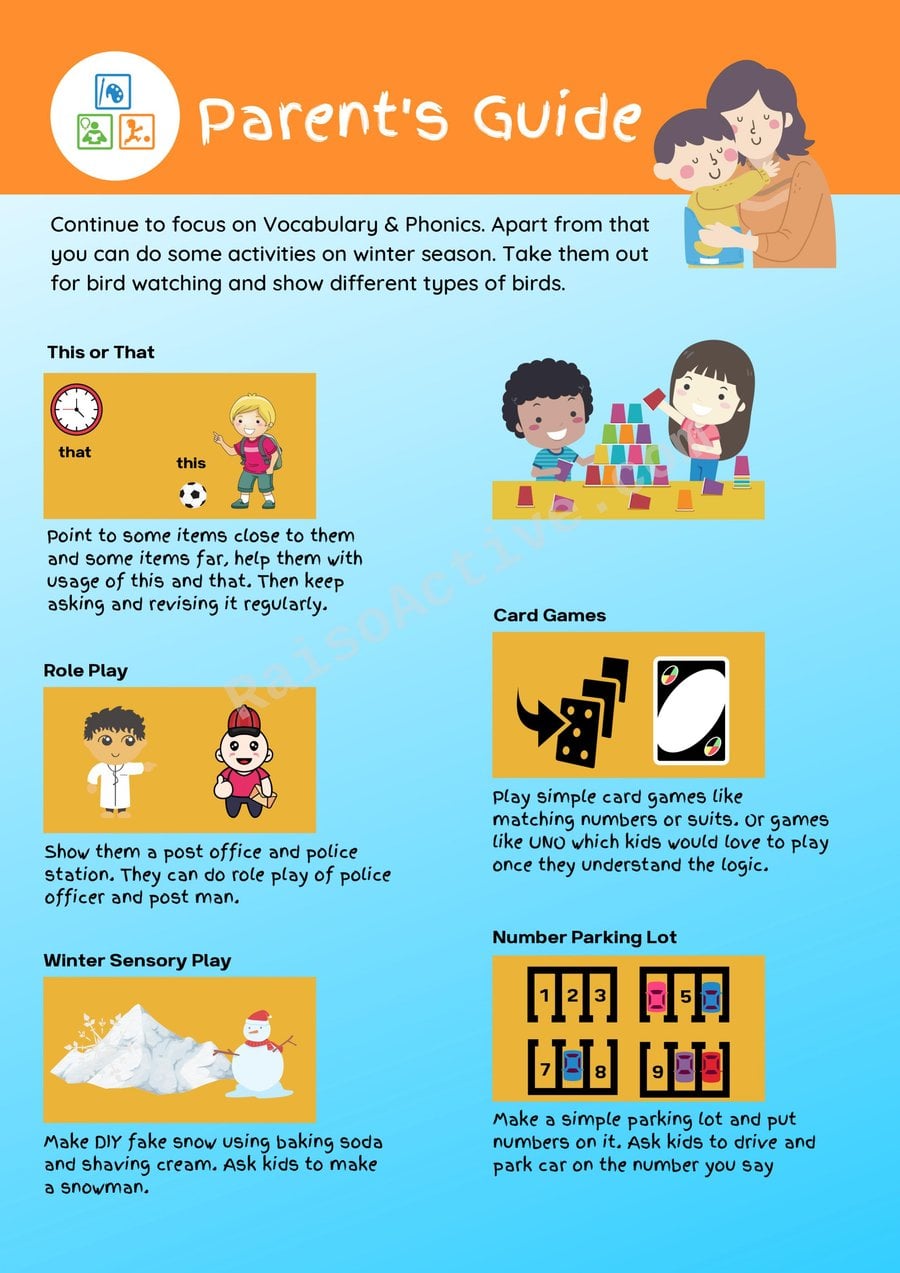
Winter Fun Activities for Kids: Parent's Guide
Ages 3-5 · Preschool–Pre-KAges 3-5 · Nursery–ReceptionAges 3-5 · Nursery–LKGAges 3-5
This parent's guide bundles several short winter-themed activities, from vocabulary games to sensory play, that build language skills, matching ability, and role-play confidence in one seasonal package. For ages 3-5, mixing modalities like talking, sorting, and hands-on sensory exploration keeps engagement high while reinforcing skills across different learning styles.

Fun Parent's Guide: Vocabulary, Phonics, and Animal Activities!
Ages 3-5 · Preschool–Pre-KAges 3-5 · Nursery–ReceptionAges 3-5 · Nursery–LKGAges 3-5
This parent's guide bundles together activities for vocabulary building, phonics practice, and animal-themed learning, giving children ages 3-5 varied exposure to language concepts like left and right, letter-object matching, and number sorting through hands-on play. Because the activities span several skill areas, the guide offers flexibility to match whatever your child is most interested in on a given day.

Parent's Guide: Fun Activities for Early Learners
Ages 3-5 · Preschool–Pre-KAges 3-5 · Nursery–ReceptionAges 3-5 · Nursery–LKGAges 3-5
This parent's guide offers a set of activities spanning literacy, sequencing, and early addition, giving caregivers several ready-to-use options for building foundational skills through everyday play. For ages 3-5, rotating between different skill areas, like rhyming games and simple math card games, keeps early learning varied and prevents any one skill from feeling repetitive or tedious.

Parent's Guide: Vocabulary Building and Emotional Development Worksheet
Ages 3-5 · Preschool–Pre-KAges 3-5 · Nursery–ReceptionAges 3-5 · Nursery–LKGAges 3-5
This multi-part parent guide walks children ages 3-5 through vocabulary sorting, making emotion faces, discussing seasons, and identifying good habits, covering both language development and emotional awareness in a single guided session. Naming emotions accurately and building vocabulary side by side helps children develop the words they need to express their feelings clearly, a skill that supports both communication and self-regulation.

Parent's Guide: Sight Words, Number Order, and Creative Art Activities!
Ages 3-5 · Preschool–Pre-KAges 3-5 · Nursery–ReceptionAges 3-5 · Nursery–LKGAges 3-5
This parent's guide gives families of children ages 3-5 a set of structured activities covering sight word recognition, ascending and descending number order, and open-ended art projects using building blocks. Weaving literacy, math, and creative expression together in one guide reflects how young children actually learn best — through varied, hands-on engagement rather than long stretches of a single skill.

Parent's Guide: Fun Activities for Early Learners!
Ages 3-5 · Preschool–Pre-KAges 3-5 · Nursery–ReceptionAges 3-5 · Nursery–LKGAges 3-5
This parent's guide bundles several short, hands-on activities that build counting, shape recognition, fine motor control, and instruction-following in children ages 3-5. Rather than a single worksheet, it offers a menu of quick learning moments parents can use throughout the day, which suits the short attention spans typical of this age group. Rotating through different skill areas in one sitting also helps parents see which concepts their child grasps easily and which need more practice.

Parent's Guide: Sight Words and CVC Words Activities
Ages 3-5 · Preschool–Pre-KAges 3-5 · Nursery–ReceptionAges 3-5 · Nursery–LKGAges 3-5
This parent's guide offers a set of hands-on activities for children ages 3-5 that build early reading skills through sight word and CVC (consonant-vowel-consonant) word practice, using letter blocks, storytelling, and even a color-mixing experiment to keep learning varied and engaging. Practicing sight words and simple three-letter words together builds the foundation for sounding out and recognizing whole words while reading.

Parent's Guide: Sight Words, Vowels, and Early Math Activities
Ages 3-5 · Preschool–Pre-KAges 3-5 · Nursery–ReceptionAges 3-5 · Nursery–LKGAges 3-5
This parent's guide combines sight word recognition, vowel puppet play, simple subtraction with blocks, and living-versus-non-living observation, giving children ages 3-5 broad exposure to early literacy, number sense, and basic science reasoning through varied hands-on activities. Because each section targets a different skill, the guide offers something to match whatever your child feels drawn to that day.
Guides for this topic

Documenting Learning Without Drowning in Data: A Practical Guide for Parents and Teachers
Learn practical ways to document your child's learning without overwhelm. Simple portfolios, observation tips, and printable trackers for ages 1-8.

Coding Activities for Preschoolers: Building Tomorrow's Thinkers Today
Discover 15+ unplugged and screen-based coding activities for preschoolers that build sequencing, logic, and problem-solving skills through play. NEP 2020 aligned.

Discovering Wonder: Nature-Based Learning Activities That Captivate Young Children
Explore nature-based learning activities for children ages 2–7 — leaf rubbings, bug hunts, nature journals, and seasonal Indian outdoor ideas that spark wonder.
Reviews
Every worksheet for ages 3–5, no watermark
Members download the full library of 1,000+ worksheets and every activity pack without watermarks or daily limits. One year costs ₹999 in India or $20 elsewhere.
See membership plansOr download any worksheet free with a watermark (5 a day).