Join the Dots: Standing Lines Worksheet for Preschoolers
This dot-to-dot worksheet asks children ages 3-5 to connect dots forming vertical lines, sometimes called 'standing lines' because they stand upright, building the bottom-to-top or top-to-bottom pencil control needed for letters like l, t, and i. Connecting dots precisely, rather than simply tracing a continuous line, adds an extra layer of accuracy practice on top of the basic straight-line motion.
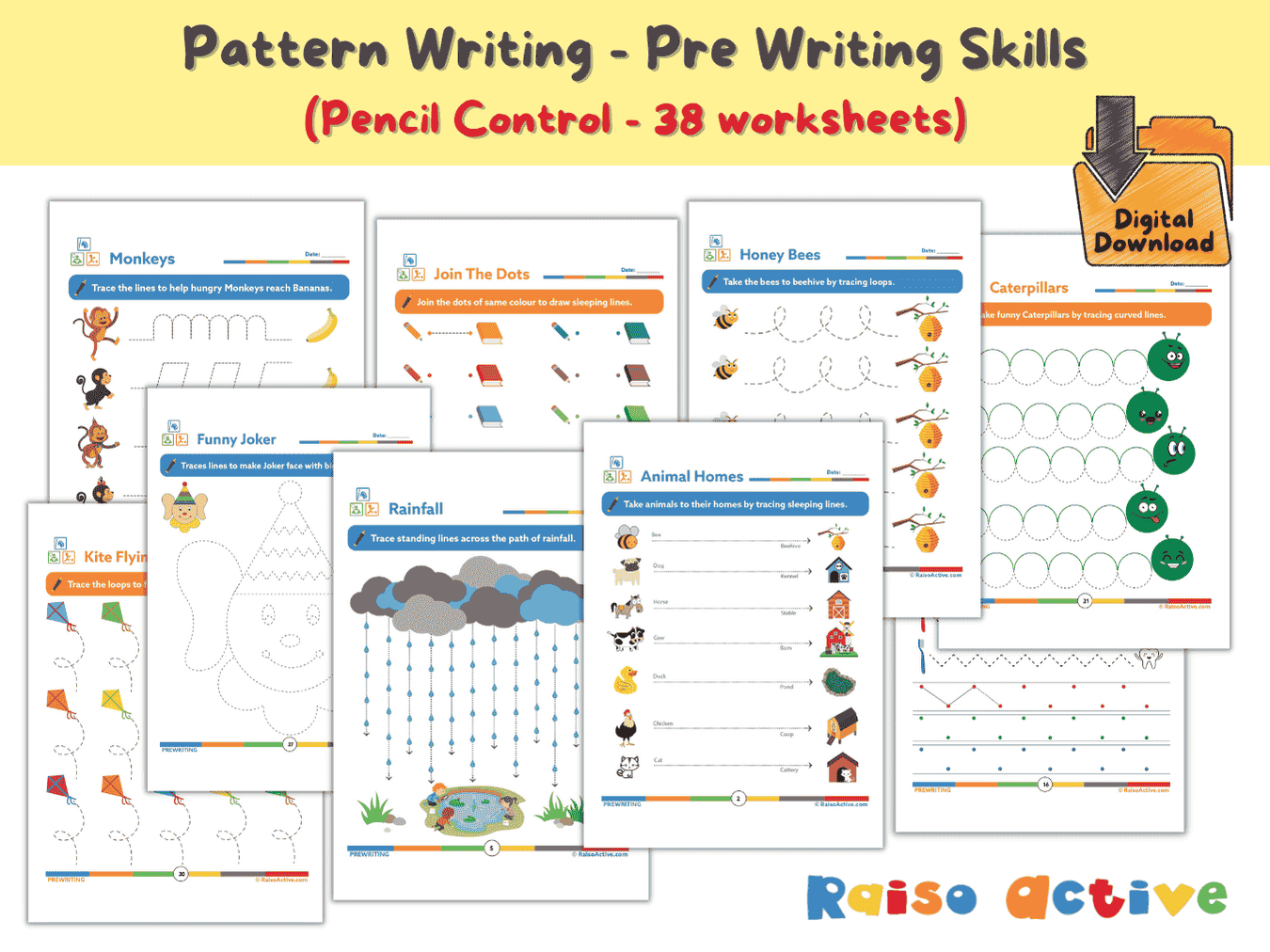
Part of the pack
Pattern Writing Pre-writing Skills Activity Book for 3-4 Year Olds
This is page 12 of the pack. Ages 3-4 · PreschoolAges 3-4 · NurseryAges 3-4
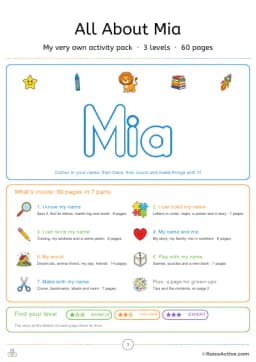
Made for your child
A whole activity pack made with their name
60 pages to spot, build, trace and write their own name, plus pages about their favourites, feelings and family. See a free preview with their name.
Make an All About Me packFree preview · free for members
Or start free: a name tracing sheet with their nameCurriculum
- Pre-Writing > Straight Lines
How to use this worksheet
Point out that the dots form a line standing up straight, like a person standing tall, rather than lying down. Have your child connect the dots in order with a pencil, moving in one consistent direction, either bottom to top or top to bottom, and stopping precisely at each dot. Encourage steady, careful movement rather than rushing between dots. Color the finished picture once every standing line is connected.
Materials needed
- Pencil
- Crayons
Extension activities
- 1Stand up straight and tall together to physically show what a 'standing line' looks like.
- 2Look for vertical lines around the house or outside, like a fence post, a door frame, or a tree trunk.
- 3Build a tall tower with blocks, talking about how it stands straight up like the traced lines.
- 4Practice connecting dots with sidewalk chalk outside to make giant standing lines.
- 5Compare this worksheet to the earlier 'sleeping lines' worksheet and talk about the difference between standing and lying down.

Written by
Hemsweta Jain · Teacher Cheena
MBA and Early Childhood Educator, teaching since 2014 · Founder of RaisoActive, Mumbai
Every RaisoActive worksheet is designed and checked by the founder before publishing.
Published · Last reviewed
More from Pattern Writing Pre-writing Skills Activity Book for 3-4 Year Olds
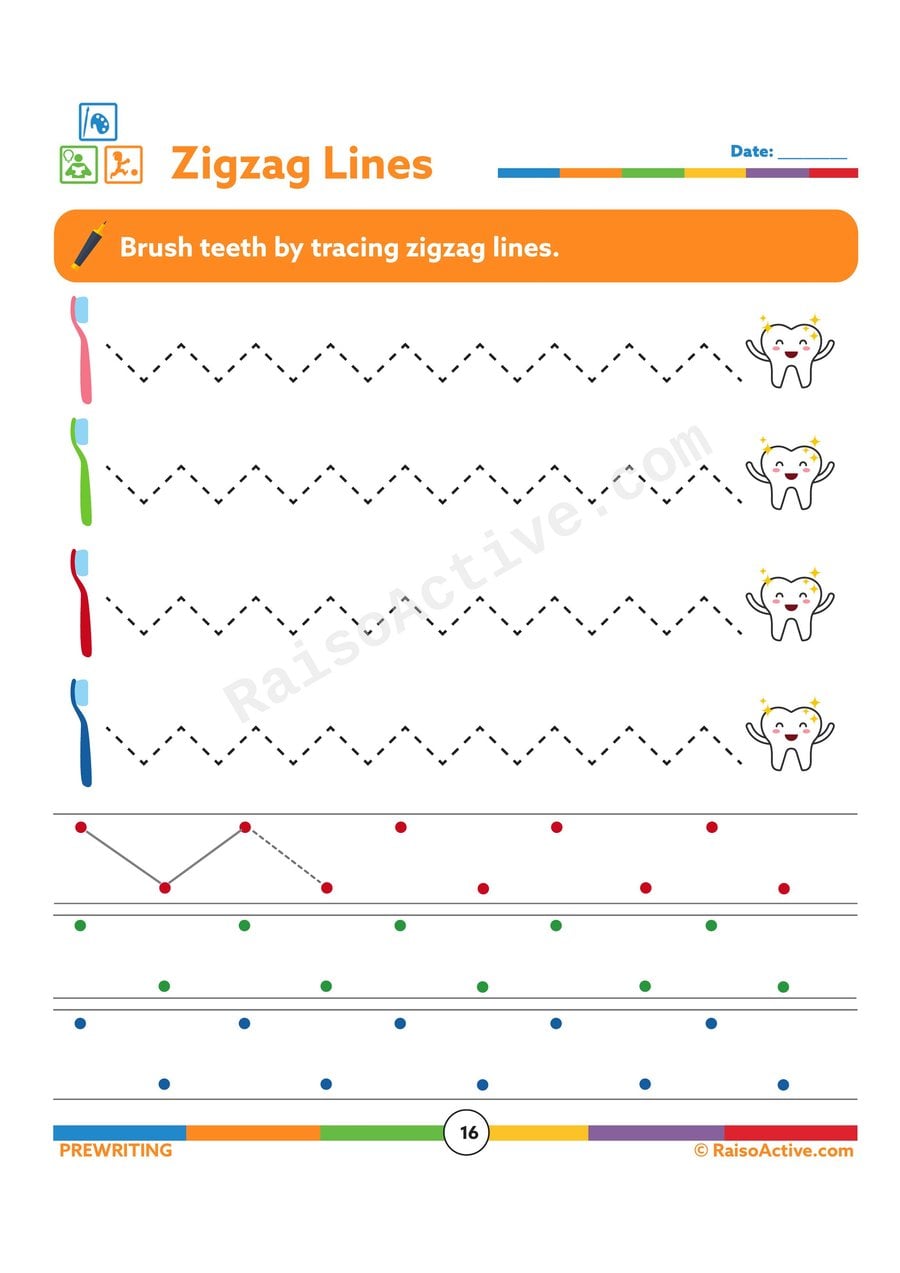
Zigzag Lines Tracing Worksheet: Brush Your Teeth!
Ages 3-5 · Preschool–Pre-KAges 3-5 · Nursery–ReceptionAges 3-5 · Nursery–LKGAges 3-5
Tracing a zigzag line representing a toothbrush's back-and-forth motion gives children ages 3-5 practice with sharp direction changes, a stroke pattern used in letters like Z, W, and M, while tying the abstract line shape to a real daily action, brushing teeth, they already understand. Zigzag lines are more demanding than smooth curves or straight lines because the pencil has to change direction abruptly and repeatedly rather than flowing continuously.

Trace the Bouncy Balls Worksheet for Preschoolers
Ages 3-5 · Preschool–Pre-KAges 3-5 · Nursery–ReceptionAges 3-5 · Nursery–LKGAges 3-5
Tracing the arcing path of a bouncy ball helps children ages 3-5 practice curved pencil strokes while connecting the drawn line to a real physical motion they already understand, a bounce. Linking an abstract line on paper to something they've seen and felt makes the curved stroke easier to grasp than tracing an unfamiliar shape, and it builds the same rounded control needed for letters and numbers later on.

Trace the Train Engine Worksheet for Preschoolers
Ages 3-5 · Preschool–Pre-KAges 3-5 · Nursery–ReceptionAges 3-5 · Nursery–LKGAges 3-5
Tracing the shapes that make up a train engine, like rectangles for the body and circles for the wheels, gives children ages 3-5 practice with mixed straight and curved strokes while reinforcing the idea that complex objects are built from combinations of simple shapes. The train theme also introduces sequencing awareness, since trains are made of connected cars that follow one after another along a track.
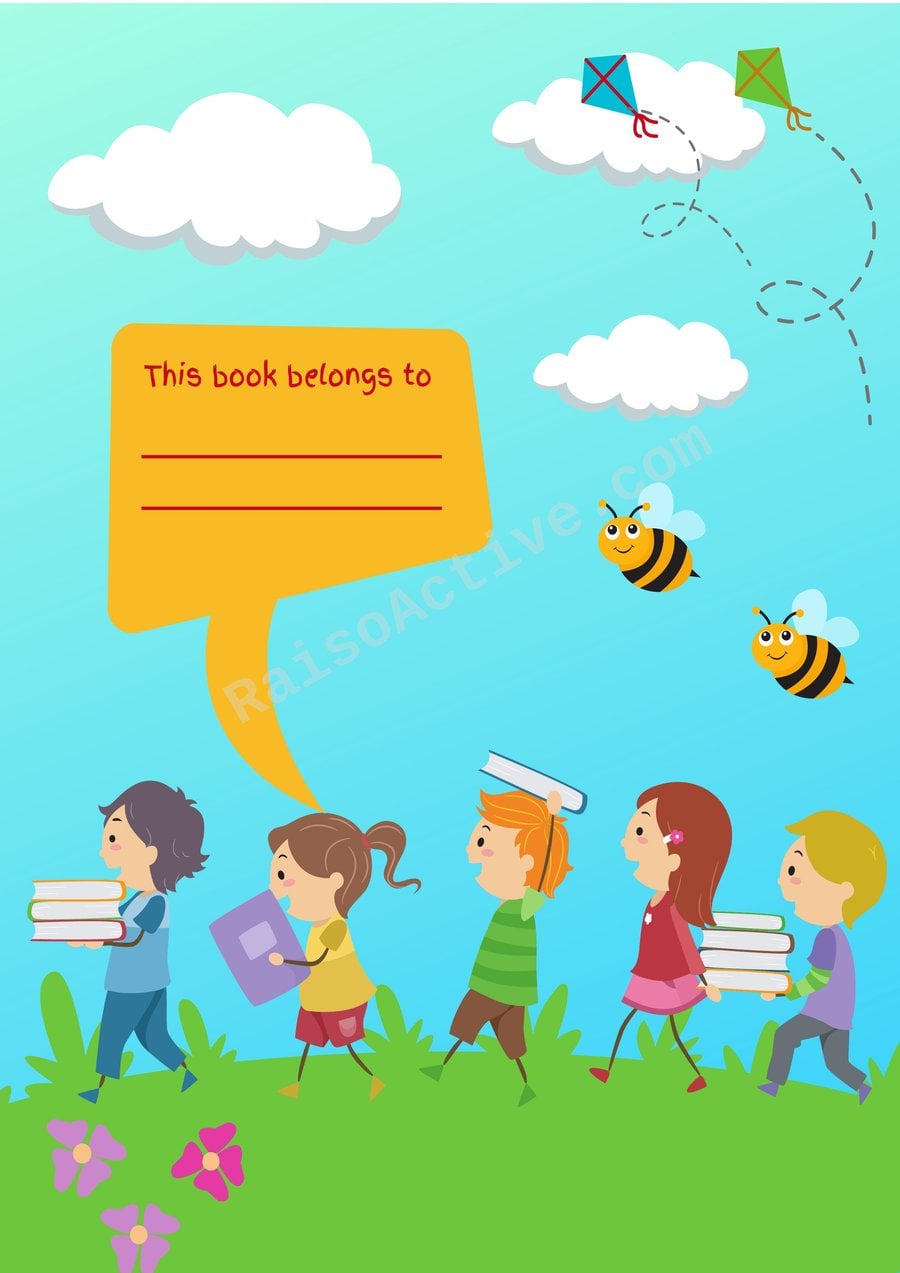
My Book: A Fun Worksheet for Early Learners
Ages 3-5 · Preschool–Pre-KAges 3-5 · Nursery–ReceptionAges 3-5 · Nursery–LKGAges 3-5
Writing their own name on the cover of something they made gives a 3-5 year old a real, motivating reason to practice name-writing — a very different feeling from tracing letters on a generic worksheet. It's often one of the first pieces of writing a child feels ownership over, which matters for building confidence around writing in general.

Move the Cars! Pre-Writing Tracing Worksheet for Preschoolers
Ages 3-5 · Preschool–Pre-KAges 3-5 · Nursery–ReceptionAges 3-5 · Nursery–LKGAges 3-5
Tracing a road-shaped path for a car gives children ages 3-5 pencil control practice disguised as a familiar, motivating theme, since most young children have pushed a toy car along an imaginary road before. The winding or straight path on this worksheet builds the same steady, controlled pencil movement needed for handwriting, while the driving theme keeps attention high through an activity that might otherwise feel repetitive.

Pattern Writing Pre-writing Skills Activity Book for 3-4 Year Olds - Page 40
Ages 3-4 · PreschoolAges 3-4 · NurseryAges 3-4
As one of the later pages in the pre-writing patterns activity book, this page asks 3-4 year olds to apply everything practiced on earlier pages, steady pressure, consistent spacing, and accurate prediction, to a pattern that combines skills built up gradually through the book. Reaching this stage of the book is itself a marker of growing stamina, since completing a full row of repeated strokes reliably takes more sustained focus than the simpler early pages required.

Trace the Funny Caterpillars Worksheet for Preschoolers
Ages 3-5 · Preschool–Pre-KAges 3-5 · Nursery–ReceptionAges 3-5 · Nursery–LKGAges 3-5
Tracing the rounded segments that make up each caterpillar's body helps children ages 3-5 practice circular and curved pencil strokes while also reinforcing shape recognition, since each segment is essentially a circle or oval joined to the next. This combination of shape tracing and sequencing, moving from one segment to the next in order, builds the same left-to-right, in-order habits that later support reading and writing.
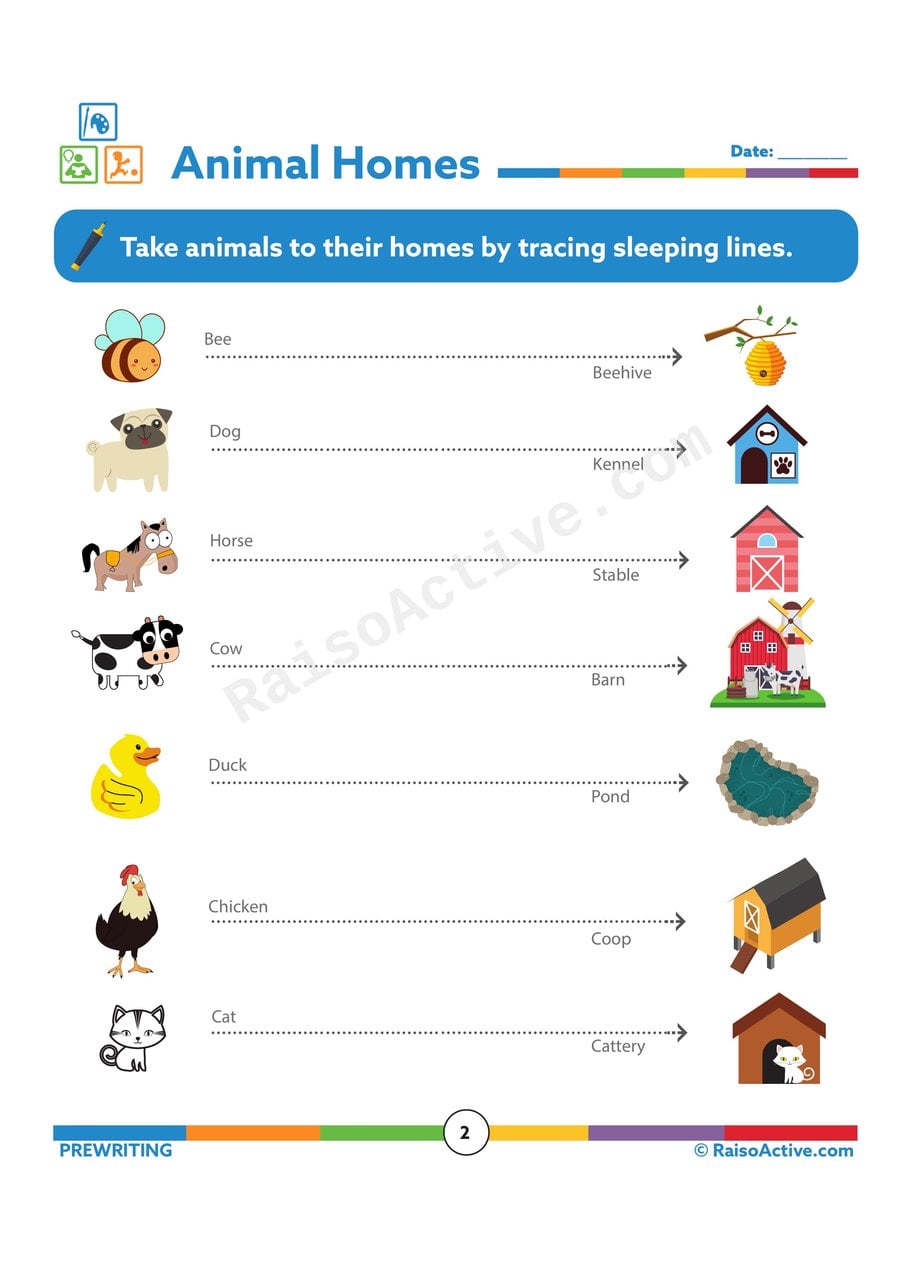
Animal Homes Tracing Worksheet for Preschoolers
Ages 3-5 · Preschool–Pre-KAges 3-5 · Nursery–ReceptionAges 3-5 · Nursery–LKGAges 3-5
Tracing a line from each animal to its home helps children ages 3-5 build pencil control while also introducing an early science concept: that different animals live in different kinds of homes, like a bird's nest or a dog's kennel. Saying the animal and its home aloud while tracing connects the physical tracing motion to new vocabulary, reinforcing both skills at once.
Related worksheets

Trace the Paths: A Fun Path Tracing Worksheet for Preschoolers!
Ages 3-5 · Preschool–Pre-KAges 3-5 · Nursery–ReceptionAges 3-5 · Nursery–LKGAges 3-5
This worksheet develops fine motor control and hand-eye coordination as children ages 3-5 trace a variety of dotted paths from a starting point to an end point, an essential pre-writing skill that builds the pencil control needed for forming letters. Following a winding line with steady pressure also strengthens visual tracking, which supports reading readiness.
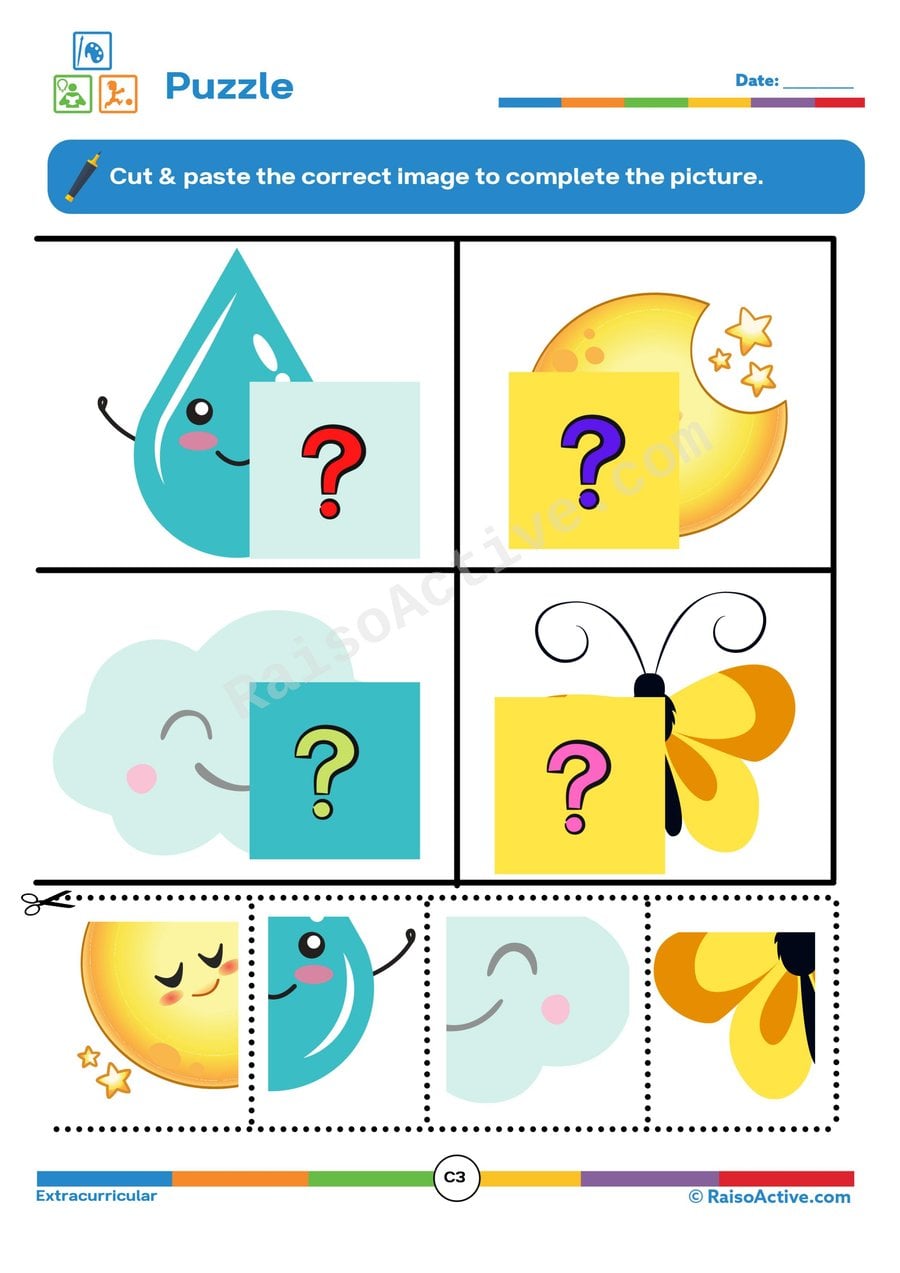
Cut and Paste Puzzle: Complete the Pictures!
Ages 3-5 · Preschool–Pre-KAges 3-5 · Nursery–ReceptionAges 3-5 · Nursery–LKGAges 3-5
This cut-and-paste puzzle challenges children ages 3-5 to visually compare cut-out image pieces to the gaps in a larger picture, strengthening visual discrimination and problem-solving as they figure out which piece fits where. Because more than one cut-out may look similar at a glance, children must attend closely to small details like color, shape, and orientation before gluing. This close visual comparison builds the same attention-to-detail skills used later in reading, where small differences between letters and words matter.
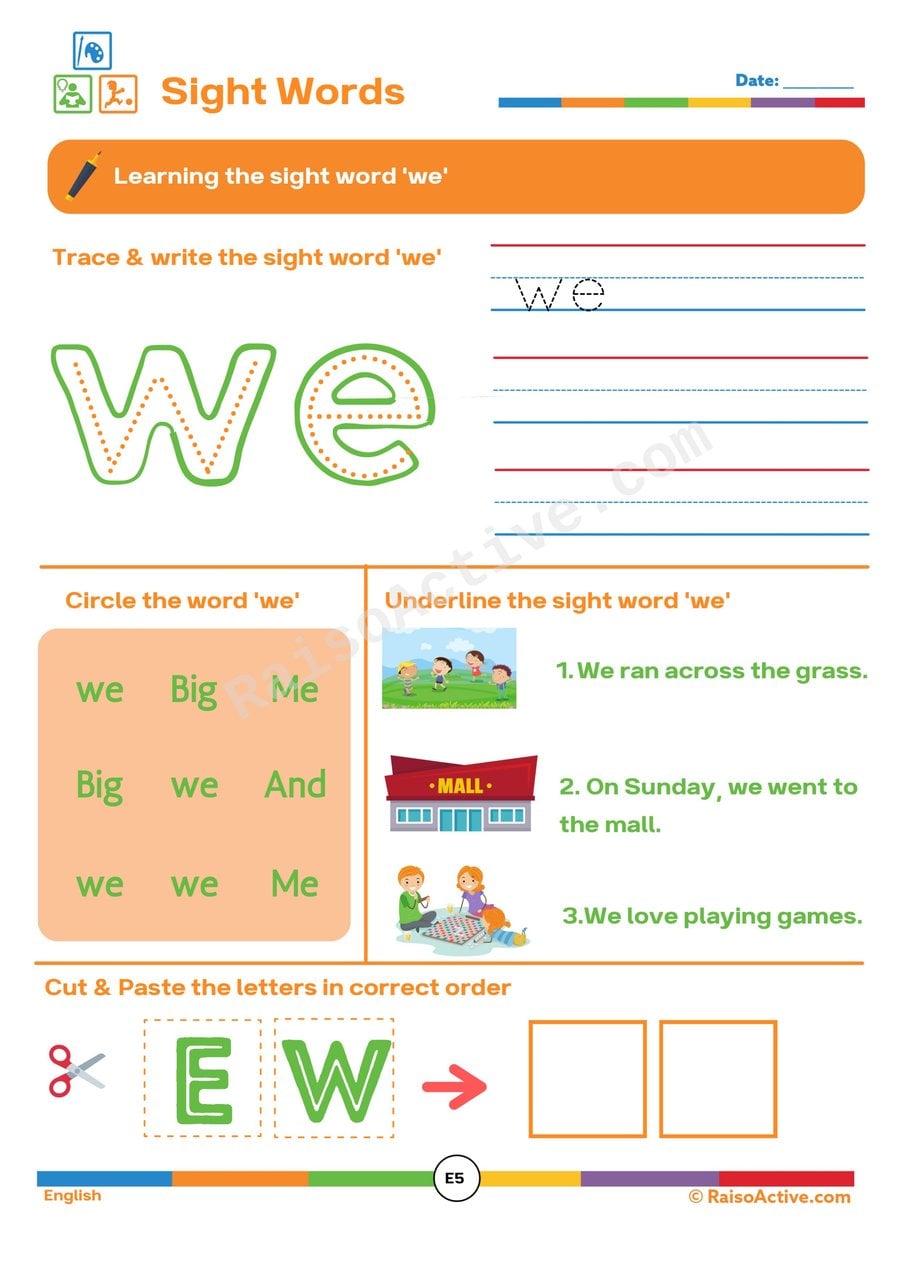
Sight Word 'We' Worksheet: Trace, Write, and Find!
Ages 3-5 · Preschool–Pre-KAges 3-5 · Nursery–ReceptionAges 3-5 · Nursery–LKGAges 3-5
This worksheet builds deep familiarity with the sight word 'we' in children ages 3-5 through four different practice formats — tracing, independent writing, circling, and finding the word within sentences — layered onto a single page. Repeating the same word across so many formats in one sitting is specifically designed to move 'we' from a word your child sounds out each time into one they recognize instantly on sight.

Parent's Guide: Fun Activities for Gross Motor Development and Emotional Learning
Ages 3-5 · Preschool–Pre-KAges 3-5 · Nursery–ReceptionAges 3-5 · Nursery–LKGAges 3-5
This parent guide equips caregivers of children ages 3-5 with activities spanning gross motor skills, emotional expression, family concepts, shape recognition, and calendar awareness, using role play, finger puppets, and simple games. Combining physical movement with emotional vocabulary practice, such as making different facial expressions, helps children build body awareness and feelings vocabulary side by side. Rotating through several distinct activity types in one guide also keeps a young child's attention across a longer play session.

Christmas Cut and Paste Worksheet for Preschoolers
Ages 3-5 · Preschool–Pre-KAges 3-5 · Nursery–ReceptionAges 3-5 · Nursery–LKGAges 3-5
Cutting out a moon, snowman, gifts, and trees and arranging them inside a circle builds scissor precision and compositional thinking in children ages 3-5. Because there's no single 'correct' layout, children also practice early creative decision-making — choosing where each element belongs within a bordered space, which supports spatial awareness.

Merry Christmas Coloring Worksheet for Preschoolers
Ages 3-5 · Preschool–Pre-KAges 3-5 · Nursery–ReceptionAges 3-5 · Nursery–LKGAges 3-5
Filling in Christmas-themed pictures with crayons or colored pencils helps children ages 3-5 refine their pencil grip and hand control while practicing the concept of staying within a defined boundary. Because the pictures include multiple familiar holiday objects, this worksheet also gives children a chance to build vocabulary by naming each item as they color it. Repeated coloring practice at this age steadily improves the wrist and finger strength needed for later writing tasks.

Happy Face Cut and Paste Worksheet for Preschoolers
Ages 3-5 · Preschool–Pre-KAges 3-5 · Nursery–ReceptionAges 3-5 · Nursery–LKGAges 3-5
This worksheet helps children ages 3-5 learn the names of facial features while practicing scissor control and precise gluing. Assembling a face piece by piece — eyes, nose, mouth, ears — reinforces body part vocabulary in a hands-on way that's more memorable than simply pointing at a picture.

Happy Easter Coloring Card Worksheet for Preschoolers
Ages 3-5 · Preschool–Pre-KAges 3-5 · Nursery–ReceptionAges 3-5 · Nursery–LKGAges 3-5
Coloring the Easter egg and bunny images on this fold-into-a-card worksheet gives children ages 3-5 practice with controlled crayon strokes and color choice, while the act of turning their artwork into a card for someone else introduces an early sense of purpose and gift-giving. Because the finished piece becomes a keepsake rather than just a worksheet, children also build pride and motivation to complete their coloring carefully. This blends fine motor practice with a first taste of creating something meaningful for another person.
Guides for this topic

Pre-Writing Strokes in Order: From Standing Lines to Loops (With Printable Patterns)
The developmental order of pre-writing strokes, from vertical lines to loops, and why practicing them in sequence makes letter formation much easier to learn.

Portfolio Assessment with Young Children: A Comprehensive Guide to Meaningful Documentation
Learn how portfolio assessment captures your child's growth through meaningful documentation. Practical tips, templates, and age-appropriate strategies for ages 1-8.
What Makes a Good Worksheet vs. a Poor One: A Parent's Guide to Quality Educational Materials
Learn what separates high-quality educational worksheets from poor busy work. Discover design principles, red flags, and how to evaluate free worksheets online for your child aged 1-8.
Reviews
Every worksheet for ages 3–5, no watermark
Members download the full library of 1,000+ worksheets and every activity pack without watermarks or daily limits. One year costs ₹999 in India or $20 elsewhere.
See membership plansOr download any worksheet free with a watermark (5 a day).