Phonics Level 1 Parent's Guide: How to Use the Activity Pages
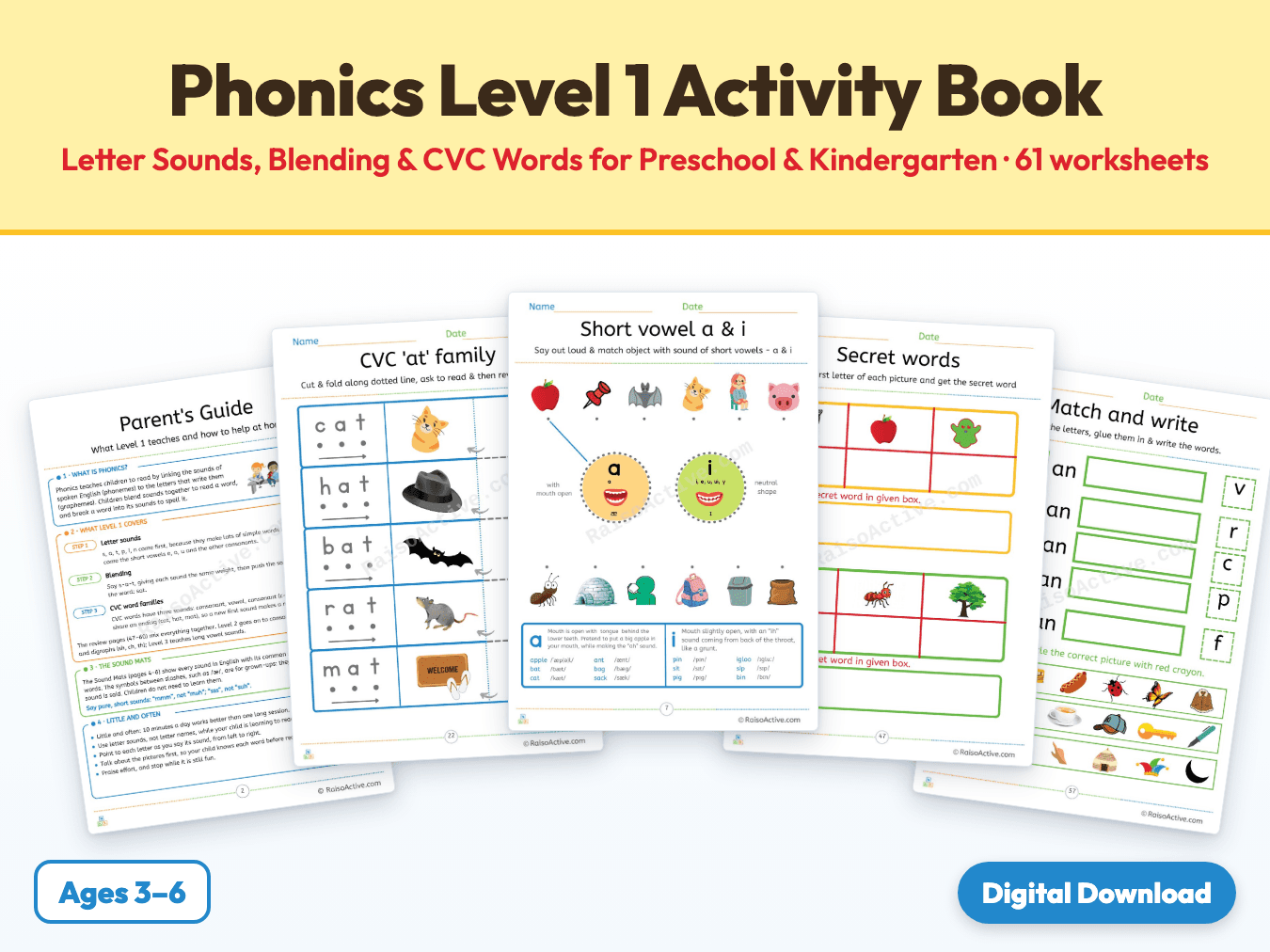
Grown-ups learn how each activity type works, from the sound dots and arrows under words to Read and Reveal, Secret Words and the review pages.
Part of the pack
Phonics Level 1 Activity Book: Letter Sounds, Blending & CVC Words for Preschool & Kindergarten
This is page 3 of the pack. Ages 3-6 · Preschool–KindergartenAges 3-6 · Nursery–Year 1Ages 3-6 · Nursery–UKGAges 3-6
Made for your child
Spelling practice, made for your child
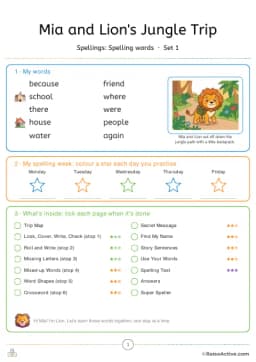
Their own spelling words turned into a pack: trace or look-cover-write-check, roll and write, a secret picture code, a word search, a crossword and a test, with their name in it.
Make a spelling packFree preview · free for members
Or start free: a word search with sight wordsCurriculum
- Phonics - Letter Sounds > Beginning Sounds
How to use this worksheet
Read the section for the activity your child is doing today. The glossary explains phoneme, grapheme, blending, segmenting, CVC word and digraph.
Materials needed
- None
Extension activities
- 1Draw your own sound dots under a word and blend it together
- 2Play I spy with first sounds

Written by
Hemsweta Jain · Teacher Cheena
MBA and Early Childhood Educator, teaching since 2014 · Founder of RaisoActive, Mumbai
Every RaisoActive worksheet is designed and checked by the founder before publishing.
Published · Last reviewed
More from Phonics Level 1 Activity Book: Letter Sounds, Blending & CVC Words for Preschool & Kindergarten

Letter Sounds j and k Say and Match Worksheet
Ages 3-6 · Preschool–KindergartenAges 3-6 · Nursery–Year 1Ages 3-6 · Nursery–UKGAges 3-6
Children hear and say the j and k sounds, see the mouth shape for each one and match pictures to the right sound. j: jam, juice, jar, giraffe, sledge and gem. k: kite, key, kettle, car, crow and crab.

CVC 'ip' Word Family Read, Colour and Match Worksheet
Ages 3-6 · Preschool–KindergartenAges 3-6 · Nursery–Year 1Ages 3-6 · Nursery–UKGAges 3-6
Children read the 'ip' words lip, sip, rip, tip and dip on their own and match each word to its picture, checking that they understood what they read.

Secret Words: Spell 'at' Family Words from First Sounds
Ages 3-6 · Preschool–KindergartenAges 3-6 · Nursery–Year 1Ages 3-6 · Nursery–UKGAges 3-6
Children hear the first sound of each picture (for example carrot, ant, top), write that letter and blend the three letters to read a hidden 'at' family word.

Letter Sounds p and n Say and Match Worksheet
Ages 3-6 · Preschool–KindergartenAges 3-6 · Nursery–Year 1Ages 3-6 · Nursery–UKGAges 3-6
Children hear and say the p and n sounds, see the mouth shape for each one and match pictures to the right sound. p: parrot, pot, pig, pizza, apple and pear. n: nose, nest, net, knife, dinner and knee.

CVC 'ag' Word Family Read, Colour and Match Worksheet
Ages 3-6 · Preschool–KindergartenAges 3-6 · Nursery–Year 1Ages 3-6 · Nursery–UKGAges 3-6
Children read the 'ag' words bag, tag, wag, rag and nag on their own and match each word to its picture, checking that they understood what they read.

Letter Sounds m and b Say and Match Worksheet
Ages 3-6 · Preschool–KindergartenAges 3-6 · Nursery–Year 1Ages 3-6 · Nursery–UKGAges 3-6
Children hear and say the m and b sounds, see the mouth shape for each one and match pictures to the right sound. m: mug, monkey, money, jam, comb and summer. b: bib, ball, bell, bubbles, rabbit and ribbon.
CVC 'it' Word Family Read and Reveal Worksheet
Ages 3-6 · Preschool–KindergartenAges 3-6 · Nursery–Year 1Ages 3-6 · Nursery–UKGAges 3-6
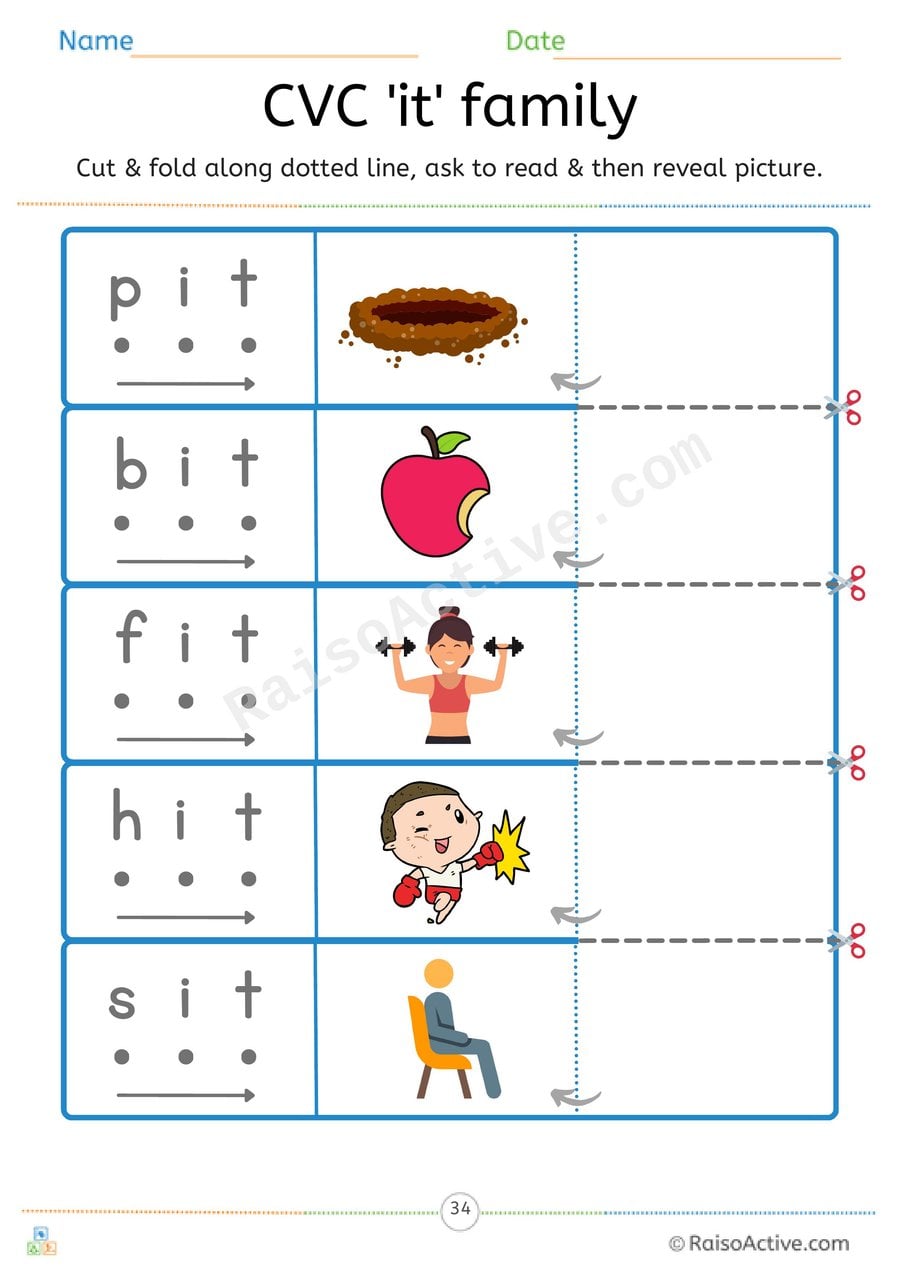
Children read five 'it' family words sound by sound, pit, bit, fit, hit and sit, and see that changing the first sound makes a new word.

Phonics Level 1 Certificate of Achievement
Ages 3-6 · Preschool–KindergartenAges 3-6 · Nursery–Year 1Ages 3-6 · Nursery–UKGAges 3-6
Children celebrate finishing Phonics Level 1 and tick the CVC word families they can now read, from at to ut.
Related worksheets

Phonics Fun: Matching Letters and Words Worksheet for Preschoolers
Ages 4-5 · Pre-KAges 4-5 · ReceptionAges 4-5 · LKGAges 4-5
Identifying the beginning sound of a pictured word and writing the matching letter teaches children ages 4-5 phonemic awareness, the ability to isolate individual sounds within spoken words, which is one of the strongest predictors of future reading success. Saying each word aloud after writing the letter reinforces the connection between the printed letter and its spoken sound, closing the loop between listening, writing, and speaking. This worksheet moves children from simply recognizing letters to actively applying letter-sound knowledge, a more advanced early literacy skill.

Phonics Level 2 Sound Mat 2: Consonants and Consonant Digraphs
Ages 4-7 · Pre-K–Grade 1Ages 4-7 · Reception–Year 2Ages 4-7 · LKG–Class 1Ages 4-7
Children meet more consonant sounds and the digraphs th, sh, ch, zh and ng, with pictures, spellings and example words.

Phonic Sounds Worksheet: Circle the Picture That Starts with the Alphabet Sound!
Ages 4-5 · Pre-KAges 4-5 · ReceptionAges 4-5 · LKGAges 4-5
This worksheet reinforces beginning-sound recognition for children ages 4-5 by presenting a letter at the start of each row and asking them to find the one picture among several that begins with that same sound. Because each row contains multiple pictures, children must test several beginning sounds against the target letter before settling on the correct one, which builds more precise listening skills than simpler one-picture matching tasks. This process also strengthens the letter-sound mapping that underlies early decoding.

Phonics Level 2 Answer Key
Ages 4-7 · Pre-K–Grade 1Ages 4-7 · Reception–Year 2Ages 4-7 · LKG–Class 1Ages 4-7
Grown-ups can check the answers for every page in the pack that has one right answer, grouped by section.
Blend Words Matching Worksheet for Preschoolers
Ages 4-5 · Pre-KAges 4-5 · ReceptionAges 4-5 · LKGAges 4-5
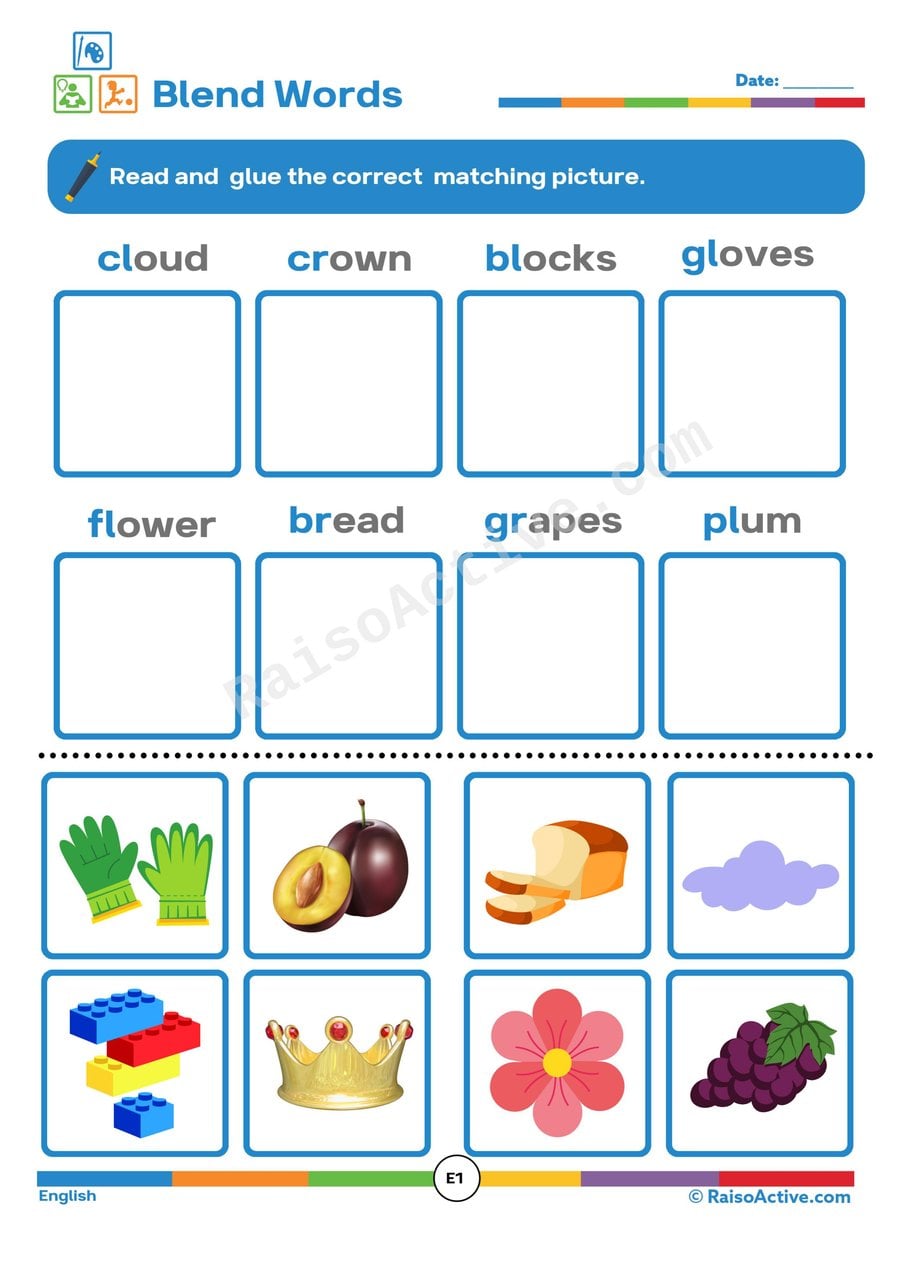
Children ages 4-5 practice reading consonant blend words — words that start with two consonant sounds blended together, like 'bl' or 'st' — and connecting them to the correct picture through a cut-and-paste matching activity. Blends are a step up in difficulty from single beginning sounds, since children must hear and produce two consonant sounds smoothly together, an important milestone on the way to more advanced phonics.
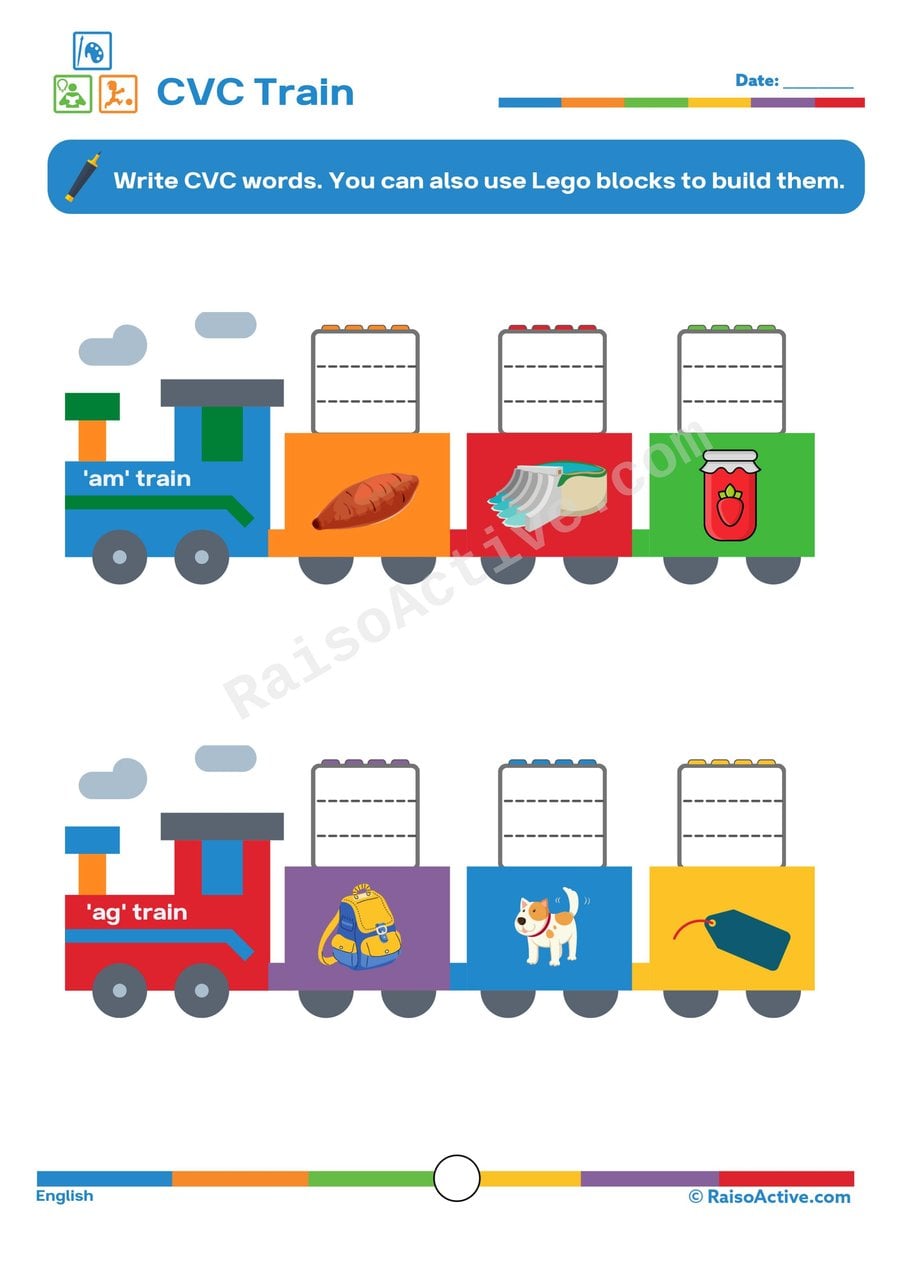
CVC Train Worksheet: Write CVC Words!
Ages 4-6 · Pre-K–KindergartenAges 4-6 · Reception–Year 1Ages 4-6 · LKG–UKGAges 4-6
Writing consonant-vowel-consonant words like 'cat,' 'sun,' or 'pig' under matching pictures gives children ages 4-6 direct practice with letter-sound blending, a core phonics skill that underpins independent reading. Because each train car pairs a picture clue with a blank space, children also practice translating a spoken word they can sound out into its correctly spelled written form.

Match the Letter: N, O, P Worksheet for Preschoolers
Ages 3-5 · Preschool–Pre-KAges 3-5 · Nursery–ReceptionAges 3-5 · Nursery–LKGAges 3-5
Drawing a line from an uppercase letter to a picture that starts with the same sound reinforces letter-sound correspondence for children ages 3-5, connecting the shape of N, O, and P to their spoken sounds.

Letter Sounds Worksheet: Color the Letter That Begins the Word!
Ages 4-5 · Pre-KAges 4-5 · ReceptionAges 4-5 · LKGAges 4-5
This worksheet strengthens phonemic awareness in children ages 4-5 by asking them to isolate the very first sound of a picture's name and match it to its printed letter. Identifying beginning sounds is one of the strongest early predictors of reading success, since it teaches children that spoken words are made of individual sounds that map onto letters. The coloring component adds a motivating, low-pressure way to record each answer.
Guides for this topic

How to Teach CVC Blending: A Step-by-Step Method That Works in Two Weeks
A step-by-step method for teaching CVC blending, covering continuous sounds, word families, common errors, and a 14-day plan that most children finish reading CVC words.
Phase 2 Phonics at Home: Sound Order, Blending Games, Worksheets
Phase 2 phonics at home: the five sound sets in order, oral blending, tricky words, a two-week routine, common mistakes, and free worksheets.
Reception Year Explained: EYFS Learning and How to Help at Home
A teacher's plain-English guide to the Reception Year: the seven areas of learning, Early Learning Goals, Phase 2/3 phonics, the RBA and home routines.
Reviews
Every worksheet for ages 3–6, no watermark
Members download the full library of 1,000+ worksheets and every activity pack without watermarks or daily limits. One year costs ₹999 in India or $20 elsewhere.
See membership plansOr download any worksheet free with a watermark (5 a day).