
Consonant Sounds: Matching Objects to 'p' and 'n' Sounds Worksheet
This worksheet gives children ages 3-5 practice identifying the beginning sounds 'p' and 'n' and matching them to the correct pictures, an early step in connecting spoken sounds to written letters. At this age, distinguishing between consonant sounds that use different parts of the mouth (lips for 'p', tongue and nose for 'n') helps children build a mental map of how sounds are produced, which supports both listening and eventual spelling. Matching objects to sounds also reinforces vocabulary alongside phonics.
Curriculum
How to use this worksheet
Say the 'p' sound and the 'n' sound together first, encouraging your child to notice how their mouth moves differently for each. Look at each picture, say its name aloud, and ask your child which sound it starts with. Have them draw a line or place the object under the matching letter to show the connection. Go through all the pictures this way, then review the finished matches together.
Materials needed
- Pencil
- Crayons
Extension activities
- •Find household objects that start with 'p' and 'n' and sort them into two piles.
- •Play a 'Simon says' game using only action words that start with 'p', like pat, point, and pop.
- •Practice writing the letters 'p' and 'n' a few times each on paper or with a finger in sand or shaving cream.
- •Make simple flashcards with 'p' and 'n' pictures for a quick daily review.
- •Sing a short song or rhyme that repeats 'p' and 'n' words to reinforce the sounds playfully.
Tips for parents and teachers
Young children sometimes confuse 'p' and 'n' visually even after they can say the sounds correctly, so keep the emphasis on listening rather than letter shape at this stage. If your child mixes them up, say the word slowly and have them watch your mouth to notice the difference. Short, frequent practice sessions work better than one long sitting for this age group.

Written by
Hemsweta Jain · Teacher Cheena
MBA and Early Childhood Educator, teaching since 2014 · Founder of RaisoActive, Mumbai
Every RaisoActive worksheet is designed and checked by the founder before publishing.
Published · Last reviewed
Related worksheets

Clothing Pattern Match Worksheet for Preschoolers
This worksheet has children ages 3-5 study repeating patterns on clothing items — stripes, polka dots, or checks — and match each item to its identical twin, building visual discrimination and early pattern-sequencing skills. Distinguishing between similar-looking patterns also sharpens attention to detail, a skill that later supports letter and word recognition.
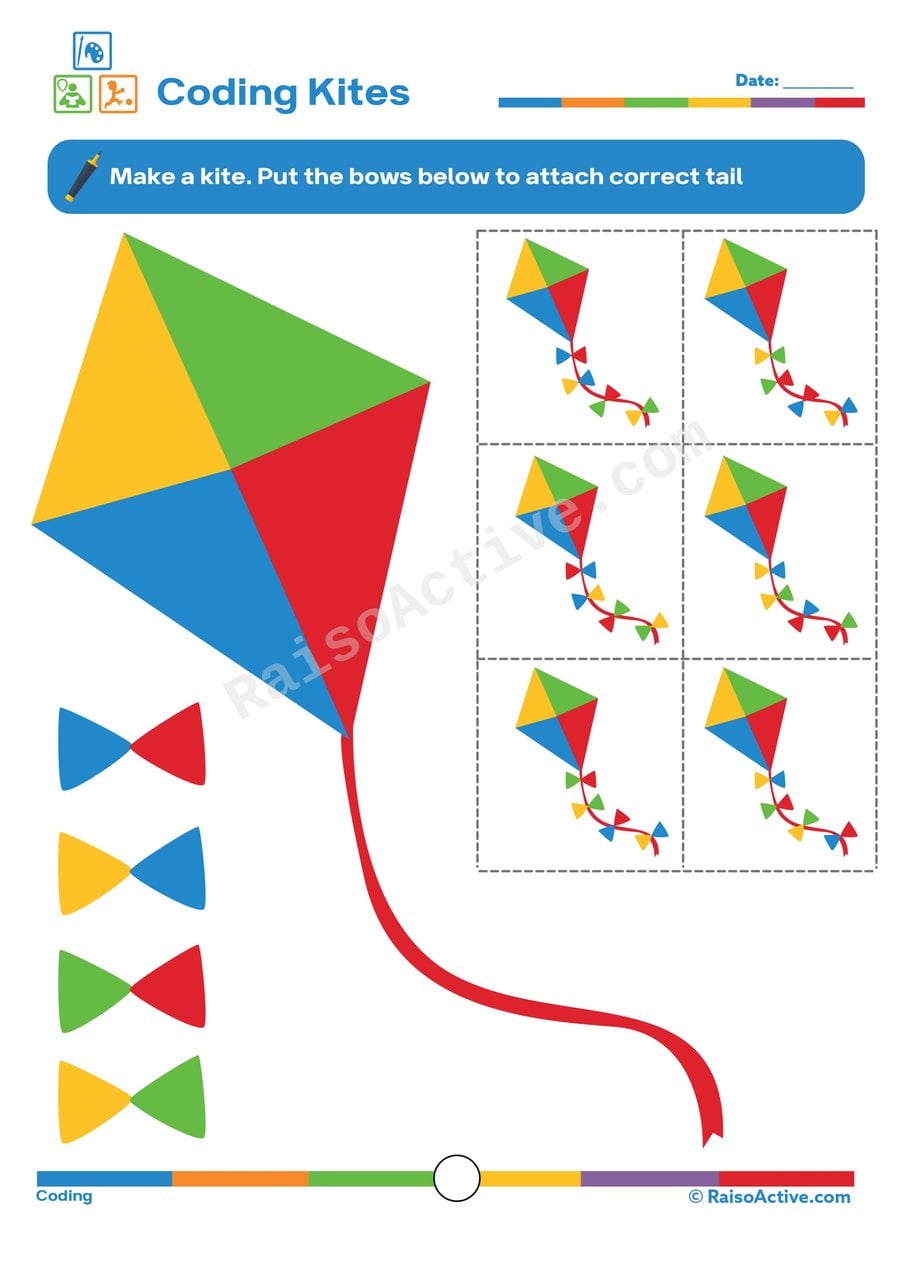
Coding Kites Worksheet: Match the Bows!
This activity sharpens visual observation in children ages 3-5 as they compare color sequences on each kite to a set of loose bows and find the exact match. Careful, systematic comparison — checking each color in order rather than glancing quickly — builds an attention-to-detail habit that transfers directly to early reading and number work.
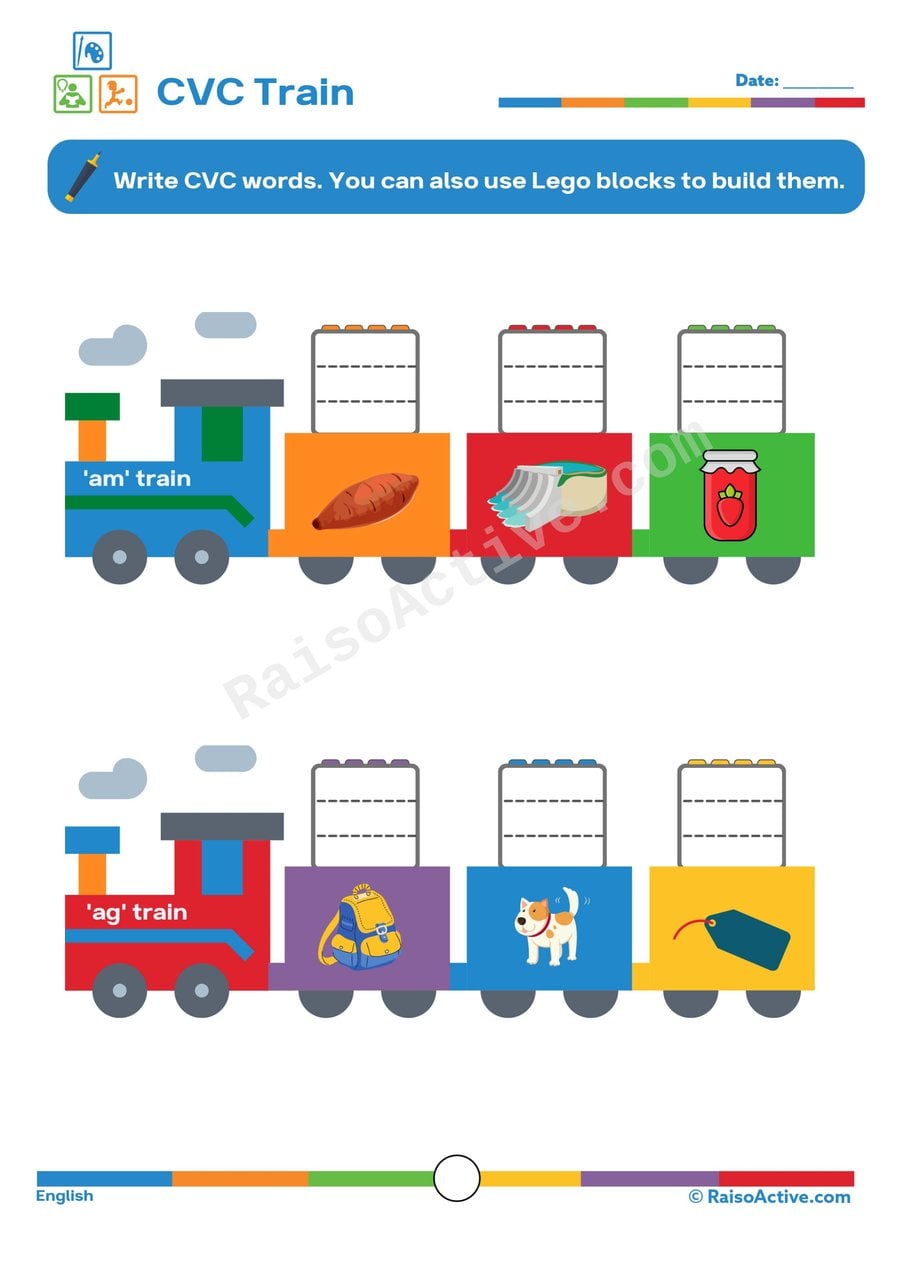
CVC Train Worksheet: Write and Build CVC Words!
This worksheet gives children ages 4-6 focused practice blending letter sounds into consonant-vowel-consonant words, using train-car pictures as clues for words like 'dog,' 'hen,' or 'cup.' Because children both write the word and can optionally build it with Lego blocks, this worksheet reinforces the same phonics skill through two different physical actions — handwriting and hands-on construction — which helps the spelling patterns stick.

Stick Man Emotions Worksheet: Happy, Sad, Angry, and Surprised!
Children ages 4-6 practice reading facial expressions on this worksheet, matching stick-figure faces to their correct emotion labels by noticing details like mouth shape and eyebrow position. This strengthens emotional literacy — the ability to name and recognize feelings in others — which supports empathy and smoother social interactions as children move into more group play and classroom settings.

Lock and Key Matching Worksheet for Preschoolers
Matching each key to the lock sharing the same letter helps children ages 3-5 practice letter recognition in a playful, puzzle-like context rather than rote drilling. Because each key must be checked against several similar-looking locks before finding the right match, this worksheet also builds visual scanning and careful comparison skills that support problem-solving.

Balloon Pattern Matching Worksheet for Preschoolers
Children ages 3-5 build early pattern-recognition skills on this worksheet by studying a sequence of colored balloons and finding the matching set to complete it. Recognizing and continuing a repeating sequence is a foundational pre-math skill that later supports understanding of number patterns, skip counting, and simple algebraic thinking.

Clothing Pattern Matching Worksheet for Preschoolers
By comparing clothing items and connecting each one to its pattern match, children ages 3-5 build visual discrimination skills, learning to notice fine differences in stripes, dots, or repeated shapes. This close-looking practice supports the same attention-to-detail children will later need to tell similar-looking letters and numbers apart.

Balloon Pattern Matching Worksheet for Preschoolers
This worksheet strengthens pattern recognition in children ages 3-5 by having them study a repeating sequence of colored balloons and locate the matching arrangement elsewhere on the page. Recognizing and reproducing a pattern is an early pre-algebra skill, laying groundwork for later number patterns and logical sequencing.
Guides for this topic
How to Teach CVC Blending: A Step-by-Step Method That Works in Two Weeks
A step-by-step method for teaching CVC blending, covering continuous sounds, word families, common errors, and a 14-day plan that most children finish reading CVC words.
Best Worksheets for 3-Year-Olds: What Works and What to Avoid
What works on worksheets for 3-year-olds: short sessions, crayons, tracing lines, matching, cutting, a free weekly plan, and signs one is too advanced.
Phase 2 Phonics at Home: Sound Order, Blending Games, Worksheets
Phase 2 phonics at home: the five sound sets in order, oral blending, tricky words, a two-week routine, common mistakes, and free worksheets.
Reviews
Every worksheet for ages 3–5, no watermark
Members download the full library of 1,000+ worksheets and every activity pack without watermarks or daily limits. One year costs ₹1,000 in India or $20 elsewhere.
See membership plansOr download any worksheet free with a watermark (5 a day).