Sight Word 'had' Worksheet: Trace, Find, and Write!
This worksheet builds sight word recognition for the common word 'had' through multiple activities, tracing, finding it among similar words, connecting letters, and cutting and pasting, giving children repeated, varied exposure to the same high-frequency word. For ages 3-5, 'had' doesn't sound out in an entirely predictable way for beginning readers, so repeated whole-word recognition practice like this is especially valuable.
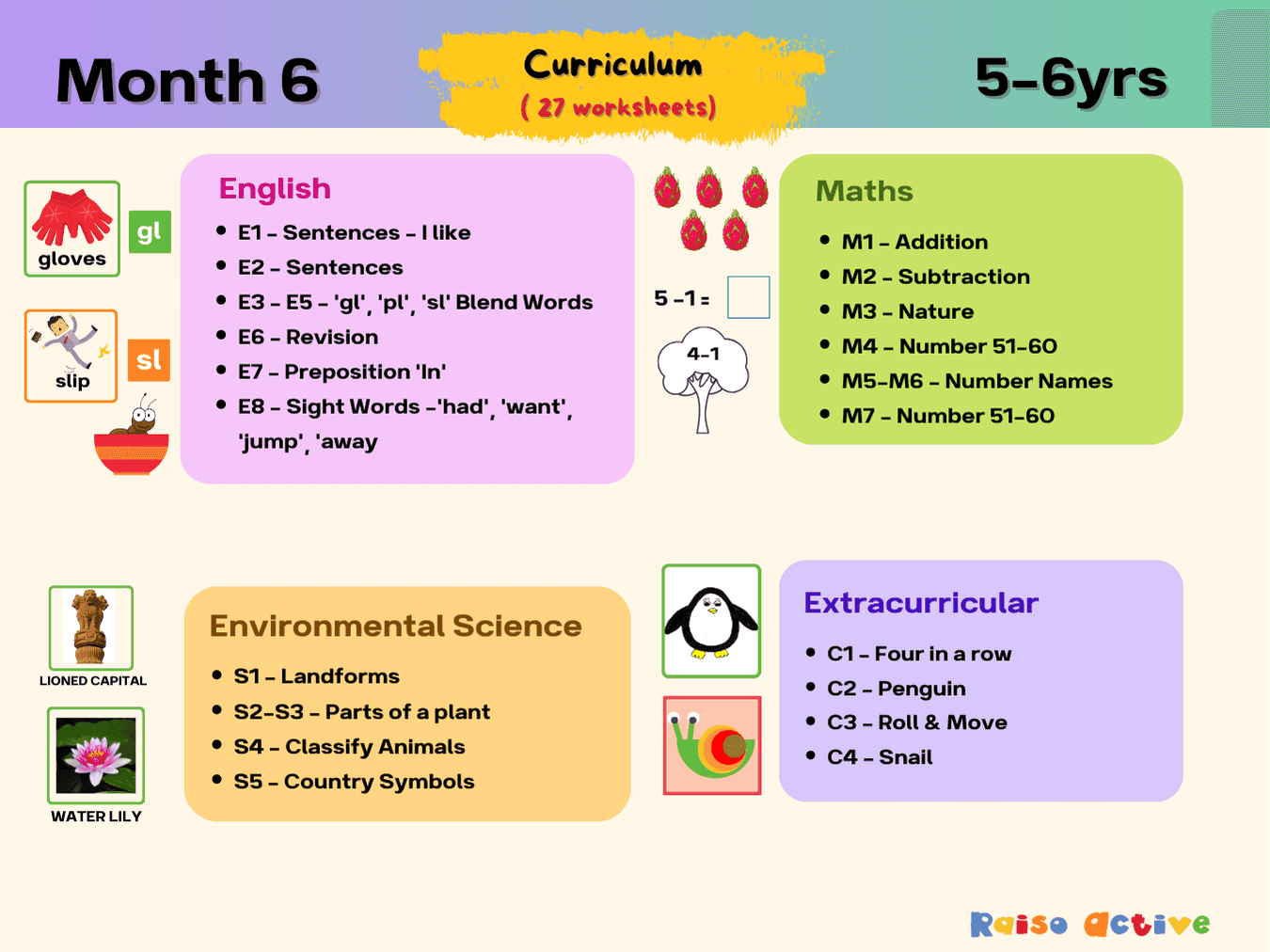
Part of the pack
Month 6: Holistic early learning activities | Ages 5-6
This is page 11 of the pack. Ages 5-6 · KindergartenAges 5-6 · Year 1Ages 5-6 · UKGAges 5-6
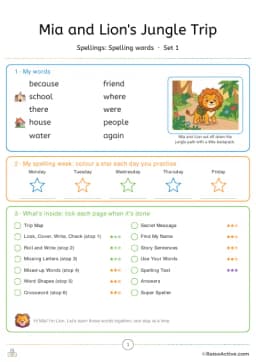
Made for your child
Spelling practice, made for your child
Their own spelling words turned into a pack: trace or look-cover-write-check, roll and write, a secret picture code, a word search, a crossword and a test, with their name in it.
Make a spelling packFree preview · free for members
Or start free: a word search with sight wordsCurriculum
- Fluency > Sight Words
How to use this worksheet
Start with tracing, having your child follow the dotted letters of 'had' with a pencil while saying the word aloud. Move to the find-and-color section, where your child scans a short list of similar-looking words and circles or colors 'had' each time it appears. Guide your child through the letter-connecting activity, linking the letters h, a, and d in the correct order to spell the word. Finish with the cut-and-paste portion, where your child cuts out individual letters and glues them in the correct sequence to spell 'had' once more, plus any remaining fill-in-the-blank practice.
Materials needed
- Pencil
- Crayons
- Scissors
- Glue or Paste
Extension activities
- 1Create a simple sentence using the word 'had,' like 'I had a snack,' and illustrate it together.
- 2Search for the word 'had' in a favorite picture book or early reader.
- 3Make a flashcard for 'had' to review alongside other sight words your child is learning.
- 4Play a quick matching game between the written word 'had' and a picture representing a simple 'had' sentence.
- 5Practice writing 'had' from memory without tracing, to check how well it's been retained.

Written by
Hemsweta Jain · Teacher Cheena
MBA and Early Childhood Educator, teaching since 2014 · Founder of RaisoActive, Mumbai
Every RaisoActive worksheet is designed and checked by the founder before publishing.
Published · Last reviewed
More from Month 6: Holistic early learning activities | Ages 5-6

Blends Revision Worksheet: Circle the Correct Blend!
Ages 4-6 · Pre-K–KindergartenAges 4-6 · Reception–Year 1Ages 4-6 · LKG–UKGAges 4-6
Choosing the correct consonant blend to match a picture asks children ages 4-6 to compare two similar-sounding options, like 'bl' versus 'br,' and decide which one truly matches the word they hear, a sharper phonics skill than recognizing a single blend in isolation. This side-by-side comparison format catches confusion between commonly mixed-up blends that simple flashcards might miss. Building this discrimination skill helps children read multisyllabic and blended words more accurately and confidently.

Parent's Guide: Fun Activities for Early Learners
Ages 3-5 · Preschool–Pre-KAges 3-5 · Nursery–ReceptionAges 3-5 · Nursery–LKGAges 3-5
This parent's guide offers a set of activities spanning literacy, sequencing, and early addition, giving caregivers several ready-to-use options for building foundational skills through everyday play. For ages 3-5, rotating between different skill areas, like rhyming games and simple math card games, keeps early learning varied and prevents any one skill from feeling repetitive or tedious.

Parts of a Plant Crossword Puzzle Worksheet for Kids
Ages 3-5 · Preschool–Pre-KAges 3-5 · Nursery–ReceptionAges 3-5 · Nursery–LKGAges 3-5
This worksheet introduces basic plant biology vocabulary, flower, leaf, stem, root, and fruit, by having children use picture clues to complete a crossword puzzle. For ages 3-5, connecting a picture of a specific plant part to its written name builds early science vocabulary alongside letter and spelling recognition through the crossword format.
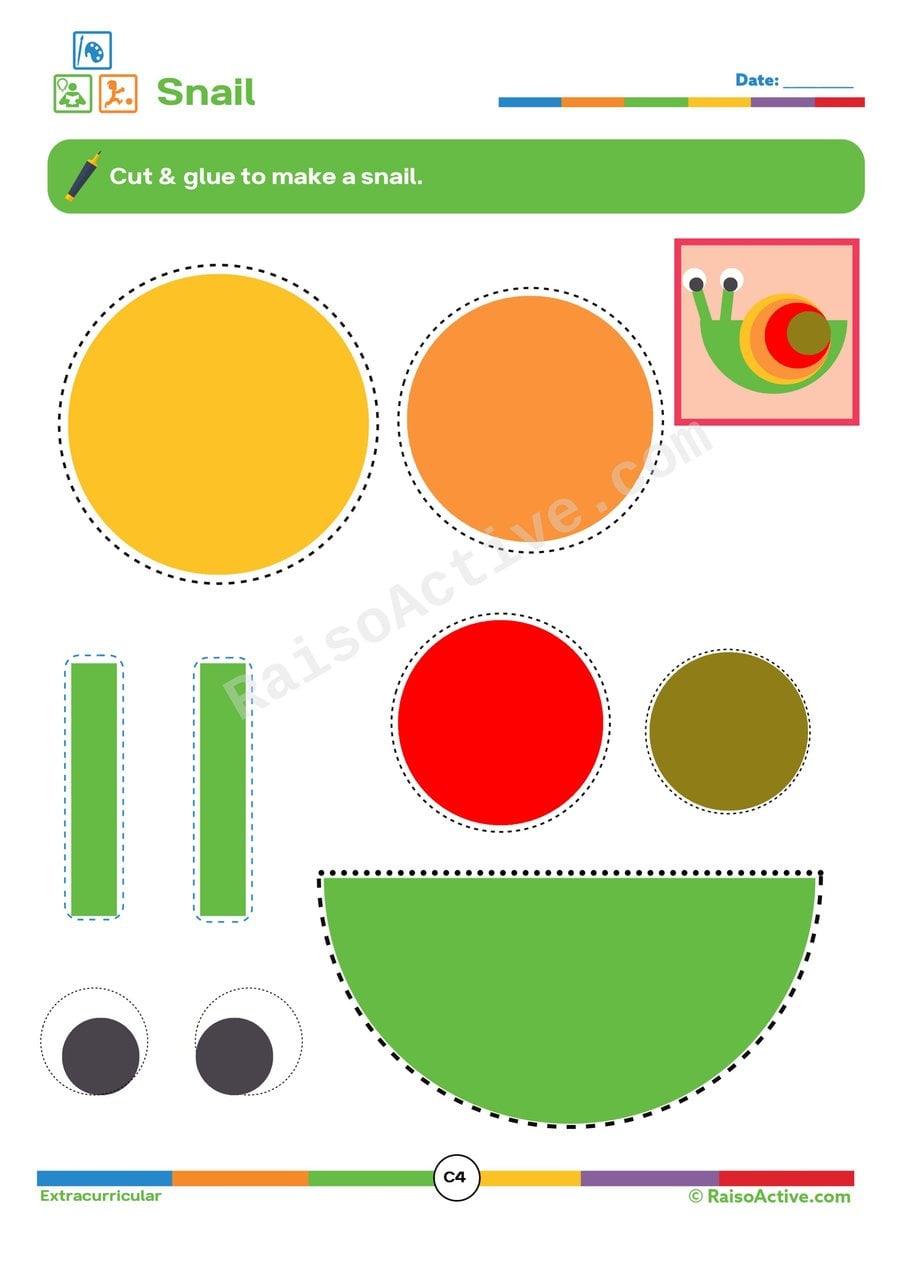
Snail Cut and Glue Worksheet for Preschoolers
Ages 3-5 · Preschool–Pre-KAges 3-5 · Nursery–ReceptionAges 3-5 · Nursery–LKGAges 3-5
Cutting out shapes and gluing them together in a specific arrangement to build a snail gives children ages 3-5 focused practice with scissor control and precise gluing placement, both demanding fine motor tasks at this age. Following a visual example to recreate the snail also builds early spatial reasoning, since children must match the size and position of each piece to the model rather than placing them randomly. This kind of guided craft bridges simple coloring pages and more independent creative projects.
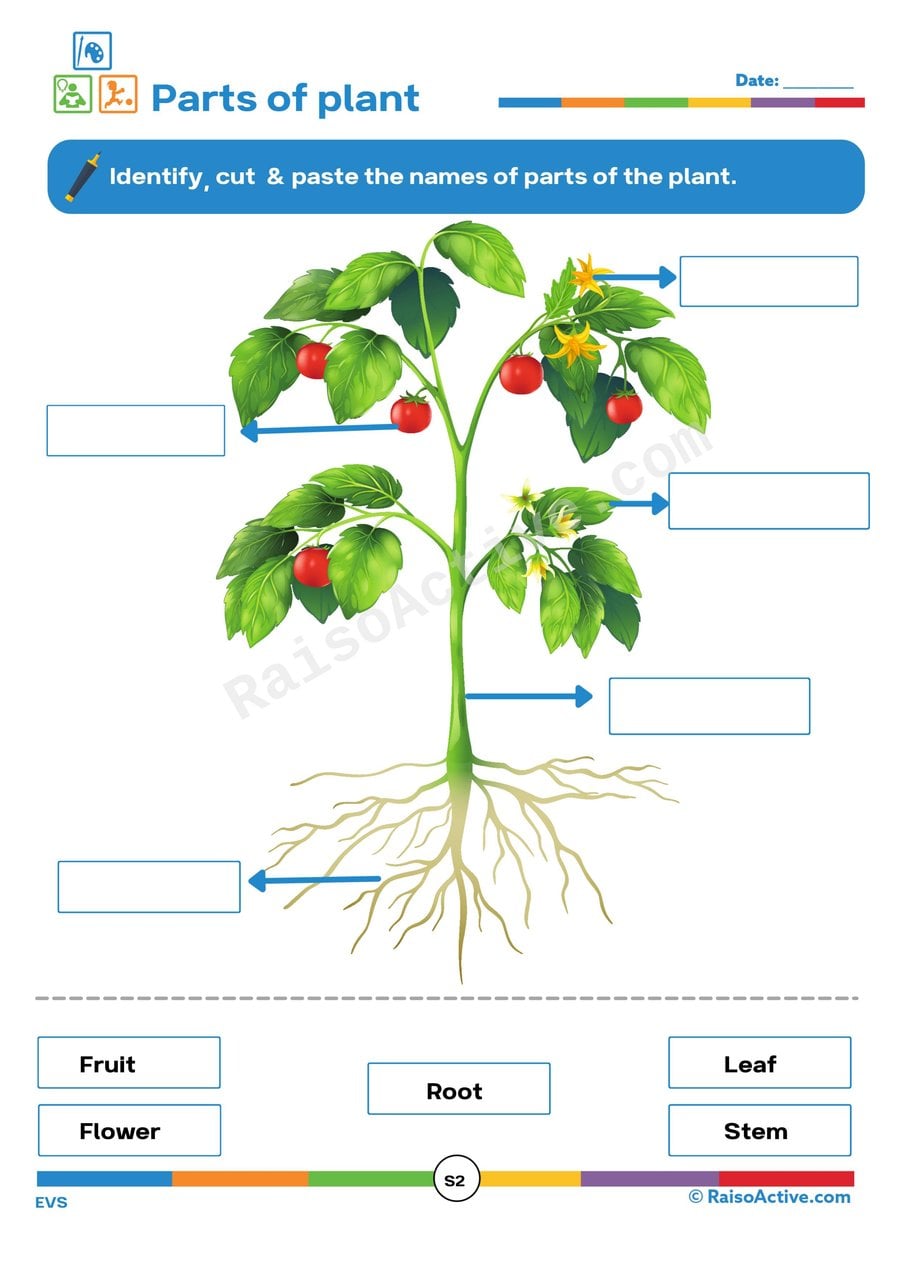
Parts of a Plant Worksheet: Identify and Label!
Ages 3-5 · Preschool–Pre-KAges 3-5 · Nursery–ReceptionAges 3-5 · Nursery–LKGAges 3-5
Labeling the root, stem, leaf, flower, and fruit of a plant teaches children ages 3-5 that living things are made of distinct parts that each serve a purpose, an early foundation for life science. The cut-and-paste labeling format requires children to match a written or pictured label to the correct location on a plant diagram, strengthening both vocabulary and visual mapping skills. Understanding plant anatomy also gives children language to describe the gardens, parks, and plants they encounter in daily life.
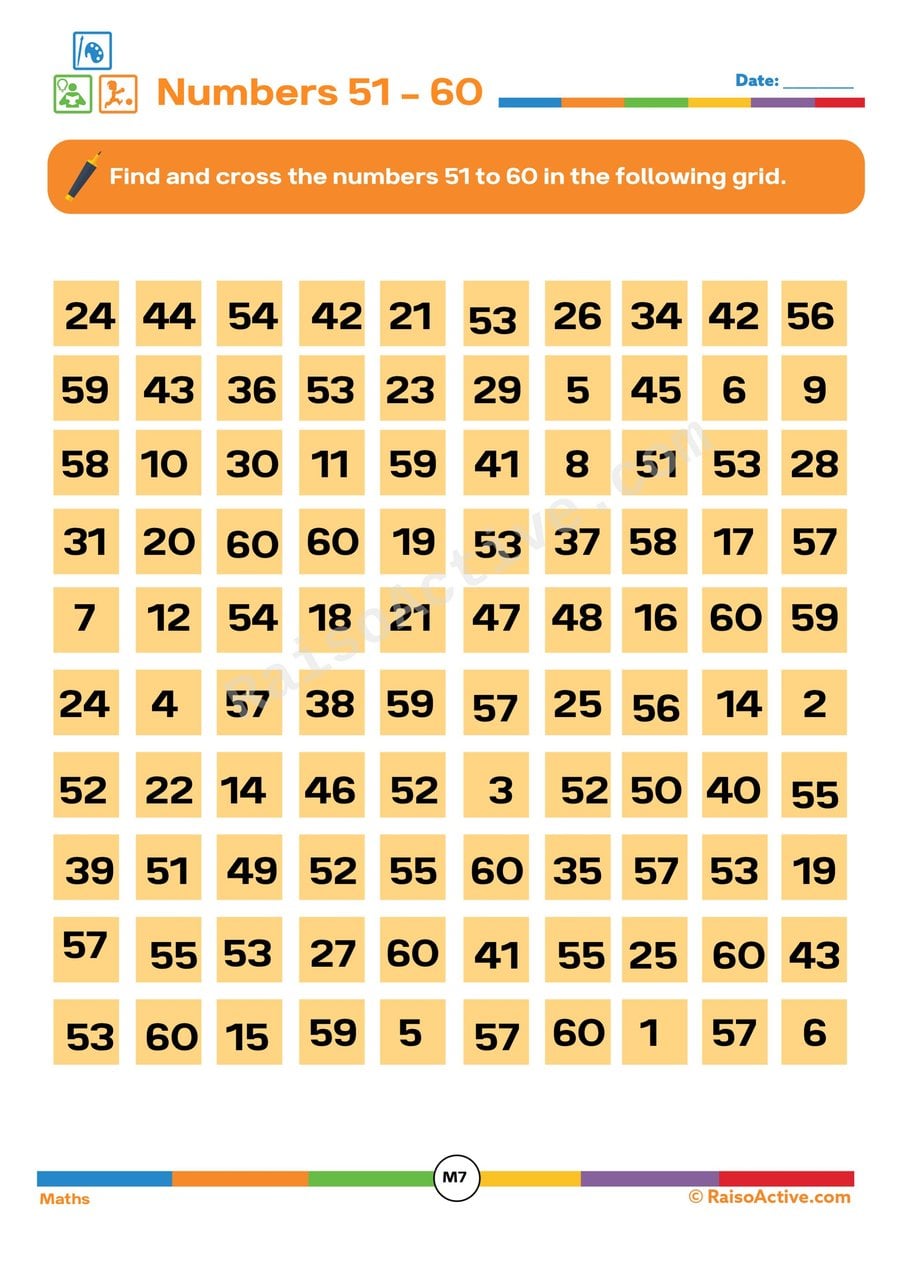
Find and Cross Numbers 51-60 Worksheet
Ages 4-5 · Pre-KAges 4-5 · ReceptionAges 4-5 · LKGAges 4-5
Hunting through a grid of numbers to find and cross out 51 through 60 trains children ages 4-5 to recognize specific two-digit numerals quickly among visually similar distractors, a scanning skill that supports both math fluency and reading readiness. This activity demands sustained visual attention, since the target numbers are scattered randomly rather than in order, unlike a simple sequencing task. It's also a fun, game-like way to reinforce number recognition without it feeling repetitive.

Number Names Worksheet: Unscramble, Match, and Write Numbers!
Ages 4-6 · Pre-K–KindergartenAges 4-6 · Reception–Year 1Ages 4-6 · LKG–UKGAges 4-6
This worksheet layers three literacy and numeracy skills together: unscrambling jumbled letters to spell out number names, writing the corresponding numeral, and matching numbers to their written names. For ages 4-6, connecting a numeral like '5' to its written word 'five' bridges math and reading skills, reinforcing that numbers can be represented in more than one way.

Landforms Cut and Paste Worksheet for Preschoolers
Ages 3-5 · Preschool–Pre-KAges 3-5 · Nursery–ReceptionAges 3-5 · Nursery–LKGAges 3-5
Sorting pictures into categories like mountains, oceans, and deserts introduces children ages 3-5 to the idea that the Earth's surface has distinct, recognizable features, an early building block of geography and earth science. The cut-and-paste format adds a fine motor challenge on top of the classification task, requiring children to physically separate and place each picture correctly rather than simply pointing. Matching an image to its labeled landform category also builds vocabulary specific to the natural world beyond everyday objects.
Related worksheets

Sight Word 'Went' Worksheet for Preschoolers: Tracing, Matching, and Sentence Completion
Ages 3-5 · Preschool–Pre-KAges 3-5 · Nursery–ReceptionAges 3-5 · Nursery–LKGAges 3-5
The word 'went' doesn't sound out predictably using standard phonics rules, so children ages 3-5 need to memorize it by sight as a whole word — a key early reading strategy for common, frequently used words. This worksheet reinforces that sight-word memory through several different formats — tracing, word-hunting, letter connecting, and sentence completion — giving repeated exposure without it feeling like a single repetitive drill. Mastering high-frequency words like 'went' significantly speeds up reading fluency, since these words appear constantly in early books.

Sight Word 'Get' Worksheet: Trace, Color, and Practice!
Ages 3-5 · Preschool–Pre-KAges 3-5 · Nursery–ReceptionAges 3-5 · Nursery–LKGAges 3-5
This multi-step worksheet builds deep familiarity with the sight word 'get' for children ages 3-5 through six different formats — tracing, coloring, sentence completion, circling, writing, and cut-and-paste spelling — giving far more repetition than a single tracing task would. High-frequency sight words like 'get' don't sound out easily, so this kind of repeated exposure across formats is exactly how early readers learn to recognize them instantly.
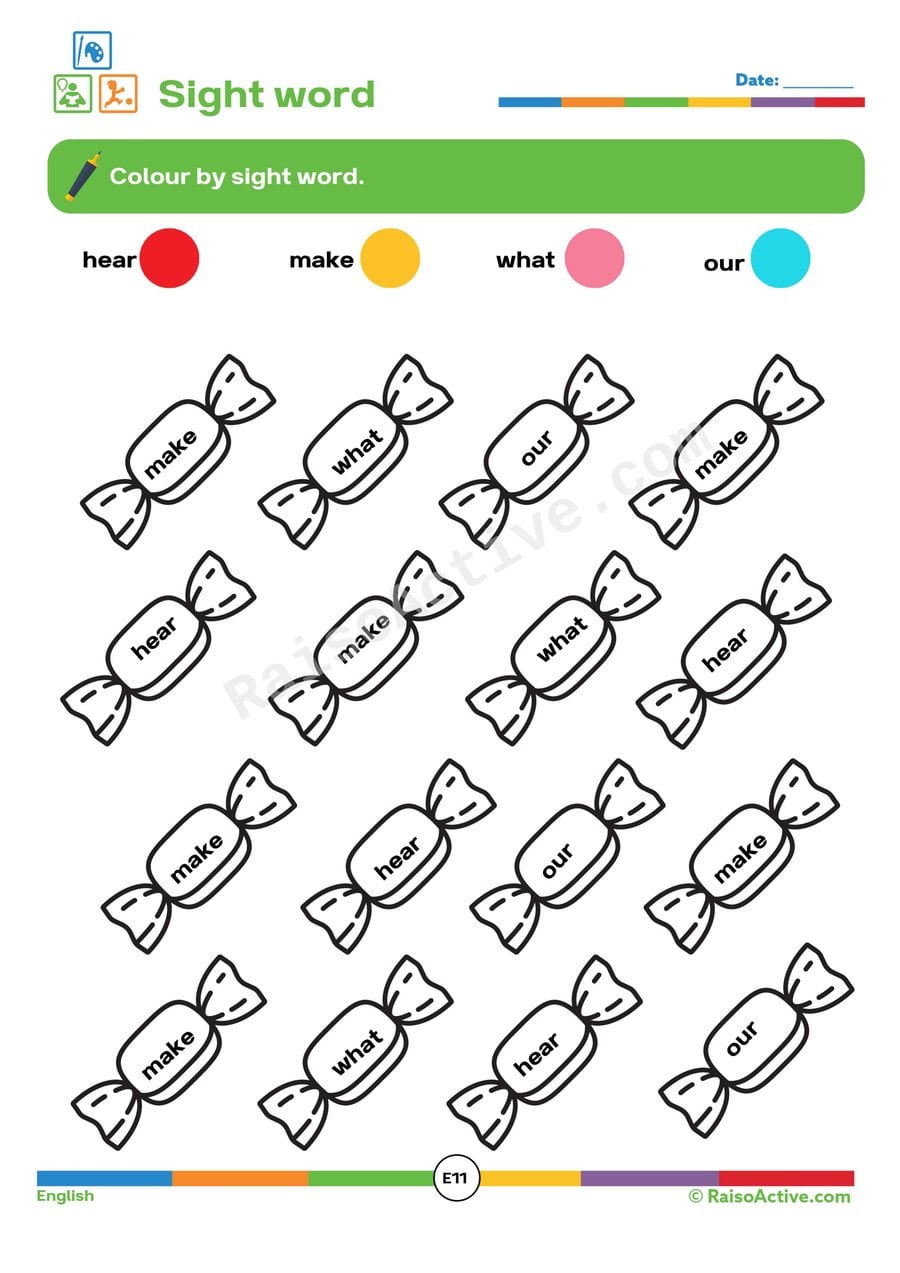
Sight Word Coloring Fun: Hear, Make, What, and Our!
Ages 3-5 · Preschool–Pre-KAges 3-5 · Nursery–ReceptionAges 3-5 · Nursery–LKGAges 3-5
Sight words like 'hear,' 'make,' 'what,' and 'our' appear so frequently in beginning reading that children need to recognize them instantly rather than sound them out every time, and this coloring activity turns that repeated recognition practice into an engaging, low-pressure task. For ages three to five, associating each word with a specific color also adds a visual memory cue that can help the word's shape stick in mind.

Learn to Write the Sight Word 'I' Worksheet for Preschoolers
Ages 3-5 · Preschool–Pre-KAges 3-5 · Nursery–ReceptionAges 3-5 · Nursery–LKGAges 3-5
This worksheet gives children ages 3-5 focused, repeated practice recognizing, tracing, and writing the sight word 'I,' one of the very first words most children learn to read and write since it appears constantly in their own speech. Because 'I' is a single letter that stands for a whole word, it's also a gentle introduction to the idea that capitalization carries meaning.

Color the Sight Words! A Fun Coloring Worksheet for Preschoolers
Ages 3-5 · Preschool–Pre-KAges 3-5 · Nursery–ReceptionAges 3-5 · Nursery–LKGAges 3-5
This worksheet helps children ages 3-5 recognize common sight words by finding and coloring them within a brick-wall design according to a color key. Because sight words like 'the,' 'and,' or 'is' don't follow regular phonics rules, repeated visual exposure like this coloring task is one of the most effective ways for young children to memorize them by sight rather than sounding them out each time.
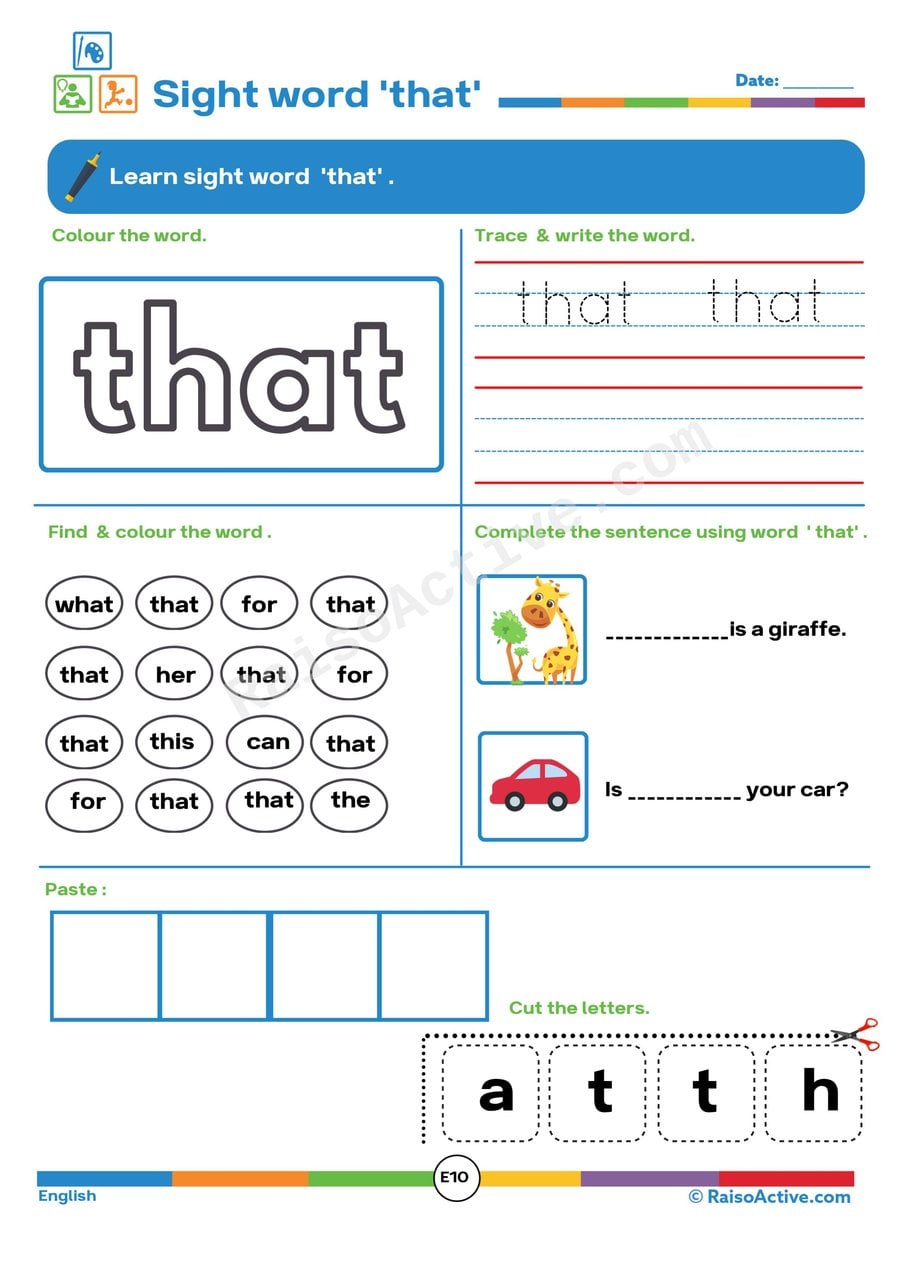
Sight Word 'That' Worksheet: Trace, Find, and Write!
Ages 4-5 · Pre-KAges 4-5 · ReceptionAges 4-5 · LKGAges 4-5
As one of the most frequently used words in early reading texts, 'that' needs to be recognized instantly rather than sounded out letter by letter, and this worksheet gives children ages 4-5 several different ways to practice that recognition. Combining tracing, visual searching, sentence completion, and cutting letters to spell the word reinforces the same target through multiple senses and formats, which strengthens memory retention for tricky sight words.

Sight Word 'There' Worksheet for Preschoolers: Tracing, Coloring, and Sentence Building
Ages 4-5 · Pre-KAges 4-5 · ReceptionAges 4-5 · LKGAges 4-5
Because 'there' can't be decoded using typical phonics rules and is easily confused with the similar-sounding 'their' and 'they're,' children ages 4-5 need repeated, varied exposure to memorize it as a sight word. Practicing it through coloring, tracing, searching, and sentence-building helps move the word from momentary recognition into automatic recall needed for fluent reading.
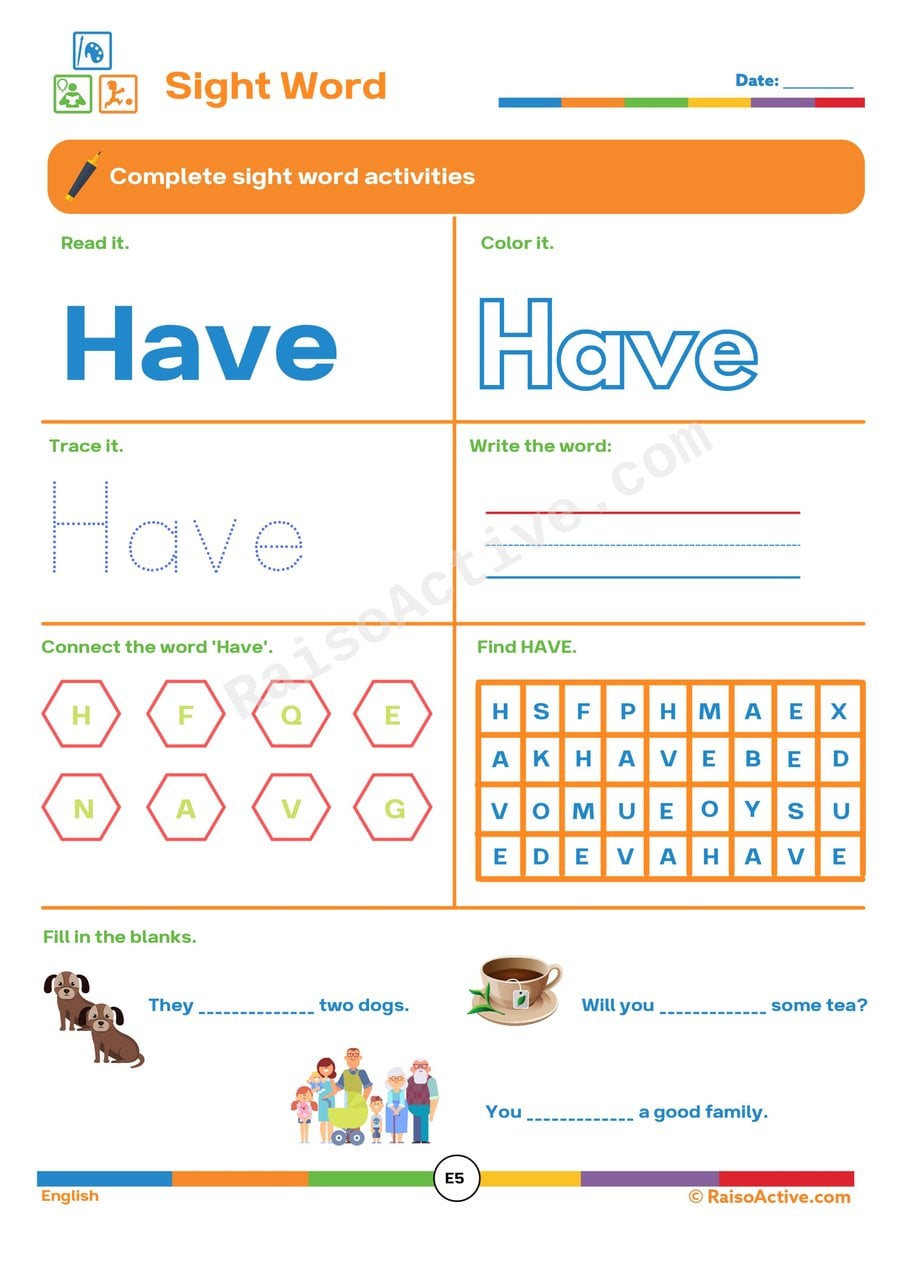
Sight Word 'Have' Worksheet for Preschoolers
Ages 3-5 · Preschool–Pre-KAges 3-5 · Nursery–ReceptionAges 3-5 · Nursery–LKGAges 3-5
This multi-step worksheet builds deep familiarity with the sight word 'have' for children ages 3-5 by having them read, color, trace, write, and search for the word in several different formats. Repeating the same word across varied tasks — rather than practicing it once — is exactly how high-frequency sight words become instantly recognizable to early readers.
Guides for this topic

Sight Words by Age: The First 50 Words and How to Teach Them Without Flashcard Fatigue
Which sight words to teach first and why, the heart-word method, a read-trace-write-find routine, games, and a by-age table of typical sight-word progress.
How to Teach CVC Blending: A Step-by-Step Method That Works in Two Weeks
A step-by-step method for teaching CVC blending, covering continuous sounds, word families, common errors, and a 14-day plan that most children finish reading CVC words.
Phase 2 Phonics at Home: Sound Order, Blending Games, Worksheets
Phase 2 phonics at home: the five sound sets in order, oral blending, tricky words, a two-week routine, common mistakes, and free worksheets.
Reviews
Every worksheet for ages 3–5, no watermark
Members download the full library of 1,000+ worksheets and every activity pack without watermarks or daily limits. One year costs ₹999 in India or $20 elsewhere.
See membership plansOr download any worksheet free with a watermark (5 a day).