Time Telling Fun: Draw the Clock Hands! (3-5 Years)
This clock-hands activity teaches children ages 3-5 the very first steps of telling time by having them draw the hour and minute hands onto a blank clock face to match a given time. Because young children at this age typically focus on hour-level time recognition, the worksheet builds foundational awareness of how a clock's two hands work together before introducing the more complex idea of minutes. Repeated practice drawing hands in the correct position and length also reinforces fine motor control alongside the time concept.
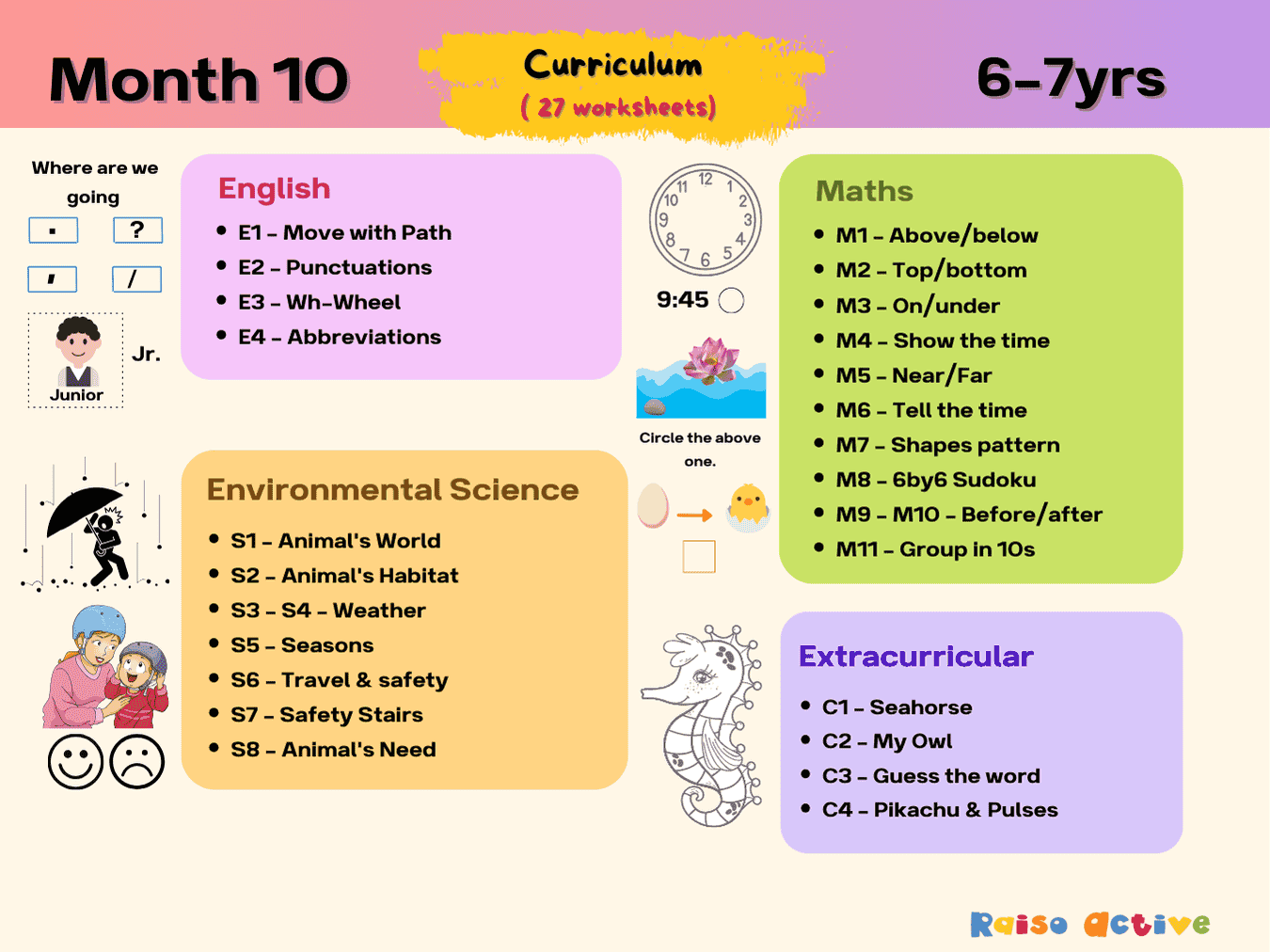
Part of the pack
Month 10: Learning & Development | Ages 6-7
This is page 11 of the pack. Ages 6-7 · Grade 1Ages 6-7 · Year 2Ages 6-7 · Class 1Ages 6-7
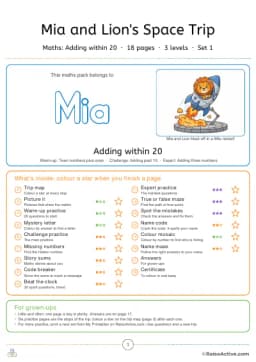
Made for your child
Telling the time, made for your child
A maths pack with your child's name in it: pictures that explain, practice at three levels, puzzles and story sums about them. Print a new set whenever they finish.
Make a maths packFree preview · free for members
Curriculum
- Time > Telling Time
How to use this worksheet
Look at the time written in the box next to each blank clock face and read it aloud together, such as '3 o'clock.' Point out where the short hour hand should point and where the long minute hand should point for that time. Have your child draw both hands carefully onto the clock face, checking the length so the hour hand is noticeably shorter than the minute hand. Repeat for each clock on the page, comparing the finished drawings to a real clock if one is available.
Materials needed
- Pencil
- Crayons
Extension activities
- 1Practice telling time using a real analog clock at home, matching hands to hours you call out.
- 2Create flashcards with different times for your child to practice reading and drawing.
- 3Set an alarm or timer for a fun activity and check the clock together when it goes off.
- 4Make a paper plate clock with movable hands for extra hands-on practice.
- 5Talk through your family's daily schedule using clock times, like breakfast or bedtime.

Written by
Hemsweta Jain · Teacher Cheena
MBA and Early Childhood Educator, teaching since 2014 · Founder of RaisoActive, Mumbai
Every RaisoActive worksheet is designed and checked by the founder before publishing.
Published · Last reviewed
More from Month 10: Learning & Development | Ages 6-7
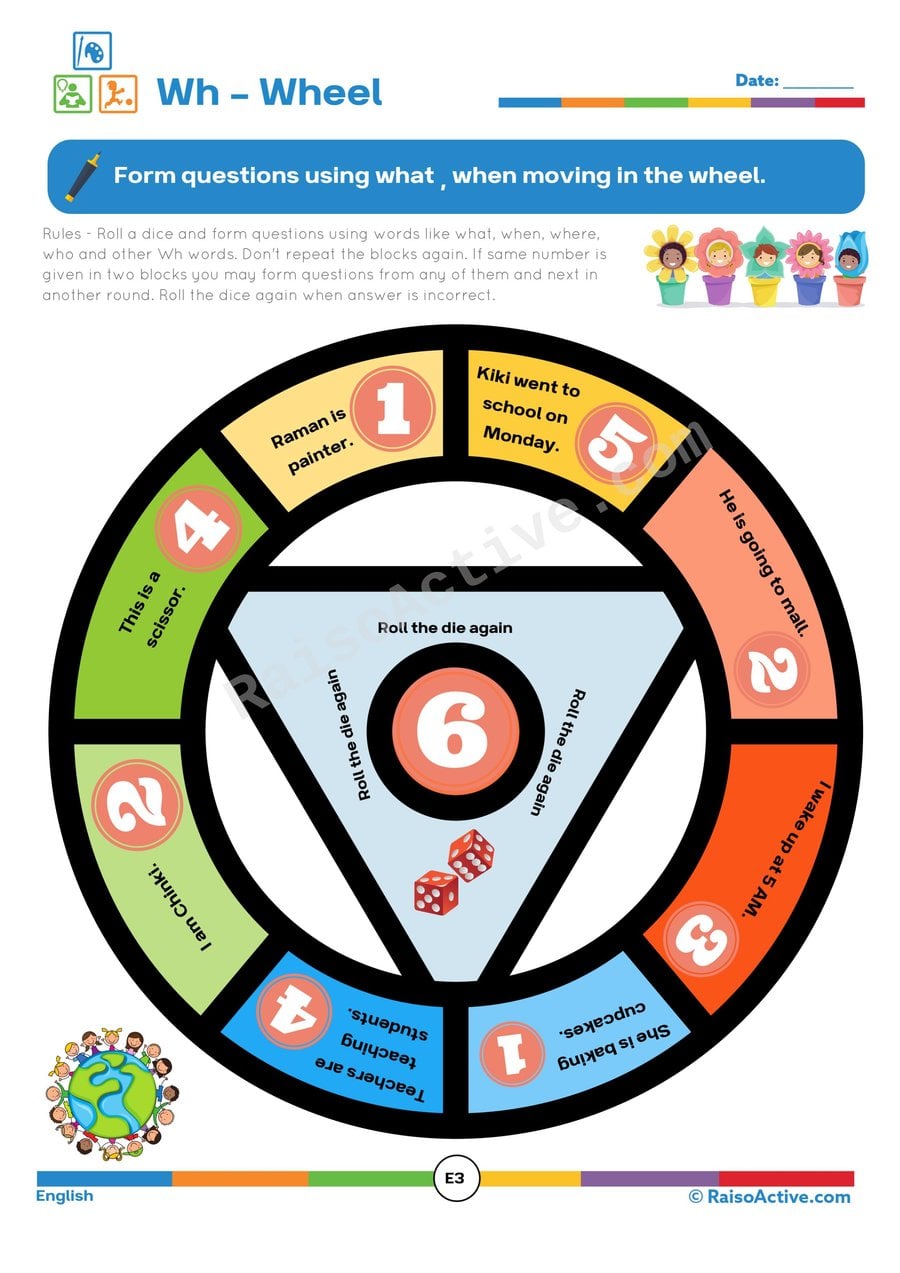
Wh- Wheel Worksheet: Question Formation Fun!
Ages 4-6 · Pre-K–KindergartenAges 4-6 · Reception–Year 1Ages 4-6 · LKG–UKGAges 4-6
This wheel activity helps children ages 4-6 practice forming questions using the five 'wh-' words — what, when, where, who, and why — a key building block for both conversational language and reading comprehension. Rolling a die to land on a random prompt keeps the practice playful and unpredictable, encouraging children to generate original questions rather than repeating memorized ones.
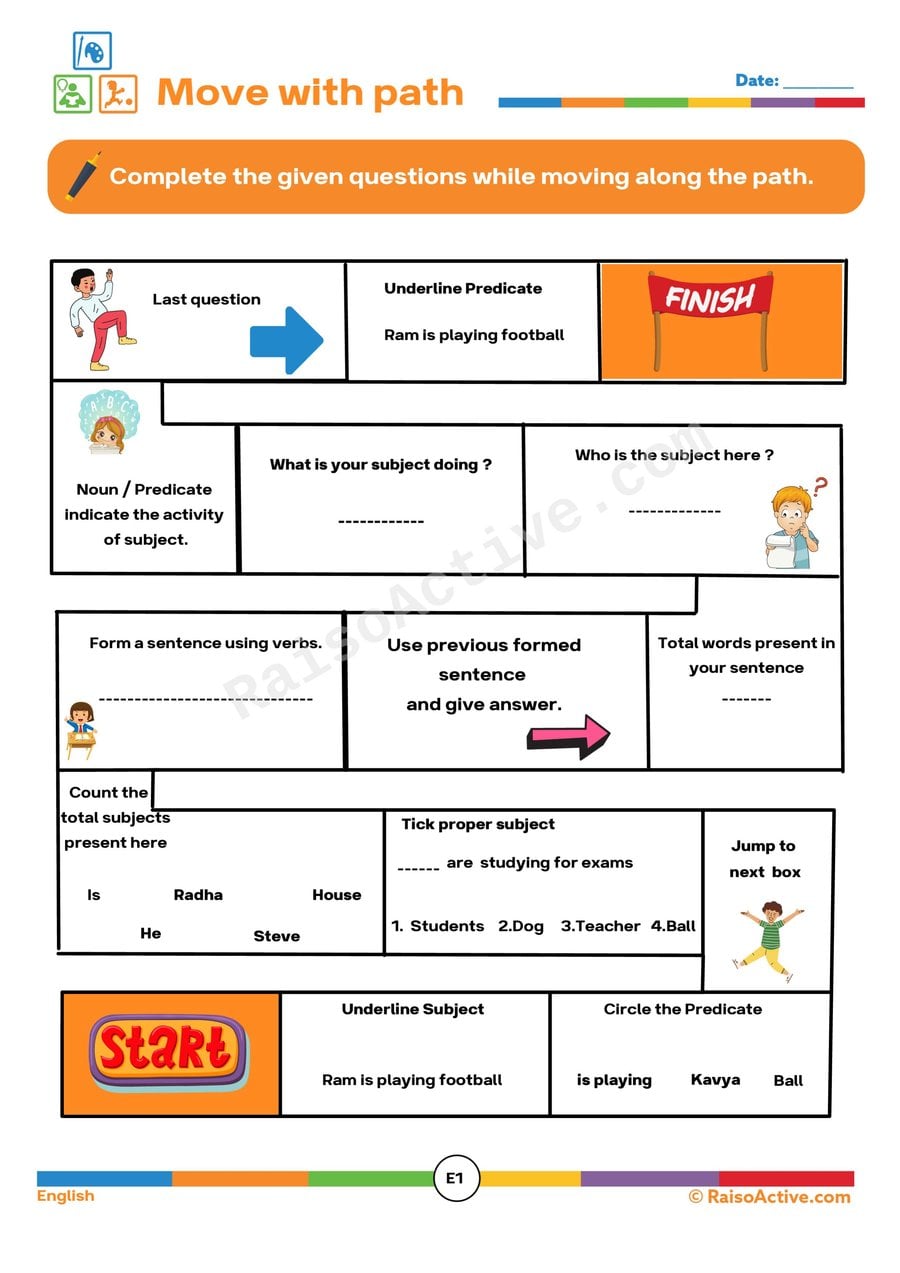
Move with Path Worksheet: Sentence Structure Fun!
Ages 4-6 · Pre-K–KindergartenAges 4-6 · Reception–Year 1Ages 4-6 · LKG–UKGAges 4-6
This path-based activity teaches children ages 4-6 the basic building blocks of a sentence — subject and predicate — by having them move through a series of boxes, underlining predicates and identifying subjects along the way. Framing grammar as a physical path to follow makes an abstract concept more concrete for early learners. By the end, children practice not just identifying sentence parts but also constructing new sentences of their own, moving from recognition to active use.

Animal Habitats Matching Worksheet for Preschoolers
Ages 3-5 · Preschool–Pre-KAges 3-5 · Nursery–ReceptionAges 3-5 · Nursery–LKGAges 3-5
This worksheet helps children ages 3-5 connect specific animals to their natural homes, reinforcing early science vocabulary around habitats like forests, oceans, and deserts. Matching an animal to its habitat circle first, then cutting and pasting the same animal into a corresponding box, gives two rounds of practice with the same concept using different formats. This repetition helps solidify the animal-habitat pairing in memory.

Shape Pattern Cut and Paste Worksheet for Preschoolers
Ages 3-5 · Preschool–Pre-KAges 3-5 · Nursery–ReceptionAges 3-5 · Nursery–LKGAges 3-5
This worksheet asks children ages 3-5 to identify the rule in a repeating shape pattern and select the correct cut-out shape to complete it, combining shape recognition with early sequencing logic. Recognizing and continuing patterns strengthens the kind of predictive thinking that later supports skip counting and multiplication concepts. Precisely cutting and placing each small shape piece also builds fine motor control.

Tell the Time Worksheet: Clock Reading Practice for Kids
Ages 4-6 · Pre-K–KindergartenAges 4-6 · Reception–Year 1Ages 4-6 · LKG–UKGAges 4-6
This worksheet helps children ages 4-6 practice reading an analog clock by looking at the position of the hour and minute hands and writing down the time shown. Analog clock reading is a genuinely challenging skill that combines number recognition with an understanding of two hands moving at different speeds, making repeated, varied practice like this essential before a child can read time confidently on their own.

Animal's World: Sorting Animals by Land, Water, and Air - Printable Worksheet
Ages 4-6 · Pre-K–KindergartenAges 4-6 · Reception–Year 1Ages 4-6 · LKG–UKGAges 4-6
This sorting worksheet teaches children ages 4-6 to classify animals into three habitat categories — land, water, and air — based on where each animal naturally lives and moves. Classifying by habitat rather than by appearance alone encourages children to think about an animal's features, like fins, wings, or legs, and connect them to function. This three-way sort is more complex than a simple two-category sort, building more advanced categorization skills.

Pikachu Pulses Worksheet: Following Instructions and Coloring Fun!
Ages 3-5 · Preschool–Pre-KAges 3-5 · Nursery–ReceptionAges 3-5 · Nursery–LKGAges 3-5
This activity helps children ages 3-5 practice following multi-step color instructions and strengthens pincer grip and fine motor precision as they place small dried lentils onto specific sections of a Pikachu outline. Working with tiny materials like lentils demands more finger control than crayons or markers, making this a genuinely challenging and rewarding fine motor exercise.

Superhero Grouping in Tens: A Fun Counting Worksheet for Preschoolers!
Ages 4-5 · Pre-KAges 4-5 · ReceptionAges 4-5 · LKGAges 4-5
Using a superhero theme, this worksheet helps children ages 4-5 practice counting objects accurately and matching a counted group to its written number, an early step toward understanding place value through grouping in tens. Circling objects according to a given number afterward reinforces the connection between a numeral and the actual quantity it represents, rather than just reciting numbers in order.
Related worksheets

Time Routine Cut and Paste Worksheet for Preschoolers
Ages 4-6 · Pre-K–KindergartenAges 4-6 · Reception–Year 1Ages 4-6 · LKG–UKGAges 4-6
Matching a clock face showing a specific time to the daily activity that happens then — like breakfast or bedtime — connects the abstract skill of clock reading to concrete routines, helping children ages 4-6 build a real-world sense of how time structures a day.

Time Telling Worksheet: Write the Time on the Clocks!
Ages 4-6 · Pre-K–KindergartenAges 4-6 · Reception–Year 1Ages 4-6 · LKG–UKGAges 4-6
Reading the position of the hour and minute hands on an analog clock and writing the matching time builds clock-reading fluency for children ages 4-6, a more advanced step than simply recognizing a given time, since it requires producing the answer independently.

Time Worksheet: Observe Events and Find the Duration!
Ages 4-6 · Pre-K–KindergartenAges 4-6 · Reception–Year 1Ages 4-6 · LKG–UKGAges 4-6
Children ages 4-6 practice an early concept of time and duration by reading about a series of daily events and calculating how long an activity lasted by adding up time spent. This introduces the idea that time can be measured and combined, a stepping stone toward reading clocks and understanding schedules later on.

Earlier and Later Time Worksheet for Preschoolers
Ages 4-6 · Pre-K–KindergartenAges 4-6 · Reception–Year 1Ages 4-6 · LKG–UKGAges 4-6
Children ages 4-6 build early time-sequencing skills by comparing clocks and everyday activities to decide which happens earlier and which happens later in the day. This worksheet introduces the abstract idea of time passing through the concrete lens of familiar routines, like meals or bedtime, which children already experience daily. Tracing the arrow toward the later activity also reinforces the logical, forward direction that time moves.

Earlier and Later Time Worksheet: Telling Time Practice
Ages 4-5 · Pre-KAges 4-5 · ReceptionAges 4-5 · LKGAges 4-5
Comparing clock times to determine which is earlier or later is an early step toward telling time for children ages 4-5, requiring them to read a clock face and reason about the order of events across a day. This worksheet builds that skill in two directions: first identifying a time earlier than a given reference point, then identifying a time later than a different clock shown. Practicing both directions helps children understand that 'earlier' and 'later' are relative concepts depending on what they're being compared to, not fixed labels attached to specific times.
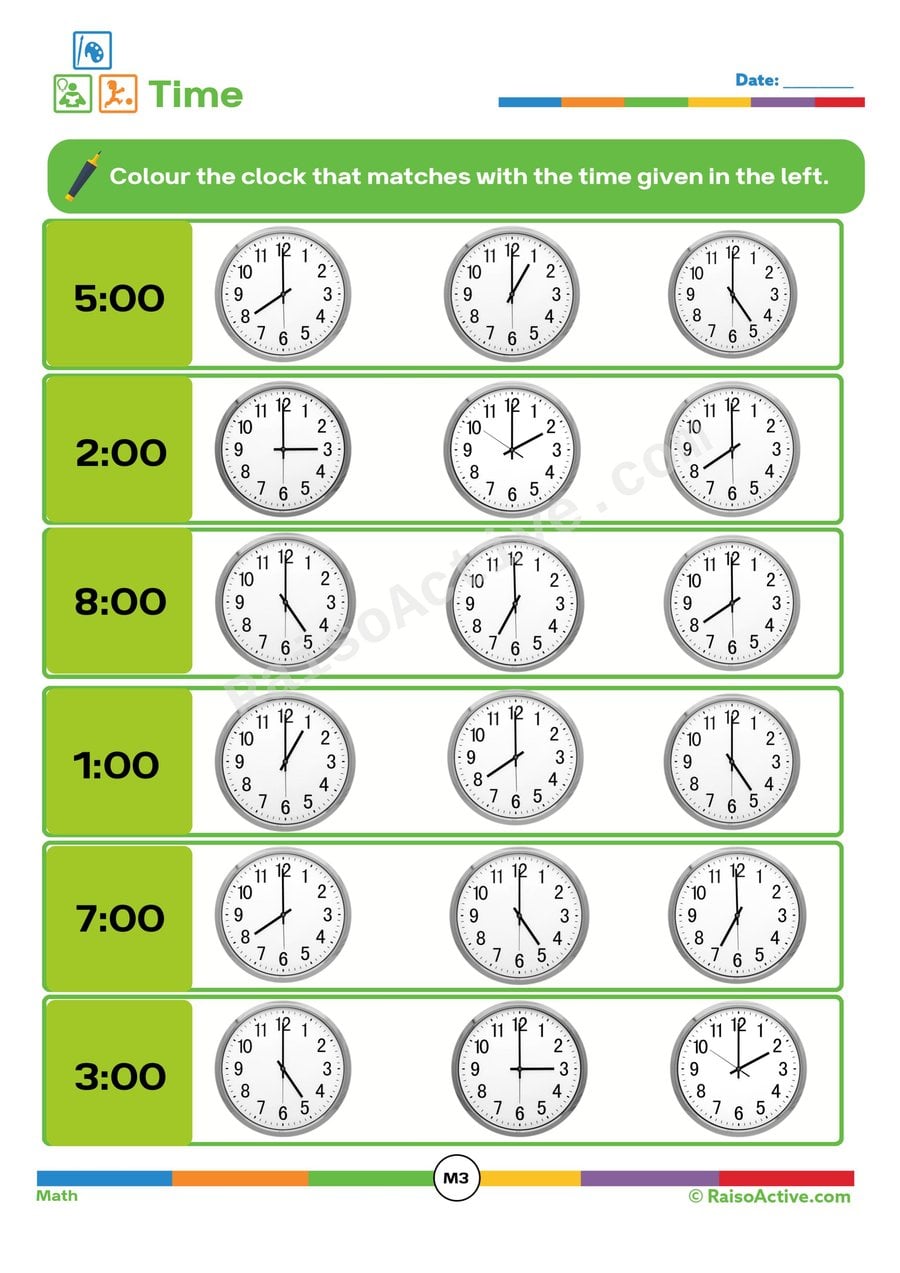
Time Matching Worksheet: Color the Clock!
Ages 4-6 · Pre-K–KindergartenAges 4-6 · Reception–Year 1Ages 4-6 · LKG–UKGAges 4-6
Matching a written or digital time to the analog clock showing the same time builds clock-reading skills for children ages 4-6, requiring them to translate between two different ways of representing the same moment.
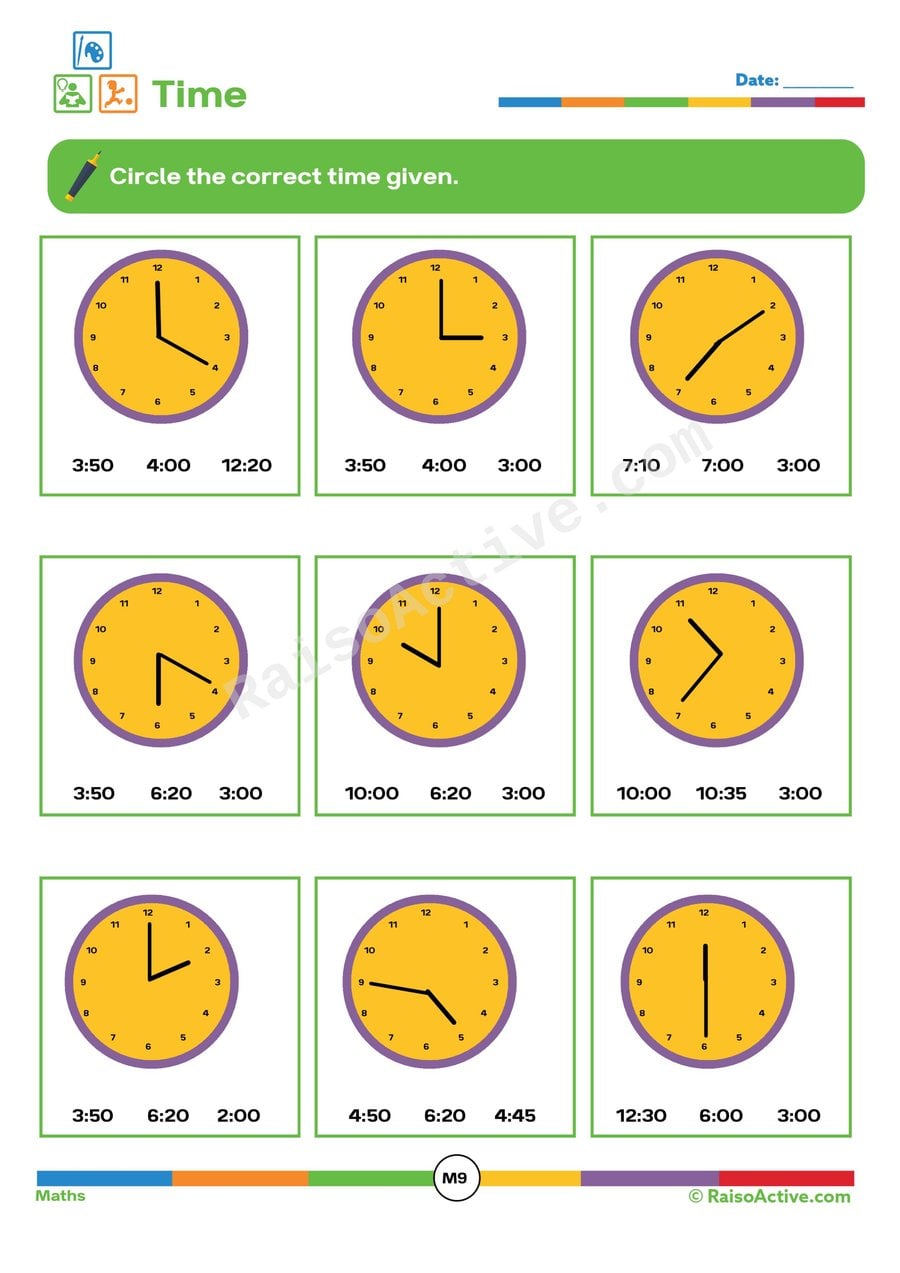
Time Telling Worksheet: Circle the Correct Time!
Ages 5-7 · Kindergarten–Grade 1Ages 5-7 · Year 1–Year 2Ages 5-7 · UKG–Class 1Ages 5-7
Reading an analog clock face and choosing the matching time from three written options builds clock-reading fluency for children ages 5-7, requiring them to interpret both the hour and minute hands together rather than guessing from a single hand.
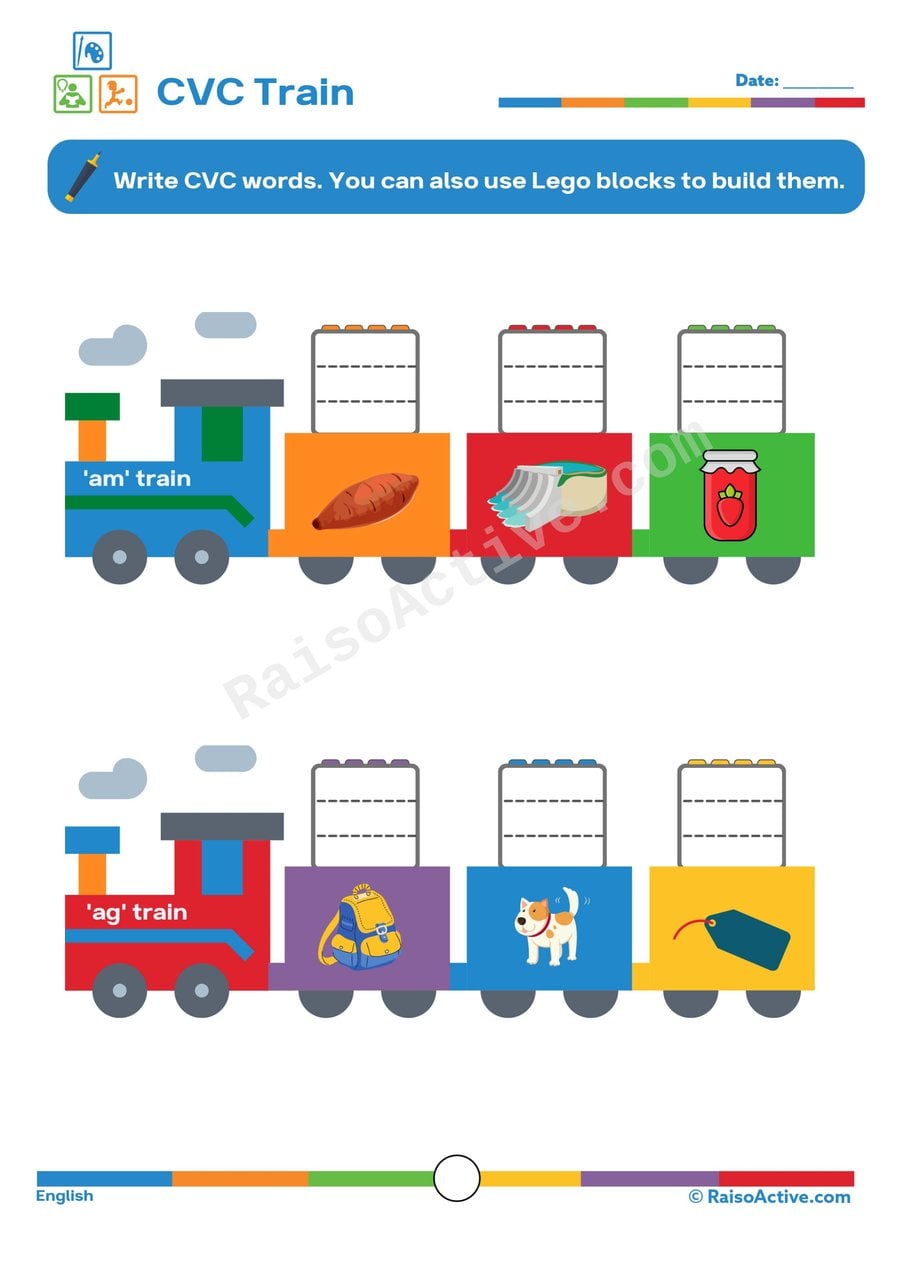
CVC Train Worksheet: Write and Build CVC Words!
Ages 4-6 · Pre-K–KindergartenAges 4-6 · Reception–Year 1Ages 4-6 · LKG–UKGAges 4-6
This worksheet gives children ages 4-6 focused practice blending letter sounds into consonant-vowel-consonant words, using train-car pictures as clues for words like 'dog,' 'hen,' or 'cup.' Because children both write the word and can optionally build it with Lego blocks, this worksheet reinforces the same phonics skill through two different physical actions — handwriting and hands-on construction — which helps the spelling patterns stick.
Guides for this topic

Number Formation Rhymes 0–9 and How to Fix Reversals
Original number formation rhymes for 0–9, the correct stroke order for each digit, why 3, 5 and 7 get reversed most often, and multisensory fixes that work.

Documenting Learning Without Drowning in Data: A Practical Guide for Parents and Teachers
Learn practical ways to document your child's learning without overwhelm. Simple portfolios, observation tips, and printable trackers for ages 1-8.

How to Help Your Child with Letter Reversals: A Complete Guide for Parents and Teachers
Letter reversals are normal until age 7-8. Learn the best multisensory strategies, anchor letter tricks, and activities to help children write b, d, p, and q correctly.
Reviews
Every worksheet for ages 3–5, no watermark
Members download the full library of 1,000+ worksheets and every activity pack without watermarks or daily limits. One year costs ₹999 in India or $20 elsewhere.
See membership plansOr download any worksheet free with a watermark (5 a day).