Physical Activity Worksheet for Kids: Identify and Tick!
This identify-and-tick worksheet asks children ages 4-6 to sort a row of pictures into 'physical activity' and 'everyday chore' categories, building the classification skills that underlie early scientific thinking. Ticking the correct boxes also reinforces visual discrimination, since children must notice differences in body position and action between, say, jumping and sweeping. At this age, connecting movement with fun helps children start to associate exercise with enjoyment rather than obligation.

Part of the pack
Month 9: Holistic Preschool Play Learning | Ages Up to 4
This is page 30 of the pack. Ages 3-4 · PreschoolAges 3-4 · NurseryAges 3-4
Curriculum
- Physical Education > Physical Activity
How to use this worksheet
Go through the pictures on the page one at a time and ask your child to say out loud what the person in each picture is doing. If the picture shows running, jumping, dancing, or playing sport, have them tick the box beside it. Once every picture has been checked, go back and ask your child to circle the pictures that show household chores instead of physical activity. Finish by asking them to name their favorite physical activity from the ones they ticked.
Materials needed
- Pencil
- Crayons
Extension activities
- 1Set a 5-minute 'movement break' where your child performs three of the ticked activities, like jumping jacks or running in place.
- 2Make a simple chart on the fridge where your child adds a sticker each day they do a physical activity from the worksheet.
- 3Play a game of charades using only the activities shown on the page, having your child guess which one you're acting out.
- 4Take a walk outside and count how many kinds of physical activity you see other people doing, like cycling or playing catch.
- 5Sort a pile of family photos or magazine cutouts into 'active' and 'not active' groups together.

Written by
Hemsweta Jain · Teacher Cheena
MBA and Early Childhood Educator, teaching since 2014 · Founder of RaisoActive, Mumbai
Every RaisoActive worksheet is designed and checked by the founder before publishing.
Published · Last reviewed
More from Month 9: Holistic Preschool Play Learning | Ages Up to 4

Cut and Paste Objects Starting with Letters: Q, R, and S Worksheet
Ages 3-5 · Preschool–Pre-KAges 3-5 · Nursery–ReceptionAges 3-5 · Nursery–LKGAges 3-5
This cut-and-paste worksheet combines beginning-sound recognition with fine motor practice for children ages 3-5, focusing on the letters Q, R, and S — three consonants that appear less often in early vocabulary than letters like B or C, so extra practice helps cement them. Cutting out small object pictures and correctly pasting them beside the matching letter requires your child to first identify the beginning sound, then execute the physical control needed to cut along lines and place glue precisely. This blend of phonics and hands-on craft work builds both academic and physical skills in one sitting.
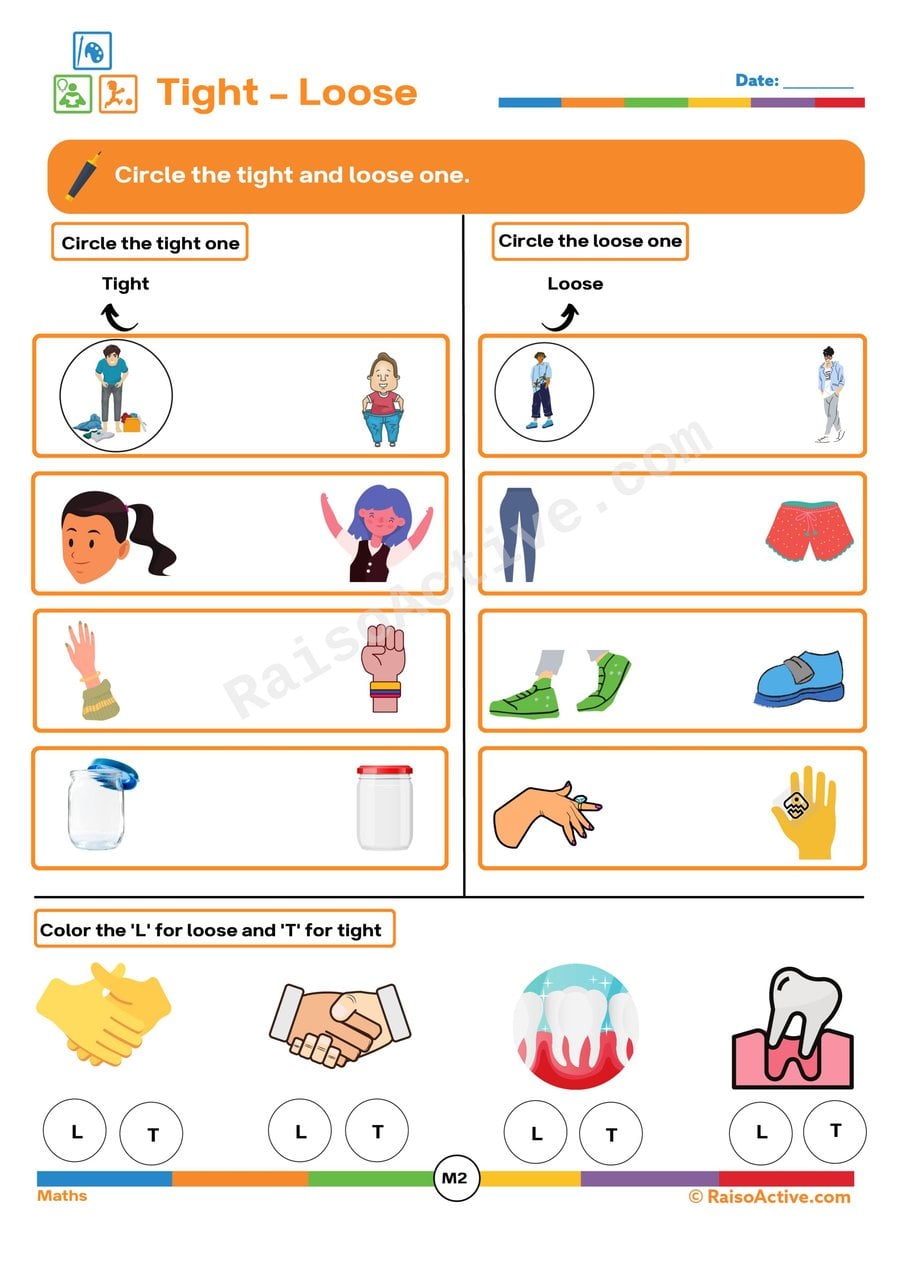
Tight and Loose Worksheet: Circle and Color!
Ages 3-5 · Preschool–Pre-KAges 3-5 · Nursery–ReceptionAges 3-5 · Nursery–LKGAges 3-5
Understanding opposite pairs like 'tight' and 'loose' helps children ages 3-5 build descriptive vocabulary and comparative thinking, skills that support both language development and early reasoning about physical properties. This worksheet asks children to look closely at pictured items — like shoelaces, screws, or clothing — and judge which state each one is in, which sharpens observation skills alongside vocabulary. Learning opposites like this also lays groundwork for later concepts such as measurement and comparison in math.

Cut and Paste Number Sequence Worksheet for Preschoolers
Ages 4-5 · Pre-KAges 4-5 · ReceptionAges 4-5 · LKGAges 4-5
This cut-and-paste worksheet helps children ages 4-5 practice number sequencing from 26 to 40 by cutting out number squares and gluing them in the correct order to complete a picture, combining counting skills with fine motor control. Sequencing numbers in this higher range requires children to recognize two-digit numerals and understand their increasing order, a more demanding task than sequencing single-digit numbers. The reward of a completed picture at the end gives children a visual, motivating payoff for careful, accurate ordering.
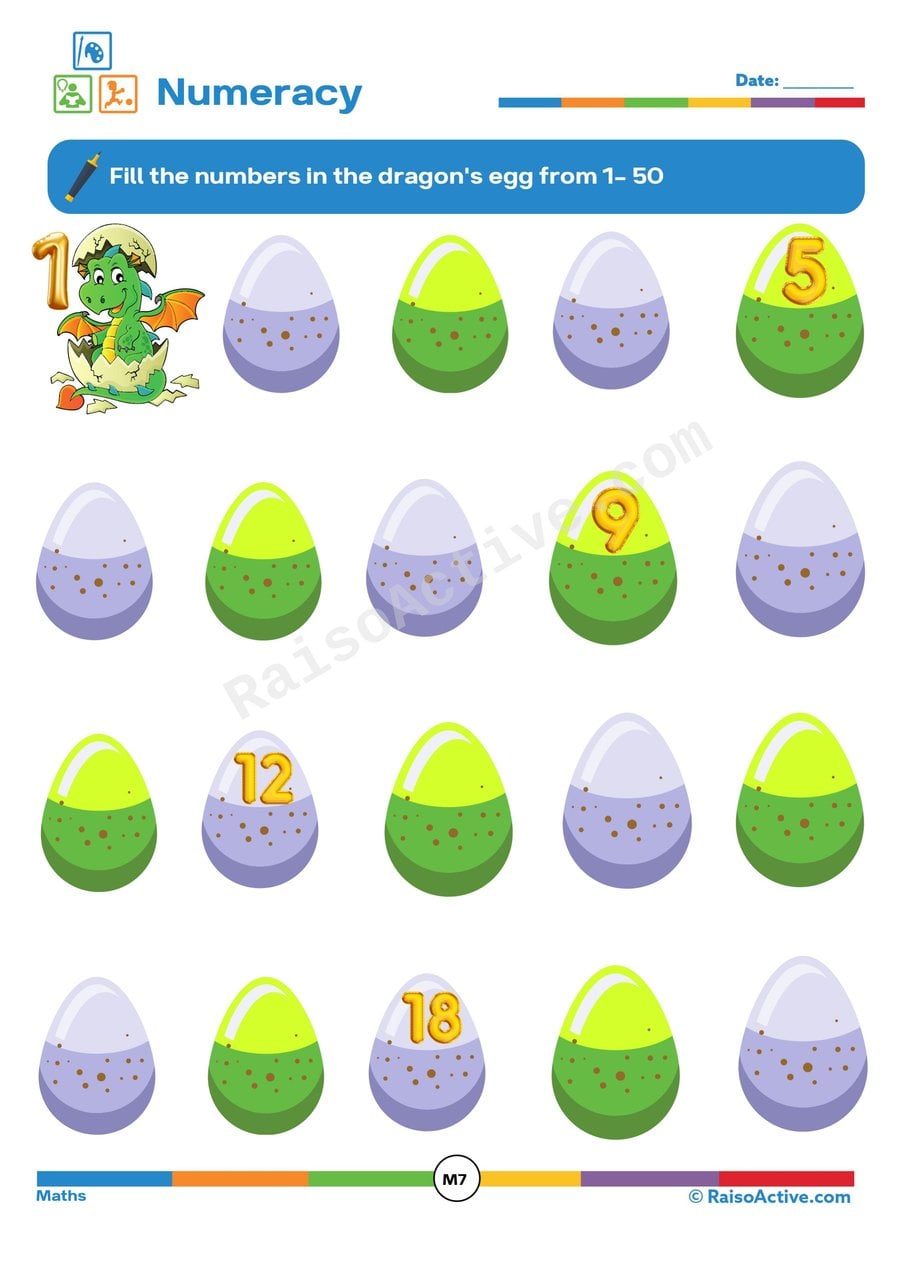
Dragon Egg Numbers: Counting to 50 Worksheet
Ages 4-6 · Pre-K–KindergartenAges 4-6 · Reception–Year 1Ages 4-6 · LKG–UKGAges 4-6
Filling in the missing numbers across a run of dragon eggs stretches a 4-6 year old's counting range well past the more common 1-20 practice, into territory where number patterns — like how every decade starts a new '_1, _2, _3' pattern — start to become visible. It's a strong bridge activity between rote counting and genuinely understanding how the number system is built.
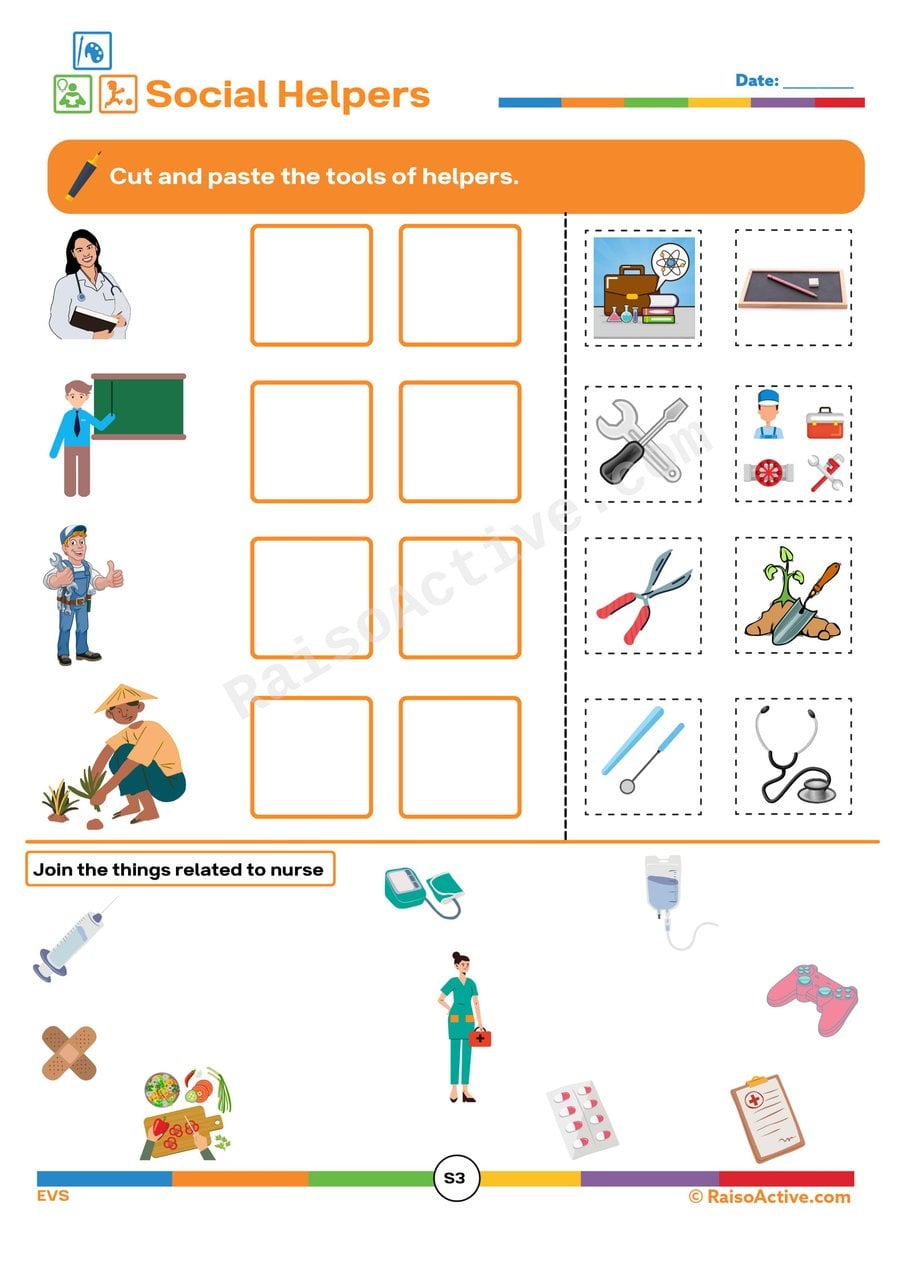
Social Helpers Tools Worksheet for Kids
Ages 3-5 · Preschool–Pre-KAges 3-5 · Nursery–ReceptionAges 3-5 · Nursery–LKGAges 3-5
This worksheet teaches children ages 3-5 to connect community helpers with the tools and equipment they use in their jobs, building early social studies knowledge alongside visual matching skills. Recognizing that a stethoscope belongs to a doctor or a hose belongs to a firefighter helps children understand how tools relate to specific roles and responsibilities in their community. The cut-and-paste and joining activities also reinforce fine motor control and visual discrimination as children sort similar-looking small pictures.
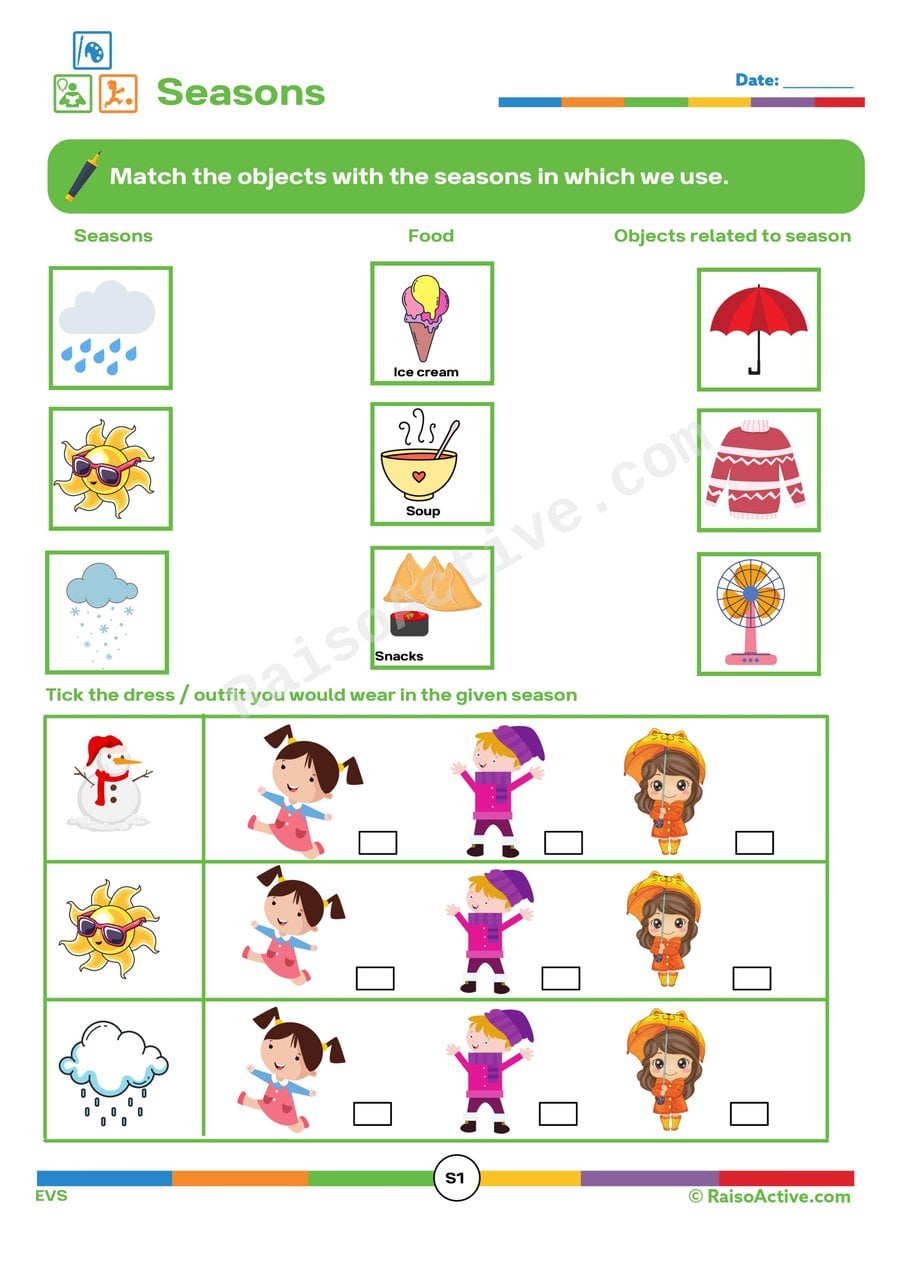
Seasons Matching Worksheet for Preschoolers
Ages 3-5 · Preschool–Pre-KAges 3-5 · Nursery–ReceptionAges 3-5 · Nursery–LKGAges 3-5
Understanding that different seasons bring different weather, clothing, and activities is an early science and life-skills concept for children ages 3-5, and this worksheet builds that understanding by having them match objects to the correct season and consider what they'd wear in each. Making these connections requires observation and categorization skills, since a child has to recall or reason through why a snowman belongs with winter or shorts belong with summer rather than simply memorizing a fixed answer. This kind of seasonal reasoning also lays groundwork for later science topics like weather patterns and the calendar year.
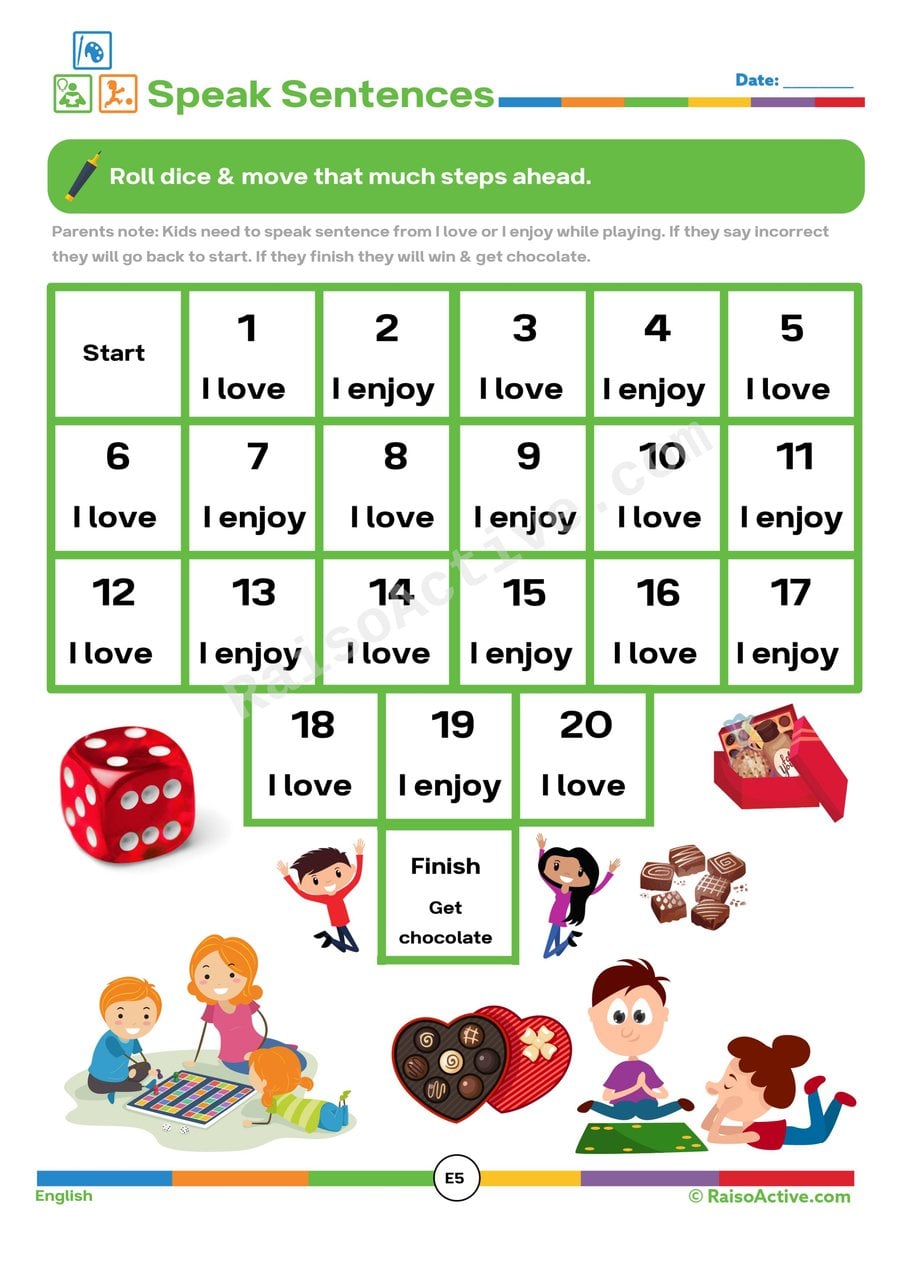
I Love or I Enjoy Sentences Worksheet for Kids
Ages 3-5 · Preschool–Pre-KAges 3-5 · Nursery–ReceptionAges 3-5 · Nursery–LKGAges 3-5
This board-game-style worksheet helps children ages 3-5 practice building and speaking simple sentences using the openers 'I love' or 'I enjoy', an early step toward oral sentence construction that later supports writing. Rolling a dice and moving along a path adds a playful, low-pressure format to what is otherwise a speaking exercise, keeping young children motivated through repetition. Saying a full sentence aloud, rather than just a single word, helps children practice sequencing subject, verb, and object in the correct order.

Days of the Week Cut and Paste Worksheet for Preschoolers
Ages 3-5 · Preschool–Pre-KAges 3-5 · Nursery–ReceptionAges 3-5 · Nursery–LKGAges 3-5
This worksheet teaches children ages 3-5 the order of the days of the week by having them cut out day names and paste them correctly under 'Yesterday', 'Today', and 'Tomorrow'. Understanding this relative time sequence is an important early step in developing time concepts, and the physical cut-and-paste format makes an abstract idea like 'yesterday' more concrete and hands-on.
Related worksheets
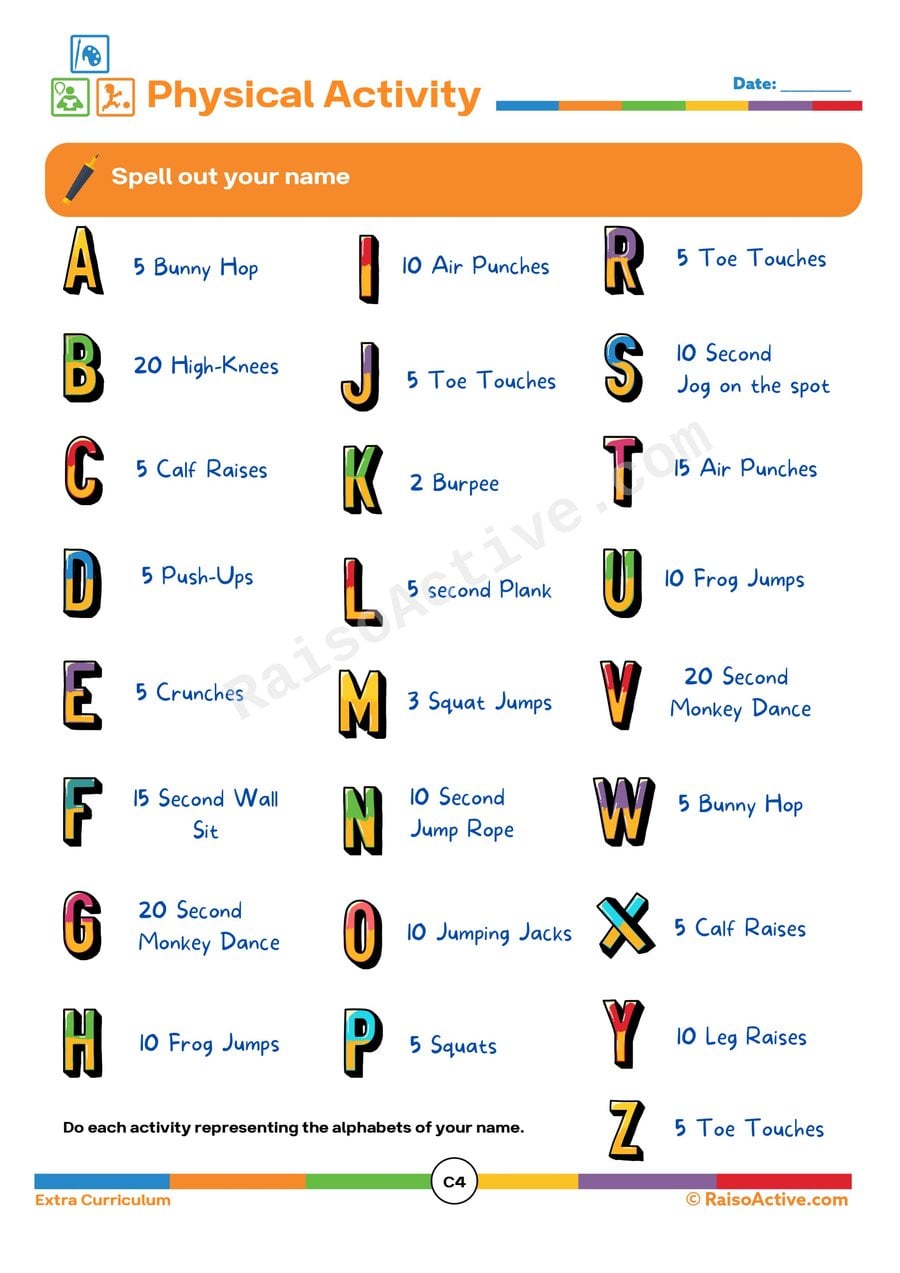
Physical Activity Worksheet: Spell Your Name!
Ages 3-5 · Preschool–Pre-KAges 3-5 · Nursery–ReceptionAges 3-5 · Nursery–LKGAges 3-5
This worksheet turns spelling practice into a physical activity by pairing each letter of the alphabet with a specific exercise, so children spell their name while getting active movement in between. For ages 3-5, connecting letter recognition to gross motor movement supports both early literacy and physical development at once, appealing especially to kinesthetic learners.

Simon Says: Follow the Instructions and Get Moving!
Ages 3-5 · Preschool–Pre-KAges 3-5 · Nursery–ReceptionAges 3-5 · Nursery–LKGAges 3-5
This worksheet turns the classic listening game into a written record, having children track which Simon Says instructions they followed correctly. For three- to five-year-olds, the game builds gross motor skills like jumping, spinning, and balancing, while also strengthening auditory attention — the ability to listen carefully and act only when the right cue ('Simon says') is given.

Caterpillar Activity Worksheet: Follow Instructions and Move!
Ages 3-5 · Preschool–Pre-KAges 3-5 · Nursery–ReceptionAges 3-5 · Nursery–LKGAges 3-5
This worksheet helps children ages 3-5 practice following multi-step instructions while getting active, as they move along a caterpillar's body and perform a different physical action in each circle, such as jumping or spinning. Combining movement with sequential instructions builds gross motor skills, listening comprehension, and the ability to hold a sequence of directions in mind.
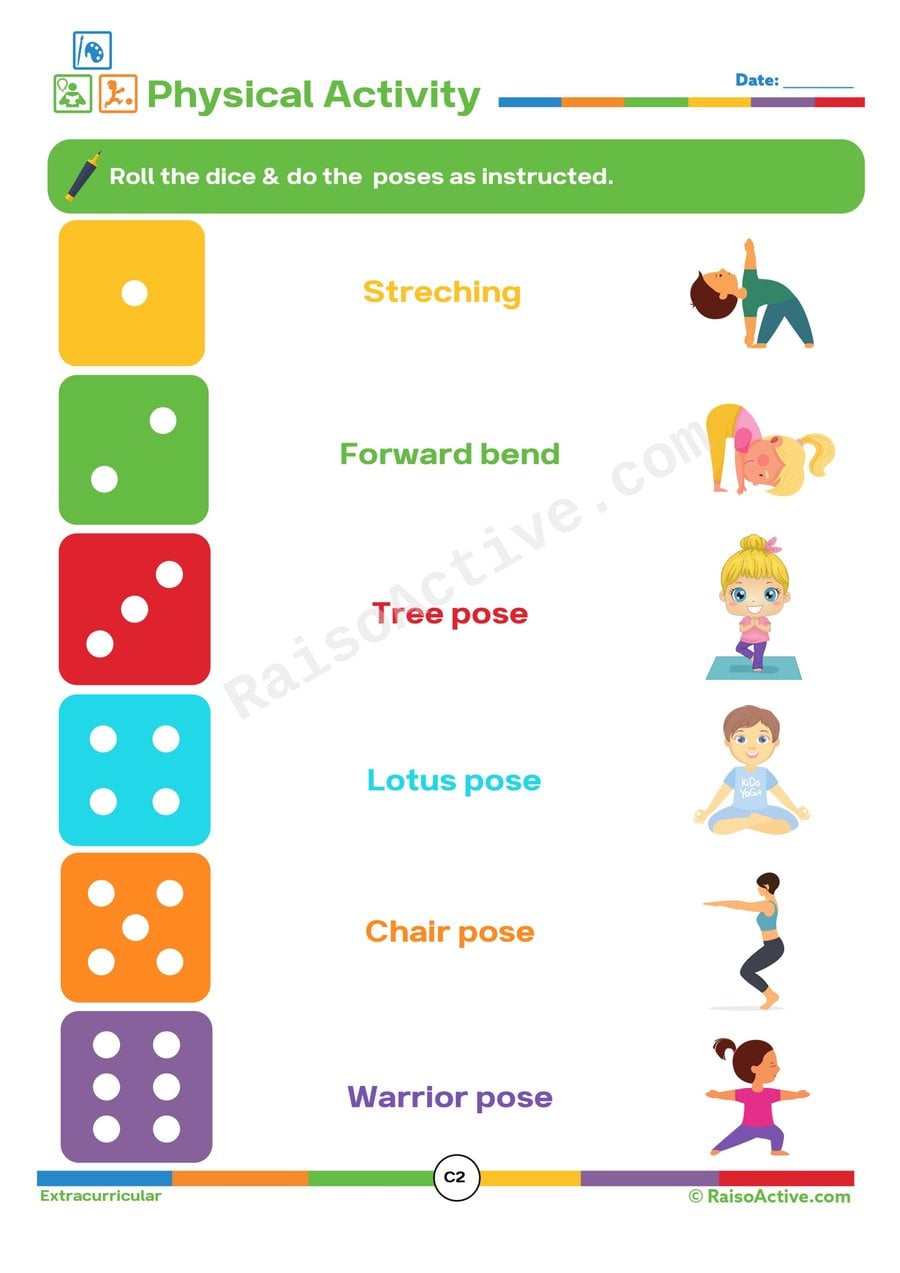
Physical Activity Dice Game: Yoga Poses for Kids!
Ages 3-5 · Preschool–Pre-KAges 3-5 · Nursery–ReceptionAges 3-5 · Nursery–LKGAges 3-5
Rolling a dice and matching the number to a yoga pose introduces children ages 3-5 to basic gross motor movement and body control in a playful, game-based format, while also reinforcing number recognition through the dice roll itself. Practicing simple yoga poses like this builds balance, body awareness, and an early habit of calm, mindful movement.
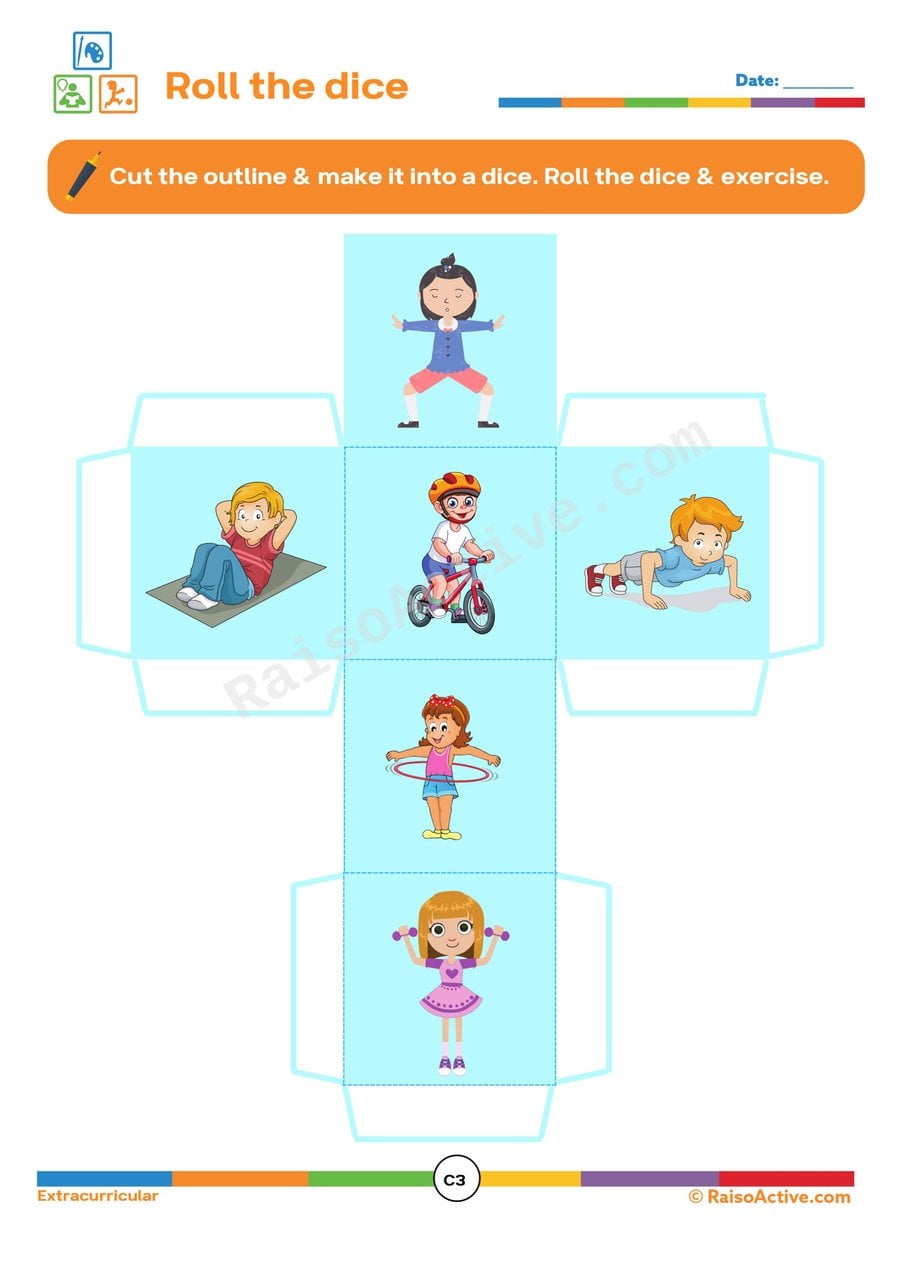
Roll the Dice Exercise Worksheet for Kids
Ages 3-5 · Preschool–Pre-KAges 3-5 · Nursery–ReceptionAges 3-5 · Nursery–LKGAges 3-5
This worksheet gets children ages 3-5 moving as they assemble a paper dice, roll it, and perform whichever physical exercise lands face-up, combining gross motor development with basic probability and turn-taking. Following a picture-based instruction and translating it into a physical action also builds the same instruction-following skill children need for classroom directions.
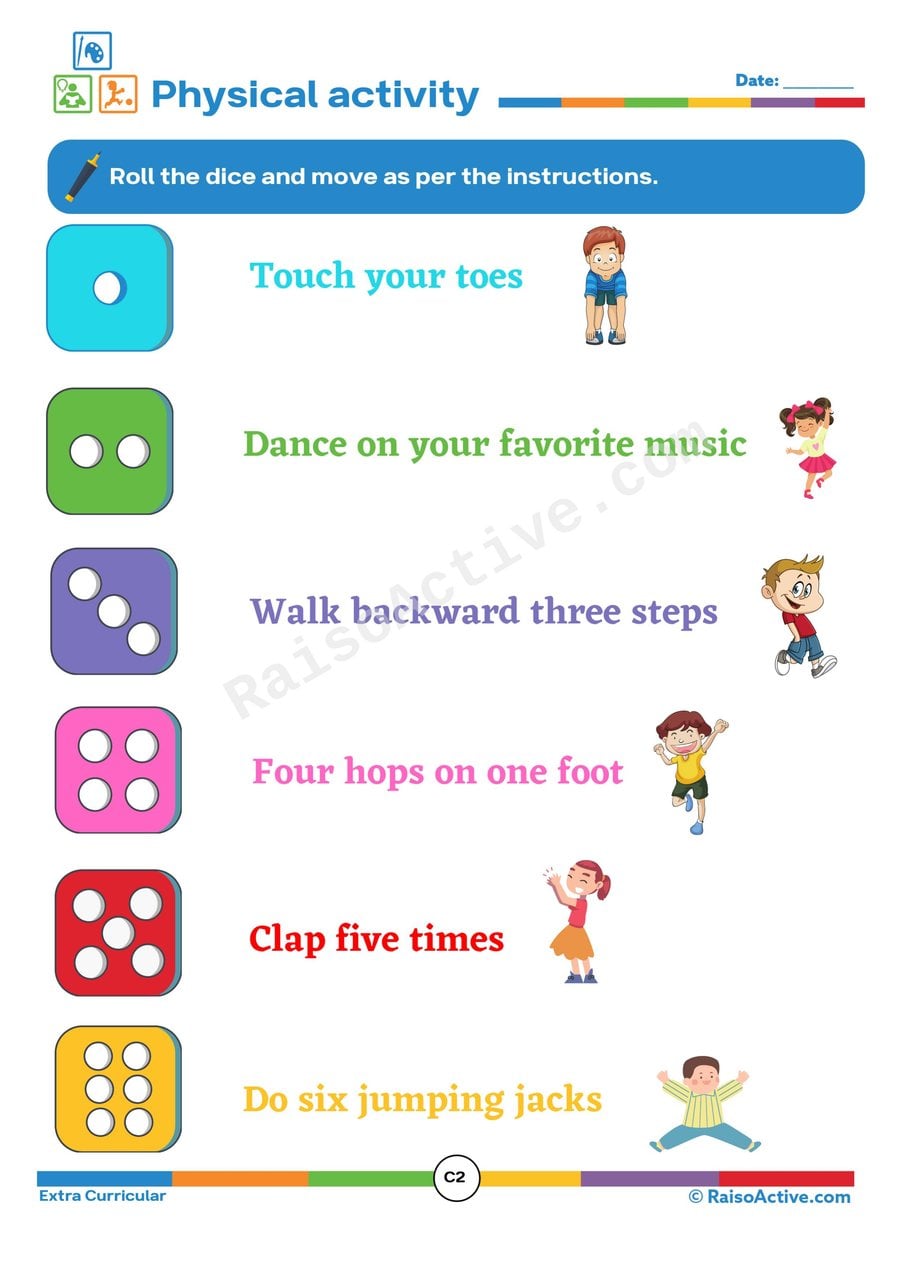
Physical Activity Dice Game Worksheet for Kids
Ages 3-5 · Preschool–Pre-KAges 3-5 · Nursery–ReceptionAges 3-5 · Nursery–LKGAges 3-5
Rolling a die and performing the matching action builds gross motor skills and number recognition together for children ages 3-5, since they must first read the number rolled before they can act on it. Following the sequence of steps also strengthens listening comprehension and the ability to carry out multi-step instructions.

Roll & Move Activity: Fun Physical Activity Cube for Kids!
Ages 3-5 · Preschool–Pre-KAges 3-5 · Nursery–ReceptionAges 3-5 · Nursery–LKGAges 3-5
This cut-and-fold craft combines fine motor skills with gross motor movement, as children build a paper cube featuring different physical actions and then roll it to determine which activity to perform. For ages 3-5, following multi-step folding and gluing instructions builds spatial reasoning and sequencing, while the resulting game encourages active movement and following simple rules.

Lock and Key Matching Worksheet for Preschoolers
Ages 3-5 · Preschool–Pre-KAges 3-5 · Nursery–ReceptionAges 3-5 · Nursery–LKGAges 3-5
Matching each key to the lock sharing the same letter helps children ages 3-5 practice letter recognition in a playful, puzzle-like context rather than rote drilling. Because each key must be checked against several similar-looking locks before finding the right match, this worksheet also builds visual scanning and careful comparison skills that support problem-solving.
Guides for this topic

Best Worksheets for 3-Year-Olds: What Works and What to Avoid
What works on worksheets for 3-year-olds: short sessions, crayons, tracing lines, matching, cutting, a free weekly plan, and signs one is too advanced.

Age-Appropriate Problem-Solving Activities: Building Critical Thinkers from the Ground Up
Discover fun, age-appropriate problem-solving activities for children ages 1-8. Build critical thinking, logic, and reasoning skills through play-based learning.
Critical Thinking Activities That Actually Work for Young Children: Building Tomorrow's Thinkers Today
Discover proven critical thinking activities for young children. Age-wise logic games, questioning techniques, and hands-on ideas to build thinking skills at home.
Reviews
Every worksheet for ages 4–6, no watermark
Members download the full library of 1,000+ worksheets and every activity pack without watermarks or daily limits. One year costs ₹999 in India or $20 elsewhere.
See membership plansOr download any worksheet free with a watermark (5 a day).