Caterpillar Activity Worksheet: Follow Instructions and Move!
This worksheet helps children ages 3-5 practice following multi-step instructions while getting active, as they move along a caterpillar's body and perform a different physical action in each circle, such as jumping or spinning. Combining movement with sequential instructions builds gross motor skills, listening comprehension, and the ability to hold a sequence of directions in mind.

Part of the pack
Month 12: Learning & Development | Ages Up to 4
This is page 29 of the pack. Ages 2-4 · PreschoolAges 2-4 · NurseryAges 2-4
Curriculum
- Physical Education > Physical Activity
How to use this worksheet
Look at the caterpillar together and point to the first circle, reading or describing the action shown, like 'hop three times.' Have your child perform that action before moving to the next circle in the caterpillar's body. Continue along the caterpillar segment by segment, performing each action fully before moving to the next one. Once your child reaches the caterpillar's head, celebrate finishing the whole sequence of movements.
Materials needed
- None
Extension activities
- 1Create your own caterpillar with new movement ideas your child suggests, like 'crawl like a crab.'
- 2Turn the activity into a group game, taking turns performing the actions with friends or siblings.
- 3Make a paper caterpillar craft and color it after completing the movement activity.
- 4Time how long it takes to complete the whole caterpillar and try to beat that time on a repeat round.

Written by
Hemsweta Jain · Teacher Cheena
MBA and Early Childhood Educator, teaching since 2014 · Founder of RaisoActive, Mumbai
Every RaisoActive worksheet is designed and checked by the founder before publishing.
Published · Last reviewed
More from Month 12: Learning & Development | Ages Up to 4

Phonics Worksheet: Write the First Letter and Draw!
Ages 3-5 · Preschool–Pre-KAges 3-5 · Nursery–ReceptionAges 3-5 · Nursery–LKGAges 3-5
Identifying the first letter of a pictured object's name and writing it down builds phonemic awareness and letter-formation practice for children ages 3-5, while the follow-up drawing task builds creative thinking and fine motor control.

Number Path Adventure: Write Numbers 1-20 Worksheet
Ages 4-6 · Pre-K–KindergartenAges 4-6 · Reception–Year 1Ages 4-6 · LKG–UKGAges 4-6
Children ages 4-6 practice writing numerals in correct sequence as they fill in missing numbers along a path of stepping stones from 1 to 20. This strengthens number-order memory and numeral formation together, both needed before a child can count on reliably or recognize number patterns like the teens. Following a winding path also adds a light visual-tracking challenge that keeps attention on the correct next stone.

Living or Non-Living? A Fun Sorting Worksheet for Preschoolers
Ages 3-5 · Preschool–Pre-KAges 3-5 · Nursery–ReceptionAges 3-5 · Nursery–LKGAges 3-5
This sorting worksheet introduces children ages 3-5 to one of science's foundational classification concepts: distinguishing living things from non-living things. Deciding whether to tick or cross each picture pushes children to apply criteria — does it grow, move, breathe, or need food — rather than sort by appearance alone, an early form of scientific reasoning. This distinction also builds vocabulary they'll use throughout later nature and biology topics.
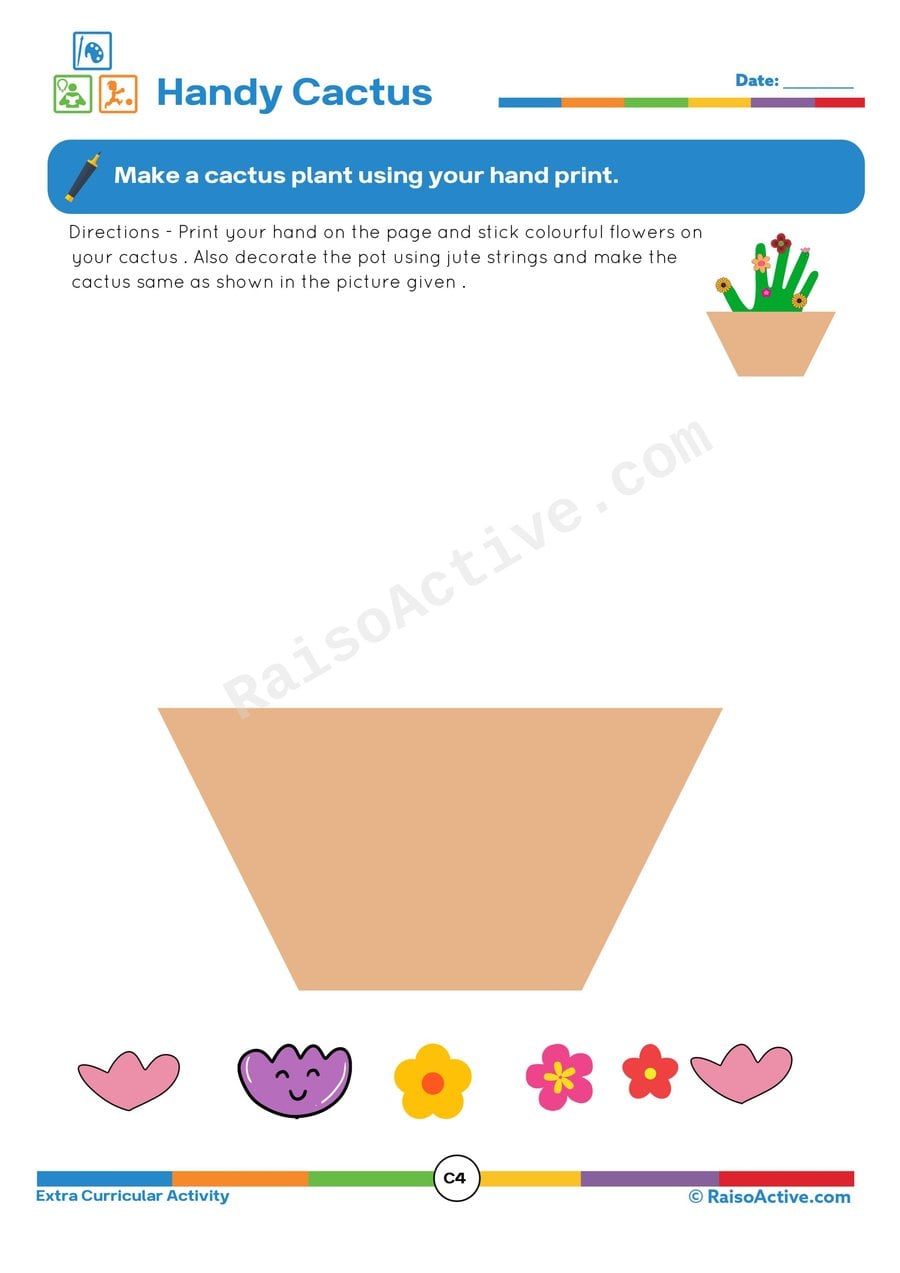
Handprint Cactus Craft Worksheet for Kids
Ages 3-5 · Preschool–Pre-KAges 3-5 · Nursery–ReceptionAges 3-5 · Nursery–LKGAges 3-5
Tracing and decorating a handprint into cactus shapes builds fine motor control and following-directions skills for children ages 3-5, since they must coordinate cutting, gluing, and arranging several craft pieces to match a shown example.

Before and After: Counting and Sequencing Worksheet
Ages 4-6 · Pre-K–KindergartenAges 4-6 · Reception–Year 1Ages 4-6 · LKG–UKGAges 4-6
Spinning a wheel to find the number that follows a given number, then writing it in the 'after' column, builds number sequencing skills for children ages 4-6 while the matching step connects the abstract number to a picture representation.

Parent's Guide: Fun Activities for Early Learners!
Ages 3-5 · Preschool–Pre-KAges 3-5 · Nursery–ReceptionAges 3-5 · Nursery–LKGAges 3-5
This parent's guide bundles several hands-on activities — letter matching, sorting, art, and simple crafts like paper cup animals — that build early literacy, fine motor skills, and creativity for children ages 3-5 through play rather than worksheets.

Many vs. Few: Object Counting Worksheet for Preschoolers
Ages 3-5 · Preschool–Pre-KAges 3-5 · Nursery–ReceptionAges 3-5 · Nursery–LKGAges 3-5
This worksheet builds early quantity comparison skills as children ages 3-5 look at groups of objects and decide whether each group shows 'many' or 'few.' Beyond simple counting, this task develops relative reasoning — understanding that quantity is judged by comparison, not just a fixed number — which lays groundwork for later concepts like greater than and less than. Circling the correct group also reinforces visual scanning and attention to detail.

Domestic Animals Cut and Paste Worksheet for Kids
Ages 3-5 · Preschool–Pre-KAges 3-5 · Nursery–ReceptionAges 3-5 · Nursery–LKGAges 3-5
Children ages 3-5 practice classifying domestic animals by recognizing which animals typically live around a house or garden, building early animal-classification knowledge alongside fine motor cutting and pasting skills. Sorting animals by where they live is a first step toward broader science categorization skills.
Related worksheets
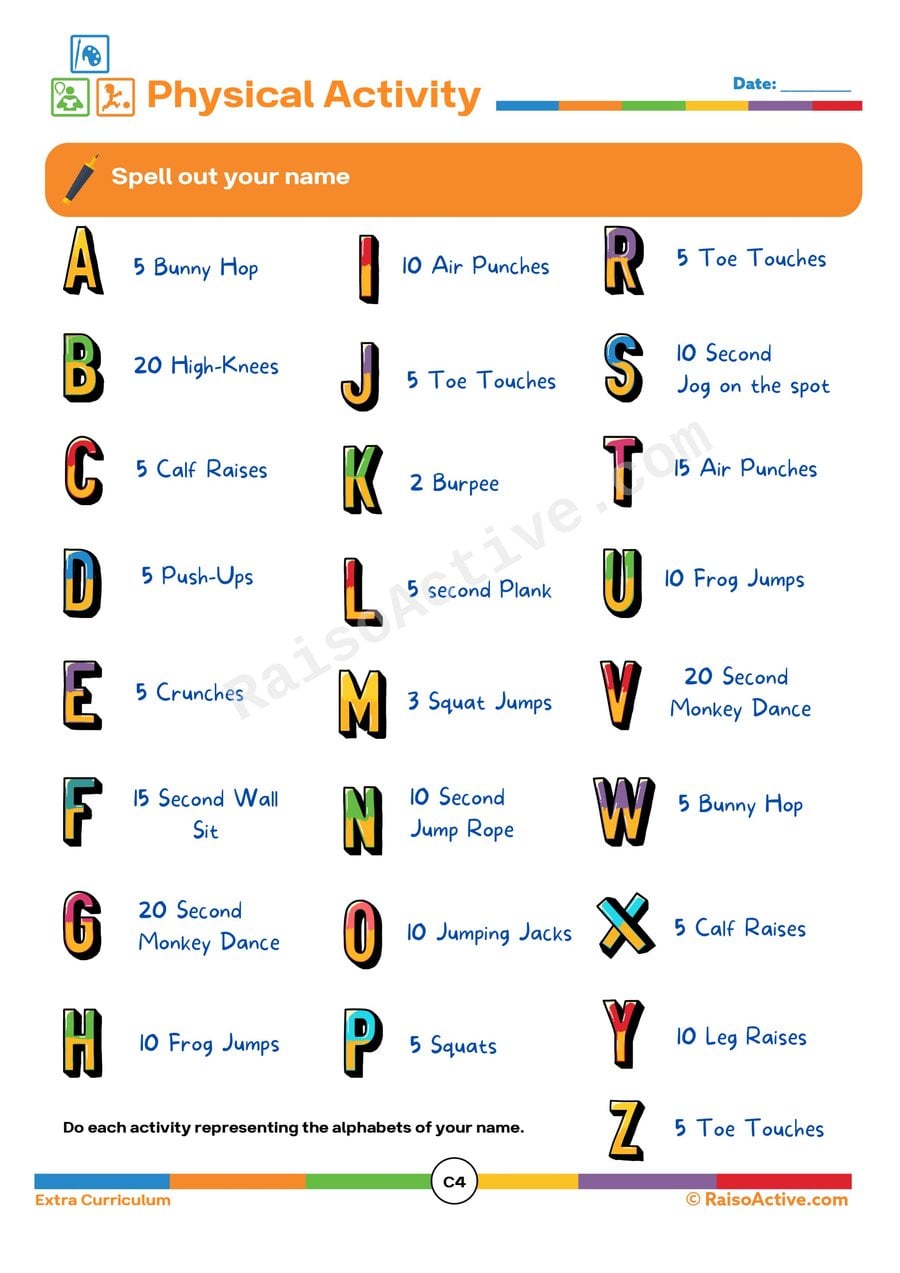
Physical Activity Worksheet: Spell Your Name!
Ages 3-5 · Preschool–Pre-KAges 3-5 · Nursery–ReceptionAges 3-5 · Nursery–LKGAges 3-5
This worksheet turns spelling practice into a physical activity by pairing each letter of the alphabet with a specific exercise, so children spell their name while getting active movement in between. For ages 3-5, connecting letter recognition to gross motor movement supports both early literacy and physical development at once, appealing especially to kinesthetic learners.

Roll & Move Activity: Fun Physical Activity Cube for Kids!
Ages 3-5 · Preschool–Pre-KAges 3-5 · Nursery–ReceptionAges 3-5 · Nursery–LKGAges 3-5
This cut-and-fold craft combines fine motor skills with gross motor movement, as children build a paper cube featuring different physical actions and then roll it to determine which activity to perform. For ages 3-5, following multi-step folding and gluing instructions builds spatial reasoning and sequencing, while the resulting game encourages active movement and following simple rules.

Physical Activity Worksheet for Kids: Identify and Tick!
Ages 4-6 · Pre-K–KindergartenAges 4-6 · Reception–Year 1Ages 4-6 · LKG–UKGAges 4-6
This identify-and-tick worksheet asks children ages 4-6 to sort a row of pictures into 'physical activity' and 'everyday chore' categories, building the classification skills that underlie early scientific thinking. Ticking the correct boxes also reinforces visual discrimination, since children must notice differences in body position and action between, say, jumping and sweeping. At this age, connecting movement with fun helps children start to associate exercise with enjoyment rather than obligation.
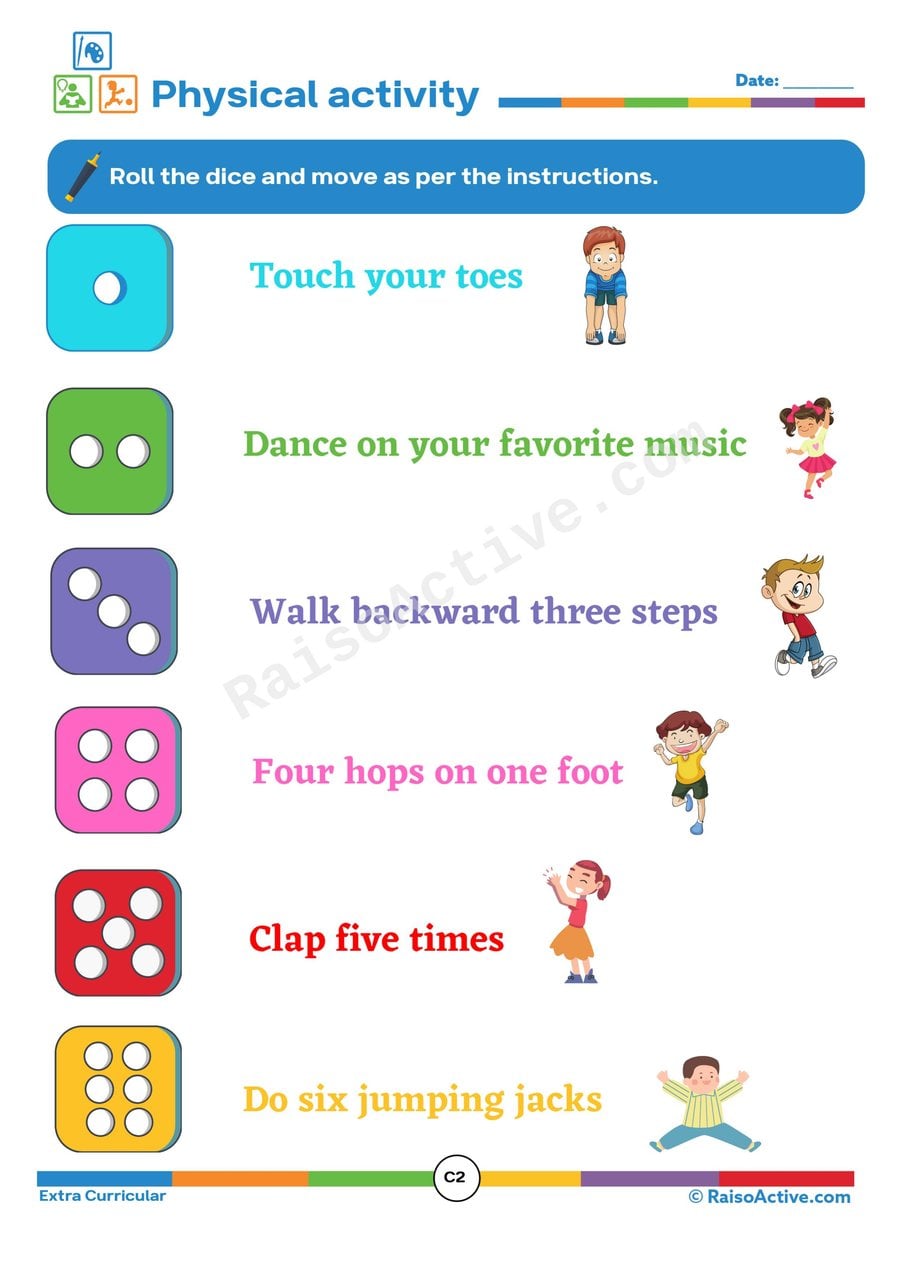
Physical Activity Dice Game Worksheet for Kids
Ages 3-5 · Preschool–Pre-KAges 3-5 · Nursery–ReceptionAges 3-5 · Nursery–LKGAges 3-5
Rolling a die and performing the matching action builds gross motor skills and number recognition together for children ages 3-5, since they must first read the number rolled before they can act on it. Following the sequence of steps also strengthens listening comprehension and the ability to carry out multi-step instructions.
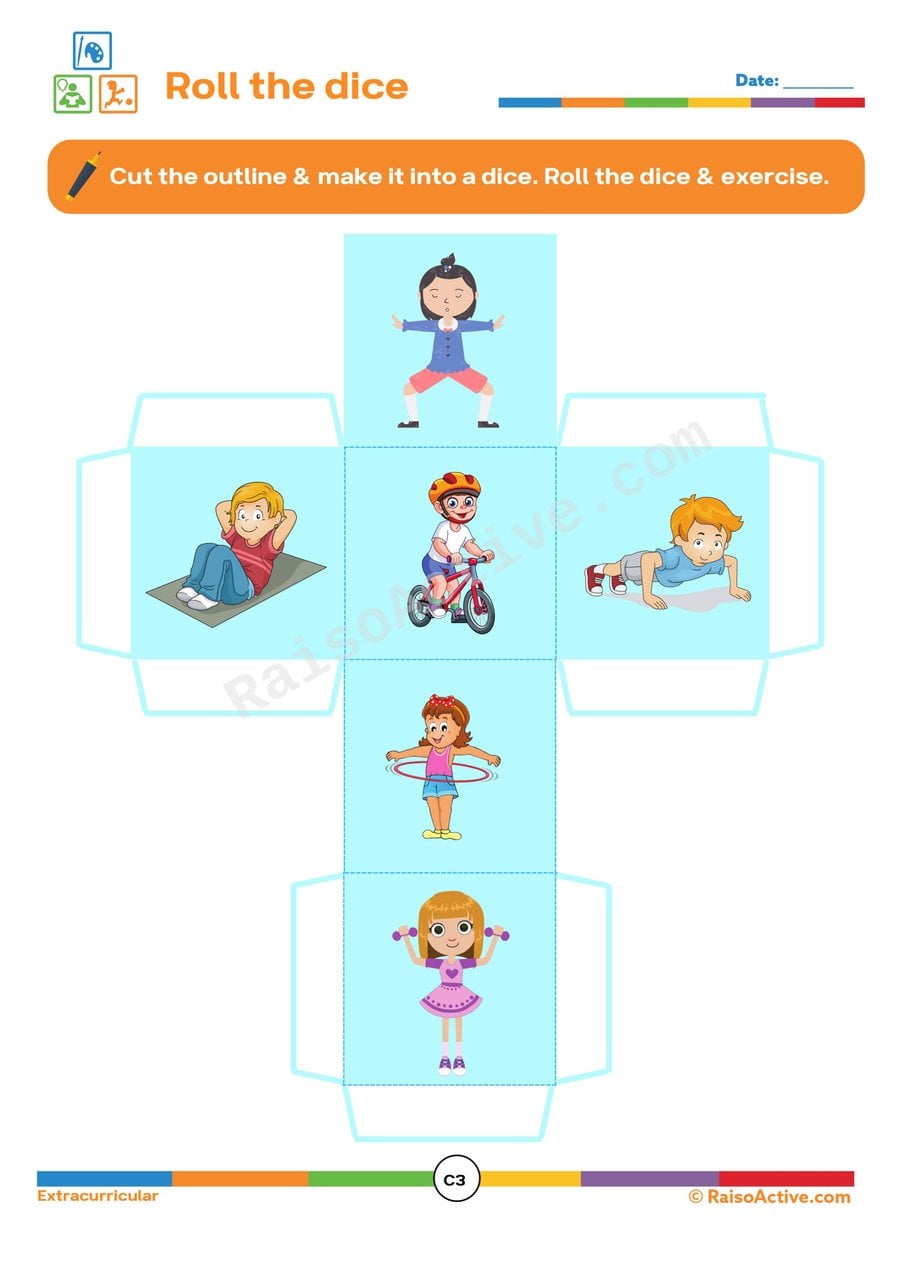
Roll the Dice Exercise Worksheet for Kids
Ages 3-5 · Preschool–Pre-KAges 3-5 · Nursery–ReceptionAges 3-5 · Nursery–LKGAges 3-5
This worksheet gets children ages 3-5 moving as they assemble a paper dice, roll it, and perform whichever physical exercise lands face-up, combining gross motor development with basic probability and turn-taking. Following a picture-based instruction and translating it into a physical action also builds the same instruction-following skill children need for classroom directions.

Simon Says: Follow the Instructions and Get Moving!
Ages 3-5 · Preschool–Pre-KAges 3-5 · Nursery–ReceptionAges 3-5 · Nursery–LKGAges 3-5
This worksheet turns the classic listening game into a written record, having children track which Simon Says instructions they followed correctly. For three- to five-year-olds, the game builds gross motor skills like jumping, spinning, and balancing, while also strengthening auditory attention — the ability to listen carefully and act only when the right cue ('Simon says') is given.
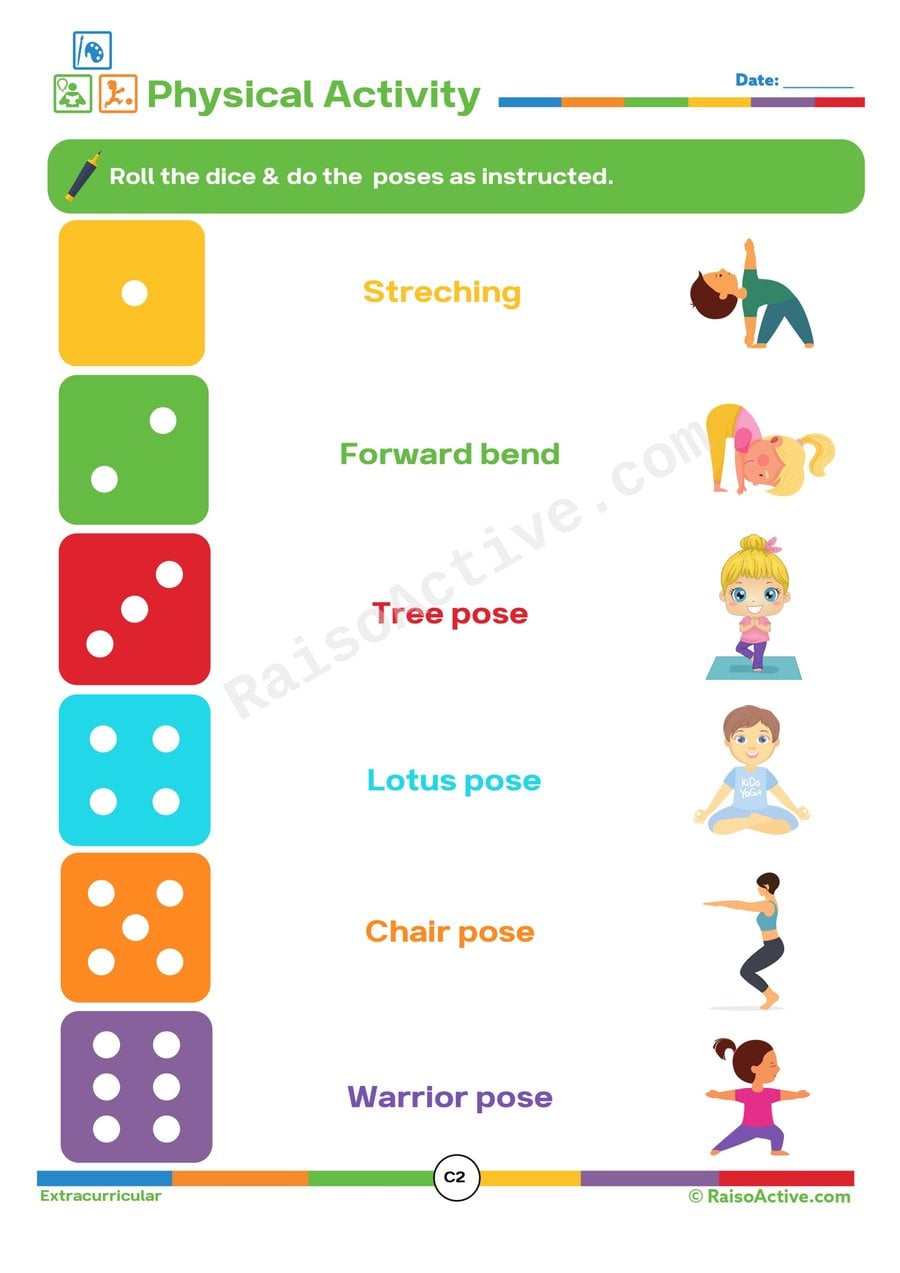
Physical Activity Dice Game: Yoga Poses for Kids!
Ages 3-5 · Preschool–Pre-KAges 3-5 · Nursery–ReceptionAges 3-5 · Nursery–LKGAges 3-5
Rolling a dice and matching the number to a yoga pose introduces children ages 3-5 to basic gross motor movement and body control in a playful, game-based format, while also reinforcing number recognition through the dice roll itself. Practicing simple yoga poses like this builds balance, body awareness, and an early habit of calm, mindful movement.
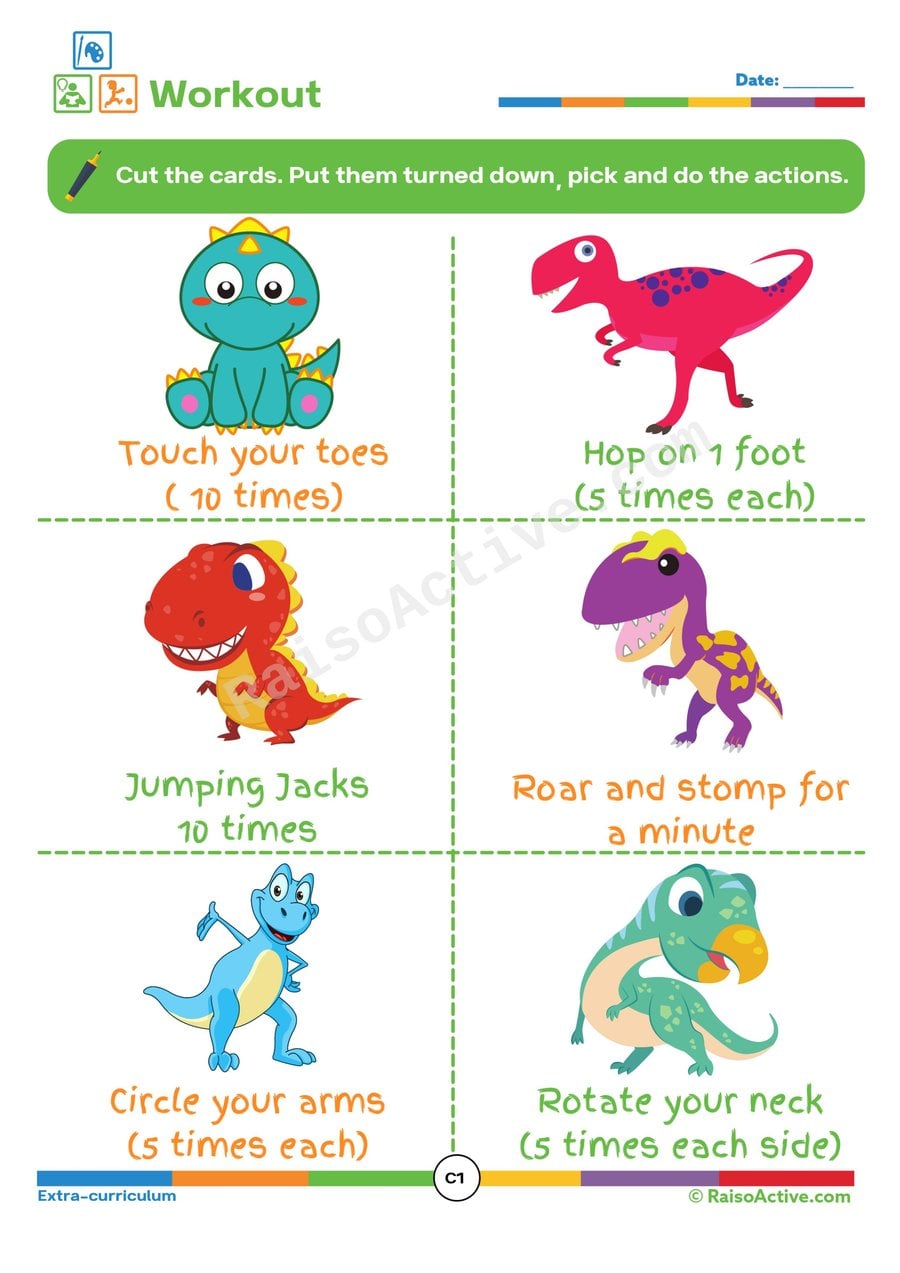
Dino Workout: Fun Exercise Worksheet for Kids!
Ages 3-5 · Preschool–Pre-KAges 3-5 · Nursery–ReceptionAges 3-5 · Nursery–LKGAges 3-5
This dinosaur-themed activity gets 3-5 year olds moving, which is exactly what this age group needs for developing gross motor skills, body awareness, and balance — abilities that don't come from sitting at a table. Following each exercise card as instructed also builds the ability to interpret a picture prompt and translate it into a physical action, a form of following directions that's harder than it sounds for young children still developing self-regulation.
Guides for this topic

Learning Activities That Work: A Comprehensive Guide for Children with ADHD
Discover hands-on, movement-based learning activities that genuinely work for children with ADHD. Practical tips for Indian parents and educators, ages 1-8.
Beyond Worksheets: Engaging Alternatives for Your 5-Year-Old Who Refuses Paper-and-Pencil Activities
Discover practical, research-backed alternatives when your 5-year-old refuses worksheets. Hands-on activities, sensory play, and movement-based learning that build the same skills.
Help! My Child Won't Sit Still for Learning Activities — A Parent's Complete Guide
Is your child unable to sit still for learning? Discover the developmental science behind why movement IS learning, plus practical strategies for active kids aged 1–8.
Reviews
Every worksheet for ages 3–5, no watermark
Members download the full library of 1,000+ worksheets and every activity pack without watermarks or daily limits. One year costs ₹999 in India or $20 elsewhere.
See membership plansOr download any worksheet free with a watermark (5 a day).