
Trace and Count: Number 8 Worksheet for Preschoolers
This worksheet has children ages 3-5 trace the number 8, a shape made of two connected loops stacked on top of each other, one of the most visually complex early numerals to write neatly. Circling exactly eight cars from a larger group builds on the precise counting skill of stopping at the right quantity rather than counting everything shown. Because 8 shares the double-loop structure with letters like B, practicing this stroke also supports future handwriting beyond just numbers.
Curriculum
How to use this worksheet
Point to the dotted number 8 and demonstrate tracing it as one continuous curving motion, showing how the top loop and bottom loop connect in the middle without lifting the pencil. Have your child trace several guided 8s, then count the row of cars together out loud, circling exactly eight with a pencil or crayon. Recount the circled group afterward to make sure the total lands on eight.
Materials needed
- Pencil
- Crayons
Extension activities
- •Have your child find 8 objects around the house, like toy cars or blocks, and count them together.
- •Encourage your child to draw 8 of their favorite things on a piece of paper.
- •Practice writing the number 8 in a tray of sand or rice, focusing on the continuous double-loop motion.
- •Play a hopping or clapping game where your child counts to 8 out loud while moving.
Tips for parents and teachers
The double loop of 8 is one of the hardest early numerals to form neatly, so expect the two loops to be uneven in size at first rather than perfectly matched. Watch to see if your child stops circling cars exactly at eight or keeps going, since distinguishing 'how many are shown' from 'circle just eight' takes focused attention. Keep the counting task manageable by covering extra cars with a hand or paper if the full group feels overwhelming.

Written by
Hemsweta Jain · Teacher Cheena
MBA and Early Childhood Educator, teaching since 2014 · Founder of RaisoActive, Mumbai
Every RaisoActive worksheet is designed and checked by the founder before publishing.
Published · Last reviewed
Related worksheets

Trace the Numbers 1-9 Worksheet for Preschoolers
Tracing the numerals 1 through 9 gives children ages 3-5 repeated, guided practice with the specific pencil strokes each number requires, building the fine motor control and muscle memory needed for independent number writing. Because tracing follows a fixed, correct path, it also reinforces accurate numeral recognition, helping children tell visually similar digits apart.
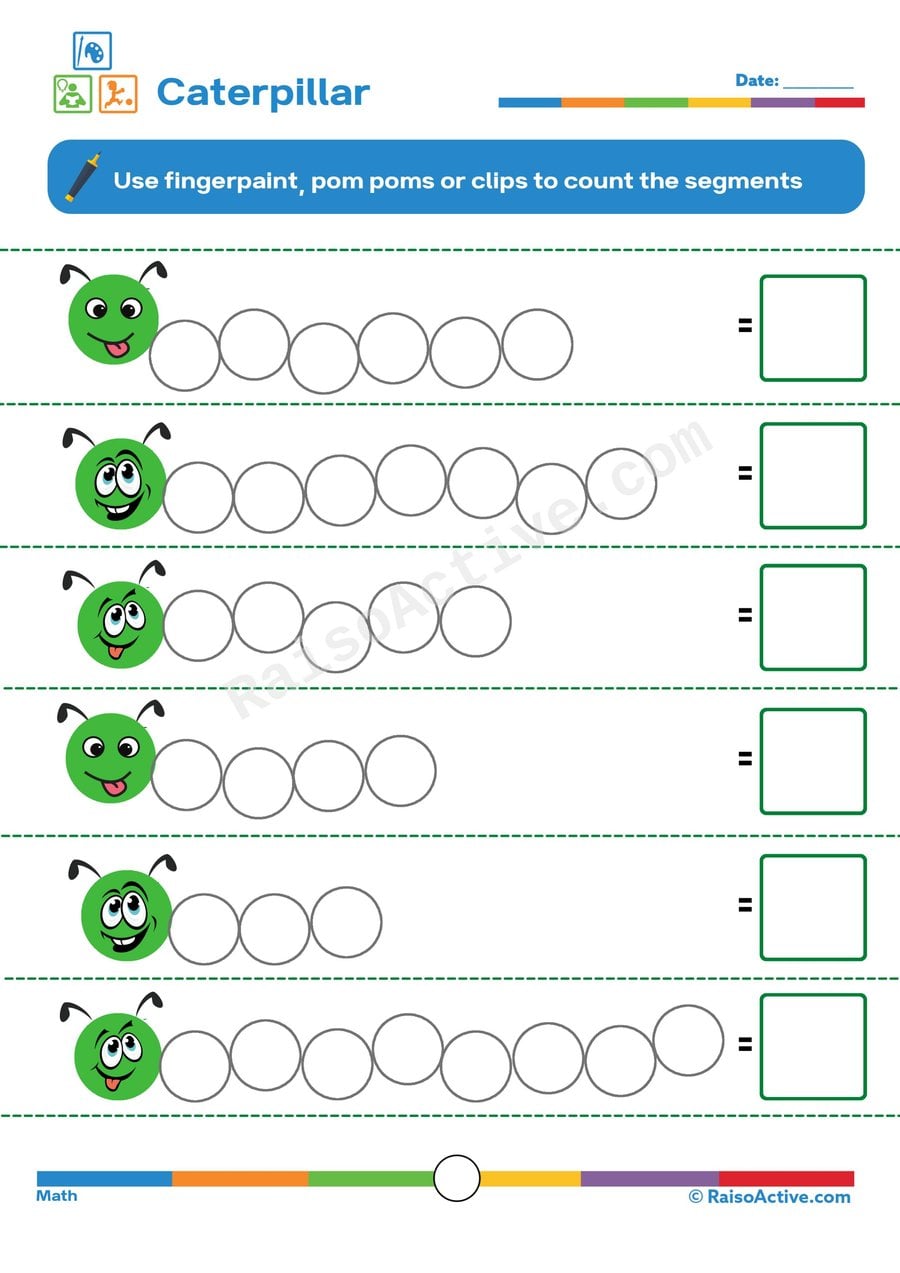
Caterpillar Counting Worksheet for Preschoolers
Counting the segments of each caterpillar teaches children ages 3-5 one-to-one correspondence — touching or marking each segment exactly once while saying a number — which is the core skill underlying accurate counting. Writing the final total in a box also connects the physical act of counting to its written numeral, reinforcing early number-writing practice.
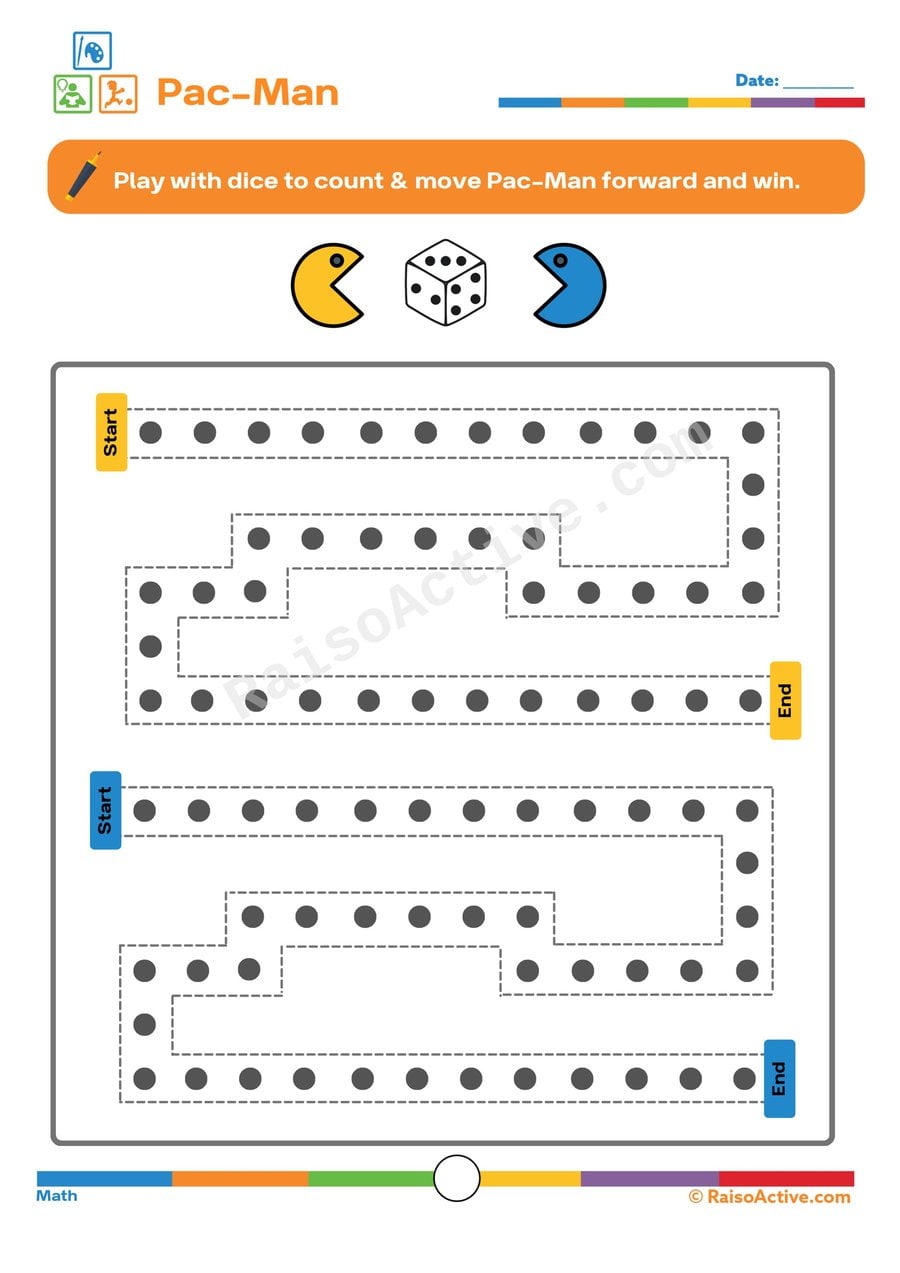
Pac-Man Maze Worksheet: Count and Move!
This dice-driven maze combines counting practice with path-following for children ages 3-5, since they must accurately count dots on a die before moving Pac-Man the matching number of spaces forward. Deciding how far to move and staying on the correct path also builds early strategic thinking, as children track their current position within the maze after each turn.
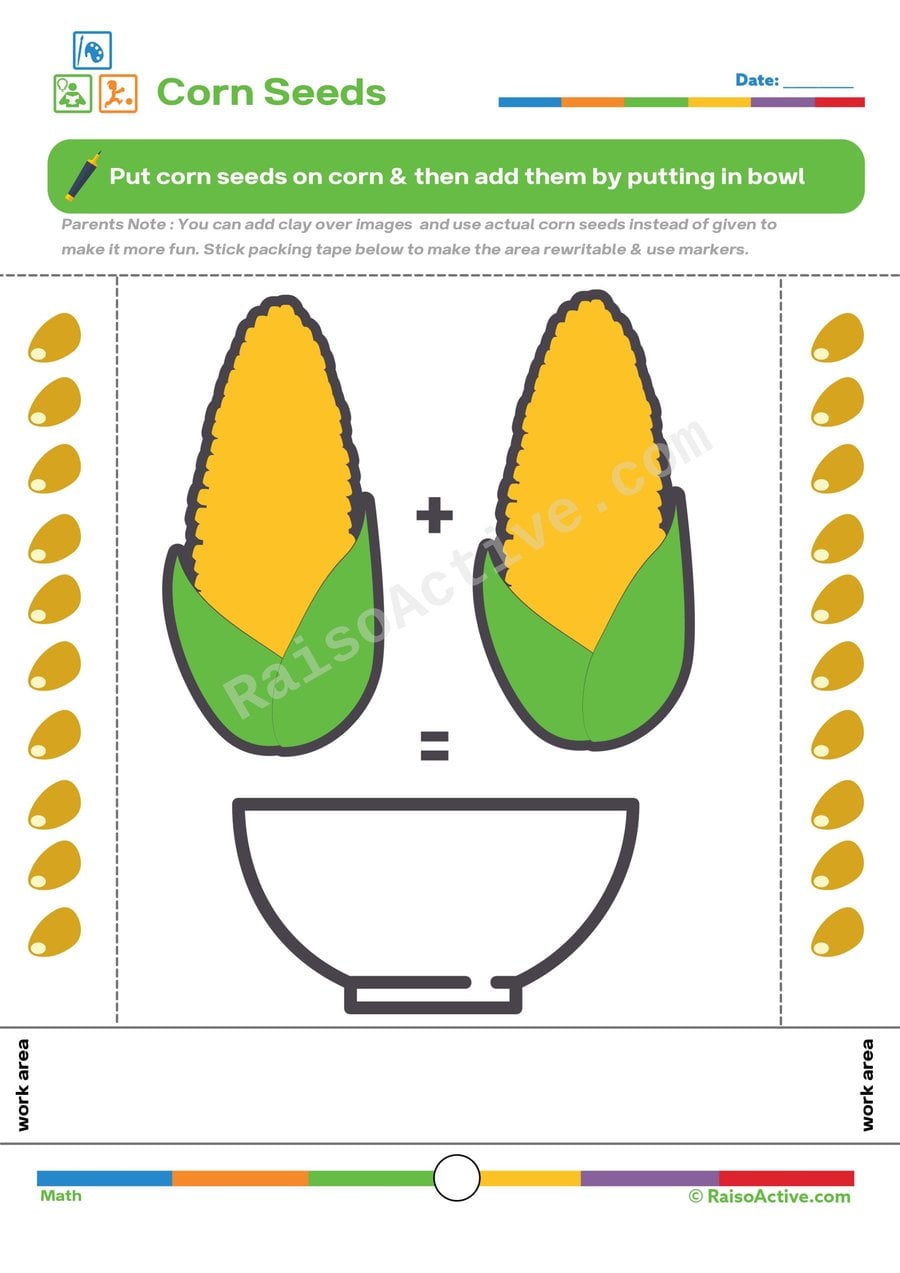
Corn Seed Addition Worksheet for Preschoolers
Counting corn seeds on two ears of corn and combining them into one total teaches children ages 3-5 the core concept of addition as joining groups together, using a concrete, countable image rather than abstract numerals alone. This worksheet also builds one-to-one correspondence, since accurate addition depends on touching or pointing to each seed exactly once while counting.
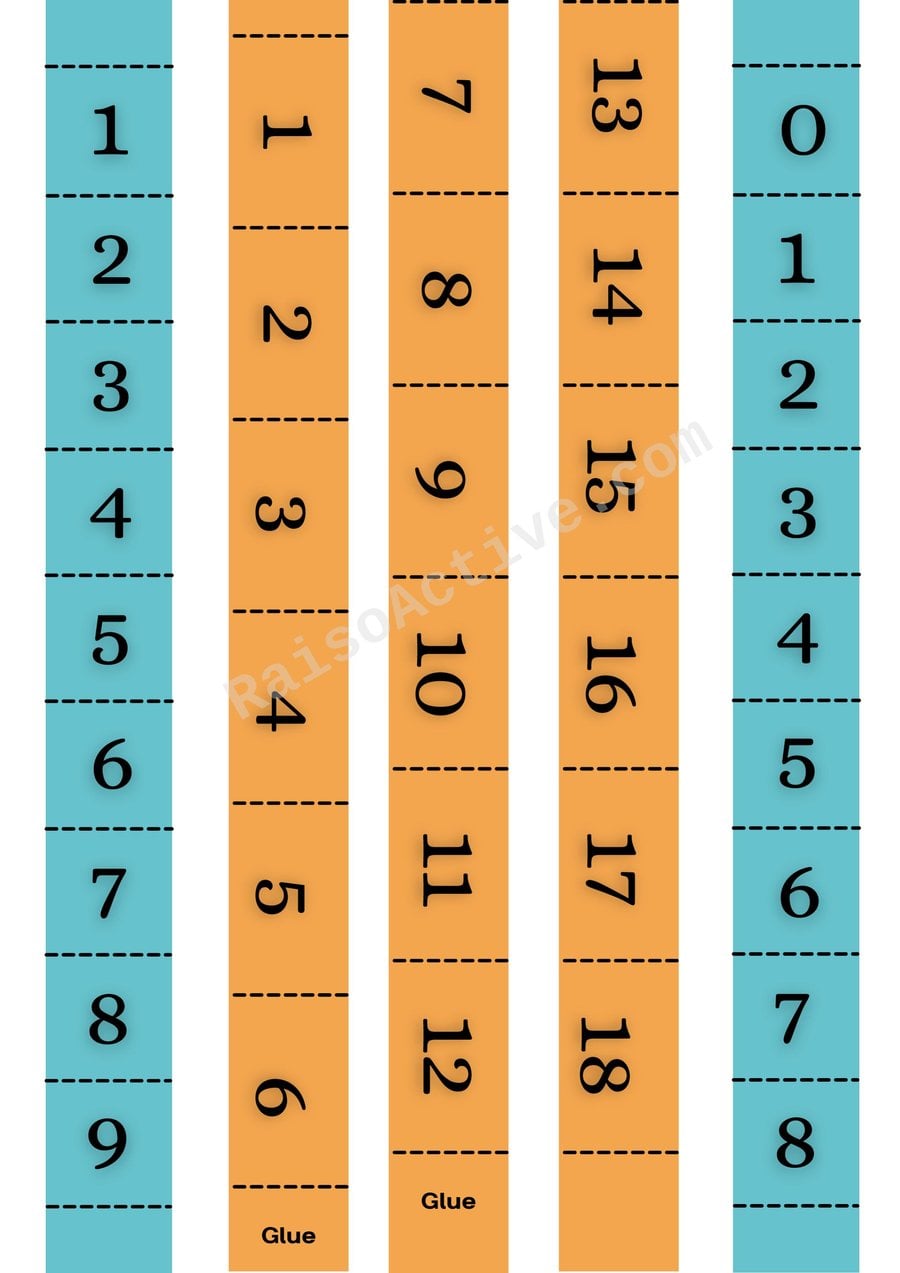
Number Matching Worksheet: 0-18
This activity strengthens numeral recognition for children ages 3-5 by having them find and pair matching numbers from 0 to 18 printed on separate strips. Because the numbers are scattered rather than in order, children must recognize each digit shape on its own rather than relying on counting sequence, which builds true number recognition instead of rote list-reciting.
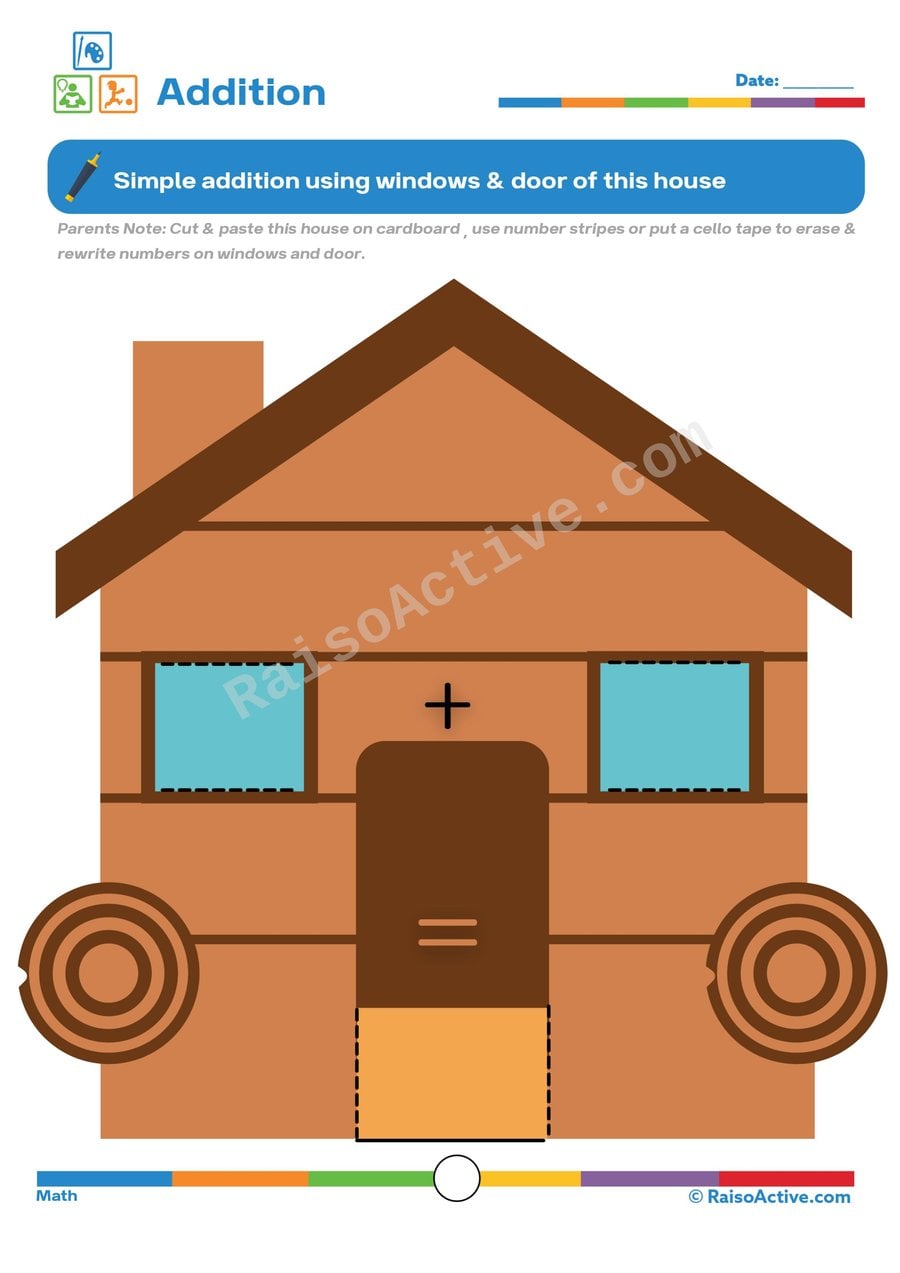
Addition House Worksheet for Preschoolers
This hands-on craft turns simple addition into a reusable game, as children ages 4-5 build a paper house with numbered windows and a door that can be changed with tape or number stripes. Physically swapping numbers to create new addition problems (like 2 windows + 1 door) helps children grasp that addition means combining separate groups into one total, rather than just memorizing facts.

Spring Table Color by Number Worksheet for Preschoolers
This color-by-number worksheet has children ages 3-5 practice matching numerals to a specific color key and then applying that color accurately across a picture, reinforcing both number recognition and one-to-one correspondence between a symbol and an action. Rolling a dice to determine which color to use next also adds an element of chance that keeps the repetitive coloring task engaging.

Easter Egg Color Code Worksheet for Preschoolers
Matching numbers on each Easter egg section to a color key builds number recognition and color-word association in children ages 3-5, since they must hold both a numeral and its assigned color in mind while coloring. This kind of coded coloring activity also strengthens visual scanning, as children need to locate the small numbers printed inside each egg section before choosing the right crayon. Completing the code correctly gives an immediate, visible reward when a colorful, patterned egg emerges from the numbered outline.
Guides for this topic
Number Formation Rhymes 0–9 and How to Fix Reversals
Original number formation rhymes for 0–9, the correct stroke order for each digit, why 3, 5 and 7 get reversed most often, and multisensory fixes that work.
What's the Best Alternative to ABCmouse? A Complete Parent's Guide to Free and Affordable Educational Apps
ABCmouse runs ~Rs 4,000-5,000/year with US spellings and curriculum. Compare free & affordable Indian-friendly apps like Khan Academy Kids and DIKSHA.
Is My Child Ready for Kindergarten? Essential Skills and Honest Assessment
Wondering if your child is ready for Class 1 or kindergarten? Learn the 5 domains of school readiness, what Indian schools look for, and how to support your child at home.
Reviews
Every worksheet for ages 3–5, no watermark
Members download the full library of 1,000+ worksheets and every activity pack without watermarks or daily limits. One year costs ₹1,000 in India or $20 elsewhere.
See membership plansOr download any worksheet free with a watermark (5 a day).