Trace the Moon: A Prewriting Worksheet for Young Learners
Tracing the curved outline of the moon gives children ages 3-6 practice with the smooth, rounded strokes that later support letters like c and o, while the night-sky theme introduces early vocabulary about the moon, stars, and sky. Because the age range spans preschool into early elementary, this worksheet works well for revisiting pencil control at a slightly more advanced level than straight-line tracing alone.
Part of the pack
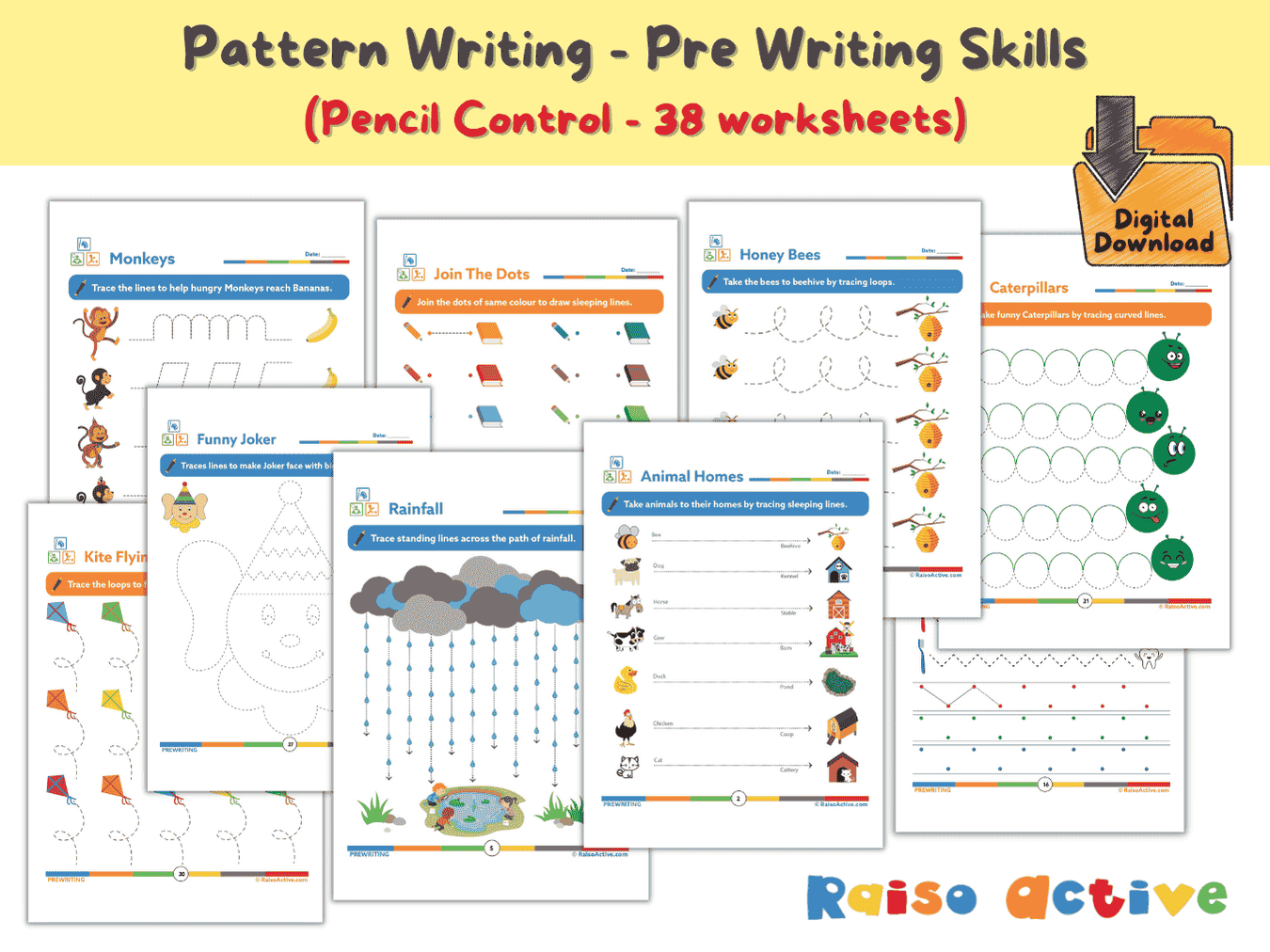
Pattern Writing Pre-writing Skills Activity Book for 3-4 Year Olds
This is page 26 of the pack. Ages 3-4 · PreschoolAges 3-4 · NurseryAges 3-4
Made for your child
A whole activity pack made with their name
60 pages to spot, build, trace and write their own name, plus pages about their favourites, feelings and family. See a free preview with their name.
Make an All About Me packFree preview · free for members
Or start free: a name tracing sheet with their nameCurriculum
- Pre-Writing > Curved Lines
How to use this worksheet
Talk about the moon with your child before starting, asking what they notice about its shape. Guide them to trace the curved outline slowly with a pencil, following the crescent or circular shape shown. Once the outline is traced, let them add details like stars in the surrounding sky or color the moon itself. Look at a picture of the real moon together afterward and compare it to their drawing.
Materials needed
- Pencil
- Crayons
Extension activities
- 1Go outside after dark for a few nights in a row and observe how the moon's shape changes.
- 2Make a paper plate moon phase craft by shading in different amounts of a circle each night.
- 3Use a flashlight and a ball to create moon-shaped shadows on the wall.
- 4Sing a moon or nighttime lullaby together and act out looking up at the sky.
- 5Cut star shapes from yellow paper and glue them around the traced moon to build a night sky scene.

Written by
Hemsweta Jain · Teacher Cheena
MBA and Early Childhood Educator, teaching since 2014 · Founder of RaisoActive, Mumbai
Every RaisoActive worksheet is designed and checked by the founder before publishing.
Published · Last reviewed
More from Pattern Writing Pre-writing Skills Activity Book for 3-4 Year Olds

Climb the Ladder: Pre-Writing Practice Worksheet for Kids
Ages 3-5 · Preschool–Pre-KAges 3-5 · Nursery–ReceptionAges 3-5 · Nursery–LKGAges 3-5
Tracing the rungs of a ladder gives children ages 3-5 focused practice with horizontal and vertical straight lines, the two most basic pencil strokes and the building blocks for letters like L, T, E, F, and H. Because a ladder has repeated, evenly spaced rungs, this worksheet also builds a sense of rhythm and spacing that carries over into writing letters at a consistent size later on.
Fish Hook Tracing Worksheet for Preschoolers
Ages 3-5 · Preschool–Pre-KAges 3-5 · Nursery–ReceptionAges 3-5 · Nursery–LKGAges 3-5
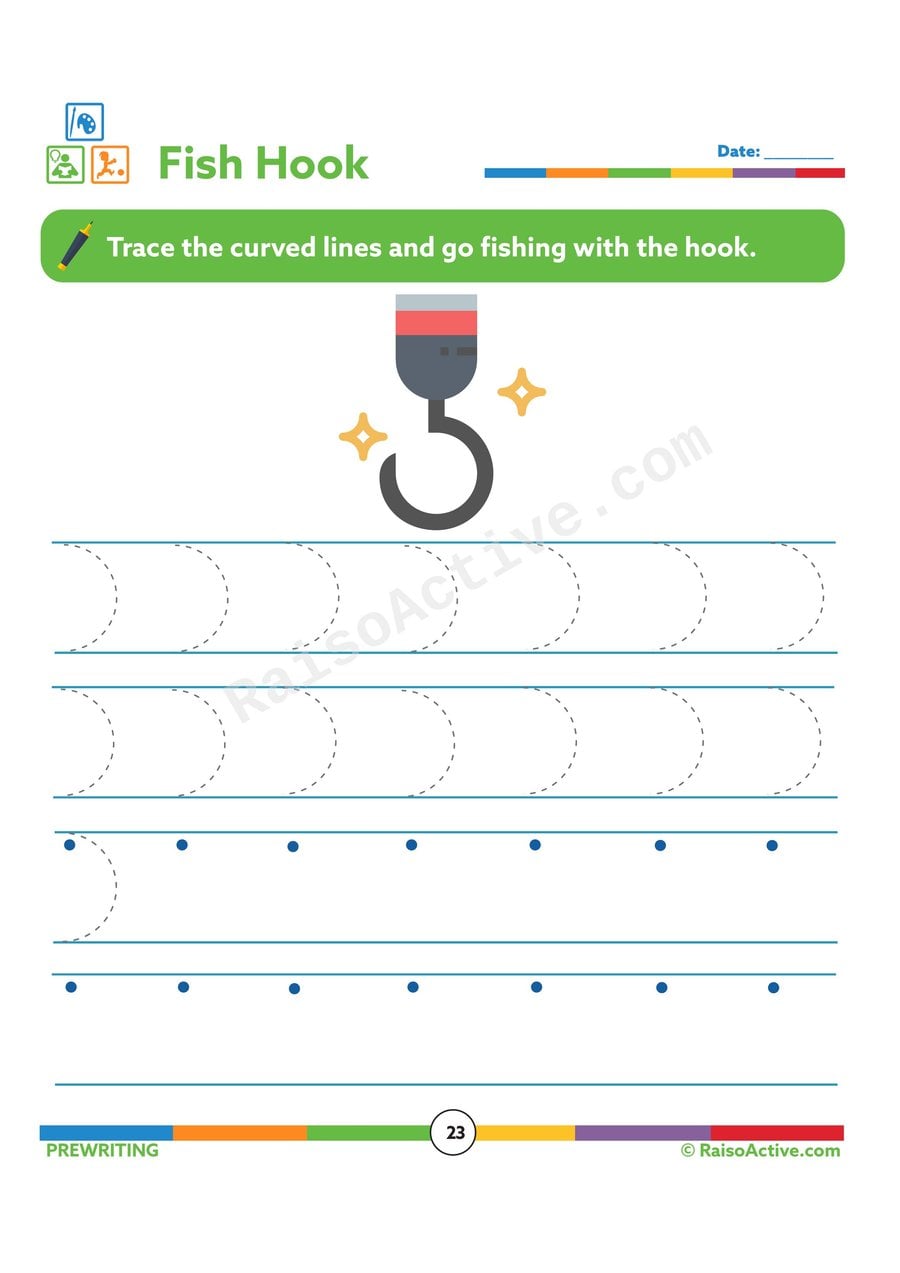
Tracing a hook-shaped fishing line curve gives children ages 3-5 practice with a tight, small curved stroke, different from the wide, sweeping curves used in other worksheets, which builds fine control over shorter pencil motions. This particular curve shape is also an early building block for letters like j, which end in a small hook, making this good preparatory practice.

Trace the Bouncy Balls Worksheet for Preschoolers
Ages 3-5 · Preschool–Pre-KAges 3-5 · Nursery–ReceptionAges 3-5 · Nursery–LKGAges 3-5
Tracing the arcing path of a bouncy ball helps children ages 3-5 practice curved pencil strokes while connecting the drawn line to a real physical motion they already understand, a bounce. Linking an abstract line on paper to something they've seen and felt makes the curved stroke easier to grasp than tracing an unfamiliar shape, and it builds the same rounded control needed for letters and numbers later on.

Fine Motor Skills Activities: Parent's Guide for Pre-Writing
Ages 3-5 · Preschool–Pre-KAges 3-5 · Nursery–ReceptionAges 3-5 · Nursery–LKGAges 3-5
This parent's guide explains that fine motor skills, the small, precise movements of the hands and fingers, need deliberate strengthening before a child can comfortably hold and control a pencil for handwriting. It outlines that skills like a strong pincer grip, wrist stability, and hand strength typically develop through everyday activities like squeezing, pinching, and tearing before they ever translate into neat pencil strokes.

Fly Airplanes Tracing Worksheet for Preschoolers
Ages 3-5 · Preschool–Pre-KAges 3-5 · Nursery–ReceptionAges 3-5 · Nursery–LKGAges 3-5
Unlike letter tracing, this worksheet has children follow long, curving flight-path lines from a globe down to the ground, which builds sustained hand-eye coordination and the ability to keep a pencil moving smoothly over a longer distance than a single letter requires. For 3-5 year olds, this kind of extended line tracing is an important bridge between short scribbles and the longer, controlled strokes needed for writing full letters and words.

Pattern Writing Pre-writing Skills Activity Book for 3-4 Year Olds - Page 11
Ages 3-4 · PreschoolAges 3-4 · NurseryAges 3-4
This page from the pre-writing patterns activity book strengthens hand and finger muscles for 3-4 year olds through repeated stroke motions, building the physical stamina and grip strength a child needs before sustained handwriting becomes comfortable. Repeating the same basic movement many times across a row also builds muscle memory, so the motion starts to feel automatic rather than something the child has to consciously plan each time.
Animal Food Matching Worksheet for Preschoolers
Ages 3-5 · Preschool–Pre-KAges 3-5 · Nursery–ReceptionAges 3-5 · Nursery–LKGAges 3-5
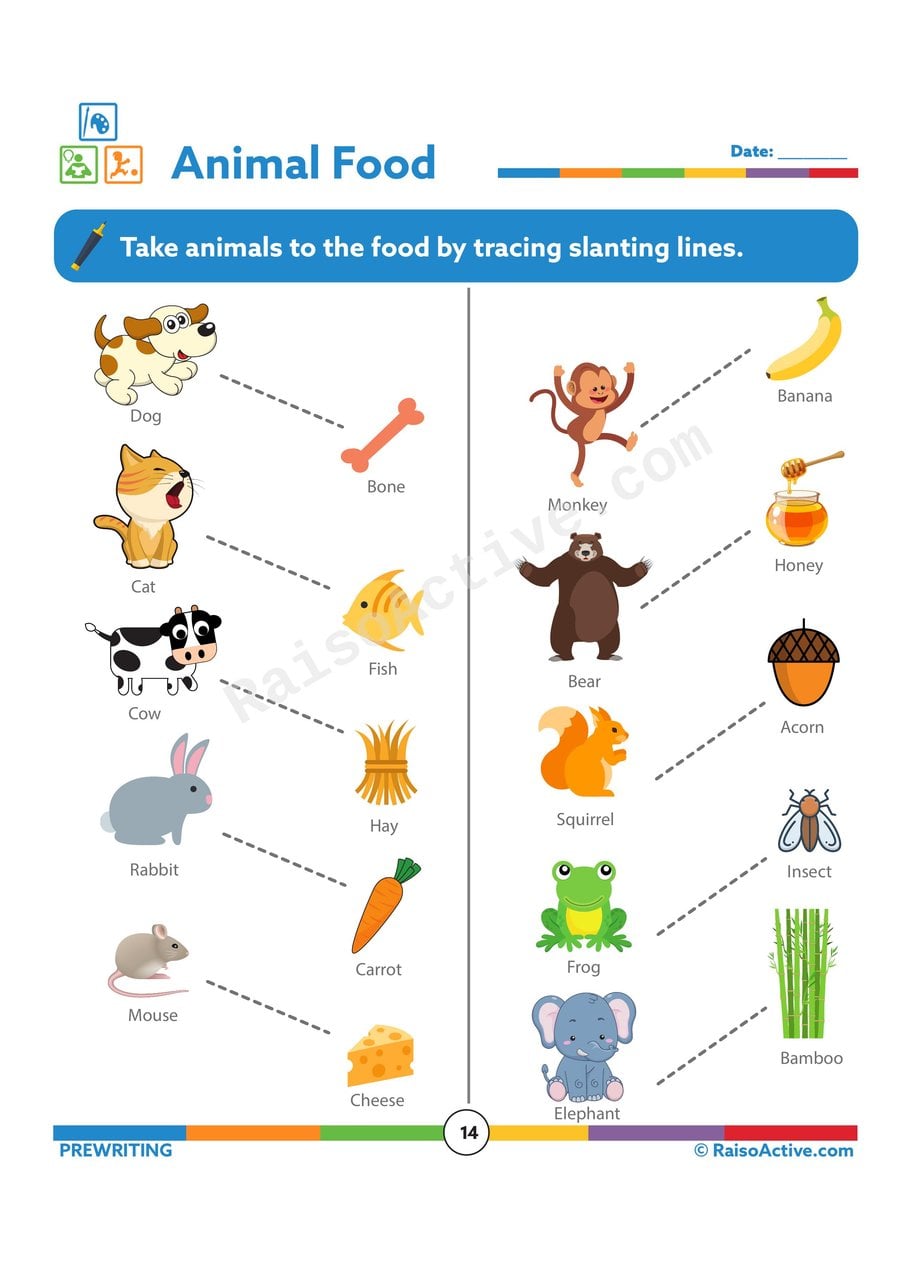
Tracing a line from each animal to the food it eats helps children ages 3-5 build pencil control while learning an early biology concept: that different animals eat different things based on what they are. Connecting a rabbit to a carrot or a bird to a worm also builds simple reasoning skills, since children start to notice why a particular pairing makes sense rather than memorizing it by rote.

Sledge Fun: Trace Slanting Lines to the Snowmen Worksheet
Ages 3-5 · Preschool–Pre-KAges 3-5 · Nursery–ReceptionAges 3-5 · Nursery–LKGAges 3-5
Tracing diagonal lines from a sledge down to waiting snowmen gives children ages 3-5 practice with slanting strokes, a motion that's harder to control than straight up-and-down or side-to-side lines because it requires the wrist to angle and rotate. Mastering this diagonal control now lays groundwork for letters like A, K, X, and Y, which all rely on slanted strokes.
Related worksheets
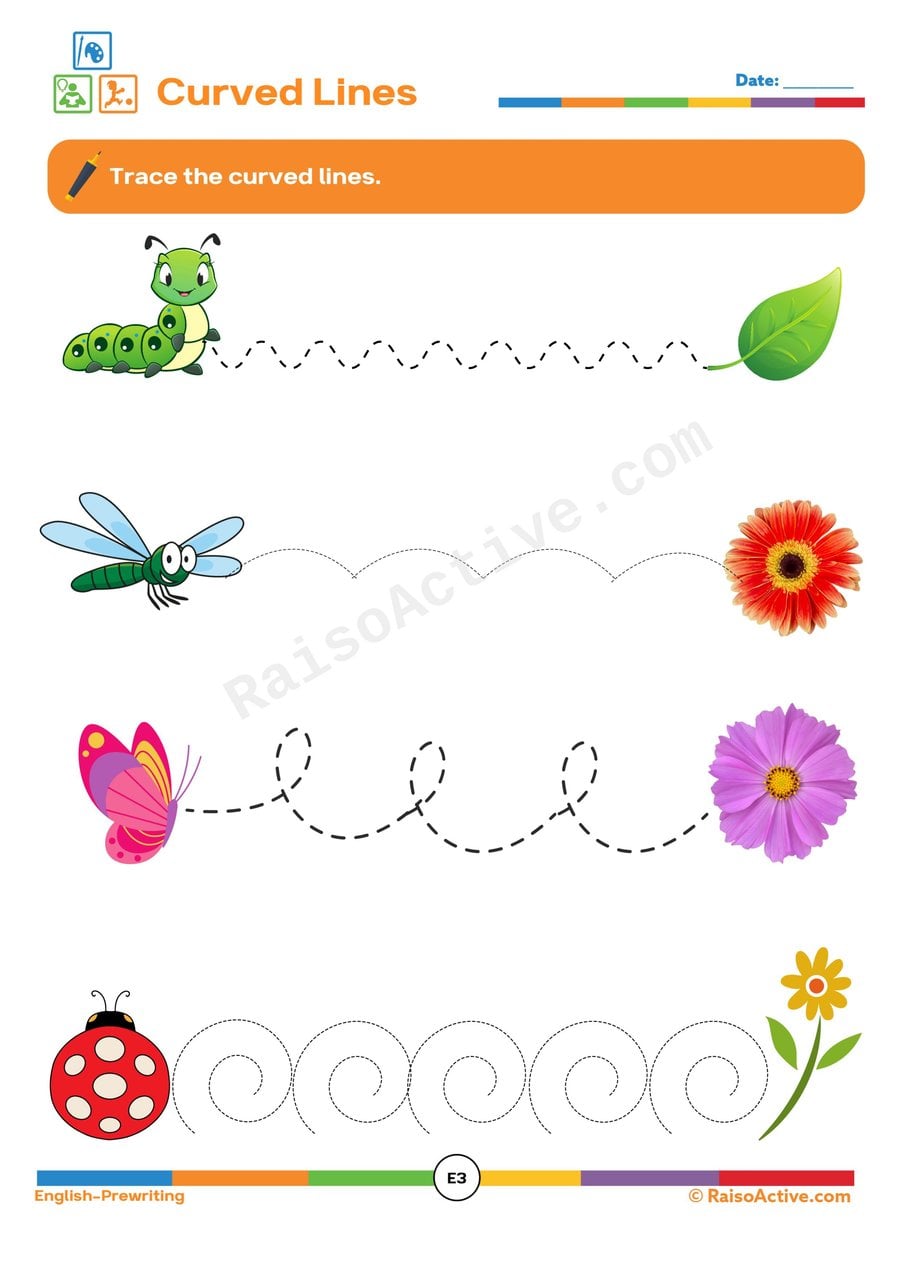
Curved Lines Tracing Worksheet for Preschoolers
Ages 3-5 · Preschool–Pre-KAges 3-5 · Nursery–ReceptionAges 3-5 · Nursery–LKGAges 3-5
Children ages 3-5 practice tracing curved lines in various directions, building the specific hand-eye coordination and wrist flexibility needed to later form curved letters like c, o, and s. Curved-line control is a distinct pre-writing skill from straight-line tracing, since it requires a smoother, more continuous pencil motion.

Merry Christmas Coloring Worksheet for Preschoolers
Ages 3-5 · Preschool–Pre-KAges 3-5 · Nursery–ReceptionAges 3-5 · Nursery–LKGAges 3-5
Filling in Christmas-themed pictures with crayons or colored pencils helps children ages 3-5 refine their pencil grip and hand control while practicing the concept of staying within a defined boundary. Because the pictures include multiple familiar holiday objects, this worksheet also gives children a chance to build vocabulary by naming each item as they color it. Repeated coloring practice at this age steadily improves the wrist and finger strength needed for later writing tasks.

Spider Web Connect-the-Dots Worksheet for Preschoolers
Ages 3-5 · Preschool–Pre-KAges 3-5 · Nursery–ReceptionAges 3-5 · Nursery–LKGAges 3-5
This connect-the-dots worksheet has children ages 3-5 count in sequence from one number to the next while drawing curved lines, building both number-order recognition and the pencil control needed for pre-writing curves and loops. Revealing a spider web at the end gives the counting practice a satisfying, visual payoff that keeps young children motivated through the whole sequence.
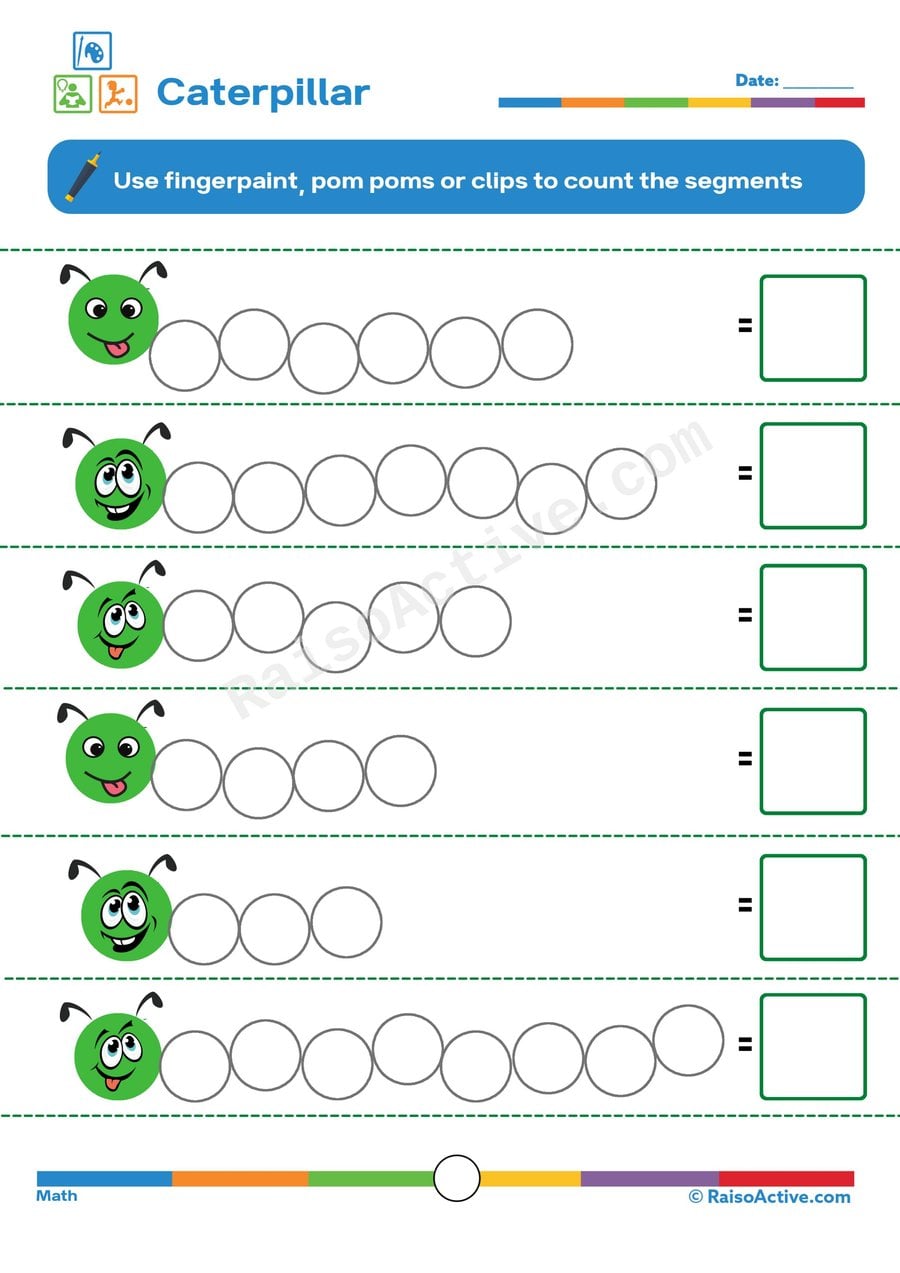
Caterpillar Counting Worksheet for Preschoolers
Ages 3-5 · Preschool–Pre-KAges 3-5 · Nursery–ReceptionAges 3-5 · Nursery–LKGAges 3-5
Counting the segments of each caterpillar teaches children ages 3-5 one-to-one correspondence — touching or marking each segment exactly once while saying a number — which is the core skill underlying accurate counting. Writing the final total in a box also connects the physical act of counting to its written numeral, reinforcing early number-writing practice.

Letter H Worksheet: Trace, Write, and Color the Letter H!
Ages 3-5 · Preschool–Pre-KAges 3-5 · Nursery–ReceptionAges 3-5 · Nursery–LKGAges 3-5
This worksheet gives children ages 3-5 layered practice with the letter H, moving from finger tracing to pencil tracing and finally to identifying and coloring pictures that begin with the H sound. Starting with a finger trace before picking up a pencil is a gentle way to build the motor pattern for a letter's shape without the added challenge of pencil control, making this a good scaffolded approach for less confident writers. Circling H pictures afterward reinforces the connection between the letter's shape and its beginning sound.

Letter E Tracing and Coloring Worksheet for Preschoolers
Ages 3-5 · Preschool–Pre-KAges 3-5 · Nursery–ReceptionAges 3-5 · Nursery–LKGAges 3-5
This tracing and coloring worksheet teaches children ages 3-5 to recognize and write both the uppercase and lowercase letter E, while also identifying pictures of objects that begin with that letter's sound. Practicing a letter in both its capital and lowercase forms helps children see that they represent the same sound despite looking different, an important early literacy concept. Circling matching pictures alongside the tracing also connects the visual letter shape to its corresponding beginning sound in spoken words.

Letter I Tracing and Coloring Worksheet for Preschoolers
Ages 3-5 · Preschool–Pre-KAges 3-5 · Nursery–ReceptionAges 3-5 · Nursery–LKGAges 3-5
This worksheet helps children ages 3-5 build fine motor skills and letter recognition by tracing both the uppercase and lowercase forms of the letter I, then applying that recognition in a coloring task and a letter-hunt word search. Practicing a short, simple letter like I builds early writing confidence, while the letter-hunt component adds a visual-scanning challenge that pushes recognition beyond just copying a shape. Coloring pictures that start with I connects the shape to its beginning sound.

Gingerbread Man Coloring Worksheet for Preschoolers
Ages 3-5 · Preschool–Pre-KAges 3-5 · Nursery–ReceptionAges 3-5 · Nursery–LKGAges 3-5
This gingerbread man worksheet gives children ages 3-5 practice coloring within a simple, familiar outline while also adding their own decorative details like buttons and a bow, encouraging creative choices within a structured shape. Deciding where to place each decoration also builds early spatial awareness, since buttons and a bow need to be positioned in specific spots on the body.
Guides for this topic

Pre-Writing Strokes in Order: From Standing Lines to Loops (With Printable Patterns)
The developmental order of pre-writing strokes, from vertical lines to loops, and why practicing them in sequence makes letter formation much easier to learn.

Portfolio Assessment with Young Children: A Comprehensive Guide to Meaningful Documentation
Learn how portfolio assessment captures your child's growth through meaningful documentation. Practical tips, templates, and age-appropriate strategies for ages 1-8.
What Makes a Good Worksheet vs. a Poor One: A Parent's Guide to Quality Educational Materials
Learn what separates high-quality educational worksheets from poor busy work. Discover design principles, red flags, and how to evaluate free worksheets online for your child aged 1-8.
Reviews
Every worksheet for ages 3–6, no watermark
Members download the full library of 1,000+ worksheets and every activity pack without watermarks or daily limits. One year costs ₹999 in India or $20 elsewhere.
See membership plansOr download any worksheet free with a watermark (5 a day).