Fish Hook Tracing Worksheet for Preschoolers
Tracing a hook-shaped fishing line curve gives children ages 3-5 practice with a tight, small curved stroke, different from the wide, sweeping curves used in other worksheets, which builds fine control over shorter pencil motions. This particular curve shape is also an early building block for letters like j, which end in a small hook, making this good preparatory practice.
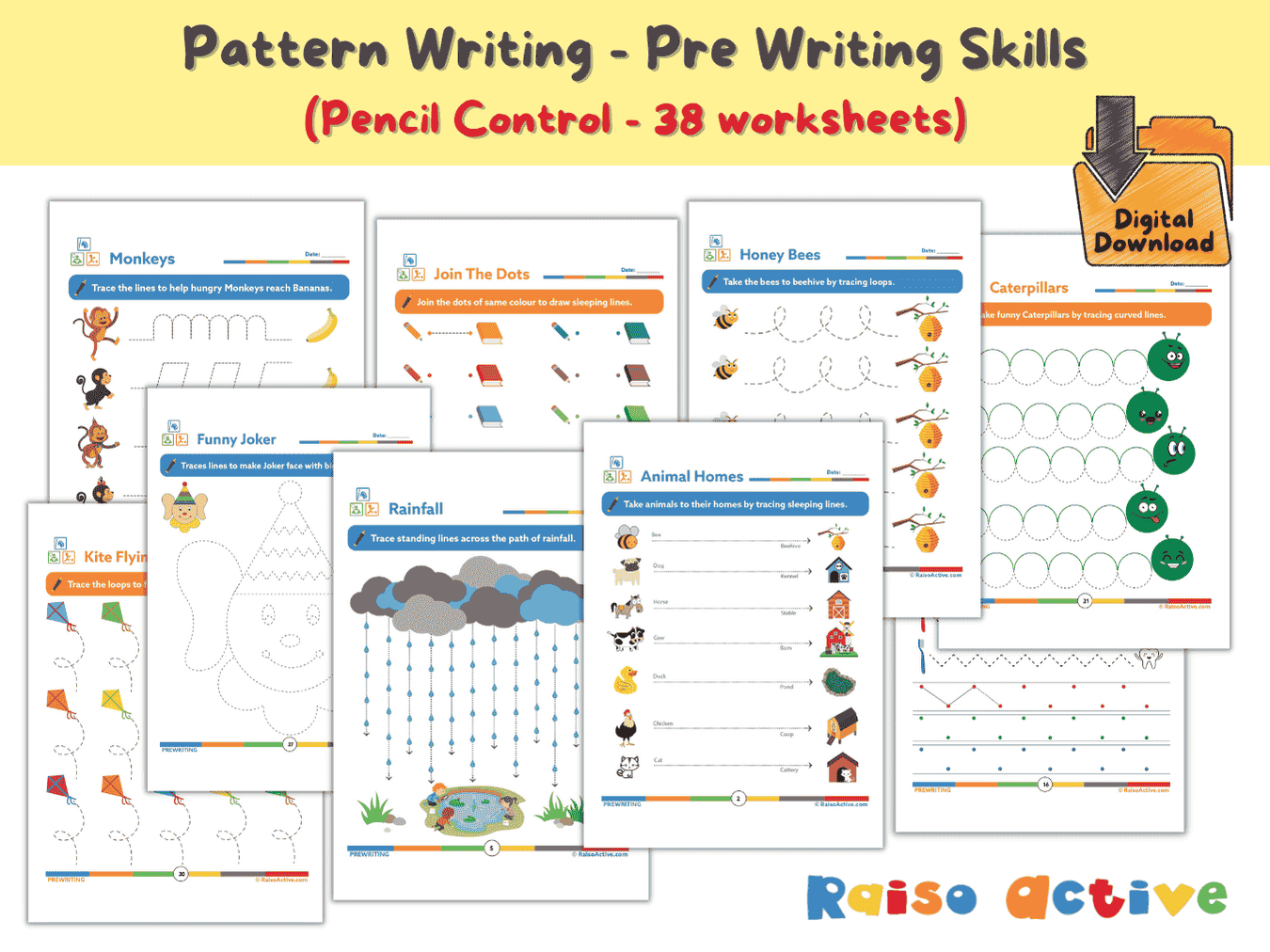
Part of the pack
Pattern Writing Pre-writing Skills Activity Book for 3-4 Year Olds
This is page 27 of the pack. Ages 3-4 · PreschoolAges 3-4 · NurseryAges 3-4
Made for your child
A whole activity pack made with their name
60 pages to spot, build, trace and write their own name, plus pages about their favourites, feelings and family. See a free preview with their name.
Make an All About Me packFree preview · free for members
Or start free: a name tracing sheet with their nameCurriculum
- Pre-Writing > Curved Lines
How to use this worksheet
Point out the fish hook and its curved shape before your child begins tracing, comparing it to a real fishing hook if they've seen one. Guide their pencil along the dotted hook-shaped line, encouraging a slow, controlled curve rather than a fast scribble. If the hook shape comes out too wide or too loose, let your child try tracing it again. Color the fish and water scene once every hook is traced.
Materials needed
- Pencil
- Crayons
Extension activities
- 1Play a magnetic fishing game using paper fish with paperclips and a magnet tied to a string.
- 2Use a small net to scoop toy fish out of a water table or basin during bath or outdoor play.
- 3Count a group of toy or paper fish together, practicing one-to-one counting.
- 4Make a simple ocean sensory bin with blue-dyed rice or water beads and small sea creature toys.
- 5Fold and cut a paper plate to make a simple fish craft with a fin and tail.

Written by
Hemsweta Jain · Teacher Cheena
MBA and Early Childhood Educator, teaching since 2014 · Founder of RaisoActive, Mumbai
Every RaisoActive worksheet is designed and checked by the founder before publishing.
Published · Last reviewed
More from Pattern Writing Pre-writing Skills Activity Book for 3-4 Year Olds
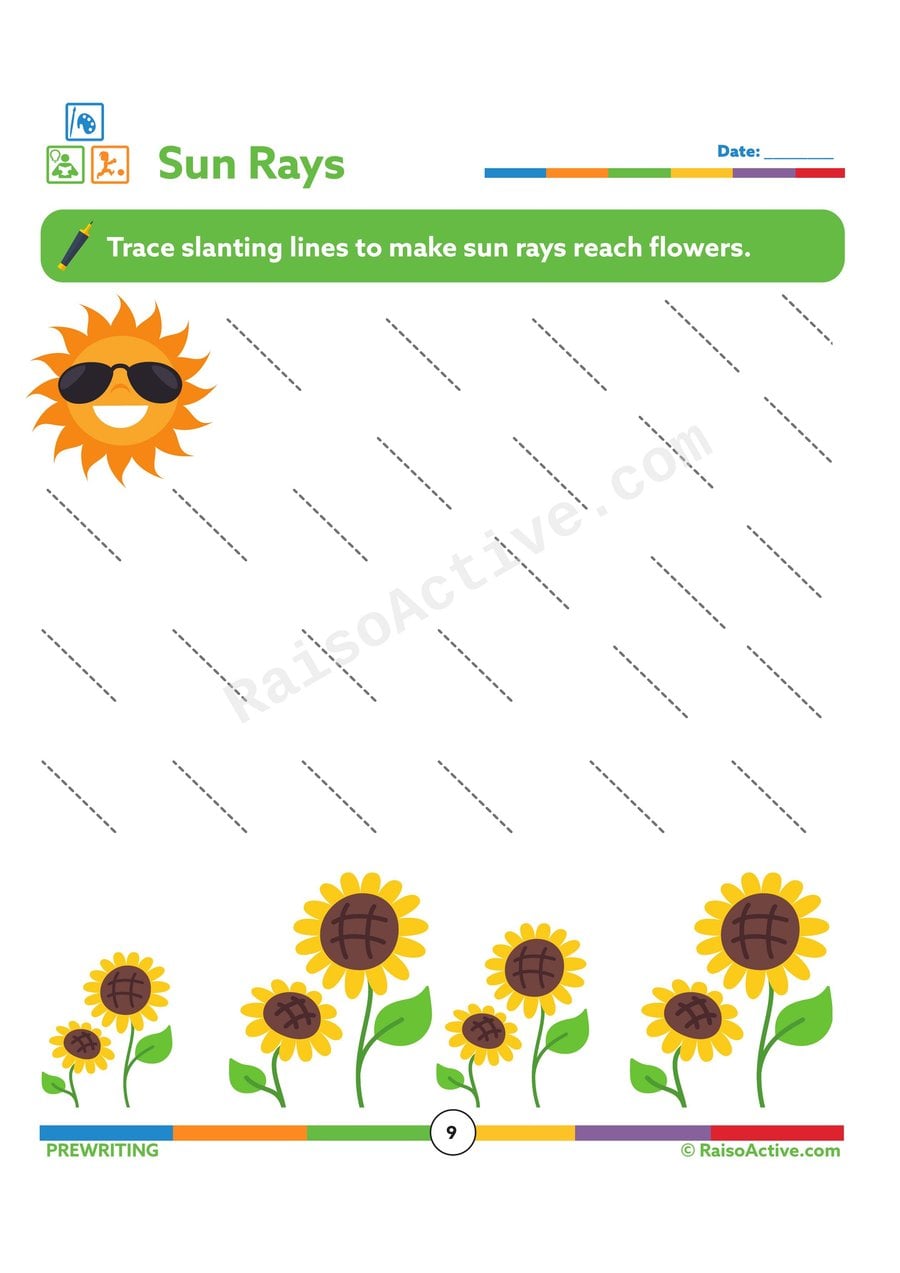
Sun Ray Tracing Worksheet for Preschoolers
Ages 3-5 · Preschool–Pre-KAges 3-5 · Nursery–ReceptionAges 3-5 · Nursery–LKGAges 3-5
Tracing sun rays radiating outward from a circular center gives children ages 3-5 practice changing pencil direction repeatedly within one page, since each ray points a different way from the center, unlike a worksheet where every line runs the same direction. This builds flexible wrist and hand control, along with early spatial awareness of how lines can radiate outward from a single point.
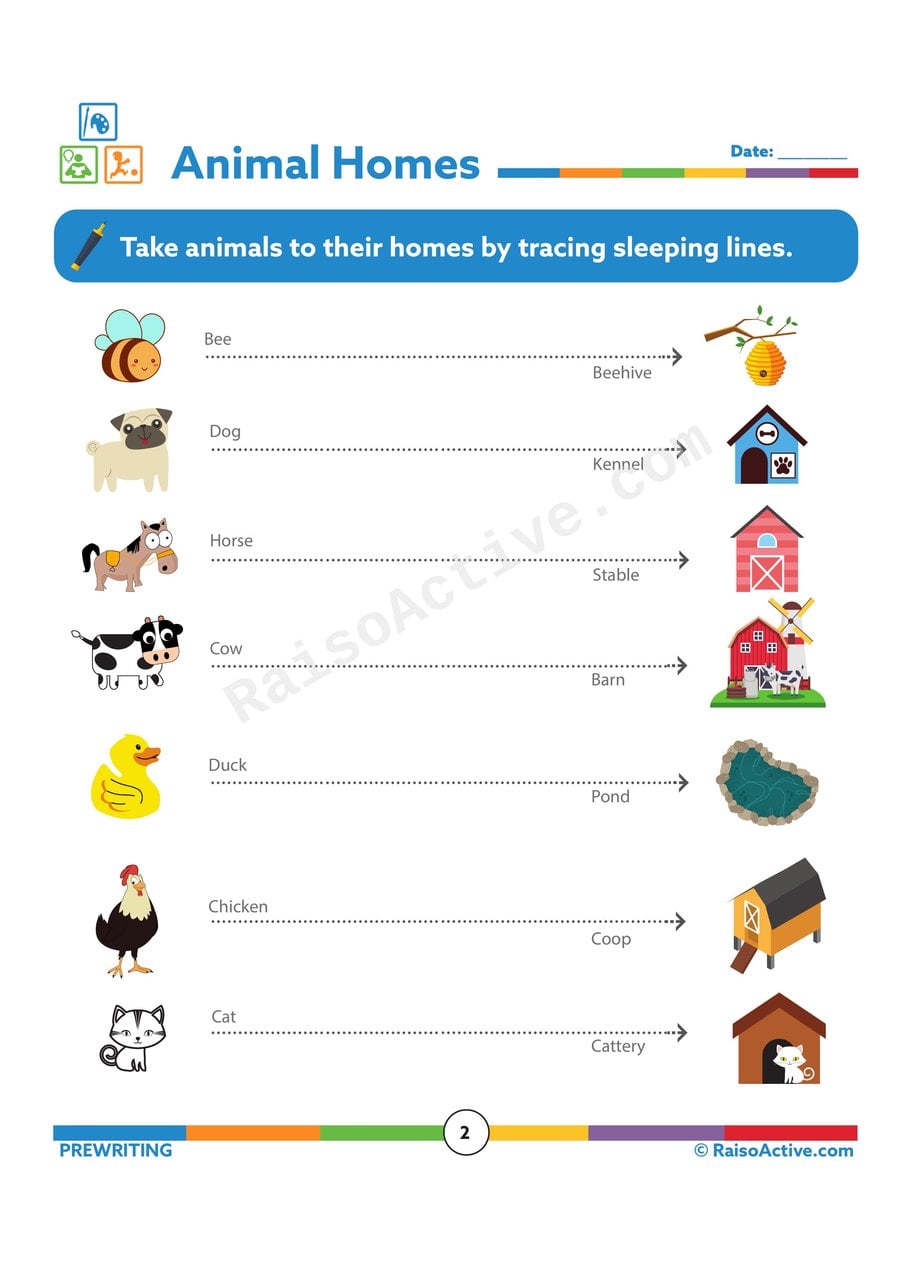
Animal Homes Tracing Worksheet for Preschoolers
Ages 3-5 · Preschool–Pre-KAges 3-5 · Nursery–ReceptionAges 3-5 · Nursery–LKGAges 3-5
Tracing a line from each animal to its home helps children ages 3-5 build pencil control while also introducing an early science concept: that different animals live in different kinds of homes, like a bird's nest or a dog's kennel. Saying the animal and its home aloud while tracing connects the physical tracing motion to new vocabulary, reinforcing both skills at once.

Join the Dots: Sleeping Lines Worksheet for Preschoolers
Ages 3-5 · Preschool–Pre-KAges 3-5 · Nursery–ReceptionAges 3-5 · Nursery–LKGAges 3-5
This dot-to-dot worksheet has children ages 3-5 connect dots to form horizontal lines, sometimes called 'sleeping lines' because they lie flat rather than standing upright, building the left-to-right pencil motion that also mirrors the direction of reading and writing English text. Dot-to-dot tracing adds an extra layer of precision beyond simple line tracing, since the child has to land exactly on each dot rather than following a continuous guide.

Trace the Waves! A Pre-Writing Worksheet for Kids
Ages 3-5 · Preschool–Pre-KAges 3-5 · Nursery–ReceptionAges 3-5 · Nursery–LKGAges 3-5
Tracing a series of connected wave shapes gives children ages 3-5 practice with a smooth, undulating curve that rises and falls repeatedly, a stroke pattern that underlies letters like m, n, u, and w. Unlike a single curve, a wave line requires the hand to reverse direction multiple times in one continuous motion without lifting the pencil, building more sustained curve control than a shorter, single-curve worksheet.

Pattern Writing Pre-writing Skills Activity Book for 3-4 Year Olds - Page 40
Ages 3-4 · PreschoolAges 3-4 · NurseryAges 3-4
As one of the later pages in the pre-writing patterns activity book, this page asks 3-4 year olds to apply everything practiced on earlier pages, steady pressure, consistent spacing, and accurate prediction, to a pattern that combines skills built up gradually through the book. Reaching this stage of the book is itself a marker of growing stamina, since completing a full row of repeated strokes reliably takes more sustained focus than the simpler early pages required.

Monkey Banana Tracing Worksheet for Preschoolers
Ages 3-5 · Preschool–Pre-KAges 3-5 · Nursery–ReceptionAges 3-5 · Nursery–LKGAges 3-5
Tracing a path connecting a monkey to a banana builds pencil control in children ages 3-5 while reinforcing a simple, well-known animal-and-food pairing that most children already recognize, which keeps the activity approachable and motivating. This worksheet also gives extra practice with whatever line type the path uses, whether a swinging curve or a straighter reach, building on the same skills developed in other animal-food and animal-home tracing worksheets.

Move the Cars! Pre-Writing Tracing Worksheet for Preschoolers
Ages 3-5 · Preschool–Pre-KAges 3-5 · Nursery–ReceptionAges 3-5 · Nursery–LKGAges 3-5
Tracing a road-shaped path for a car gives children ages 3-5 pencil control practice disguised as a familiar, motivating theme, since most young children have pushed a toy car along an imaginary road before. The winding or straight path on this worksheet builds the same steady, controlled pencil movement needed for handwriting, while the driving theme keeps attention high through an activity that might otherwise feel repetitive.

Pattern Writing Pre-writing Skills Activity Book for 3-4 Year Olds - Page 17
Ages 3-4 · PreschoolAges 3-4 · NurseryAges 3-4
This page from the pre-writing patterns activity book asks 3-4 year olds to continue a repeating stroke pattern, which trains their brain to predict what comes next in a visual sequence before their hand draws it. That predicting-then-executing process is a form of early motor planning, the same skill that later lets a child anticipate the next stroke needed to form a letter without stopping to think about each individual line.
Related worksheets
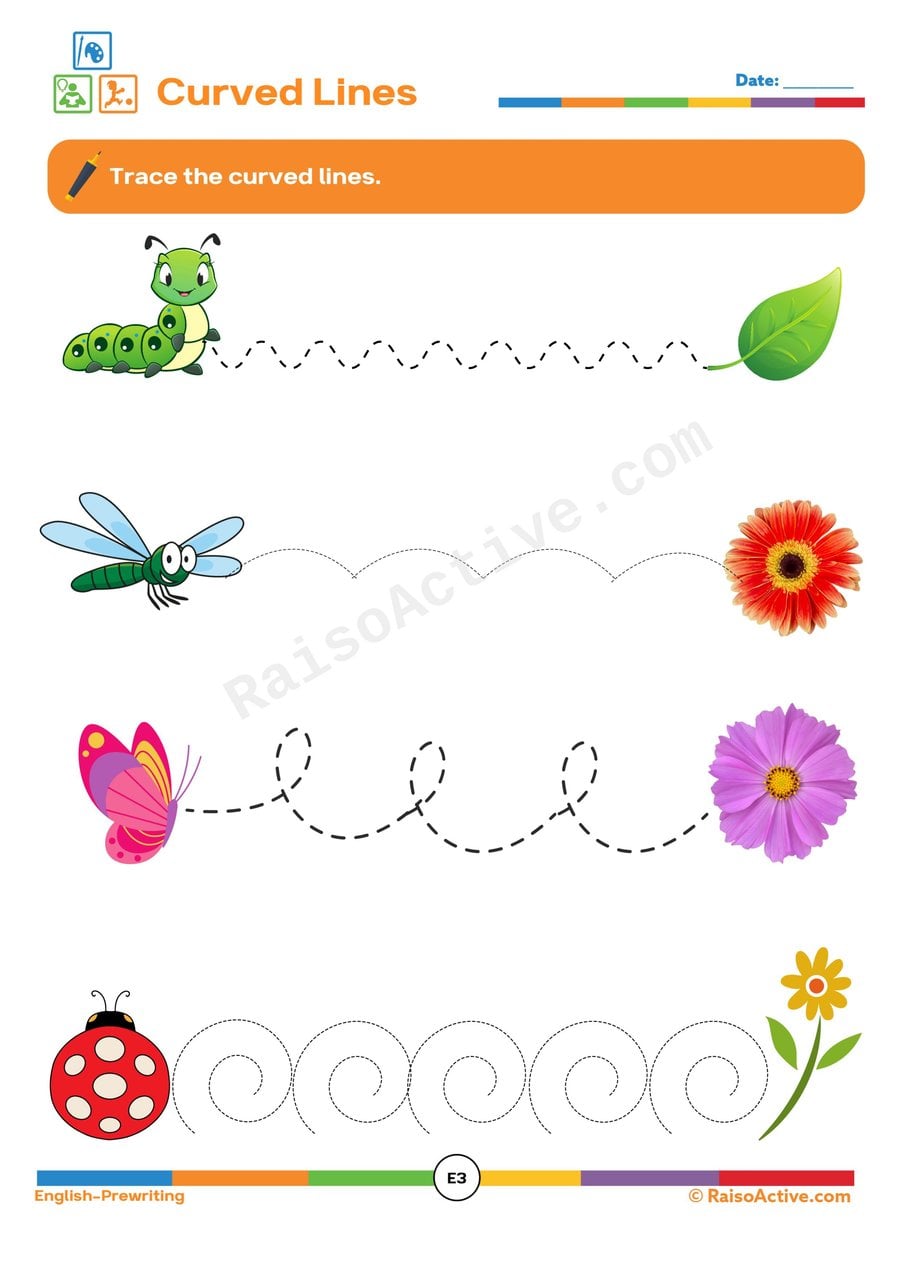
Curved Lines Tracing Worksheet for Preschoolers
Ages 3-5 · Preschool–Pre-KAges 3-5 · Nursery–ReceptionAges 3-5 · Nursery–LKGAges 3-5
Children ages 3-5 practice tracing curved lines in various directions, building the specific hand-eye coordination and wrist flexibility needed to later form curved letters like c, o, and s. Curved-line control is a distinct pre-writing skill from straight-line tracing, since it requires a smoother, more continuous pencil motion.

Merry Christmas Coloring Worksheet for Preschoolers
Ages 3-5 · Preschool–Pre-KAges 3-5 · Nursery–ReceptionAges 3-5 · Nursery–LKGAges 3-5
Filling in Christmas-themed pictures with crayons or colored pencils helps children ages 3-5 refine their pencil grip and hand control while practicing the concept of staying within a defined boundary. Because the pictures include multiple familiar holiday objects, this worksheet also gives children a chance to build vocabulary by naming each item as they color it. Repeated coloring practice at this age steadily improves the wrist and finger strength needed for later writing tasks.
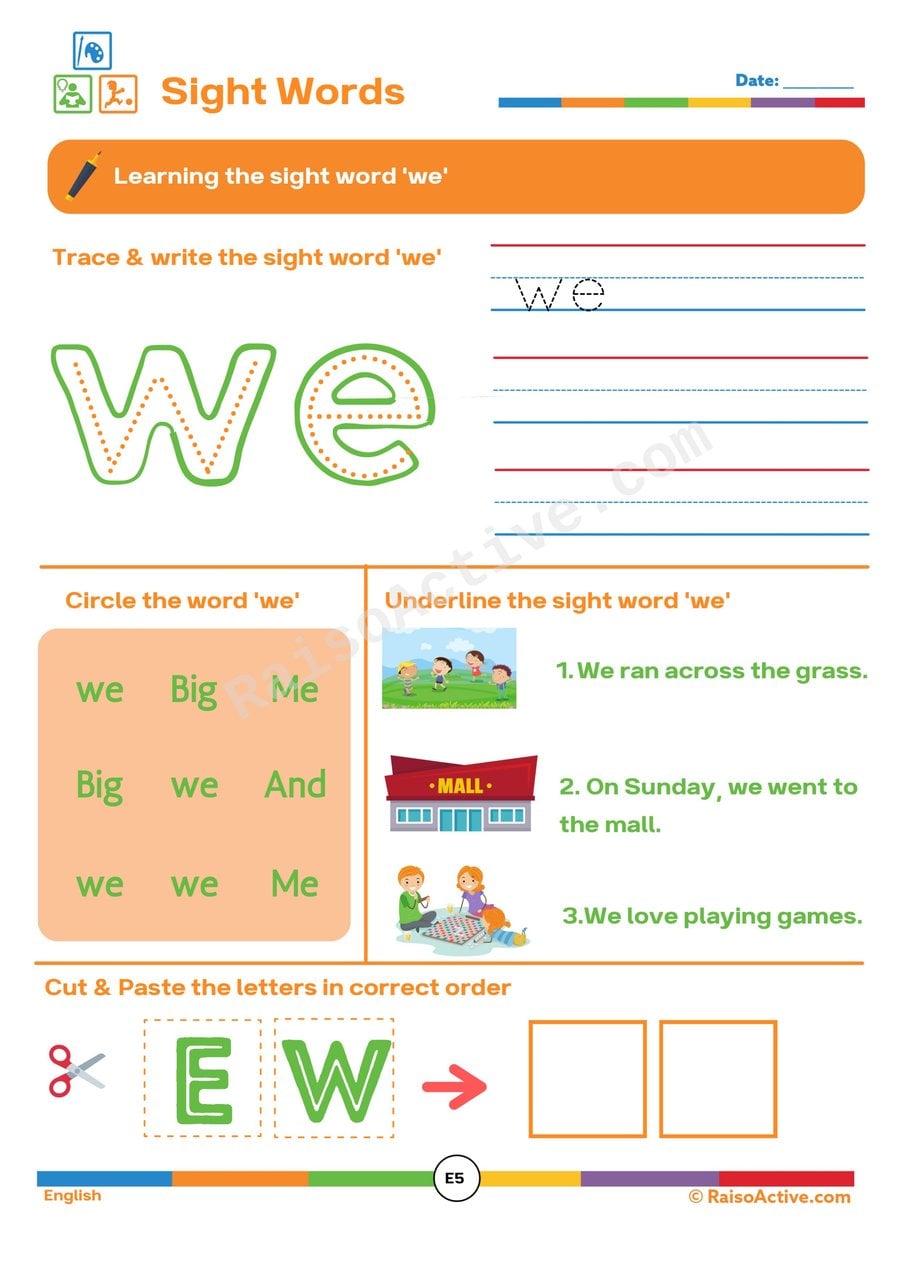
Sight Word 'We' Worksheet: Trace, Write, and Find!
Ages 3-5 · Preschool–Pre-KAges 3-5 · Nursery–ReceptionAges 3-5 · Nursery–LKGAges 3-5
This worksheet builds deep familiarity with the sight word 'we' in children ages 3-5 through four different practice formats — tracing, independent writing, circling, and finding the word within sentences — layered onto a single page. Repeating the same word across so many formats in one sitting is specifically designed to move 'we' from a word your child sounds out each time into one they recognize instantly on sight.
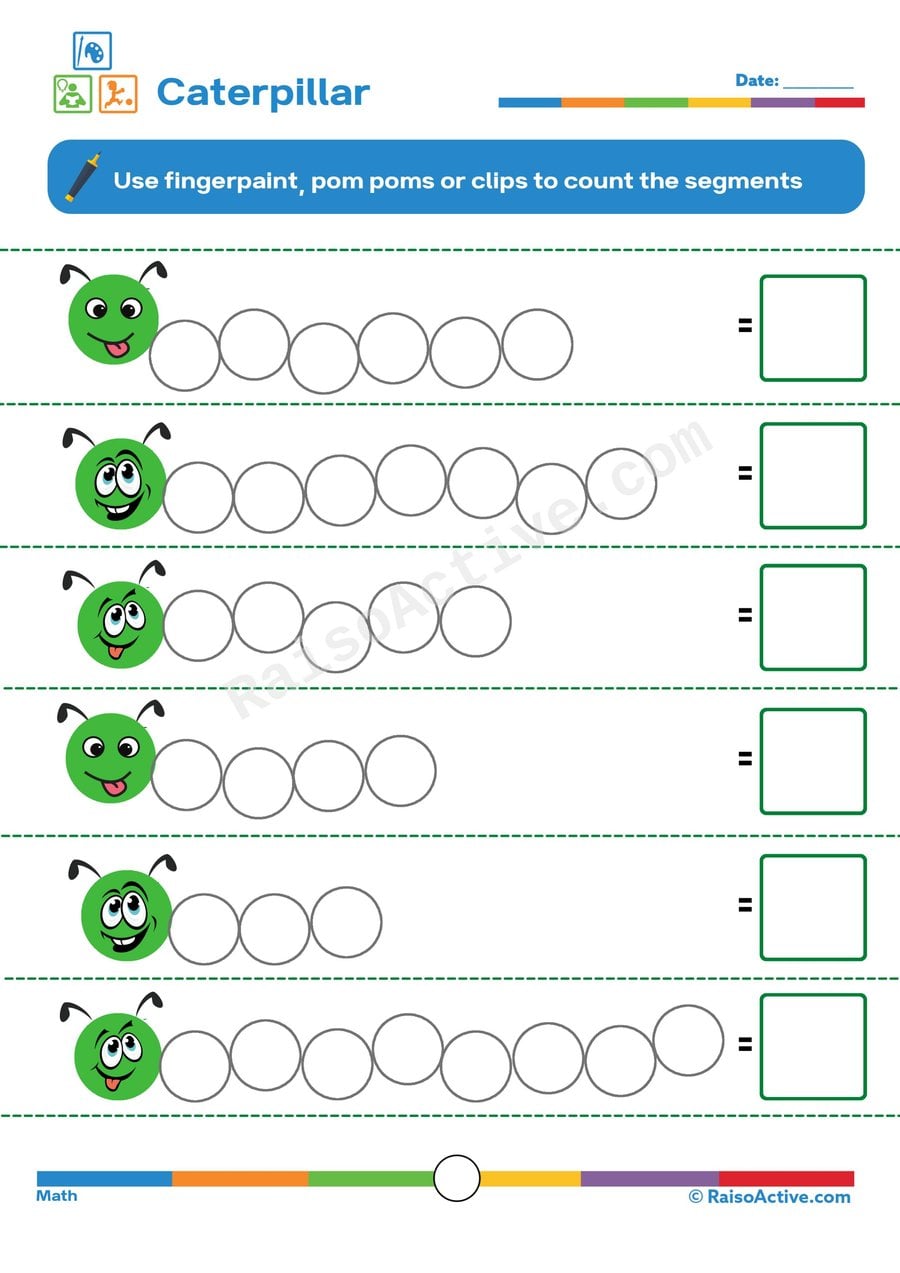
Caterpillar Counting Worksheet for Preschoolers
Ages 3-5 · Preschool–Pre-KAges 3-5 · Nursery–ReceptionAges 3-5 · Nursery–LKGAges 3-5
Counting the segments of each caterpillar teaches children ages 3-5 one-to-one correspondence — touching or marking each segment exactly once while saying a number — which is the core skill underlying accurate counting. Writing the final total in a box also connects the physical act of counting to its written numeral, reinforcing early number-writing practice.
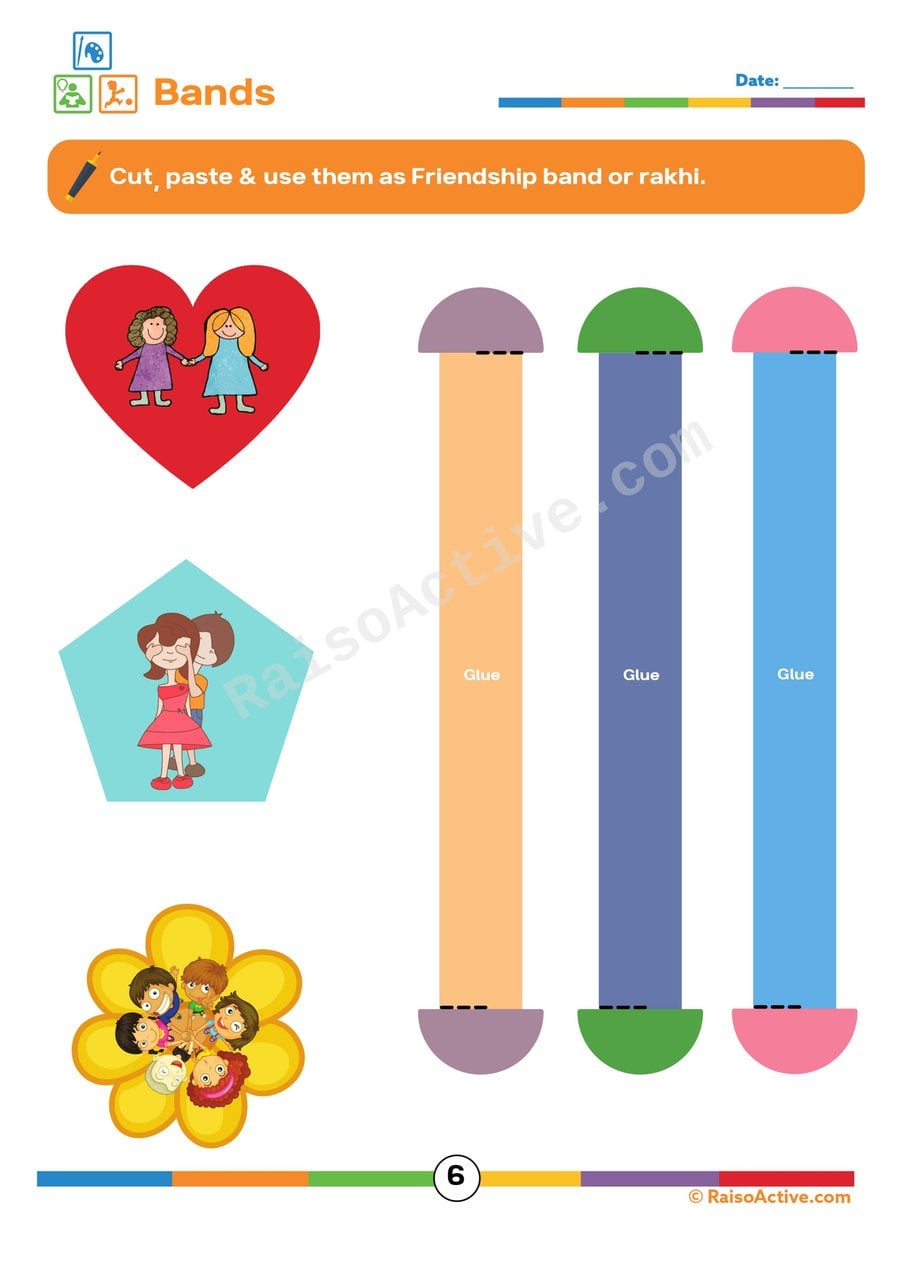
Friendship Band Craft: Cut, Paste, and Create!
Ages 3-5 · Preschool–Pre-KAges 3-5 · Nursery–ReceptionAges 3-5 · Nursery–LKGAges 3-5
This worksheet gives children ages 3-5 additional practice with scissor control and sequential assembly as they cut, join, and decorate their own friendship band or rakhi. Repeating a craft with a new set of shapes reinforces the multi-step process of cutting, arranging, and gluing until it becomes a comfortable, repeatable routine.

Easter Maze Adventure: Help the Bunny Find the Carrot!
Ages 3-5 · Preschool–Pre-KAges 3-5 · Nursery–ReceptionAges 3-5 · Nursery–LKGAges 3-5
Tracing a path from the bunny to the carrot builds fine motor control and pencil steadiness in children ages 3-5, since staying within the maze's narrow lines requires more precision than open coloring. Navigating around dead ends also develops early problem-solving and planning skills, as children learn to look ahead and backtrack when a path doesn't work out. This kind of visual-spatial puzzle strengthens the ability to plan a route mentally before committing it to paper, a skill that supports later map-reading and logical thinking.
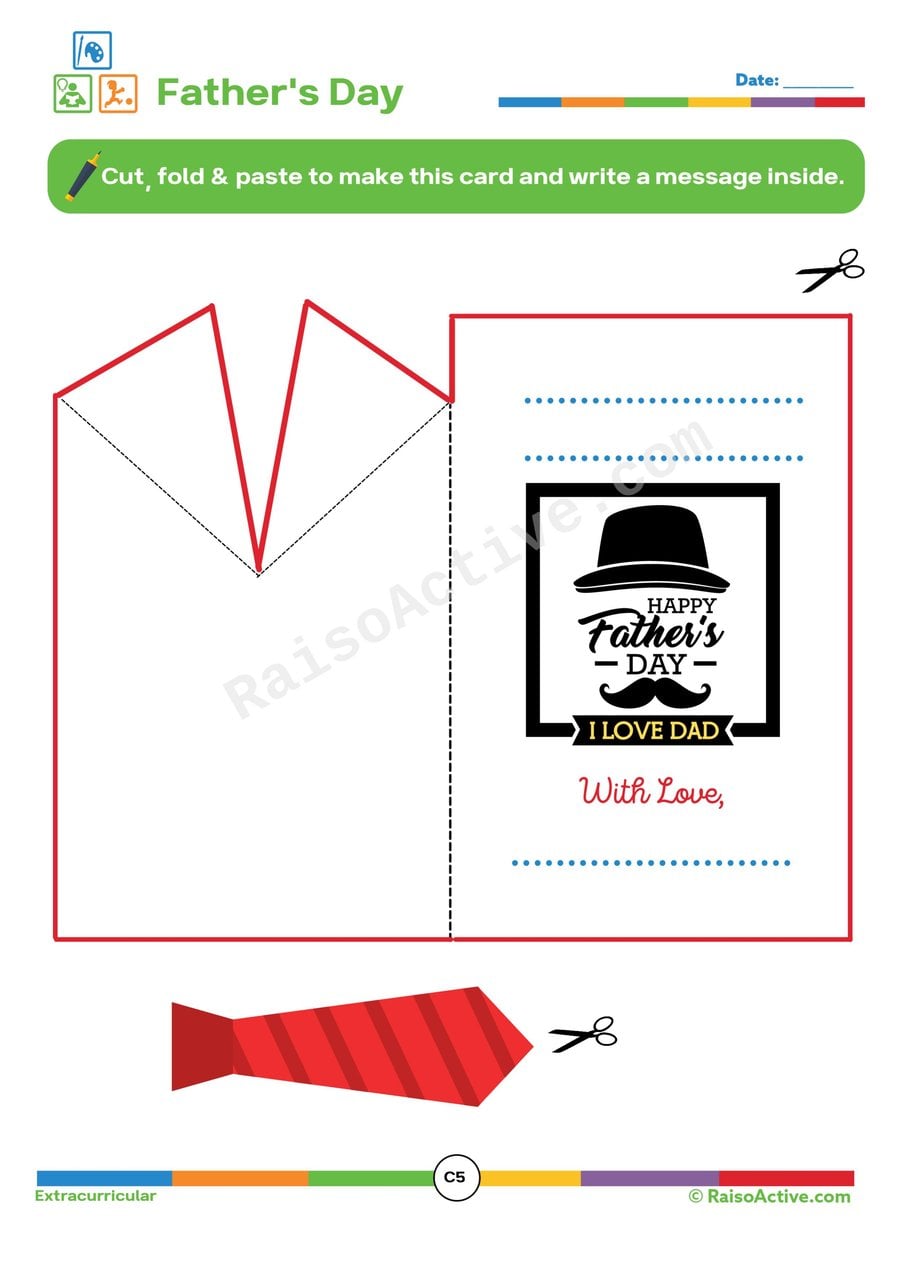
Father's Day Card Craft: Cut, Fold, and Paste!
Ages 3-5 · Preschool–Pre-KAges 3-5 · Nursery–ReceptionAges 3-5 · Nursery–LKGAges 3-5
This Father's Day card craft gives children ages 3-5 focused practice with three distinct fine motor actions in sequence — cutting along a line, folding paper neatly in half, and pasting a small piece precisely in place. Sequencing multiple craft steps in the right order also builds early executive-function skills like following multi-step directions. The personal, gift-making purpose adds meaning and motivation that keeps young children engaged through each step.
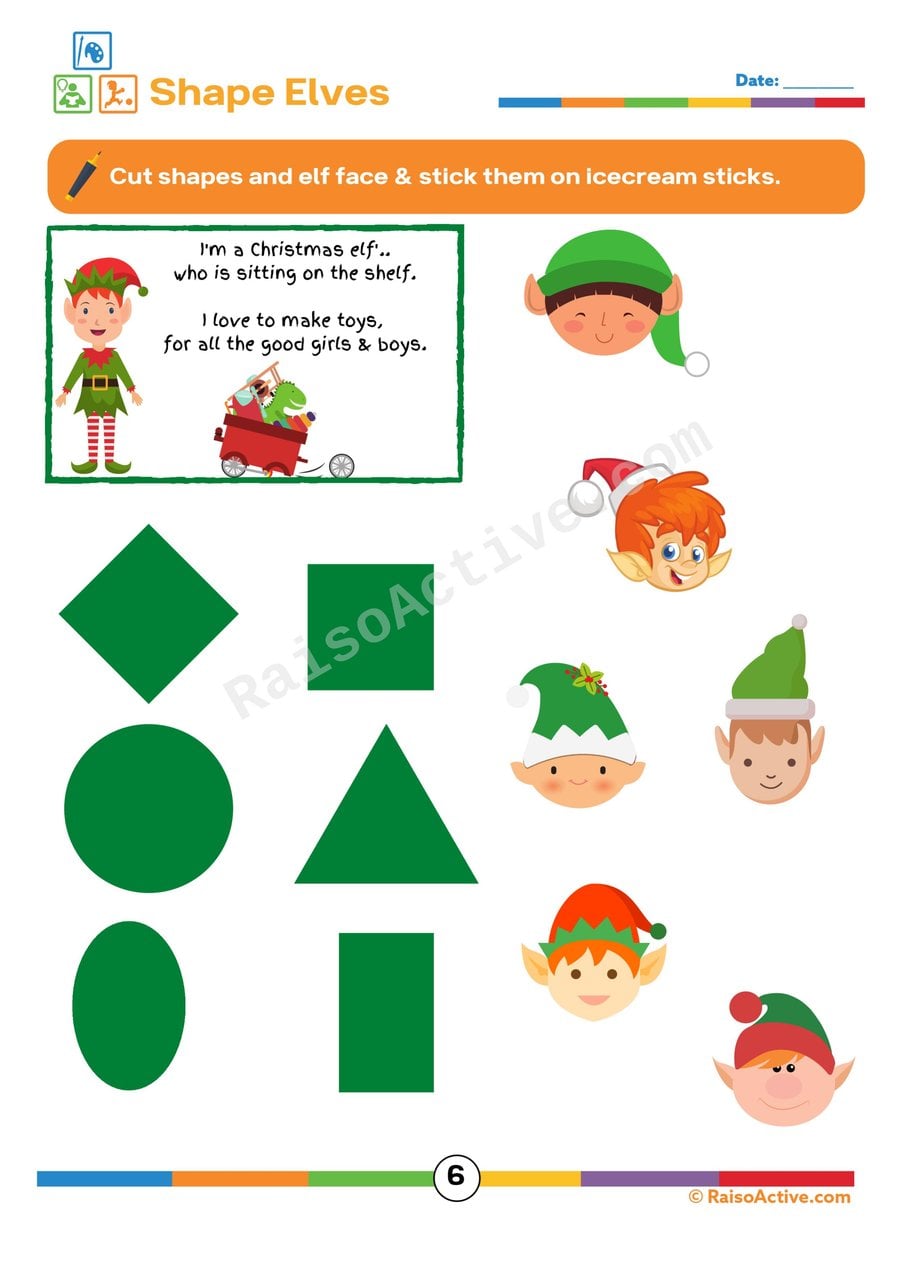
Shape Elves Worksheet: Cut, Paste, and Create!
Ages 3-5 · Preschool–Pre-KAges 3-5 · Nursery–ReceptionAges 3-5 · Nursery–LKGAges 3-5
Cutting out circles, triangles, and rectangles to assemble an elf face teaches children ages 3-5 to recognize and name basic 2D shapes while practicing scissor control along both straight and curved lines. Because each shape has to go in a specific spot to form a recognizable face, children also build spatial reasoning as they figure out which shape works as eyes, a nose, or a hat. Turning geometry into a craft project makes an abstract math concept feel like creative play.
Guides for this topic

Pre-Writing Strokes in Order: From Standing Lines to Loops (With Printable Patterns)
The developmental order of pre-writing strokes, from vertical lines to loops, and why practicing them in sequence makes letter formation much easier to learn.

Portfolio Assessment with Young Children: A Comprehensive Guide to Meaningful Documentation
Learn how portfolio assessment captures your child's growth through meaningful documentation. Practical tips, templates, and age-appropriate strategies for ages 1-8.
What Makes a Good Worksheet vs. a Poor One: A Parent's Guide to Quality Educational Materials
Learn what separates high-quality educational worksheets from poor busy work. Discover design principles, red flags, and how to evaluate free worksheets online for your child aged 1-8.
Reviews
Every worksheet for ages 3–5, no watermark
Members download the full library of 1,000+ worksheets and every activity pack without watermarks or daily limits. One year costs ₹999 in India or $20 elsewhere.
See membership plansOr download any worksheet free with a watermark (5 a day).