Father's Day Card Craft: Cut, Fold, and Paste!
This Father's Day card craft gives children ages 3-5 focused practice with three distinct fine motor actions in sequence — cutting along a line, folding paper neatly in half, and pasting a small piece precisely in place. Sequencing multiple craft steps in the right order also builds early executive-function skills like following multi-step directions. The personal, gift-making purpose adds meaning and motivation that keeps young children engaged through each step.
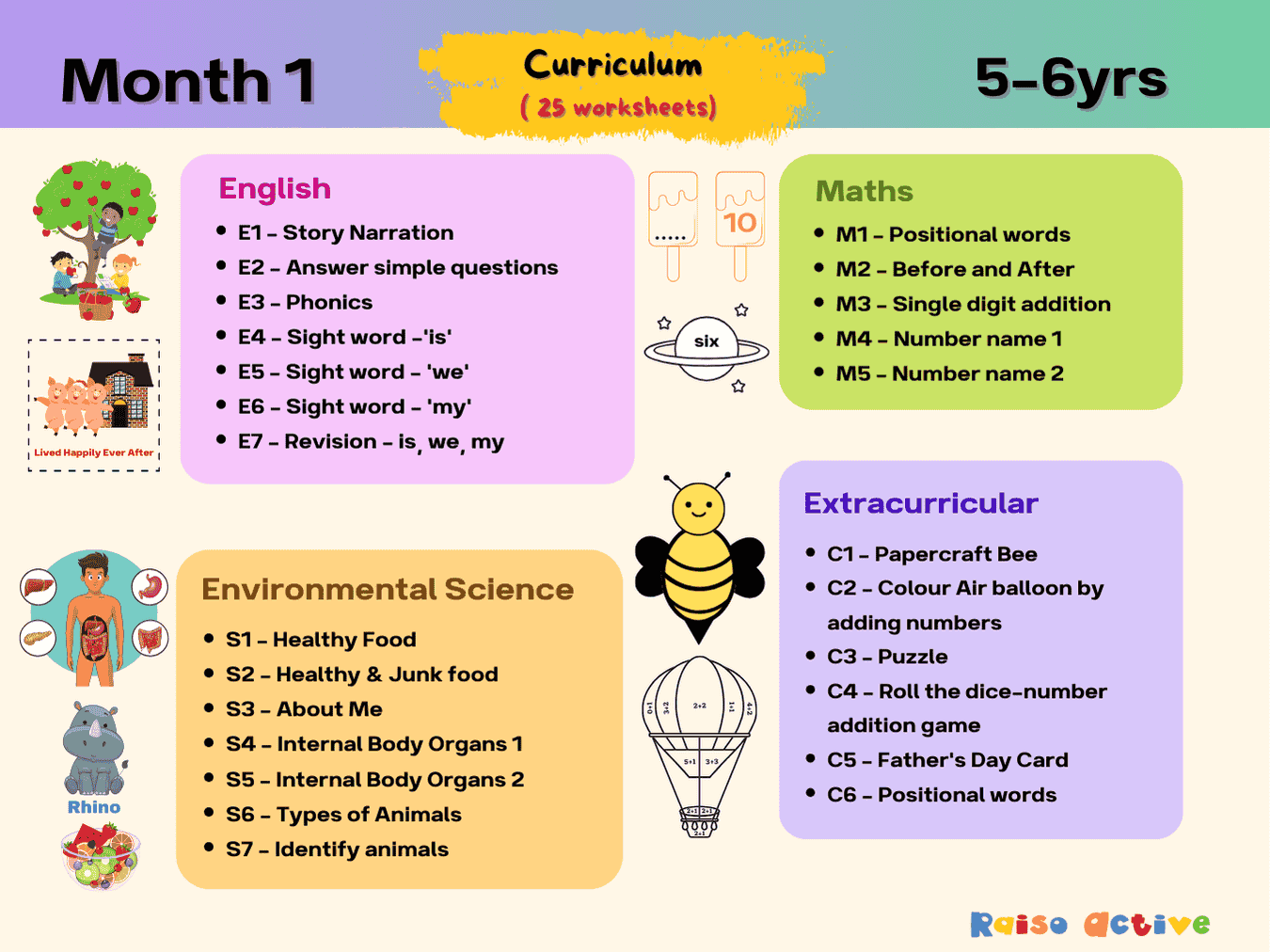
Part of the pack
Month 1: Learning & Development | Ages 5-6
This is page 27 of the pack. Ages 5-6 · KindergartenAges 5-6 · Year 1Ages 5-6 · UKGAges 5-6
Curriculum
- Art & Craft > Arts & Crafts
How to use this worksheet
First, help your child cut carefully along the solid outer lines of the card template using child-safe scissors. Next, show them how to fold the cut card in half along the center crease to form the card shape. Then have them apply a small amount of glue to the back of the tie piece and press it into place on the front of the card. Finally, help your child write or dictate a short message inside, and let them decorate the card with crayons before giving it to their special someone.
Materials needed
- Scissors
- Glue
- Pencil or Pen
- Crayons (optional)
Extension activities
- 1Have children draw a picture of their dad inside the card.
- 2Encourage children to decorate the outside of the card with stickers or drawings.
- 3Practice folding paper in half several more times to reinforce the crease-and-match skill.
- 4Make a matching card for another important adult in the child's life, like a grandfather or uncle.
- 5Ask your child to dictate three things they love about their dad while you write them down.

Written by
Hemsweta Jain · Teacher Cheena
MBA and Early Childhood Educator, teaching since 2014 · Founder of RaisoActive, Mumbai
Every RaisoActive worksheet is designed and checked by the founder before publishing.
Published · Last reviewed
More from Month 1: Learning & Development | Ages 5-6
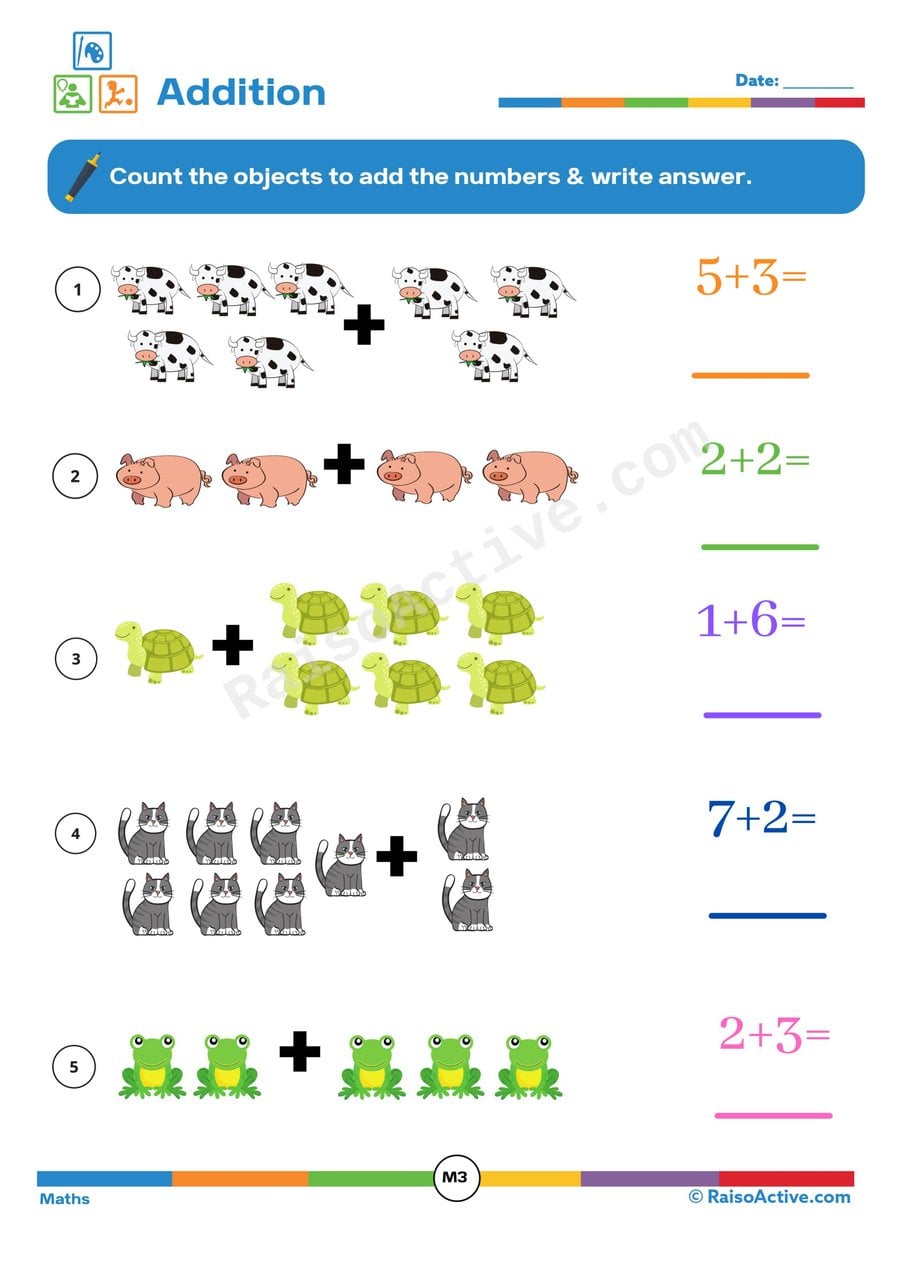
Addition Worksheet: Count and Add Objects!
Ages 4-6 · Pre-K–KindergartenAges 4-6 · Reception–Year 1Ages 4-6 · LKG–UKGAges 4-6
Counting two groups of pictured objects and writing their combined total introduces children ages 4-6 to addition as a concrete, visual process before they work with numbers alone. Because the objects are drawn out rather than represented only by digits, children can physically point and count to verify their answer, building confidence in early math reasoning. Repeated practice with this picture-based format helps children internalize what a plus sign means before they're expected to solve equations without visual support.

Air Balloon Color by Sums Worksheet for Preschoolers
Ages 3-5 · Preschool–Pre-KAges 3-5 · Nursery–ReceptionAges 3-5 · Nursery–LKGAges 3-5
This color-by-sums worksheet combines basic addition practice with color-by-number skills, asking children ages 3-5 to solve simple addition problems within each section of an air balloon and then color that section according to a matching color key. Solving a math problem correctly before coloring turns each section into a small, self-checking task, since an incorrect sum would lead to the wrong color choice. This blend of math and art keeps repetitive addition practice feeling like a creative activity rather than a drill.

Learn the Sight Word 'My' - Tracing, Writing, and Matching Worksheet
Ages 3-5 · Preschool–Pre-KAges 3-5 · Nursery–ReceptionAges 3-5 · Nursery–LKGAges 3-5
This worksheet builds sight-word fluency for the word 'my' in children ages 3-5 through a combination of tracing, independent writing, fill-in-the-blank sentences, and a matching activity. Working with the same word across several different formats helps cement recognition, since 'my' is a high-frequency word that appears constantly in early reading material but doesn't follow simple phonics patterns. The matching component adds a visual-recognition check to confirm the word sticks even without tracing cues.

Number Names Matching Worksheet for Preschoolers
Ages 3-5 · Preschool–Pre-KAges 3-5 · Nursery–ReceptionAges 3-5 · Nursery–LKGAges 3-5
This matching worksheet builds early number-word literacy for children ages 3-5 by asking them to connect each numeral with its written name. Learning that '5' and 'five' refer to the same quantity strengthens number sense and lays groundwork for reading math vocabulary later in school. The side-by-side layout also sharpens visual scanning and one-to-one matching skills.

Phonics Fun: Matching Letters and Words Worksheet for Preschoolers
Ages 4-5 · Pre-KAges 4-5 · ReceptionAges 4-5 · LKGAges 4-5
Identifying the beginning sound of a pictured word and writing the matching letter teaches children ages 4-5 phonemic awareness, the ability to isolate individual sounds within spoken words, which is one of the strongest predictors of future reading success. Saying each word aloud after writing the letter reinforces the connection between the printed letter and its spoken sound, closing the loop between listening, writing, and speaking. This worksheet moves children from simply recognizing letters to actively applying letter-sound knowledge, a more advanced early literacy skill.

Domestic vs. Wild Animals Sorting Worksheet for Preschoolers
Ages 3-5 · Preschool–Pre-KAges 3-5 · Nursery–ReceptionAges 3-5 · Nursery–LKGAges 3-5
Sorting animal pictures into domestic and wild categories teaches children ages 3-5 early classification skills, requiring them to consider a shared trait, like whether an animal lives with humans or in the wild, rather than just naming individual animals. This kind of categorization is a foundational science and logical-thinking skill, since sorting by an abstract rule is more advanced than simply identifying objects one at a time. Cutting and gluing the animals into their correct groups also adds fine motor practice to the sorting task.

Solar System Number Matching Worksheet for Preschoolers
Ages 4-6 · Pre-K–KindergartenAges 4-6 · Reception–Year 1Ages 4-6 · LKG–UKGAges 4-6
This worksheet combines number-word recognition with a color-by-key coloring task for children ages 4-6, asking them to match number names written on planets to their corresponding numerals before coloring each planet according to a color code. Matching written number words in a space-themed context adds novelty that keeps repeated number-word practice fresh, while the color-key step reinforces careful, sequential following of visual instructions. Together, these two tasks combine literacy and numeracy practice in one engaging page.
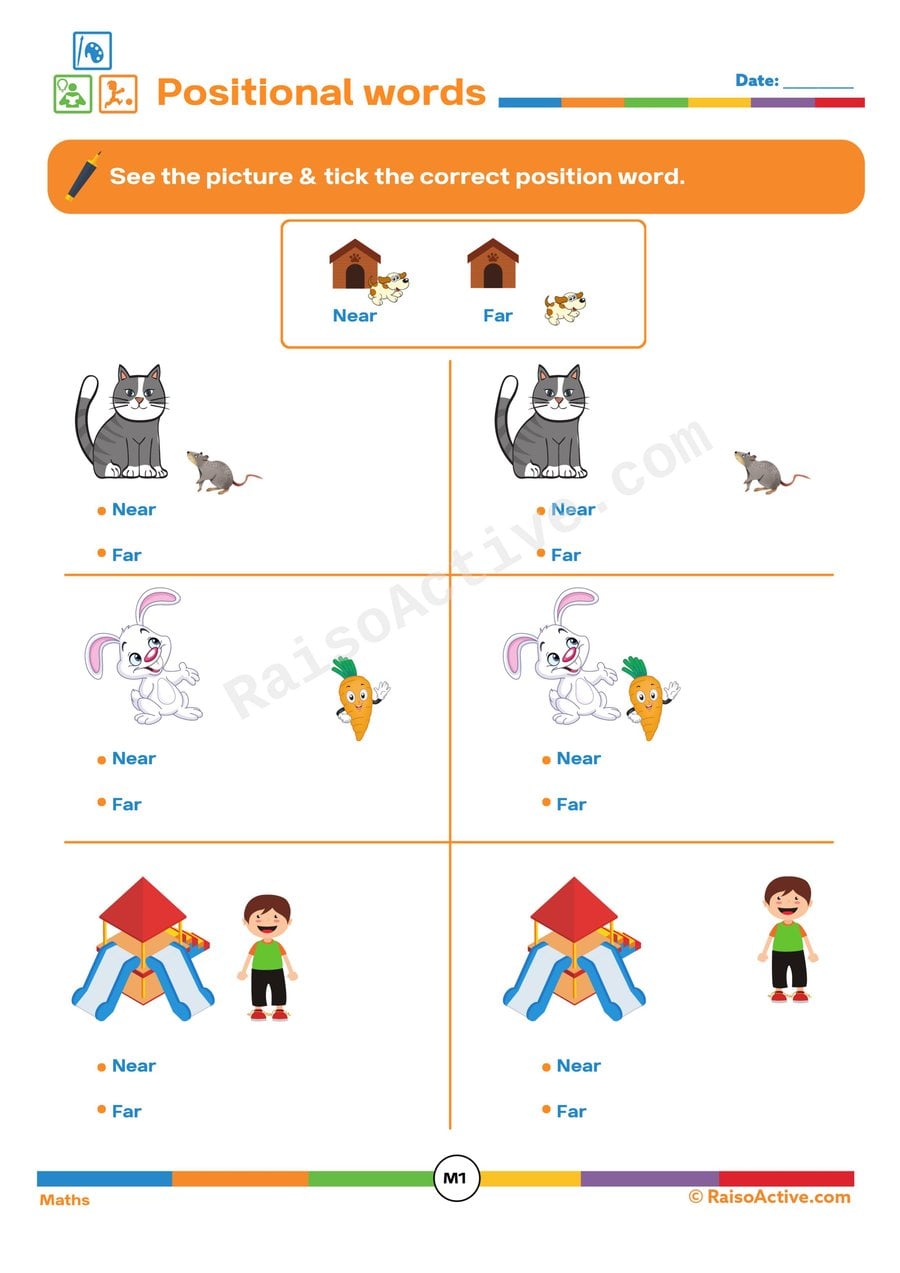
Positional Words Worksheet: Near and Far
Ages 3-5 · Preschool–Pre-KAges 3-5 · Nursery–ReceptionAges 3-5 · Nursery–LKGAges 3-5
This worksheet introduces children ages 3-5 to the positional concepts of 'near' and 'far,' asking them to look at a picture and tick the word that correctly describes an object's distance from a reference point. Positional vocabulary like this is an important building block for spatial reasoning and later geometry and direction-following skills. Because near and far are relative concepts rather than fixed labels, this practice also builds flexible thinking about how position depends on comparison.
Related worksheets
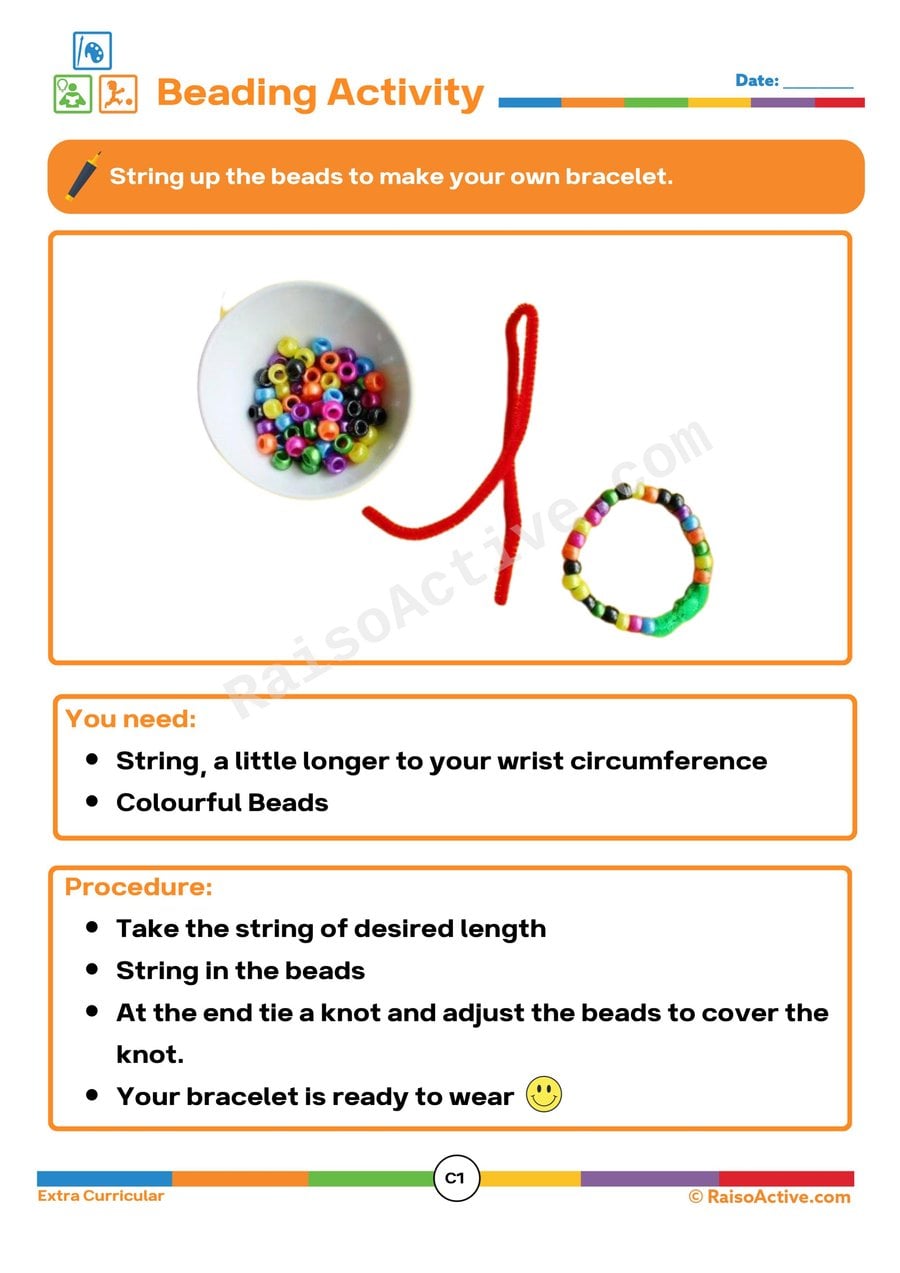
Beading Fun: Make Your Own Bracelet Worksheet
Ages 3-5 · Preschool–Pre-KAges 3-5 · Nursery–ReceptionAges 3-5 · Nursery–LKGAges 3-5
This beading craft has children ages 3-5 string beads onto a cord and tie it off to make a wearable bracelet, building bilateral coordination as one hand holds the string steady while the other threads beads — a genuinely demanding fine motor task at this age. Completing a sequence of small, repeated actions toward a finished, wearable product also builds patience and a sense of accomplishment.
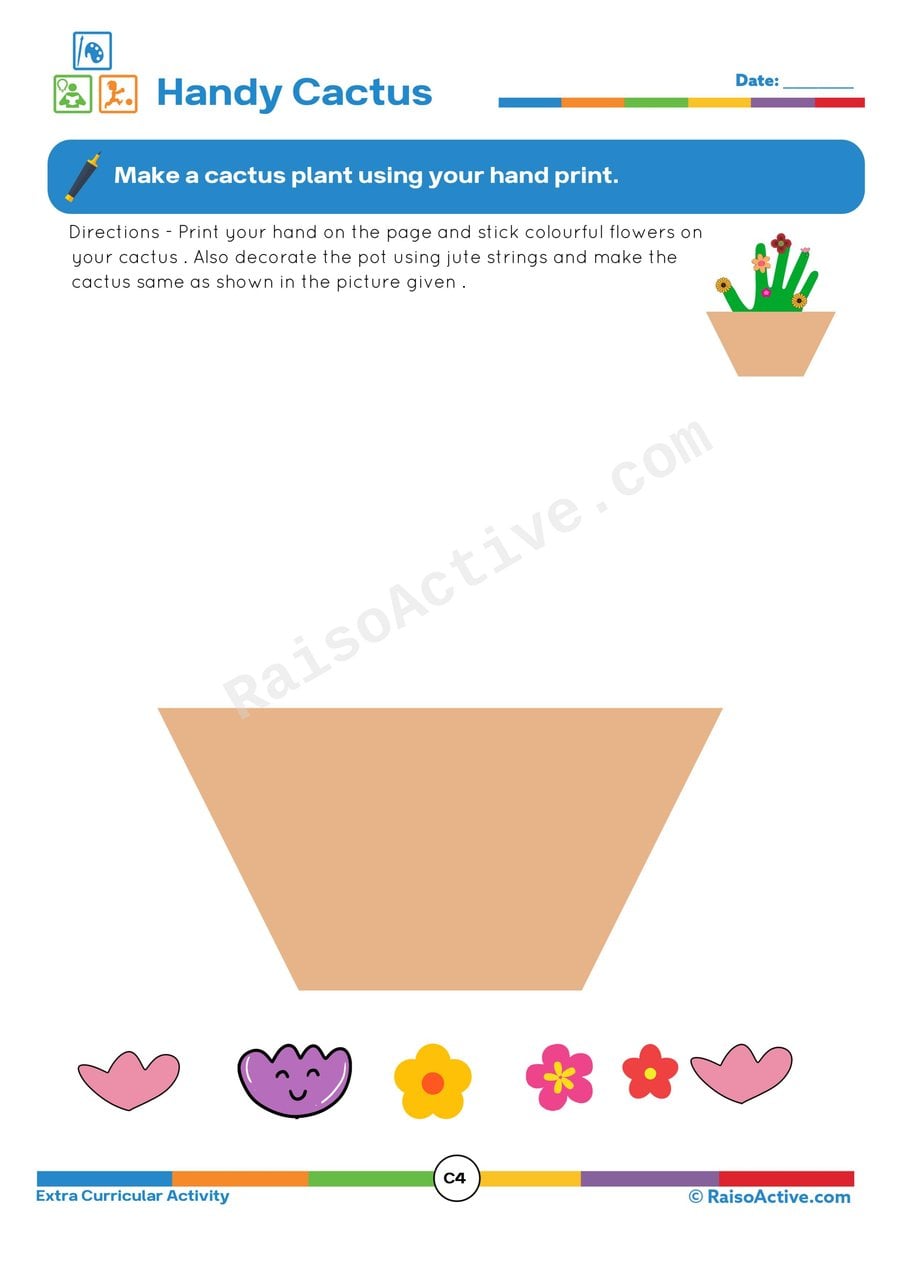
Handprint Cactus Craft Worksheet for Kids
Ages 3-5 · Preschool–Pre-KAges 3-5 · Nursery–ReceptionAges 3-5 · Nursery–LKGAges 3-5
Tracing and decorating a handprint into cactus shapes builds fine motor control and following-directions skills for children ages 3-5, since they must coordinate cutting, gluing, and arranging several craft pieces to match a shown example.

Cute Rabbit Cut and Paste Worksheet for Preschoolers
Ages 3-5 · Preschool–Pre-KAges 3-5 · Nursery–ReceptionAges 3-5 · Nursery–LKGAges 3-5
Children ages 3-5 practice precise scissor control and gluing as they cut apart separate body-shape pieces and assemble them into a complete rabbit picture, building the fine motor coordination needed for later handwriting. Piecing together separate parts to form a whole also strengthens early spatial reasoning about how shapes fit together.

Napkin Folding Fun: Following Instructions Worksheet for Kids
Ages 3-5 · Preschool–Pre-KAges 3-5 · Nursery–ReceptionAges 3-5 · Nursery–LKGAges 3-5
This activity builds sequential following-directions skills and fine motor control as children fold a napkin step by step into a new shape. Because each fold depends on the one before it, children practice holding a multi-step instruction in mind and executing it in order — a skill that transfers directly to following recipes, craft instructions, and classroom directions later on.

Flower Fun: Draw and Color a Flower with Bottle Caps and Bangles!
Ages 3-5 · Preschool–Pre-KAges 3-5 · Nursery–ReceptionAges 3-5 · Nursery–LKGAges 3-5
Tracing around a bottle cap for small circles and a bangle for large circles teaches children ages 3-5 to use everyday objects as drawing tools, building fine motor control and an early sense of composing shapes into a picture. This hands-on approach to drawing a flower also introduces the idea that complex pictures can be built from simple repeated shapes.

Cotton Bud Flower Craft Worksheet for Preschoolers
Ages 3-5 · Preschool–Pre-KAges 3-5 · Nursery–ReceptionAges 3-5 · Nursery–LKGAges 3-5
This cotton bud craft has children ages 3-5 paste cotton buds around a yellow center to build flower petals, an activity that strengthens the pincer grip and hand control needed for later pencil writing. Because each cotton bud represents one petal, the craft doubles as a counting exercise, giving children practice with one-to-one correspondence while they work. Combining a sensory material like cotton buds with a familiar shape — the flower — makes fine motor practice feel like play rather than drilling.

Pikachu Pulses Worksheet: Following Instructions and Coloring Fun!
Ages 3-5 · Preschool–Pre-KAges 3-5 · Nursery–ReceptionAges 3-5 · Nursery–LKGAges 3-5
This activity helps children ages 3-5 practice following multi-step color instructions and strengthens pincer grip and fine motor precision as they place small dried lentils onto specific sections of a Pikachu outline. Working with tiny materials like lentils demands more finger control than crayons or markers, making this a genuinely challenging and rewarding fine motor exercise.

Color Mixing Worksheet for Preschoolers: Learn Primary and Secondary Colors!
Ages 4-6 · Pre-K–KindergartenAges 4-6 · Reception–Year 1Ages 4-6 · LKG–UKGAges 4-6
Identifying primary colors and predicting which two combine to create each secondary color introduces children ages 4-6 to basic color theory, an early scientific concept about how colors interact. This worksheet builds the vocabulary and reasoning skills needed to understand color mixing before testing it out with real paint or crayons.
Guides for this topic

Celebrating Diversity: How to Incorporate Cultural Awareness in Learning Activities for Young Children
Practical cultural awareness activities for young children aged 2-8. Explore Indian festivals, world cultures, food, music, and crafts to teach diversity and inclusion.
How to Teach Cutting Skills to Your Preschooler: A Complete Guide for Parents and Teachers
Help your child master scissor skills safely. Expert guide covering readiness signs, scissor types, progression steps, pre-cutting exercises, and fun practice ideas for ages 2-6.
What Supplies Do You Need for Preschool Learning at Home: The Complete Essential Guide
Discover the essential supplies for preschool learning at home — from crayons and counting blocks to sensory bins. Affordable options available in India for ages 2–6.
Reviews
Every worksheet for ages 3–5, no watermark
Members download the full library of 1,000+ worksheets and every activity pack without watermarks or daily limits. One year costs ₹999 in India or $20 elsewhere.
See membership plansOr download any worksheet free with a watermark (5 a day).