Free printable worksheets · US · UK · India
Grade 1 / Class 1 Addition Worksheets (Ages 6–7)
Grade 1 / Class 1 addition worksheets are practice sheets for children aged 6–7 in Grade 1 in the US and Class 1 in India. Addition is combining two or more groups of objects or numbers to find a total, using objects, pictures or written number sentences. The sheets on this page cover combining two groups into one, number bonds and doubles, counting on from a number and making ten.
Grade 1, known as Class 1 in India and Year 2 in the UK, is where a child works through a full page independently: place value with tens and ones, addition and subtraction within 20, and short reading passages followed by comprehension questions replace picture-supported counting sheets. Six-year-olds recall many addition facts within 20 without counting, especially doubles and facts made from ten, and begin adding two-digit numbers in columns, keeping tens and ones lined up. Worksheets should mix a page of fact recall against the clock with column addition problems that do not need regrouping, and a few word problems where the child chooses to add rather than being told to. Regrouping across a ten in column addition is next year's step.
105+ worksheets · free PDF download · print on A4 or Letter
Grade 1 / Class 1 Addition Worksheets to print
Browse all worksheets for ages 6–7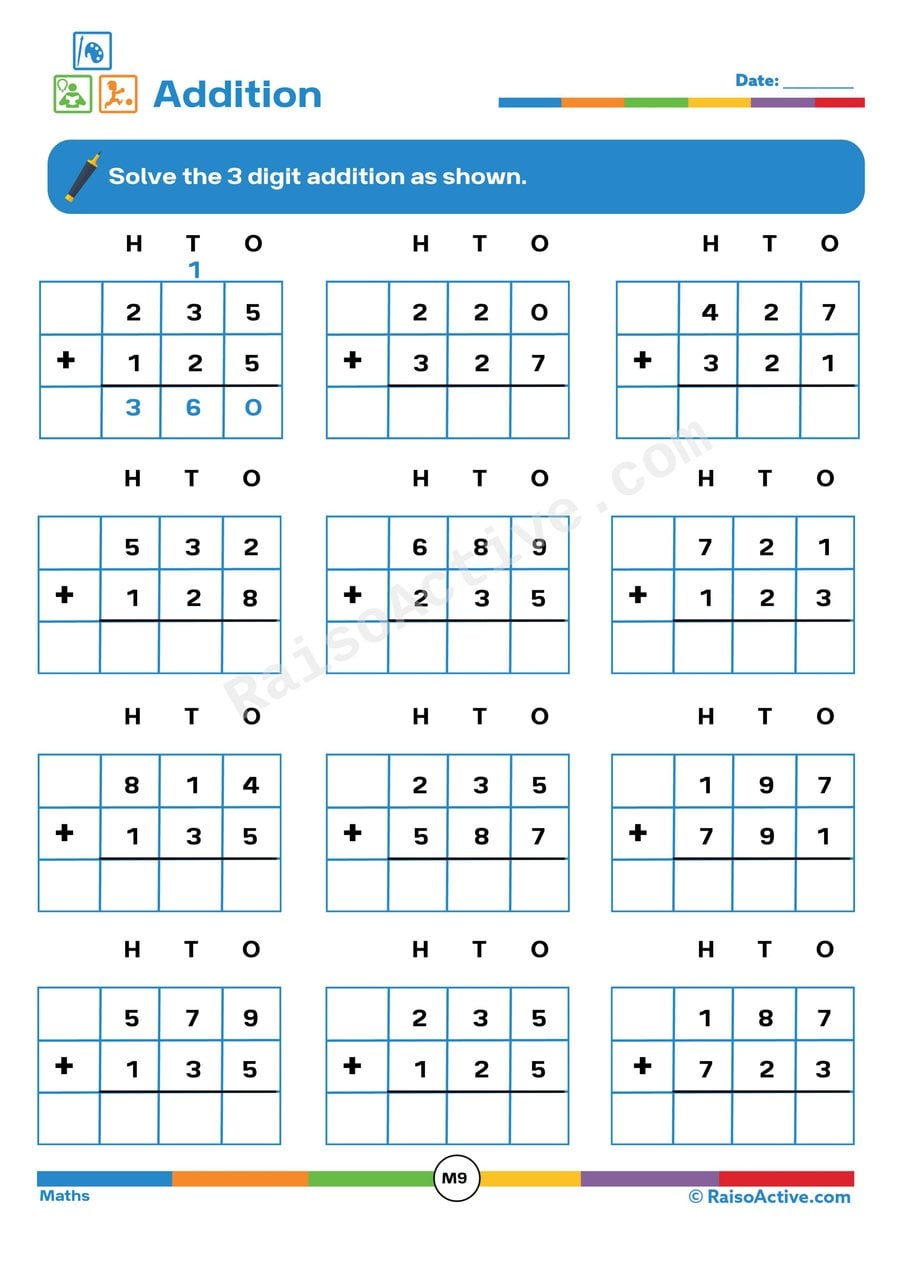
3-Digit Addition Worksheet for Kids
Adding two three-digit numbers requires children to work through the ones, tens, and hundreds columns in order and understand how a sum in one column can carry over into the next, a significant step up from single-digit addition. For ages six to eight, mastering this column-based process builds the procedural fluency needed for all future multi-digit arithmetic.
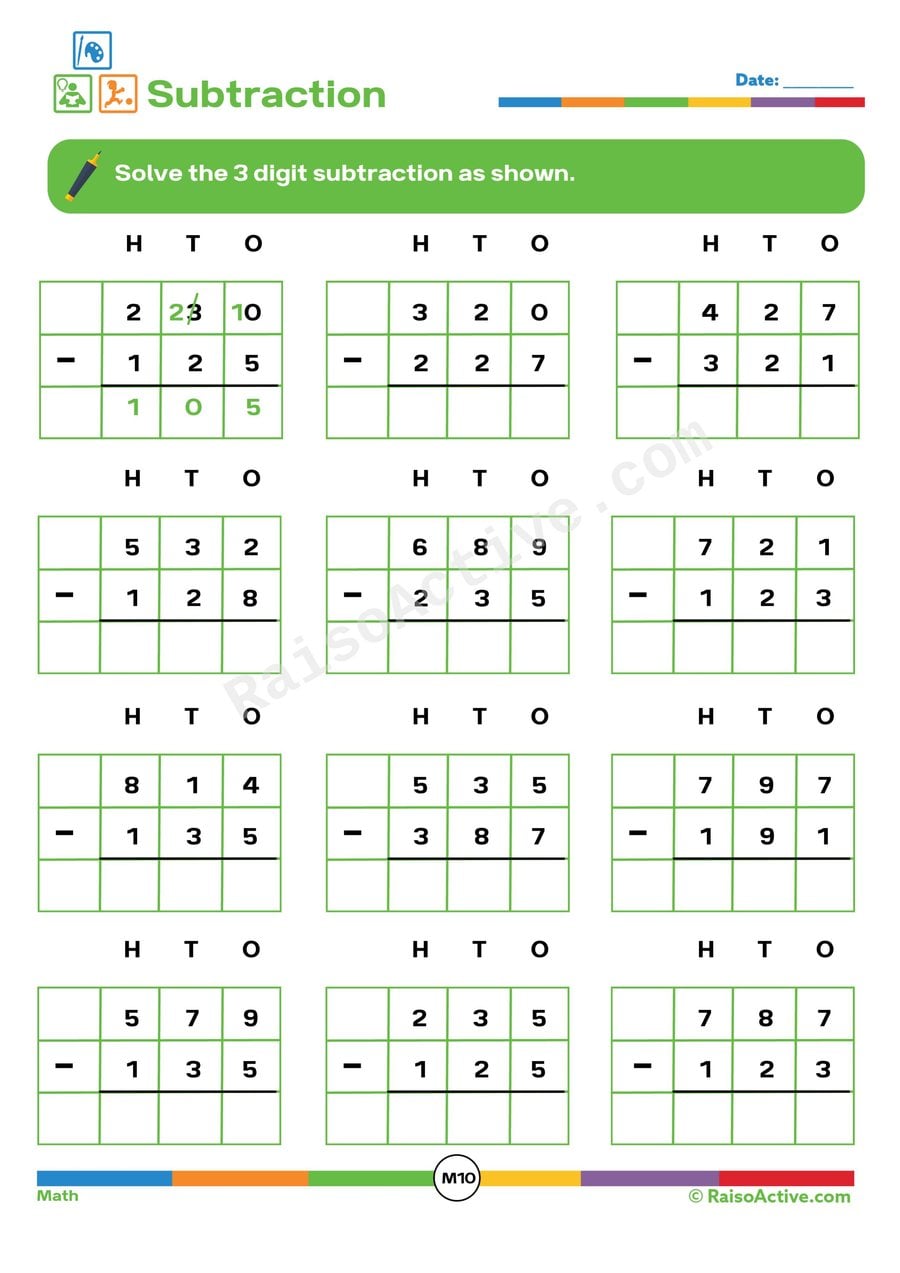
3-Digit Subtraction Worksheet for Kids
Subtracting three-digit numbers introduces children to borrowing, or regrouping, across place value columns, a more demanding skill than simple subtraction since it requires understanding that a ten can be 'broken' into ones when a column doesn't have enough to subtract from. For ages five to seven, this worksheet builds the procedural foundation for confident multi-digit subtraction going forward.
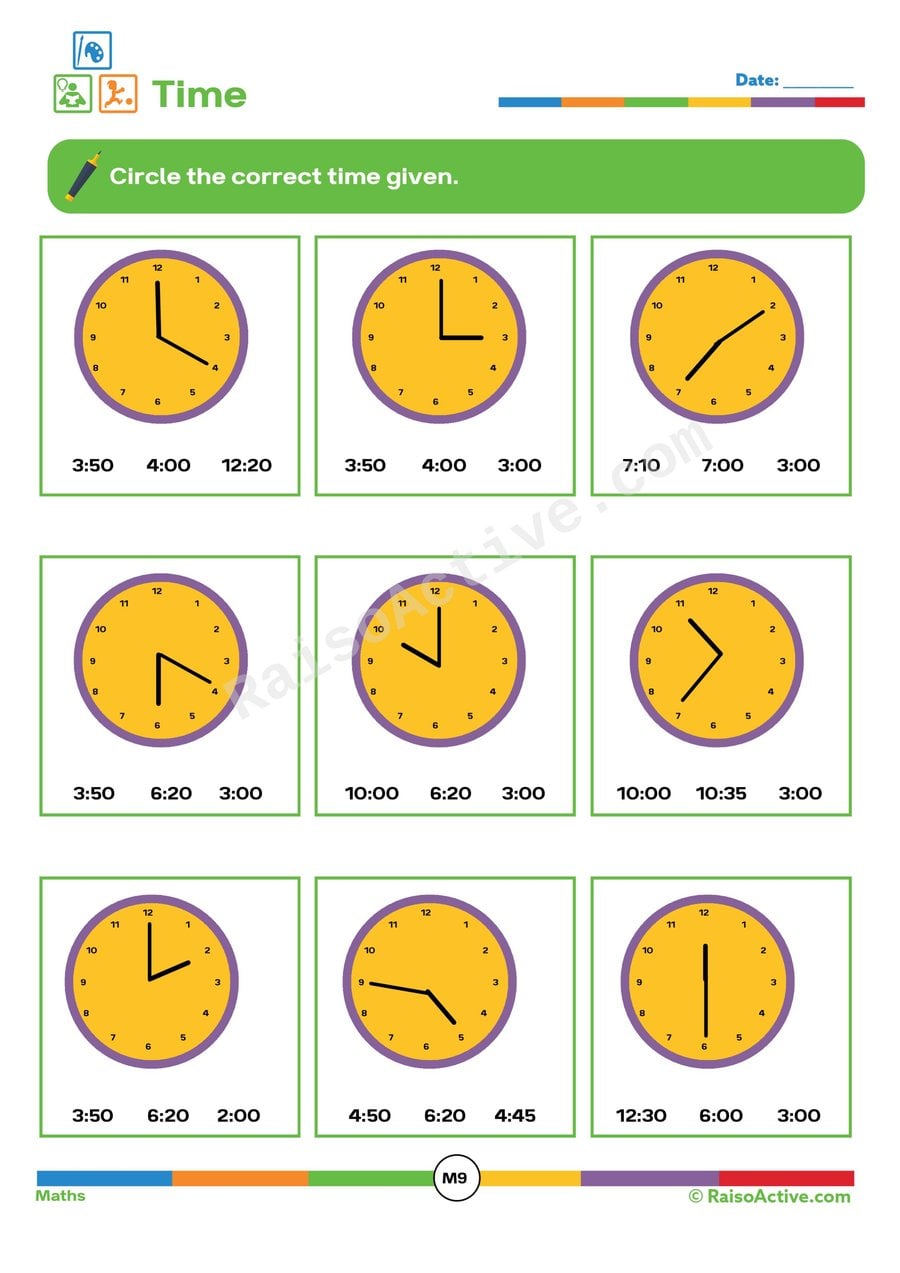
Time Telling Worksheet: Circle the Correct Time!
Reading an analog clock face and choosing the matching time from three written options builds clock-reading fluency for children ages 5-7, requiring them to interpret both the hour and minute hands together rather than guessing from a single hand.
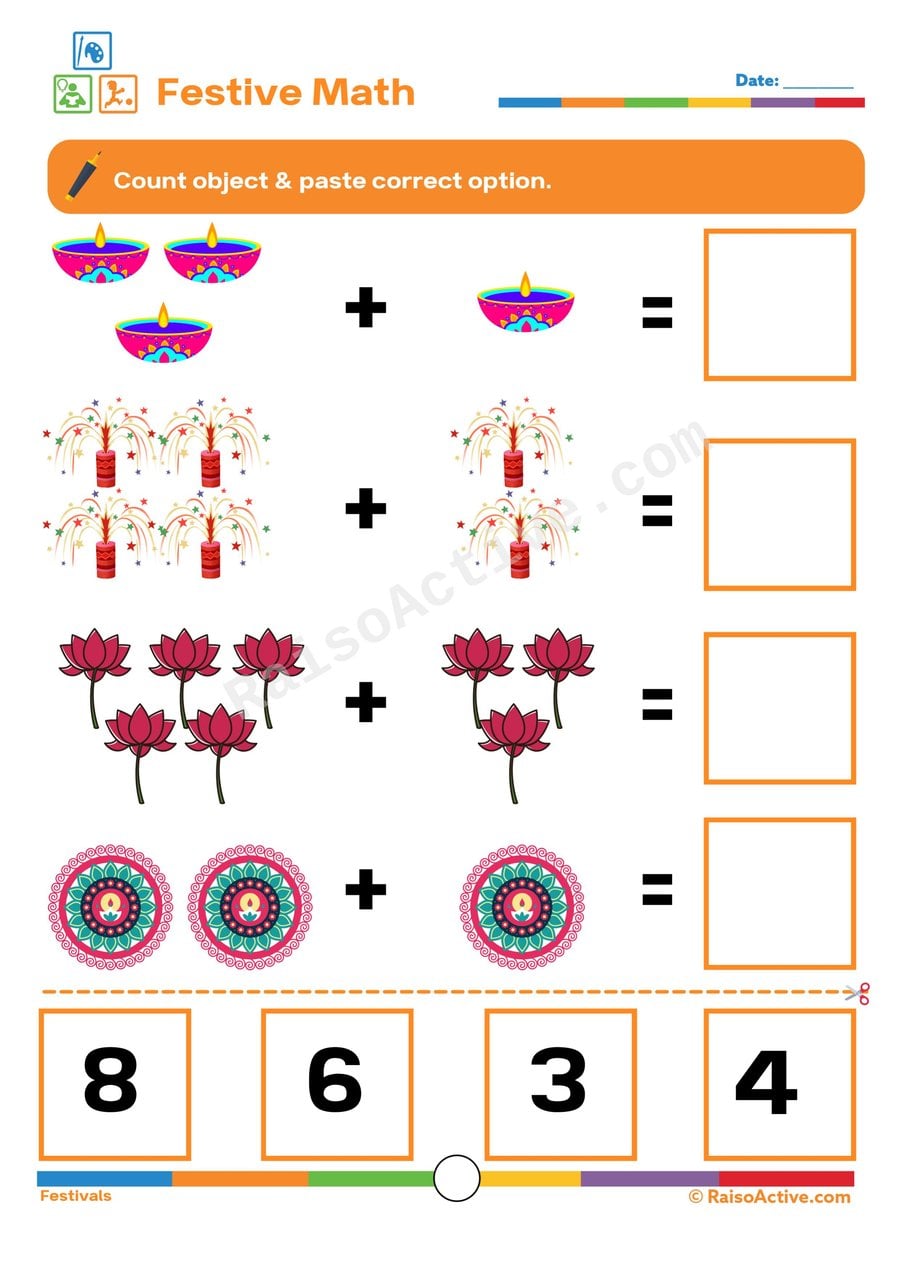
Festive Math: Count and Add Objects Worksheet
Children ages 4-6 practice counting groups of festival-themed objects and combining them through simple addition, building early number sense and the concept that addition means putting two groups together. Counting festive imagery keeps the math concrete and visual, which is especially important before children can add using abstract numerals alone.

Counting Fun: Count by 5 or 10 Worksheet for Preschoolers!
Counting objects arranged in groups of five or ten teaches children ages 4-6 skip counting, a faster strategy for finding a total than counting every single object one by one. This early efficiency strategy builds a foundation for later multiplication and for quickly estimating larger quantities.

Subtraction Worksheet: Count and Subtract with Fun Objects!
This worksheet grounds subtraction in something 4-6 year olds can actually see and count — a group of objects being taken away — rather than starting with abstract numerals and symbols. Because your child has to count the starting group, physically account for the number being subtracted, and then count what's left, this builds real number sense about what subtraction means, not just a memorized fact.

Festive Math Fun: Counting and Addition Worksheet for Kids
Children ages 4-6 sharpen counting accuracy and practice basic addition using festive Christmas visuals, including a snowman scene where sums are recorded directly on its body. This worksheet also introduces subtraction-style thinking by having children count what remains after some objects are 'struck out,' giving an early, concrete preview of take-away math.
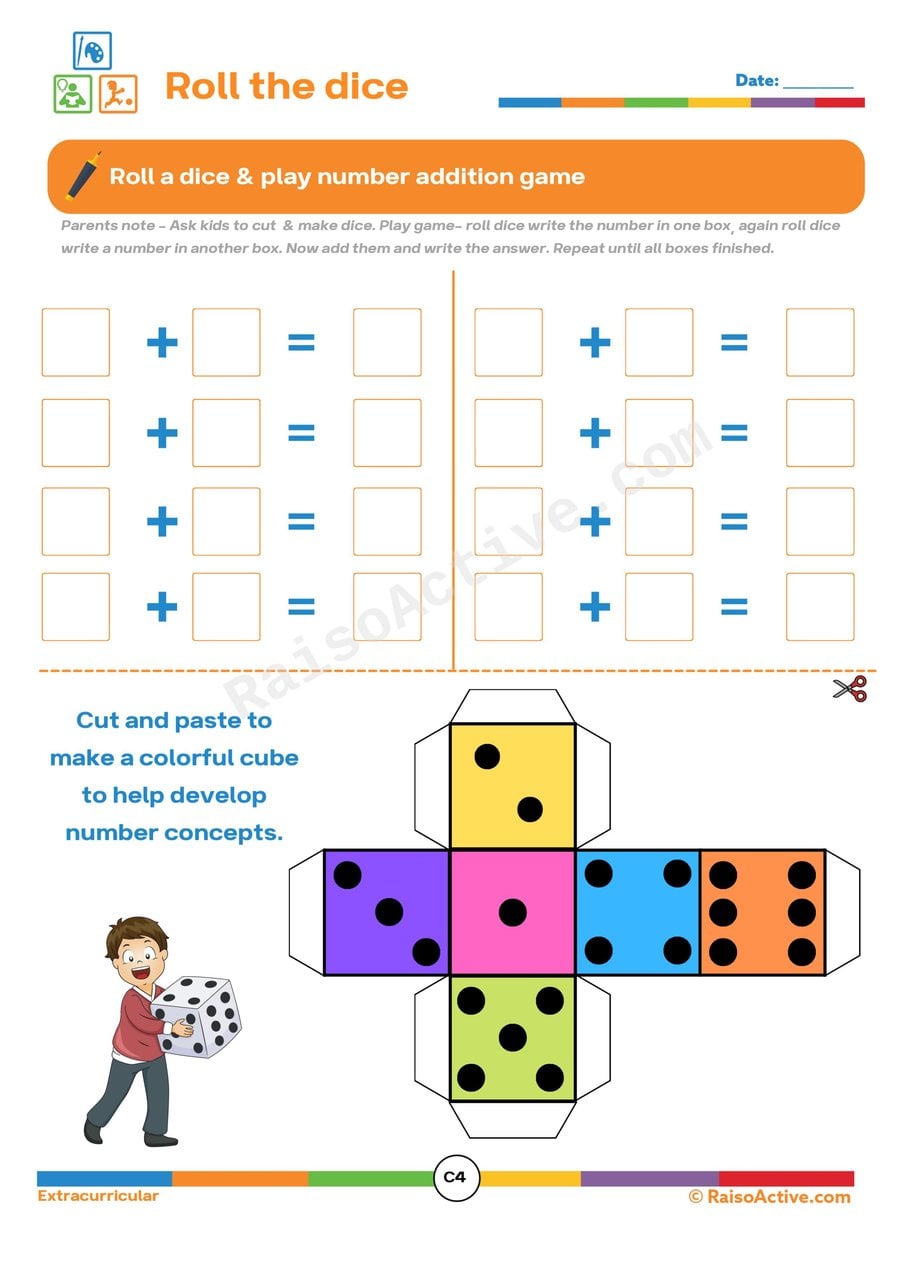
Roll the Dice Addition Worksheet for Kids
This dice-based addition worksheet gives children ages 4-6 hands-on practice combining two quantities into a sum, using a physical dice roll to make the abstract idea of addition concrete and random. Rolling, recording, and adding numbers repeatedly builds fluency with numbers 1-6 and reinforces that addition means 'putting together.' The repeated-roll format also builds working memory as children hold two numbers in mind to combine them.

Addition and Subtraction Sums Worksheet for Preschoolers
Practicing addition and subtraction problems within 10 together, rather than in separate worksheets, helps children see the two operations as related, that subtraction can undo addition, which builds more flexible number sense than drilling each skill in isolation. For ages four to six, working within small numbers keeps the focus on understanding the operations rather than on managing large quantities.

Alligator Comparison Worksheet: Greater Than, Less Than, and Equal To!
This worksheet teaches children ages 4-6 to compare two numbers using the 'hungry alligator' mnemonic, where the alligator's mouth always opens toward the larger number. Understanding greater than, less than, and equal to is an essential building block for later place value, ordering, and basic algebra concepts.

Subtraction Worksheet: Find the Row with Matching Answers!
This worksheet pushes subtraction practice a step further for children ages 4-6 by having them solve several subtraction problems and then compare the answers across different rows to find matches, adding a layer of number-sense reasoning on top of basic calculation. Recognizing that two different subtraction problems can produce the same answer helps children understand that numbers can be reached in more than one way, which is an important early step toward flexible mathematical thinking. This kind of comparison task also builds attention to detail, since a child has to solve every problem accurately before the matching rows can be found.
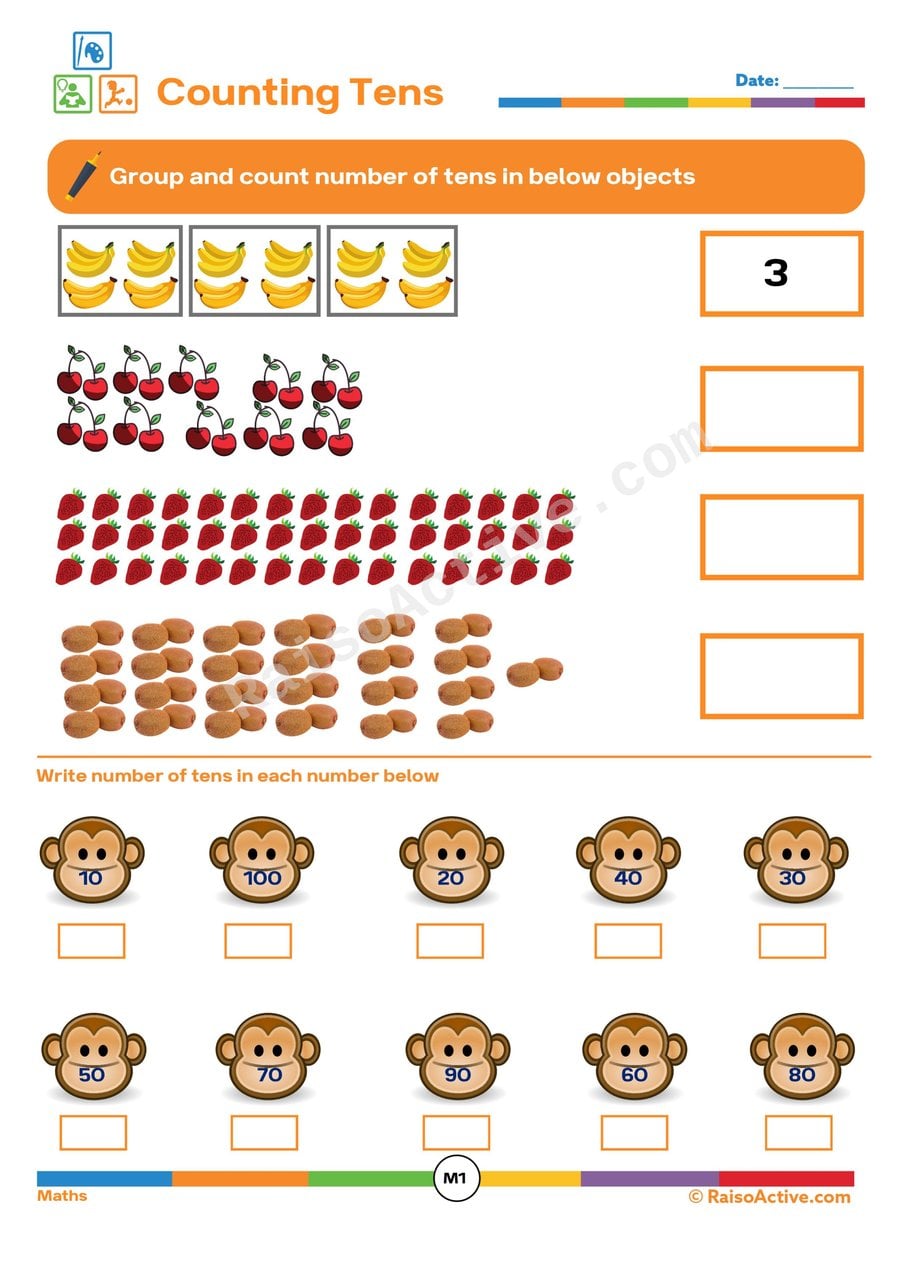
Counting Tens Worksheet: Group and Count!
Grouping objects into sets of ten and counting the groups introduces the foundation of place value, the idea that a 'ten' is both ten individual ones and a single unit worth counting on its own. This worksheet gives ages four to six early, hands-on exposure to that concept well before they encounter formal place-value charts in school.

Subtraction Fun: Practice Problems for Early Learners
This worksheet gives children ages 4-6 repeated practice with basic subtraction, working through simple equations and word problems that build number sense before formal arithmetic instruction begins. Filling in missing numbers within equations also introduces the idea that subtraction is reversible and connected to addition, an early step toward flexible number thinking. Repeated, varied practice like this helps subtraction facts move from effortful counting to quick recall.

Navaratri Dance Count: A Fun Counting Worksheet for Kids!
This worksheet builds counting accuracy in children ages 4-6 as they count dancers in Garba or Navaratri dance scenes and record the totals. Counting figures arranged in a lively, non-linear scene is slightly more challenging than counting objects in a row, which pushes children to track what they've already counted more carefully.

Descending Order Worksheet for Kids: Numbers 63-100
Arranging numbers from largest to smallest asks children ages 4-6 to apply their counting knowledge in reverse, which is a genuinely different mental skill from counting forward and helps solidify a flexible, deep understanding of number order rather than rote recitation. Working within the 63 to 100 range also pushes children to compare two-digit numbers directly, deciding which of two numbers is bigger based on both digits rather than just the first one. This kind of descending practice complements ascending counting practice and rounds out a child's overall number sense.

Subtraction Worksheet: Practice Subtracting with Fun Pictures!
Children ages 4-6 practice subtraction by looking at a set of pictured objects, crossing out or removing the indicated amount, and writing the resulting total. Seeing subtraction visually, rather than only as abstract numbers, helps children genuinely understand what 'taking away' means before relying on memorized facts. This visual approach builds a strong foundation for mental math strategies used in later grades.
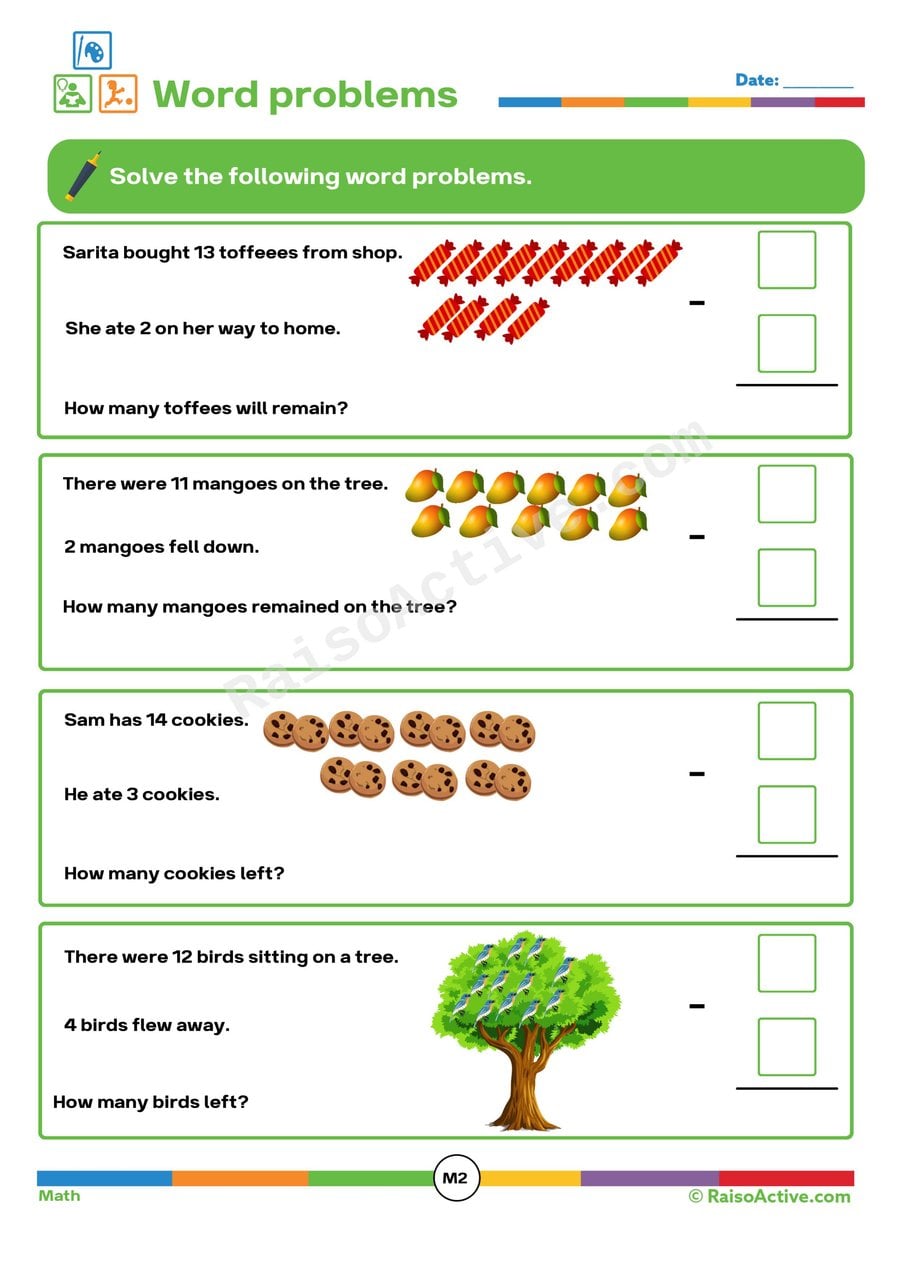
Word Problems Worksheet for Early Learners
Children ages 4-6 practice applying subtraction to real-life scenarios by reading short word problems and figuring out how many items remain after some are taken away, connecting basic subtraction facts to reading comprehension. Translating a written story into a subtraction problem is a more advanced skill than solving bare number sentences, since it requires understanding what the story is actually asking.

Number Pattern Worksheet for Kids: Identify and Fill in the Blanks!
Identifying and continuing number patterns builds early algebraic thinking for children ages 4-6, teaching them to notice a repeated rule, like adding one or adding five, rather than treating each number as unrelated. This kind of pattern recognition strengthens number sense and lays groundwork for later skip-counting, multiplication, and even sequencing in non-math contexts.

Addition Worksheet: Adding Numbers with Fun Pictures!
This worksheet gives children ages 4-6 practice with simple addition by having them combine two groups of pictured objects and write the resulting total, reinforcing the core idea that addition means putting groups together to find 'how many in all.' Working from pictures rather than numbers alone helps bridge concrete counting to the more abstract number sentences children will encounter as their math skills progress.

Counting Ones Worksheet: Match and Fill in the Blanks!
Children ages 4-6 build early place value understanding by matching numbers to their corresponding sums and filling in blanks with the correct count of ones. This introduces the foundational idea that numbers are made up of countable units, a concept that underlies all later addition, subtraction, and multi-digit math. Matching and filling in blanks together reinforces both number recognition and basic counting accuracy.

Word Problems Worksheet: Addition Practice for Kids
Children ages 4-6 practice applying addition to real-life scenarios by reading short word problems and figuring out what numbers to add together, a skill that bridges basic number facts with reading comprehension and problem-solving. Solving word problems teaches children to translate language into math, a step beyond simply adding numbers already given.
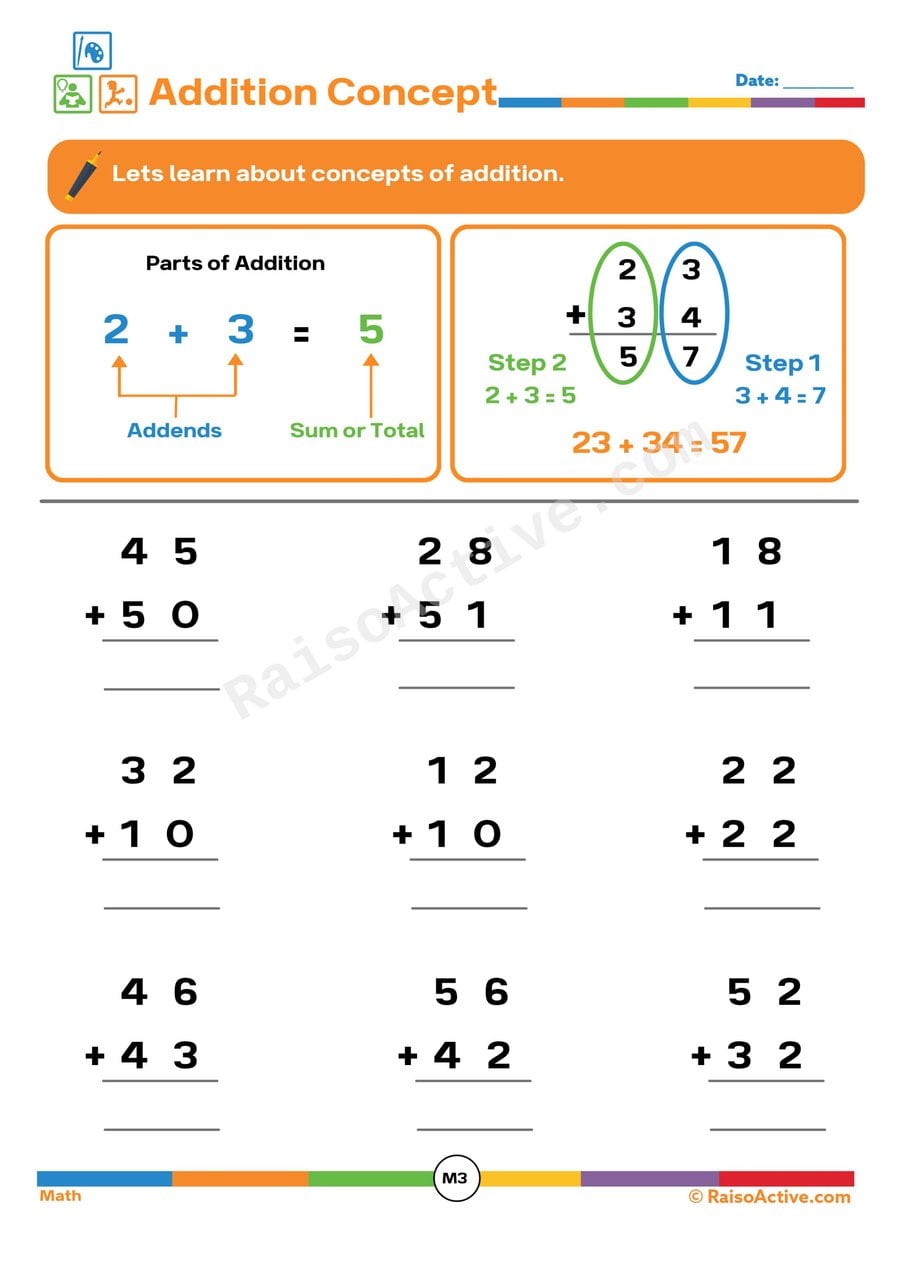
Addition Concepts Worksheet for Preschoolers
Preschoolers ages 4-6 build early number sense by visually combining two small groups into one total, the concrete foundation every later addition fact depends on. Seeing objects physically joined together, rather than just numbers on a page, helps children grasp that addition means 'putting together' before they ever memorize a sum.
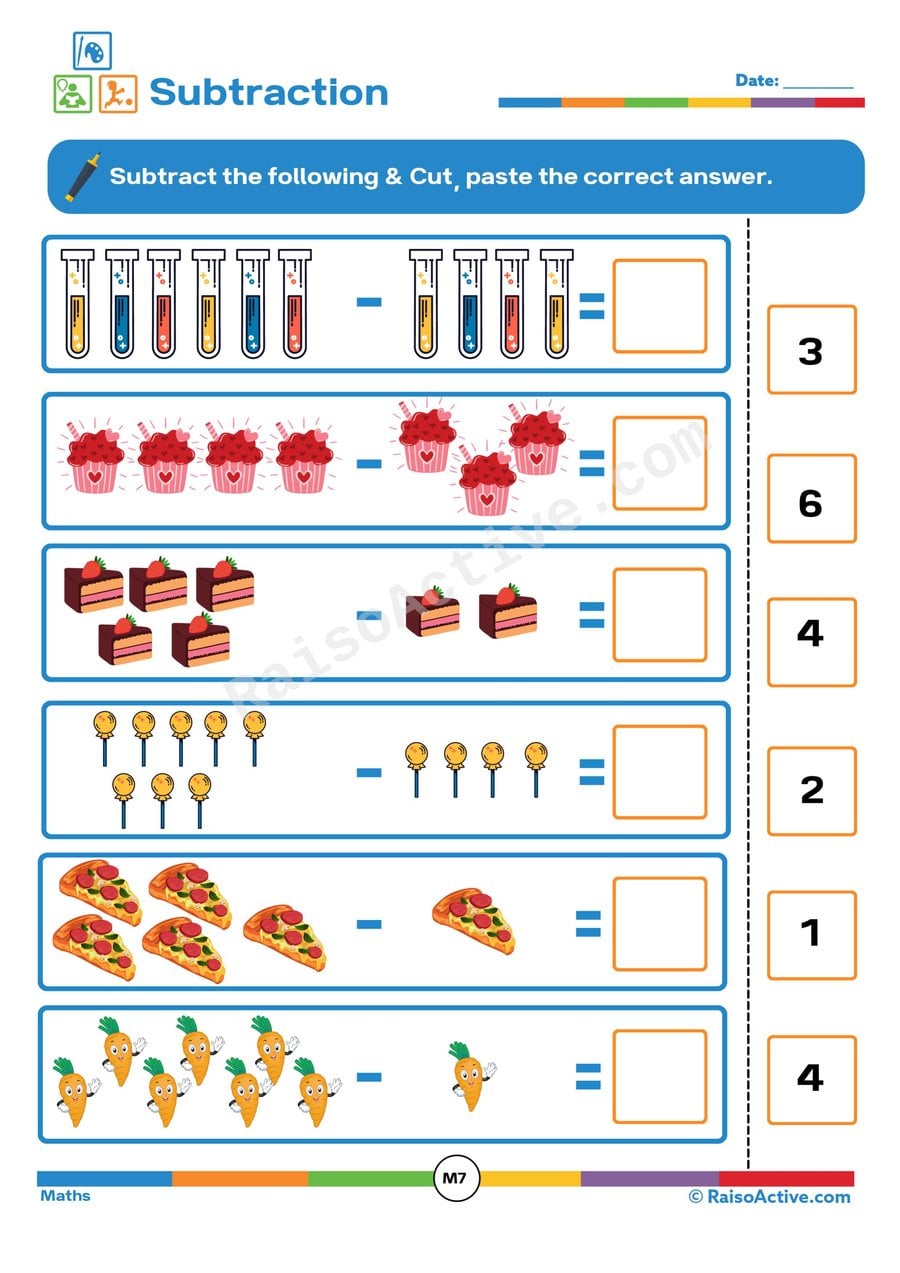
Subtraction Fun: Cut and Paste the Answers!
This worksheet grounds subtraction in something concrete for children ages 4-6 by having them count visual object groups, subtract, and then physically select and paste the correct numeral answer from a set of choices. Counting objects before subtracting keeps the math anchored in real quantities rather than abstract numerals alone, which is exactly the kind of support young learners need before they're ready for purely symbolic subtraction. The cut-and-paste answer selection also adds a layer of verification, since your child has to search through several numeral options to find the one that truly matches their calculated answer.

Rolling Addition Worksheet for Preschoolers: Dice Game Fun!
Rolling two dice and adding the results teaches children ages 4-6 the core idea of addition as combining two quantities into one total, rather than just memorizing number facts. The physical act of rolling builds excitement around math while requiring them to recognize dice pips or numerals, transfer them to paper, and calculate a sum, connecting concrete play to abstract arithmetic.
What Grade 1 / Class 1 addition worksheets cover
Six-year-olds recall many addition facts within 20 without counting, especially doubles and facts made from ten, and begin adding two-digit numbers in columns, keeping tens and ones lined up. Worksheets should mix a page of fact recall against the clock with column addition problems that do not need regrouping, and a few word problems where the child chooses to add rather than being told to. Regrouping across a ten in column addition is next year's step.
- Recall doubles and facts within 20 without counting
- Add two-digit numbers in columns, tens under tens
- Solve a word problem by choosing to add
- Use a known fact, like 5 + 5, to solve a near double
How to use these worksheets at home or in class
About twenty minutes a day, split between one math page and one reading page on alternating days, matches what most first grade teachers assign as homework. Have your child read every instruction aloud before starting, since that doubles as reading practice.
Start with the sheet that matches what your child can already do, then move one step up. Keep finished sheets in a folder: Grade 1 / Class 1 teachers often ask for evidence of practice, and children like seeing their own progress.
Is your child ready for Grade 1 / Class 1 addition work?
A child ready for this stage reads and writes numerals fluently to 20, blends simple words into sentences, follows a written instruction without help, and can explain out loud how they solved a problem rather than only stating the answer.
Frequently asked questions
How do I help my six-year-old memorize addition facts instead of counting every time?
Start with the easiest groups: doubles like 4 + 4, and facts that make ten, such as 6 + 4, since both are useful anchors for working out others. Practice one small group of facts at a time with short, frequent drills rather than one long list, and connect new facts to known ones, such as 5 + 6 being one more than 5 + 5. Fingers used only for facts not yet secure is a normal, temporary stage.
What should a Grade 1 / Class 1 child be able to do in addition?
Six-year-olds recall many addition facts within 20 without counting, especially doubles and facts made from ten, and begin adding two-digit numbers in columns, keeping tens and ones lined up. Worksheets should mix a page of fact recall against the clock with column addition problems that do not need regrouping, and a few word problems where the child chooses to add rather than being told to. Regrouping across a ten in column addition is next year's step. A child ready for this stage reads and writes numerals fluently to 20, blends simple words into sentences, follows a written instruction without help, and can explain out loud how they solved a problem rather than only stating the answer.
Do these worksheets follow the Grade 1 / Class 1 curriculum?
The sheets cover combining two groups into one, number bonds and doubles, counting on from a number and making ten, which sit inside the Common Core Grade 1 (1.OA, 1.NBT, RF.1.3); NEP 2020 Foundational Stage Class 1; National Curriculum KS1 (Year 2) outcomes for Grade 1 / Class 1. Class 1 (India), Year 2 (UK) use the same skills at this age, so the sheets also fit families following those programmes.
Are these Grade 1 / Class 1 addition worksheets free?
Yes. Each worksheet downloads free as a watermarked PDF once you create an account, with a limit of five a day. An annual membership ($20) removes the watermark and the limit for the whole library of over 1,000 worksheets and every printable pack.

Written by
Hemsweta Jain · Teacher Cheena
MBA and Early Childhood Educator, teaching since 2014 · Founder of RaisoActive, Mumbai
Written and reviewed by Hemsweta Jain (Teacher Cheena), who designs every RaisoActive worksheet.
Last reviewed
Printable packs for ages 6–7
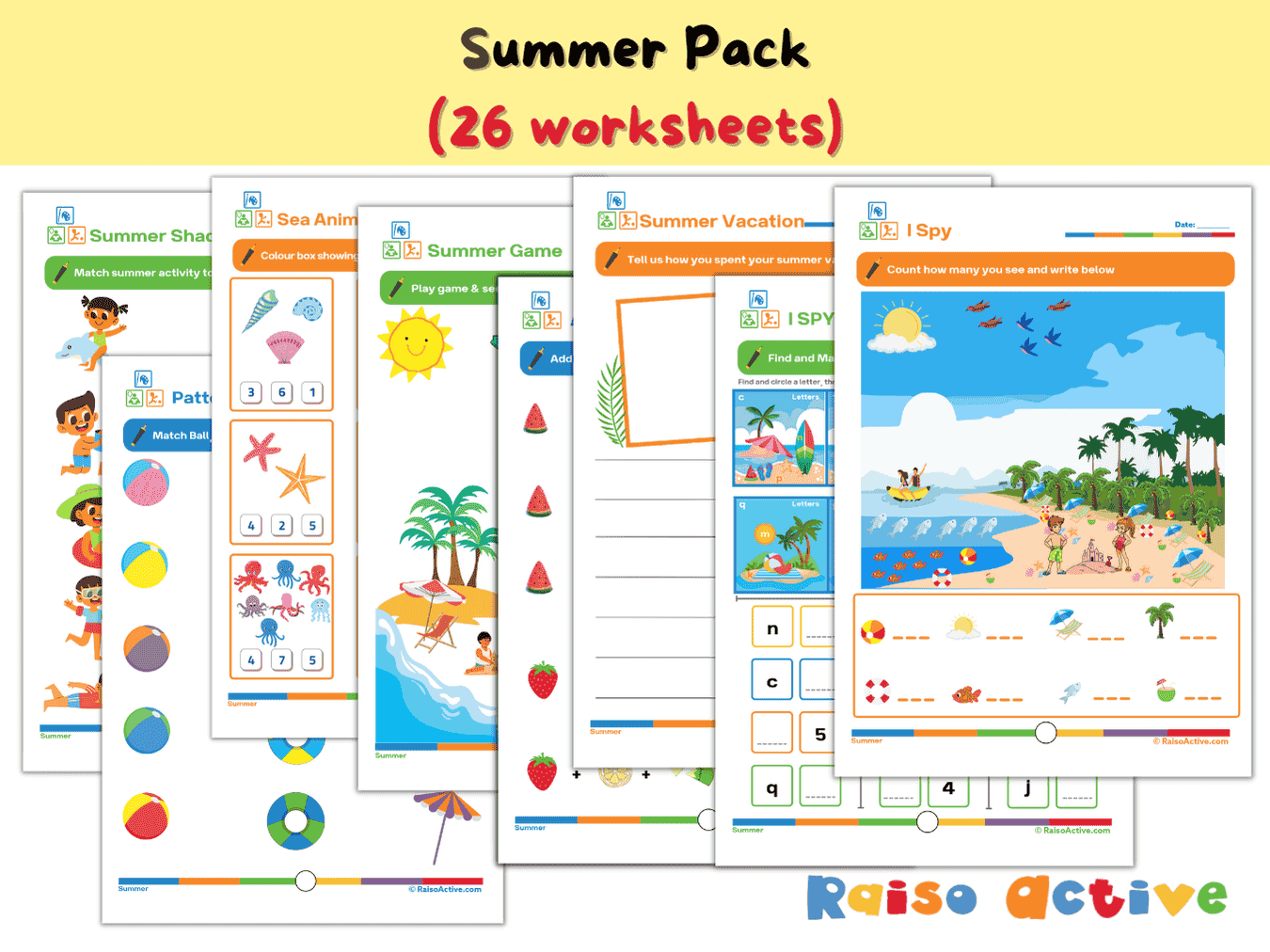
Summer Activity Pack: Math, Literacy, Puzzles & More for Preschool & Kindergarten
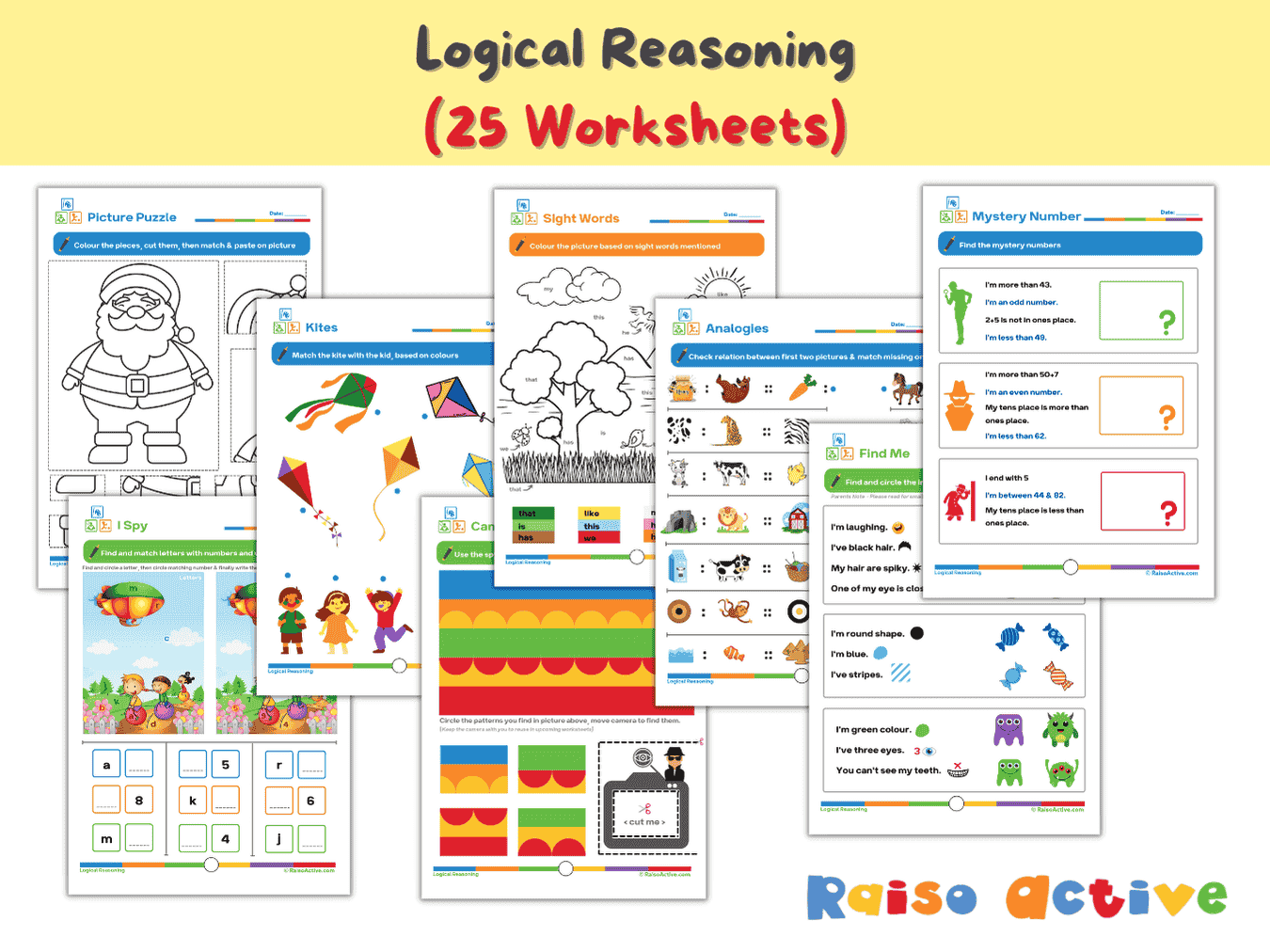
Logical Reasoning Activity Book for Preschool & Kindergarten | Patterns, Puzzles & Analogies
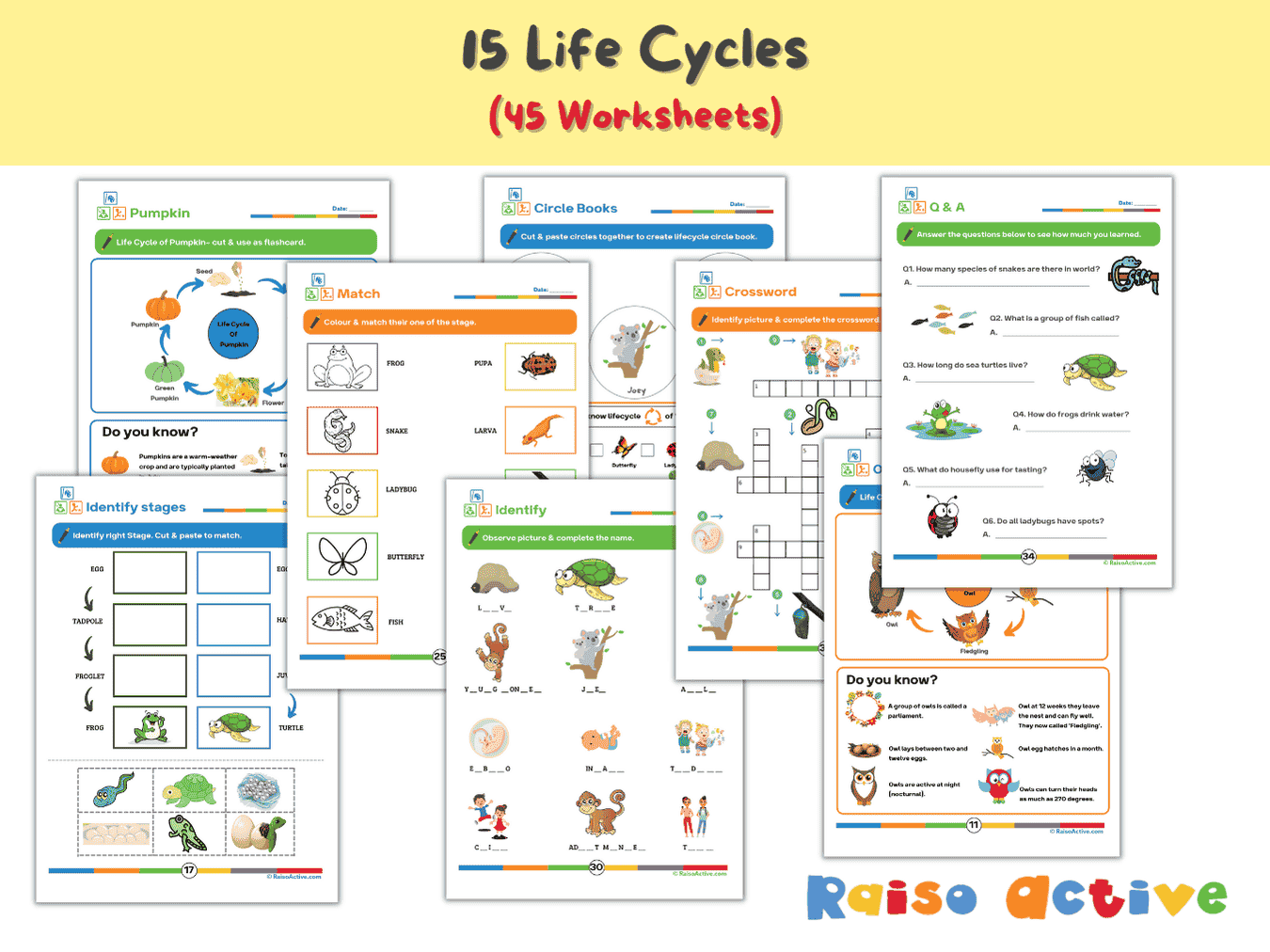
Lifecycles Activity Book & Flashcards for Preschool & Early Elementary
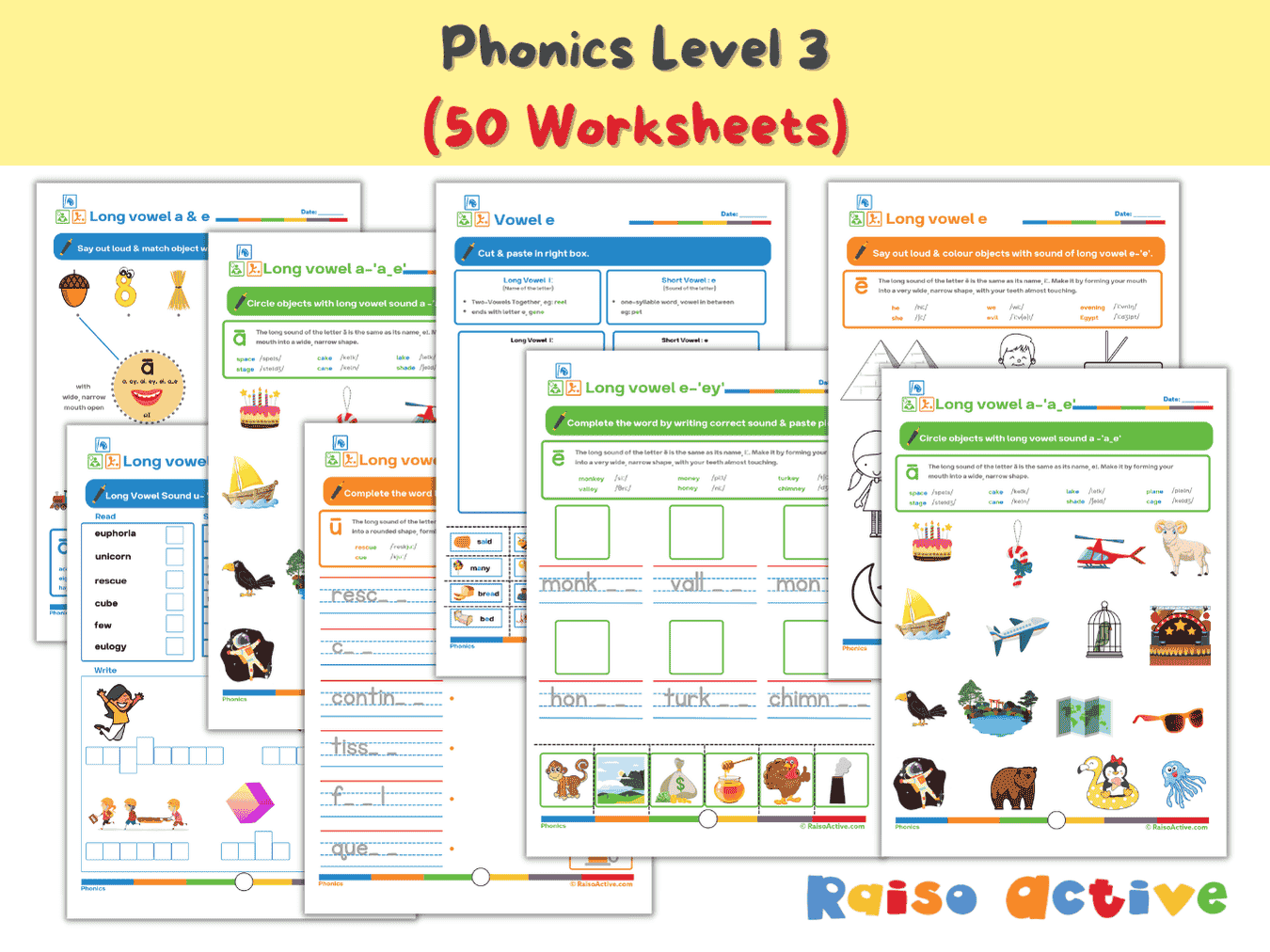
Phonics Level 3 Long Vowels Activity Book for Kindergarten & 1st Grade
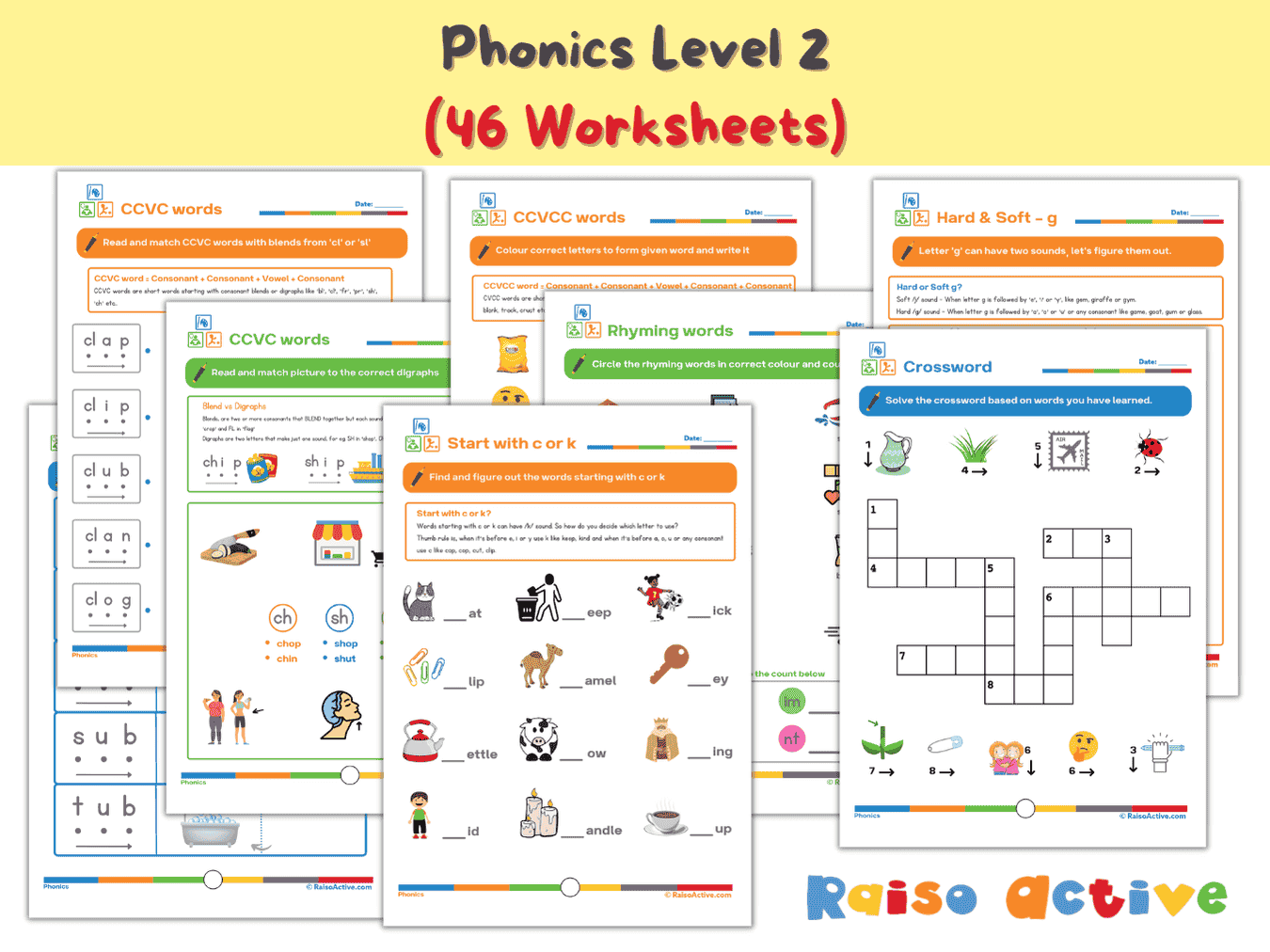
Phonics Level 2 Worksheets: CVC, CCVC, CVCC Word Families & Blends for Early Readers (Ages 4-7)
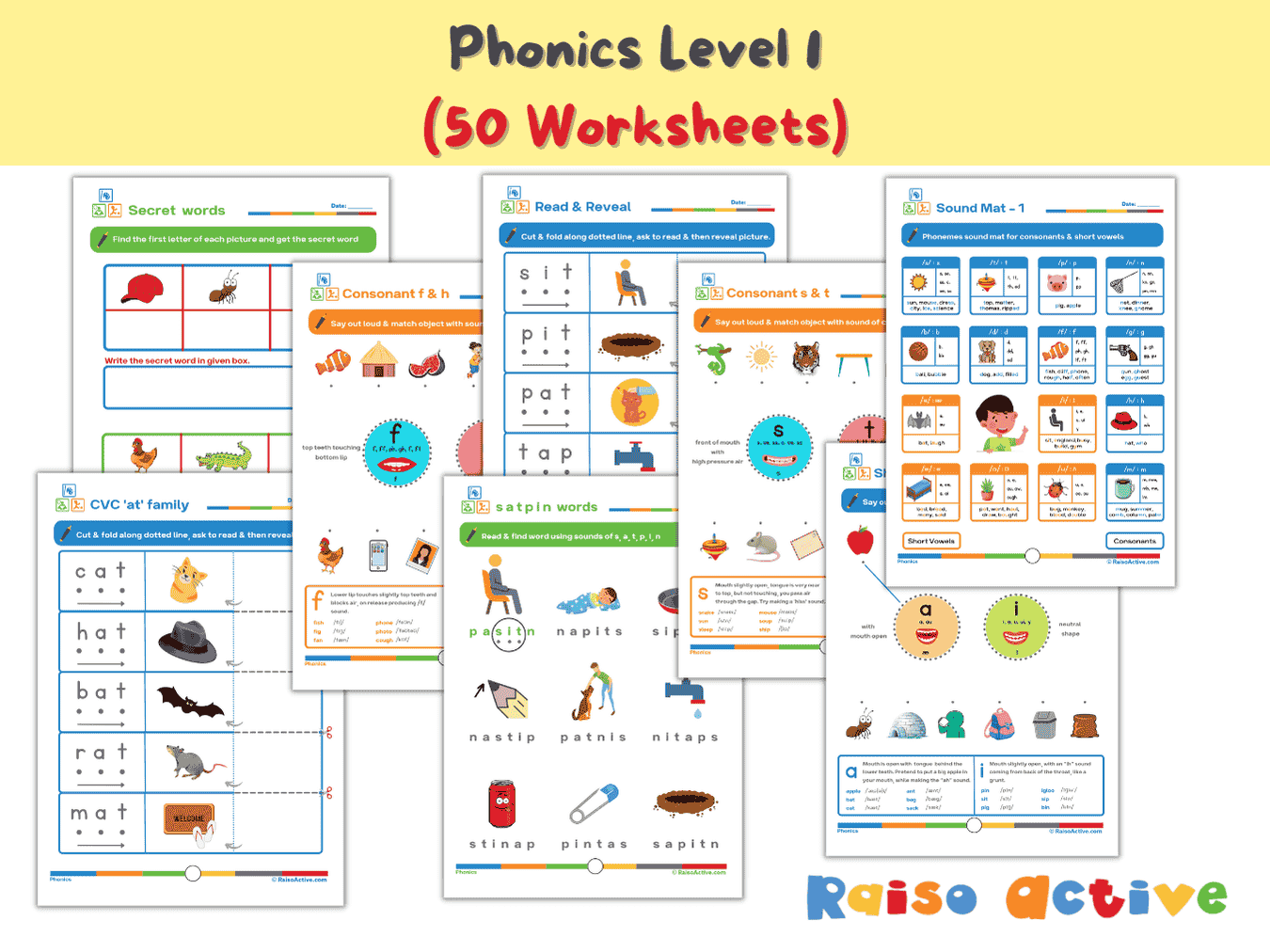
Phonics Level 1 Activity Book: Letter Sounds, Blending & CVC Words for Preschool & Kindergarten
Guides for parents and teachers
See all guides →Number Formation Rhymes 0–9 and How to Fix Reversals
Original number formation rhymes for 0–9, the correct stroke order for each digit, why 3, 5 and 7 get reversed most often, and multisensory fixes that work.
UKG Syllabus Explained: English, Maths and EVS Month by Month
What UKG classes typically cover in English, maths and EVS, month by month, aligned to NEP 2020, with ways to support at home and signs your child is behind.
Christmas and Winter Activities That Combine Fun and Learning: Creating Magical Educational Experiences
Discover Christmas and winter activities that combine festive fun with real learning. Crafts, counting, literacy, and printable worksheets for ages 2 to 8 — perfect for home and school.
Age-Appropriate Halloween Learning Activities: Balancing Spooks and Skills for Young Learners
Discover fun, age-appropriate Halloween learning activities for young children. Spooky crafts, counting games, literacy ideas, and printable worksheets for ages 2 to 8.
The Power of Music: How Musical Activities Accelerate Learning Development in Young Children
Discover how musical activities accelerate brain development, phonics, maths, and emotional regulation in children ages 1–8. Practical tips for Indian homes and classrooms.
Is Khan Academy Kids Really Free? A Parent's Complete Guide to Costs, Features, and Hidden Fees
Confirmed: Khan Academy Kids has zero subscription fees, ads, or paywalls. See what's included, age-by-age tips, and offline use for Indian families.
Canonical: https://raisoactive.com/worksheets/grade-1-addition