Punctuation Adventure: End Punctuation Worksheet for Kids
Children ages 5-7 practice choosing between periods, question marks, and exclamation points based on the meaning and tone of a sentence, a skill that connects punctuation directly to how a sentence should sound when read aloud. This builds the foundation for expressive, correctly punctuated writing later in school.
Part of the pack
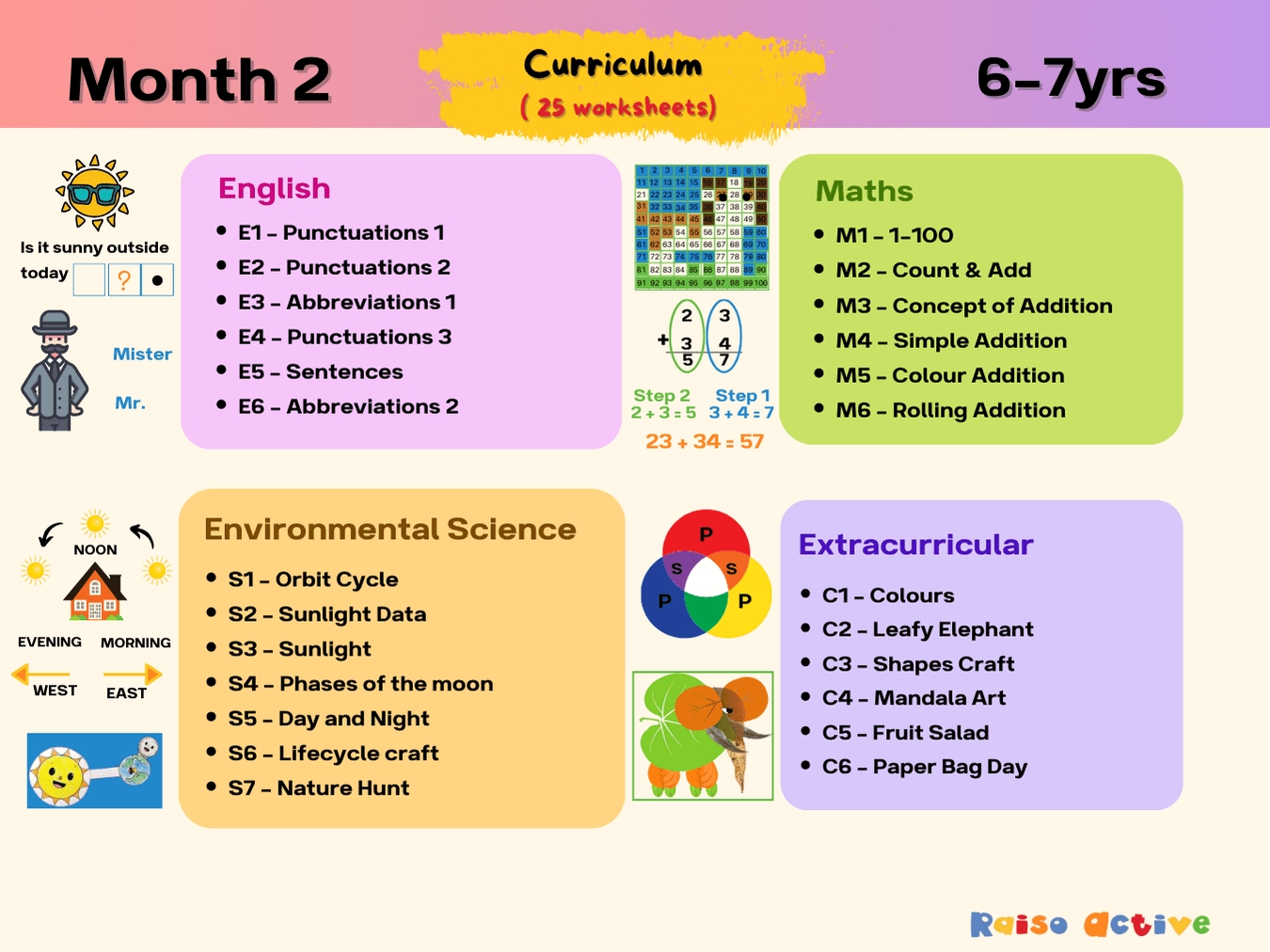
Month 2: Learning & Development | Ages 6-7
This is page 8 of the pack. Ages 6-7 · Grade 1Ages 6-7 · Year 2Ages 6-7 · Class 1Ages 6-7
Made for your child
A whole activity pack made with their name
60 pages to spot, build, trace and write their own name, plus pages about their favourites, feelings and family. See a free preview with their name.
Make an All About Me packFree preview · free for members
Or start free: a name tracing sheet with their nameCurriculum
- Mechanics > Punctuation
How to use this worksheet
Read the short story together first, pausing at the end of each sentence to talk about whether it is a statement, a question, or an exclamation. Ask your child to decide which end mark fits and write it in. Once finished, read the story back aloud together, using your voice to match each punctuation mark — a flat tone for periods, a rising tone for question marks, and excitement for exclamation points.
Materials needed
- Pencil
- Eraser
Extension activities
- 1Have your child write three original sentences, one of each type, and swap punctuation marks to hear how the meaning changes.
- 2Read a picture book together and ask your child to guess the end punctuation before you turn the page to check.
- 3Play a punctuation charades game where you say a sentence and your child acts out a period, question mark, or exclamation point with their body.
- 4Write silly sentences together and challenge your child to punctuate them for maximum excitement.

Written by
Hemsweta Jain · Teacher Cheena
MBA and Early Childhood Educator, teaching since 2014 · Founder of RaisoActive, Mumbai
Every RaisoActive worksheet is designed and checked by the founder before publishing.
Published · Last reviewed
More from Month 2: Learning & Development | Ages 6-7
Punctuation Fun: Cut & Paste Punctuation Worksheet
Ages 4-6 · Pre-K–KindergartenAges 4-6 · Reception–Year 1Ages 4-6 · LKG–UKGAges 4-6
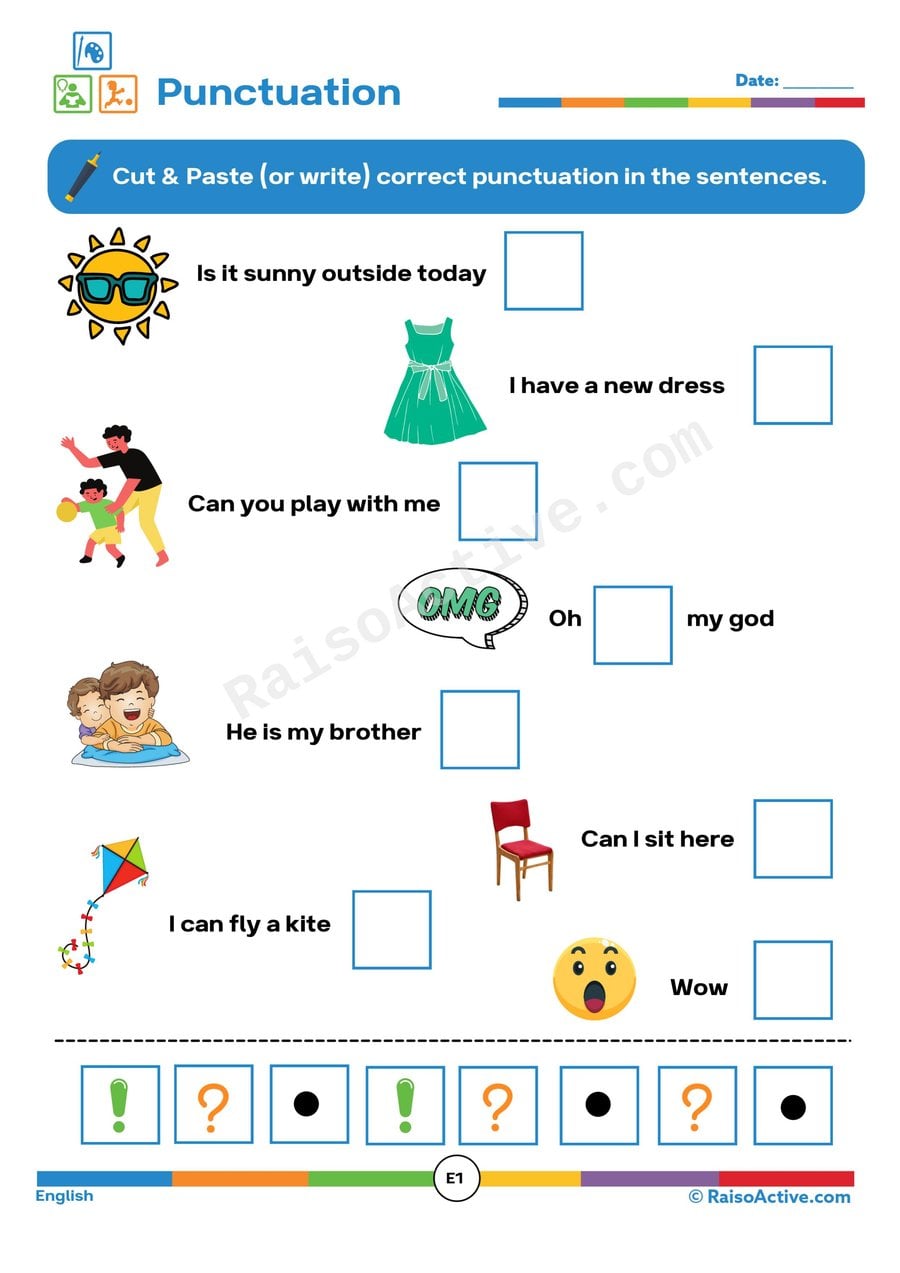
This worksheet teaches children to recognize and apply correct end punctuation — periods, question marks, and exclamation points — by reading simple sentences and choosing the punctuation mark that fits each one's tone. For four- to six-year-olds, connecting a sentence's meaning (a statement, a question, an exclamation) to its correct punctuation mark is an early step toward understanding that punctuation changes how a sentence should be read and understood.
Addition Concepts Worksheet for Preschoolers
Ages 4-6 · Pre-K–KindergartenAges 4-6 · Reception–Year 1Ages 4-6 · LKG–UKGAges 4-6
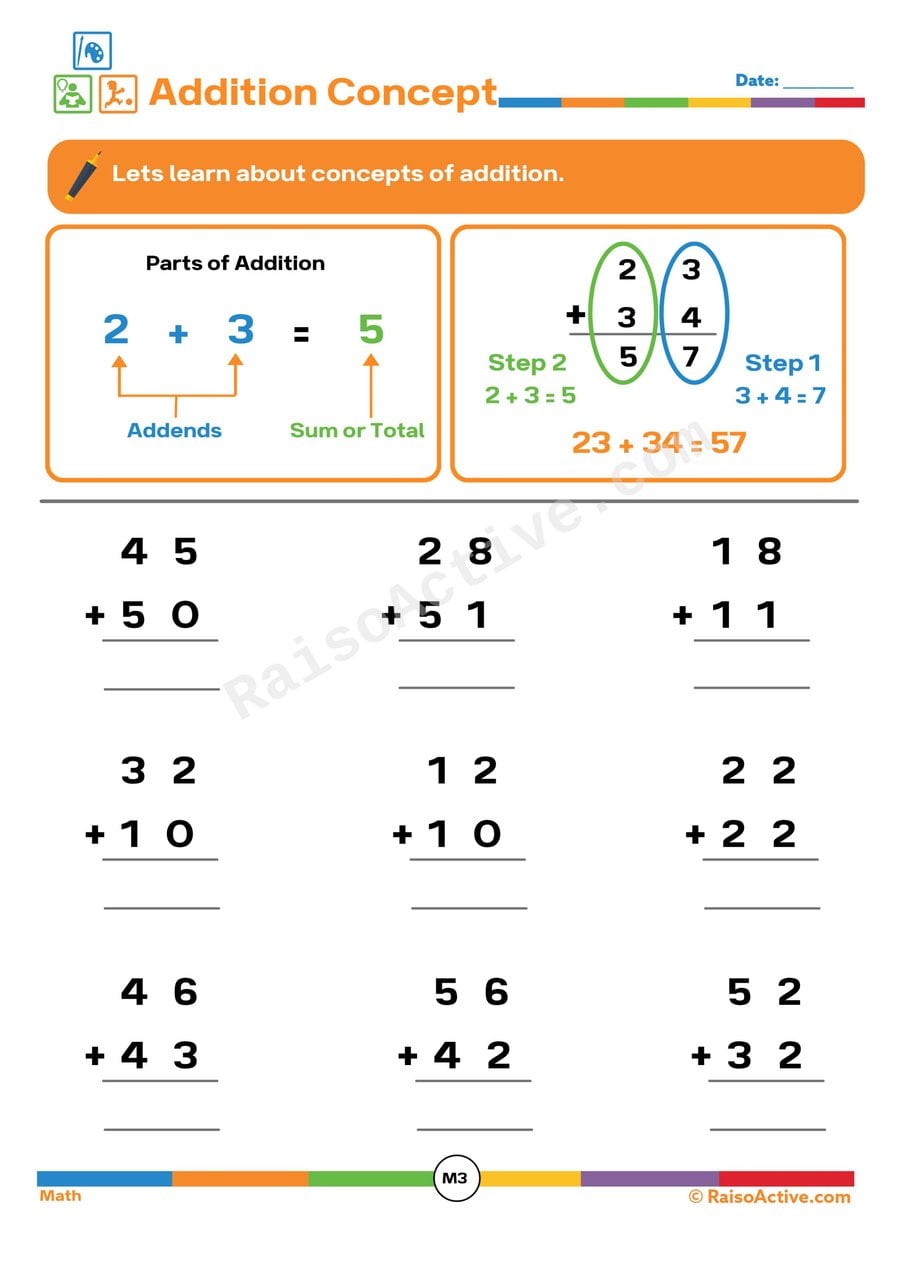
Preschoolers ages 4-6 build early number sense by visually combining two small groups into one total, the concrete foundation every later addition fact depends on. Seeing objects physically joined together, rather than just numbers on a page, helps children grasp that addition means 'putting together' before they ever memorize a sum.

Abbreviations Worksheet: Matching Words and Abbreviations!
Ages 4-6 · Pre-K–KindergartenAges 4-6 · Reception–Year 1Ages 4-6 · LKG–UKGAges 4-6
This worksheet teaches children common abbreviations, like 'Dr.' for Doctor or 'St.' for Street, by having them match each full word to its shortened form. For four- to six-year-olds who are building early reading and writing fluency, recognizing abbreviations is a practical real-world skill, since these shortened forms appear regularly in addresses, titles, and everyday writing.

Sunlight Data Worksheet: Exploring Seasons and Sunlight Hours!
Ages 3-5 · Preschool–Pre-KAges 3-5 · Nursery–ReceptionAges 3-5 · Nursery–LKGAges 3-5
This worksheet introduces the science concept that daylight hours change with the seasons by having children record estimated sunlight hours for winter and summer dates and compare the two. For three- to five-year-olds, comparing two simple data points side by side is an early introduction to the idea of collecting and reading information, well before formal data or graphing skills are taught.
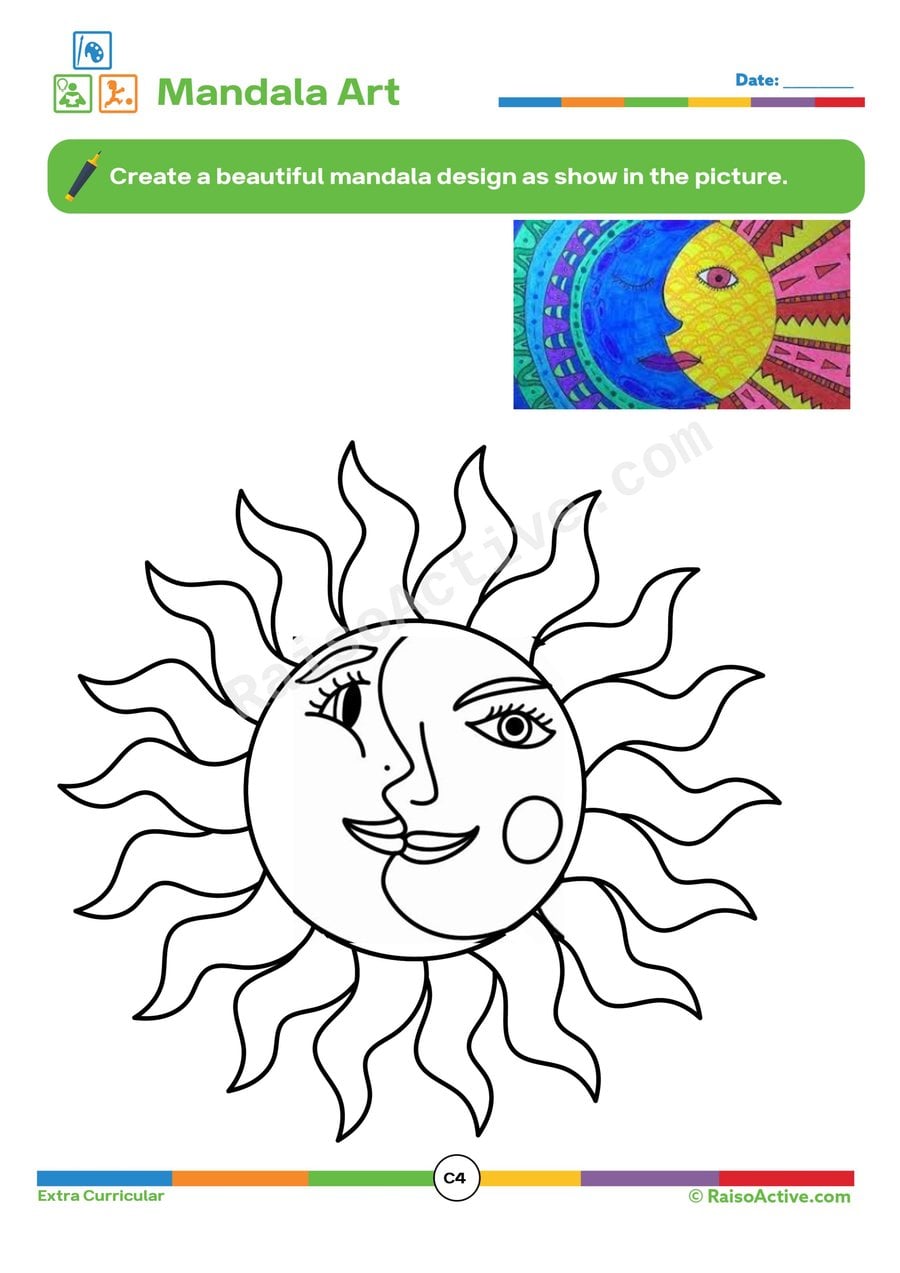
Mandala Art Worksheet: Create a Beautiful Design!
Ages 3-5 · Preschool–Pre-KAges 3-5 · Nursery–ReceptionAges 3-5 · Nursery–LKGAges 3-5
This worksheet builds fine motor control and color choice as children fill in a symmetrical mandala design, a repeating pattern radiating out from a central point. For three- to five-year-olds, coloring a mandala introduces an early sense of symmetry and pattern, since the repeating sections encourage children to notice and often repeat color choices around the design.
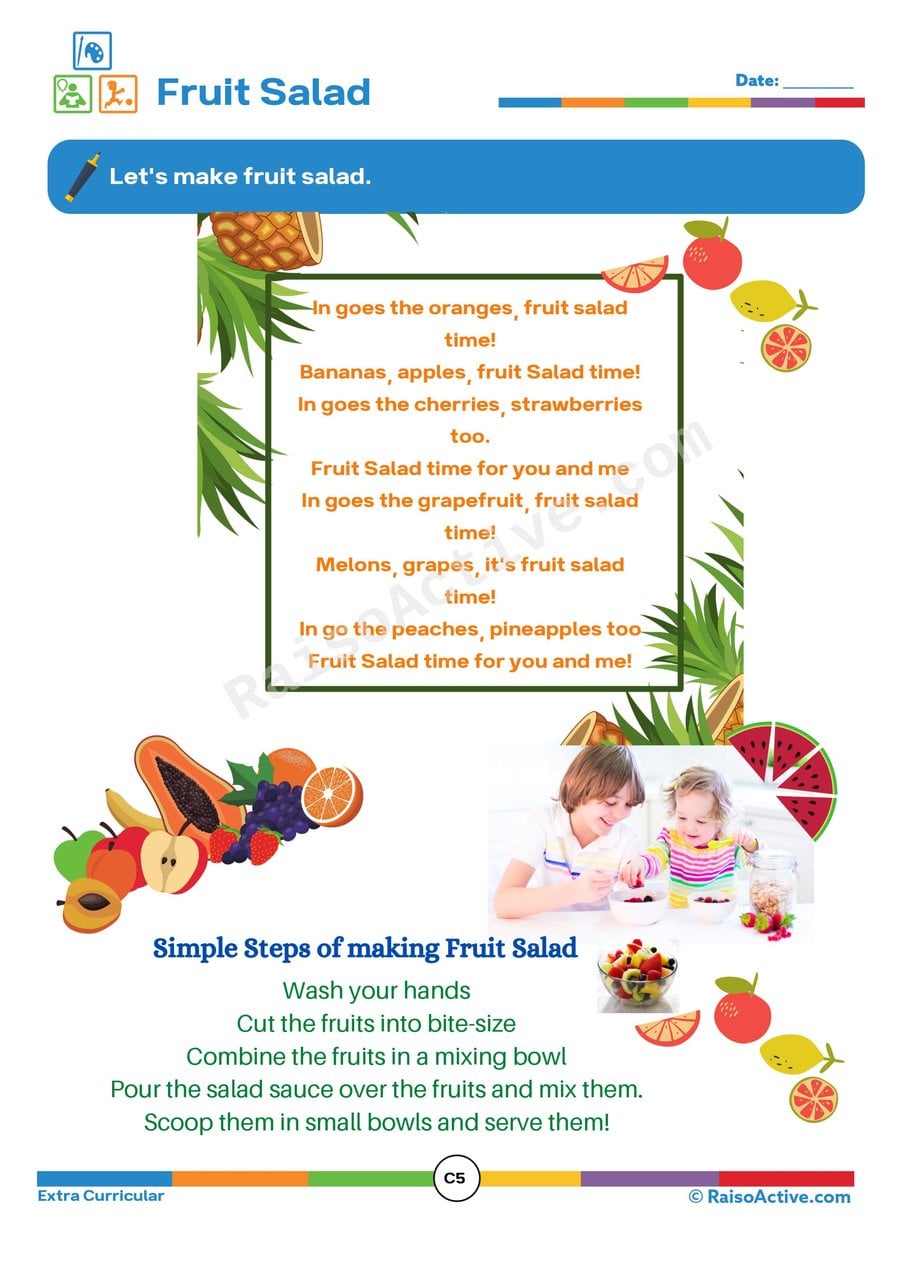
Fruit Salad Fun: A Recipe Worksheet for Kids
Ages 3-5 · Preschool–Pre-KAges 3-5 · Nursery–ReceptionAges 3-5 · Nursery–LKGAges 3-5
This worksheet uses a simple fruit salad recipe to teach children ages 3-5 how to follow a sequence of steps in order, a skill that underlies both reading comprehension and later procedural thinking in math and science. It also introduces healthy eating concepts as children name and draw the fruits that go into their salad.

Count and Add: Fruits, Vehicles, and Sweets Worksheet for Preschoolers
Ages 3-5 · Preschool–Pre-KAges 3-5 · Nursery–ReceptionAges 3-5 · Nursery–LKGAges 3-5
This worksheet practices counting and basic addition by having children count several different groups of everyday objects — fruits, vehicles, and sweets — and then add the totals together. For three- to five-year-olds, varying the objects being counted across different sections keeps the counting practice fresh while reinforcing that the process of counting and adding works the same way no matter what's being counted.

Parent's Guide: Fun Activities for Early Learning
Ages 3-5 · Preschool–Pre-KAges 3-5 · Nursery–ReceptionAges 3-5 · Nursery–LKGAges 3-5
This parent guide brings together five activities spanning punctuation, moon phases, subject and predicate, the solar system, and counting and addition, giving children ages 3-5 a broad sampler of language arts, science, and math concepts through hands-on materials like Oreo biscuits and a flashlight. Working across such different topics in one guide helps children practice shifting attention between subjects, a skill that supports the more structured subject-switching they'll encounter in school.
Related worksheets

Punctuation Fun: Practice Using Punctuation Marks!
Ages 4-6 · Pre-K–KindergartenAges 4-6 · Reception–Year 1Ages 4-6 · LKG–UKGAges 4-6
Choosing the correct punctuation mark to complete a sentence teaches children ages 4-6 that periods, question marks, and other marks change how a sentence should be read and understood, not just how it looks on paper. Matching sentences to their correct punctuation marks reinforces this by requiring children to recognize the tone or purpose of a sentence, whether it's a statement, a question, or an exclamation. This early grammar practice builds the foundation for reading with expression and writing complete, correctly punctuated sentences later on.

Trace the Numbers 1-9 Worksheet for Preschoolers
Ages 3-5 · Preschool–Pre-KAges 3-5 · Nursery–ReceptionAges 3-5 · Nursery–LKGAges 3-5
Tracing the numerals 1 through 9 gives children ages 3-5 repeated, guided practice with the specific pencil strokes each number requires, building the fine motor control and muscle memory needed for independent number writing. Because tracing follows a fixed, correct path, it also reinforces accurate numeral recognition, helping children tell visually similar digits apart.
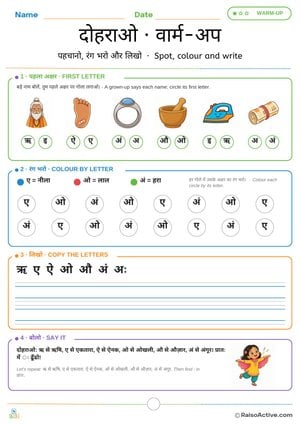
Hindi Vowels Part 2 Revision: Spot, Colour and Write | दोहराओ – वार्म-अप
Ages 3-7 · Preschool–Grade 1Ages 3-7 · Nursery–Year 2Ages 3-7 · Nursery–Class 1Ages 3-7
A warm-up revision: circle the first letter of each picture word, colour circles by letter (ए blue, ओ red, अं green), copy the seven letters and repeat the words ऋषि, एकतारा, ऐनक, ओखली, औज़ार and अंगूर.
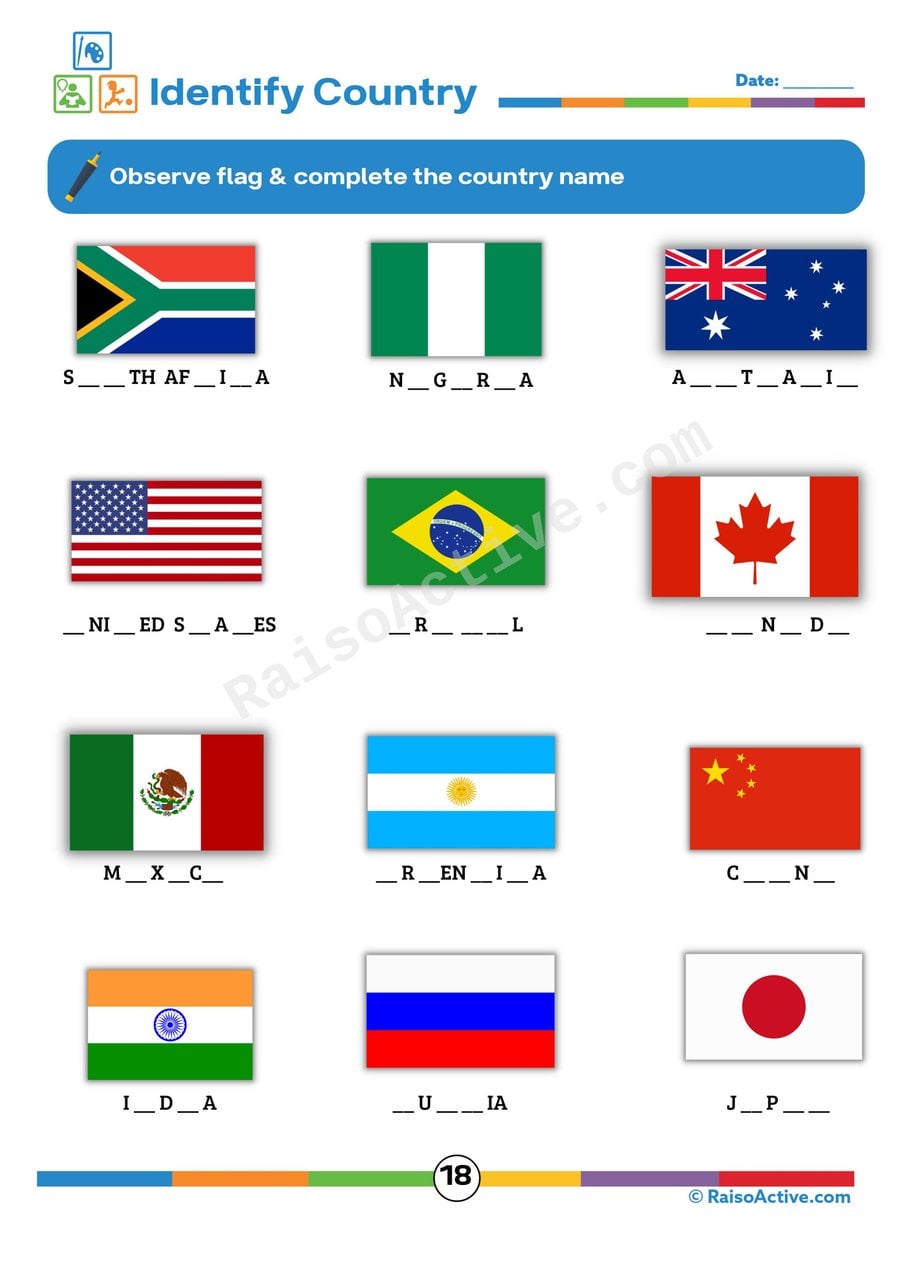
Identify the Country: Flag Matching Worksheet
Ages 4-7 · Pre-K–Grade 1Ages 4-7 · Reception–Year 2Ages 4-7 · LKG–Class 1Ages 4-7
Filling in the missing letters of each country's name while studying its flag gives children ages 4-7 practice with letter-sound correspondence and spelling patterns, since they must sound out the word and recall which letters are already provided as clues. It also builds early geography knowledge, helping children connect a visual symbol (the flag) to a country's name for the first time. This dual practice of decoding and world knowledge lays groundwork for both literacy and social studies skills.
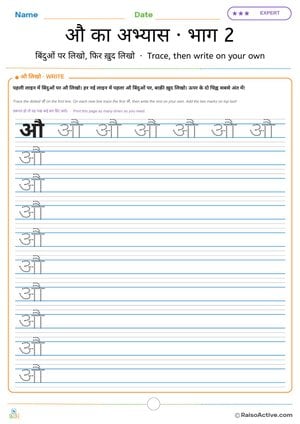
Hindi Letter औ (au) Practice 2: Trace, then Write on Your Own | औ का अभ्यास · भाग 2
Ages 5-7 · Kindergarten–Grade 1Ages 5-7 · Year 1–Year 2Ages 5-7 · UKG–Class 1Ages 5-7
An expert page for confident writers: trace the dotted औ on the first line, then on each new line trace the first औ and write the rest on your own, adding the two marks on top last.
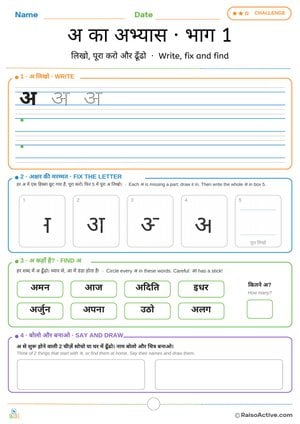
Hindi Letter अ Practice Part 1: Write, Fix and Find | अ का अभ्यास · भाग 1
Ages 3-7 · Preschool–Grade 1Ages 3-7 · Nursery–Year 2Ages 3-7 · Nursery–Class 1Ages 3-7
Children write अ on guide lines, complete four partly drawn letters, circle अ in eight words (while avoiding its look-alike आ), count how many they found, then think of two more words at home that start with अ and draw them.
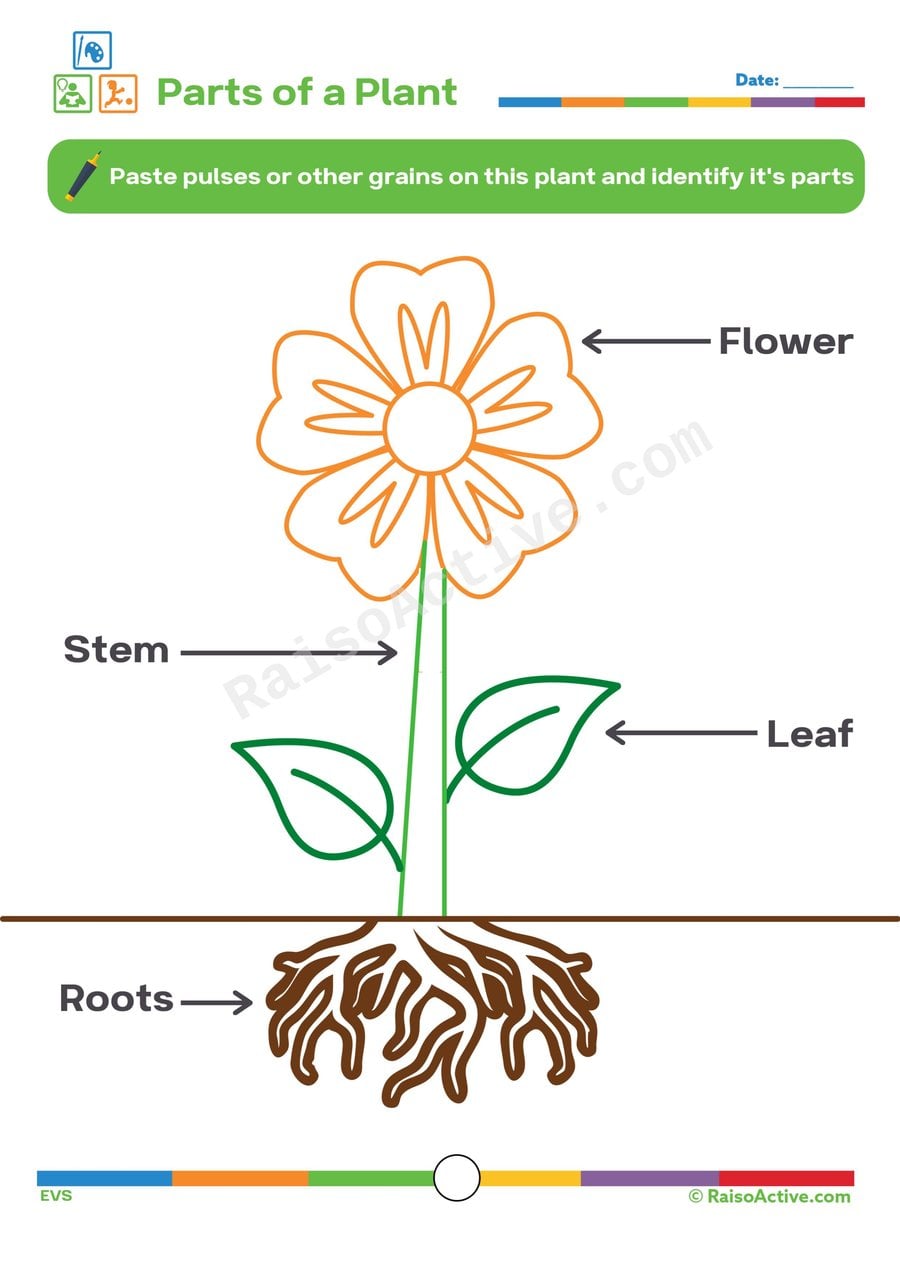
Parts of a Plant Worksheet: Identify and Label!
Ages 3-5 · Preschool–Pre-KAges 3-5 · Nursery–ReceptionAges 3-5 · Nursery–LKGAges 3-5
This activity teaches children ages 3-5 the basic parts of a plant — flower, stem, leaf, and roots — by having them label a diagram and add texture using real pulses or grains glued onto the plant shape. Combining a tactile material with each labeled part helps young children retain the vocabulary better than labeling alone, since touch and sight reinforce the same information.
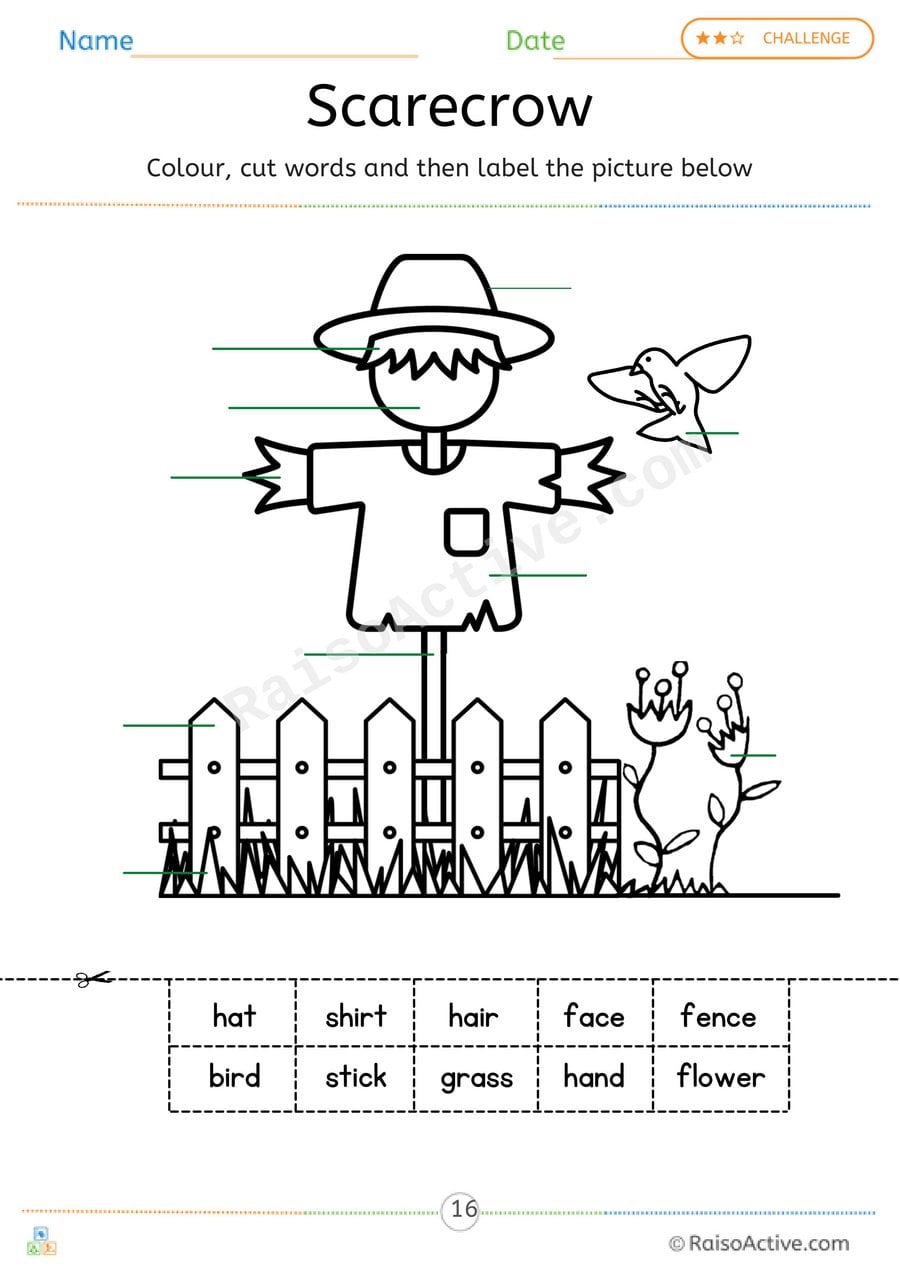
Scarecrow Labeling Worksheet for Preschoolers
Ages 3-5 · Preschool–Pre-KAges 3-5 · Nursery–ReceptionAges 3-5 · Nursery–LKGAges 3-5
This worksheet has children ages 3-5 color a scarecrow, then cut out word labels for its parts, hat, straw, shirt, gloves, and glue each label onto the correct spot, connecting written words directly to the objects they name. Tracing the labels afterward adds letter-formation practice on top of the vocabulary-building label matching.
Guides for this topic

Documenting Learning Without Drowning in Data: A Practical Guide for Parents and Teachers
Learn practical ways to document your child's learning without overwhelm. Simple portfolios, observation tips, and printable trackers for ages 1-8.

How to Help Your Child with Letter Reversals: A Complete Guide for Parents and Teachers
Letter reversals are normal until age 7-8. Learn the best multisensory strategies, anchor letter tricks, and activities to help children write b, d, p, and q correctly.

Activities That Help with Pencil Grip Development: A Complete Guide for Parents and Teachers
Discover fun, research-backed activities to develop pencil grip in young children. Age-wise exercises, play ideas, and expert tips for parents and teachers.
Reviews
Every worksheet for ages 5–7, no watermark
Members download the full library of 1,000+ worksheets and every activity pack without watermarks or daily limits. One year costs ₹999 in India or $20 elsewhere.
See membership plansOr download any worksheet free with a watermark (5 a day).