Body Parts Matching Worksheet for Preschoolers
Learning the names of body parts builds early vocabulary and body awareness for children ages 3-5, helping them describe their physical experiences and follow instructions that reference specific parts of the body. This cut-and-paste worksheet asks children to match pictures of body parts to their correct location on a figure, which reinforces spatial understanding of the body alongside vocabulary. Because children physically cut and glue each piece into place, the activity also builds fine motor control at the same time as the science and language content.
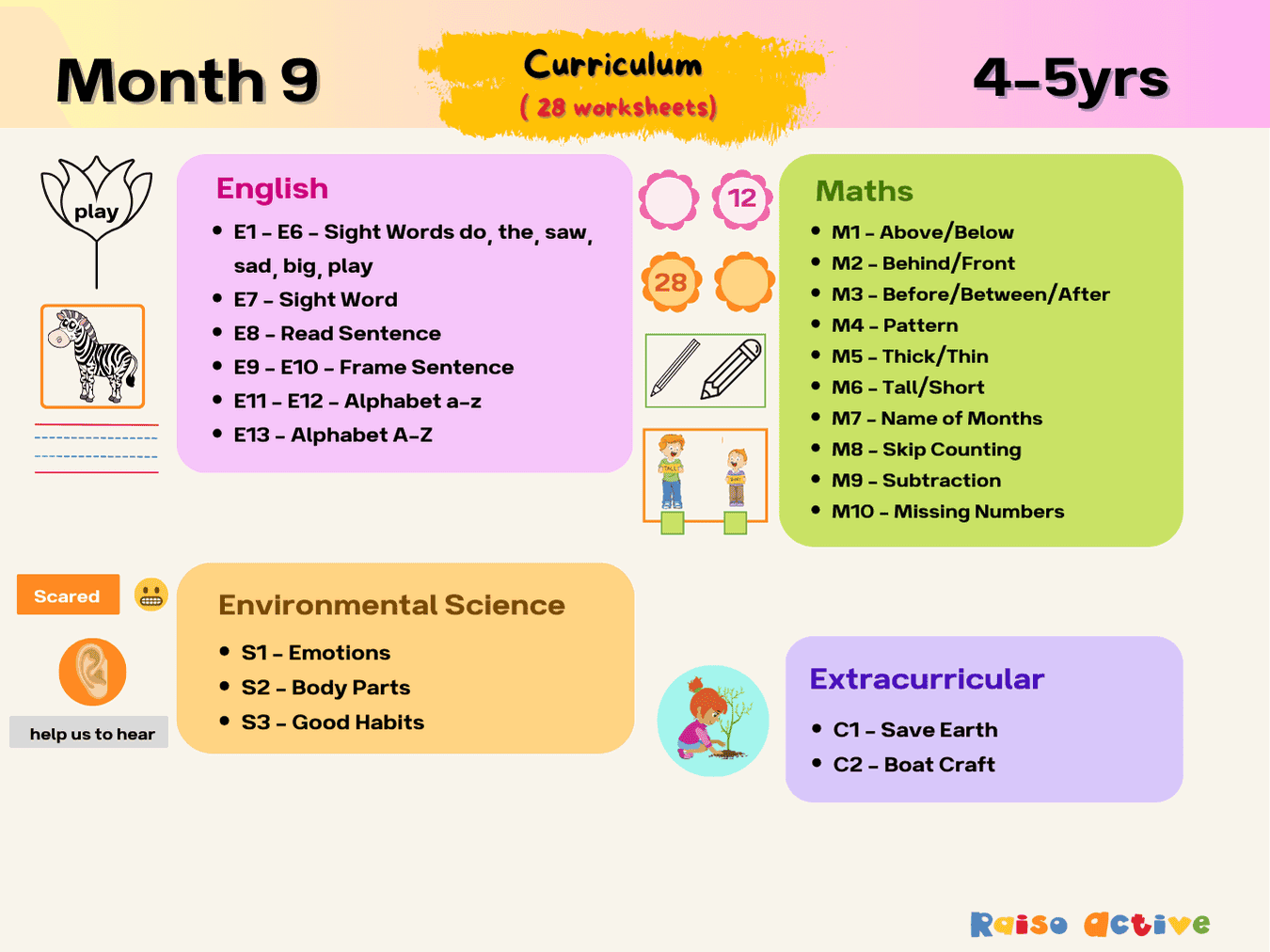
Part of the pack
Month 9: Play-Based Preschool Foundational Skills | Ages 4-5
This is page 28 of the pack. Ages 4-5 · Pre-KAges 4-5 · ReceptionAges 4-5 · LKGAges 4-5
Curriculum
- Living Things - Animals > Animals & Habitats
How to use this worksheet
Look at the pictures at the bottom of the page together and name each body part aloud. Have your child cut out each picture carefully along the dotted lines. Ask them to figure out where on the figure each body part belongs and glue it into the matching circle. Once every piece is placed, review the completed figure together, pointing to and naming each body part one more time.
Materials needed
- Scissors
- Glue
- Pencil
Extension activities
- 1Draw and label your own body parts on a large outline traced from your child lying on paper.
- 2Act out the functions of each body part, like clapping hands or hopping on feet, to connect the name to its use.
- 3Sing a body parts song like 'Head, Shoulders, Knees, and Toes' together for extra reinforcement.
- 4Play a game where you call out a body part and your child touches it as fast as they can.

Written by
Hemsweta Jain · Teacher Cheena
MBA and Early Childhood Educator, teaching since 2014 · Founder of RaisoActive, Mumbai
Every RaisoActive worksheet is designed and checked by the founder before publishing.
Published · Last reviewed
More from Month 9: Play-Based Preschool Foundational Skills | Ages 4-5

Thick and Thin Worksheet: Identifying Object Thickness
Ages 3-5 · Preschool–Pre-KAges 3-5 · Nursery–ReceptionAges 3-5 · Nursery–LKGAges 3-5
This worksheet asks children ages 3-5 to compare objects and identify which is thickest and which is thinnest in each set, building early comparative reasoning and size-based vocabulary. Comparing objects along a specific dimension like thickness — rather than just overall size — sharpens observational skills and introduces the kind of precise descriptive language children will need for later measurement concepts.
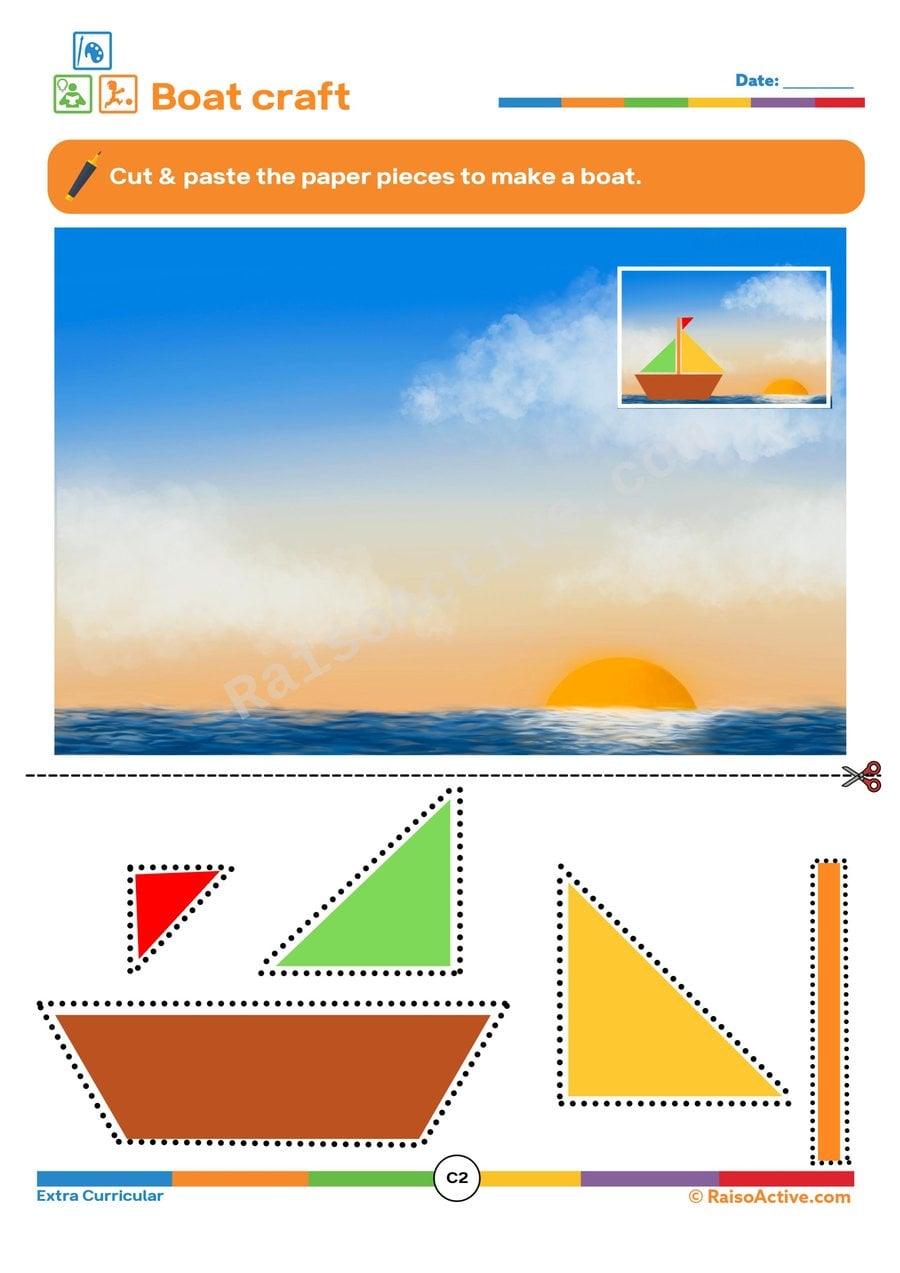
Boat Craft Worksheet: Cut and Paste a Boat!
Ages 3-5 · Preschool–Pre-KAges 3-5 · Nursery–ReceptionAges 3-5 · Nursery–LKGAges 3-5
This cut-and-paste craft asks children ages 3-5 to cut out individual shapes and assemble them into a complete boat scene, building fine motor control through scissor use and precise gluing while also reinforcing basic shape and color recognition along the way. Assembling a picture from separate cut pieces requires spatial reasoning too, since your child has to figure out where each shape belongs relative to the others to make the finished boat look right. Craft-based worksheets like this one turn fine motor practice into a creative, open-ended activity rather than a repetitive drill.
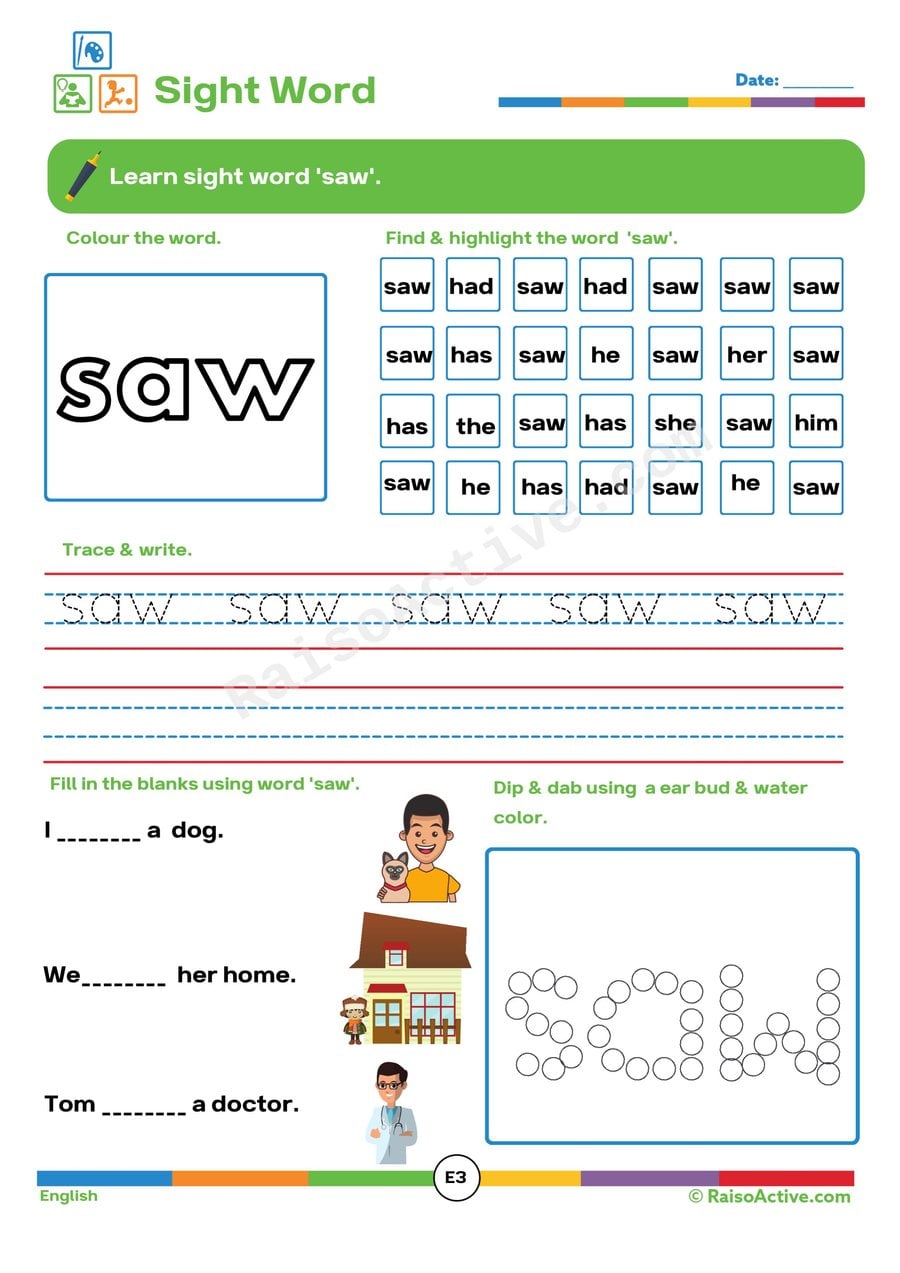
Sight Word 'Saw' Worksheet: Trace, Find, and Color!
Ages 3-5 · Preschool–Pre-KAges 3-5 · Nursery–ReceptionAges 3-5 · Nursery–LKGAges 3-5
The word 'saw' is another high-frequency sight word that doesn't follow standard phonics patterns, so children ages 3-5 need this kind of layered, multi-format practice — coloring, tracing, searching, and sentence completion — to build automatic recognition. Repeated exposure to the same word through different activities strengthens the visual memory needed for instant sight-word recall, which is essential since sight words make up a large percentage of the words in early beginner books. The variety of formats here also keeps a young child's attention across a longer practice session than a single repetitive task would.

Learn the Sight Word 'Do' - Tracing and Practice Worksheet
Ages 3-5 · Preschool–Pre-KAges 3-5 · Nursery–ReceptionAges 3-5 · Nursery–LKGAges 3-5
Sight words like 'do' can't be sounded out using regular phonics rules, so children ages 3-5 need repeated visual exposure and active practice to memorize them by sight — exactly what this multi-part worksheet provides through tracing, highlighting, filling blanks, and even dot-marking the word. Because sight words appear so frequently in early readers, automatic recognition of a word like 'do' removes a major stumbling block that would otherwise interrupt a child's reading flow on nearly every page. Practicing the same word in several different formats within one worksheet builds the strong repetition that sight-word memorization requires.
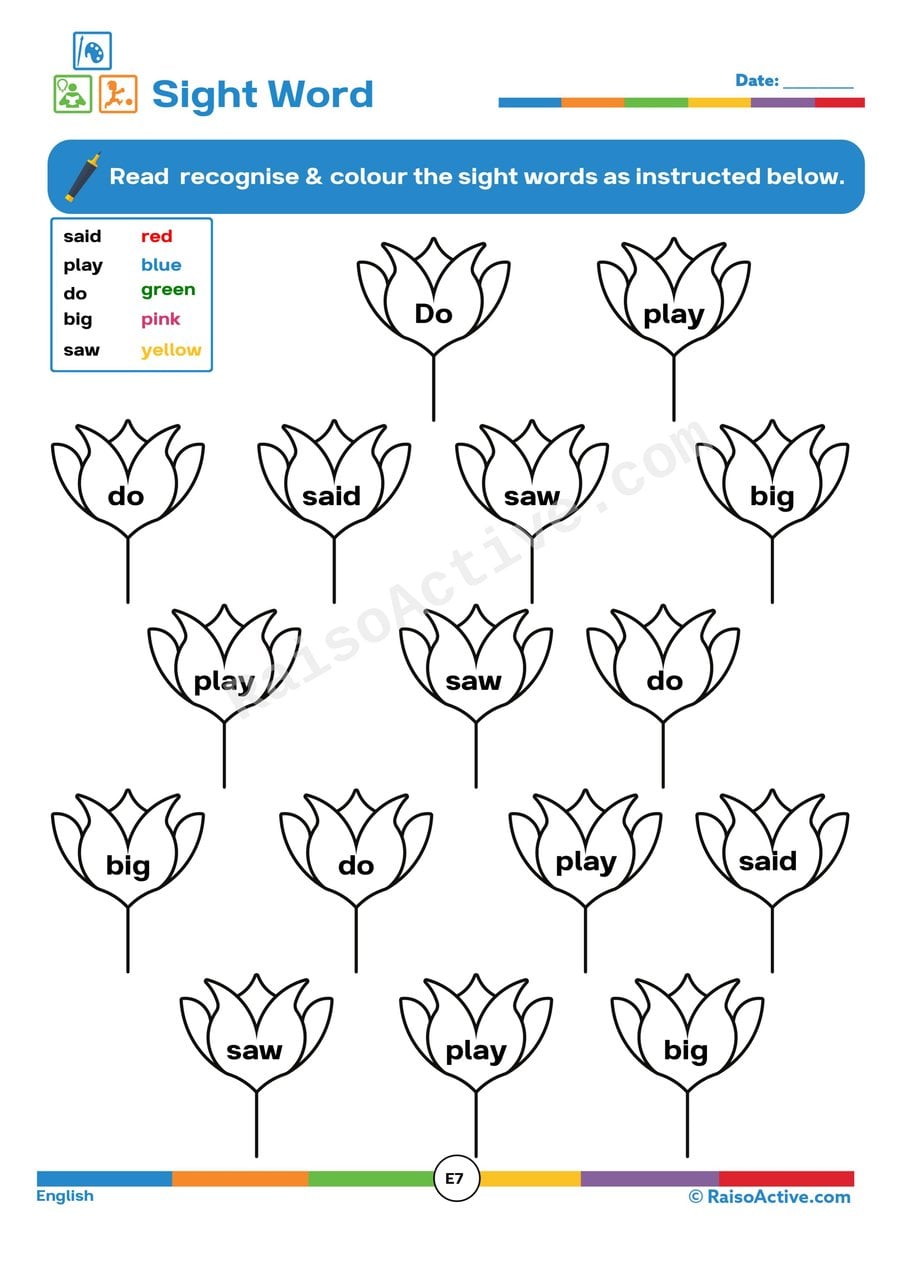
Sight Word Coloring Worksheet: Read and Color!
Ages 3-5 · Preschool–Pre-KAges 3-5 · Nursery–ReceptionAges 3-5 · Nursery–LKGAges 3-5
This worksheet combines sight-word recognition with a coloring activity, asking children ages 3-5 to read a list of common sight words and then find and color matching words hidden inside flower images. Turning word-hunting into a coloring task keeps young children engaged far longer than flashcard drills alone, while still delivering the repeated exposure that sight words require to become automatic.

Save Earth: A Cut and Paste Sorting Worksheet for Kids
Ages 3-5 · Preschool–Pre-KAges 3-5 · Nursery–ReceptionAges 3-5 · Nursery–LKGAges 3-5
This cut-and-paste activity introduces children ages 3-5 to the practical concept of waste sorting by having them classify pictured items as 'wet' or 'dry' waste - an early, hands-on entry point into environmental responsibility. Cutting along the lines and gluing each piece into its correct bin also builds scissor control and precise hand placement, both important fine motor milestones at this age.
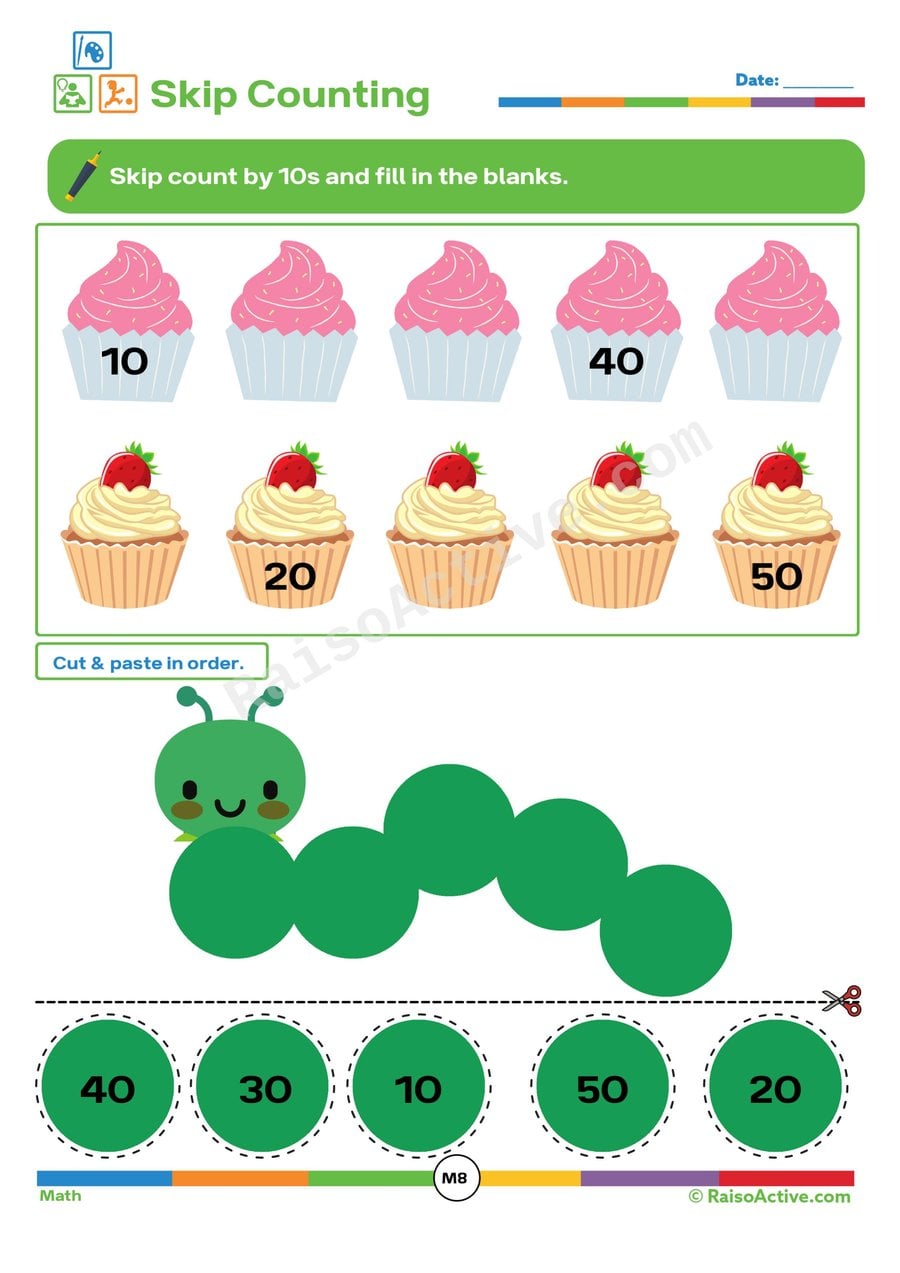
Skip Counting Cupcake Worksheet: Count by 10s!
Ages 4-5 · Pre-KAges 4-5 · ReceptionAges 4-5 · LKGAges 4-5
This worksheet has children ages 4-5 fill in missing numbers while skip counting by tens, then cut and paste the numbers onto a caterpillar in the correct sequence. Skip counting by tens is a crucial stepping stone toward place value and mental math, since it helps children see numbers in efficient groups rather than counting one by one.

Match the Patterns: Fun Worksheet for Preschoolers
Ages 3-5 · Preschool–Pre-KAges 3-5 · Nursery–ReceptionAges 3-5 · Nursery–LKGAges 3-5
By connecting each picture to its matching pattern, children ages 3-5 practice visual pattern recognition - the ability to notice a repeating sequence of colors, shapes, or objects - which is an early building block for both math reasoning and reading, since reading also relies on recognizing repeated letter patterns. The worksheet also builds fine motor control as children draw connecting lines with a pencil or crayon.
Related worksheets
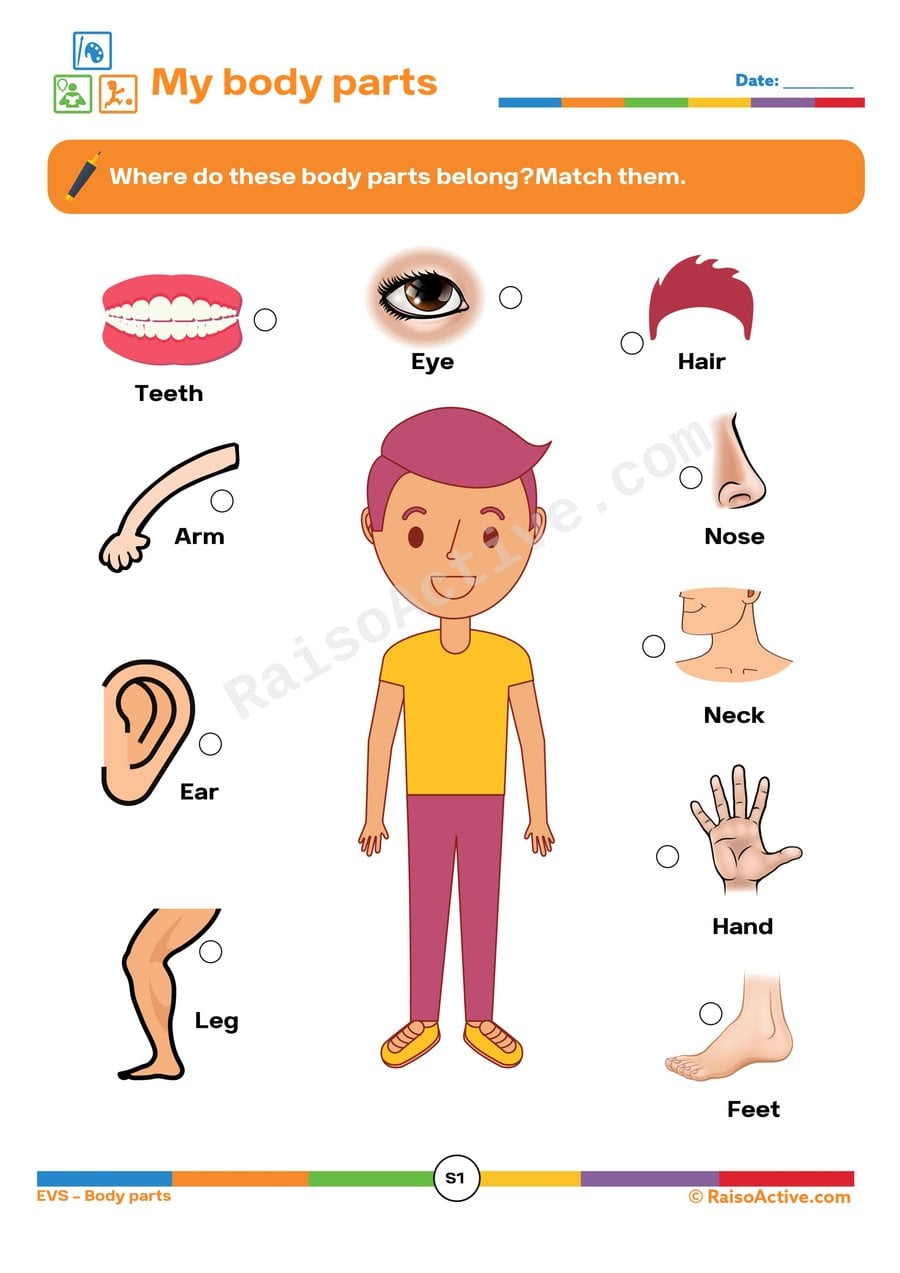
Match the Body Parts! A Fun Worksheet for Kids
Ages 3-5 · Preschool–Pre-KAges 3-5 · Nursery–ReceptionAges 3-5 · Nursery–LKGAges 3-5
Drawing lines from body part pictures to their correct location on a human figure helps children ages 3-5 build vocabulary for parts of the body, like arms, legs, and ears, while practicing visual-spatial matching between a small picture and its larger corresponding location. This worksheet strengthens the link between a spoken body part name and its physical location, a skill children also use constantly in daily routines like getting dressed or washing up. Matching pictures to a full-body diagram, rather than just naming parts in isolation, builds a more complete mental map of the body.
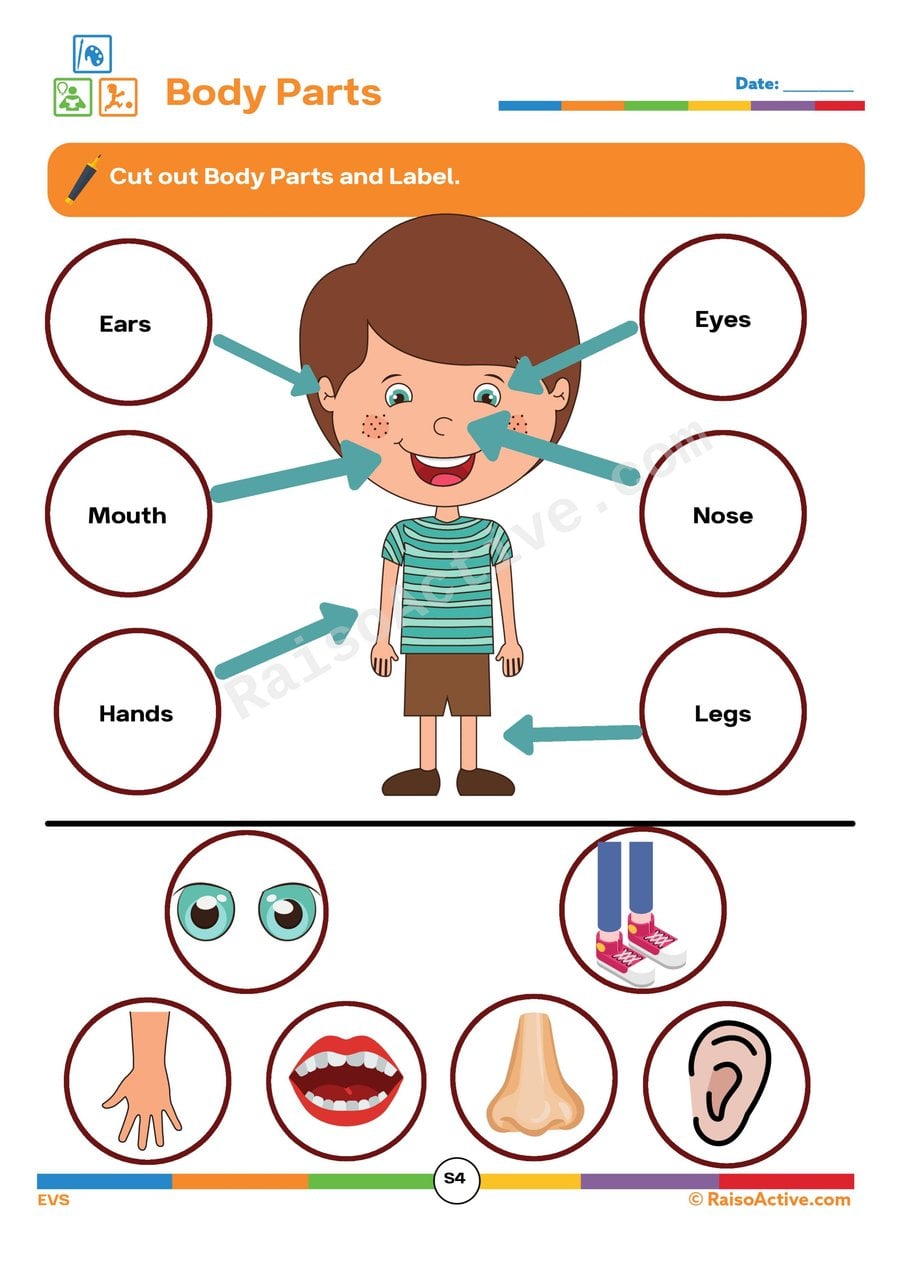
Body Parts Worksheet: Cut and Label!
Ages 3-5 · Preschool–Pre-KAges 3-5 · Nursery–ReceptionAges 3-5 · Nursery–LKGAges 3-5
Cutting out labeled body part images and gluing them onto a figure teaches children ages 3-5 the names and locations of body parts like arms, legs, and ears, connecting spoken vocabulary to a visual, physical location on the body. The cutting and pasting process also strengthens fine motor control, giving this worksheet a combined literacy and hand-strength benefit. Because the body is something children can also touch and point to on themselves, this activity bridges paper-based learning with real, physical self-awareness.

Body Parts Matching Worksheet for Preschoolers
Ages 3-5 · Preschool–Pre-KAges 3-5 · Nursery–ReceptionAges 3-5 · Nursery–LKGAges 3-5
Children ages 3-5 practice matching each body part to its specific function, like eyes to seeing or legs to walking, building early awareness of how their own body works. This connects body-part vocabulary to real-world purpose rather than just naming parts in isolation.

Body Parts Cut and Paste Worksheet for Preschoolers
Ages 3-5 · Preschool–Pre-KAges 3-5 · Nursery–ReceptionAges 3-5 · Nursery–LKGAges 3-5
Cutting out body part pictures and gluing them to match written sentences builds vocabulary for children ages 3-5 while reinforcing fine motor skills, connecting a spoken or written body part name to its correct image.

Happy Face Cut and Paste Worksheet for Preschoolers
Ages 3-5 · Preschool–Pre-KAges 3-5 · Nursery–ReceptionAges 3-5 · Nursery–LKGAges 3-5
This worksheet helps children ages 3-5 learn the names of facial features while practicing scissor control and precise gluing. Assembling a face piece by piece — eyes, nose, mouth, ears — reinforces body part vocabulary in a hands-on way that's more memorable than simply pointing at a picture.

Sequencing Worksheet for Kids: First, Next, Last
Ages 4-7 · Pre-K–Grade 1Ages 4-7 · Reception–Year 2Ages 4-7 · LKG–Class 1Ages 4-7
Children put three-step stories in order using first, next and last, then work backwards to find what came before a picture. This builds sequencing, time vocabulary and cause and effect thinking.

Indian Cities Crossword Puzzle Worksheet for Kids
Ages 4-6 · Pre-K–KindergartenAges 4-6 · Reception–Year 1Ages 4-6 · LKG–UKGAges 4-6
This crossword challenges children ages 4-6 to identify famous Indian cities from picture clues of their landmarks and then spell out each city's name in the puzzle grid, combining observation skills with early geography knowledge. Counting the crossword boxes to match each city's letter count also reinforces attention to word length before writing.

Elephant Shapes: Fun Sorting Worksheet for Preschoolers!
Ages 3-5 · Preschool–Pre-KAges 3-5 · Nursery–ReceptionAges 3-5 · Nursery–LKGAges 3-5
This playful sorting worksheet has children ages 3-5 use an elephant's 'trunk' (their own hand reaching through a cut circle) to pick and sort shapes, building both shape recognition and simple classification skills. Physically selecting and grouping shapes by type, rather than just naming them on sight, helps solidify the concept that shapes can share a category even when their size or color differs.
Guides for this topic

Best Worksheets for 3-Year-Olds: What Works and What to Avoid
What works on worksheets for 3-year-olds: short sessions, crayons, tracing lines, matching, cutting, a free weekly plan, and signs one is too advanced.

Age-Appropriate Problem-Solving Activities: Building Critical Thinkers from the Ground Up
Discover fun, age-appropriate problem-solving activities for children ages 1-8. Build critical thinking, logic, and reasoning skills through play-based learning.
Critical Thinking Activities That Actually Work for Young Children: Building Tomorrow's Thinkers Today
Discover proven critical thinking activities for young children. Age-wise logic games, questioning techniques, and hands-on ideas to build thinking skills at home.
Reviews
Every worksheet for ages 3–5, no watermark
Members download the full library of 1,000+ worksheets and every activity pack without watermarks or daily limits. One year costs ₹999 in India or $20 elsewhere.
See membership plansOr download any worksheet free with a watermark (5 a day).