Body Parts Cut and Paste Worksheet for Preschoolers
Cutting out body part pictures and gluing them to match written sentences builds vocabulary for children ages 3-5 while reinforcing fine motor skills, connecting a spoken or written body part name to its correct image.
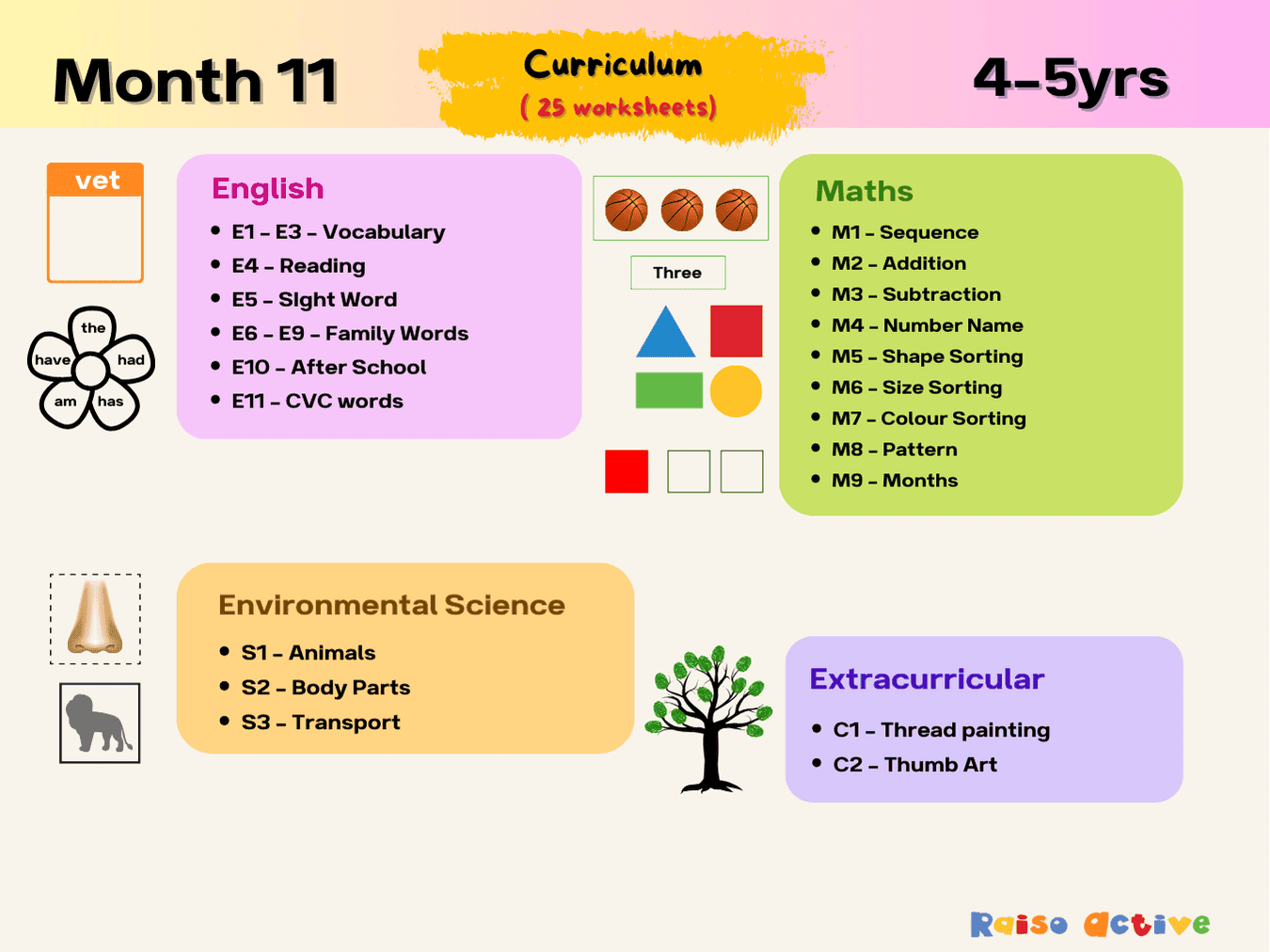
Part of the pack
Month 11: Learning & Development | Ages 4-5
This is page 25 of the pack. Ages 4-5 · Pre-KAges 4-5 · ReceptionAges 4-5 · LKGAges 4-5
Curriculum
- My Body > Five Senses
How to use this worksheet
Read each sentence at the top of a box aloud together, such as 'I see with my ___.' Have your child find the matching body part picture at the bottom of the page and cut it out. Glue it into the correct box next to its sentence, continuing through the remaining sentences while discussing what each body part does.
Materials needed
- Scissors
- Glue
- Pencil
Extension activities
- 1Draw and label a picture of yourself, naming each body part.
- 2Play a game where you point to different body parts and name them.
- 3Sing a body parts song like 'Head, Shoulders, Knees, and Toes.'
- 4Create a body parts collage using magazine cutouts.

Written by
Hemsweta Jain · Teacher Cheena
MBA and Early Childhood Educator, teaching since 2014 · Founder of RaisoActive, Mumbai
Every RaisoActive worksheet is designed and checked by the founder before publishing.
Published · Last reviewed
More from Month 11: Learning & Development | Ages 4-5

After School Routine Worksheet: Sequencing Activities
Ages 3-5 · Preschool–Pre-KAges 3-5 · Nursery–ReceptionAges 3-5 · Nursery–LKGAges 3-5
Children ages 3-5 practice ordering a set of pictures to match the real sequence of their own after-school routine, building early sequencing skills that also support memory, planning, and the language of time, like 'first,' 'next,' and 'last.' Reflecting on their own daily routine makes this sequencing practice personally meaningful rather than abstract.

Match the Letter: N, O, P Worksheet for Preschoolers
Ages 3-5 · Preschool–Pre-KAges 3-5 · Nursery–ReceptionAges 3-5 · Nursery–LKGAges 3-5
Drawing a line from an uppercase letter to a picture that starts with the same sound reinforces letter-sound correspondence for children ages 3-5, connecting the shape of N, O, and P to their spoken sounds.
Thumb Art Tree Worksheet for Preschoolers
Ages 3-5 · Preschool–Pre-KAges 3-5 · Nursery–ReceptionAges 3-5 · Nursery–LKGAges 3-5
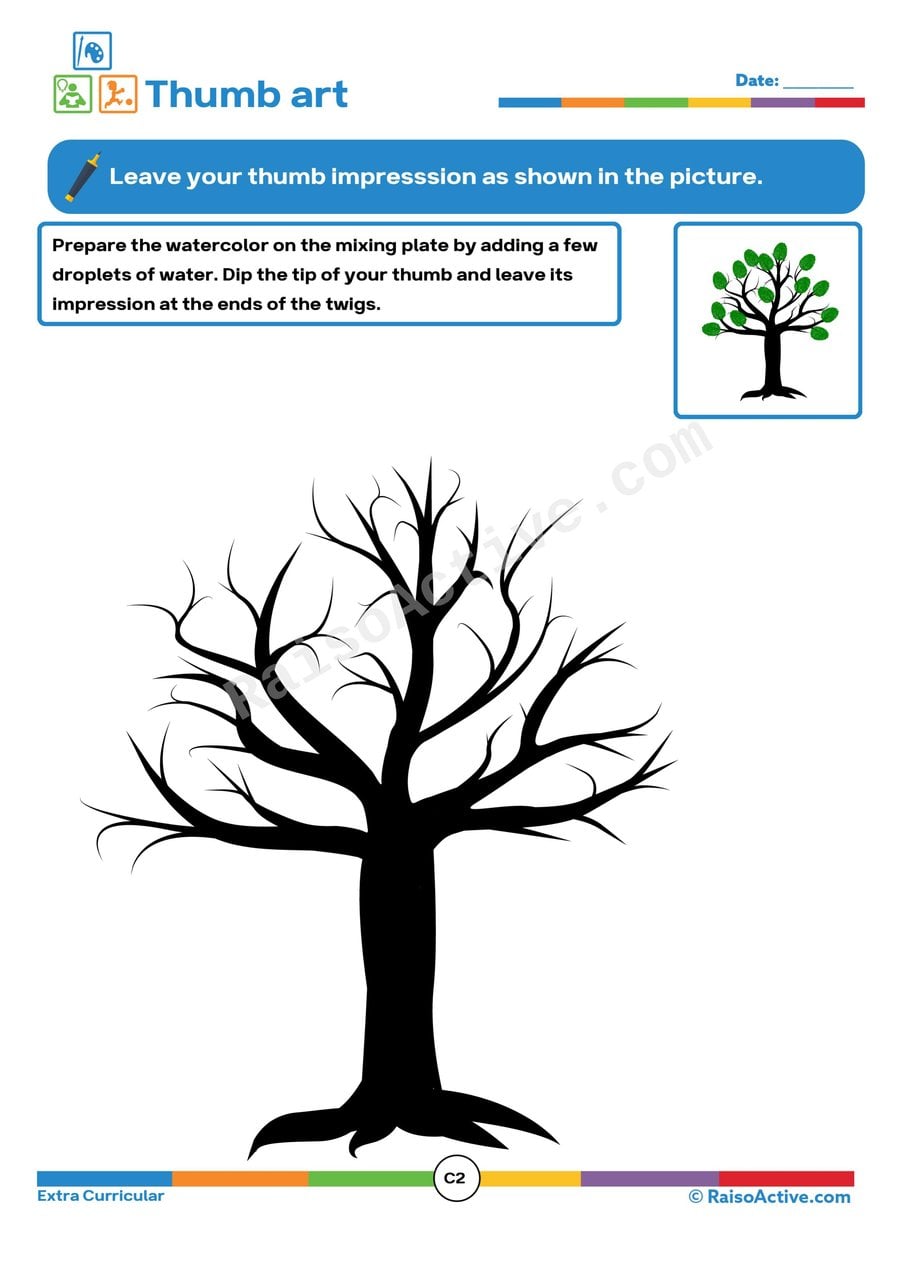
This thumbprint craft helps children ages 3-5 develop fine motor control and hand strength as they press their thumb repeatedly onto paper to create the leaves of a tree, a controlled, repetitive motion that's different from typical crayon coloring. It also introduces early art concepts like composition and texture, since the finished tree's fullness depends on how many thumbprints your child adds and where they place them.

Family Words Worksheet: Picture Matching and Word Recognition
Ages 4-6 · Pre-K–KindergartenAges 4-6 · Reception–Year 1Ages 4-6 · LKG–UKGAges 4-6
This worksheet gives children ages 4-6 another round of practice recognizing family-member vocabulary words, reinforcing the connection between a printed word and the picture it names through both a tick-the-answer step and a cut-and-paste matching step. Repeating this pairing across two different formats on one page helps move these words from recognition with support toward more independent reading.
Flower Power Subtraction Worksheet for Kids
Ages 4-6 · Pre-K–KindergartenAges 4-6 · Reception–Year 1Ages 4-6 · LKG–UKGAges 4-6
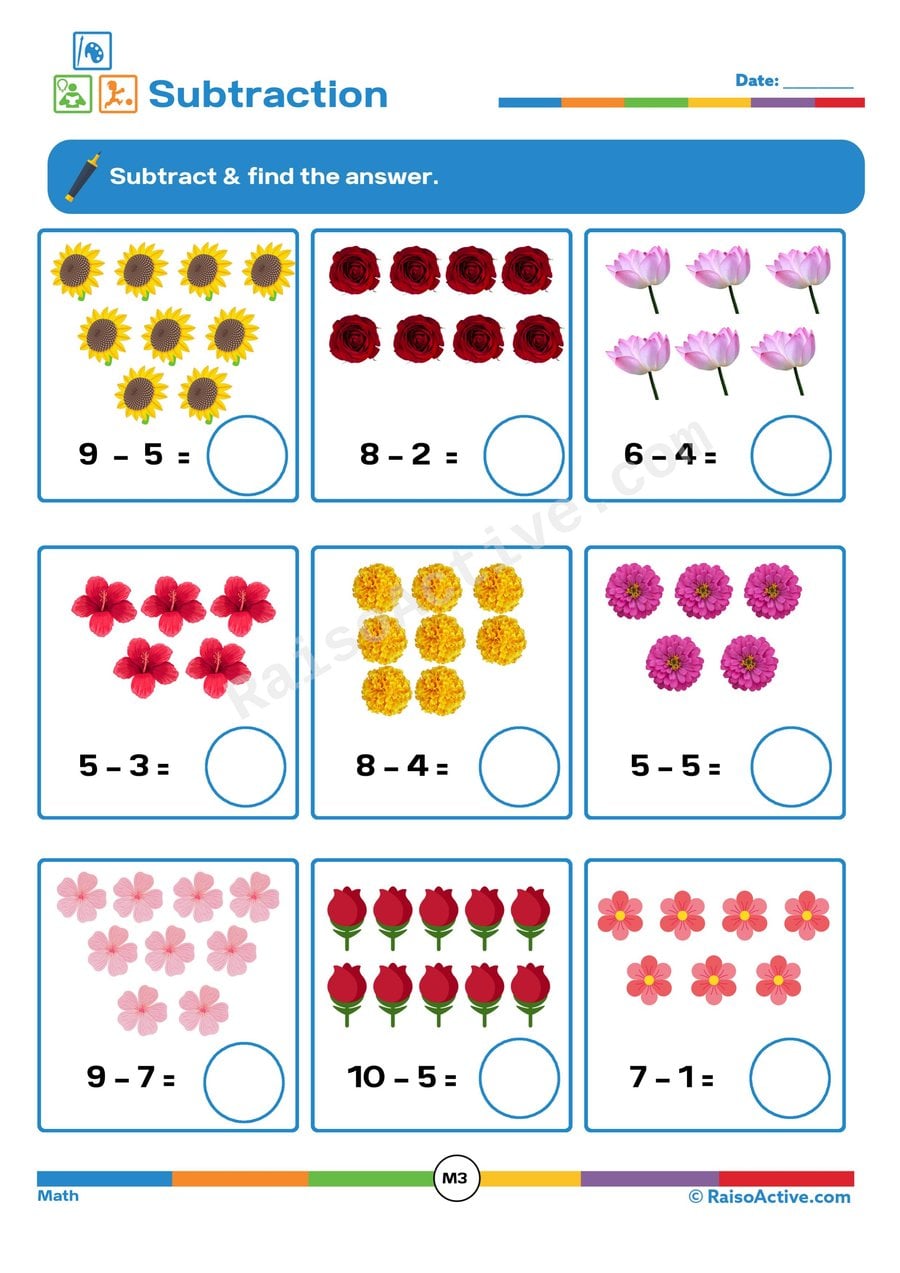
This worksheet gives children ages 4-6 hands-on subtraction practice using a flower-themed counting context, asking them to count pictured objects, subtract a given amount, and write the difference in a circle. The visual, countable format helps make subtraction concrete rather than abstract, reinforcing that 'taking away' reduces a group's total in a way children can see and verify by recounting.

Read and Match: Fun Reading Worksheet for Preschoolers
Ages 3-5 · Preschool–Pre-KAges 3-5 · Nursery–ReceptionAges 3-5 · Nursery–LKGAges 3-5
Reading a simple sentence and matching it to its corresponding picture builds early reading comprehension for children ages 3-5, teaching them that written words carry meaning that connects to real images and ideas.

Pattern Recognition Worksheet: Cut and Paste the Next Picture!
Ages 3-5 · Preschool–Pre-KAges 3-5 · Nursery–ReceptionAges 3-5 · Nursery–LKGAges 3-5
This worksheet builds pattern recognition for children ages 3-5 by having them identify a repeating sequence in each row and then cut out and glue the picture that correctly continues it. Because the correct piece must be found among several distractor options, this task sharpens visual discrimination alongside the logical thinking needed to predict what comes next in a sequence.

Months of the Year Cut and Paste Worksheet for Kids
Ages 3-5 · Preschool–Pre-KAges 3-5 · Nursery–ReceptionAges 3-5 · Nursery–LKGAges 3-5
Cutting out the months of the year and gluing them in the correct order builds sequencing skills and calendar vocabulary for children ages 3-5, an early step toward understanding how time is organized across a year.
Related worksheets

Happy Face Cut and Paste Worksheet for Preschoolers
Ages 3-5 · Preschool–Pre-KAges 3-5 · Nursery–ReceptionAges 3-5 · Nursery–LKGAges 3-5
This worksheet helps children ages 3-5 learn the names of facial features while practicing scissor control and precise gluing. Assembling a face piece by piece — eyes, nose, mouth, ears — reinforces body part vocabulary in a hands-on way that's more memorable than simply pointing at a picture.
Body Parts Worksheet: Cut and Label!
Ages 3-5 · Preschool–Pre-KAges 3-5 · Nursery–ReceptionAges 3-5 · Nursery–LKGAges 3-5
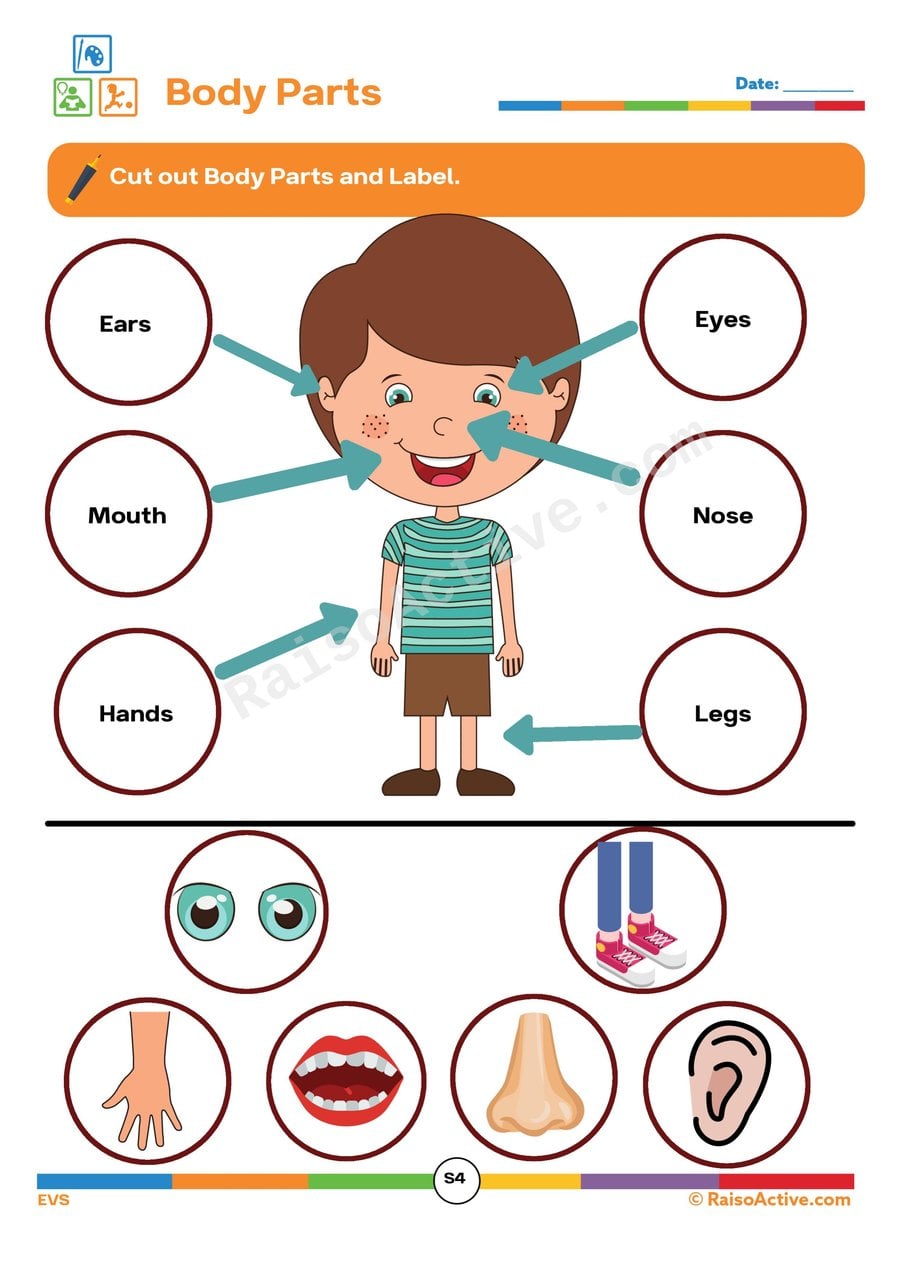
Cutting out labeled body part images and gluing them onto a figure teaches children ages 3-5 the names and locations of body parts like arms, legs, and ears, connecting spoken vocabulary to a visual, physical location on the body. The cutting and pasting process also strengthens fine motor control, giving this worksheet a combined literacy and hand-strength benefit. Because the body is something children can also touch and point to on themselves, this activity bridges paper-based learning with real, physical self-awareness.
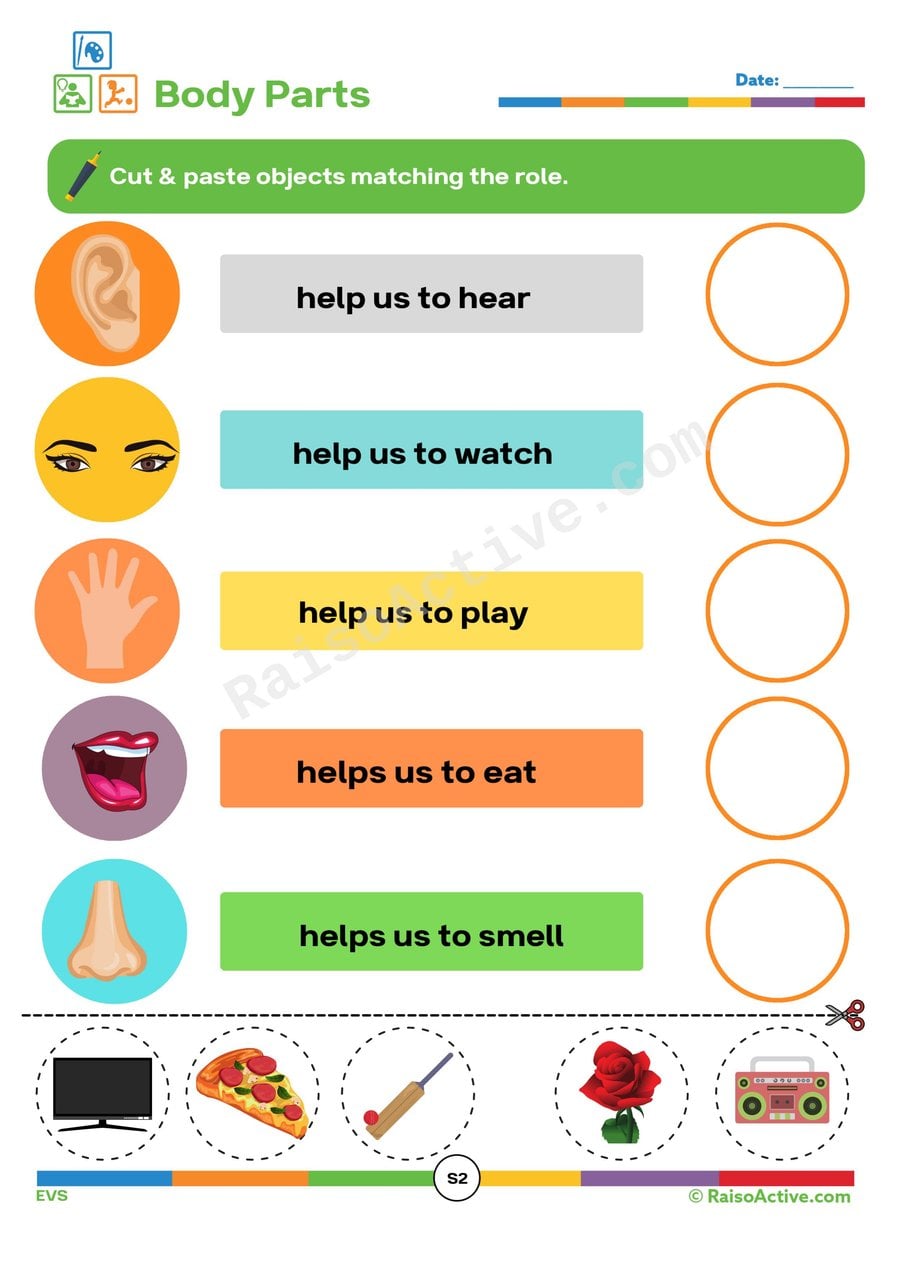
Body Parts Matching Worksheet for Preschoolers
Ages 3-5 · Preschool–Pre-KAges 3-5 · Nursery–ReceptionAges 3-5 · Nursery–LKGAges 3-5
Learning the names of body parts builds early vocabulary and body awareness for children ages 3-5, helping them describe their physical experiences and follow instructions that reference specific parts of the body. This cut-and-paste worksheet asks children to match pictures of body parts to their correct location on a figure, which reinforces spatial understanding of the body alongside vocabulary. Because children physically cut and glue each piece into place, the activity also builds fine motor control at the same time as the science and language content.

Body Parts Matching Worksheet for Preschoolers
Ages 3-5 · Preschool–Pre-KAges 3-5 · Nursery–ReceptionAges 3-5 · Nursery–LKGAges 3-5
Children ages 3-5 practice matching each body part to its specific function, like eyes to seeing or legs to walking, building early awareness of how their own body works. This connects body-part vocabulary to real-world purpose rather than just naming parts in isolation.
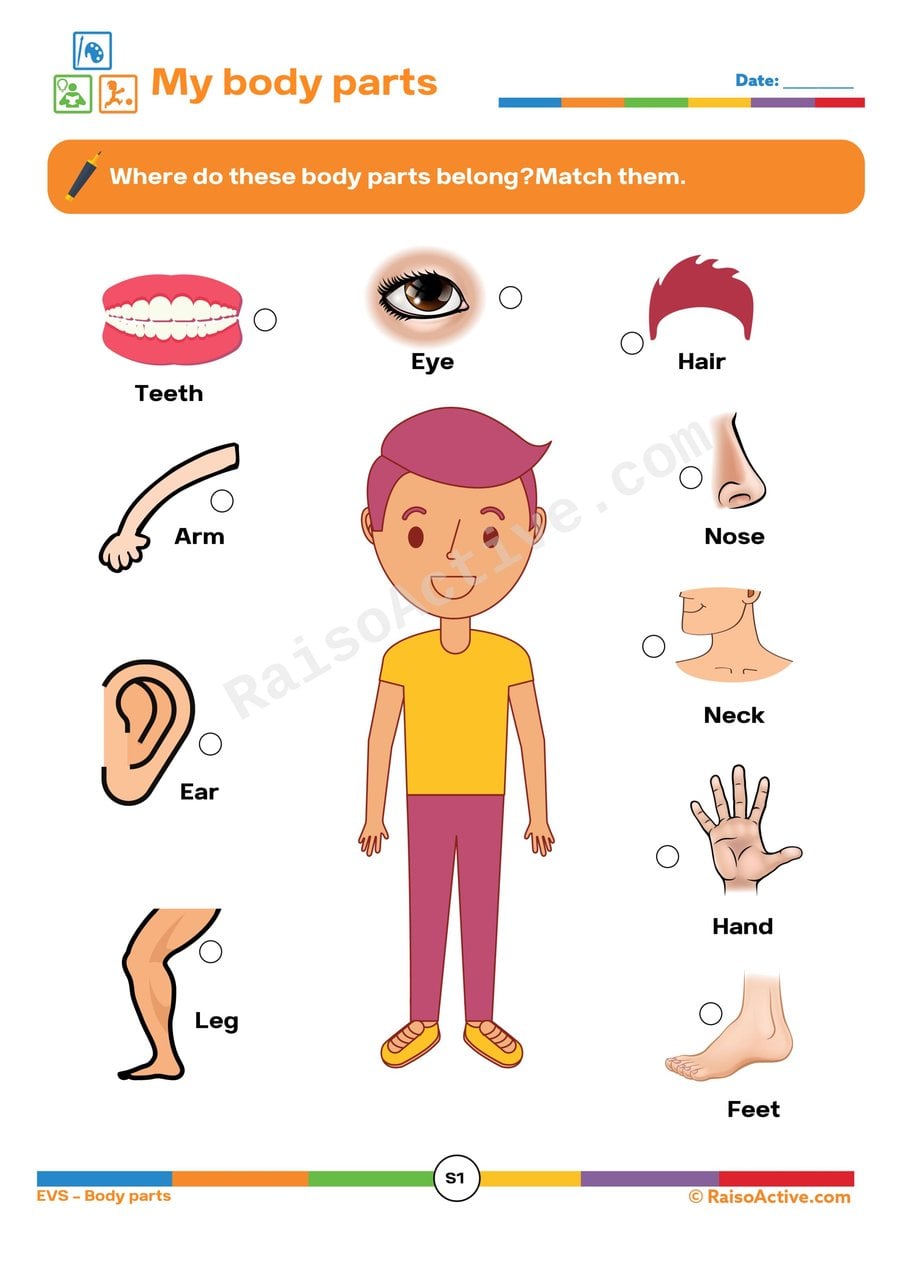
Match the Body Parts! A Fun Worksheet for Kids
Ages 3-5 · Preschool–Pre-KAges 3-5 · Nursery–ReceptionAges 3-5 · Nursery–LKGAges 3-5
Drawing lines from body part pictures to their correct location on a human figure helps children ages 3-5 build vocabulary for parts of the body, like arms, legs, and ears, while practicing visual-spatial matching between a small picture and its larger corresponding location. This worksheet strengthens the link between a spoken body part name and its physical location, a skill children also use constantly in daily routines like getting dressed or washing up. Matching pictures to a full-body diagram, rather than just naming parts in isolation, builds a more complete mental map of the body.
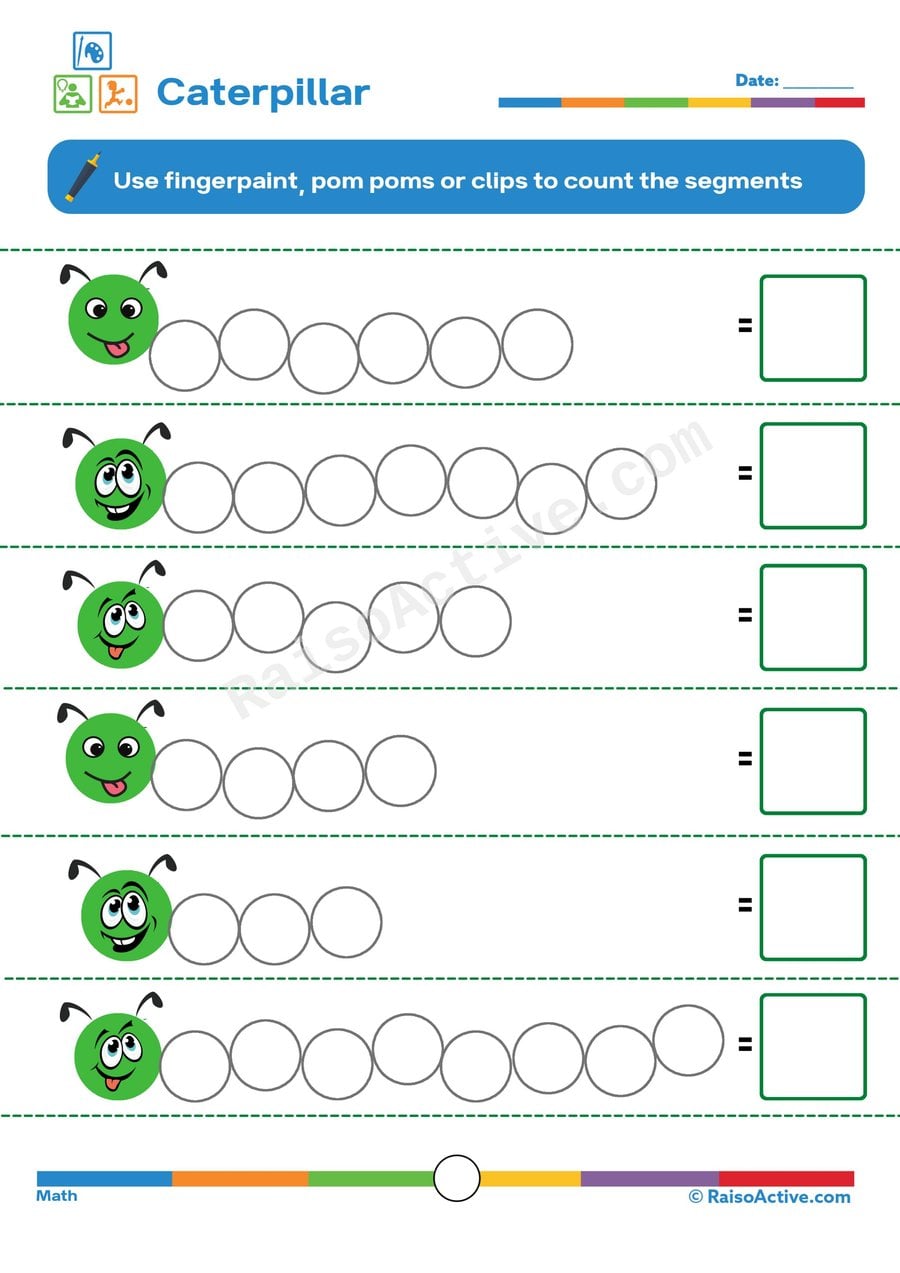
Caterpillar Counting Worksheet for Preschoolers
Ages 3-5 · Preschool–Pre-KAges 3-5 · Nursery–ReceptionAges 3-5 · Nursery–LKGAges 3-5
Counting the segments of each caterpillar teaches children ages 3-5 one-to-one correspondence — touching or marking each segment exactly once while saying a number — which is the core skill underlying accurate counting. Writing the final total in a box also connects the physical act of counting to its written numeral, reinforcing early number-writing practice.
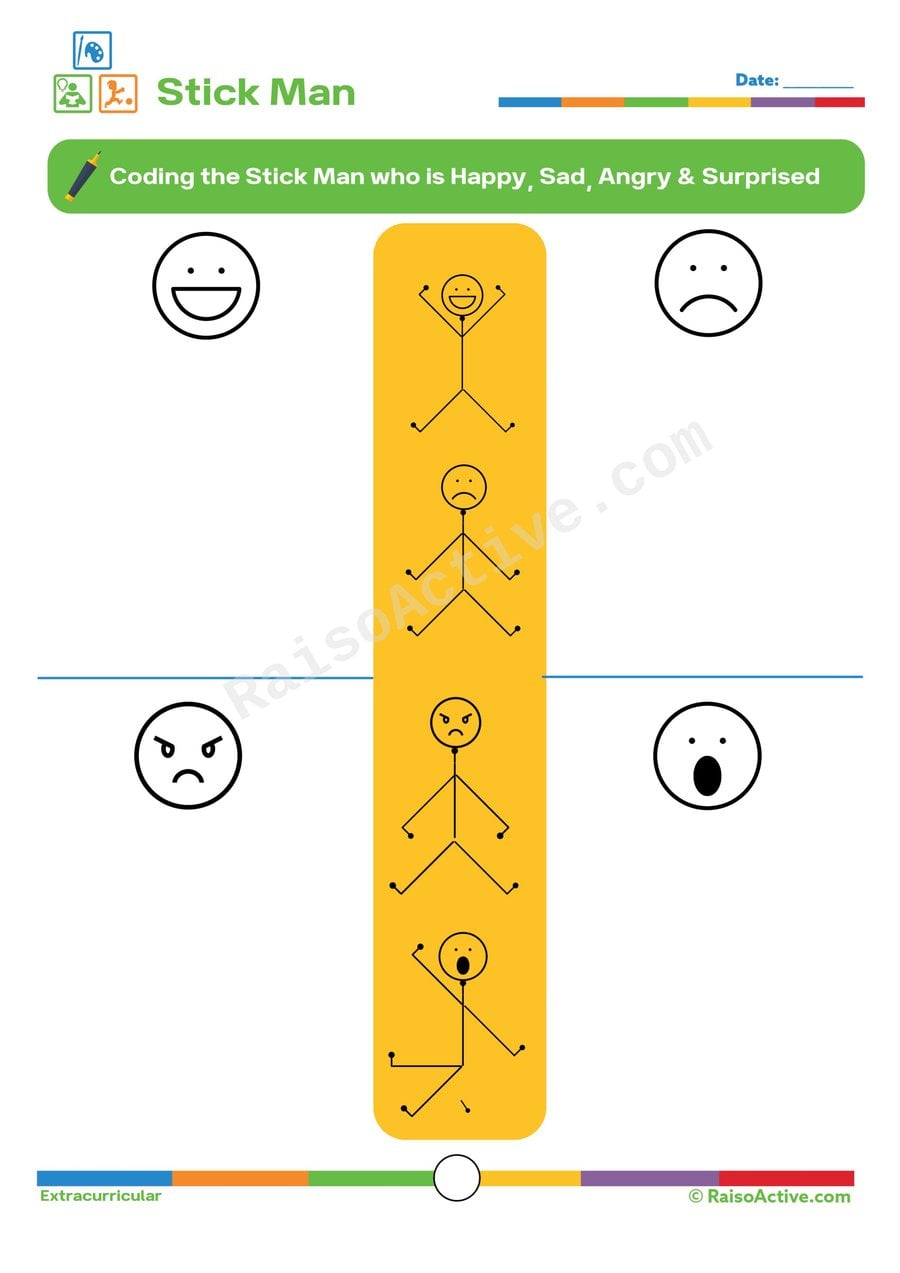
Stick Man Emotions Worksheet: Happy, Sad, Angry & Surprised!
Ages 3-5 · Preschool–Pre-KAges 3-5 · Nursery–ReceptionAges 3-5 · Nursery–LKGAges 3-5
Matching simple stick-figure faces to emotion words helps children ages 3-5 build an early emotional vocabulary, connecting facial cues like a curved mouth or raised eyebrows to specific feeling words. This kind of emotion recognition is a foundational social-emotional skill, helping children name what they and others are feeling instead of just reacting.
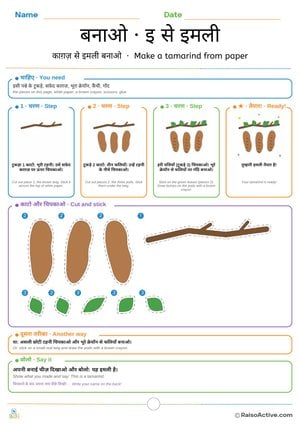
Make a Paper Tamarind: Hindi Letter इ Craft | बनाओ · इ से इमली
Ages 3-7 · Preschool–Grade 1Ages 3-7 · Nursery–Year 2Ages 3-7 · Nursery–Class 1Ages 3-7
Children cut out the pieces, put them together following three step pictures and make a paper tamarind. Saying the word इमली as they make it links the sound इ to something they built themselves.
Guides for this topic

Best Worksheets for 3-Year-Olds: What Works and What to Avoid
What works on worksheets for 3-year-olds: short sessions, crayons, tracing lines, matching, cutting, a free weekly plan, and signs one is too advanced.
How to Teach Cutting Skills to Your Preschooler: A Complete Guide for Parents and Teachers
Help your child master scissor skills safely. Expert guide covering readiness signs, scissor types, progression steps, pre-cutting exercises, and fun practice ideas for ages 2-6.
Christmas and Winter Activities That Combine Fun and Learning: Creating Magical Educational Experiences
Discover Christmas and winter activities that combine festive fun with real learning. Crafts, counting, literacy, and printable worksheets for ages 2 to 8 — perfect for home and school.
Reviews
Every worksheet for ages 3–5, no watermark
Members download the full library of 1,000+ worksheets and every activity pack without watermarks or daily limits. One year costs ₹999 in India or $20 elsewhere.
See membership plansOr download any worksheet free with a watermark (5 a day).