Free printable worksheets · US · UK · India
Grade 1 / Class 1 Mazes Worksheets (Ages 6–7)
Grade 1 / Class 1 mazes worksheets are practice sheets for children aged 6–7. Mazes are printed paths a child follows with a pencil from a start point to an end point, choosing the correct route among dead ends. The sheets on this page cover visual tracking along a path, planning a route before moving the pencil and pencil control around turns.
Grade 1, known as Class 1 in India and Year 2 in the UK, is where a child works through a full page independently: place value with tens and ones, addition and subtraction within 20, and short reading passages followed by comprehension questions replace picture-supported counting sheets. Six-year-olds are ready for dense mazes with long dead ends and for mazes that carry a learning rule. Skip-counting mazes are found by moving in 2s, 5s or 10s; phonics mazes pass only through words with a long a sound; addition mazes follow sums that equal 10. Solving from the finish back to the start, or in one attempt without lifting the pencil, raises the challenge without a new sheet. Persistence is now the main skill being built.
20 worksheets · free PDF download · print on A4 or Letter
Grade 1 / Class 1 Mazes Worksheets to print
Browse all worksheets for ages 6–7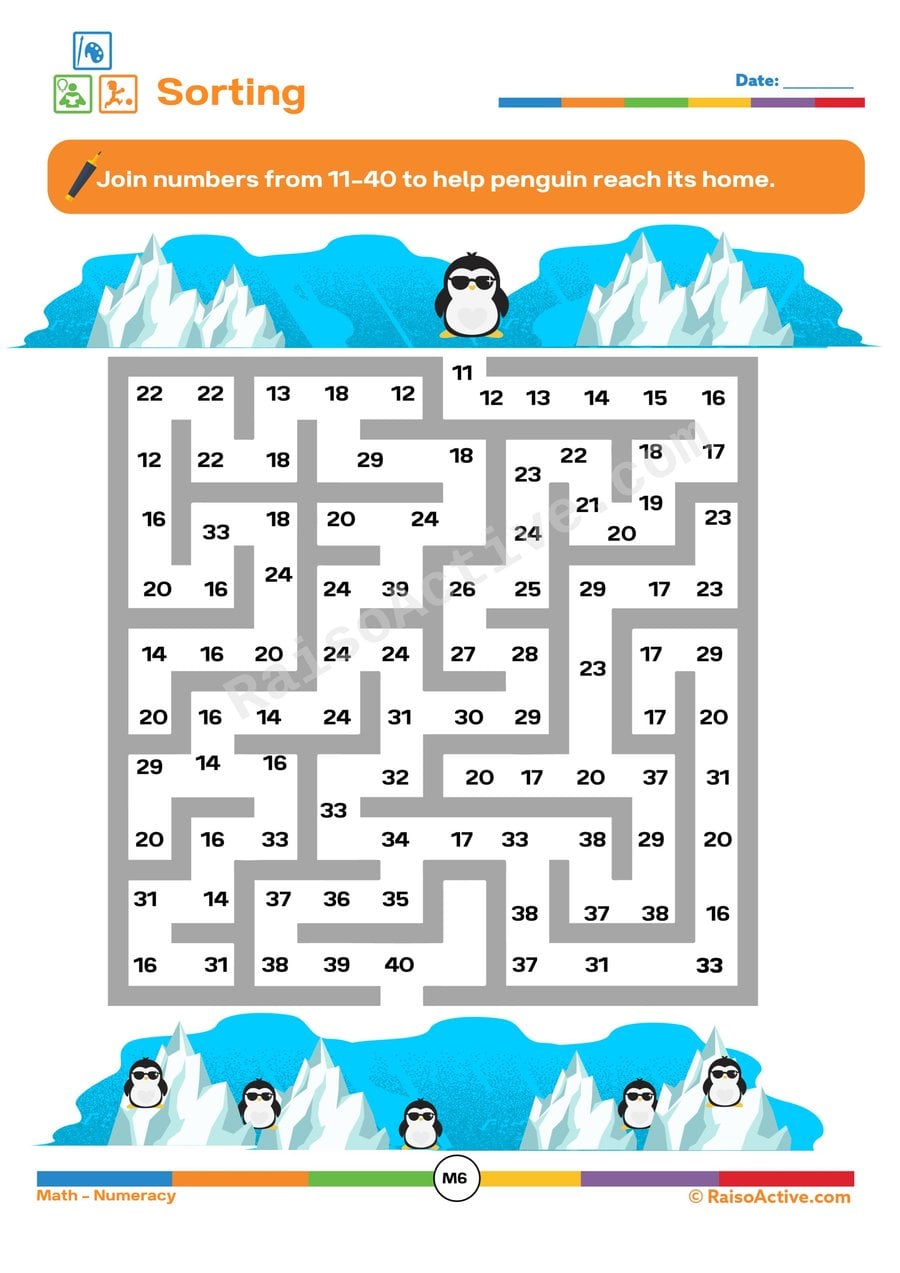
Penguin's Path: A Fun Sorting Worksheet for Kids!
This maze worksheet has 4-6 year olds trace a path through numbers 11 to 40, building both number sequencing across a wider range and the fine motor control needed to draw a connected line dot to dot. Because the range spans several decades, your child gets real practice with the trickiest part of early counting — the transitions between decades (19 to 20, 29 to 30) — while the penguin's journey gives the task a clear, motivating goal.

Number Path: Help the Boy Reach His House! (Numbers 41-50)
This maze worksheet takes 4-6 year olds into two-digit number territory, asking them to recognize and sequence numbers 41 through 50 in order to trace a path — a step up in difficulty from single-digit counting since two-digit numbers are easy to reverse or confuse (41 versus 14). Tracing the connecting line also keeps pencil control and hand-eye coordination in play alongside the number work, and the payoff of guiding the boy home gives the counting task a clear, motivating goal.
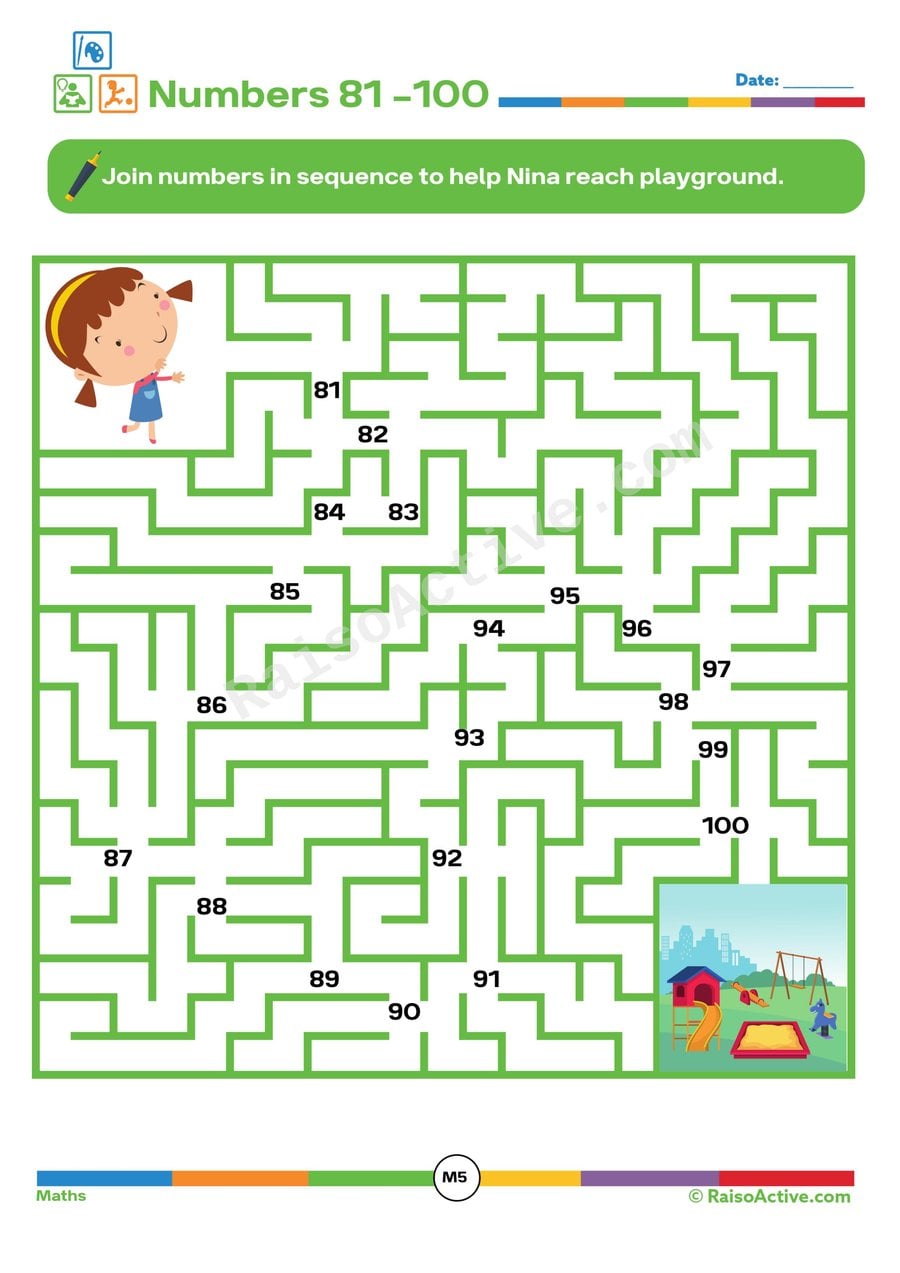
Nina's Playground Maze: Numbers 81-100 Worksheet
This maze-style worksheet asks children ages 4-6 to trace a path by joining numbers in sequence from 81 to 100, combining number recognition and counting fluency with the fine motor demands of following a winding path. Because children must find the next correct number among several nearby options rather than simply reciting a memorized sequence, the activity sharpens visual scanning alongside numeracy. Successfully completing a 20-number sequence like this also builds stamina and confidence for handling longer counting ranges without losing track.
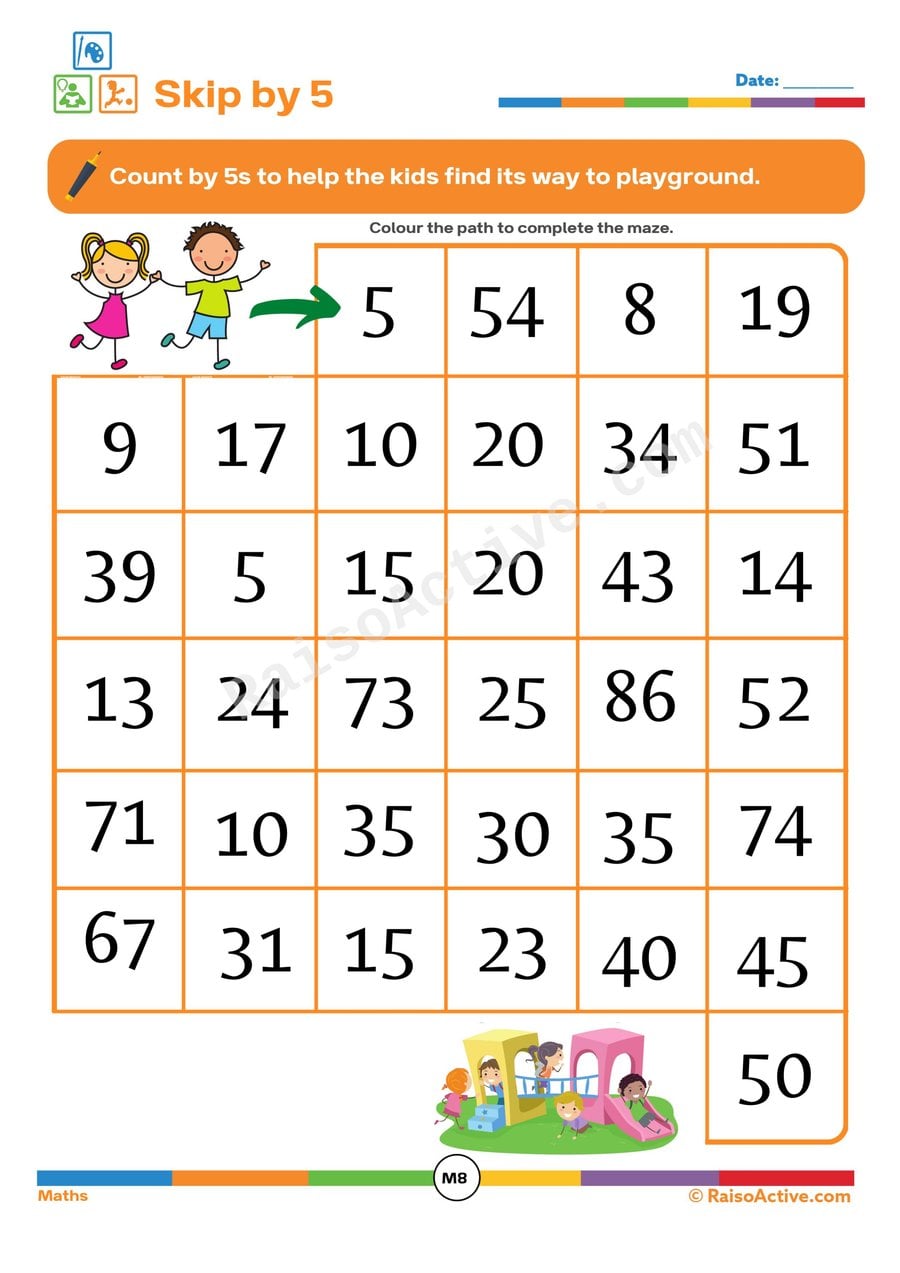
Skip Counting by 5: Maze Worksheet for Kids
Skip counting by fives is a stepping stone toward multiplication and telling time on a clock face, and this maze format turns that abstract number pattern into a concrete navigation task. Ages four to six benefit from the built-in feedback a maze provides: choosing the wrong number sends the path to a dead end, so children learn to self-correct their counting in real time.

Help the Mouse Escape! Numbers 81-90 Maze Worksheet
This maze worksheet asks children ages 4-6 to connect numbers in order from 81 to 90, giving practice with number sequencing in the higher tens range while adding a playful story element — helping a mouse escape from cats. Because the numbers must be found and connected in the correct order among a maze of paths, the activity combines number recognition with visual scanning and route planning. Working confidently within the 80s range also builds toward full fluency counting to 100, a key numeracy milestone at this age.

Help Dad Reach Home! Missing Number Maze Worksheet
Filling in missing numbers along a maze path combines number sequencing from 1-20 with the planning skills needed to trace a route from start to finish, giving children ages 4-6 practice in both counting recall and spatial navigation.
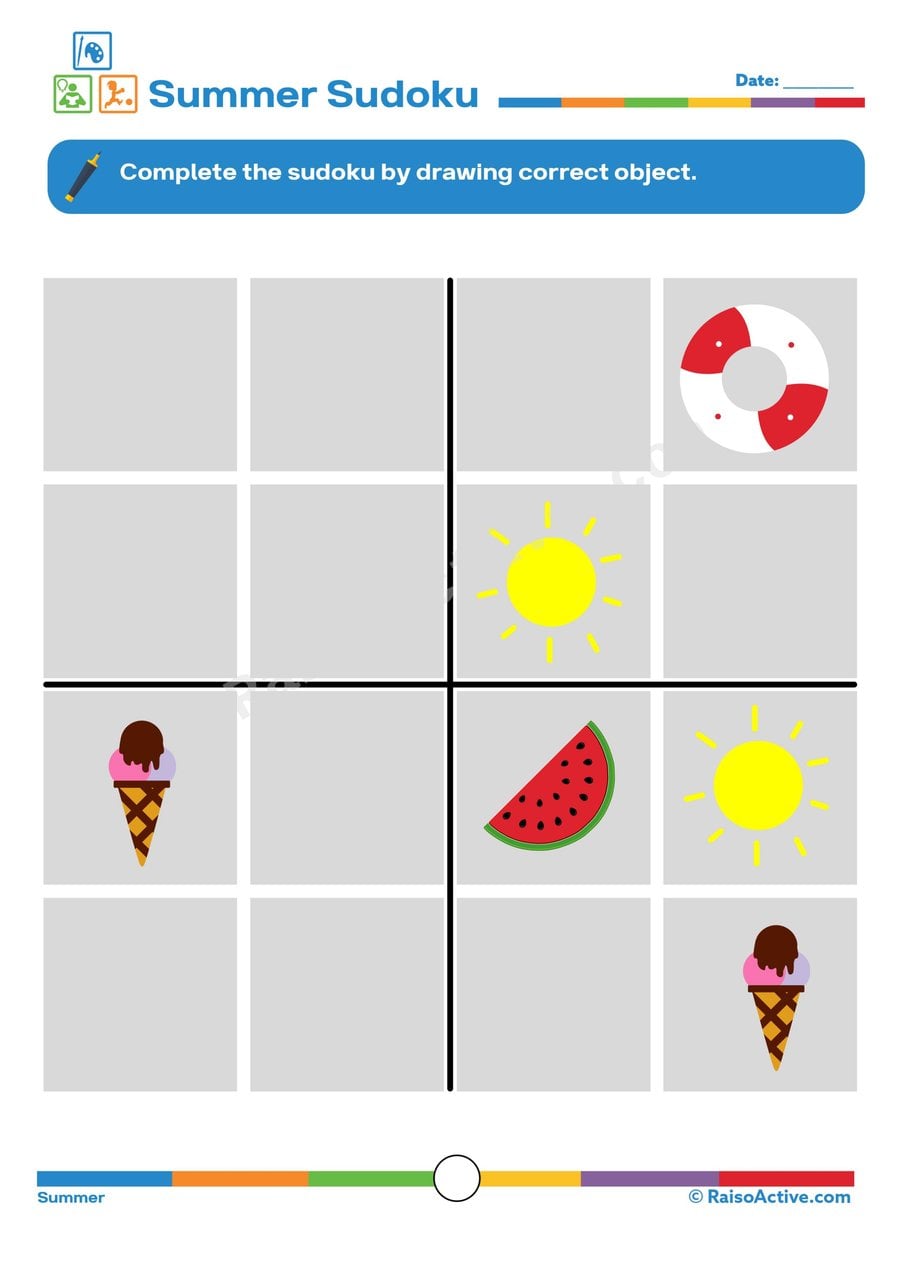
Summer Sudoku Worksheet for Kids
This simplified Sudoku puzzle has children ages 4-6 fill empty boxes with summer pictures so each row, column, and small 2x2 square contains every image exactly once, introducing early logical reasoning through visual clues instead of numbers. Because the grid uses a smaller 2x2 structure rather than the larger 3x3 blocks used in classic Sudoku, it's an accessible entry point into the process of elimination that more advanced logic puzzles require. Completing it builds patience and systematic thinking, since guessing randomly rarely works.

Holiday Sudoku: Cut and Paste Picture Puzzle Worksheet
This holiday-themed sudoku worksheet builds logical reasoning and problem-solving skills in children ages 4-6 by having them determine which holiday picture is missing from each row and column of a puzzle grid. Solving a picture sudoku by elimination, rather than by simple matching, requires children to hold multiple constraints in mind at once — what's already in the row and what's already in the column — which is genuinely challenging early logic practice. The festive imagery adds motivation and seasonal fun to an otherwise abstract reasoning task.

Summer Sudoku: Complete the Summer-Themed Sudoku Puzzle!
This picture Sudoku puzzle introduces children ages 4-6 to logical reasoning by having them fill empty squares with summer images so that no picture repeats in any row, column, or smaller square. Solving it requires children to hold multiple pieces of information in mind at once, tracking what's already placed in a row and column before deciding what belongs in an empty square, which builds working memory alongside visual discrimination. This kind of structured logic puzzle is an early stepping stone toward the reasoning skills used in later math and problem-solving.
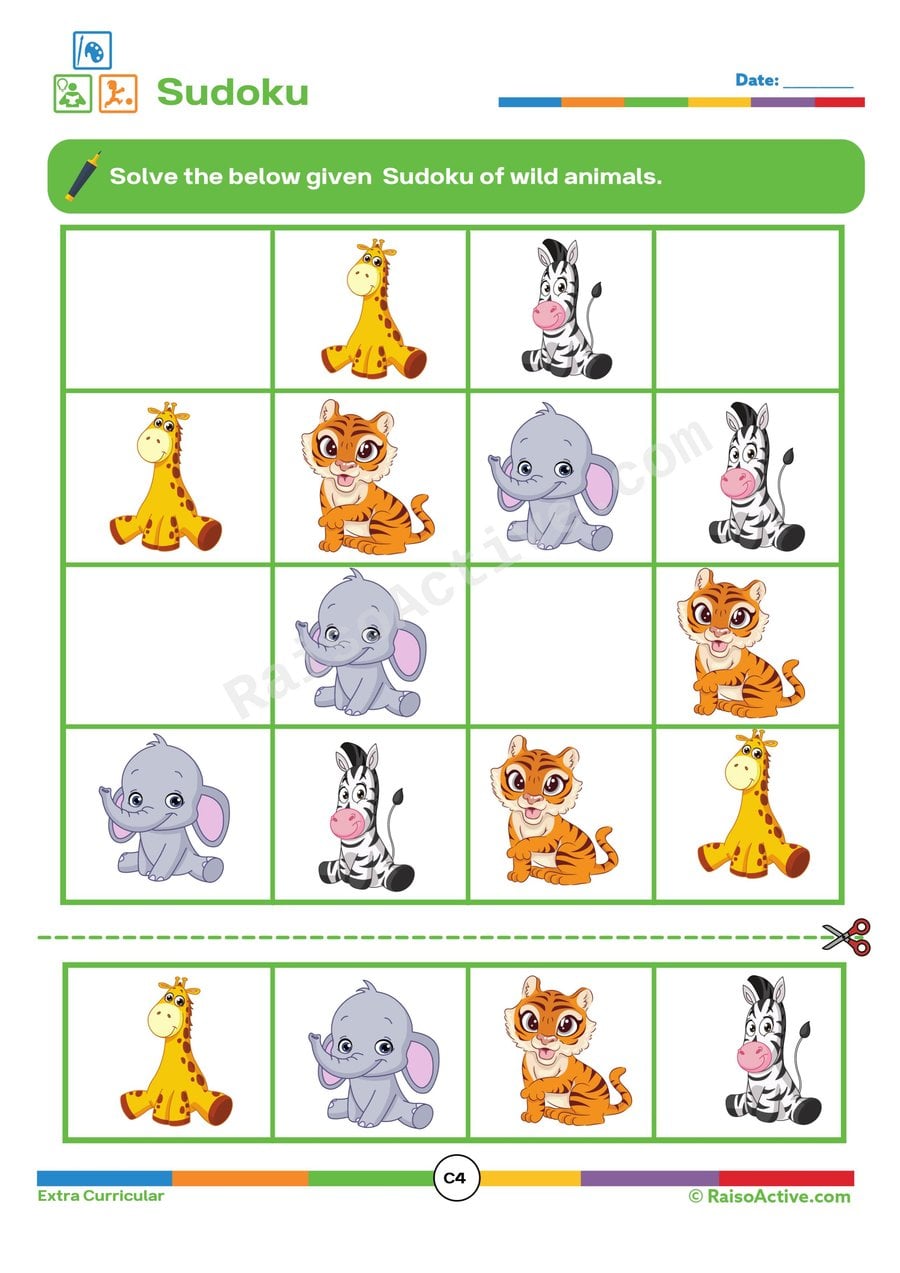
Wild Animals Sudoku Worksheet for Kids
Solving a picture sudoku with wild animals introduces children ages 4-6 to early logical reasoning, since each animal can only appear once in every row, column, and small grid, requiring careful process of elimination. This puzzle format builds problem-solving stamina and visual discrimination in a format that feels like play rather than a typical worksheet.
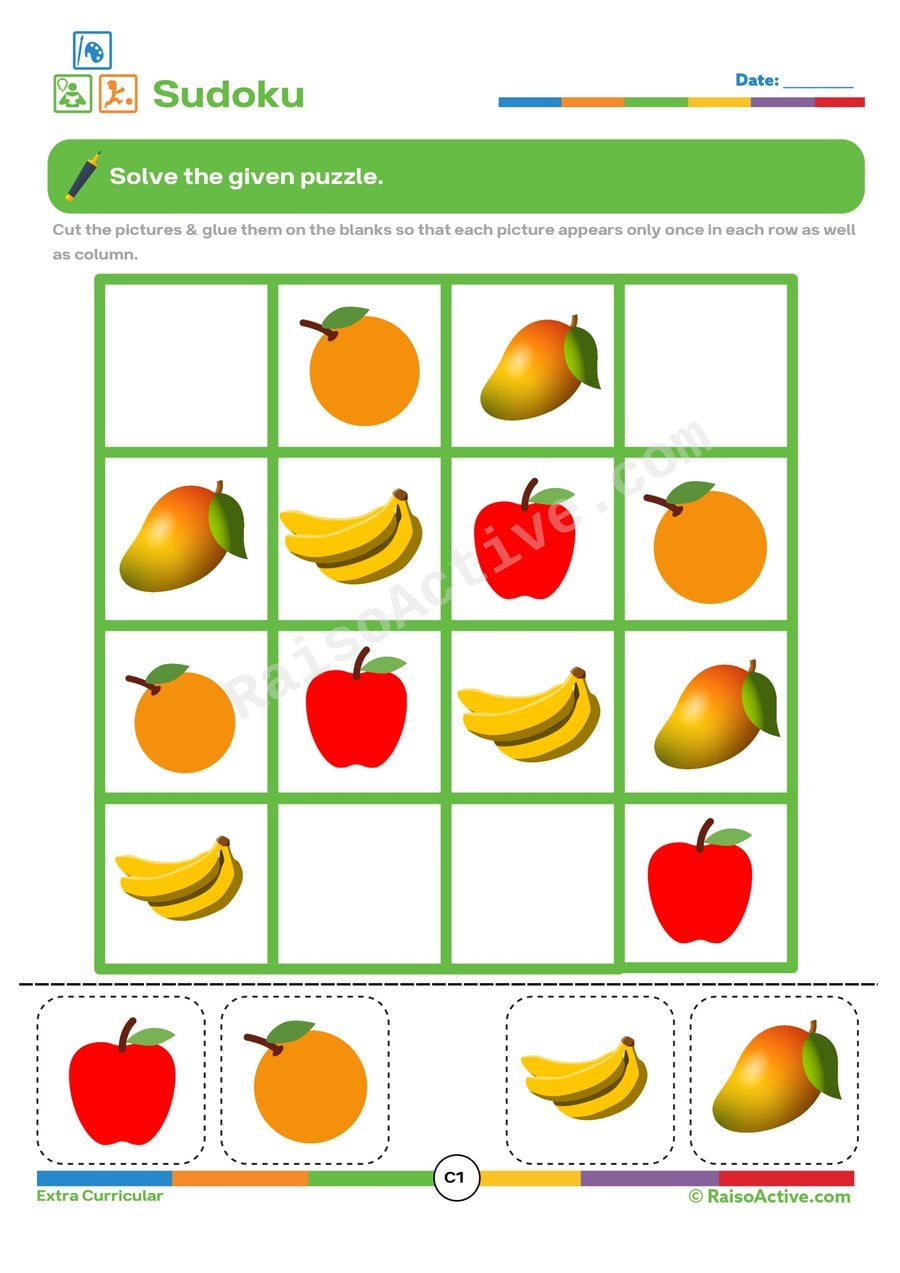
Fruit Sudoku Puzzle Worksheet for Kids
Completing a fruit-themed Sudoku grid builds early logical reasoning for children ages 4-6, requiring them to track which fruits are already placed in a row or column and deduce which one is missing — a foundational problem-solving skill.

Math Puzzle: Cut and Paste Addition and Subtraction Worksheet
Solving addition and subtraction problems and matching each answer to its correct puzzle piece builds calculation fluency alongside visual matching skills for children ages 4-6, turning practice into a self-checking puzzle format.

6x6 Sudoku Puzzle: Picture Matching Worksheet for Kids
This picture-based sudoku worksheet introduces children ages 4-6 to an early form of logical deduction, teaching them that each picture can appear only once in every row and column of the grid. Working out where a picture must go by process of elimination builds problem-solving and visual-scanning skills well beyond simple matching. Cutting and placing the small picture pieces precisely also strengthens fine motor coordination.
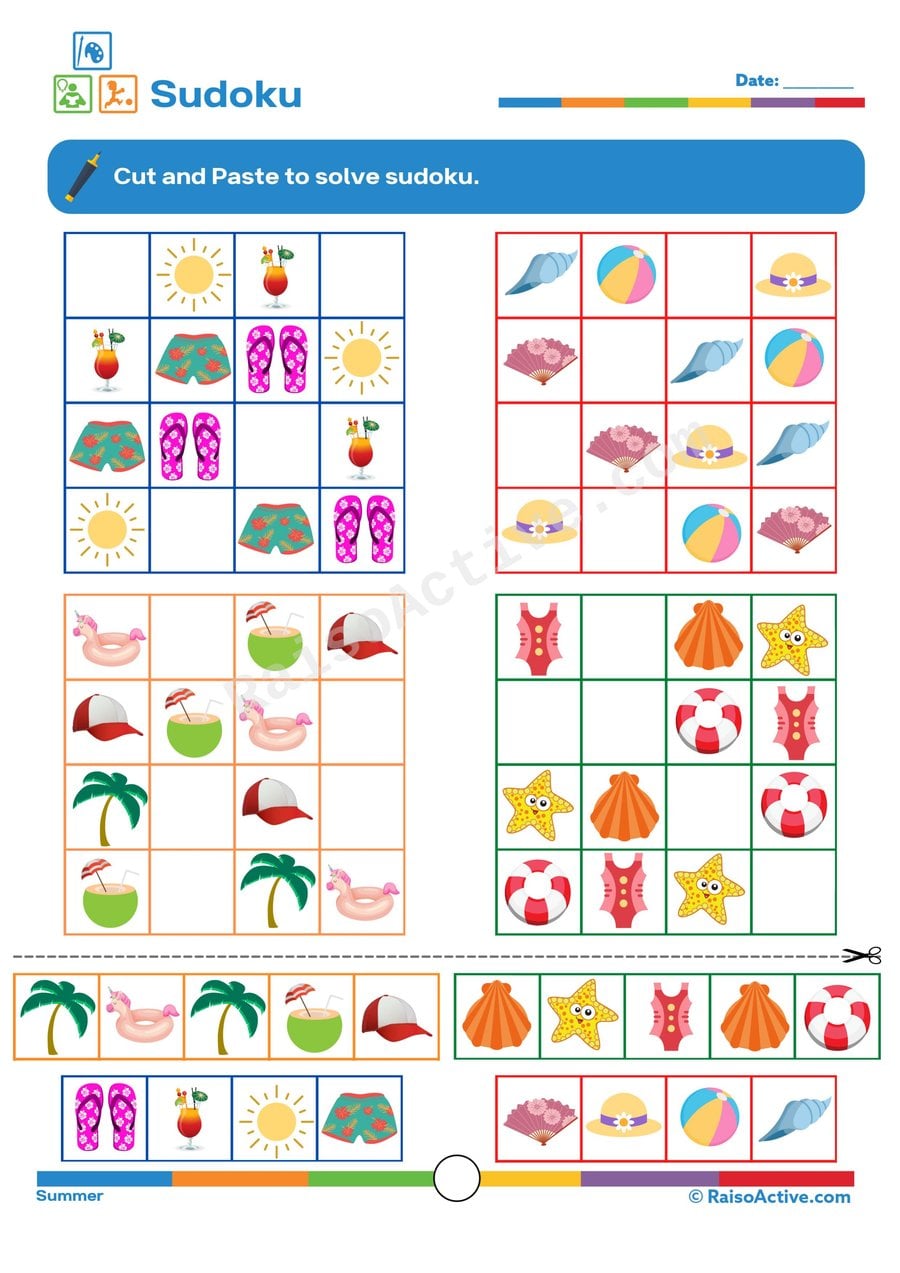
Summer Sudoku: Cut and Paste Worksheet for Kids
This worksheet combines cutting and pasting with logical puzzle-solving for children ages 4-6, who must cut out small summer images and paste each one into the correct empty square of a Sudoku grid so no image repeats in any row, column, or smaller square. Beyond the reasoning skills of a typical Sudoku, this version adds scissor practice and precise placement with glue, building fine motor coordination alongside logical thinking. Handling small cut-out pieces and placing them accurately also demands more spatial planning than simply coloring or drawing a picture.
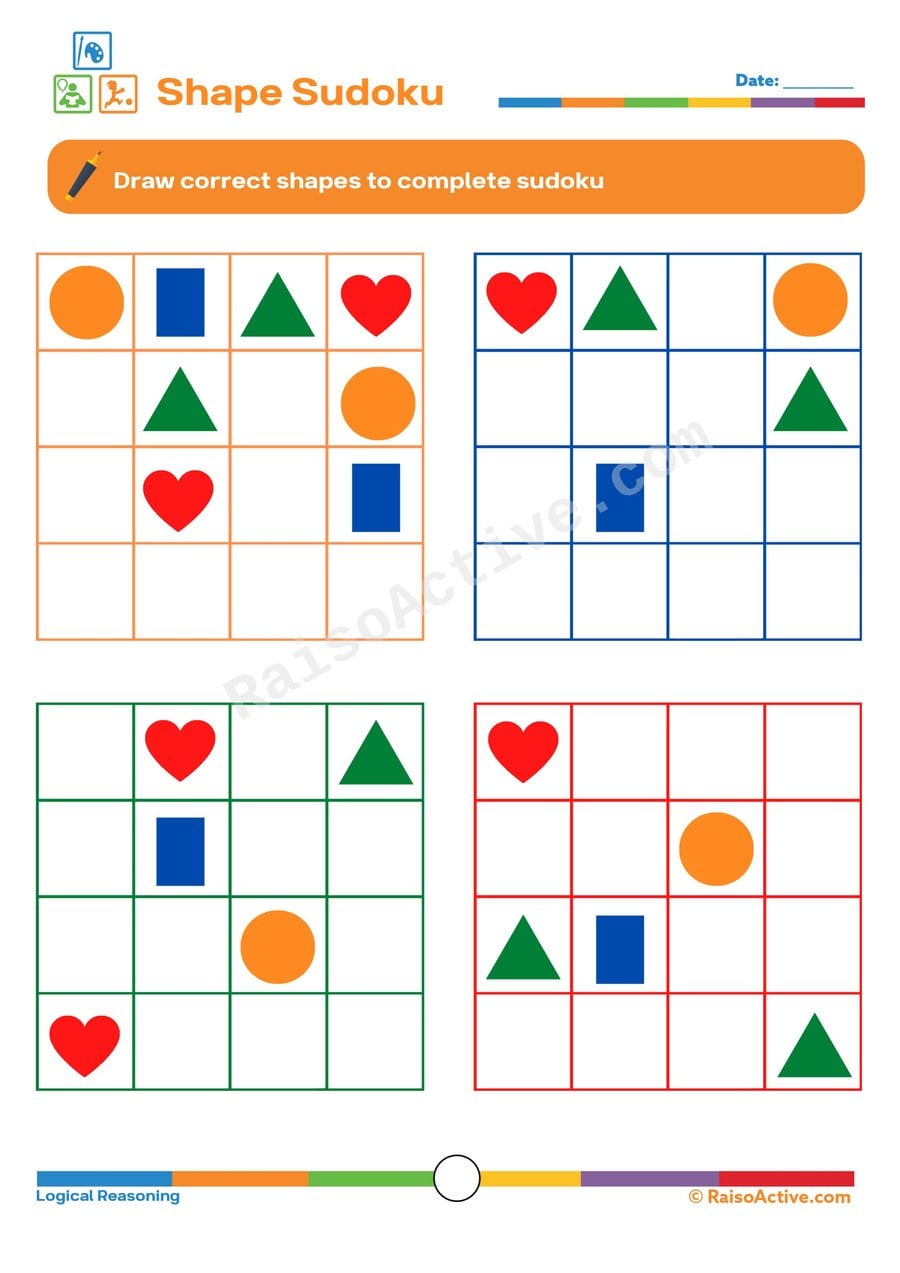
Shape Sudoku: Complete the Puzzles!
This shape-based Sudoku worksheet challenges children ages 4-6 to apply logical reasoning as they fill in missing shapes so that each row, column, and smaller grid section contains every shape exactly once. Unlike simple shape naming, Sudoku requires children to track multiple constraints at the same time and use process of elimination, an early and valuable introduction to structured logical thinking. Successfully completing even a simplified shape Sudoku builds real confidence in tackling multi-step problems methodically.

Spring Sudoku Worksheet: Cut and Paste Puzzle for Kids
Placing cut-out pictures into a sudoku-style grid so that no image repeats in any row, column, or box teaches children ages 4-6 early logical reasoning and systematic thinking, since they must check multiple directions before deciding where each piece belongs. Cutting out the small picture squares beforehand also builds scissor control and hand-eye coordination. Together, this combines a pre-math logic puzzle with fine motor practice in a single spring-themed activity.

Subtraction Adventure: A Fun Math Worksheet for Kids!
This worksheet gives children ages 4-6 varied practice with basic subtraction by solving simple equations across several different boxes, each with its own themed instruction to follow, like circling remaining items. Mixing subtraction problems with small follow-up tasks keeps the page engaging while reinforcing that subtraction means finding what's left after some amount is taken away.

Number Path Adventure: Write Numbers 1-20 Worksheet
Children ages 4-6 practice writing numerals in correct sequence as they fill in missing numbers along a path of stepping stones from 1 to 20. This strengthens number-order memory and numeral formation together, both needed before a child can count on reliably or recognize number patterns like the teens. Following a winding path also adds a light visual-tracking challenge that keeps attention on the correct next stone.
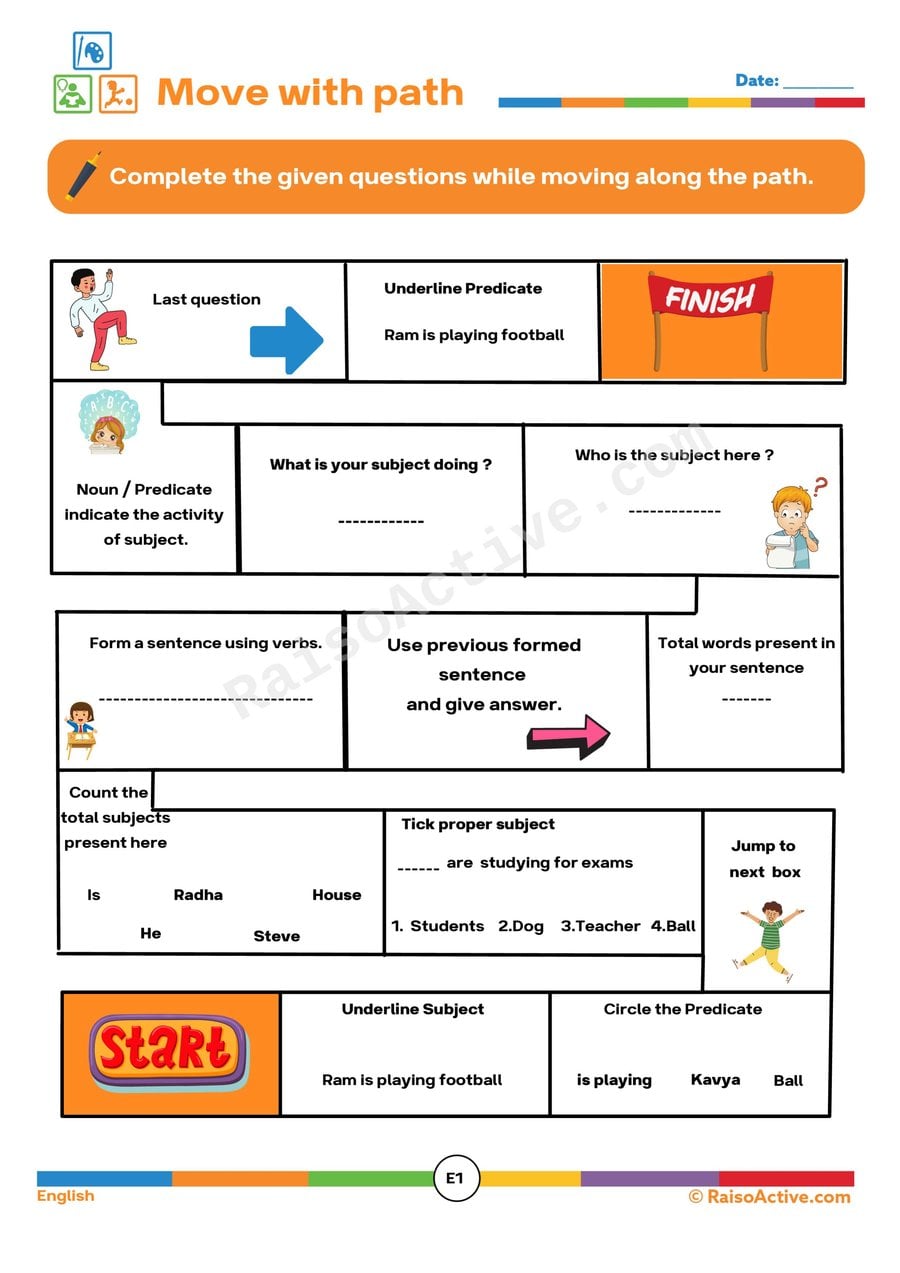
Move with Path Worksheet: Sentence Structure Fun!
This path-based activity teaches children ages 4-6 the basic building blocks of a sentence — subject and predicate — by having them move through a series of boxes, underlining predicates and identifying subjects along the way. Framing grammar as a physical path to follow makes an abstract concept more concrete for early learners. By the end, children practice not just identifying sentence parts but also constructing new sentences of their own, moving from recognition to active use.

Princess's Number Path: Fill in the Missing Numbers Worksheet
Filling in missing numbers along a themed path gives children ages 4-6 practice with number sequencing — understanding that numbers follow a fixed, predictable order and being able to identify what comes before or after a given number. This skill goes beyond simple counting, since a child has to hold the number sequence in their head and apply it to gaps rather than just reciting numbers in order from the start. The princess-and-prince storyline gives the exercise a narrative hook that keeps young children engaged through what might otherwise feel like a repetitive counting task.
What Grade 1 / Class 1 mazes worksheets cover
Six-year-olds are ready for dense mazes with long dead ends and for mazes that carry a learning rule. Skip-counting mazes are found by moving in 2s, 5s or 10s; phonics mazes pass only through words with a long a sound; addition mazes follow sums that equal 10. Solving from the finish back to the start, or in one attempt without lifting the pencil, raises the challenge without a new sheet. Persistence is now the main skill being built.
- Find the route by counting in 2s, 5s or 10s
- Pass only through words that have the long a sound
- Follow the path of sums that make 10
- Solve a dense maze with long dead ends in one attempt
- Work a maze backwards from the finish to the start
How to use these worksheets at home or in class
About twenty minutes a day, split between one math page and one reading page on alternating days, matches what most first grade teachers assign as homework. Have your child read every instruction aloud before starting, since that doubles as reading practice.
Start with the sheet that matches what your child can already do, then move one step up. Keep finished sheets in a folder: Grade 1 / Class 1 teachers often ask for evidence of practice, and children like seeing their own progress.
Is your child ready for Grade 1 / Class 1 mazes work?
A child ready for this stage reads and writes numerals fluently to 20, blends simple words into sentences, follows a written instruction without help, and can explain out loud how they solved a problem rather than only stating the answer.
Frequently asked questions
How long should a six-year-old spend on one maze?
Five to ten minutes is a good limit. A maze that takes longer is probably too dense for the child's current planning, and the second half becomes trial and error rather than thinking. Use a plain maze as a warm-up before written work, and a number or word maze as review at the end. If the child rushes and cuts through walls, ask for the route with a finger first.
What should a Grade 1 / Class 1 child be able to do in mazes?
Six-year-olds are ready for dense mazes with long dead ends and for mazes that carry a learning rule. Skip-counting mazes are found by moving in 2s, 5s or 10s; phonics mazes pass only through words with a long a sound; addition mazes follow sums that equal 10. Solving from the finish back to the start, or in one attempt without lifting the pencil, raises the challenge without a new sheet. Persistence is now the main skill being built. A child ready for this stage reads and writes numerals fluently to 20, blends simple words into sentences, follows a written instruction without help, and can explain out loud how they solved a problem rather than only stating the answer.
Do these worksheets follow the Grade 1 / Class 1 curriculum?
The sheets cover visual tracking along a path, planning a route before moving the pencil, pencil control around turns and problem-solving through trial and error, which sit inside the Common Core Grade 1 (1.OA, 1.NBT, RF.1.3); NEP 2020 Foundational Stage Class 1; National Curriculum KS1 (Year 2) outcomes for Grade 1 / Class 1. Class 1 (India), Year 2 (UK) use the same skills at this age, so the sheets also fit families following those programmes.
Are these Grade 1 / Class 1 mazes worksheets free?
Yes. Each worksheet downloads free as a watermarked PDF once you create an account, with a limit of five a day. An annual membership ($20) removes the watermark and the limit for the whole library of over 1,000 worksheets and every printable pack.

Written by
Hemsweta Jain · Teacher Cheena
MBA and Early Childhood Educator, teaching since 2014 · Founder of RaisoActive, Mumbai
Written and reviewed by Hemsweta Jain (Teacher Cheena), who designs every RaisoActive worksheet.
Last reviewed
Printable packs for ages 6–7
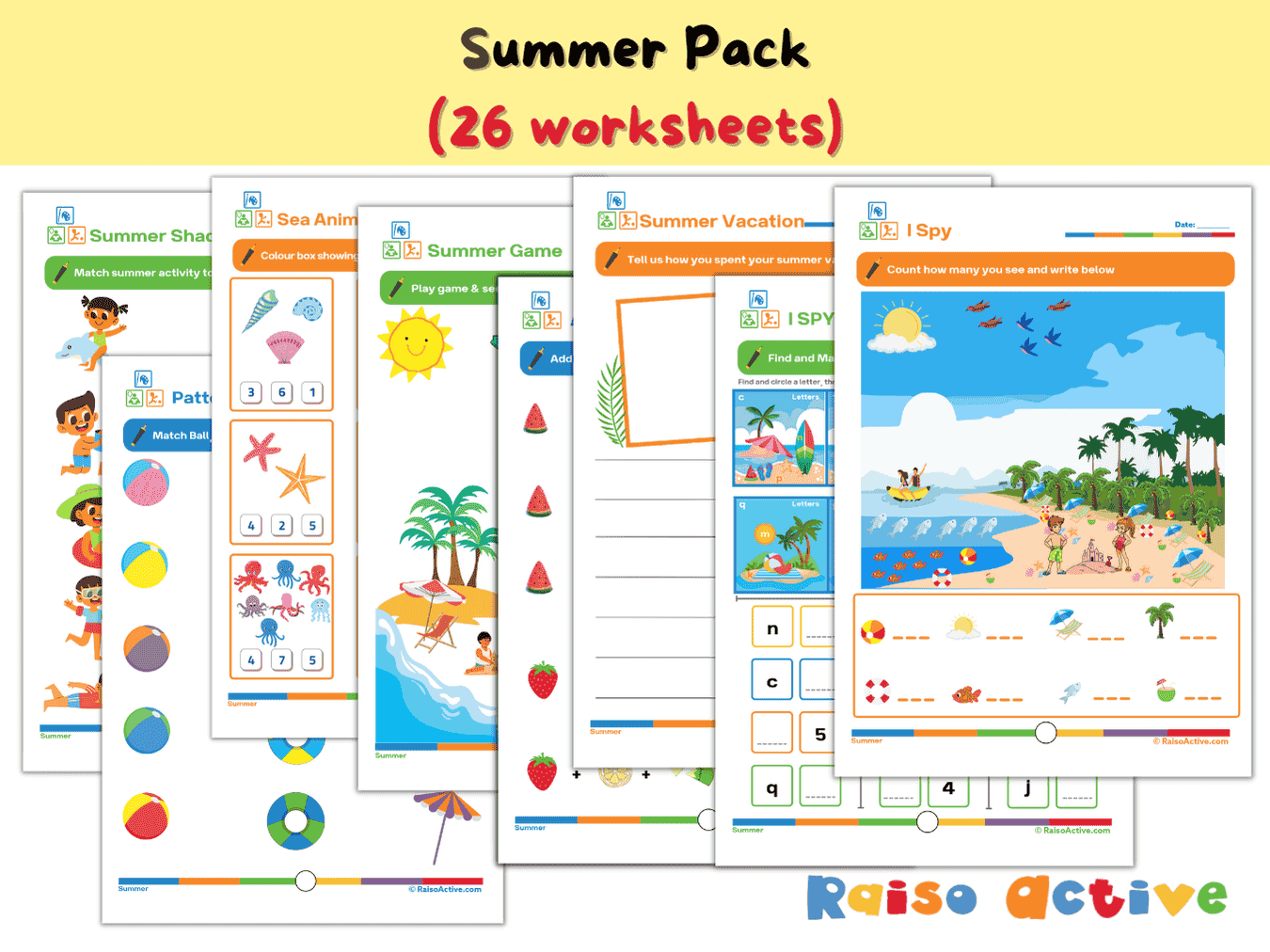
Summer Activity Pack: Math, Literacy, Puzzles & More for Preschool & Kindergarten
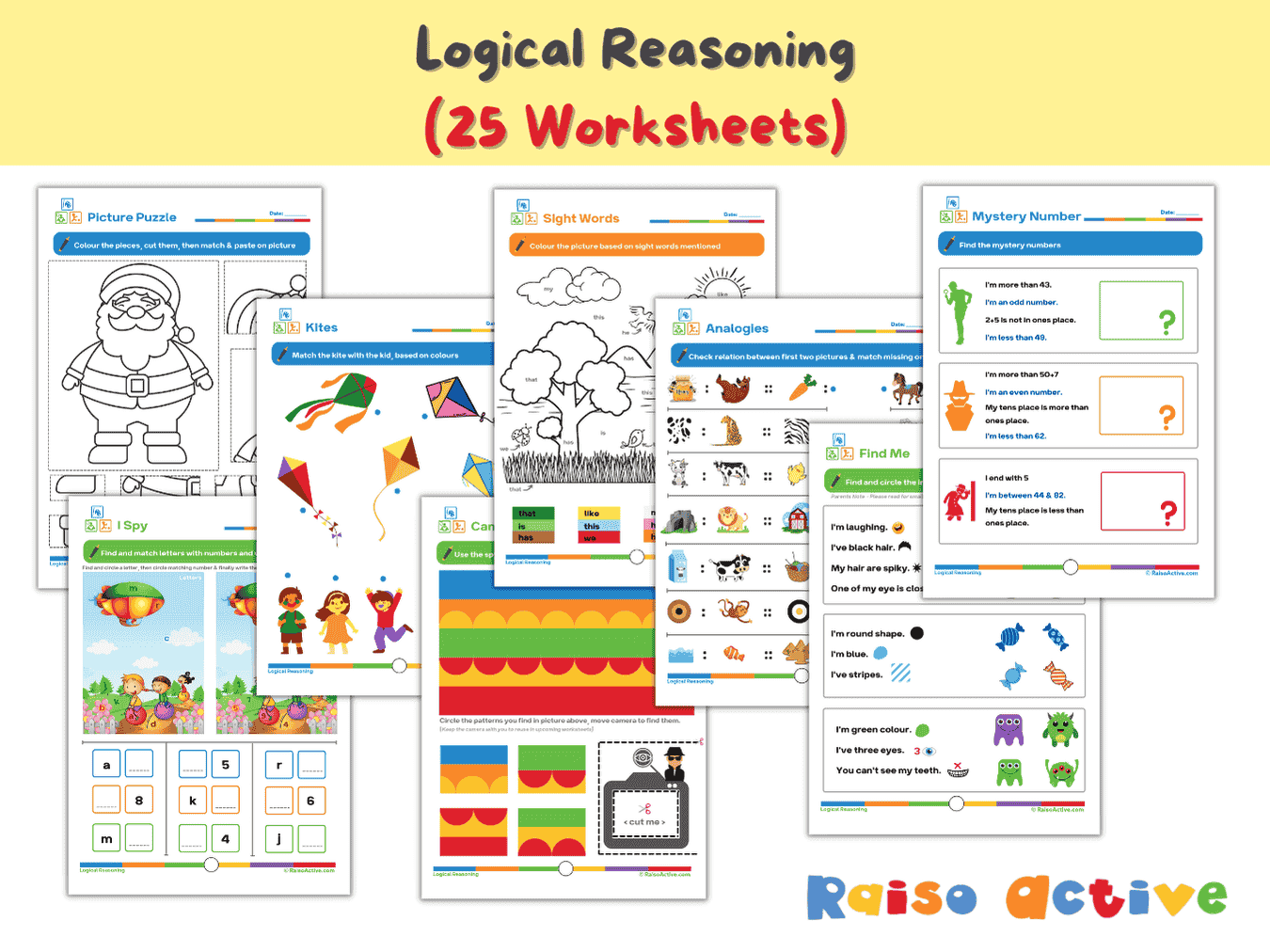
Logical Reasoning Activity Book for Preschool & Kindergarten | Patterns, Puzzles & Analogies
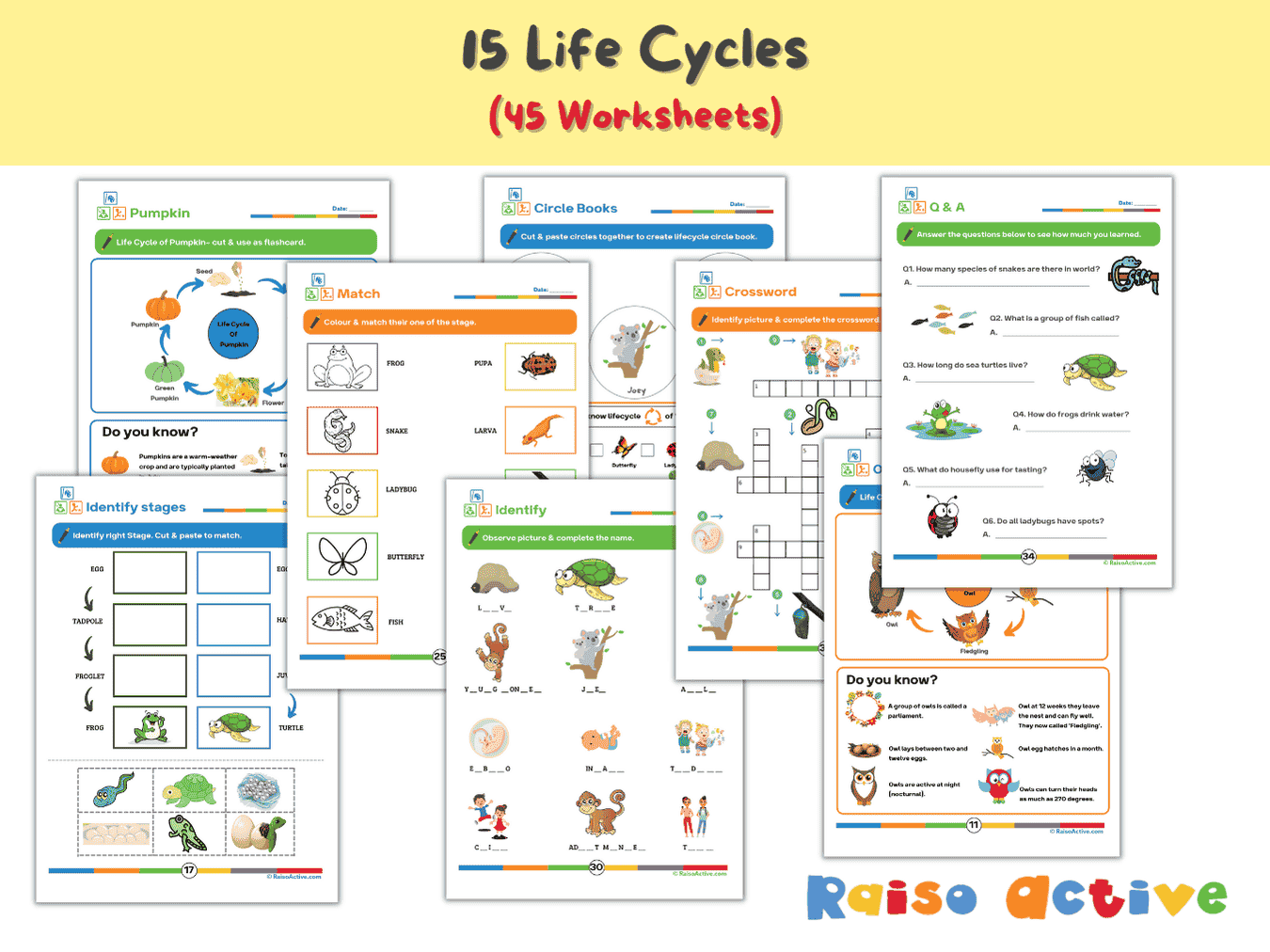
Lifecycles Activity Book & Flashcards for Preschool & Early Elementary
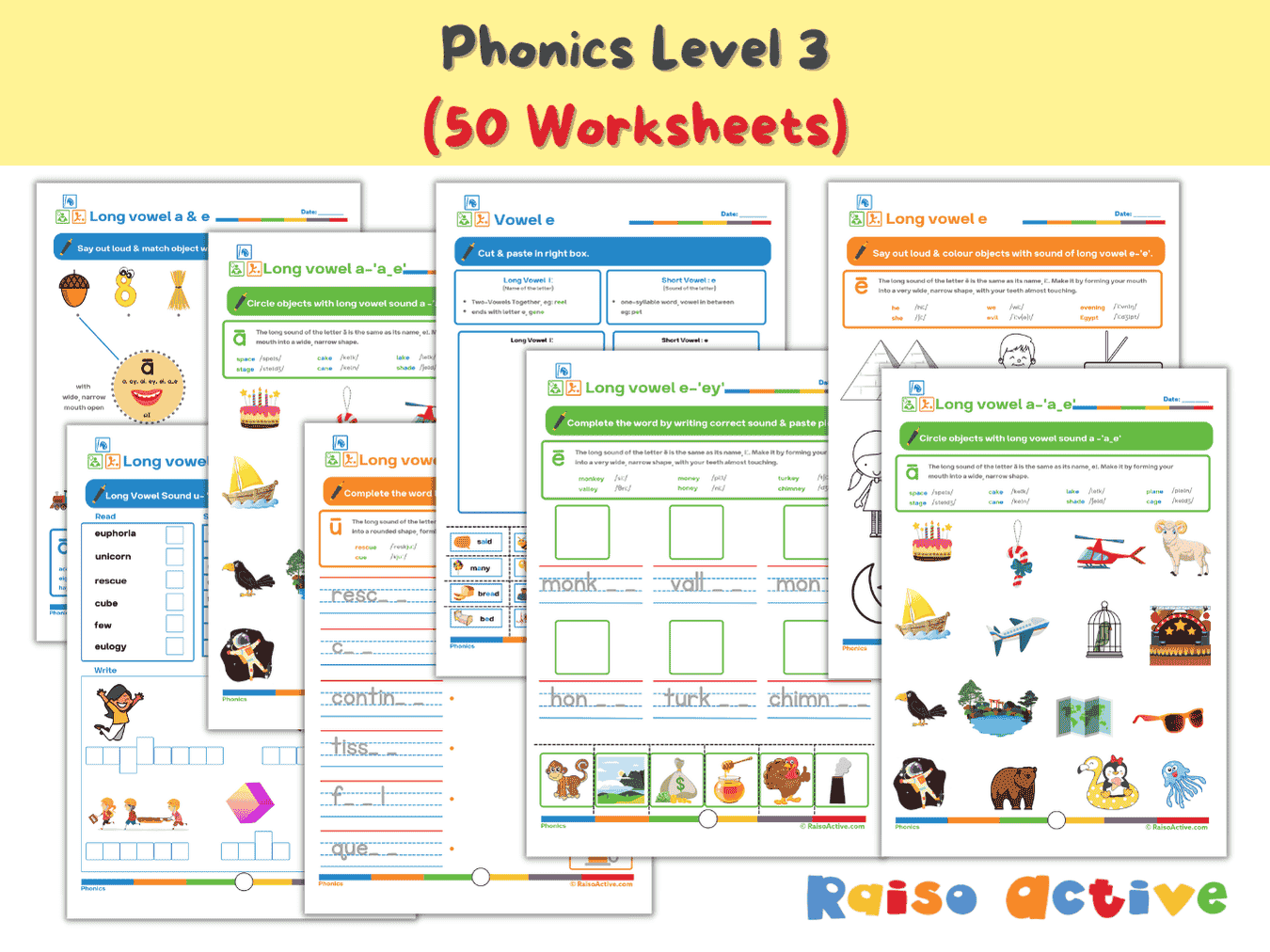
Phonics Level 3 Long Vowels Activity Book for Kindergarten & 1st Grade
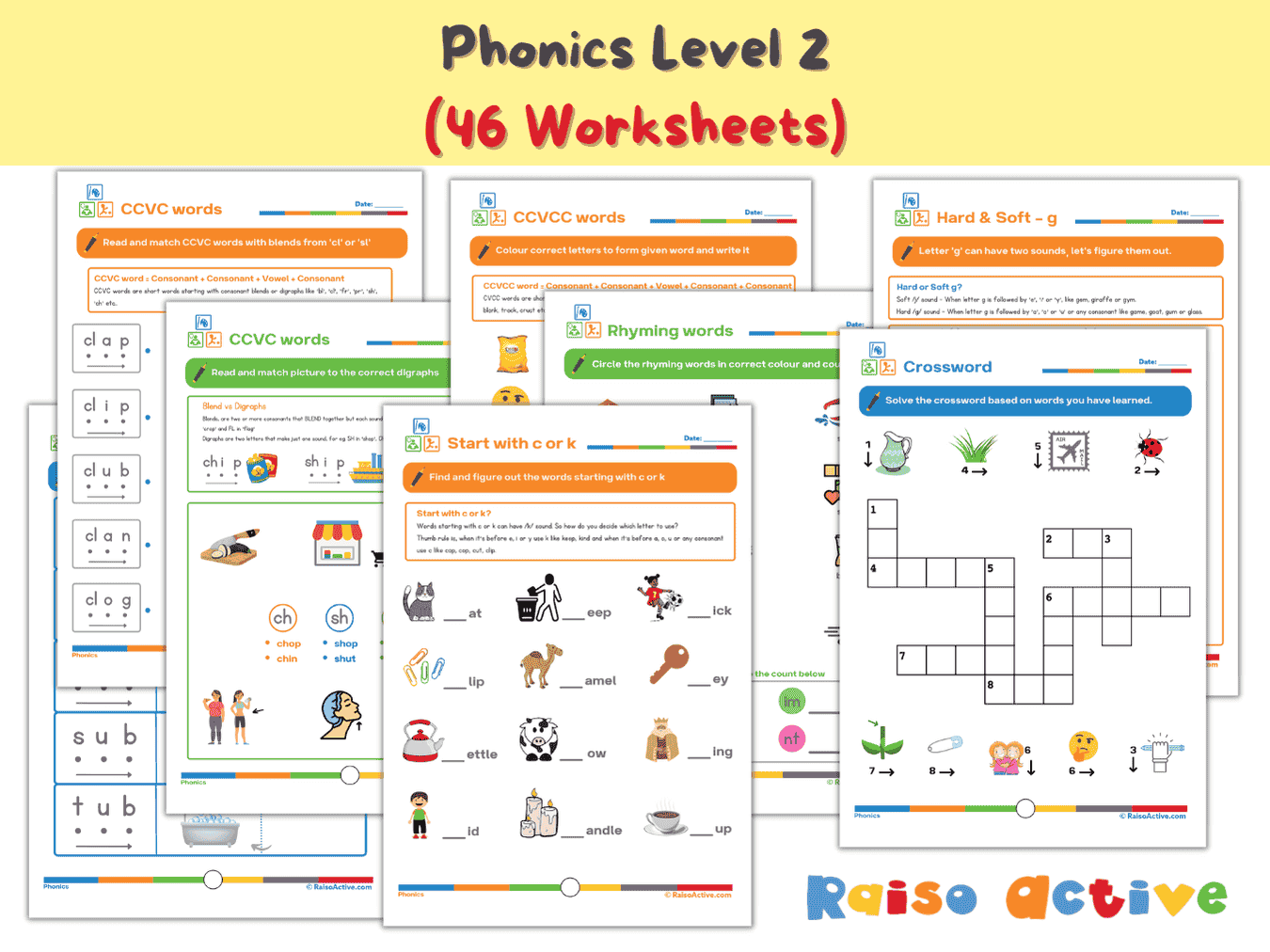
Phonics Level 2 Worksheets: CVC, CCVC, CVCC Word Families & Blends for Early Readers (Ages 4-7)
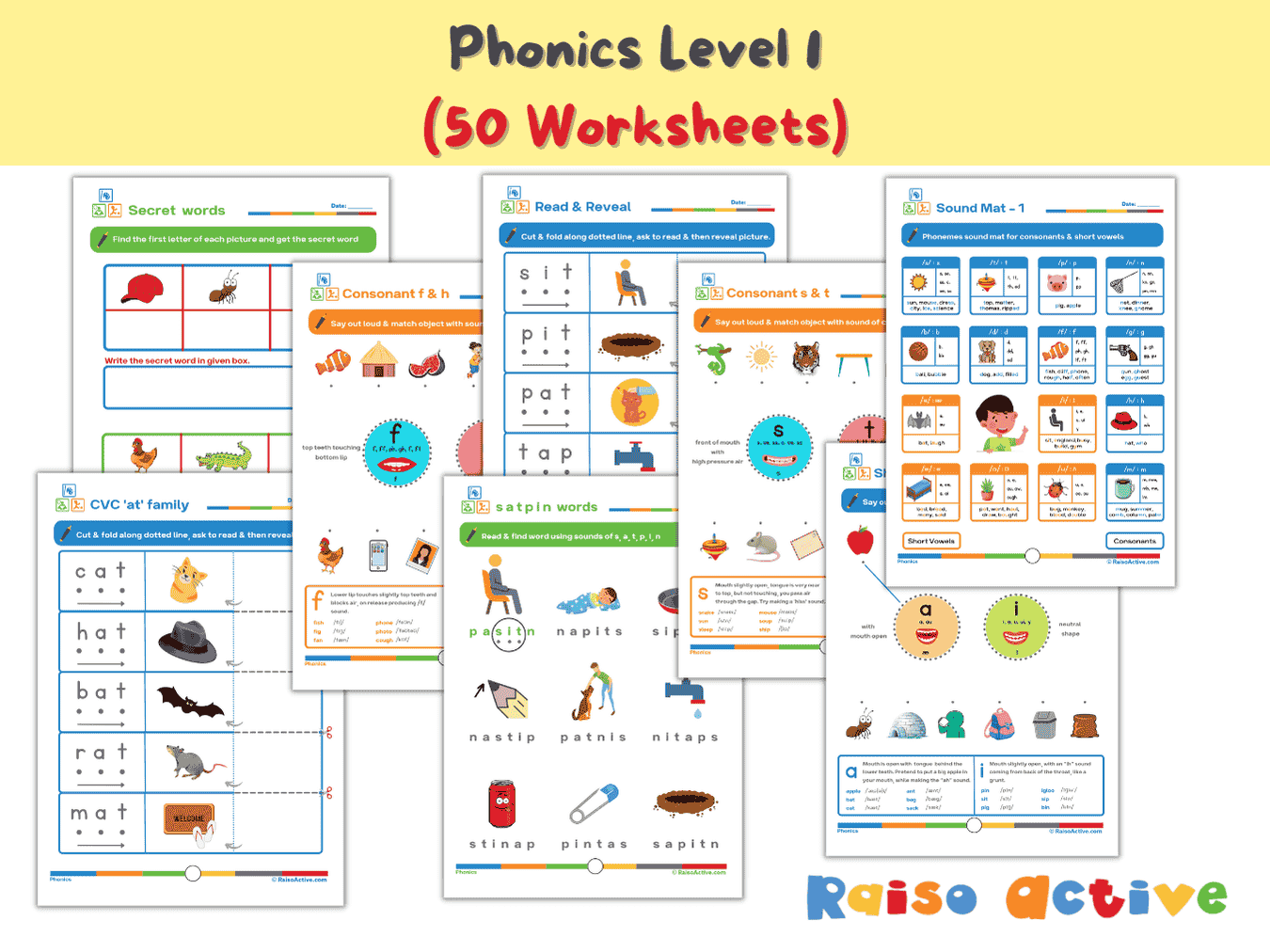
Phonics Level 1 Activity Book: Letter Sounds, Blending & CVC Words for Preschool & Kindergarten
Guides for parents and teachers
See all guides →Age-Appropriate Problem-Solving Activities: Building Critical Thinkers from the Ground Up
Discover fun, age-appropriate problem-solving activities for children ages 1-8. Build critical thinking, logic, and reasoning skills through play-based learning.
Fostering Creativity in Structured Learning: The Perfect Balance for Young Minds
Learn how to blend creativity with structured learning for children ages 1-8. Practical strategies, activities, and printable worksheets for parents and teachers.
Critical Thinking Activities That Actually Work for Young Children: Building Tomorrow's Thinkers Today
Discover proven critical thinking activities for young children. Age-wise logic games, questioning techniques, and hands-on ideas to build thinking skills at home.
Preparing Your Child for a Rapidly Changing World: Essential Skills for Future Success
Discover the essential 21st century skills your child needs for future success. Practical tips on creativity, critical thinking, digital literacy & emotional intelligence for ages 1-8.
Coding Activities for Preschoolers: Building Tomorrow's Thinkers Today
Discover 15+ unplugged and screen-based coding activities for preschoolers that build sequencing, logic, and problem-solving skills through play. NEP 2020 aligned.
Nurturing Your Gifted Child: How to Provide Appropriate Challenges at Home
Discover how to recognise giftedness in young children and provide meaningful challenges at home without burnout. Practical strategies for Indian parents.