Transport Matching Worksheet for Preschoolers
Preschoolers ages 3-5 build categorization and vocabulary skills as they connect each vehicle picture to the environment where it actually travels. Sorting vehicles by where they go strengthens early classification thinking, a skill children rely on later when grouping objects by other shared properties. It also introduces transportation vocabulary that expands their spoken language.
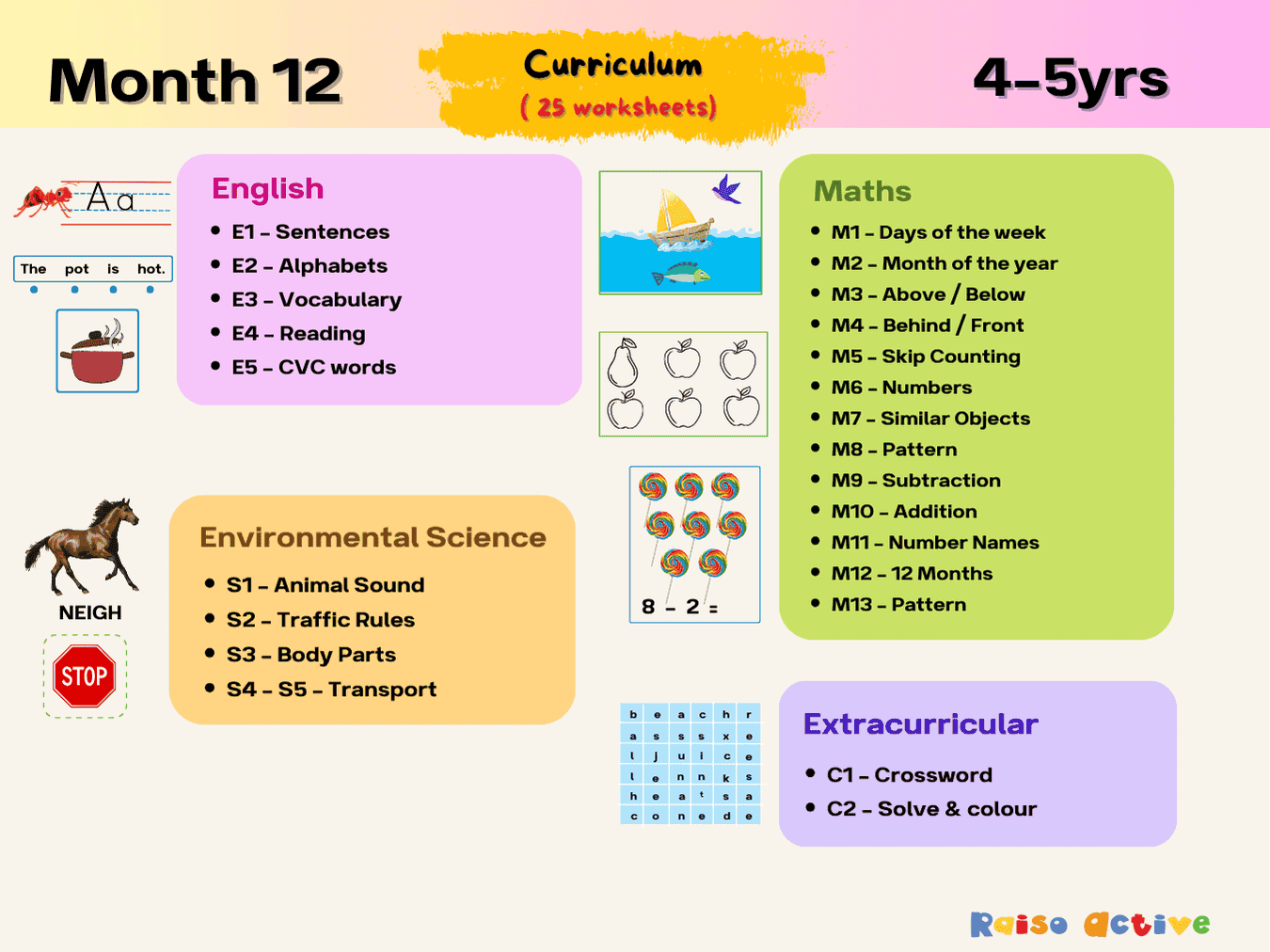
Part of the pack
Month 12: Learning & Development | Ages 4-5
This is page 25 of the pack. Ages 4-5 · Pre-KAges 4-5 · ReceptionAges 4-5 · LKGAges 4-5

Made for your child
Counting to 10, made for your child
A maths pack with your child's name in it: pictures that explain, practice at three levels, puzzles and story sums about them. Print a new set whenever they finish.
Make a maths packFree preview · free for members
Curriculum
- Transportation > Transportation
How to use this worksheet
Start by looking at each vehicle picture together and naming it out loud. Ask your child where that vehicle travels — on a road, in the water, or in the sky — before they circle the matching environment picture. Work through the page one vehicle at a time rather than rushing through all of them, and encourage your child to point to the vehicle and say a full sentence like "The boat travels on water." Finish by coloring the vehicles once every match is circled correctly.
Materials needed
- Pencil
- Crayons
Extension activities
- 1Sort toy cars, boats, and planes into three piles by where they travel, then check the piles against the worksheet.
- 2Take a walk and count how many different transport types you spot — cars, buses, bikes, planes overhead.
- 3Make paper boats and race them in a sink or bathtub to reinforce that boats travel on water.
- 4Build a simple road out of tape on the floor and drive toy cars along it while naming other vehicles that use roads.

Written by
Hemsweta Jain · Teacher Cheena
MBA and Early Childhood Educator, teaching since 2014 · Founder of RaisoActive, Mumbai
Every RaisoActive worksheet is designed and checked by the founder before publishing.
Published · Last reviewed
More from Month 12: Learning & Development | Ages 4-5

Months of the Year: Sequencing Worksheet for Preschoolers
Ages 3-5 · Preschool–Pre-KAges 3-5 · Nursery–ReceptionAges 3-5 · Nursery–LKGAges 3-5
Choosing which month comes next from a set of options builds sequencing skills and calendar vocabulary for children ages 3-5, reinforcing the fixed order of the twelve months through repeated practice rather than memorization alone.

Vocabulary Worksheet: Circle the Objects That Start with the Letter!
Ages 4-6 · Pre-K–KindergartenAges 4-6 · Reception–Year 1Ages 4-6 · LKG–UKGAges 4-6
This worksheet reinforces letter-sound recognition for children ages 4-6 by presenting a target letter and asking them to identify which pictures in a row begin with that sound. Unlike single-picture beginning sound tasks, scanning an entire row of images and filtering for matches builds sustained visual attention alongside phonics, since children must reject several near-matches before finding the correct ones.

Number Sequence Worksheet: What Comes Before, After, and In Between!
Ages 4-5 · Pre-KAges 4-5 · ReceptionAges 4-5 · LKGAges 4-5
Identifying numbers that come before, after, or in between a given number builds flexible number sequencing skills for children ages 4-5, going beyond simple forward counting to strengthen their overall sense of number order.
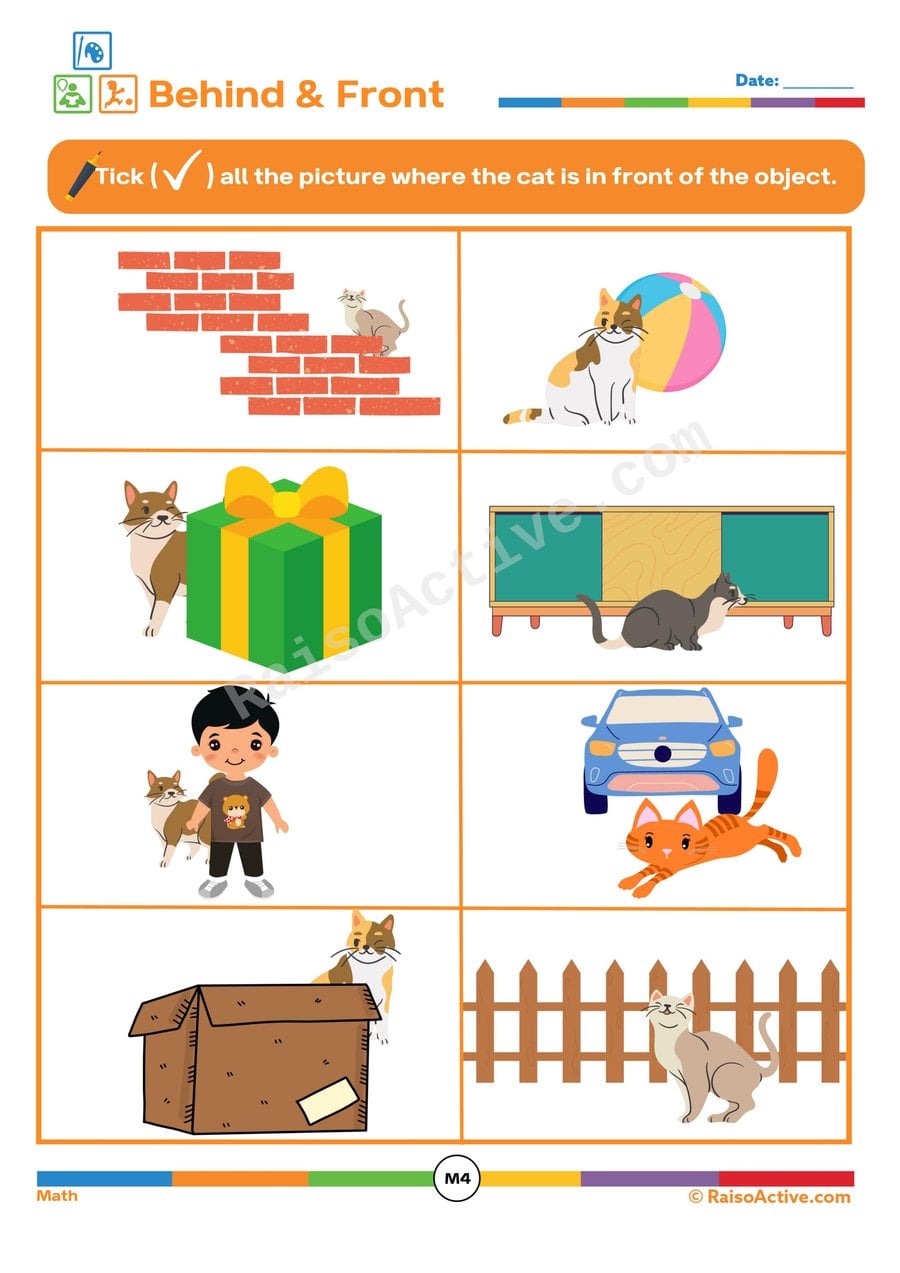
Front and Behind Worksheet: Where is the Cat?
Ages 3-5 · Preschool–Pre-KAges 3-5 · Nursery–ReceptionAges 3-5 · Nursery–LKGAges 3-5
Judging whether the cat sits 'in front of' or 'behind' an object in each picture develops relative-position reasoning for children ages 3-5, an early spatial skill that also builds the vocabulary needed for giving and following directions.

Days of the Week Sequencing Worksheet for Preschoolers
Ages 3-5 · Preschool–Pre-KAges 3-5 · Nursery–ReceptionAges 3-5 · Nursery–LKGAges 3-5
This worksheet builds sequencing skills for children ages 3-5 as they work with the days of the week in order, first filling in a missing day and then cutting and gluing days into the correct sequence. Understanding that days follow a fixed, repeating order is an early step toward time concepts like yesterday, today, and tomorrow, and this hands-on repetition helps cement a sequence that isn't visually obvious the way counting objects is.
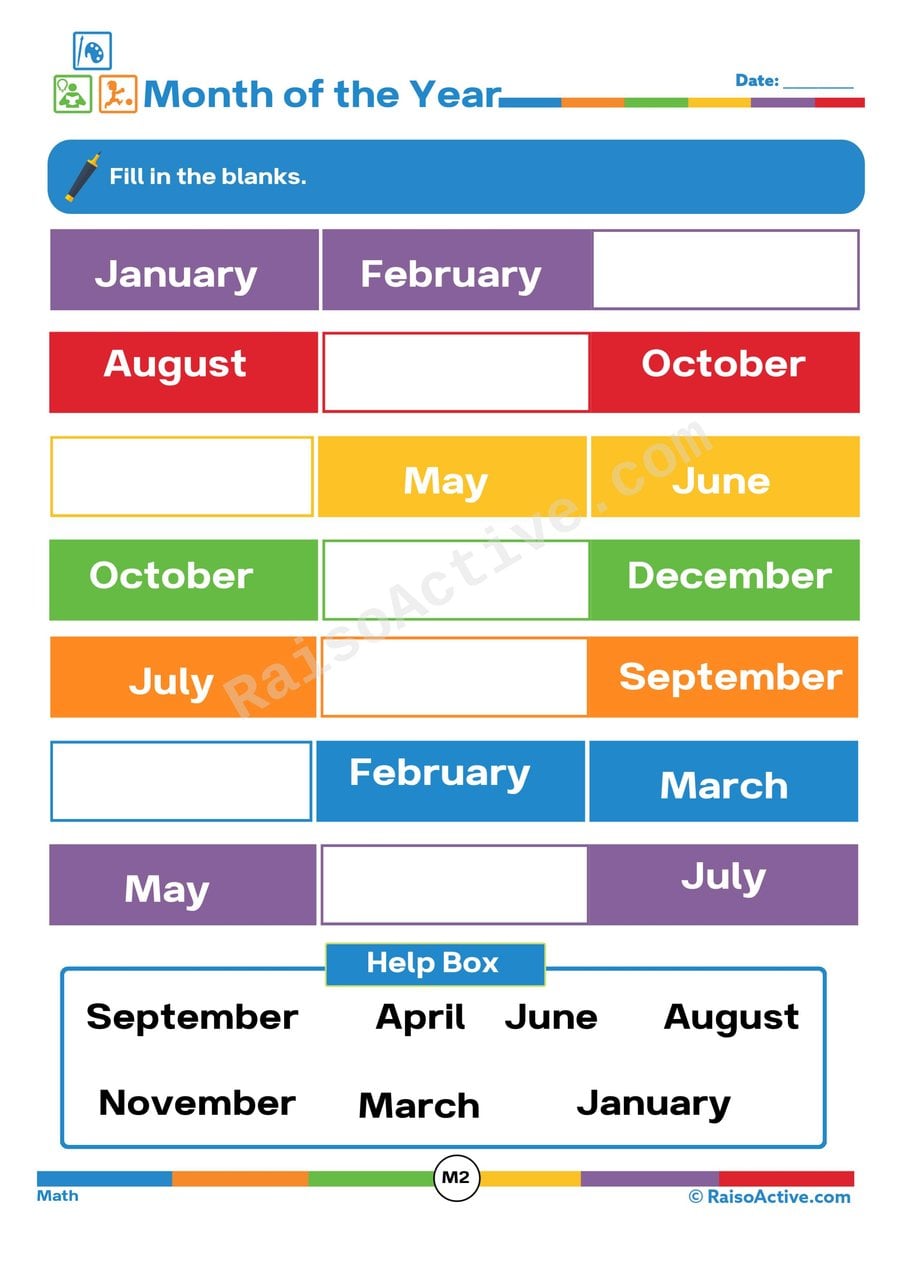
Months of the Year Fill-in-the-Blanks Worksheet
Ages 3-5 · Preschool–Pre-KAges 3-5 · Nursery–ReceptionAges 3-5 · Nursery–LKGAges 3-5
This worksheet introduces children ages 3-5 to the twelve months of the year in order, asking them to fill in missing month names using a reference list. Practicing this longer, less familiar sequence builds memory and early calendar literacy, skills that support understanding birthdays, holidays, and seasons as the year unfolds.
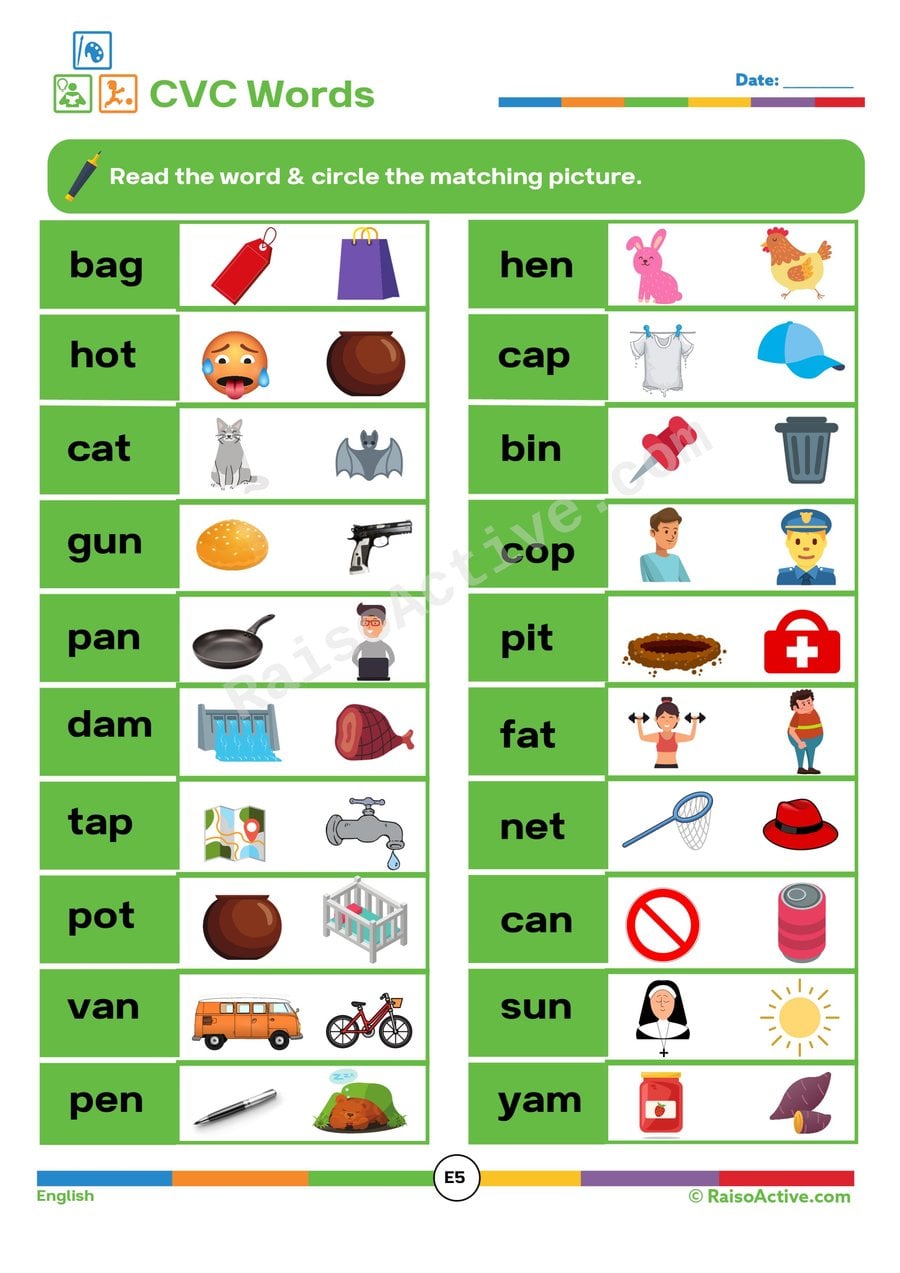
CVC Word Matching Worksheet: Read and Circle!
Ages 4-6 · Pre-K–KindergartenAges 4-6 · Reception–Year 1Ages 4-6 · LKG–UKGAges 4-6
Sounding out each consonant-vowel-consonant word letter by letter strengthens decoding, and matching that word to its picture connects decoding to meaning — an essential step for children ages 4-6 becoming independent readers.

Subtraction Fun: Candy and Treats Worksheet for Kids!
Ages 4-6 · Pre-K–KindergartenAges 4-6 · Reception–Year 1Ages 4-6 · LKG–UKGAges 4-6
This worksheet gives children ages 4-6 concrete practice with subtraction by counting pictured candies and treats, then taking away a stated amount to find the difference. Using a visually appealing, countable context like candy makes the abstract idea of 'taking away' easier to grasp than numbers alone, helping children build the one-to-one counting and comparison skills that subtraction depends on.
Related worksheets
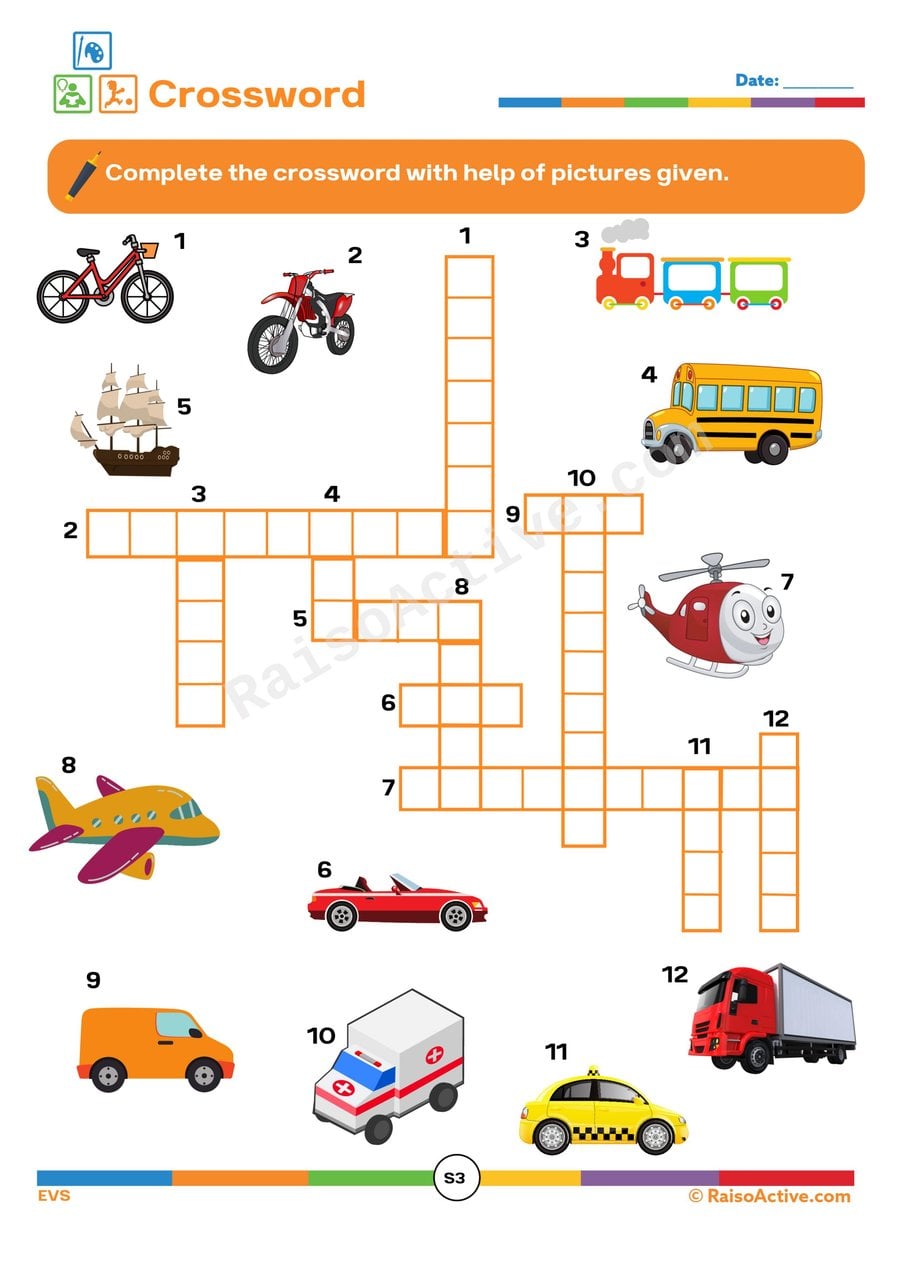
Crossword Puzzle: Vehicles Worksheet for Kids
Ages 4-6 · Pre-K–KindergartenAges 4-6 · Reception–Year 1Ages 4-6 · LKG–UKGAges 4-6
Solving a crossword using vehicle pictures challenges children ages 4-6 to connect an image to its written spelling while also introducing the logic of a crossword grid, where letters must fit both across and down. This combination builds vocabulary, spelling awareness, and early problem-solving persistence as children work through clues that intersect with one another.

Train Engine Craft: Cut and Paste Worksheet for Preschoolers
Ages 3-5 · Preschool–Pre-KAges 3-5 · Nursery–ReceptionAges 3-5 · Nursery–LKGAges 3-5
Children ages 3-5 practice following a multi-step visual sequence and build fine motor precision as they cut out individual shapes and assemble them into a complete train engine picture. Beyond cutting and gluing practice, this craft introduces basic engineering thinking — understanding how separate parts combine to form one recognizable whole.

Transportation Fun: Identify Land, Water, and Air Vehicles!
Ages 3-5 · Preschool–Pre-KAges 3-5 · Nursery–ReceptionAges 3-5 · Nursery–LKGAges 3-5
This worksheet helps children ages 3-5 classify different vehicles by where they travel — land, water, or air — building early categorization skills alongside transportation vocabulary. Writing the correct letter (L, W, or A) for each picture requires children to think about a vehicle's purpose and environment, not just recognize what it is, adding a layer of reasoning beyond simple naming.

Transport Worksheet: Circle and Count the Transport Items!
Ages 3-5 · Preschool–Pre-KAges 3-5 · Nursery–ReceptionAges 3-5 · Nursery–LKGAges 3-5
This worksheet combines two skills for children ages 3-5: visually identifying which pictures represent transportation versus other objects, and then counting a separate group of transport items and recording the total as a number. Circling only the correct category first requires categorization and attention to detail, while the counting section that follows builds one-to-one correspondence with a real-world, kid-friendly theme that most children find naturally engaging. Vehicles are also a great vocabulary-building topic, since children often already know many transport names from daily life.

Transportation Match-Up Worksheet for Preschoolers
Ages 4-6 · Pre-K–KindergartenAges 4-6 · Reception–Year 1Ages 4-6 · LKG–UKGAges 4-6
Matching a written description to the correct vehicle picture builds reading comprehension for children ages 4-6, requiring them to connect specific details, like where a vehicle travels or what it carries, to a visual image. This strengthens both transportation vocabulary and the broader skill of using descriptive clues to identify something, which supports comprehension in future reading tasks.
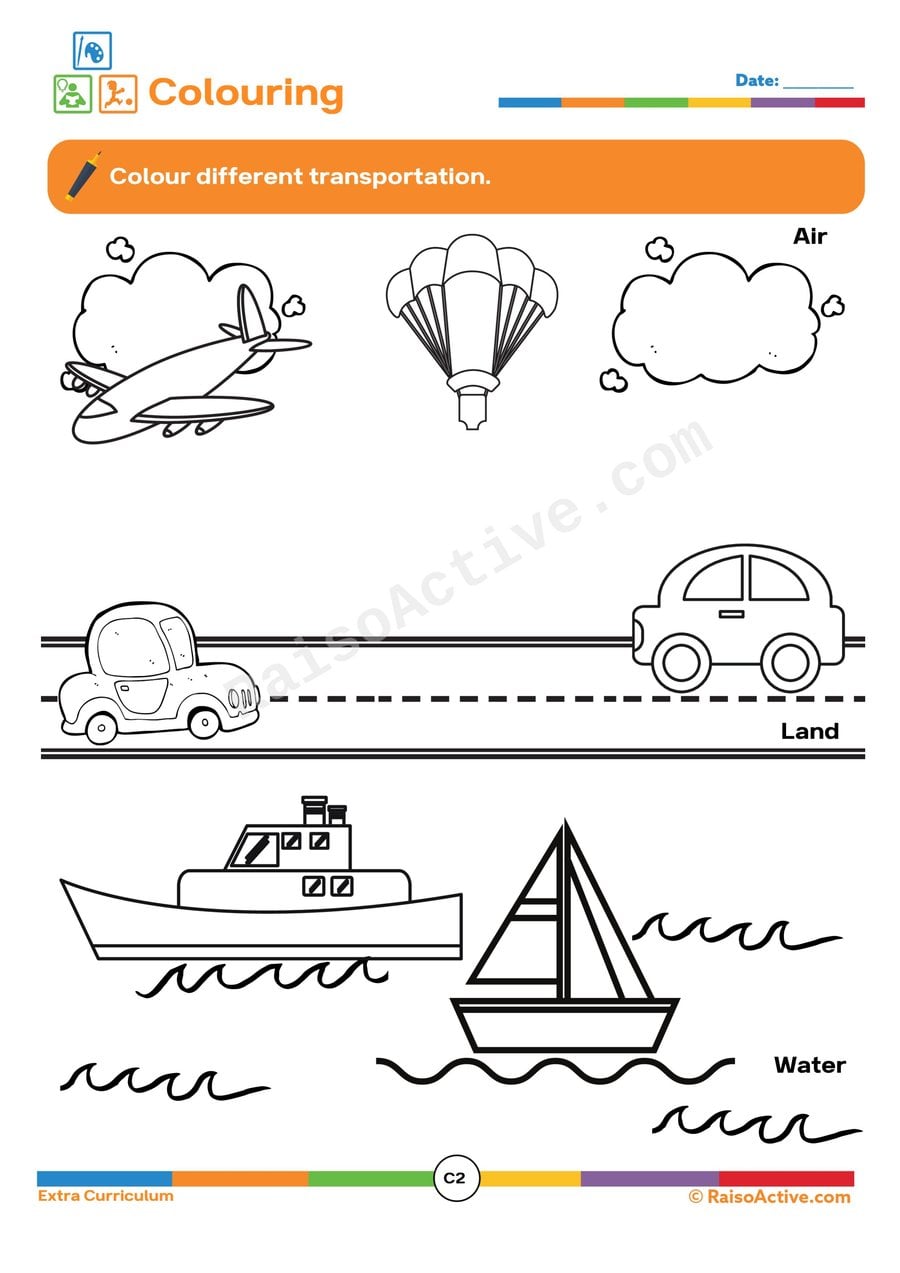
Color the Transportation Worksheet for Kids
Ages 3-5 · Preschool–Pre-KAges 3-5 · Nursery–ReceptionAges 3-5 · Nursery–LKGAges 3-5
Coloring vehicles that travel by air, land, and water helps children ages 3-5 build an early classification system for how transportation is grouped by environment, not just by shape or size. Naming where each vehicle travels while coloring also reinforces vocabulary and observation skills, since children must look closely at each picture's features to decide its category.

Land Transport Vehicles Worksheet for Preschoolers
Ages 3-5 · Preschool–Pre-KAges 3-5 · Nursery–ReceptionAges 3-5 · Nursery–LKGAges 3-5
This worksheet asks children ages 3-5 to look at a busy scene and identify land transport vehicles — cars, trucks, buses, bicycles — by circling them, building visual discrimination skills alongside transportation vocabulary. Picking specific vehicles out of a larger picture also trains children's ability to filter relevant details from a busy visual field, a useful skill well beyond this worksheet's topic.

Transport Unscramble and Match Worksheet for Preschoolers
Ages 3-5 · Preschool–Pre-KAges 3-5 · Nursery–ReceptionAges 3-5 · Nursery–LKGAges 3-5
Unscrambling vehicle names strengthens letter-order awareness and spelling patterns for children ages 3-5, while matching each unscrambled word to its picture connects the written word to a real object they can recognize. Together, these two steps build vocabulary and an early sense that letters must appear in a specific sequence to form a meaningful word.
Guides for this topic

Best Worksheets for 3-Year-Olds: What Works and What to Avoid
What works on worksheets for 3-year-olds: short sessions, crayons, tracing lines, matching, cutting, a free weekly plan, and signs one is too advanced.

Age-Appropriate Problem-Solving Activities: Building Critical Thinkers from the Ground Up
Discover fun, age-appropriate problem-solving activities for children ages 1-8. Build critical thinking, logic, and reasoning skills through play-based learning.
Critical Thinking Activities That Actually Work for Young Children: Building Tomorrow's Thinkers Today
Discover proven critical thinking activities for young children. Age-wise logic games, questioning techniques, and hands-on ideas to build thinking skills at home.
Reviews
Every worksheet for ages 3–5, no watermark
Members download the full library of 1,000+ worksheets and every activity pack without watermarks or daily limits. One year costs ₹999 in India or $20 elsewhere.
See membership plansOr download any worksheet free with a watermark (5 a day).