Free printable worksheets · United Kingdom
KS1 Phonics Worksheets (Ages 5–7)
KS1 phonics worksheets are practice sheets for children aged 5–7 in Key Stage 1 (Years 1–2) in the UK. Phonics is the practice of connecting letters to the sounds they represent, then blending those sounds together to decode and read words. The sheets on this page cover letter-sound correspondence, blending sounds into words, segmenting words into sounds and digraphs and consonant blends.
Key Stage 1 covers Years 1 and 2 together, the stretch in which a child becomes an independent reader and writer while moving from counting to calculating. Year 1 work centres on phonics and the screening check; Year 2 shifts towards spelling patterns, longer writing and mental arithmetic with two-digit numbers. Five-year-olds blend printed letters into words, not just spoken sounds, reading simple three-letter words by sounding out each letter and pushing them together. Worksheets should introduce the common digraphs sh, ch and th as single sounds, ask the child to segment a spoken word into sound boxes for spelling, and mix a few nonsense words in to check that blending, not memory, is doing the work. Longer vowel patterns with a silent e are not expected yet.
980+ worksheets · free PDF download · print on A4 or Letter
KS1 Phonics Worksheets to print
Browse all worksheets for ages 5–7
Personal Pronouns Worksheet for Kids: Circle and Underline!
Circling the subject pronoun and underlining the object pronoun in each sentence teaches children ages 5-7 to recognize that pronouns play different grammatical roles depending on their position in a sentence, an important step toward more advanced grammar understanding. This careful, close-reading task also builds attention to sentence structure that supports stronger writing later on.

Punctuation Adventure: End Punctuation Worksheet for Kids
Children ages 5-7 practice choosing between periods, question marks, and exclamation points based on the meaning and tone of a sentence, a skill that connects punctuation directly to how a sentence should sound when read aloud. This builds the foundation for expressive, correctly punctuated writing later in school.

Sun Safety Worksheet for Kids: Learn About Staying Safe in the Sun!
This worksheet has children ages 4-7 answer questions about sun safety, such as why sunscreen and hats matter, building early health literacy alongside writing practice as they put their understanding into their own words. Because the questions ask children to reason about why certain sun-safety habits matter rather than just label a picture, this worksheet develops early explanatory thinking, a step up from simple factual recall. Practicing writing full answers, even short ones, also builds sentence-forming skills appropriate for this age range.
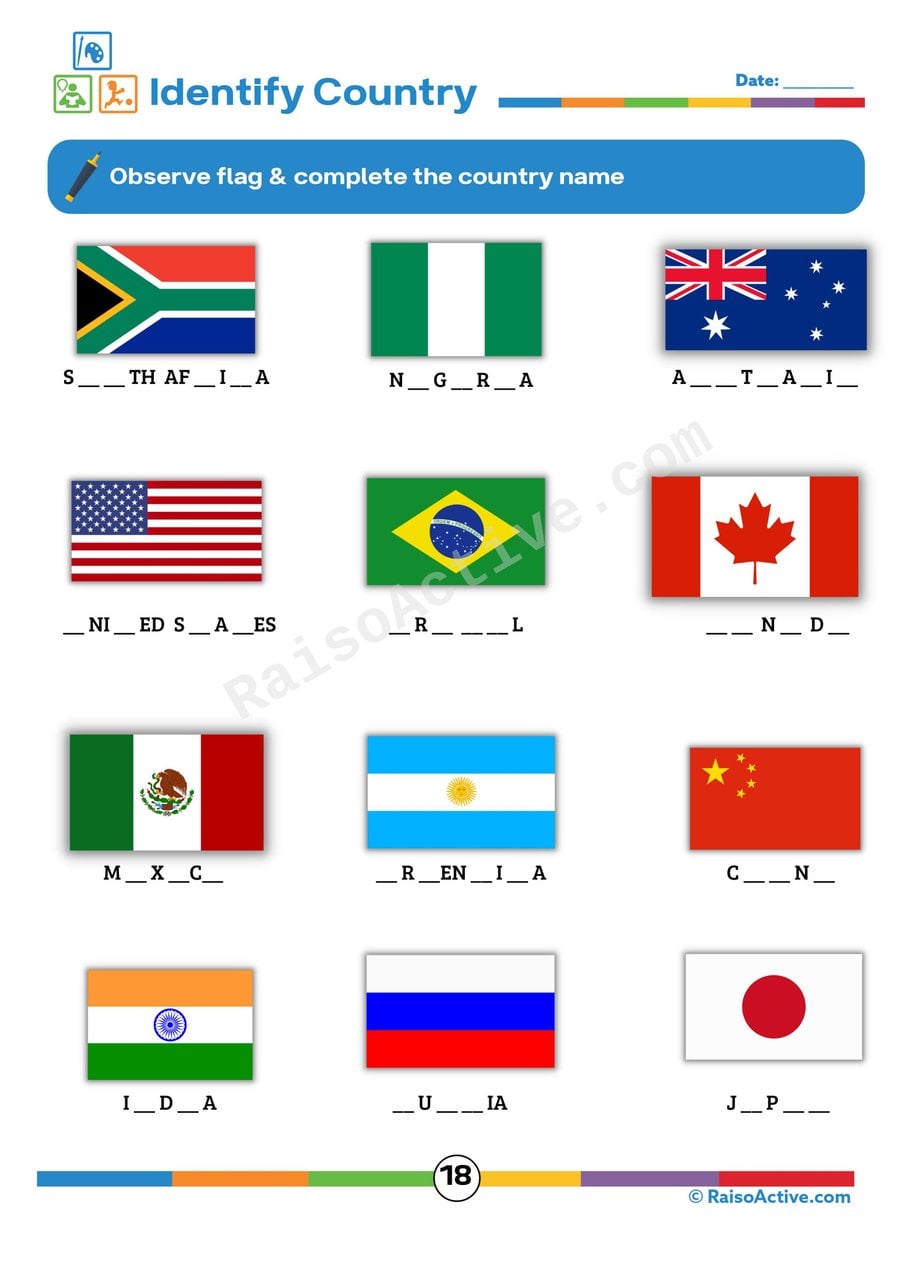
Identify the Country: Flag Matching Worksheet
Filling in the missing letters of each country's name while studying its flag gives children ages 4-7 practice with letter-sound correspondence and spelling patterns, since they must sound out the word and recall which letters are already provided as clues. It also builds early geography knowledge, helping children connect a visual symbol (the flag) to a country's name for the first time. This dual practice of decoding and world knowledge lays groundwork for both literacy and social studies skills.

Family Words Worksheet: Picture Matching and Word Recognition
Children ages 4-6 practice recognizing and reading words from the 'family' word group, like 'candle' becoming 'candle-family' patterns or similar word-family endings, by matching written words to their corresponding pictures. Word family practice builds phonics pattern recognition, helping children read new words faster by spotting familiar chunks within them.

Conjunctions Worksheet: Practice with 'and', 'but', 'so', and 'yet'
This worksheet introduces four common coordinating conjunctions, teaching children to notice how 'and,' 'but,' 'so,' and 'yet' each connect ideas differently, whether adding information, showing contrast, or indicating a result. For ages 4-6, this is an early step toward writing compound sentences and understanding that word choice changes the meaning and flow of a sentence.
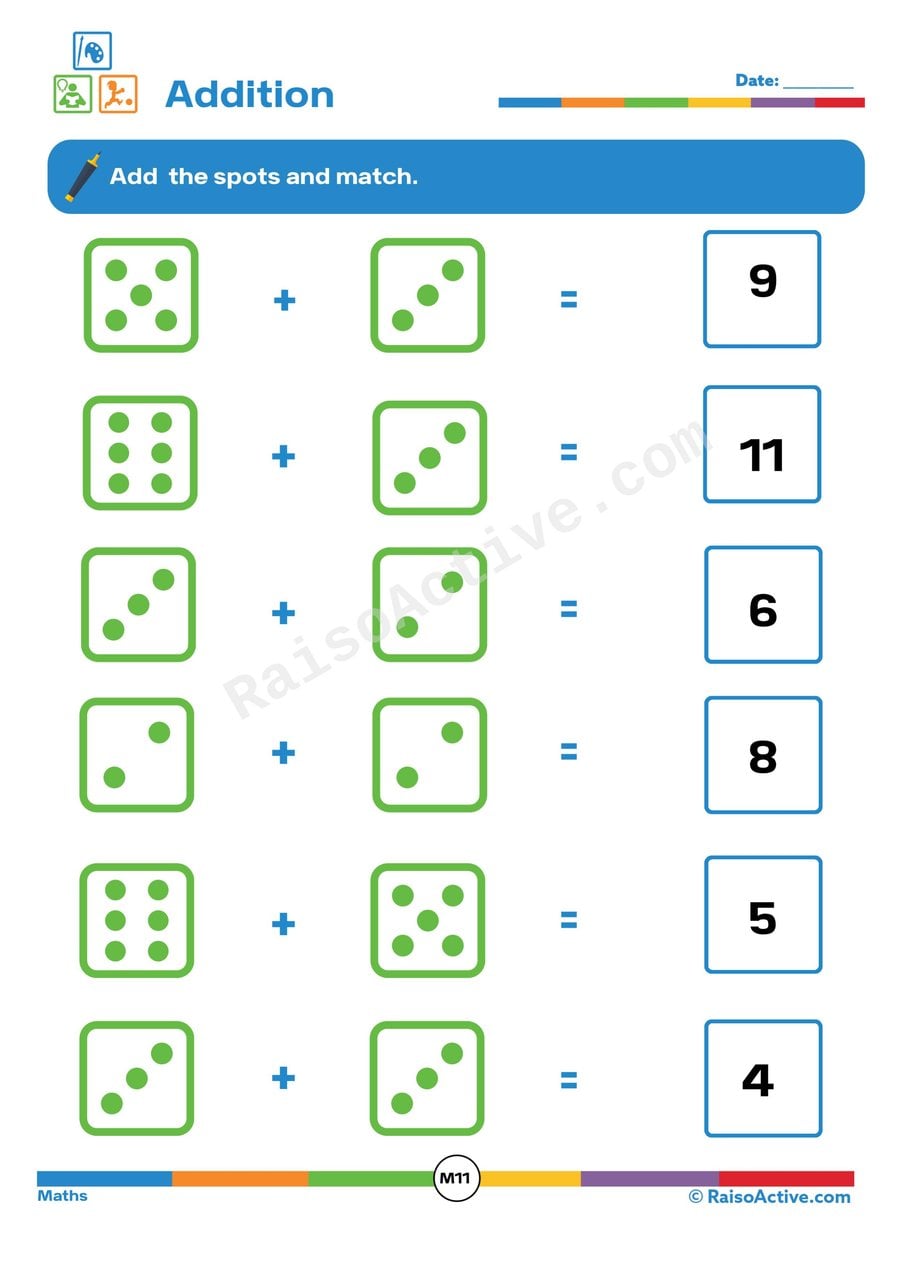
Dice Addition Worksheet: Add the Spots and Match!
This worksheet builds basic addition fluency by having children count the dots on two dice, add the totals together, and match the resulting sum to the correct number. For four- to six-year-olds, using dice as the counting tool adds a layer of subitizing practice — the ability to recognize a small quantity of dots at a glance without counting one by one — which speeds up addition over time.

Conjunctions Worksheet: Expanding Sentences (Ages 4-6)
This worksheet moves beyond simple conjunction identification to active sentence expansion, asking children to use conjunctions like 'but,' 'when,' 'until,' 'because,' and 'if' to add new information and build longer, more sophisticated sentences. For ages 4-6, this kind of guided sentence-combining is a key step toward more complex, connected storytelling in both spoken and written language.

Match the Countries with Their Symbols Worksheet
Children ages 4-6 build early social studies awareness by matching country flags to their well-known national symbols, connecting visual recognition with basic geography and cultural knowledge. This kind of matching exercise strengthens careful observation, since children must compare colors, shapes, and details across both the flag and the symbol image. It also plants the seed for understanding that different countries have distinct identities and traditions.
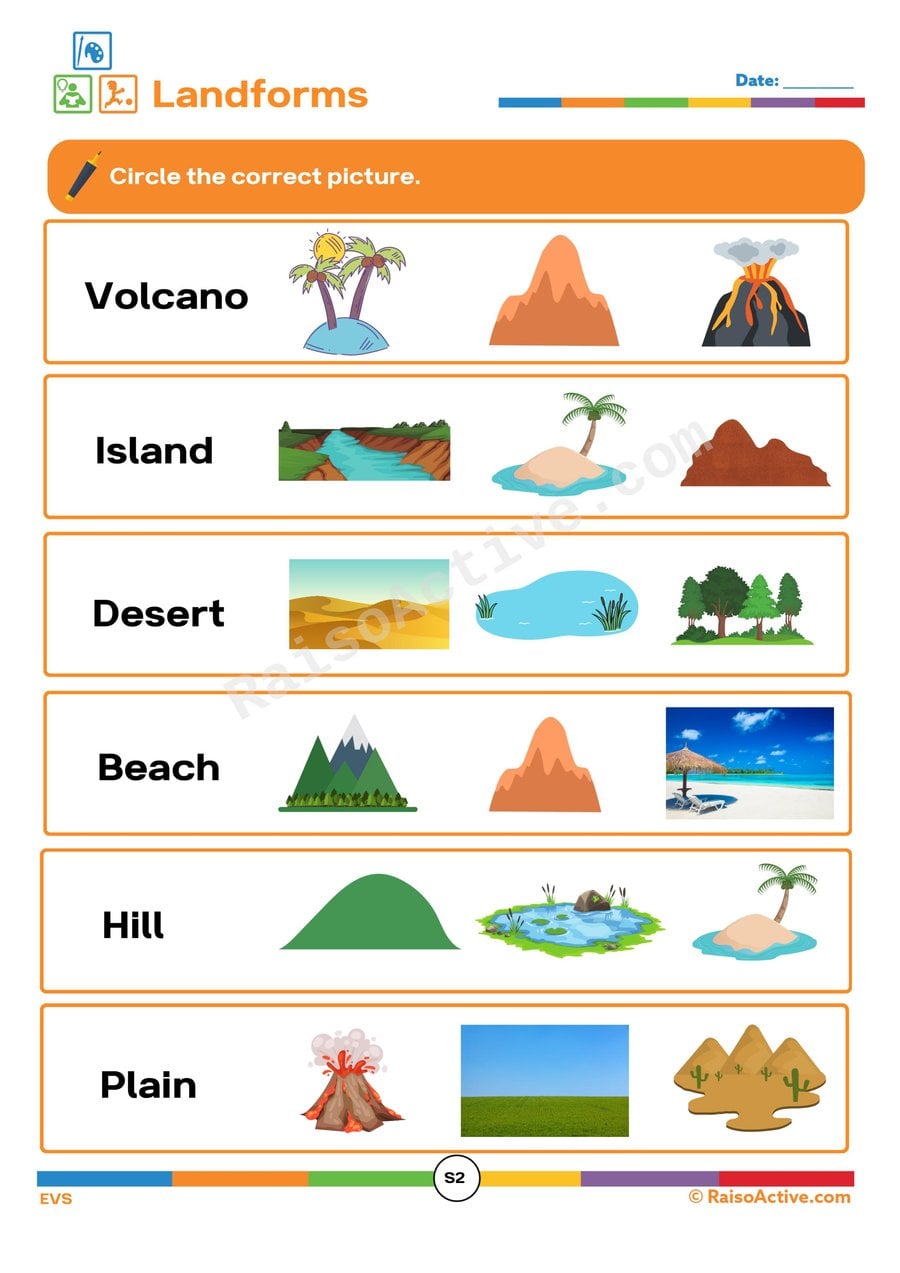
Landforms Worksheet: Circle the Correct Picture!
This worksheet introduces children ages 4-6 to basic landform vocabulary — words like mountain, valley, island, or river — by asking them to read or hear a landform's name and circle the picture that matches it. Connecting a geography term to its correct visual representation builds early science and social studies vocabulary well before children can read complex nonfiction text on their own. This kind of word-to-picture matching also reinforces observational skills, since children must notice the distinguishing visual features that make one landform different from another.

CVC 'an' Family Matching Worksheet for Early Readers
This worksheet strengthens phonics skills in children ages 4-6 by having them read, color, and match CVC words from the 'an' family, such as 'can', 'man', and 'fan'. Practicing an entire word family together helps children notice the shared 'an' pattern, an efficient shortcut that lets them decode a whole group of new words once they master just one.
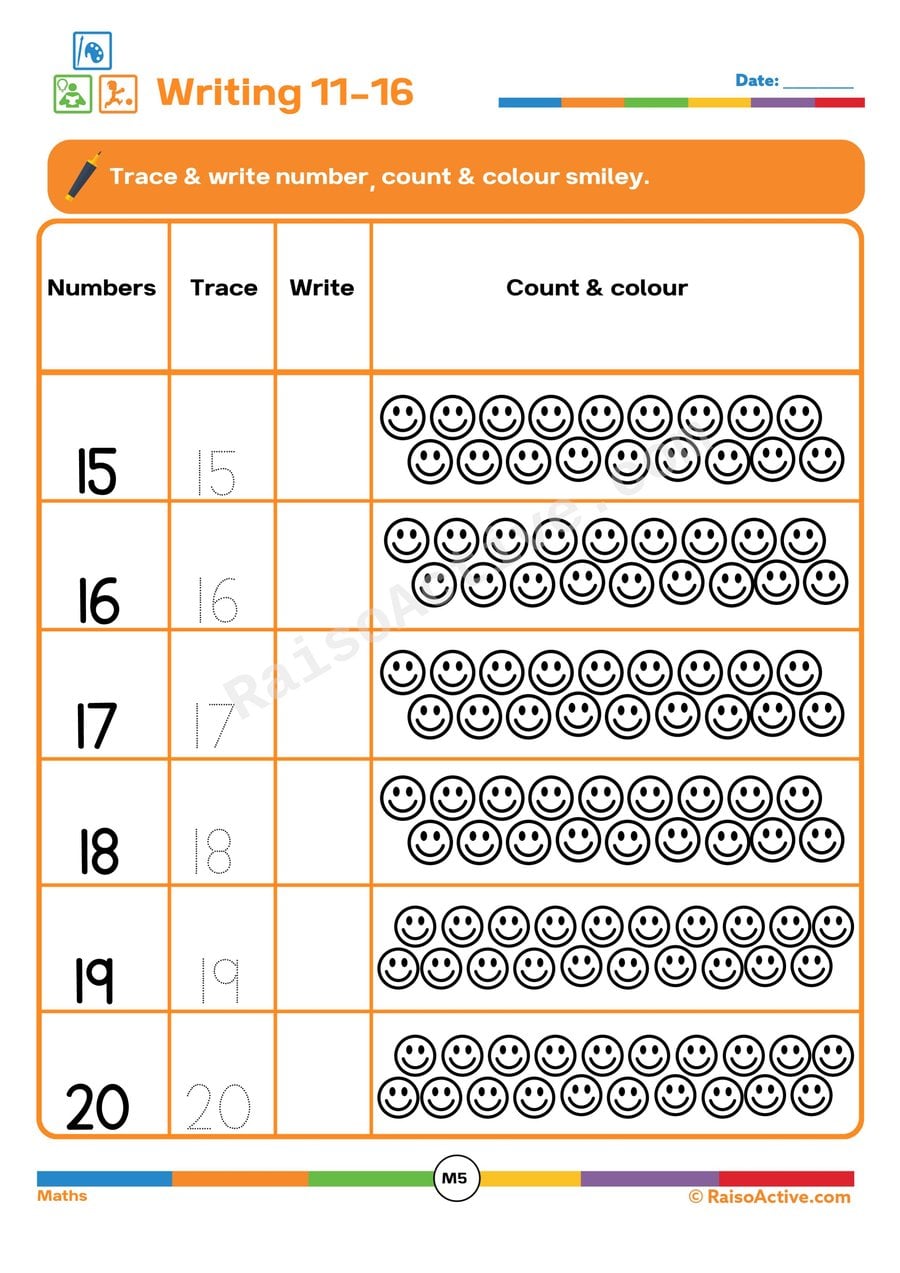
Number Tracing and Counting Worksheet for Kids
This worksheet layers three connected numeracy skills for children ages 4-6: tracing numerals to build correct number formation, writing numbers independently from memory, and counting objects to connect a written numeral to an actual quantity. Number formation practice at this age matters because children often develop habits — like starting a number from the wrong point — that are hard to unlearn later, so guided tracing helps establish correct strokes early. Pairing that with counting smiley faces ensures the numeral isn't just a shape being copied but a quantity being understood.
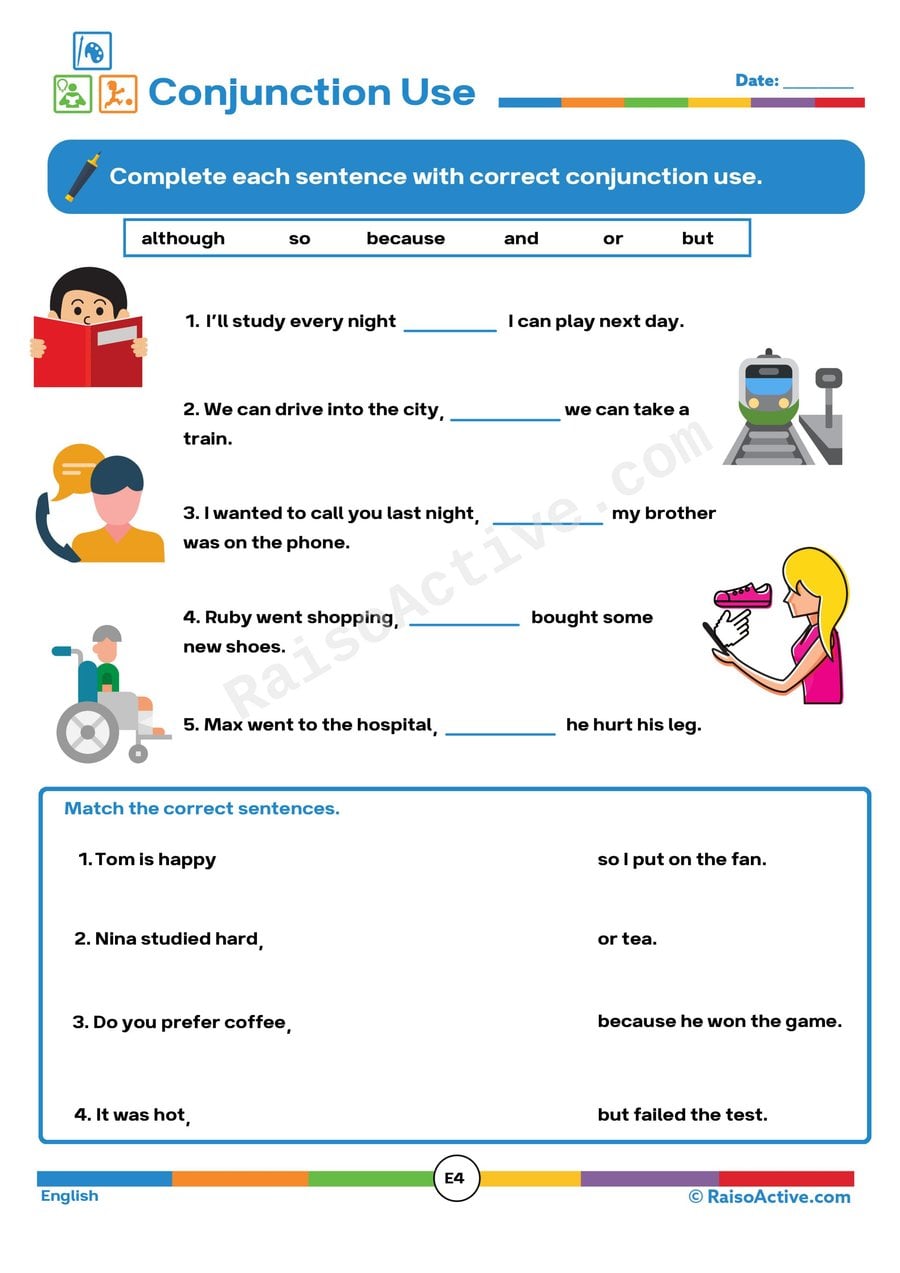
Conjunctions Worksheet: Complete the Sentences!
Choosing the correct conjunction to complete a sentence teaches children ages 4-6 how small connecting words like 'and,' 'but,' and 'or' link two ideas together into one longer, more complex thought. Practicing this helps move children from simple, short sentences toward the more sophisticated sentence structures they'll need for both reading comprehension and their own writing.

Pronoun Power: Fill-in-the-Blanks Worksheet for Kids
Children ages 4-6 practice using indefinite pronouns like 'someone', 'anything', or 'everybody' correctly within sentences, an early grammar skill that helps their spoken and written language sound more natural and precise. Filling in blanks with the right pronoun requires reading comprehension, since children must understand the sentence's meaning to choose correctly. The coloring step adds a quick visual check that reinforces the correct answer.
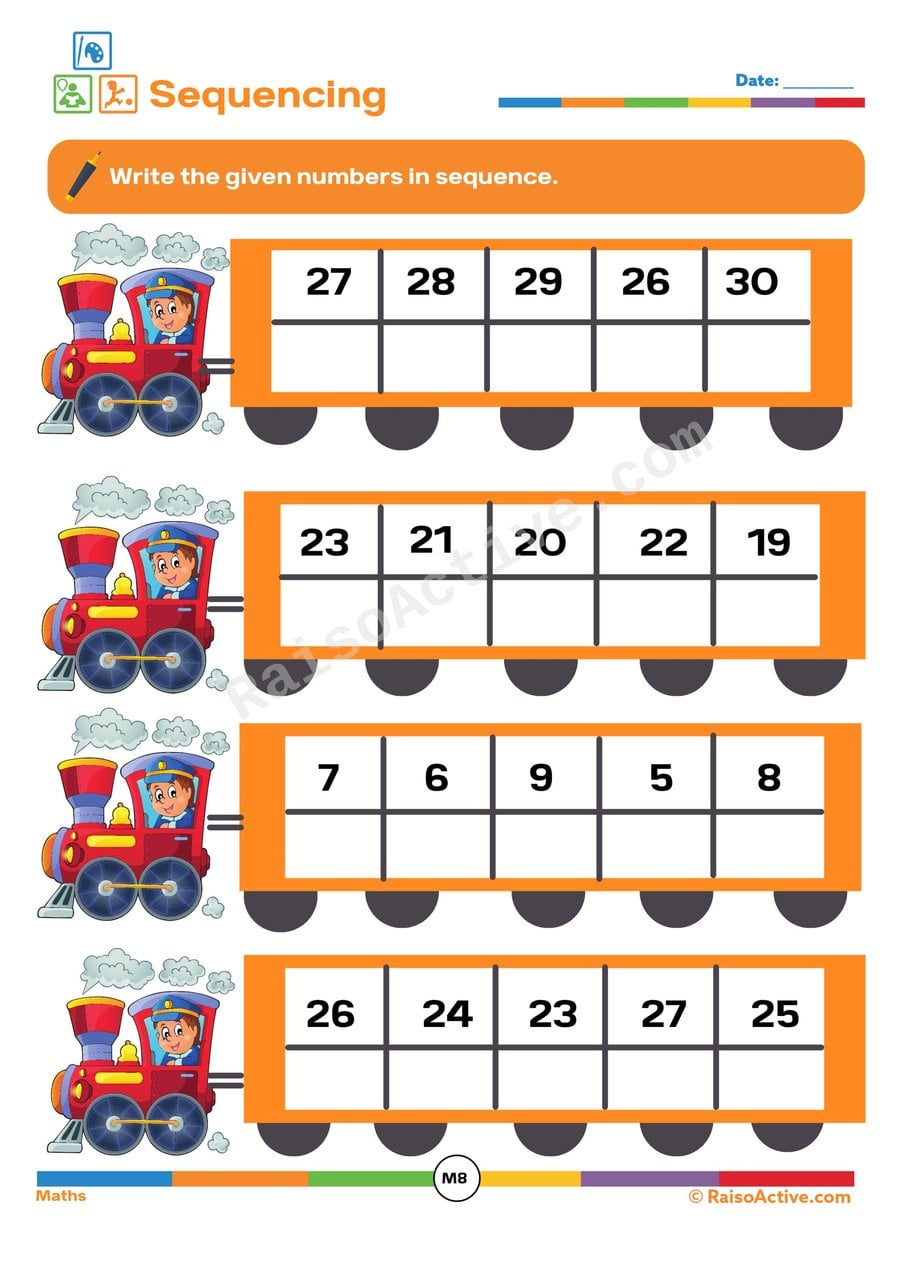
Number Sequencing Train Worksheet for Kids
This train-themed sequencing worksheet challenges children ages 4-6 to fill in missing numbers scattered throughout a sequence, requiring them to recognize number order well enough to identify a gap anywhere in the run rather than only counting forward from the start. This deeper sequencing skill supports later math concepts like skip counting, addition, and number lines. Writing the missing numbers by hand, rather than just saying them aloud, also reinforces number formation alongside number order.

Long Vowel 'ai' Worksheet: Circle and Write the Words!
The long 'ai' spelling pattern, found in words like 'rain' and 'snail,' is one of the first alternative spellings children ages 4-6 encounter for the long 'a' sound, since they've likely already learned the more common silent-e pattern like in 'cake.' This worksheet has children identify pictures containing the 'ai' sound and then write the matching word, building recognition of this specific spelling choice among the several ways English can represent the same long vowel sound. Understanding that one sound can be spelled multiple ways is a key insight for becoming a flexible, confident reader.

Fall Vocabulary Unscramble Worksheet for Preschoolers
This unscrambling activity asks children ages 4-6 to rearrange jumbled letters into correctly spelled fall vocabulary words, building letter-sound awareness and an early sense of correct spelling patterns. Because each word relates to a picture clue, children also practice connecting spoken vocabulary to its written form, a key step on the road to independent reading.

Alphabet Adventures: Complete the Vocabulary Table!
This worksheet helps children ages 4-6 strengthen letter-picture-word associations by filling in missing letters, finding matching pictures for each letter, and pasting them into a vocabulary table. Combining letter recall, picture matching, and gluing into one multi-step task pushes children beyond simple letter recognition into actively building and organizing vocabulary, an important step toward independent reading and writing.

Short Vowel Sounds: Matching Objects to Sounds Worksheet
This worksheet helps children ages 4-6 tell apart the short 'o' sound (as in 'fox') from the short 'u' sound (as in 'sun') by matching pictured objects to their correct vowel sound. Short vowels are the building blocks of the earliest CVC words children read, so being able to hear and distinguish them accurately is essential before moving on to more complex word patterns.

Stick Man Emotions Worksheet: Happy, Sad, Angry, and Surprised!
Children ages 4-6 practice reading facial expressions on this worksheet, matching stick-figure faces to their correct emotion labels by noticing details like mouth shape and eyebrow position. This strengthens emotional literacy — the ability to name and recognize feelings in others — which supports empathy and smoother social interactions as children move into more group play and classroom settings.

Sentence Detective: Simple, Compound, or Complex Sentences Worksheet for Kids
This worksheet introduces children to three different sentence structures, simple, compound, and complex, teaching them to notice how conjunctions and clause combinations change a sentence's complexity, a more advanced grammar concept appropriate for ages four to six who are already reading independently. Recognizing these structures also improves reading fluency, since children start to anticipate pauses and connections within longer sentences.

Reading Comprehension Worksheet: Max and Tuffy's Adventures!
Reading the short story about Max and Tuffy and answering questions afterward helps children ages 4-6 practice true reading comprehension, recalling specific details like who did what and where, rather than just decoding words on the page. Writing out their answers also builds the connection between understanding a story and expressing that understanding in writing.

Read and Match: Sentence Reading Worksheet for Early Learners
This worksheet has 4-6 year olds read a full sentence aloud and then identify which picture actually matches its meaning by coloring the circle beside it, building reading comprehension in a format that requires understanding the whole sentence rather than picking out a single keyword. Because more than one picture on the page may share surface similarities, your child has to genuinely process what the sentence says, which is a stronger comprehension check than simple word-picture matching.

Animal Homes Worksheet: Match the Animals to Their Habitats!
Children ages 4-6 build early life-science knowledge as they match each animal to the habitat where it actually lives, such as a fish to water or a bird to a nest. This worksheet moves beyond simple animal identification into understanding the relationship between a living thing and its environment, an important building block for later ecosystem and habitat topics in science class.
What KS1 phonics worksheets cover
Five-year-olds blend printed letters into words, not just spoken sounds, reading simple three-letter words by sounding out each letter and pushing them together. Worksheets should introduce the common digraphs sh, ch and th as single sounds, ask the child to segment a spoken word into sound boxes for spelling, and mix a few nonsense words in to check that blending, not memory, is doing the work. Longer vowel patterns with a silent e are not expected yet.
- Blend printed letters in a three-letter word into speech
- Read words with the digraphs sh, ch and th
- Write a spoken word into sound boxes, one box per sound
- Read a nonsense word like vop to check real blending
How to use these worksheets at home or in class
Because this stage spans two years, match the sheet to what the classroom is doing rather than to age alone: decoding and number bonds for a Year 1 child, comprehension and times tables for a Year 2 child, in sessions of fifteen to twenty minutes.
Start with the sheet that matches what your child can already do, then move one step up. Keep finished sheets in a folder: KS1 teachers often ask for evidence of practice, and children like seeing their own progress.
Is your child ready for KS1 phonics work?
A child ready for the later half of this stage reads a short passage with reasonable fluency, writes several connected sentences, adds and subtracts within twenty and recalls the 2, 5 and 10 times tables with growing confidence.
- Read and sort words by their long vowel spelling pattern
- Read a short decodable passage using known letter patterns
- Spell a dictated word choosing the correct vowel spelling
Frequently asked questions
My five-year-old guesses words instead of sounding them out. What helps?
Cover all but the first letter and ask for its sound before revealing the rest, which stops the habit of glancing at a word and guessing from its shape or the picture nearby. Nonsense words are useful here too, since they cannot be guessed and force real sounding out. Slow the pace deliberately for a few sessions, sound by sound, and only speed up once accuracy on both real and nonsense words is solid.
What should a KS1 child be able to do in phonics?
Five-year-olds blend printed letters into words, not just spoken sounds, reading simple three-letter words by sounding out each letter and pushing them together. Worksheets should introduce the common digraphs sh, ch and th as single sounds, ask the child to segment a spoken word into sound boxes for spelling, and mix a few nonsense words in to check that blending, not memory, is doing the work. Longer vowel patterns with a silent e are not expected yet. A child ready for the later half of this stage reads a short passage with reasonable fluency, writes several connected sentences, adds and subtracts within twenty and recalls the 2, 5 and 10 times tables with growing confidence.
Do these worksheets follow the KS1 curriculum?
The sheets cover letter-sound correspondence, blending sounds into words, segmenting words into sounds and digraphs and consonant blends, which sit inside the National Curriculum Key Stage 1 outcomes for KS1. Kindergarten to 1st Grade (US), UKG to Class 1 (India) use the same skills at this age, so the sheets also fit families following those programmes.
Are these KS1 phonics worksheets free?
Yes. Each worksheet downloads free as a watermarked PDF once you create an account, with a limit of five a day. An annual membership ($20) removes the watermark and the limit for the whole library of over 1,000 worksheets and every printable pack.

Written by
Hemsweta Jain · Teacher Cheena
MBA and Early Childhood Educator, teaching since 2014 · Founder of RaisoActive, Mumbai
Written and reviewed by Hemsweta Jain (Teacher Cheena), who designs every RaisoActive worksheet.
Last reviewed
Printable packs for ages 5–7
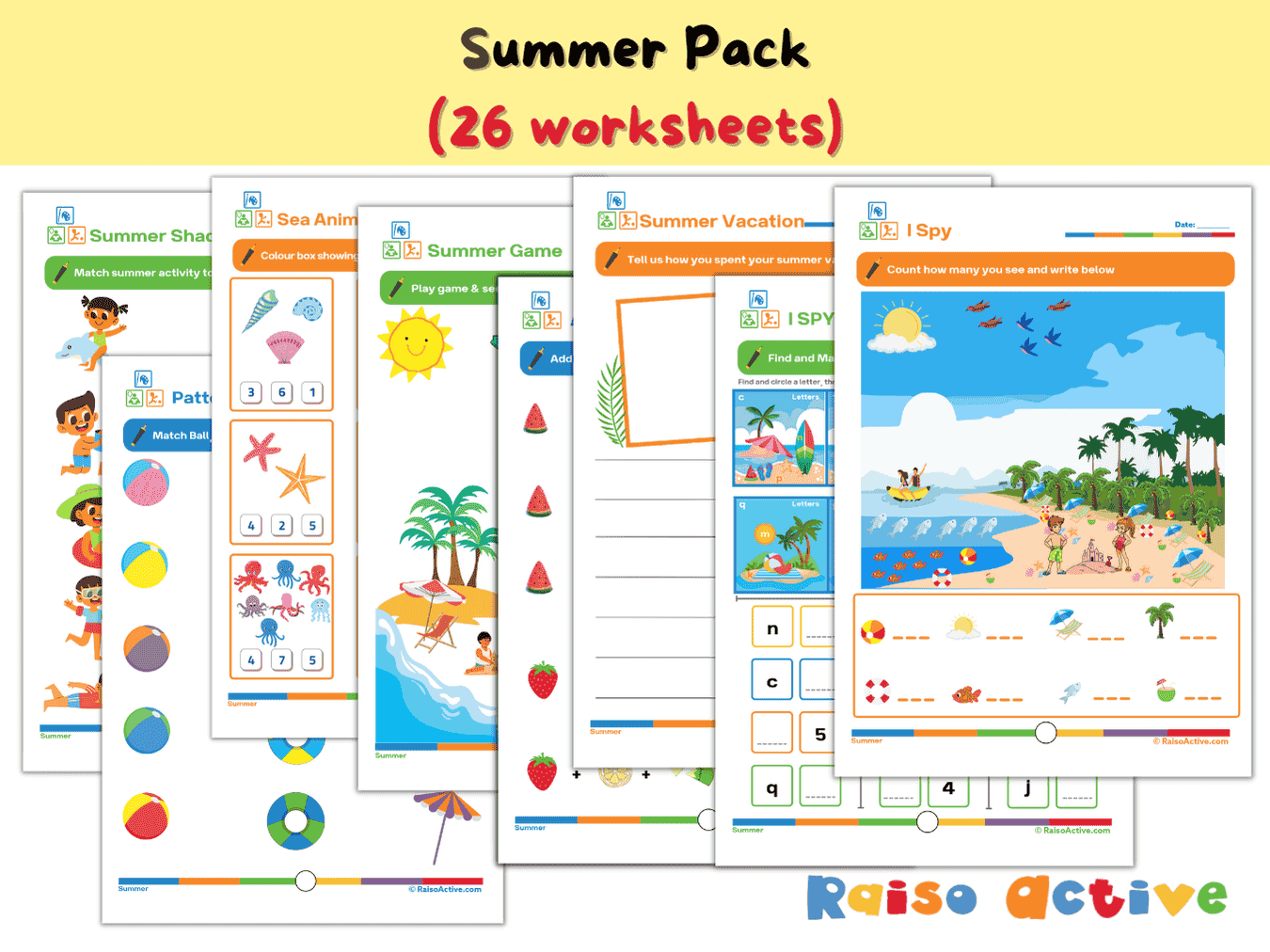
Summer Activity Pack: Math, Literacy, Puzzles & More for Preschool & Kindergarten
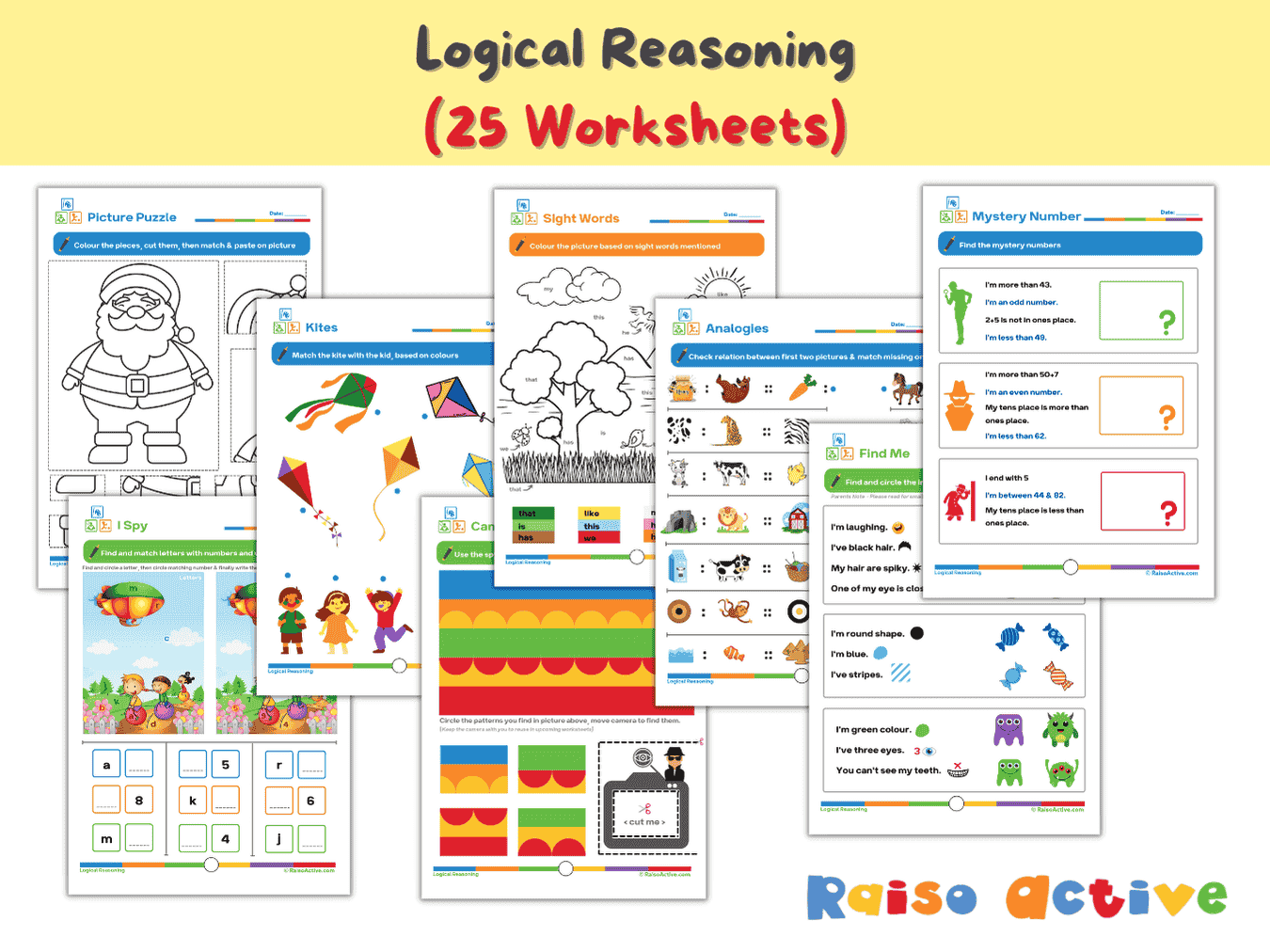
Logical Reasoning Activity Book for Preschool & Kindergarten | Patterns, Puzzles & Analogies
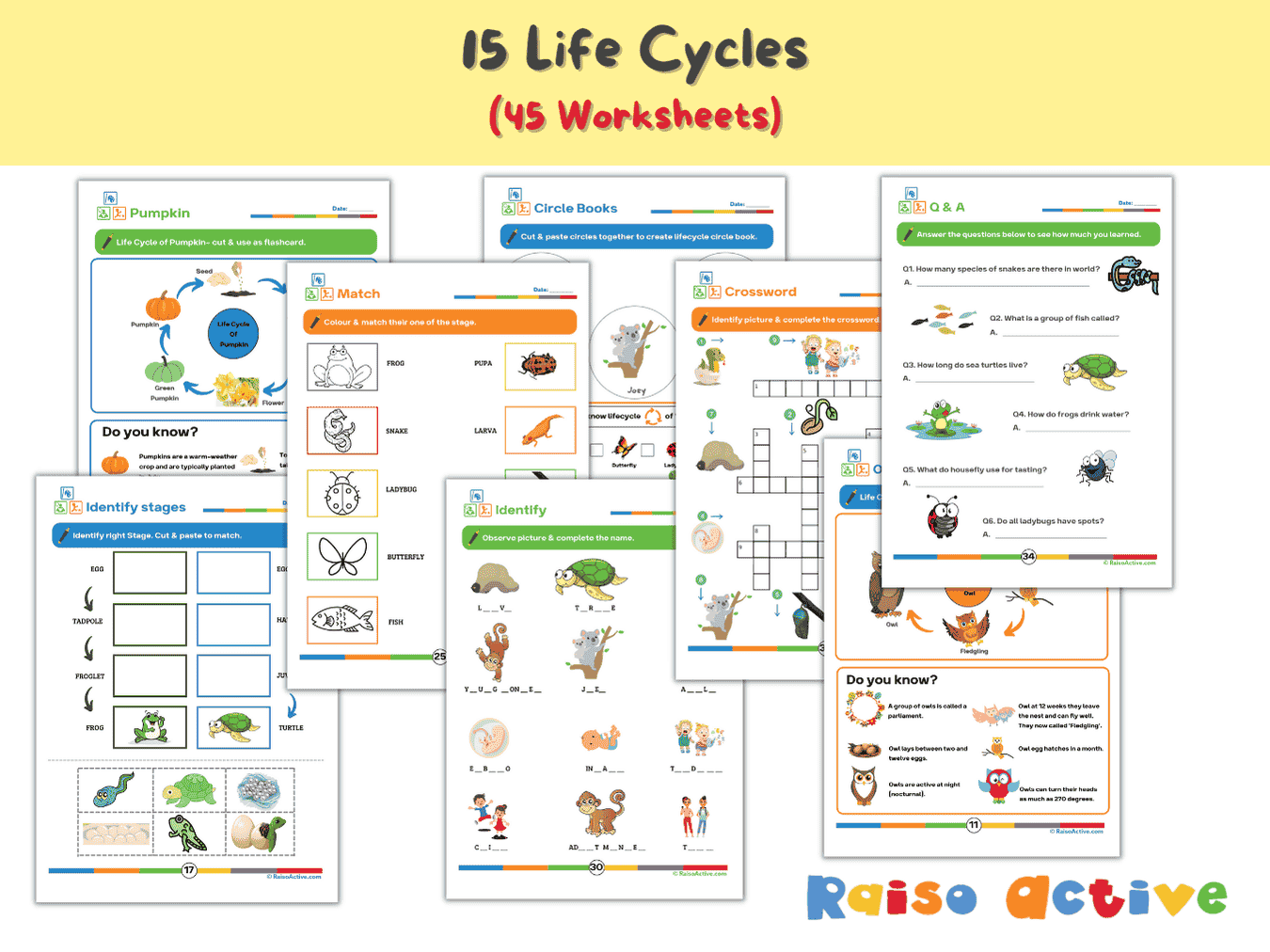
Lifecycles Activity Book & Flashcards for Preschool & Early Elementary
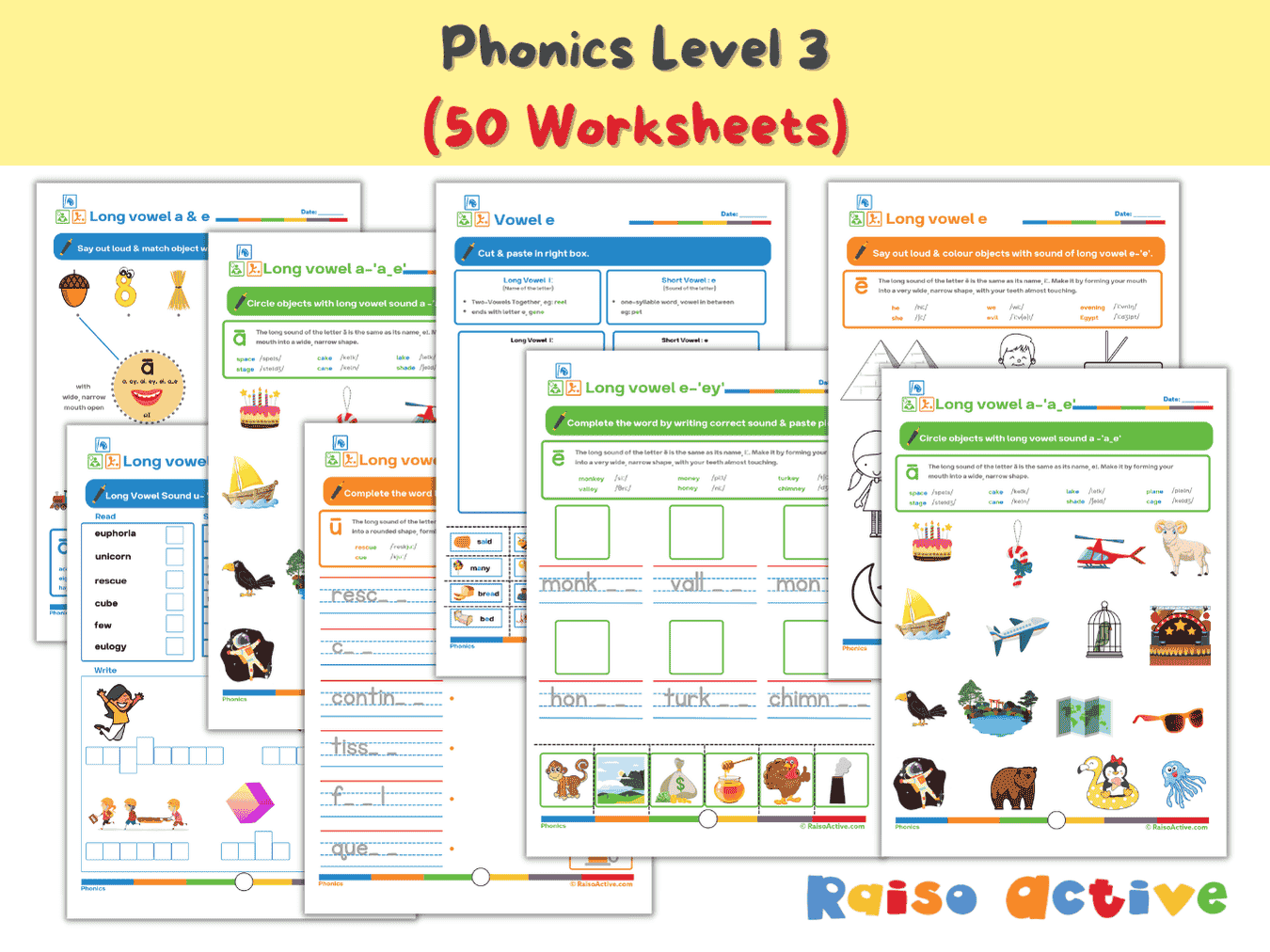
Phonics Level 3 Long Vowels Activity Book for Kindergarten & 1st Grade
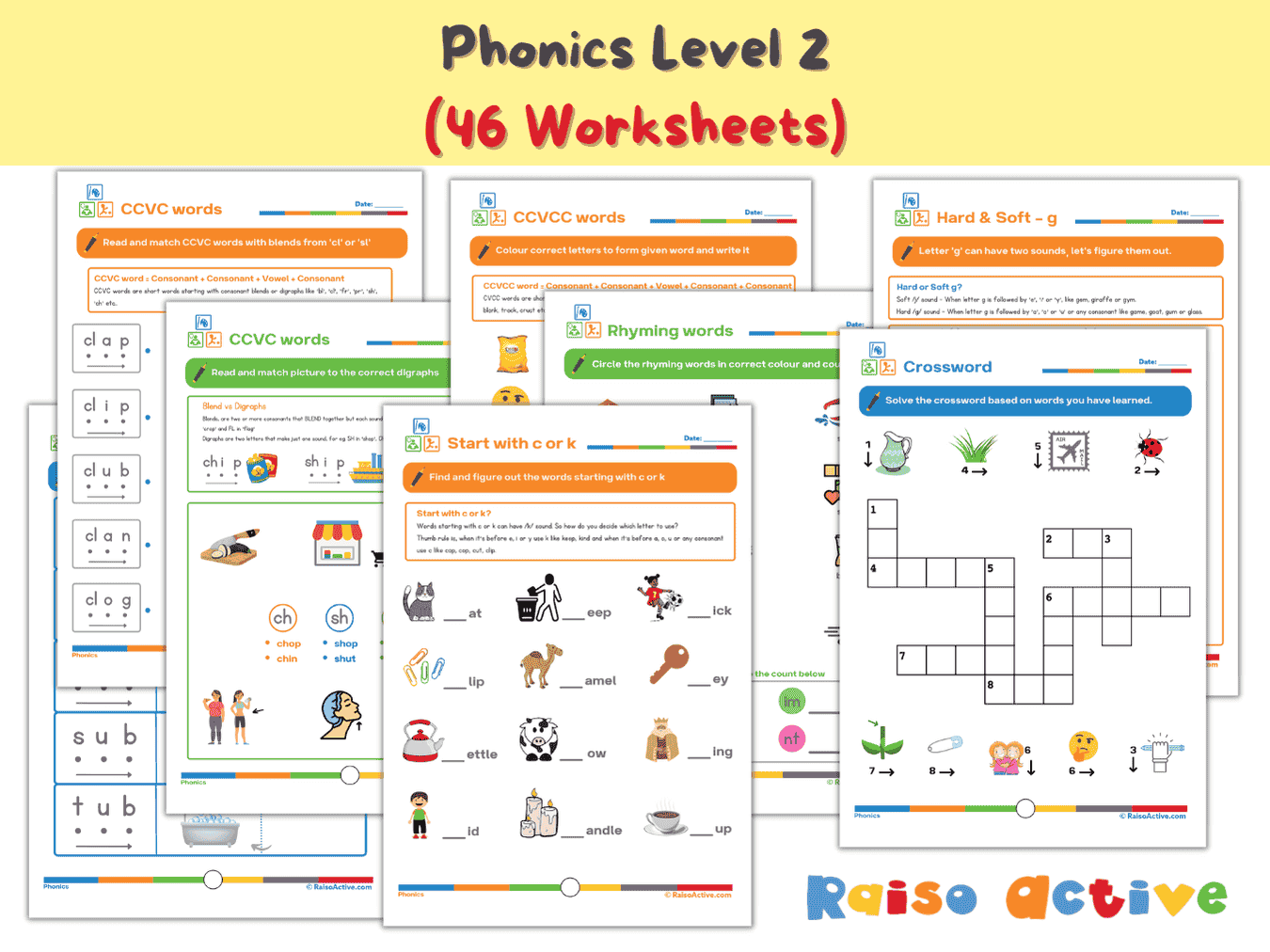
Phonics Level 2 Worksheets: CVC, CCVC, CVCC Word Families & Blends for Early Readers (Ages 4-7)
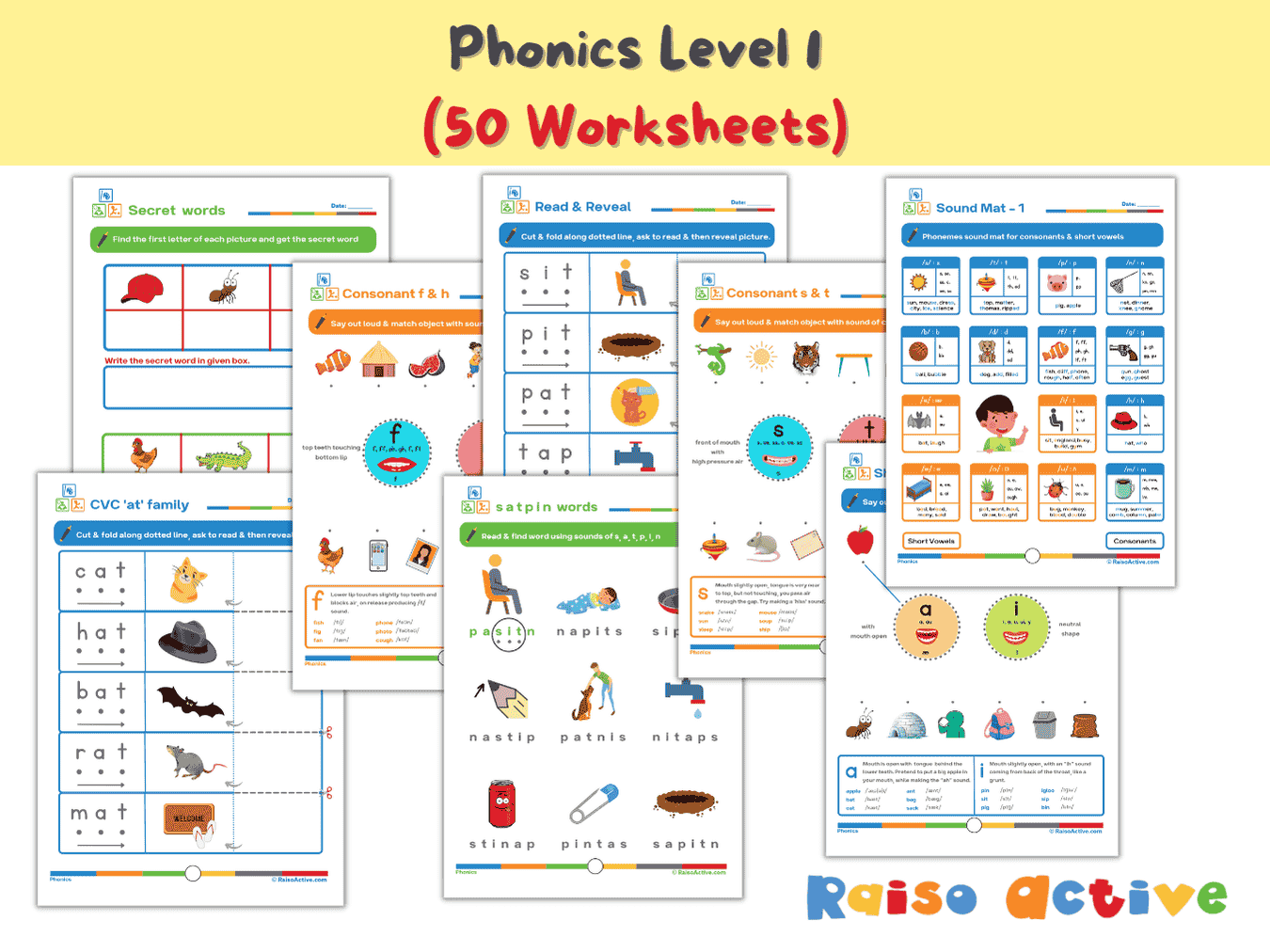
Phonics Level 1 Activity Book: Letter Sounds, Blending & CVC Words for Preschool & Kindergarten
Guides for parents and teachers
See all guides →Sight Words by Age: The First 50 Words and How to Teach Them Without Flashcard Fatigue
Which sight words to teach first and why, the heart-word method, a read-trace-write-find routine, games, and a by-age table of typical sight-word progress.
How to Teach CVC Blending: A Step-by-Step Method That Works in Two Weeks
A step-by-step method for teaching CVC blending, covering continuous sounds, word families, common errors, and a 14-day plan that most children finish reading CVC words.
Phase 2 Phonics at Home: Sound Order, Blending Games, Worksheets
Phase 2 phonics at home: the five sound sets in order, oral blending, tricky words, a two-week routine, common mistakes, and free worksheets.
Reception Year Explained: EYFS Learning and How to Help at Home
A teacher's plain-English guide to the Reception Year: the seven areas of learning, Early Learning Goals, Phase 2/3 phonics, the RBA and home routines.
UKG Syllabus Explained: English, Maths and EVS Month by Month
What UKG classes typically cover in English, maths and EVS, month by month, aligned to NEP 2020, with ways to support at home and signs your child is behind.
Bridging Two Worlds: A Complete Guide to Teaching Heritage Languages Alongside English
A practical guide to raising bilingual children who speak both their heritage language and English with confidence. Research-backed strategies, activities, and tips for Indian families.