Free printable worksheets · US · UK · India
Easter Worksheets (Ages 3–7)
Easter worksheets are printable activity sheets for children aged 3 to 7 built around eggs, bunnies, chicks and spring. They include counting and sorting eggs by color, tracing bunny and chick outlines, completing repeating patterns on decorated eggs, and coloring within basket and egg borders, building counting, sorting, fine motor and pattern-recognition skills ahead of Easter Sunday, March 28, 2027.
Easter Sunday falls on March 28, 2027, in the same spring stretch that Preschool classrooms in the US, Nursery and Reception classes in the UK, and Nursery through Class 1 classrooms in India all use for planting, growing and baby-animal topics, which is why egg and bunny worksheets fit so naturally alongside them. A three-year-old traces a simple oval egg outline; a seven-year-old sorts a dozen decorated eggs by color and pattern or completes an egg-decorating sequence that repeats every third stripe. These sheets turn that shared spring theme into short counting, tracing and pattern sessions in the two or three weeks before the holiday.
31+ worksheets · free PDF download · print on A4 or Letter
Easter Worksheets to print
Browse all worksheets for ages 3–7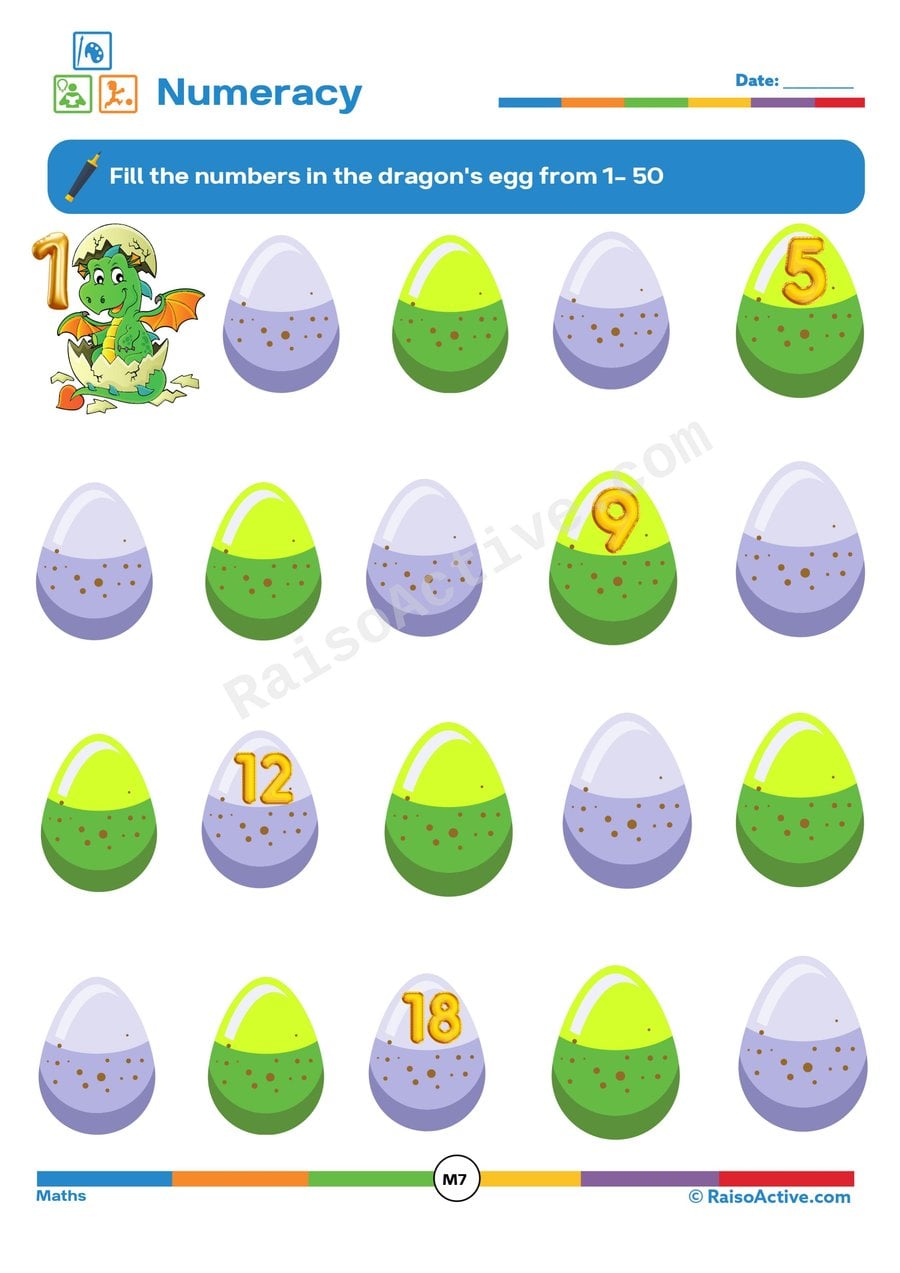
Dragon Egg Numbers: Counting to 50 Worksheet
Filling in the missing numbers across a run of dragon eggs stretches a 4-6 year old's counting range well past the more common 1-20 practice, into territory where number patterns — like how every decade starts a new '_1, _2, _3' pattern — start to become visible. It's a strong bridge activity between rote counting and genuinely understanding how the number system is built.

Spring Sudoku Worksheet: Cut and Paste Puzzle for Kids
Placing cut-out pictures into a sudoku-style grid so that no image repeats in any row, column, or box teaches children ages 4-6 early logical reasoning and systematic thinking, since they must check multiple directions before deciding where each piece belongs. Cutting out the small picture squares beforehand also builds scissor control and hand-eye coordination. Together, this combines a pre-math logic puzzle with fine motor practice in a single spring-themed activity.
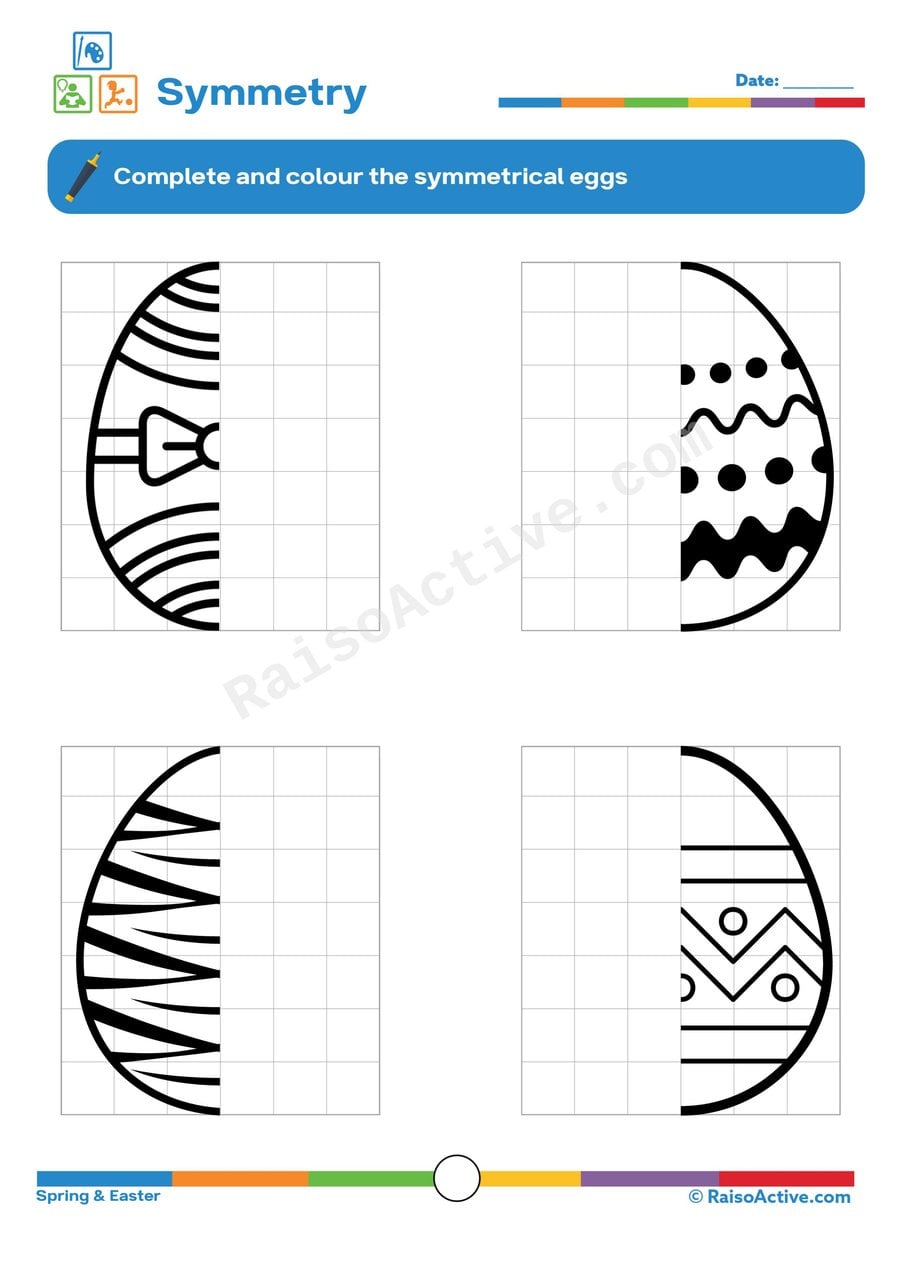
Symmetry Eggs Worksheet for Preschoolers
This worksheet introduces children ages 4-6 to the concept of symmetry by having them complete the missing mirrored half of an egg design. Drawing a matching reflection requires children to closely observe shape, size, and placement on one side and reproduce it accurately on the other — an early geometry skill that also sharpens visual attention to detail.
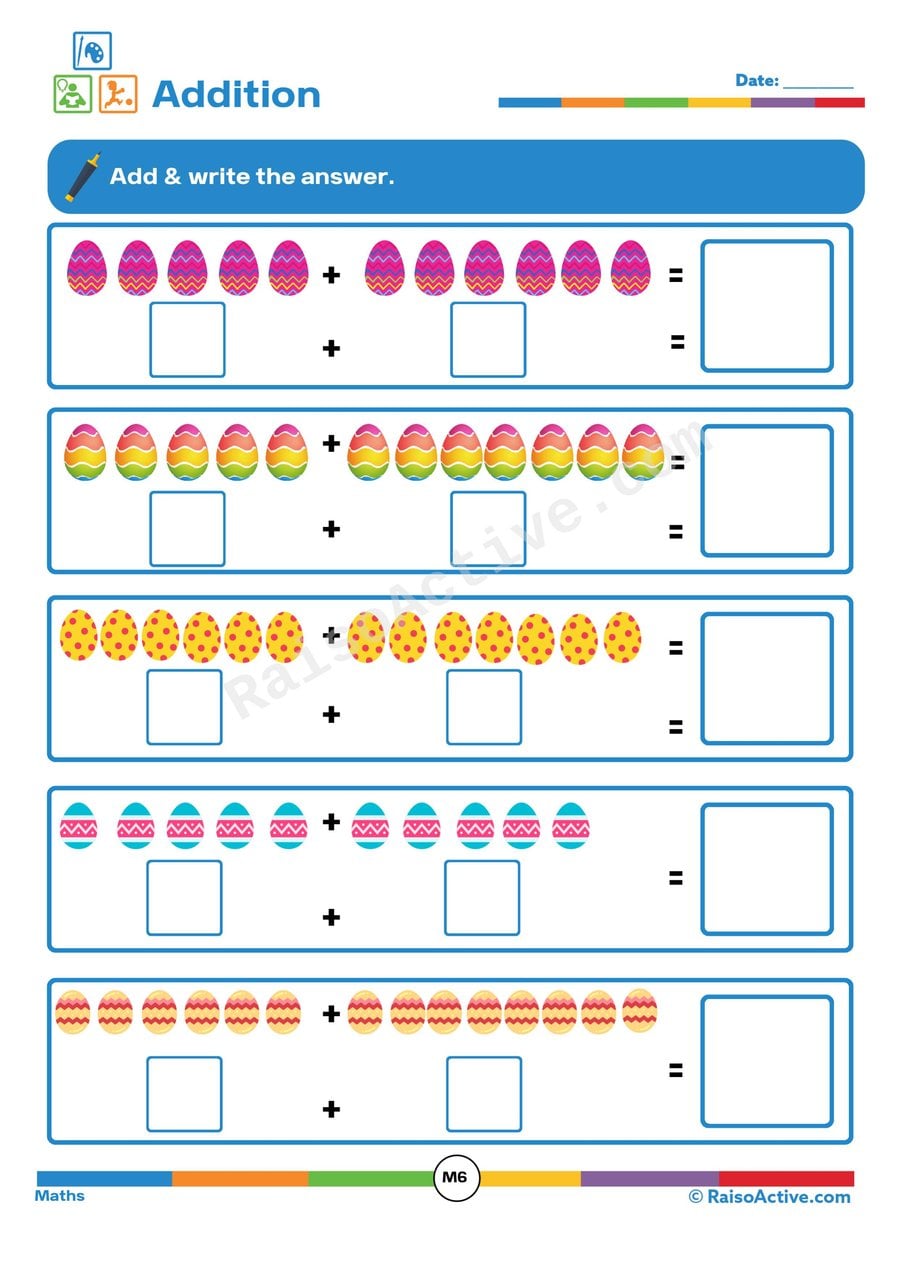
Easter Egg Addition Worksheet for Preschoolers
Counting groups of Easter eggs and combining them builds early addition sense for children ages 4-5, showing that putting two smaller groups together creates one larger total. Because the eggs are grouped visually rather than shown as bare numerals, children practice one-to-one counting alongside the abstract addition symbol, connecting the concrete and written forms of the same idea.

Spring Vocabulary Unscramble Worksheet for Preschoolers
This unscrambling worksheet has children ages 4-5 rearrange jumbled letters into correctly spelled spring vocabulary words, strengthening letter-sound awareness and reinforcing the idea that letters have a fixed, meaningful order. Working from a picture clue to a written word also builds the bridge between spoken vocabulary and early spelling.
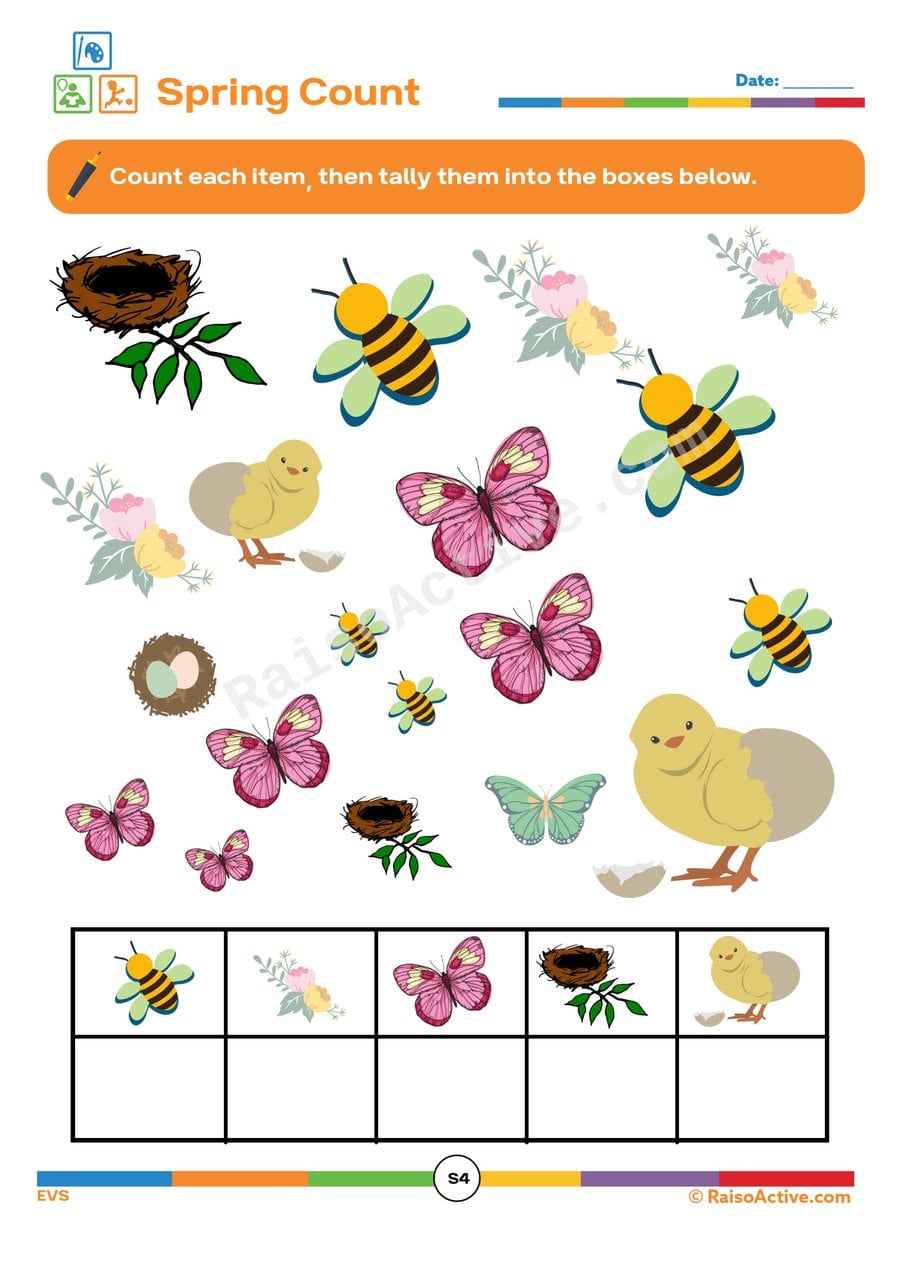
Spring Count: Tally the Spring Items Worksheet
Introduces tally marks as a way of recording a count, teaching children ages 3-5 to count spring-themed objects and represent the total visually in groups of five — an early step toward understanding how numbers can be organized.

Easter Egg Match: Add and Find the Matching Designs!
This worksheet blends early addition with visual matching as children ages 3-5 combine two separate shape groups and then search for the Easter egg design that shows the same total. Because the 'answer' is a picture rather than a written number, children practice quantity comparison and pattern-matching without needing to know written numerals yet.

Paper Bag Bunny Craft Worksheet for Preschoolers
This paper bag craft has children ages 3-5 follow a multi-step sequence of instructions — attaching a pom pom nose, spoon ears, googly eyes, and whisker details — while practicing the fine motor control needed to place and glue small materials precisely. Because the craft uses several different textures and materials in one project, children also get sensory-rich practice beyond typical paper-and-crayon activities. Successfully completing each step in order builds confidence in following sequential, multi-part directions.
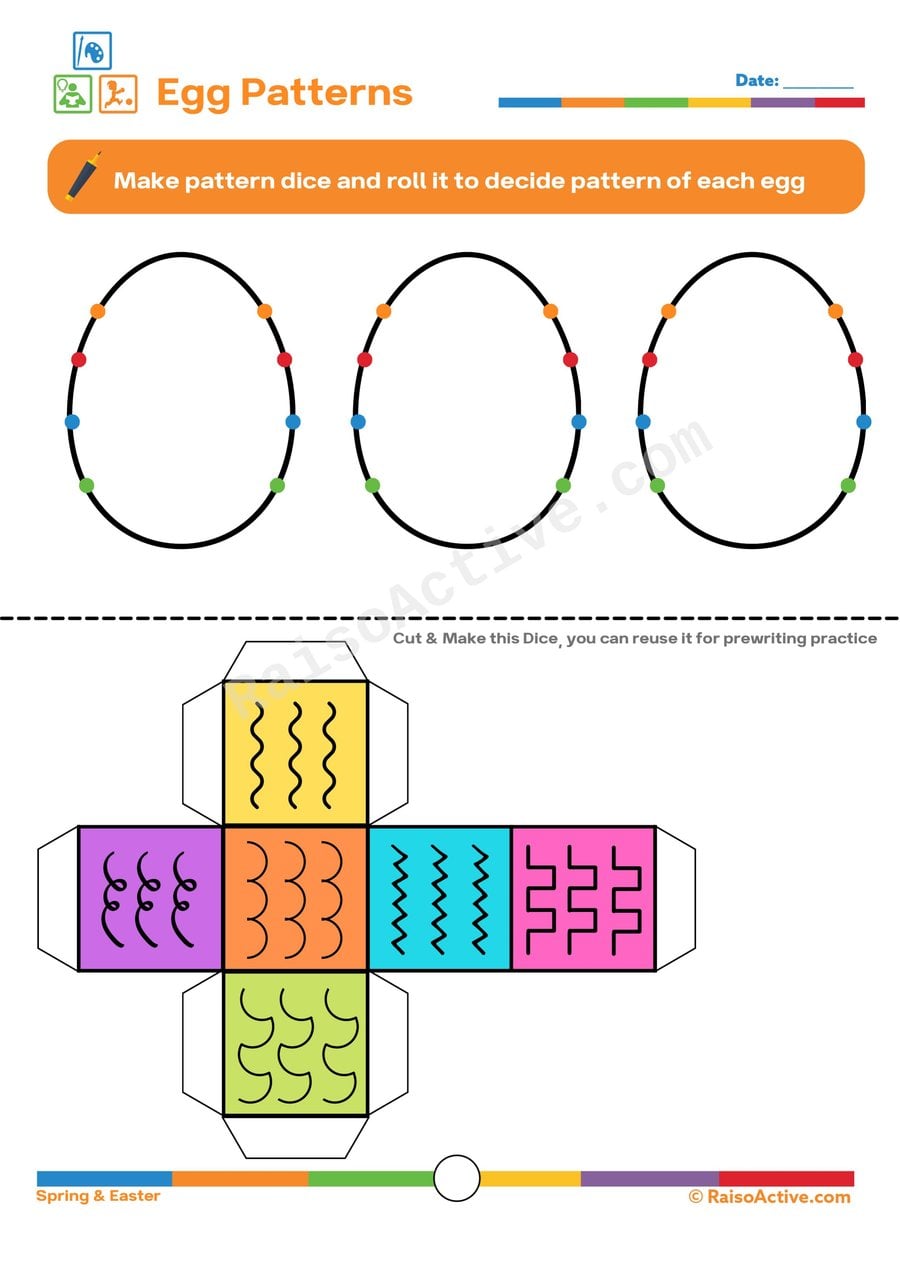
Egg Pattern Worksheet: Create and Match Patterns!
This egg-pattern activity has children ages 3-5 build a simple pattern dice and use it to generate and recreate repeating designs, developing pattern-recognition skills that underpin later math concepts like sequencing and multiplication. Rolling the dice and transferring the result onto each egg also connects a random outcome to a deliberate drawing action, strengthening cause-and-effect thinking.
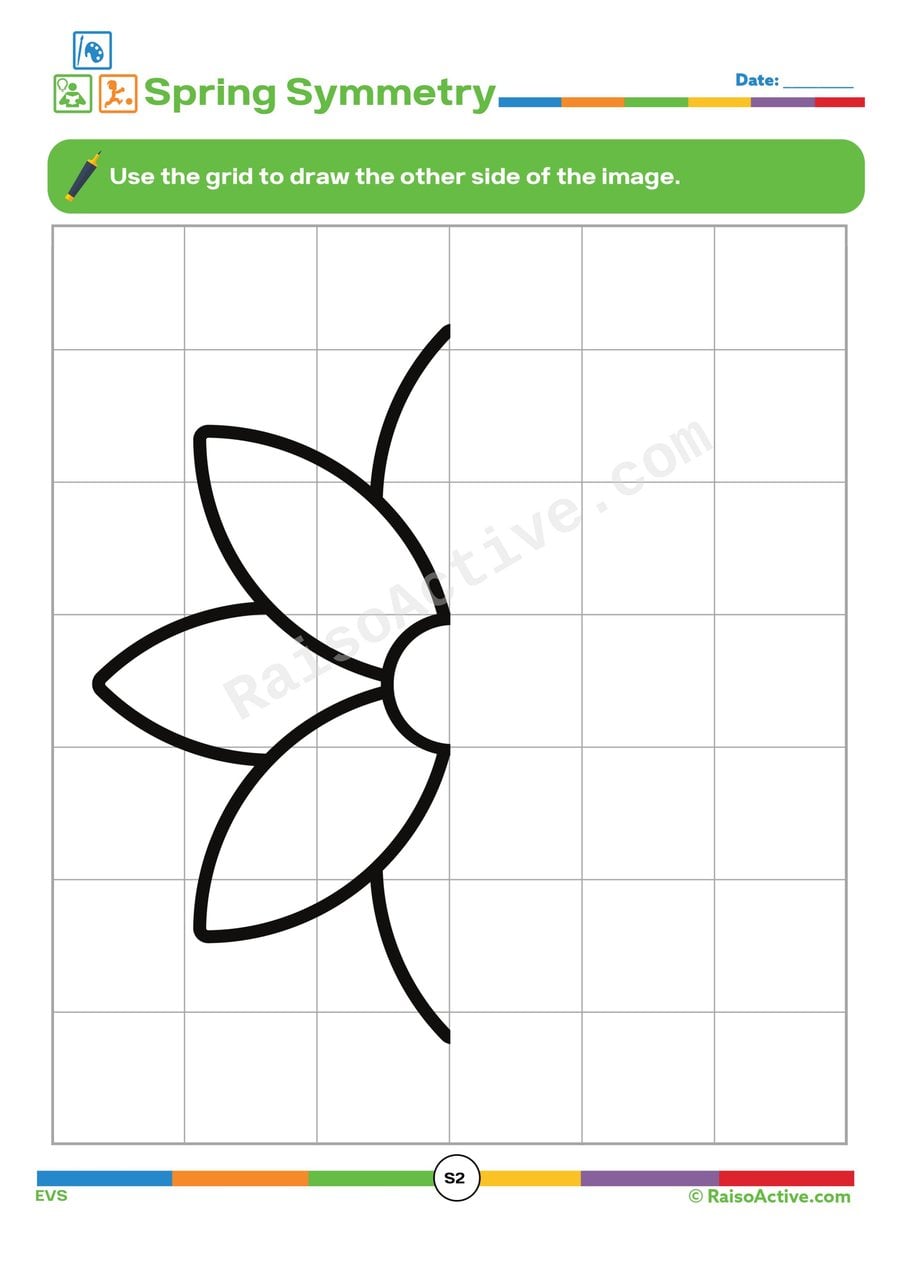
Spring Symmetry Worksheet: Draw the Other Half!
This worksheet introduces children ages 3-5 to the concept of symmetry by having them draw the missing half of a flower using a grid as a visual guide. Replicating a shape on the opposite side of a center line builds spatial reasoning and careful observation, while the drawing itself strengthens pencil control and hand-eye coordination in a way that's more open-ended than simple tracing.

Bunny's Reading Adventure: A Fun Reading Worksheet for Kids!
This dice-based game board worksheet has children ages 3-5 practice reading and recognizing numbers on dice, then applying simple rules — like taking an extra turn or skipping one — as they move a bunny toward its family. Following game rules and reading numbers in the context of play builds both number recognition and the ability to hold and apply multi-step instructions, a skill that supports later following of more complex directions.

Easter Egg Color Match Worksheet for Preschoolers
This worksheet builds on color recognition by asking children ages 3-5 to color a full row of eggs so they all match one another, reinforcing visual discrimination alongside color vocabulary. Rather than following a printed key, children must compare their own work egg to egg, which adds a self-checking element to the coloring task.

Easter Egg Pattern Matching Worksheet for Preschoolers
This seasonal worksheet strengthens pattern-recognition and visual matching skills in children ages 3-5 by having them connect a decorative pattern to the Easter egg that displays the same design. Matching a pattern swatch to its corresponding decorated egg requires close visual comparison of colors, shapes, and repeating elements, sharpening the same attention-to-detail skills used in reading and early math. The seasonal egg theme adds festive motivation to the visual discrimination practice.

Easter Maze Adventure: Help the Bunny Find the Carrot!
Tracing a path from the bunny to the carrot builds fine motor control and pencil steadiness in children ages 3-5, since staying within the maze's narrow lines requires more precision than open coloring. Navigating around dead ends also develops early problem-solving and planning skills, as children learn to look ahead and backtrack when a path doesn't work out. This kind of visual-spatial puzzle strengthens the ability to plan a route mentally before committing it to paper, a skill that supports later map-reading and logical thinking.
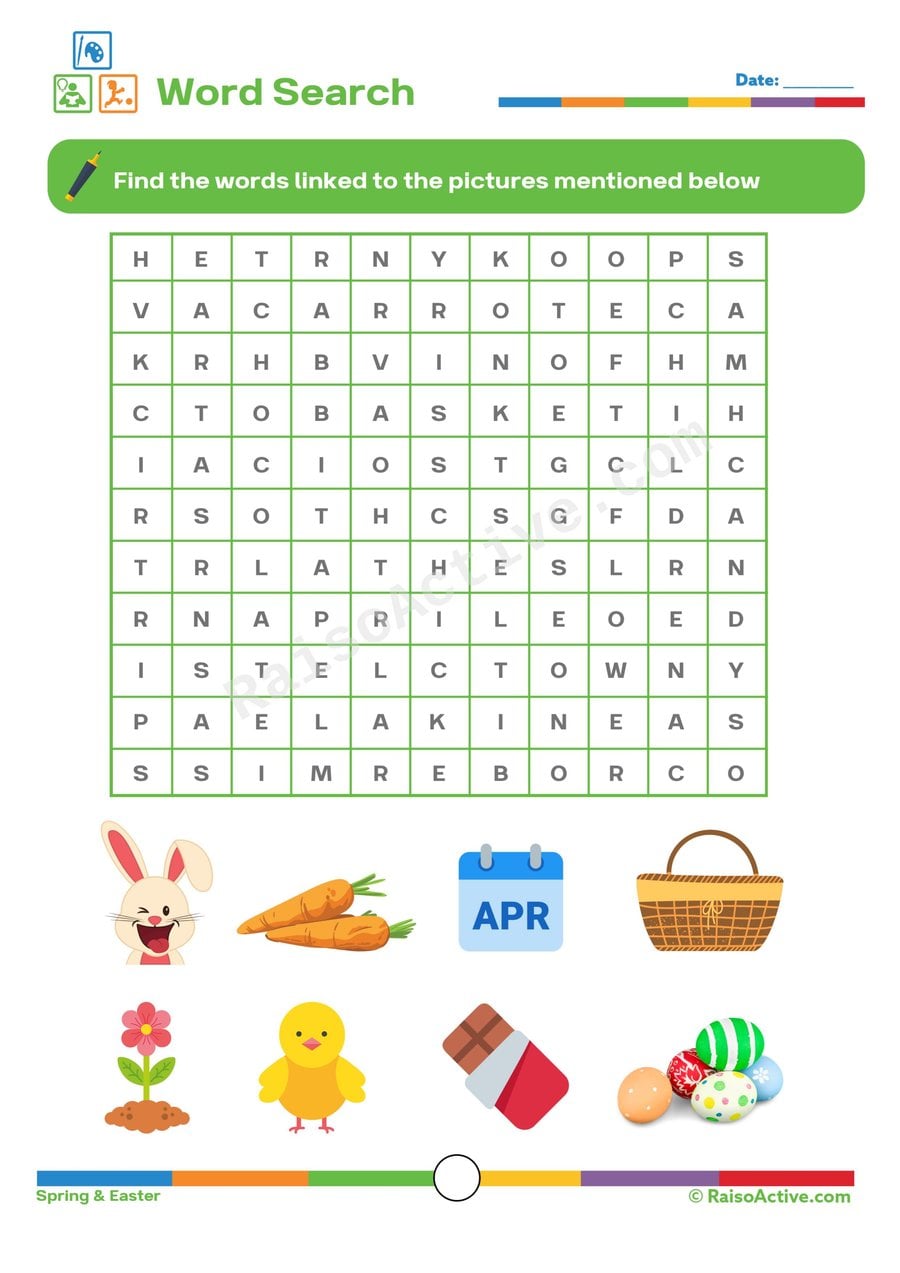
Spring Word Search Worksheet for Preschoolers
This Spring Word Search sharpens visual scanning and letter-tracking skills for children ages 3-5 as they hunt for season words hidden inside a grid of letters. Searching row by row and diagonally builds the same left-to-right tracking habit needed for reading, while recognizing whole words like 'FLOWER' or 'RAIN' strengthens early sight-word memory and spring vocabulary.

Easter Egg Color by Hints Worksheet for Preschoolers
This worksheet has children ages 3-5 listen to or read simple written hints describing shapes and colors, then apply that information correctly while coloring each Easter egg, building early reading comprehension and the ability to follow multi-step verbal instructions. Because the hints must be followed precisely rather than colored freely, children also practice patience and careful attention to detail.

Easter Egg Color Code Worksheet for Preschoolers
Matching numbers on each Easter egg section to a color key builds number recognition and color-word association in children ages 3-5, since they must hold both a numeral and its assigned color in mind while coloring. This kind of coded coloring activity also strengthens visual scanning, as children need to locate the small numbers printed inside each egg section before choosing the right crayon. Completing the code correctly gives an immediate, visible reward when a colorful, patterned egg emerges from the numbered outline.

Egg Sorting Worksheet: Count and Order the Chicks!
Cutting out and arranging numbered eggs in order builds number sequencing skills for children ages 3-5, requiring them to compare several numbers at once and place them correctly rather than just recognizing a single number in isolation. This hands-on ordering task also reinforces counting fluency, since children benefit from counting aloud as they check their arrangement.

Easter Egg Color Match Worksheet for Preschoolers
Children ages 3-5 practice color recognition and following a visual code as they color Easter eggs to match a key provided at the top of the page. Using a color-coded key rather than free coloring adds an instruction-following element, teaching children to check a reference and apply it consistently across a whole page.

Easter Pattern Match Worksheet: Bunny, Basket, and Egg Fun!
This worksheet has children ages 3-5 study a repeating pattern shown across a set of bunny, basket, and egg images, then identify which item on the right continues or matches that same pattern. Recognizing a pattern by its color or design sequence builds early algebraic thinking, since spotting what comes next is a skill children will rely on throughout math.
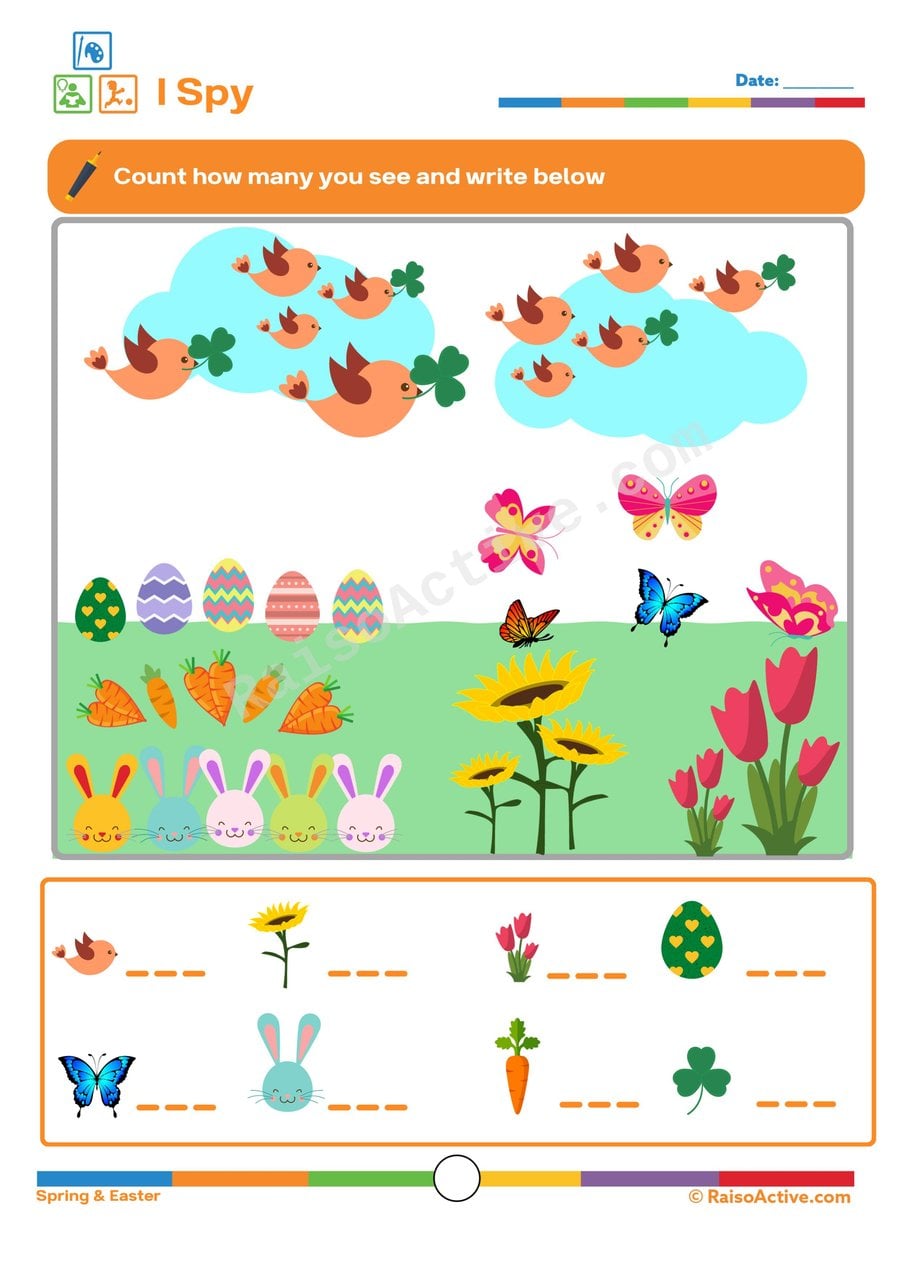
I Spy Spring Worksheet: Count and Write!
Spotting and tallying spring-themed pictures, like flowers, bees, or raindrops, gives children ages 3-5 practice with one-to-one counting and then translating that count into a written numeral. Because the items are scattered across the page rather than lined up neatly, children also build visual scanning skills as they search each section carefully before counting. Writing the final number afterward connects the physical act of counting to abstract number symbols, a key early numeracy milestone.
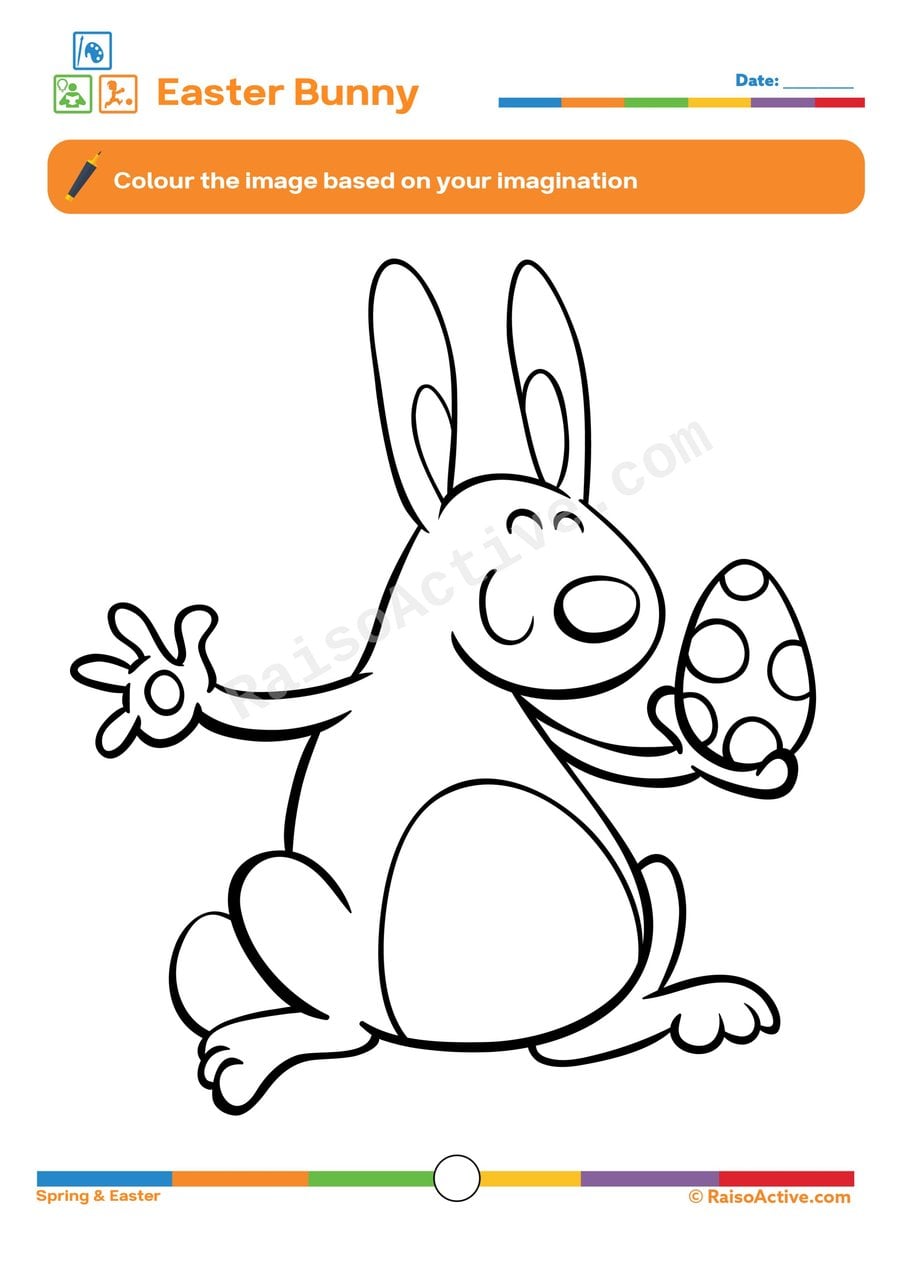
Easter Bunny Coloring Worksheet for Kids
Children ages 3-5 build fine motor control and creative expression while coloring an Easter bunny and egg using crayons or colored pencils. Open-ended coloring tasks like this one, without a strict color code, give children room to make independent choices while still practicing the pencil grip and control needed for later writing.

Spot the Spots! Spring Coloring Worksheet for Preschoolers
This worksheet pairs counting practice with coloring as children ages 3-5 look at a number written beside each picture and color exactly that many spots onto it, reinforcing one-to-one correspondence between a numeral and a matching quantity. Because the target number changes from picture to picture, children must check the number freshly each time rather than coloring on autopilot.

Spring Table Color by Number Worksheet for Preschoolers
This color-by-number worksheet has children ages 3-5 practice matching numerals to a specific color key and then applying that color accurately across a picture, reinforcing both number recognition and one-to-one correspondence between a symbol and an action. Rolling a dice to determine which color to use next also adds an element of chance that keeps the repetitive coloring task engaging.
What children learn through Easter worksheets
Easter worksheets use eggs, bunnies and chicks as counting and sorting objects: a three- to five-year-old counts eggs in a basket up to 10, while a six- or seven-year-old sorts eggs by color or pattern or completes a repeating stripe-and-dot design across a row of eggs. Tracing sheets follow bunny ear, chick and egg outlines to build the pencil control needed before letter formation, and mazes guide a bunny to its basket.
- Counting and sorting eggs by color and pattern
- Tracing bunny, chick and egg outlines
- Completing repeating stripe and dot patterns on decorated eggs
- Matching baby animals to their parents
What to prepare a week before Easter
Print a mixed set of tracing, counting and coloring sheets a week before March 28 so a child has ready-made quiet-time activities around an Easter egg hunt or family visit. Keep pastel crayons or colored pencils with the printed pack, and set aside one harder sorting or pattern sheet for an older sibling so the pack covers a wider age range on the day.
- Print 6–8 sheets across tracing, counting and coloring
- Stock pastel crayons or colored pencils with the printed pack
- Set aside a harder sorting or pattern sheet for older children
- Save a bunny maze for a quiet moment after the egg hunt
Frequently asked questions
What age are Easter worksheets for?
Easter worksheets on this page suit children aged 3 to 7, spanning Preschool through 1st Grade in the US, Nursery through Year 2 in the UK, and Nursery through Class 1 in India. Younger children use tracing and coloring sheets with large egg and bunny outlines, while five- to seven-year-olds are ready for counting, sorting and pattern sheets built around the same spring pictures.
What sorting and pattern skills should a kindergartner practice at Easter?
By Kindergarten, most five- and six-year-olds can sort a small set of objects by one attribute, such as color, and can copy or continue a simple two- or three-step repeating pattern. Easter worksheets that ask a child to sort eggs by color or continue a stripe-and-dot design on a row of eggs check exactly these skills using seasonal pictures.
Are Easter worksheets religious?
The worksheets on this page focus on the secular, widely used spring symbols of Easter, eggs, bunnies, chicks and baskets, rather than religious content, and are written for counting, tracing, sorting and coloring practice suitable for any Preschool, Nursery or Kindergarten classroom.
How many Easter worksheets should a preschooler do?
One sheet a day, or 10 to 15 minutes, in the one to two weeks before Easter Sunday is enough for a three- to five-year-old, since these sheets are a seasonal supplement rather than a full curriculum. Alternating a tracing sheet one day with a counting or coloring sheet the next keeps the short session varied.
Are the Easter worksheets free to download?
Yes. Every Easter worksheet and printable pack can be downloaded free as a watermarked PDF after creating an account, with five downloads a day. An annual subscription removes the watermark and the daily limit across the Easter sheets, printable packs and the rest of the 1,000+ worksheet library.

Written by
Hemsweta Jain · Teacher Cheena
MBA and Early Childhood Educator, teaching since 2014 · Founder of RaisoActive, Mumbai
Written and reviewed by Hemsweta Jain (Teacher Cheena), who designs every RaisoActive worksheet.
Last reviewed
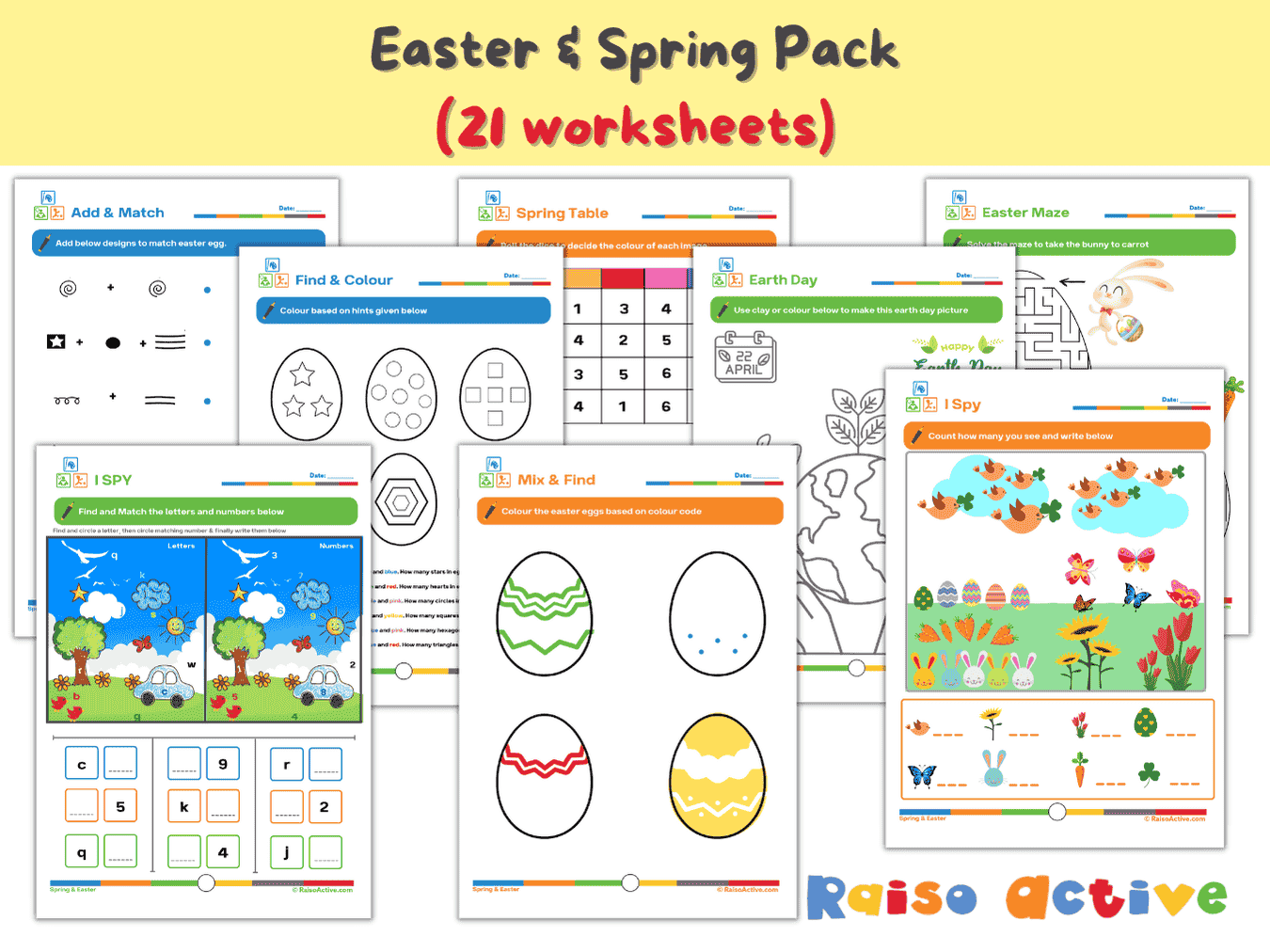
Printable packs for ages 3–7
Guides for parents and teachers
See all guides →Number Formation Rhymes 0–9 and How to Fix Reversals
Original number formation rhymes for 0–9, the correct stroke order for each digit, why 3, 5 and 7 get reversed most often, and multisensory fixes that work.
Best Worksheets for 3-Year-Olds: What Works and What to Avoid
What works on worksheets for 3-year-olds: short sessions, crayons, tracing lines, matching, cutting, a free weekly plan, and signs one is too advanced.
Portfolio Assessment with Young Children: A Comprehensive Guide to Meaningful Documentation
Learn how portfolio assessment captures your child's growth through meaningful documentation. Practical tips, templates, and age-appropriate strategies for ages 1-8.
Fostering Creativity in Structured Learning: The Perfect Balance for Young Minds
Learn how to blend creativity with structured learning for children ages 1-8. Practical strategies, activities, and printable worksheets for parents and teachers.
Preparing Your Child for a Rapidly Changing World: Essential Skills for Future Success
Discover the essential 21st century skills your child needs for future success. Practical tips on creativity, critical thinking, digital literacy & emotional intelligence for ages 1-8.
Celebrating Diversity: How to Incorporate Cultural Awareness in Learning Activities for Young Children
Practical cultural awareness activities for young children aged 2-8. Explore Indian festivals, world cultures, food, music, and crafts to teach diversity and inclusion.
Canonical: https://raisoactive.com/worksheets/easter-worksheets