Free printable worksheets · United Kingdom
KS1 Shapes Worksheets (Ages 5–7)
KS1 shapes worksheets are practice sheets for children aged 5–7 in Key Stage 1 (Years 1–2) in the UK. Shapes worksheets build recognition and naming of common two- and three-dimensional forms, and the ability to sort or match them by their features. The sheets on this page cover naming 2D shapes, matching identical shapes, sorting shapes by attribute and finding shapes in everyday objects.
Key Stage 1 covers Years 1 and 2 together, the stretch in which a child becomes an independent reader and writer while moving from counting to calculating. Year 1 work centres on phonics and the screening check; Year 2 shifts towards spelling patterns, longer writing and mental arithmetic with two-digit numbers. Five-year-olds move into three dimensions. Alongside the flat shapes, worksheets introduce cube, sphere, cone and cylinder, ask which object matches each one, and press the key idea that a cube has square faces without being a square. Sorting flat from solid, composing two triangles into a square, and finding shapes in a photo of a kitchen are all fair tasks. Precise words such as "vertex" and "edge" can wait; "corner" and "side" do the job.
959+ worksheets · free PDF download · print on A4 or Letter
KS1 Shapes Worksheets to print
Browse all worksheets for ages 5–7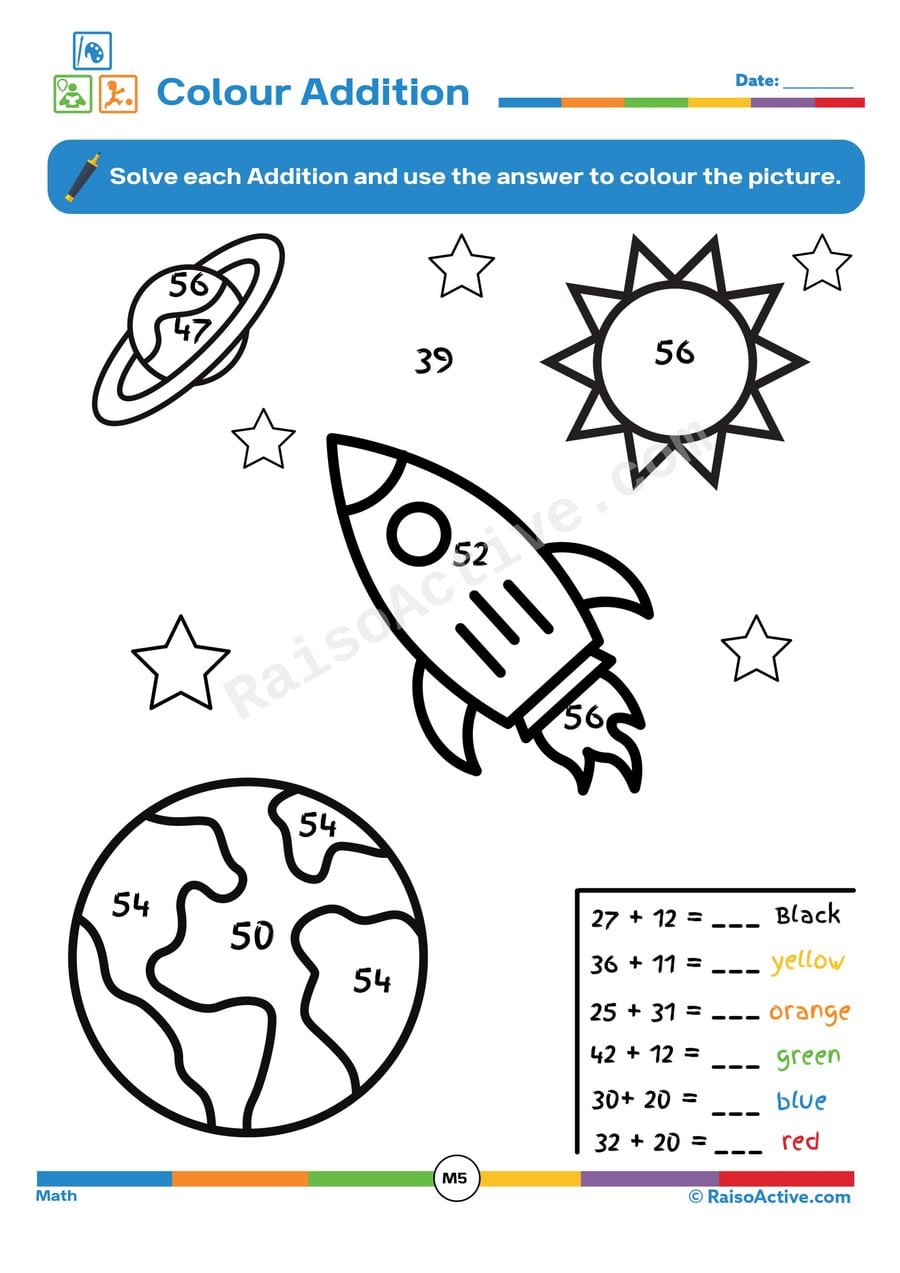
Color Addition Worksheet: Space Adventure!
This worksheet builds addition fluency by having children solve simple equations and then use each answer to determine which color to use in a corresponding section of a space-themed picture. For five- to seven-year-olds, this color-by-number format adds motivation to solve each problem accurately, since a wrong answer means the wrong color goes in the wrong spot and the final picture won't come together correctly.
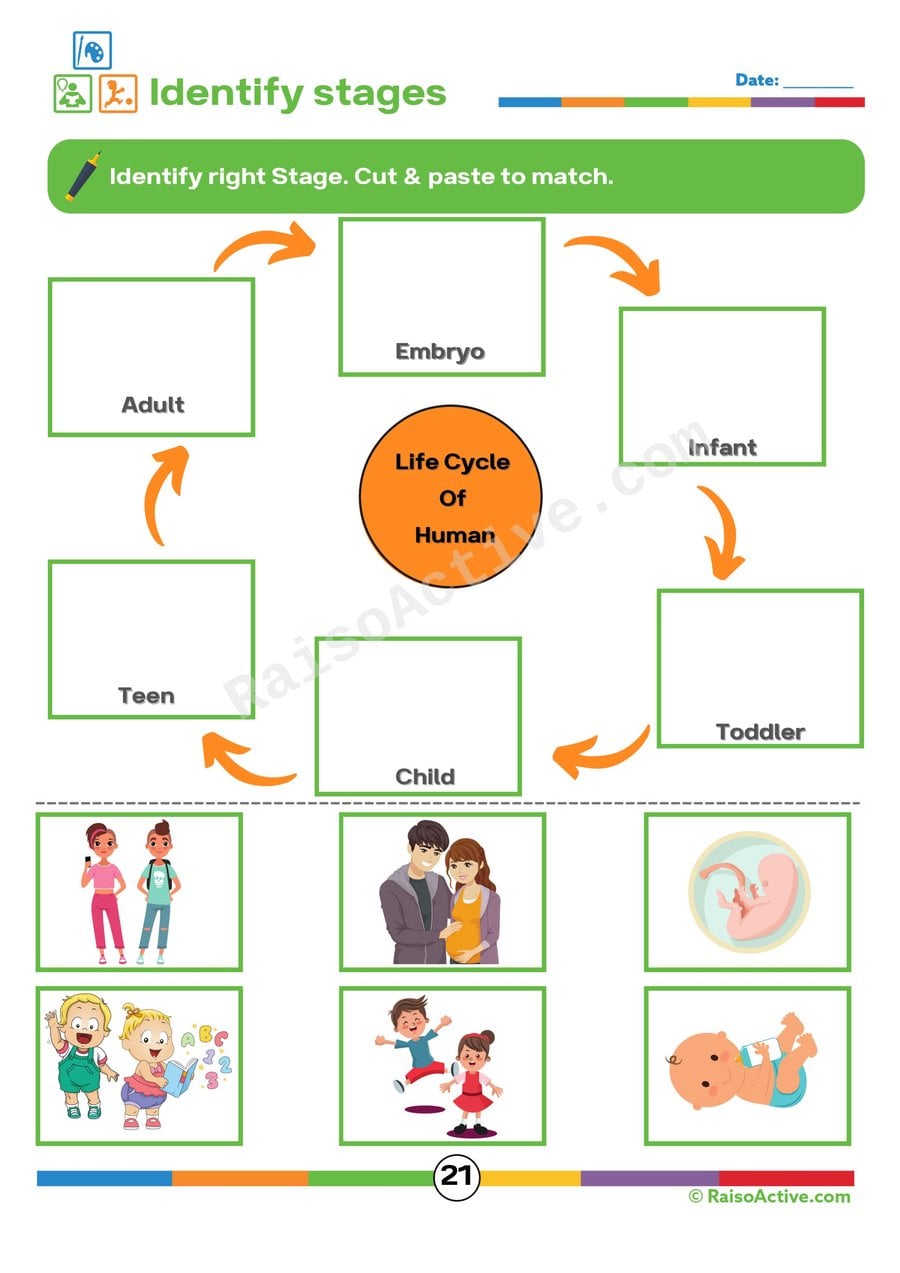
Human Life Cycle Stages Worksheet for Kids
This worksheet helps children ages 4-6 understand that people, like animals, grow and change over time by matching pictures to the stages of human development — baby, child, teenager, and adult. It introduces early classification and comparison skills while giving children a concrete way to talk about growth they can observe in their own family.

Long Vowel Sounds: Matching Objects to Sounds - A & E Worksheet
This worksheet asks children ages 4-6 to listen for and match objects whose names contain the long 'a' sound, as in 'cake,' or the long 'e' sound, as in 'bee,' sharpening their ability to distinguish between vowel sounds that look and sound similar to a beginning reader. Practicing long vowels alongside short vowels builds the fuller phonics picture children need to decode a wider range of words as their reading vocabulary grows.

Read and Match: Sentence Reading Worksheet for Early Learners
This worksheet has 4-6 year olds read a full sentence aloud and then identify which picture actually matches its meaning by coloring the circle beside it, building reading comprehension in a format that requires understanding the whole sentence rather than picking out a single keyword. Because more than one picture on the page may share surface similarities, your child has to genuinely process what the sentence says, which is a stronger comprehension check than simple word-picture matching.
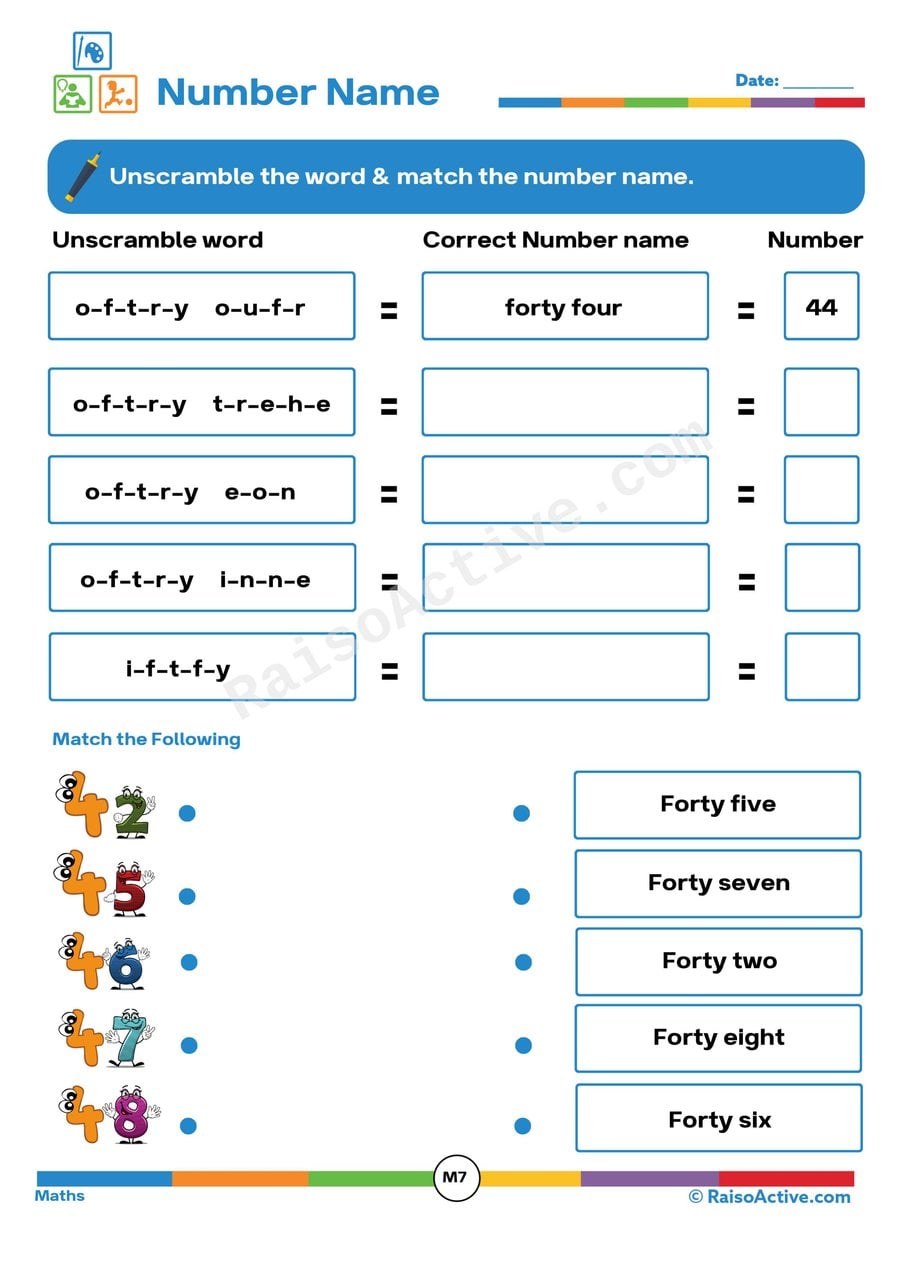
Number Name Matching Worksheet for Preschoolers
This worksheet connects three related number skills at once: unscrambling a jumbled word to spell a number name correctly, writing that number name out, and then matching it to its numeral — a layered task that builds both early spelling and number recognition together. Because number-name spelling (like 'seven' or 'eight') doesn't always follow simple sound-out rules, this worksheet gives 4-6 year olds valuable repeated exposure to sight-word-style number vocabulary.

Abbreviations Worksheet: Matching Words and Abbreviations!
This worksheet teaches children common abbreviations, like 'Dr.' for Doctor or 'St.' for Street, by having them match each full word to its shortened form. For four- to six-year-olds who are building early reading and writing fluency, recognizing abbreviations is a practical real-world skill, since these shortened forms appear regularly in addresses, titles, and everyday writing.

Life Cycle Stages Worksheet: Identify and Sequence!
This worksheet asks children ages 4-6 to identify what life-cycle stage is shown in each individual picture and then number a whole set of pictures into the correct growth sequence, moving beyond simple matching into independent ordering and logical reasoning. Because the worksheet likely mixes several different animals' or plants' stages, it also asks children to recognize what type of life cycle a picture belongs to before sequencing it.
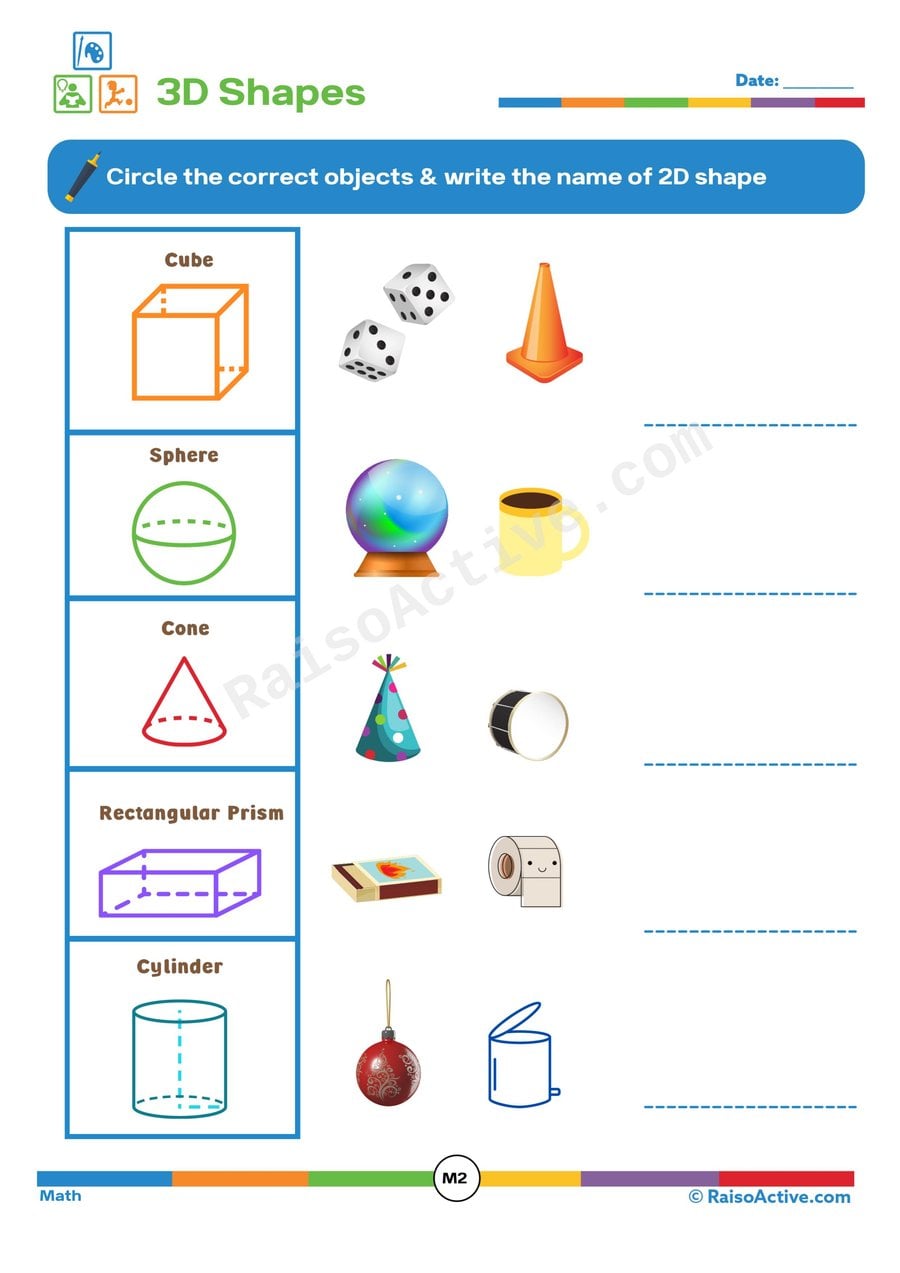
3D Shapes Worksheet: Circle and Name the Shapes!
This worksheet helps children ages 4-6 identify common 3D shapes like spheres, cubes, and cylinders by matching them to real objects, then connects each 3D shape to its related 2D shape, such as a cube's square face or a sphere's circular outline. Understanding that 3D shapes are built from 2D shapes is an important early geometry concept that supports later spatial reasoning and measurement skills.

Family Words Cut and Paste Worksheet for Early Readers
Reading a simple CVC word and matching it to its picture teaches children ages 4-6 to blend individual sounds into a whole word and then connect that word to its meaning, a core decoding skill for early readers. Because CVC words follow a consistent consonant-vowel-consonant pattern, practicing them builds a reliable phonics foundation that transfers to reading many other simple words.

Number Names Worksheet: Unscramble, Match, and Write Numbers!
This worksheet layers three literacy and numeracy skills together: unscrambling jumbled letters to spell out number names, writing the corresponding numeral, and matching numbers to their written names. For ages 4-6, connecting a numeral like '5' to its written word 'five' bridges math and reading skills, reinforcing that numbers can be represented in more than one way.

Solve & Color: Fun Addition and Subtraction Worksheet for Kids!
This worksheet combines early arithmetic practice with a color-by-number format, as children ages 4-6 solve simple addition and subtraction problems and then use a color key to fill in each shape based on their answer. Because getting the coloring 'right' depends on solving the math correctly, children get built-in, self-checking feedback on their arithmetic while also practicing shape recognition and staying within lines.

Short Vowel Sounds: Matching Objects to Sounds Worksheet
This worksheet helps children ages 4-6 tell apart the short 'o' sound (as in 'fox') from the short 'u' sound (as in 'sun') by matching pictured objects to their correct vowel sound. Short vowels are the building blocks of the earliest CVC words children read, so being able to hear and distinguish them accurately is essential before moving on to more complex word patterns.

Adjective Adventure: Matching Sentences Worksheet for Kids
This worksheet teaches 4-6 year olds that adjectives are the words that describe nouns, asking them to fill in a missing adjective in a sentence and then physically mark the noun and adjective separately by underlining and circling. That separation step — telling apart which word names a thing and which word describes it — is a genuinely useful grammar distinction that most children haven't consciously noticed before, even though they use adjectives constantly in speech.
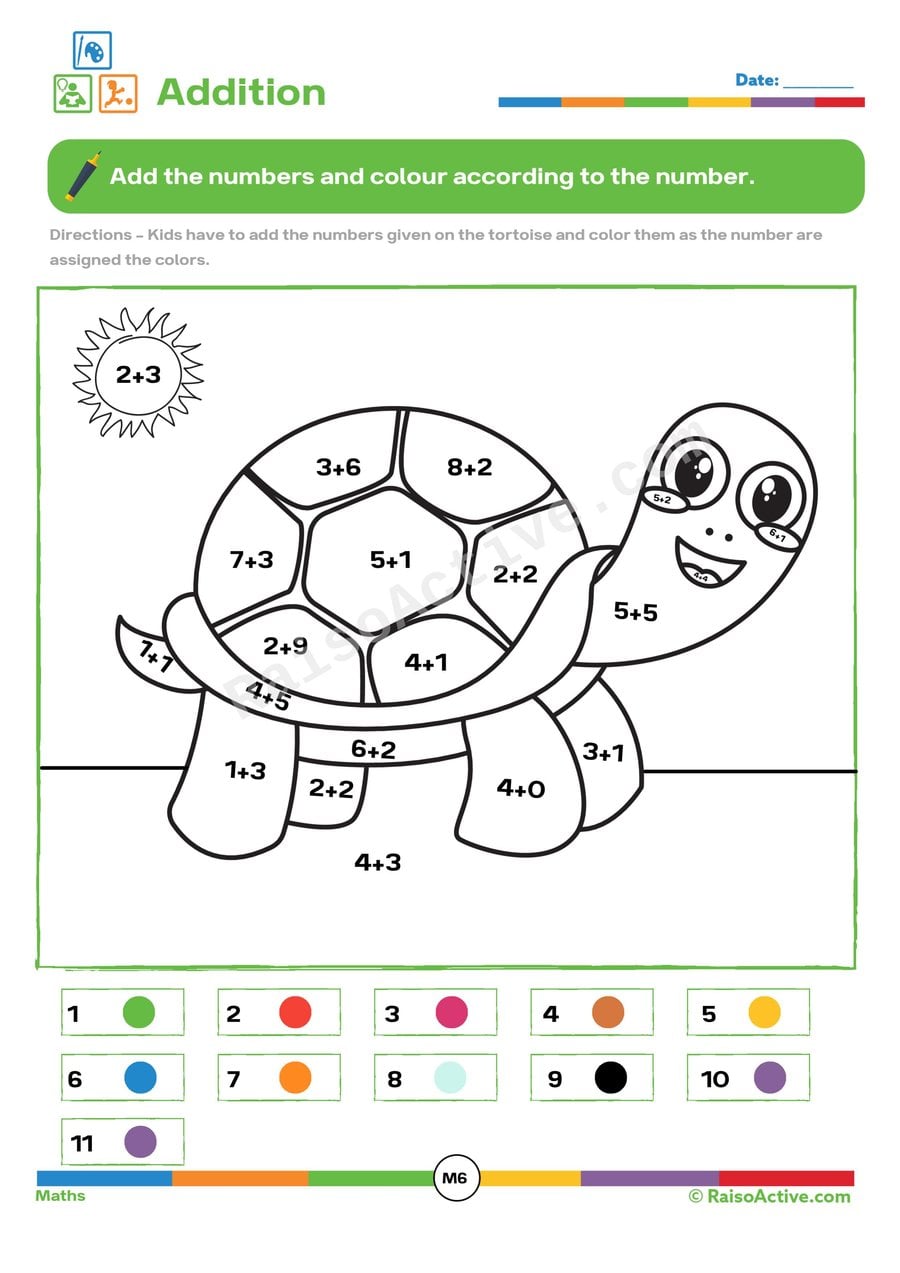
Color by Number Addition Worksheet: The Turtle!
Children ages 4-6 practice single-digit addition facts and then apply a color key to their answers, combining math fluency with careful visual matching as the turtle picture is revealed. The immediate visual payoff of a colored picture gives children a clear, motivating way to check whether their addition was correct.

Color Mixing Worksheet for Preschoolers: Learn Primary and Secondary Colors!
Identifying primary colors and predicting which two combine to create each secondary color introduces children ages 4-6 to basic color theory, an early scientific concept about how colors interact. This worksheet builds the vocabulary and reasoning skills needed to understand color mixing before testing it out with real paint or crayons.
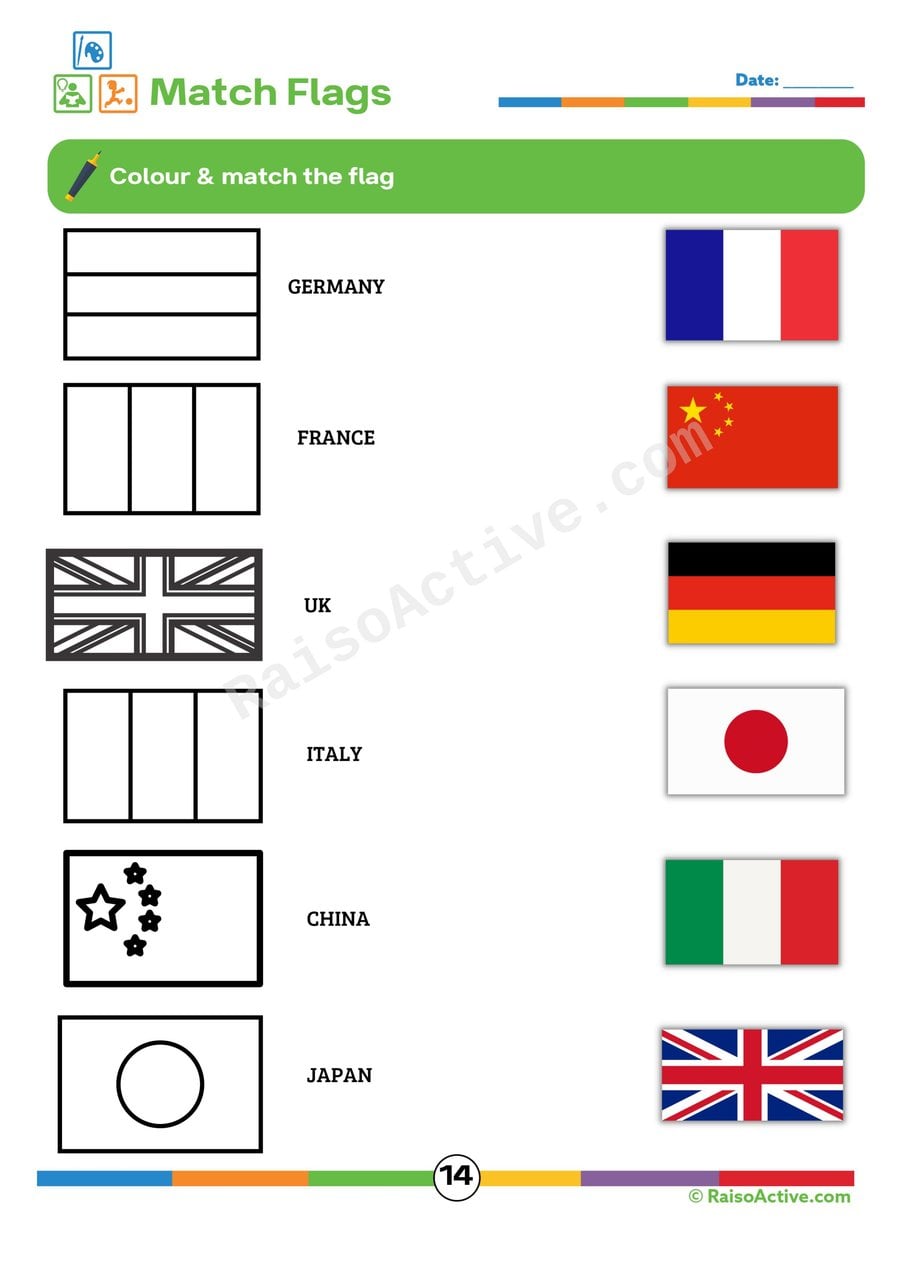
Match the Flags Worksheet: Color and Learn!
This worksheet helps children ages 4-6 recognize different country flags by coloring them accurately and matching each one to its correct country name. Coloring flags with real colors, rather than free choice, adds a layer of factual precision to the usual creative coloring task, reinforcing that flags carry specific, meaningful designs.

Tens and Ones Matching Worksheet for Preschoolers
Children ages 4-6 begin exploring the concept of tens and ones by matching groups of objects to their corresponding number sentences, an early step toward understanding place value in two-digit numbers. Cutting and pasting pictures into the correct boxes reinforces the matching logic while adding fine motor practice. This groundwork prepares children for later math concepts like regrouping and multi-digit addition.
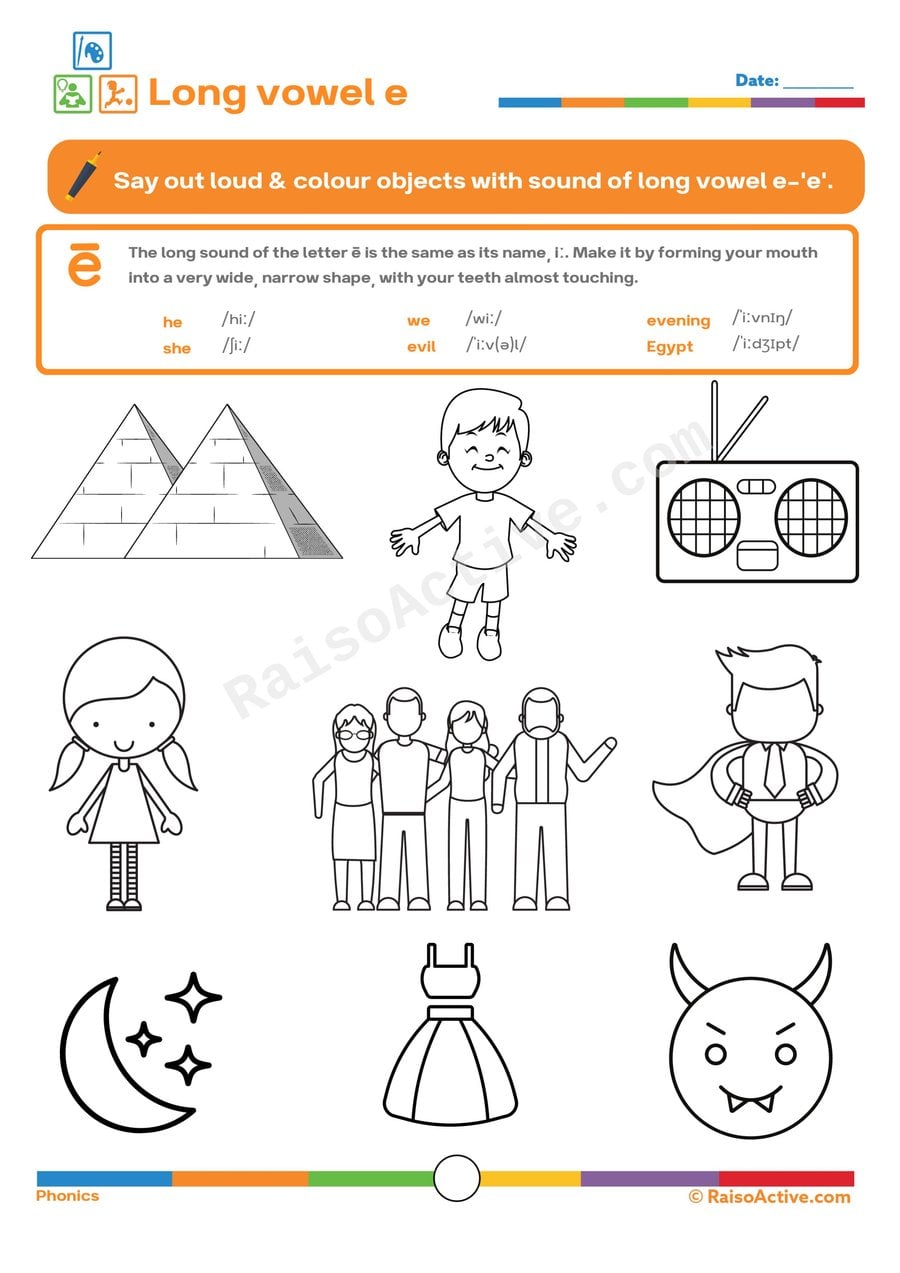
Long Vowel E Coloring Worksheet: Say the Sounds!
This worksheet builds long 'e' sound recognition for children ages 4-6 through a simple listen-and-color format, letting children focus entirely on auditory discrimination without the added demand of reading or writing. Long 'e' words like 'he' and 'she' appear constantly in early reading, so being able to instantly recognize the sound supports smoother decoding once your child starts reading connected text. Coloring only the pictures with the target sound also builds sustained attention, since your child has to evaluate every picture individually rather than color the whole page at once.

CCVC Word Matching Worksheet: Read and Match 'cl' and 'sl' Blends
This worksheet gives children ages 4-6 focused practice reading and matching CCVC words that begin with the 'cl' and 'sl' consonant blends, like 'clap' and 'slide'. Practicing two specific, similarly structured blends side by side sharpens a child's ability to hear the subtle difference between them, a skill that becomes increasingly important as vocabulary and reading material grow more complex.

Numeracy Match: Counting and Number Recognition Worksheet
Children ages 4-6 strengthen number recognition by matching written numerals to their corresponding word names or quantities, reinforcing that numbers can be represented in more than one way. This kind of numeral-to-word matching deepens number sense beyond simple counting, helping children see the relationship between symbol, word, and quantity. Coloring in their birth date personalizes the practice and connects it to something meaningful in their own life.

Y and Z Consonant Sounds Worksheet: Match the Objects!
This worksheet builds beginning-sound recognition for children ages 4-6 with the letters 'y' and 'z', two consonants that appear less frequently at the start of common words, giving children practice with sounds they may hear less often than 's', 't', or 'm'. Matching each picture to its correct starting letter reinforces the sound-symbol connection while also expanding vocabulary, since words like 'yarn' or 'zebra' may be less familiar to young learners. This rounds out a child's coverage of consonant sounds toward full alphabet mastery.

Alphabet Adventures: Complete the Vocabulary Table!
This worksheet helps children ages 4-6 strengthen letter-picture-word associations by filling in missing letters, finding matching pictures for each letter, and pasting them into a vocabulary table. Combining letter recall, picture matching, and gluing into one multi-step task pushes children beyond simple letter recognition into actively building and organizing vocabulary, an important step toward independent reading and writing.
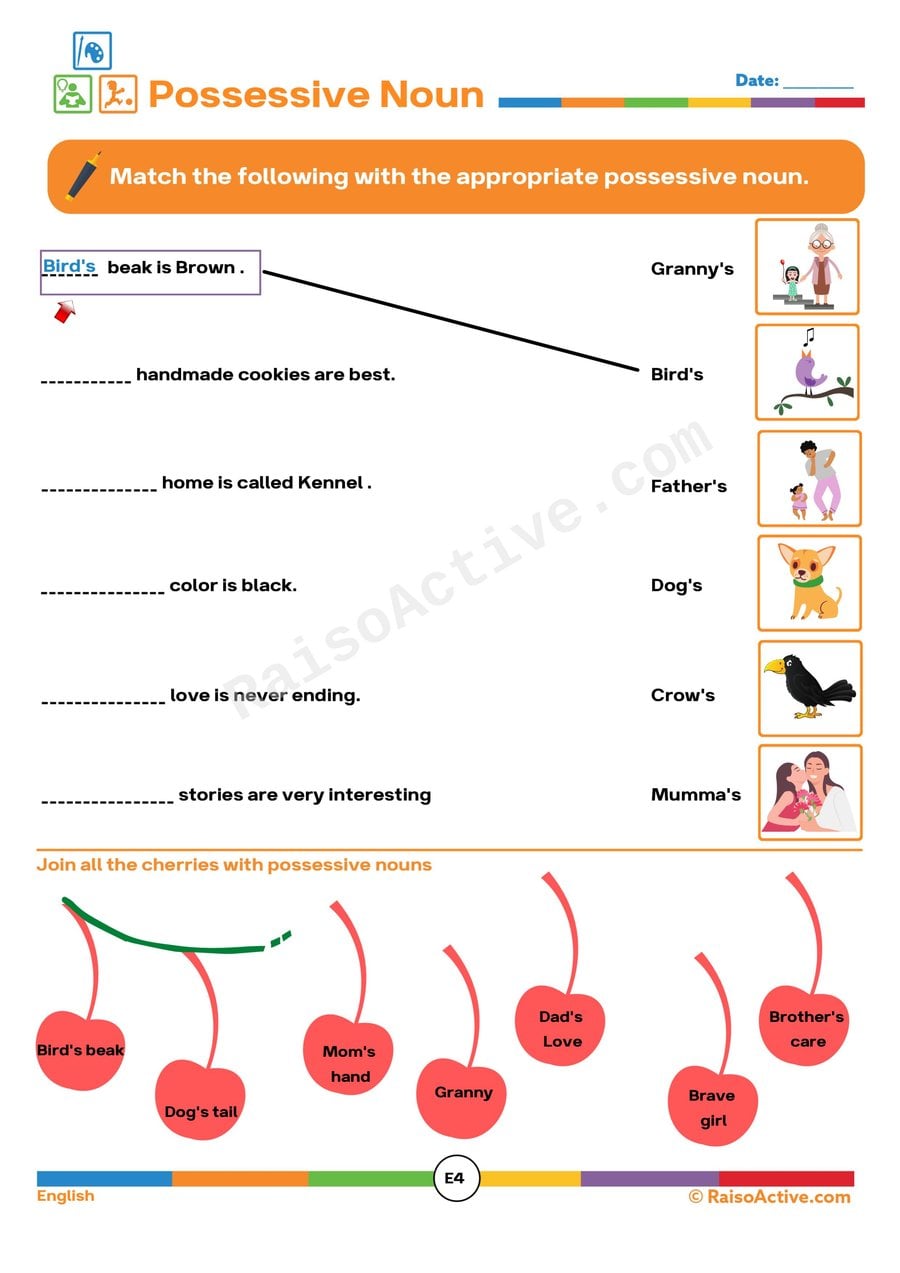
Possessive Noun Matching Worksheet for Kids
Children ages 4-6 learn to identify possessive nouns, like 'the dog's bone' or 'Mia's book', which show ownership using an apostrophe and 's'. Matching possessive phrases to their meaning builds early grammar awareness that will later support correct sentence writing and reading comprehension. The cherry-connecting activity adds a playful visual-tracking layer to reinforce the matching skill.

Long Vowel i-y Worksheet: Complete the Words and Match the Pictures!
This worksheet has children ages 4-6 complete words by writing the correct ending sound for the long 'i' pattern, which can be spelled with 'i' or 'y,' and then match each finished word to its picture, combining spelling, phonics, and visual matching in one task. Filling in a missing part of a word, rather than writing it entirely from scratch, gives children a scaffolded way to practice spelling without the full demand of unassisted writing. Matching the finished word to a picture also confirms whether their spelling produced the intended word.
What KS1 shapes worksheets cover
Five-year-olds move into three dimensions. Alongside the flat shapes, worksheets introduce cube, sphere, cone and cylinder, ask which object matches each one, and press the key idea that a cube has square faces without being a square. Sorting flat from solid, composing two triangles into a square, and finding shapes in a photo of a kitchen are all fair tasks. Precise words such as "vertex" and "edge" can wait; "corner" and "side" do the job.
- Match cube, sphere, cone and cylinder to a dice, ball, hat and can
- Sort pictures into flat shapes and solid shapes
- Build a square or rectangle from two or more triangles
- Name the shape of a clock, a door and a slice of pizza
- Say how a square and a cube are alike and different
How to use these worksheets at home or in class
Because this stage spans two years, match the sheet to what the classroom is doing rather than to age alone: decoding and number bonds for a Year 1 child, comprehension and times tables for a Year 2 child, in sessions of fifteen to twenty minutes.
Start with the sheet that matches what your child can already do, then move one step up. Keep finished sheets in a folder: KS1 teachers often ask for evidence of practice, and children like seeing their own progress.
Is your child ready for KS1 shapes work?
A child ready for the later half of this stage reads a short passage with reasonable fluency, writes several connected sentences, adds and subtracts within twenty and recalls the 2, 5 and 10 times tables with growing confidence.
- Draw a closed shape with exactly five corners
- Divide a circle and a rectangle into halves and quarters
- Name pentagon, hexagon and rhombus from a mixed set
Frequently asked questions
What is the easiest way to explain 3D shapes to a five-year-old?
Flat shapes can be drawn; solid shapes can be picked up. Put a ball beside a drawn circle and a dice beside a drawn square, let the child hold the solid ones, and ask which could roll and which could stack. Rolling and stacking are how five-year-olds first tell a sphere from a cube. Names come afterward, one per object: ball is sphere, dice is cube, can is cylinder, party hat is cone.
What should a KS1 child be able to do in shapes?
Five-year-olds move into three dimensions. Alongside the flat shapes, worksheets introduce cube, sphere, cone and cylinder, ask which object matches each one, and press the key idea that a cube has square faces without being a square. Sorting flat from solid, composing two triangles into a square, and finding shapes in a photo of a kitchen are all fair tasks. Precise words such as "vertex" and "edge" can wait; "corner" and "side" do the job. A child ready for the later half of this stage reads a short passage with reasonable fluency, writes several connected sentences, adds and subtracts within twenty and recalls the 2, 5 and 10 times tables with growing confidence.
Do these worksheets follow the KS1 curriculum?
The sheets cover naming 2D shapes, matching identical shapes, sorting shapes by attribute and finding shapes in everyday objects, which sit inside the National Curriculum Key Stage 1 outcomes for KS1. Kindergarten to 1st Grade (US), UKG to Class 1 (India) use the same skills at this age, so the sheets also fit families following those programmes.
Are these KS1 shapes worksheets free?
Yes. Each worksheet downloads free as a watermarked PDF once you create an account, with a limit of five a day. An annual membership ($20) removes the watermark and the limit for the whole library of over 1,000 worksheets and every printable pack.

Written by
Hemsweta Jain · Teacher Cheena
MBA and Early Childhood Educator, teaching since 2014 · Founder of RaisoActive, Mumbai
Written and reviewed by Hemsweta Jain (Teacher Cheena), who designs every RaisoActive worksheet.
Last reviewed
Printable packs for ages 5–7
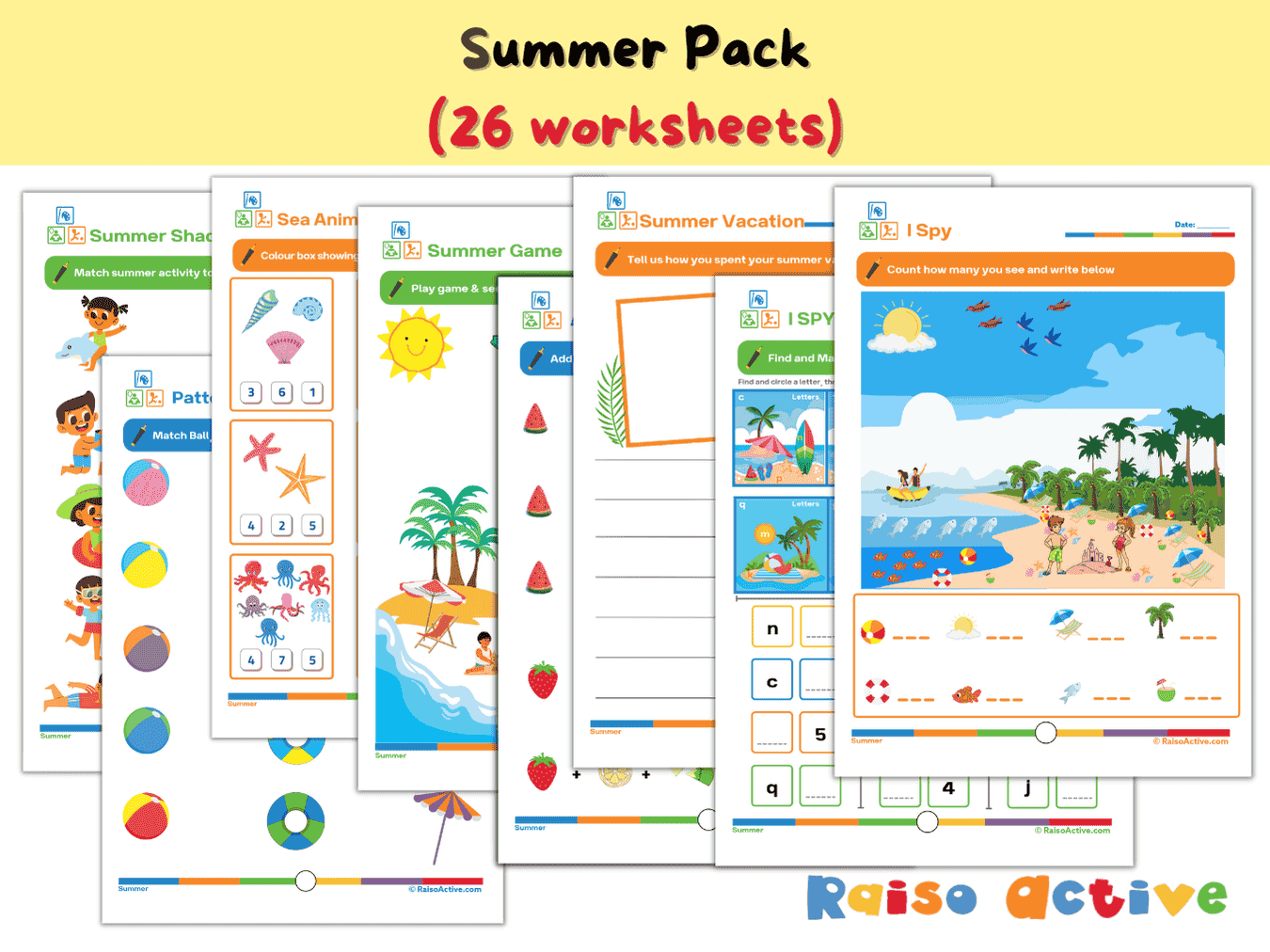
Summer Activity Pack: Math, Literacy, Puzzles & More for Preschool & Kindergarten
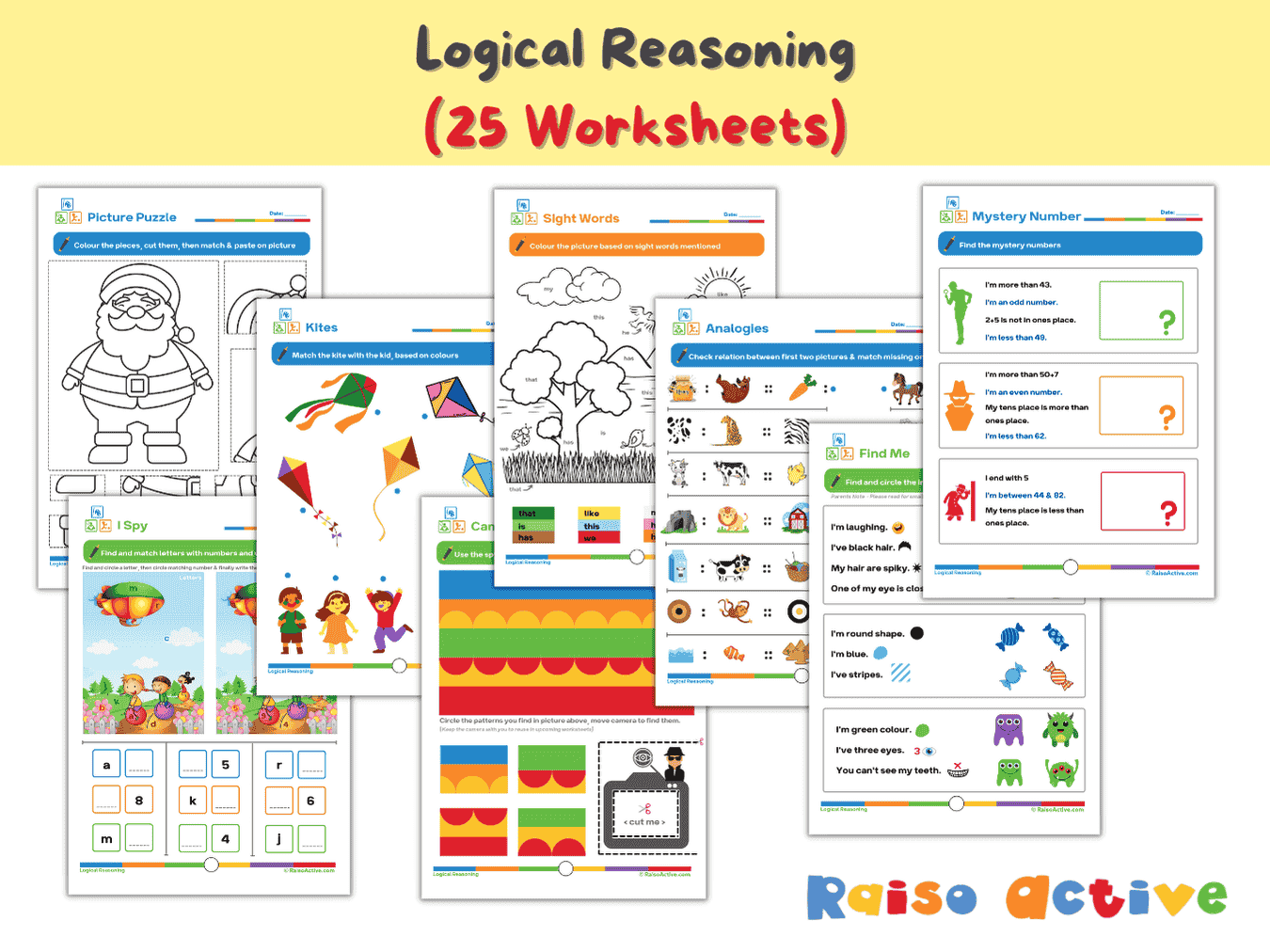
Logical Reasoning Activity Book for Preschool & Kindergarten | Patterns, Puzzles & Analogies
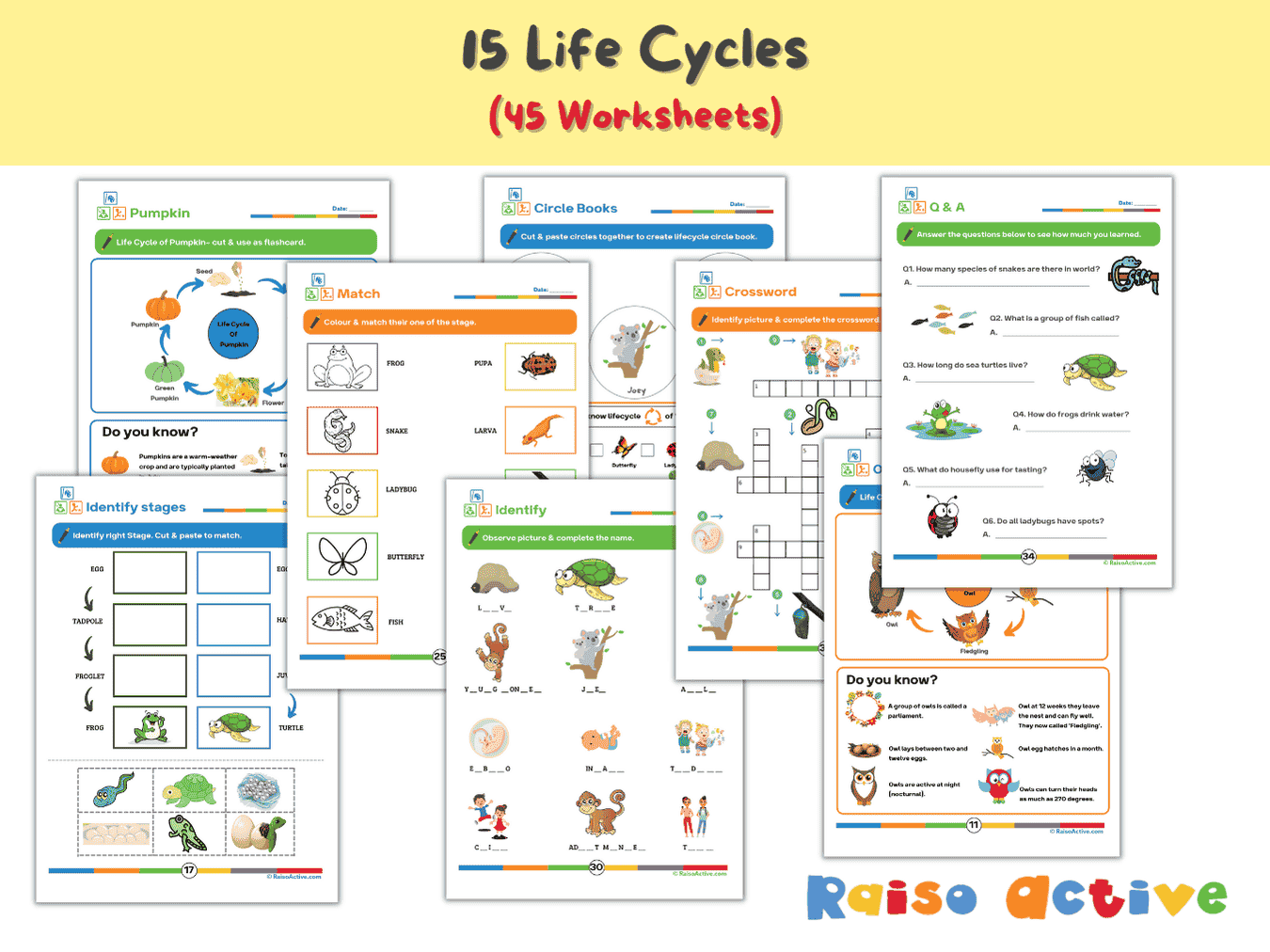
Lifecycles Activity Book & Flashcards for Preschool & Early Elementary
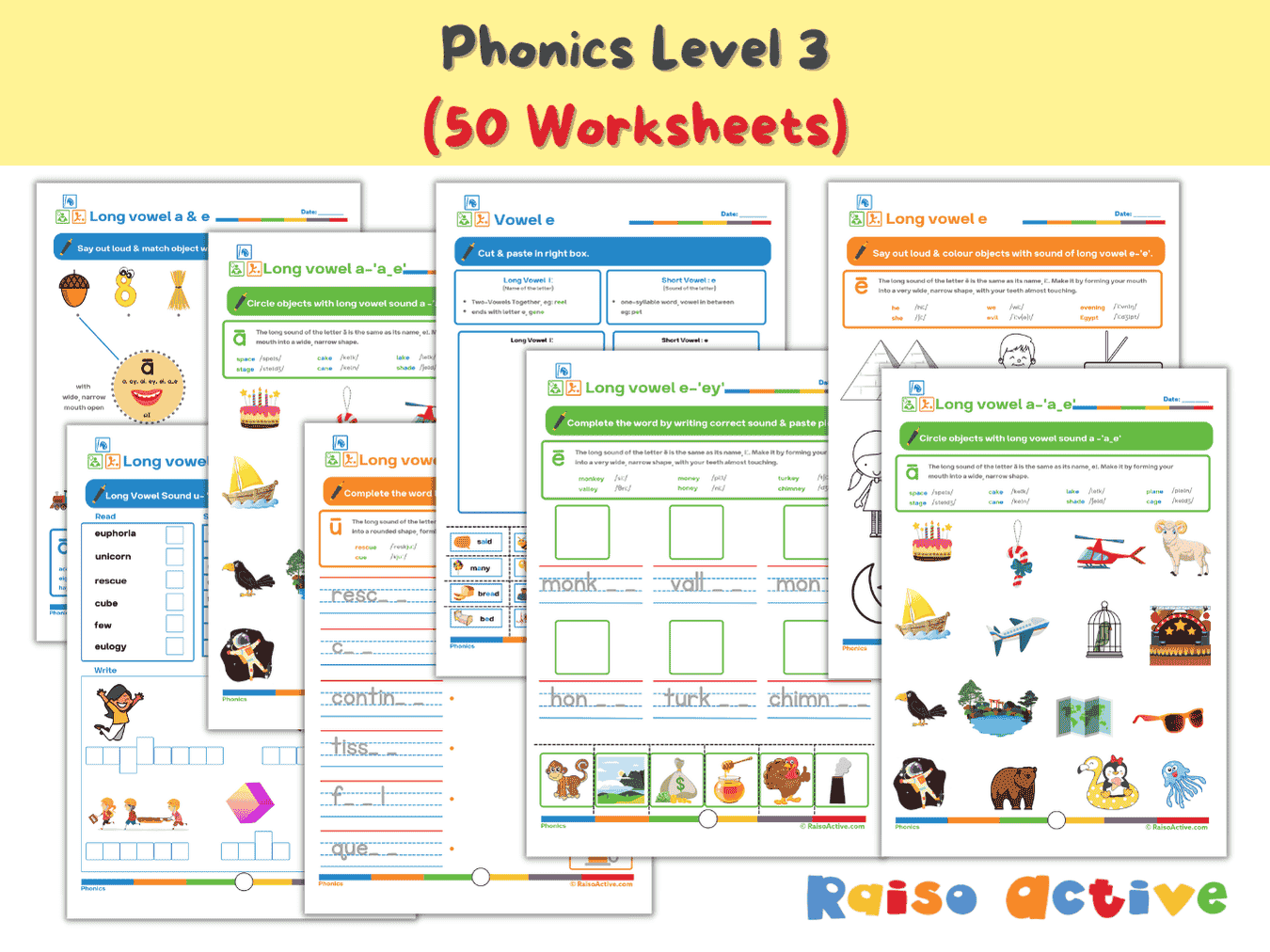
Phonics Level 3 Long Vowels Activity Book for Kindergarten & 1st Grade
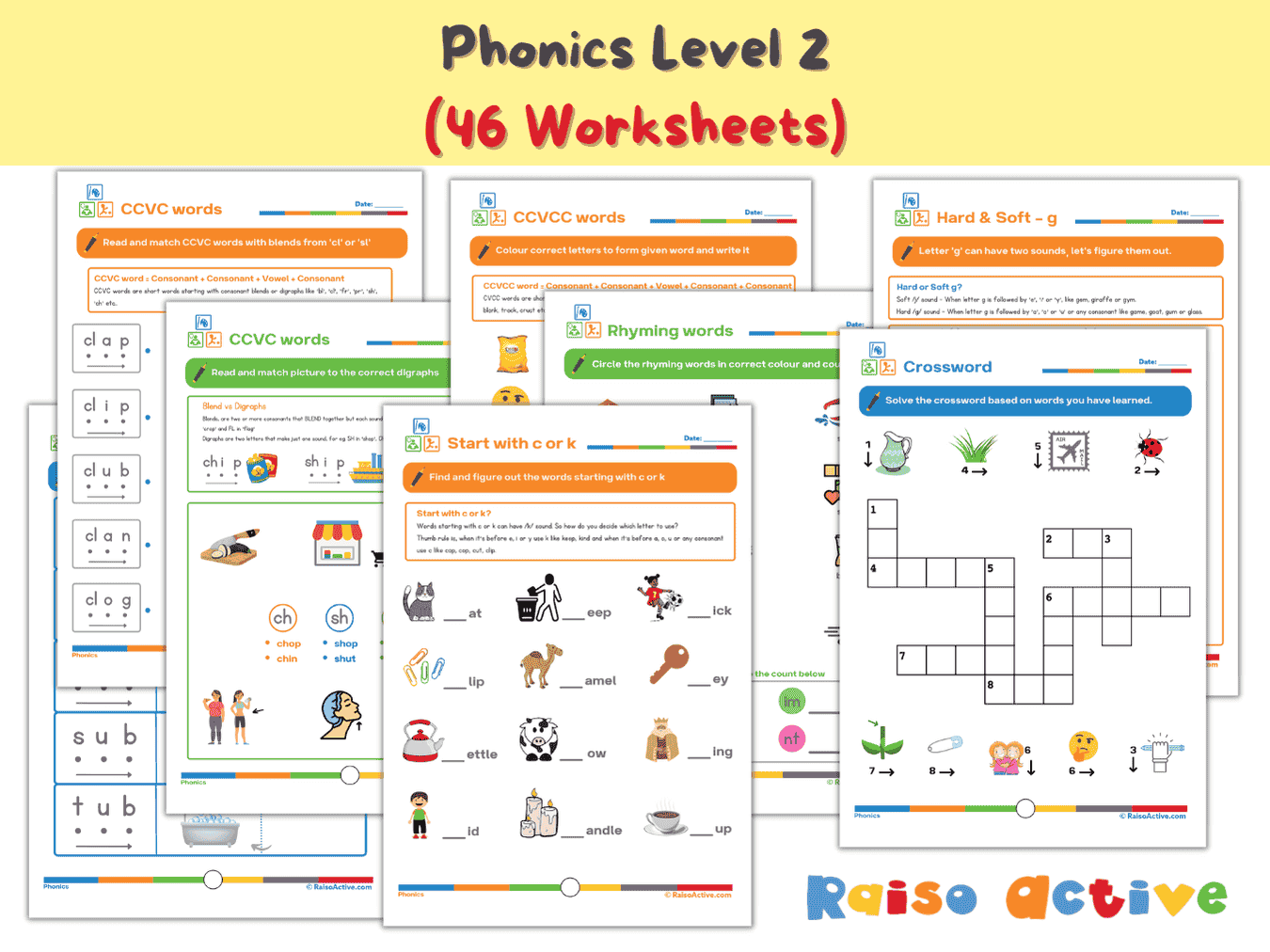
Phonics Level 2 Worksheets: CVC, CCVC, CVCC Word Families & Blends for Early Readers (Ages 4-7)
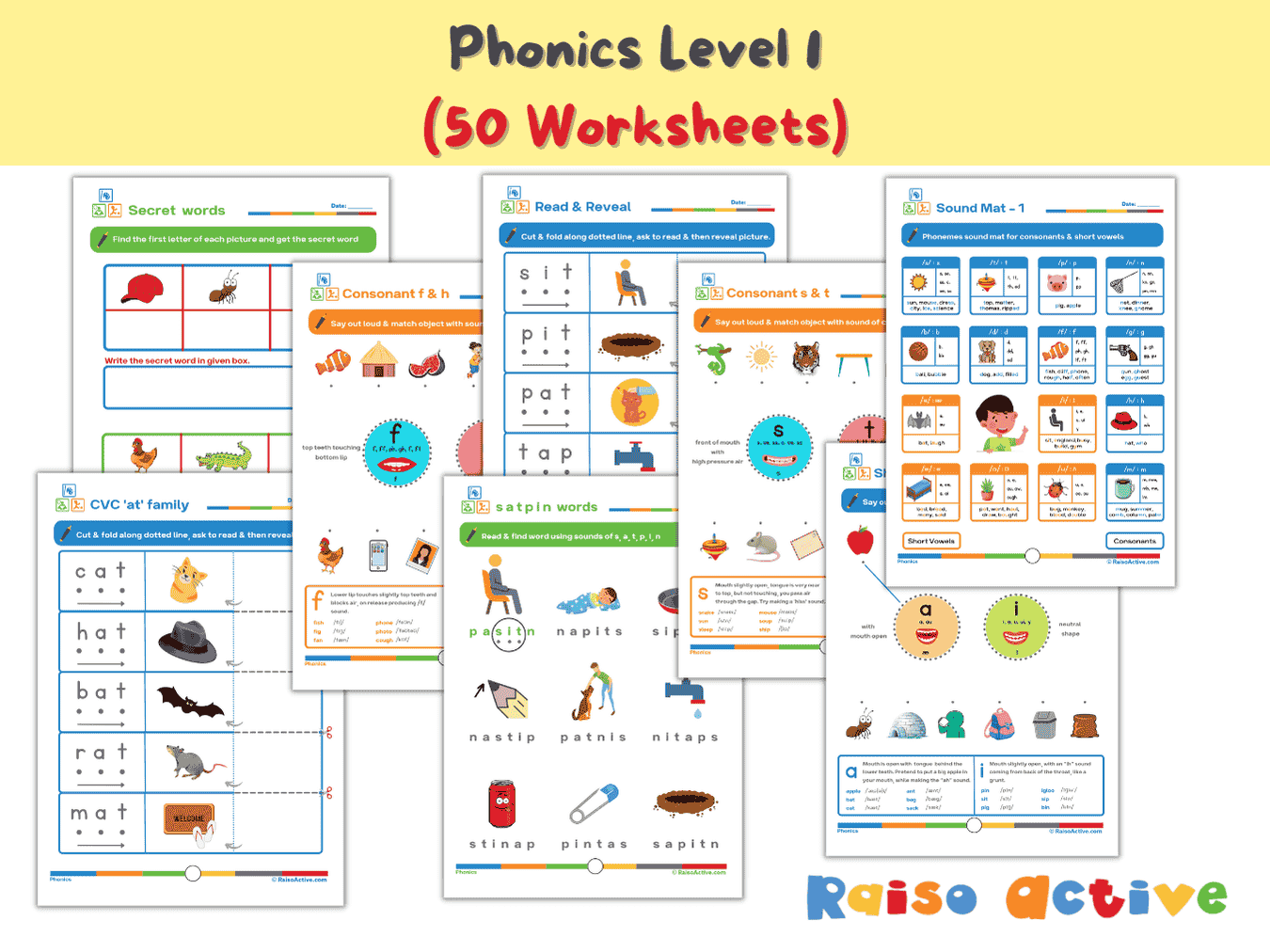
Phonics Level 1 Activity Book: Letter Sounds, Blending & CVC Words for Preschool & Kindergarten
Guides for parents and teachers
See all guides →UKG Syllabus Explained: English, Maths and EVS Month by Month
What UKG classes typically cover in English, maths and EVS, month by month, aligned to NEP 2020, with ways to support at home and signs your child is behind.
How to Teach Your 3-Year-Old to Recognise Numbers: A Parent's Complete Guide
Help your 3-year-old recognise numbers 1-10 with multi-sensory activities, everyday maths moments, and simple routines. Practical guide with Indian context included.