Free printable worksheets · United Kingdom
KS1 Counting Worksheets (Ages 5–7)
KS1 counting worksheets are practice sheets for children aged 5–7 in Key Stage 1 (Years 1–2) in the UK. Counting is matching a spoken number word to each object in a group, one at a time, to find out how many there are in total. The sheets on this page cover one-to-one correspondence, counting a set of objects accurately, matching a numeral to a quantity and comparing more and less.
Key Stage 1 covers Years 1 and 2 together, the stretch in which a child becomes an independent reader and writer while moving from counting to calculating. Year 1 work centres on phonics and the screening check; Year 2 shifts towards spelling patterns, longer writing and mental arithmetic with two-digit numbers. Five-year-olds count to 100, usually fluently to 30 or so and with some hesitation near the decade boundaries after that, and count by tens as a shortcut for counting large groups. Worksheets should ask for the number that comes before, after or between two given numbers, counting objects arranged in groups of ten, and comparing two two-digit numbers to say which is greater. Skip counting by twos and fives is often starting but not yet secure.
699+ worksheets · free PDF download · print on A4 or Letter
KS1 Counting Worksheets to print
Browse all worksheets for ages 5–7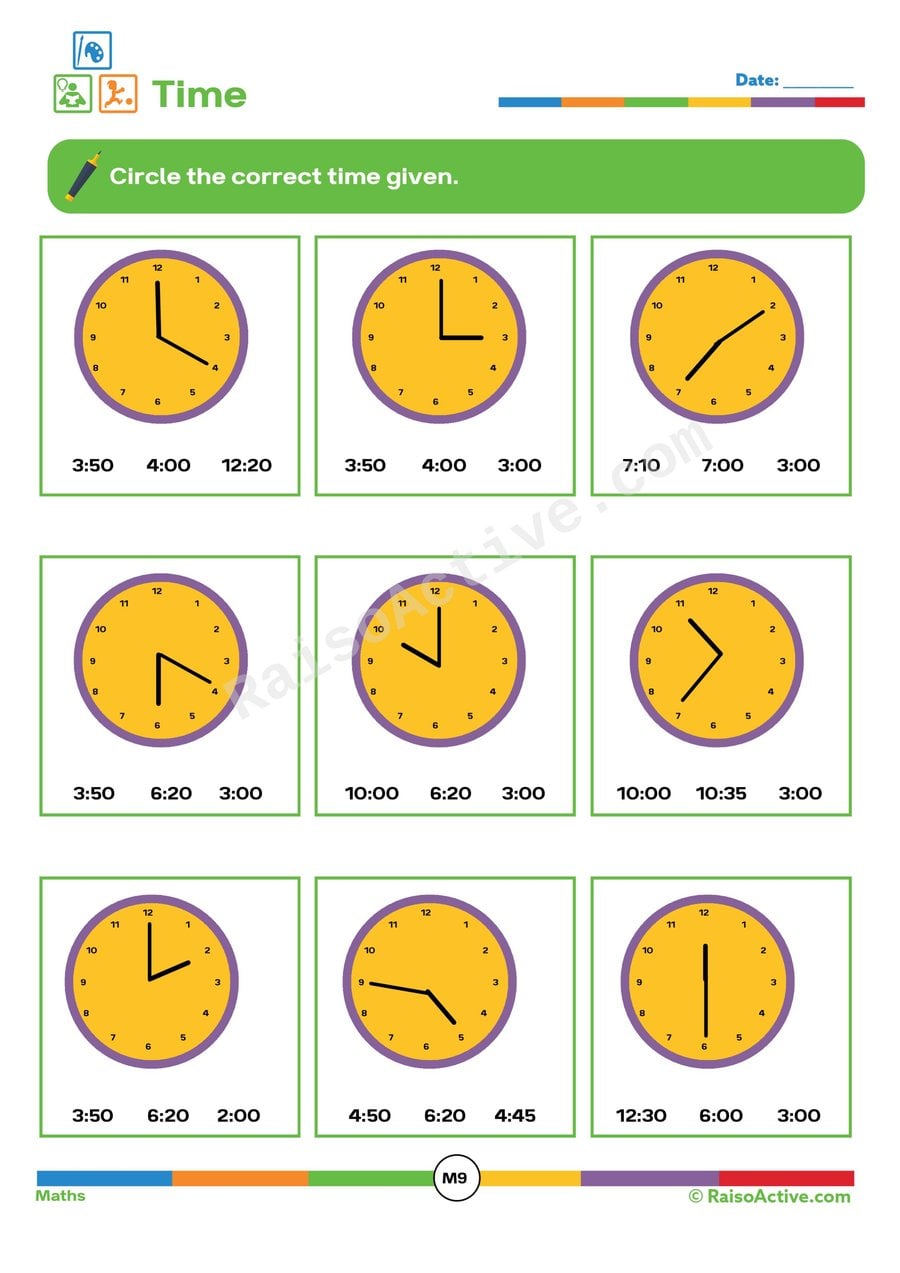
Time Telling Worksheet: Circle the Correct Time!
Reading an analog clock face and choosing the matching time from three written options builds clock-reading fluency for children ages 5-7, requiring them to interpret both the hour and minute hands together rather than guessing from a single hand.
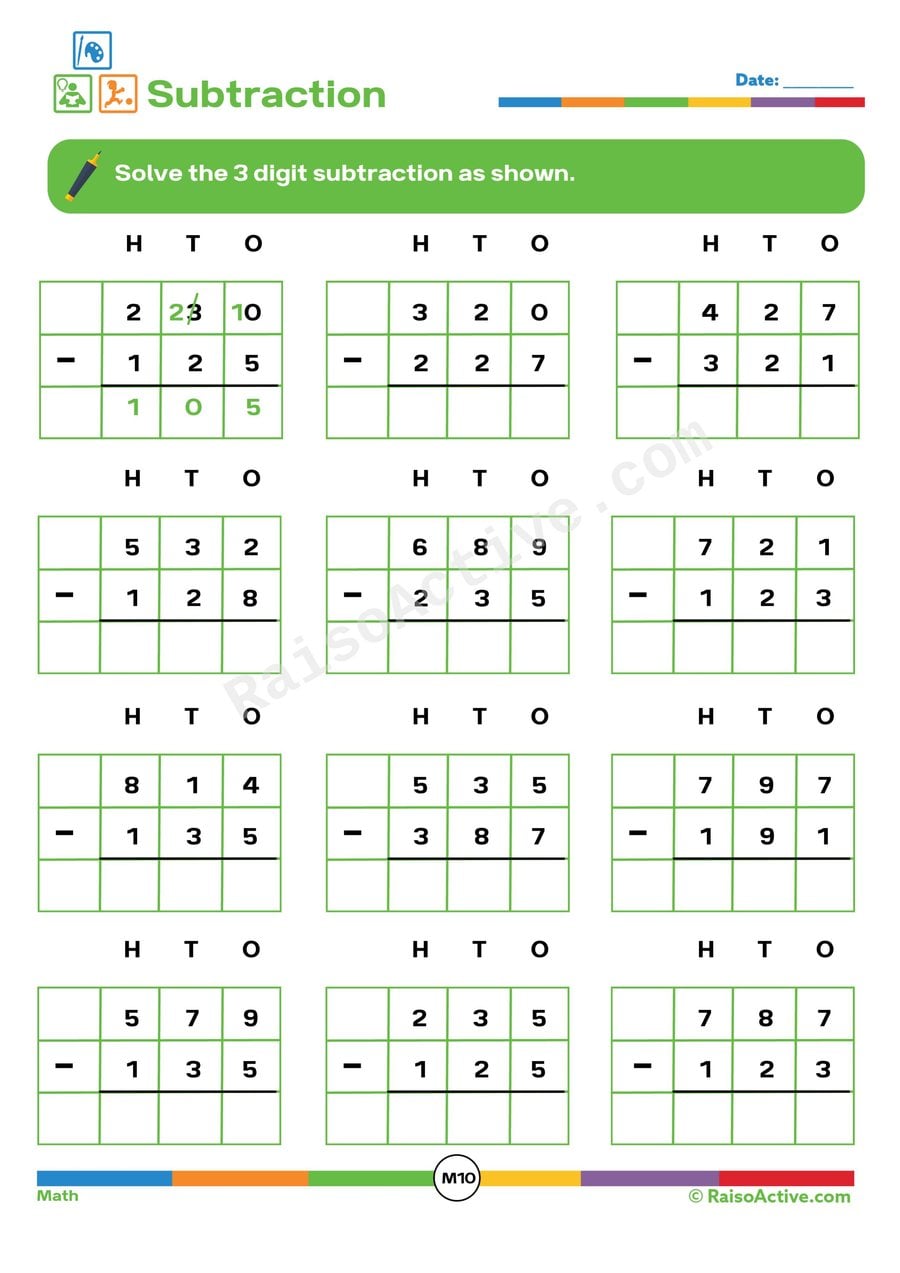
3-Digit Subtraction Worksheet for Kids
Subtracting three-digit numbers introduces children to borrowing, or regrouping, across place value columns, a more demanding skill than simple subtraction since it requires understanding that a ten can be 'broken' into ones when a column doesn't have enough to subtract from. For ages five to seven, this worksheet builds the procedural foundation for confident multi-digit subtraction going forward.

Consonant Sounds: Match the Objects! L & R Sounds Worksheet
Distinguishing between 'l' and 'r' is one of the trickier auditory discriminations in early phonics, since the two sounds are formed with similar tongue positions and are frequently confused by young English learners. This worksheet gives children ages 4-6 focused practice listening for the difference at the start of familiar object names, then matching each picture to its correct consonant. Strengthening this specific sound contrast supports both clearer speech and more accurate spelling later on.

Solar System Number Matching Worksheet for Preschoolers
This worksheet combines number-word recognition with a color-by-key coloring task for children ages 4-6, asking them to match number names written on planets to their corresponding numerals before coloring each planet according to a color code. Matching written number words in a space-themed context adds novelty that keeps repeated number-word practice fresh, while the color-key step reinforces careful, sequential following of visual instructions. Together, these two tasks combine literacy and numeracy practice in one engaging page.

Family Words Cut and Paste Worksheet for Early Readers
Reading a simple CVC word and matching it to its picture teaches children ages 4-6 to blend individual sounds into a whole word and then connect that word to its meaning, a core decoding skill for early readers. Because CVC words follow a consistent consonant-vowel-consonant pattern, practicing them builds a reliable phonics foundation that transfers to reading many other simple words.

Missing Numbers Worksheet: Before, Between, and After
This worksheet asks children ages 4-6 to fill in missing numbers that come before, between, or after given numbers in a sequence, building a deeper understanding of number order than simple counting alone. Recognizing what number is missing from a sequence requires children to mentally hold the number line and reason about relative position, a skill that supports later addition and subtraction.

Missing Numbers Worksheet: Before, After, and Between!
This worksheet strengthens number sequencing by asking children to figure out which number comes before, after, or between two given numbers, rather than simply counting from one in order. For four- to six-year-olds, working with numbers 'out of context' like this builds a flexible mental number line, an essential foundation for later addition, subtraction, and skip counting.

Stick Man Emotions Worksheet: Happy, Sad, Angry, and Surprised!
Children ages 4-6 practice reading facial expressions on this worksheet, matching stick-figure faces to their correct emotion labels by noticing details like mouth shape and eyebrow position. This strengthens emotional literacy — the ability to name and recognize feelings in others — which supports empathy and smoother social interactions as children move into more group play and classroom settings.

Alligator Comparison Worksheet: Greater Than, Less Than, and Equal To!
This worksheet teaches children ages 4-6 to compare two numbers using the 'hungry alligator' mnemonic, where the alligator's mouth always opens toward the larger number. Understanding greater than, less than, and equal to is an essential building block for later place value, ordering, and basic algebra concepts.

Alphabet Games Worksheet: Match the Letters to the Games!
This worksheet helps children ages 4-6 practice beginning-sound letter recognition by matching alphabet cards to pictures of games whose names start with that letter. Placing a letter card on its matching game picture, rather than simply circling an answer, adds a hands-on sorting element that keeps the activity active and physical rather than purely paper-based.

Match the Countries with Their Symbols Worksheet
Children ages 4-6 build early social studies awareness by matching country flags to their well-known national symbols, connecting visual recognition with basic geography and cultural knowledge. This kind of matching exercise strengthens careful observation, since children must compare colors, shapes, and details across both the flag and the symbol image. It also plants the seed for understanding that different countries have distinct identities and traditions.

Abbreviations Worksheet: Matching Words and Abbreviations!
This worksheet teaches children common abbreviations, like 'Dr.' for Doctor or 'St.' for Street, by having them match each full word to its shortened form. For four- to six-year-olds who are building early reading and writing fluency, recognizing abbreviations is a practical real-world skill, since these shortened forms appear regularly in addresses, titles, and everyday writing.

Blend Words Worksheet: Circle the Correct Picture!
This worksheet strengthens blending skills for children ages 4-6, asking them to say a consonant blend like 'bl' or 'st' together with different word endings and identify which resulting word matches a picture. Blending two consonant sounds smoothly before adding a vowel is a more advanced phonics skill than single-letter sounds, and this practice directly supports decoding multisyllabic and blended words during independent reading.
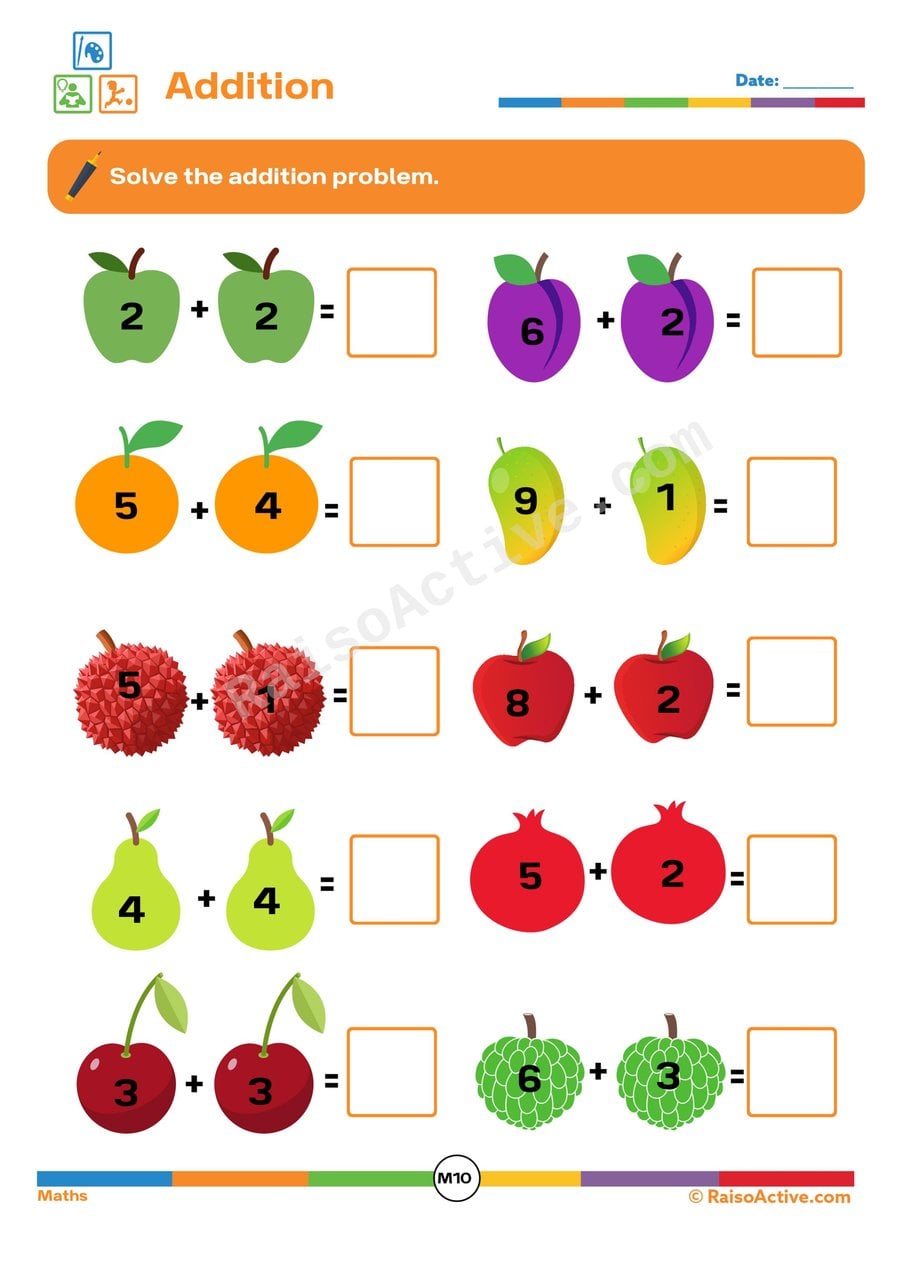
Fruit Addition Worksheet for Preschoolers
This worksheet practices basic addition by having children count two separate groups of fruit and combine the totals into one sum. For four- to six-year-olds, working with pictures of real, countable objects like apples and bananas makes the abstract idea of 'adding' concrete before they're asked to add using numbers alone.

Read and Match: Fun Sentences and Pictures Worksheet for Kids!
Reading simple sentences and matching them to the correct picture helps children ages 4-6 practice decoding text and checking their understanding against a visual clue, an important step in building true reading comprehension rather than picture-guessing. Coloring the pictures afterward adds a rewarding finishing touch that keeps young readers engaged through the whole page.

Comparing Numbers Worksheet: Greater Than, Less Than, and Equal To!
Children ages 4-6 learn to compare two numbers and choose the correct symbol — greater than, less than, or equal to — building an essential foundation for later work with inequalities and algebra. Comparing quantities and representing the relationship symbolically is a more abstract skill than simple counting, so this worksheet stretches children just past straightforward number recognition into true numerical reasoning.
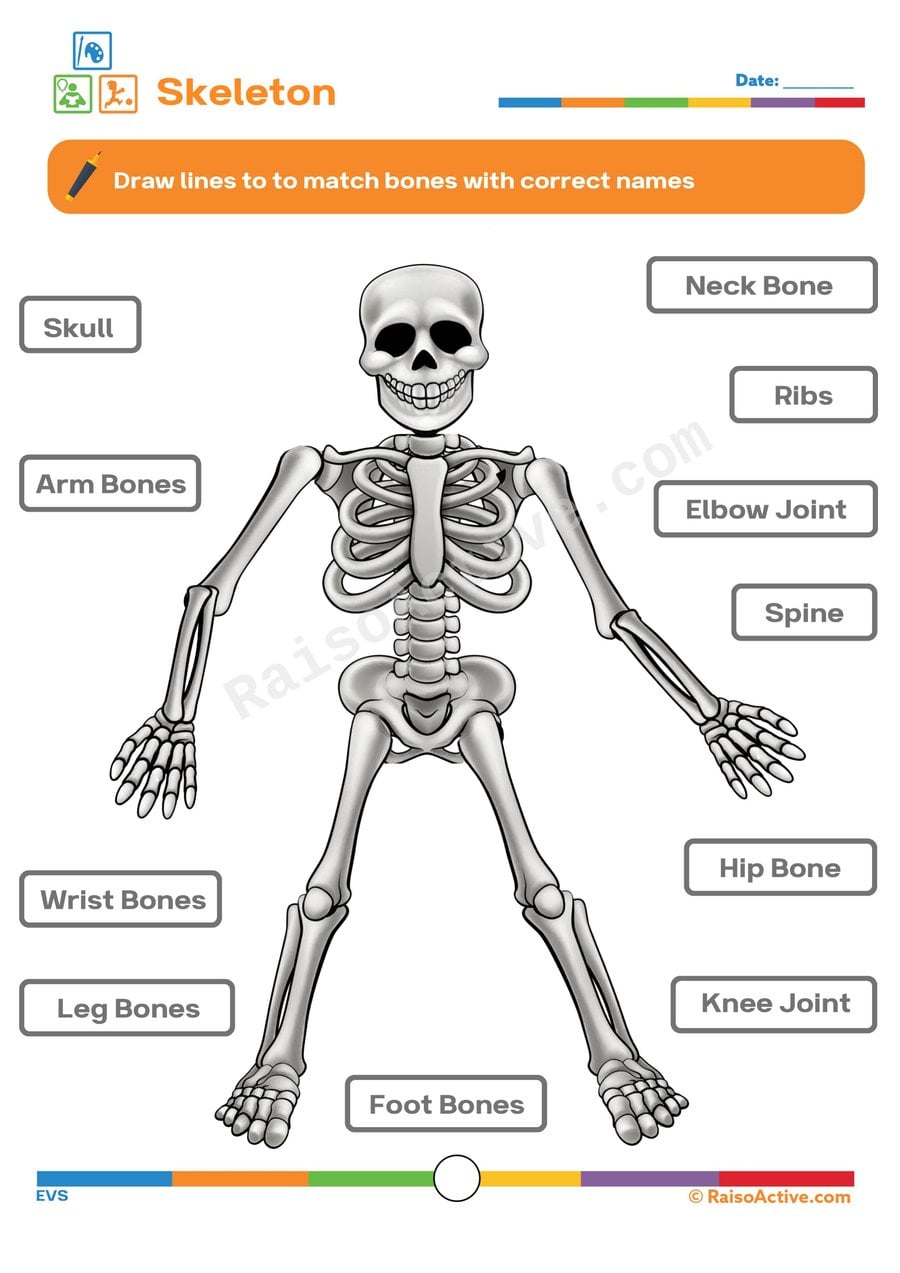
Skeleton Matching Worksheet: Learn About Bones!
Drawing lines from bone names to their locations on a skeleton diagram introduces children ages 4-6 to basic human anatomy vocabulary, such as skull, ribs, or spine, while practicing left-to-right reading and matching skills. Because children must read a word and then visually locate the correct part of the body, this worksheet also strengthens the connection between written language and real-world objects, an important step toward reading comprehension. The Halloween-skeleton framing makes an otherwise academic science topic feel playful and approachable.

Descending Order Worksheet for Kids: Numbers 63-100
Arranging numbers from largest to smallest asks children ages 4-6 to apply their counting knowledge in reverse, which is a genuinely different mental skill from counting forward and helps solidify a flexible, deep understanding of number order rather than rote recitation. Working within the 63 to 100 range also pushes children to compare two-digit numbers directly, deciding which of two numbers is bigger based on both digits rather than just the first one. This kind of descending practice complements ascending counting practice and rounds out a child's overall number sense.

CVC 'in' Family Matching Worksheet: Read, Color, and Match!
This worksheet extends word-family practice to the 'in' pattern (pin, bin, win, tin), giving children ages 4-6 another opportunity to apply the analogy strategy of recognizing a shared ending and swapping only the first letter to read new words quickly. Practicing several word families over time — 'ad,' 'ag,' 'it,' and now 'in' — helps children generalize the underlying reading strategy rather than memorizing isolated words, which is exactly the kind of transferable skill that speeds up reading development. Coloring and matching each word to its picture adds a multisensory layer that helps the pattern stick.
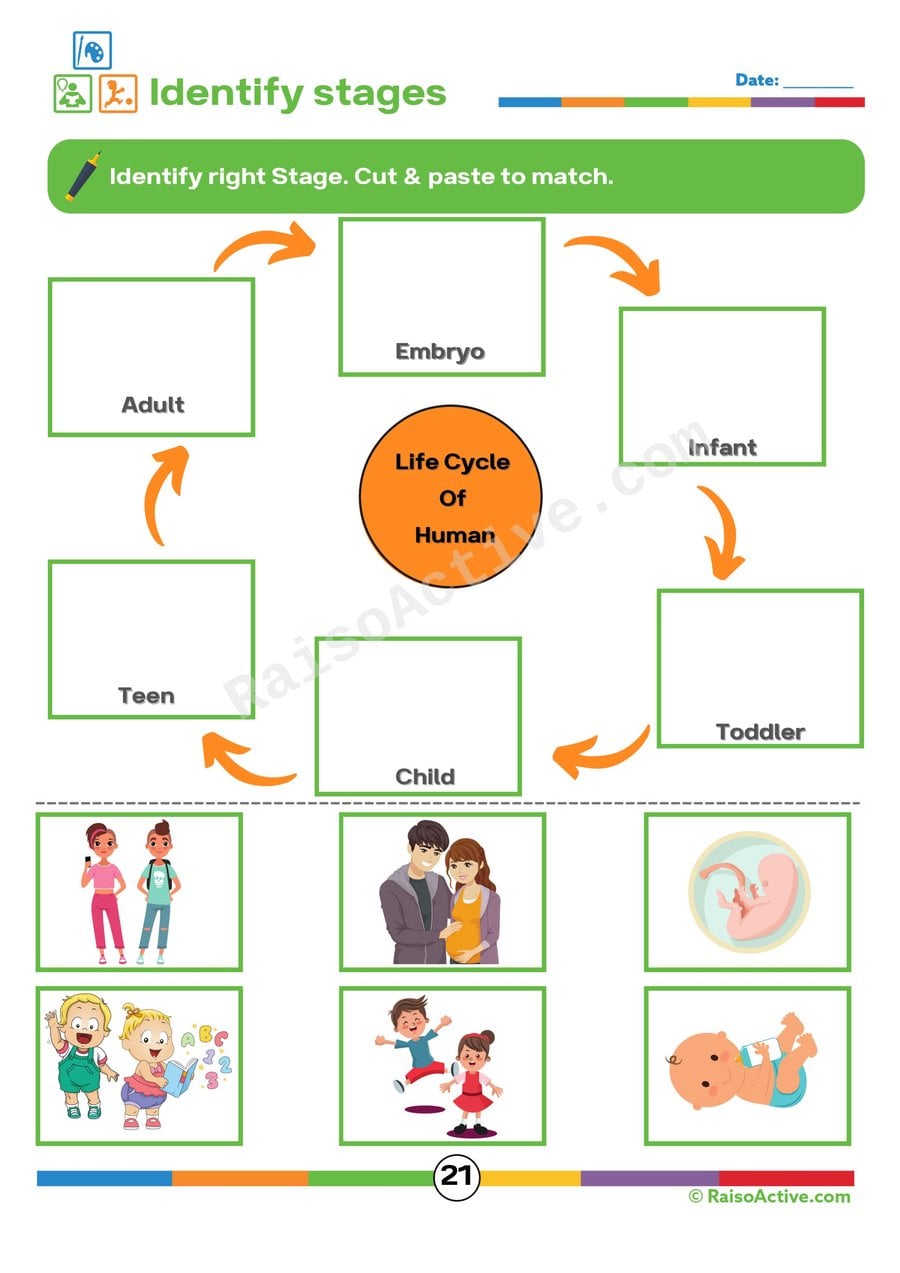
Human Life Cycle Stages Worksheet for Kids
This worksheet helps children ages 4-6 understand that people, like animals, grow and change over time by matching pictures to the stages of human development — baby, child, teenager, and adult. It introduces early classification and comparison skills while giving children a concrete way to talk about growth they can observe in their own family.
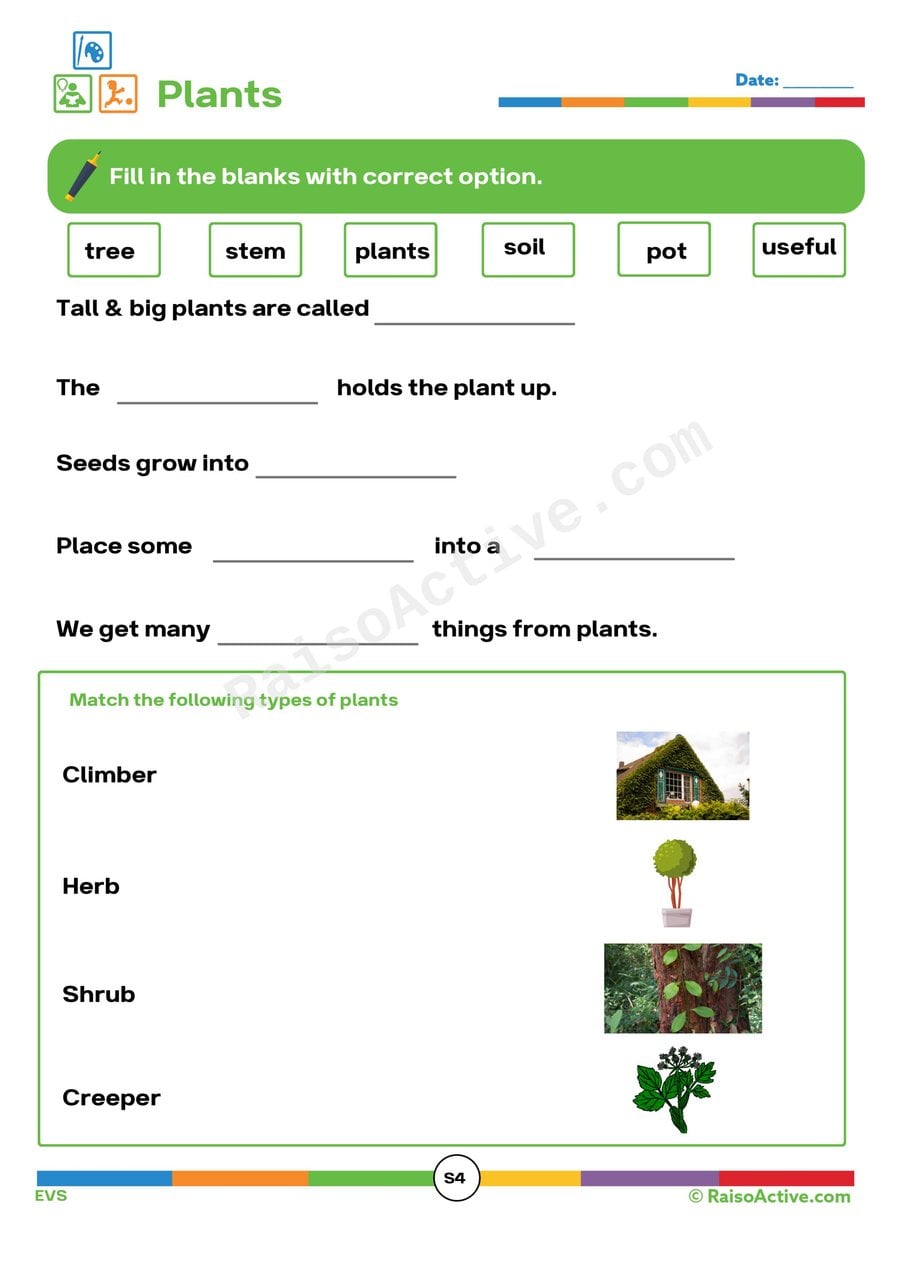
Plant Parts Worksheet for Preschoolers
This worksheet introduces 4-6 year olds to plant anatomy — roots, stem, leaves, and flower — and asks them to connect each part's name to its function, while a separate matching section links different plant types to their pictures. Learning that plants have parts with specific jobs (roots drink water, leaves make food from sunlight) is an early building block of life science, and naming these parts gives your child vocabulary they'll keep reusing throughout school science lessons.
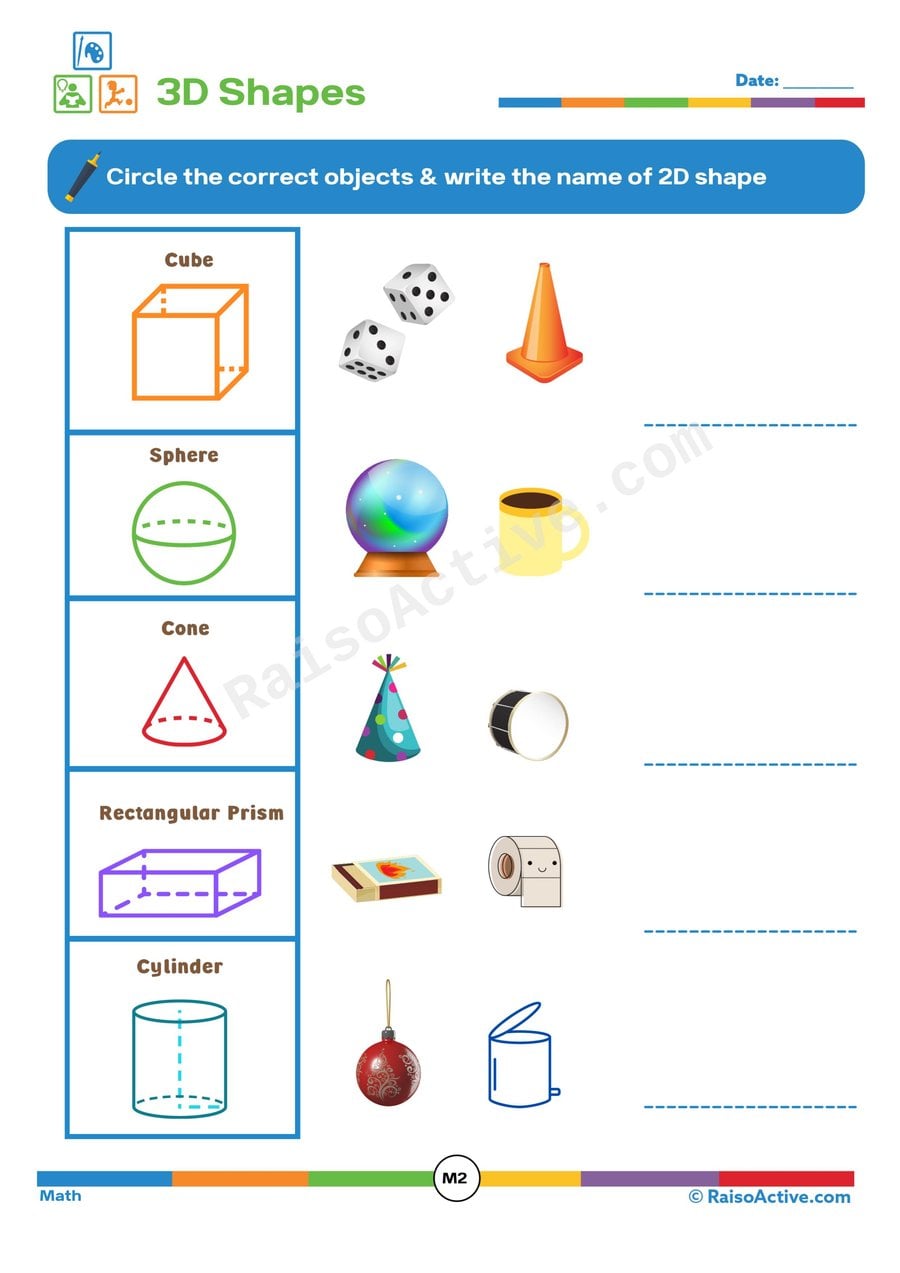
3D Shapes Worksheet: Circle and Name the Shapes!
This worksheet helps children ages 4-6 identify common 3D shapes like spheres, cubes, and cylinders by matching them to real objects, then connects each 3D shape to its related 2D shape, such as a cube's square face or a sphere's circular outline. Understanding that 3D shapes are built from 2D shapes is an important early geometry concept that supports later spatial reasoning and measurement skills.
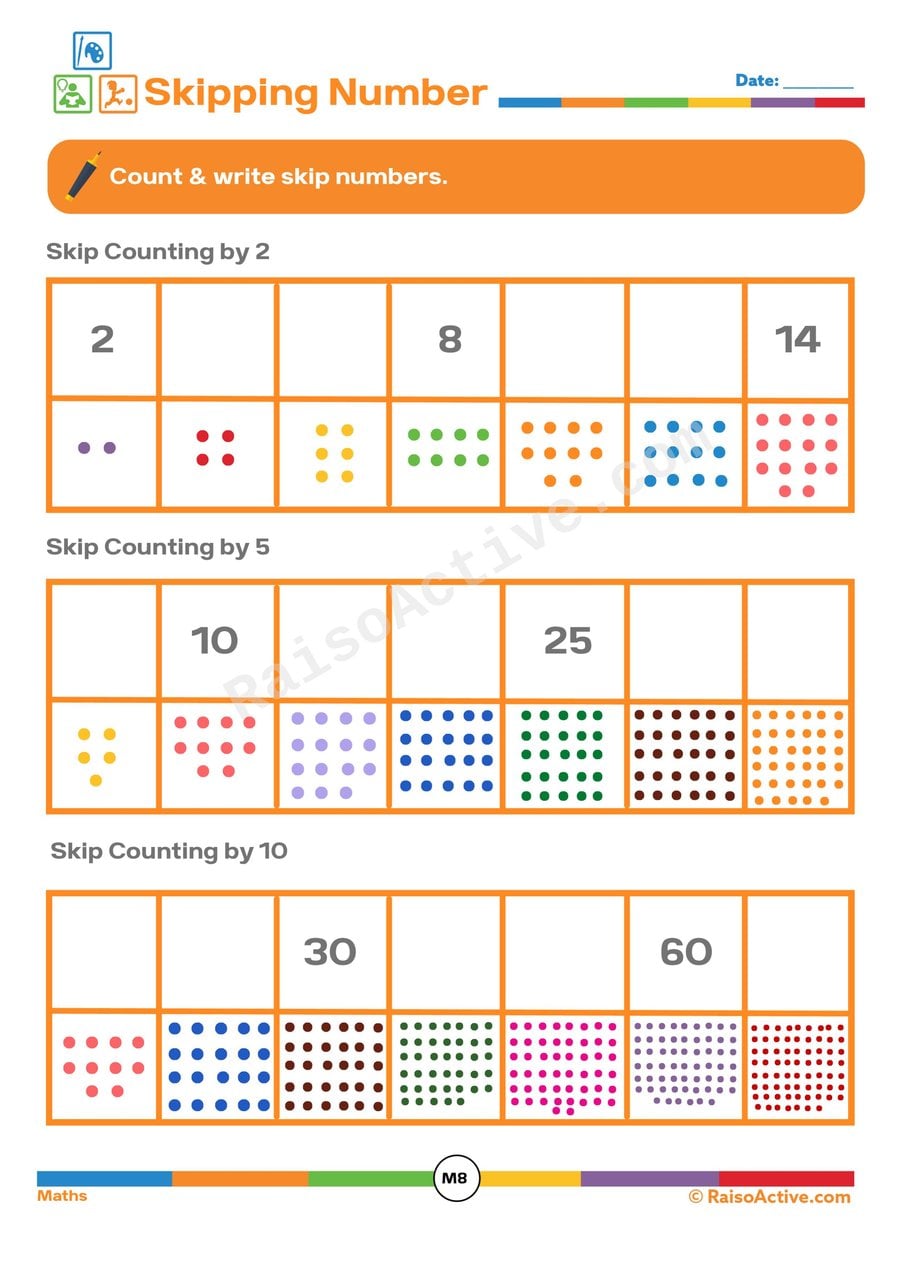
Skip Counting Adventure: Counting by 2, 5, and 10!
Children ages 4-6 practice skip counting by 2s, 5s, and 10s, recognizing the repeating number patterns that let them count large groups faster than counting one by one. Skip counting is an early stepping stone toward multiplication and a genuinely useful shortcut children can apply well beyond this worksheet.

Counting Ones Worksheet: Match and Fill in the Blanks!
Children ages 4-6 build early place value understanding by matching numbers to their corresponding sums and filling in blanks with the correct count of ones. This introduces the foundational idea that numbers are made up of countable units, a concept that underlies all later addition, subtraction, and multi-digit math. Matching and filling in blanks together reinforces both number recognition and basic counting accuracy.
What KS1 counting worksheets cover
Five-year-olds count to 100, usually fluently to 30 or so and with some hesitation near the decade boundaries after that, and count by tens as a shortcut for counting large groups. Worksheets should ask for the number that comes before, after or between two given numbers, counting objects arranged in groups of ten, and comparing two two-digit numbers to say which is greater. Skip counting by twos and fives is often starting but not yet secure.
- Count aloud to 100, with the decades as the tricky part
- Count objects grouped in tens rather than one at a time
- Say the number that comes before, after or between two numbers
- Compare two two-digit numbers and say which is greater
How to use these worksheets at home or in class
Because this stage spans two years, match the sheet to what the classroom is doing rather than to age alone: decoding and number bonds for a Year 1 child, comprehension and times tables for a Year 2 child, in sessions of fifteen to twenty minutes.
Start with the sheet that matches what your child can already do, then move one step up. Keep finished sheets in a folder: KS1 teachers often ask for evidence of practice, and children like seeing their own progress.
Is your child ready for KS1 counting work?
A child ready for the later half of this stage reads a short passage with reasonable fluency, writes several connected sentences, adds and subtracts within twenty and recalls the 2, 5 and 10 times tables with growing confidence.
- Skip count by twos, fives and tens past 100
- Count backwards from any given two-digit number
- Group a large scattered set into tens before counting it
Frequently asked questions
Where do most five-year-olds get stuck counting to 100?
At the decade boundaries, going from 29 to 30, 39 to 40 and so on, because the pattern of adding one to the ones digit breaks and a new word has to be recalled instead. A hundred chart the child can see while counting helps, since the pattern down each column becomes visible. Practice counting from a few different starting points near a decade boundary, such as 27 to 33, rather than always starting over from one.
What should a KS1 child be able to do in counting?
Five-year-olds count to 100, usually fluently to 30 or so and with some hesitation near the decade boundaries after that, and count by tens as a shortcut for counting large groups. Worksheets should ask for the number that comes before, after or between two given numbers, counting objects arranged in groups of ten, and comparing two two-digit numbers to say which is greater. Skip counting by twos and fives is often starting but not yet secure. A child ready for the later half of this stage reads a short passage with reasonable fluency, writes several connected sentences, adds and subtracts within twenty and recalls the 2, 5 and 10 times tables with growing confidence.
Do these worksheets follow the KS1 curriculum?
The sheets cover one-to-one correspondence, counting a set of objects accurately, matching a numeral to a quantity and comparing more and less, which sit inside the National Curriculum Key Stage 1 outcomes for KS1. Kindergarten to 1st Grade (US), UKG to Class 1 (India) use the same skills at this age, so the sheets also fit families following those programmes.
Are these KS1 counting worksheets free?
Yes. Each worksheet downloads free as a watermarked PDF once you create an account, with a limit of five a day. An annual membership ($20) removes the watermark and the limit for the whole library of over 1,000 worksheets and every printable pack.

Written by
Hemsweta Jain · Teacher Cheena
MBA and Early Childhood Educator, teaching since 2014 · Founder of RaisoActive, Mumbai
Written and reviewed by Hemsweta Jain (Teacher Cheena), who designs every RaisoActive worksheet.
Last reviewed
Printable packs for ages 5–7
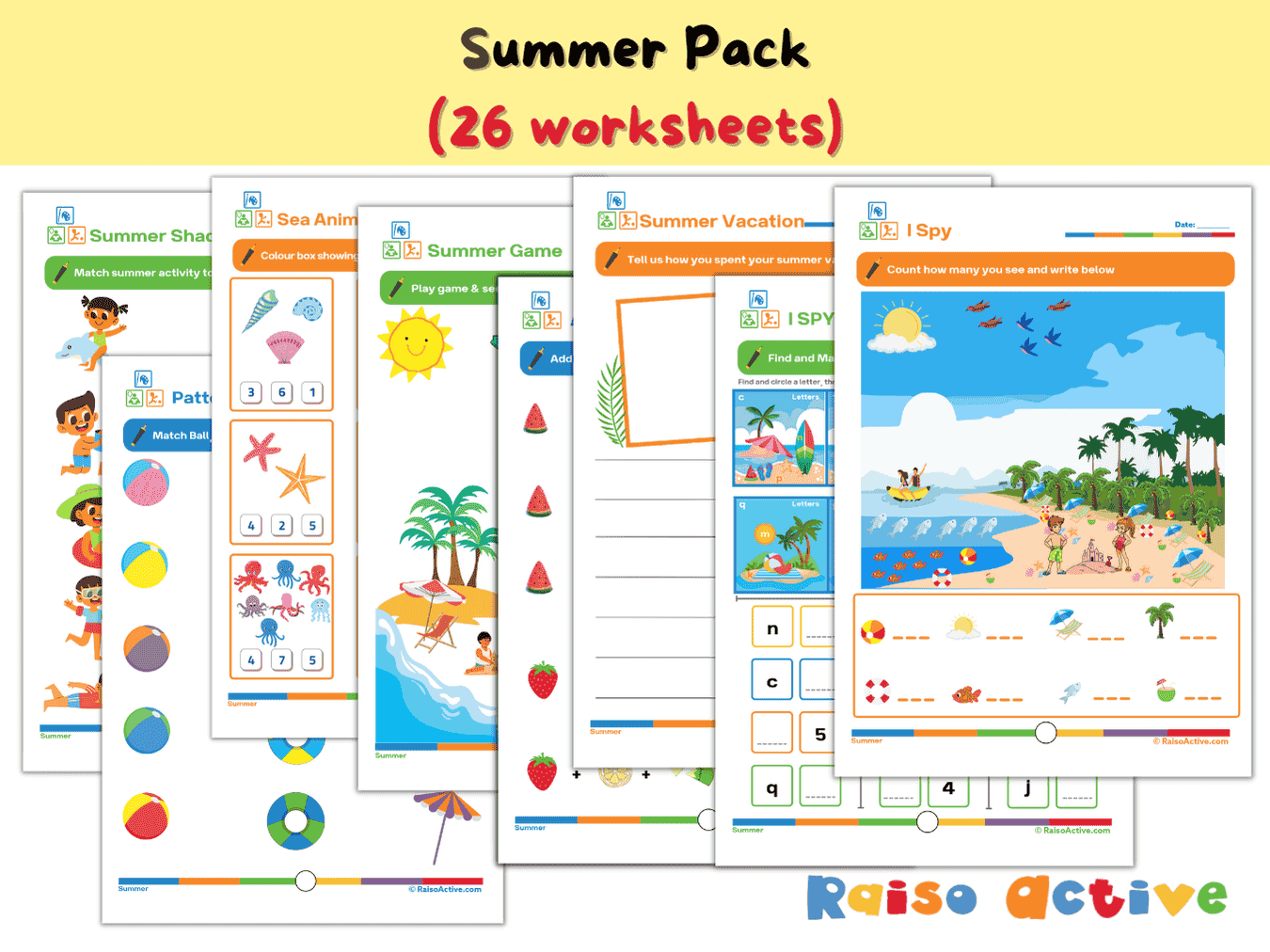
Summer Activity Pack: Math, Literacy, Puzzles & More for Preschool & Kindergarten
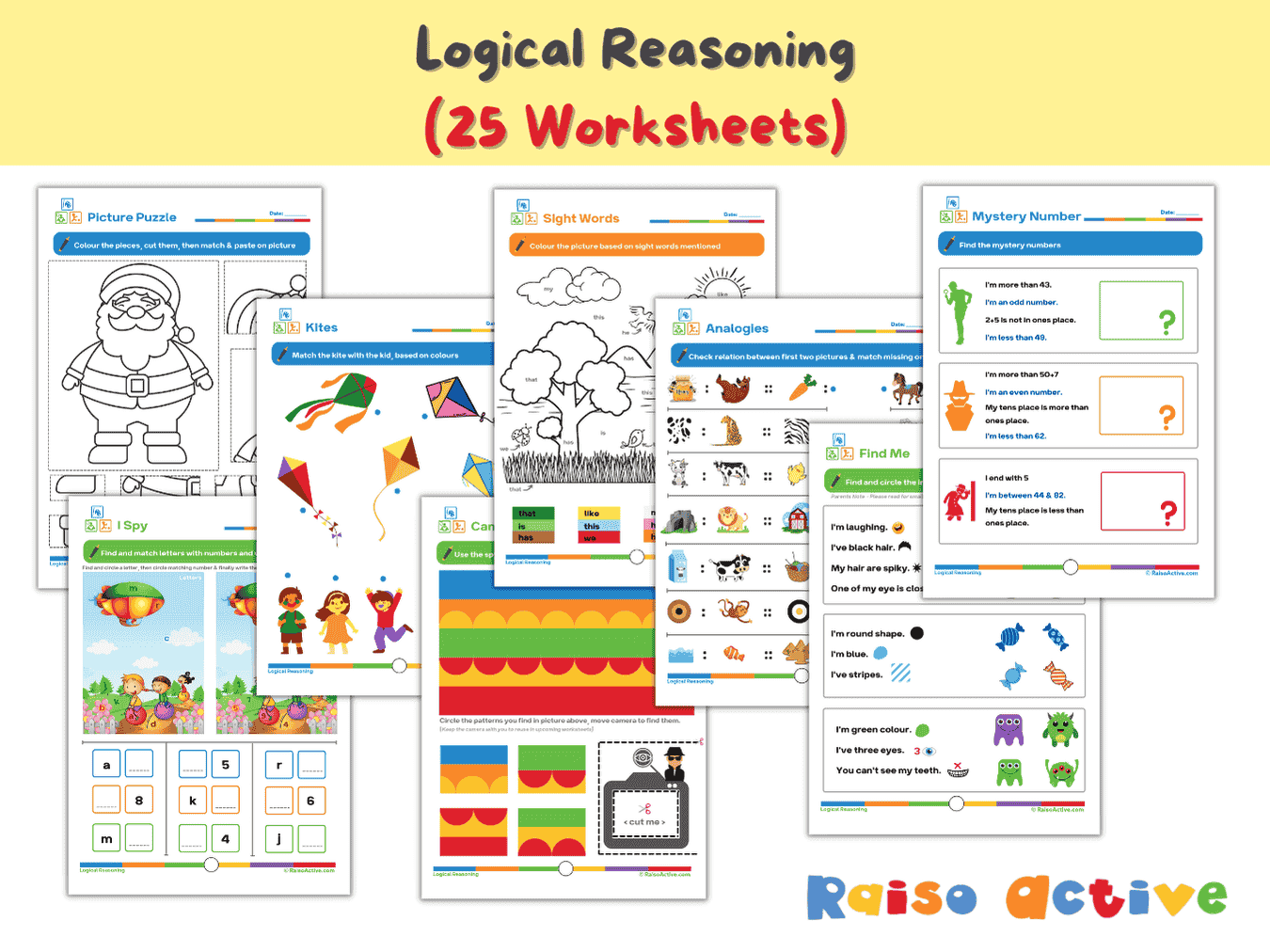
Logical Reasoning Activity Book for Preschool & Kindergarten | Patterns, Puzzles & Analogies
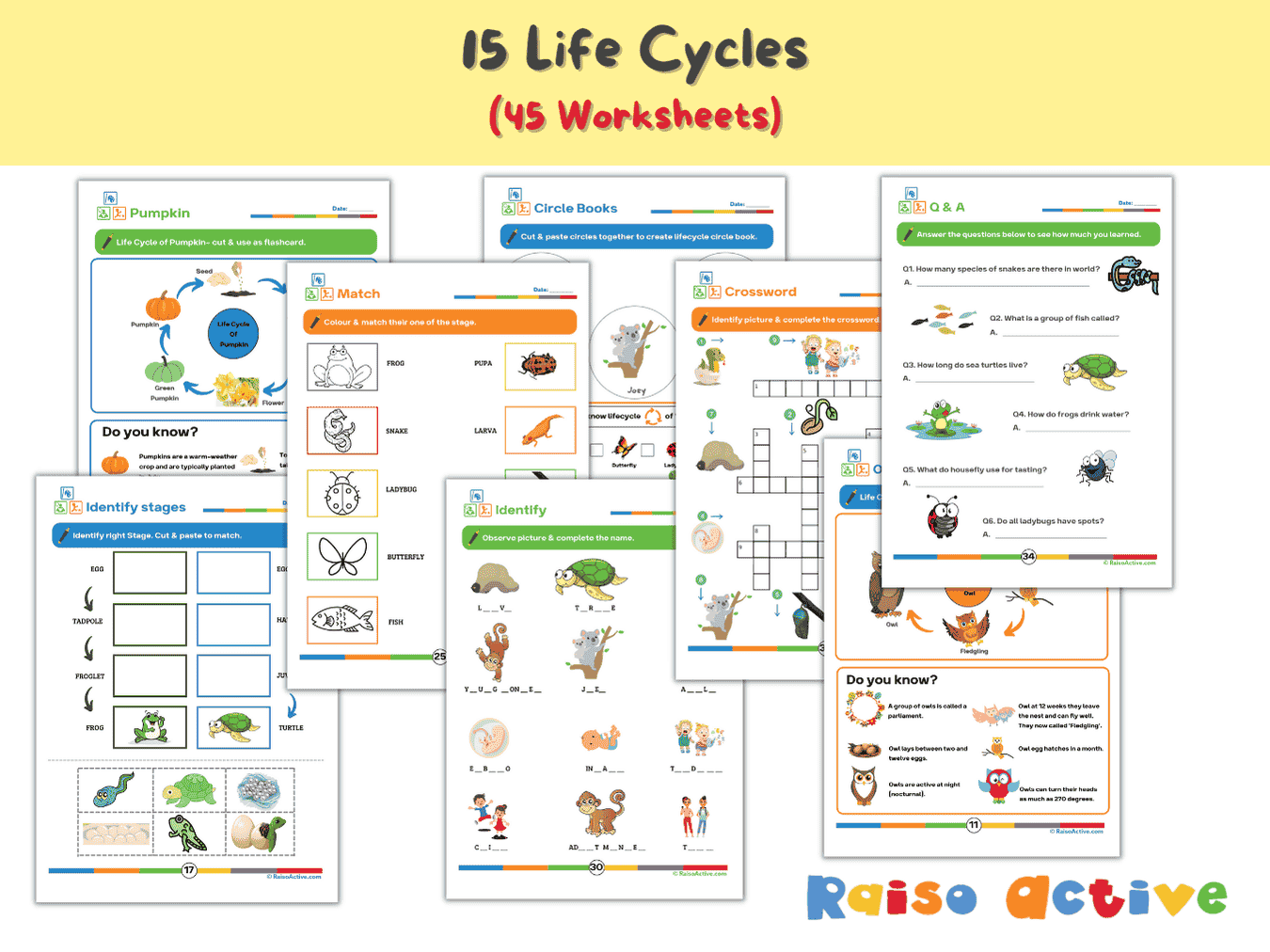
Lifecycles Activity Book & Flashcards for Preschool & Early Elementary
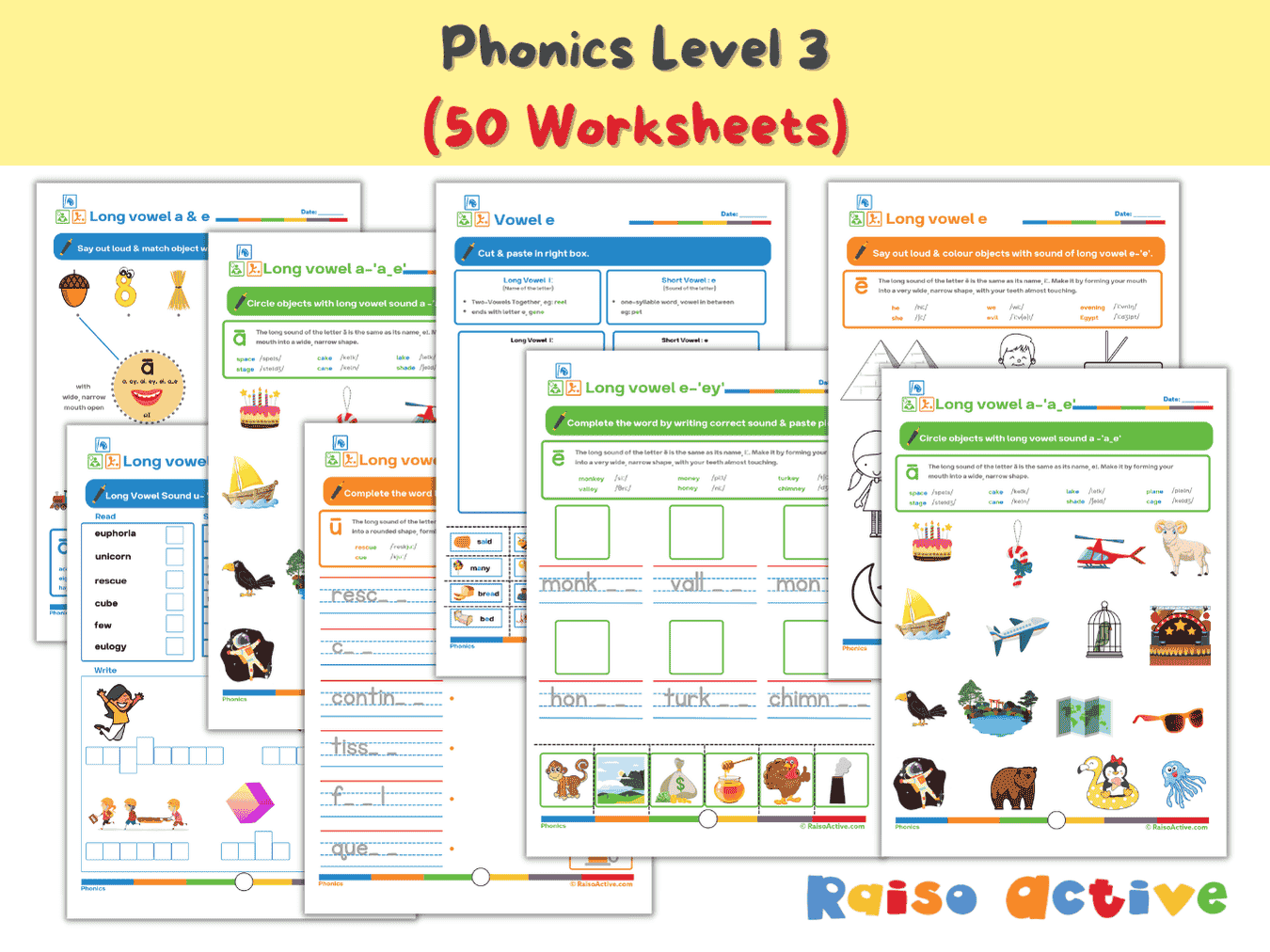
Phonics Level 3 Long Vowels Activity Book for Kindergarten & 1st Grade
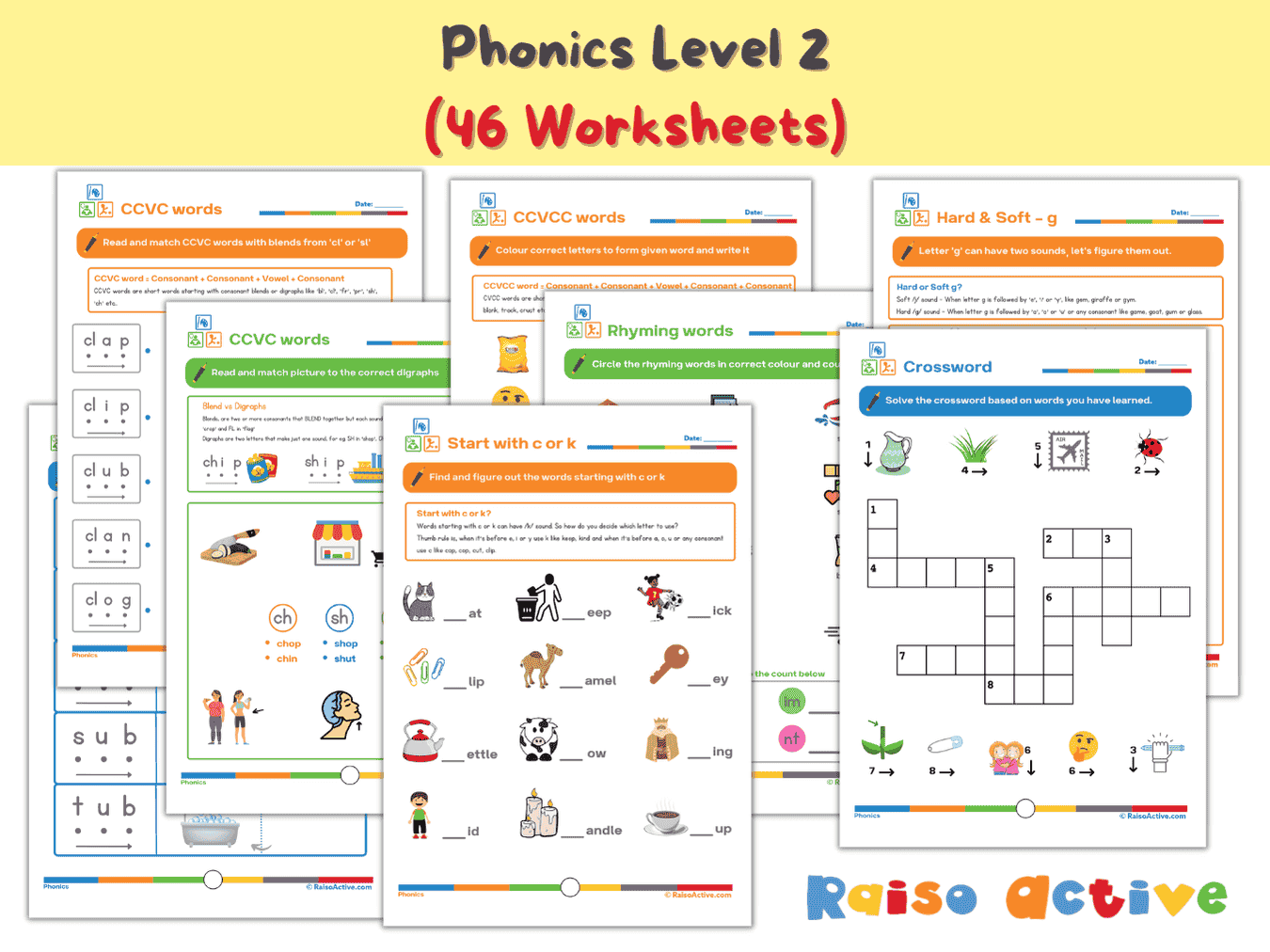
Phonics Level 2 Worksheets: CVC, CCVC, CVCC Word Families & Blends for Early Readers (Ages 4-7)
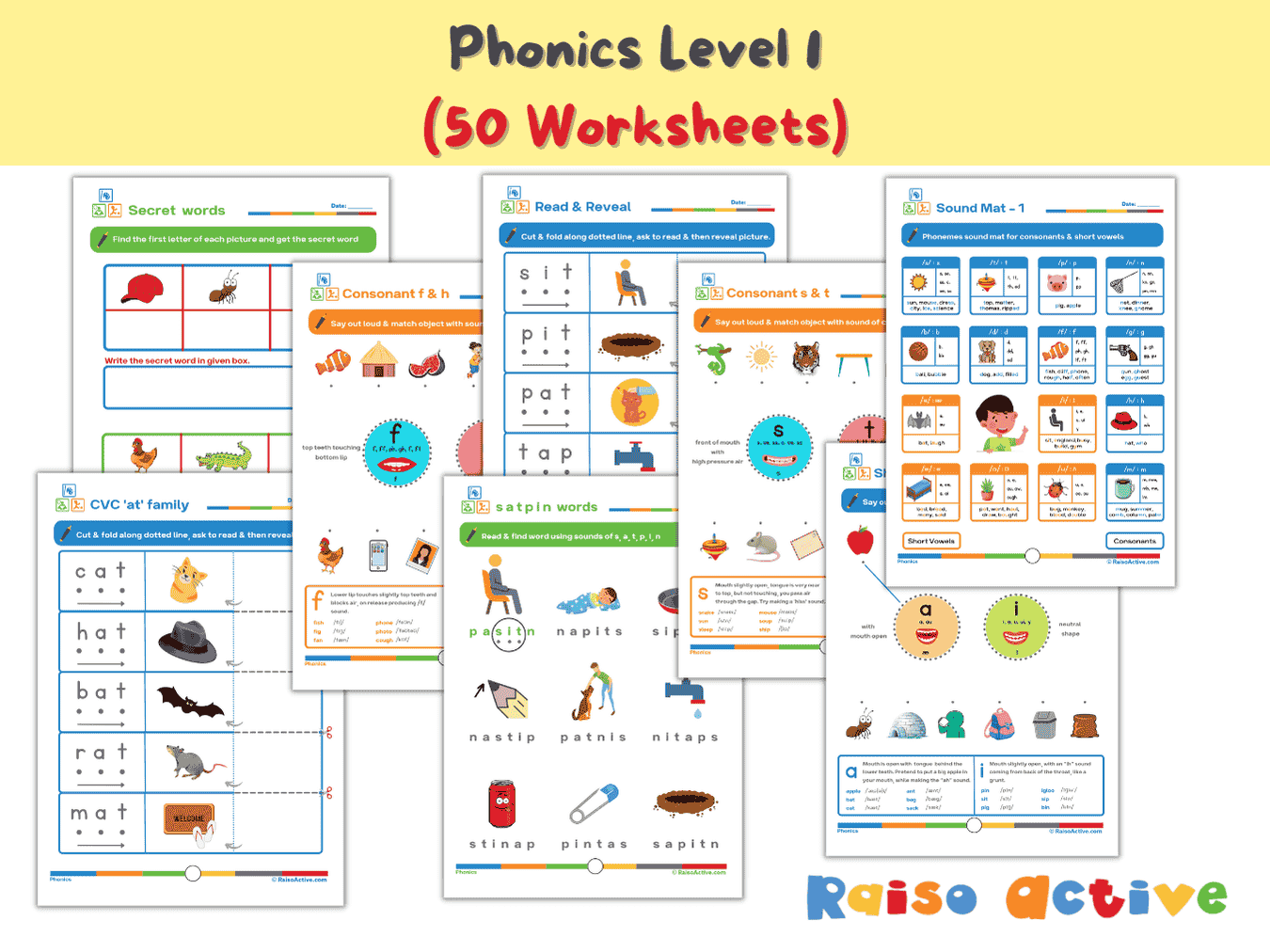
Phonics Level 1 Activity Book: Letter Sounds, Blending & CVC Words for Preschool & Kindergarten
Guides for parents and teachers
See all guides →Number Formation Rhymes 0–9 and How to Fix Reversals
Original number formation rhymes for 0–9, the correct stroke order for each digit, why 3, 5 and 7 get reversed most often, and multisensory fixes that work.
Christmas and Winter Activities That Combine Fun and Learning: Creating Magical Educational Experiences
Discover Christmas and winter activities that combine festive fun with real learning. Crafts, counting, literacy, and printable worksheets for ages 2 to 8 — perfect for home and school.
Age-Appropriate Halloween Learning Activities: Balancing Spooks and Skills for Young Learners
Discover fun, age-appropriate Halloween learning activities for young children. Spooky crafts, counting games, literacy ideas, and printable worksheets for ages 2 to 8.
The Power of Music: How Musical Activities Accelerate Learning Development in Young Children
Discover how musical activities accelerate brain development, phonics, maths, and emotional regulation in children ages 1–8. Practical tips for Indian homes and classrooms.
What's the Best Alternative to ABCmouse? A Complete Parent's Guide to Free and Affordable Educational Apps
ABCmouse runs ~Rs 4,000-5,000/year with US spellings and curriculum. Compare free & affordable Indian-friendly apps like Khan Academy Kids and DIKSHA.
Is Khan Academy Kids Really Free? A Parent's Complete Guide to Costs, Features, and Hidden Fees
Confirmed: Khan Academy Kids has zero subscription fees, ads, or paywalls. See what's included, age-by-age tips, and offline use for Indian families.