Free printable worksheets · United Kingdom
KS1 Cutting Practice Worksheets (Ages 5–7)
KS1 cutting practice worksheets are practice sheets for children aged 5–7 in Key Stage 1 (Years 1–2) in the UK. Cutting practice is using child scissors to cut along a printed line, straight or curved, to build hand strength and bilateral coordination. The sheets on this page cover scissor grip and control, cutting along a straight line, cutting along a curved line and cutting out a shape in one piece.
Key Stage 1 covers Years 1 and 2 together, the stretch in which a child becomes an independent reader and writer while moving from counting to calculating. Year 1 work centres on phonics and the screening check; Year 2 shifts towards spelling patterns, longer writing and mental arithmetic with two-digit numbers. Five-year-olds can cut out a circle by rotating the paper steadily, follow a spiral inward without crossing the coils, and cut around simple pictures closely enough to use them. That opens up cut-and-paste sheets: cut out four pictures, then sequence them into a story or sort them into two boxes. A worksheet should now combine the cutting with a thinking task. Fiddly inner corners and very small pieces are still hard.
342+ worksheets · free PDF download · print on A4 or Letter
KS1 Cutting Practice Worksheets to print
Browse all worksheets for ages 5–7
Family Words Cut and Paste Worksheet for Preschoolers
This worksheet gives children ages 4-6 repeated practice connecting a written word to its meaning through picture matching, reinforcing that letters combine to represent real, recognizable things. Cutting and gluing the pictures also builds the fine motor control and spatial planning needed to place a small object precisely within a defined space.

Months of the Year Cut and Paste Worksheet for Kids
This cut-and-paste activity teaches children ages 4-6 the correct sequence of the twelve months, a foundational calendar and time-concept skill. Physically cutting and placing each month name in order reinforces sequencing logic while the scissor work builds fine motor control needed for handwriting. Understanding month order also helps children later grasp seasons, birthdays, and holidays in context.
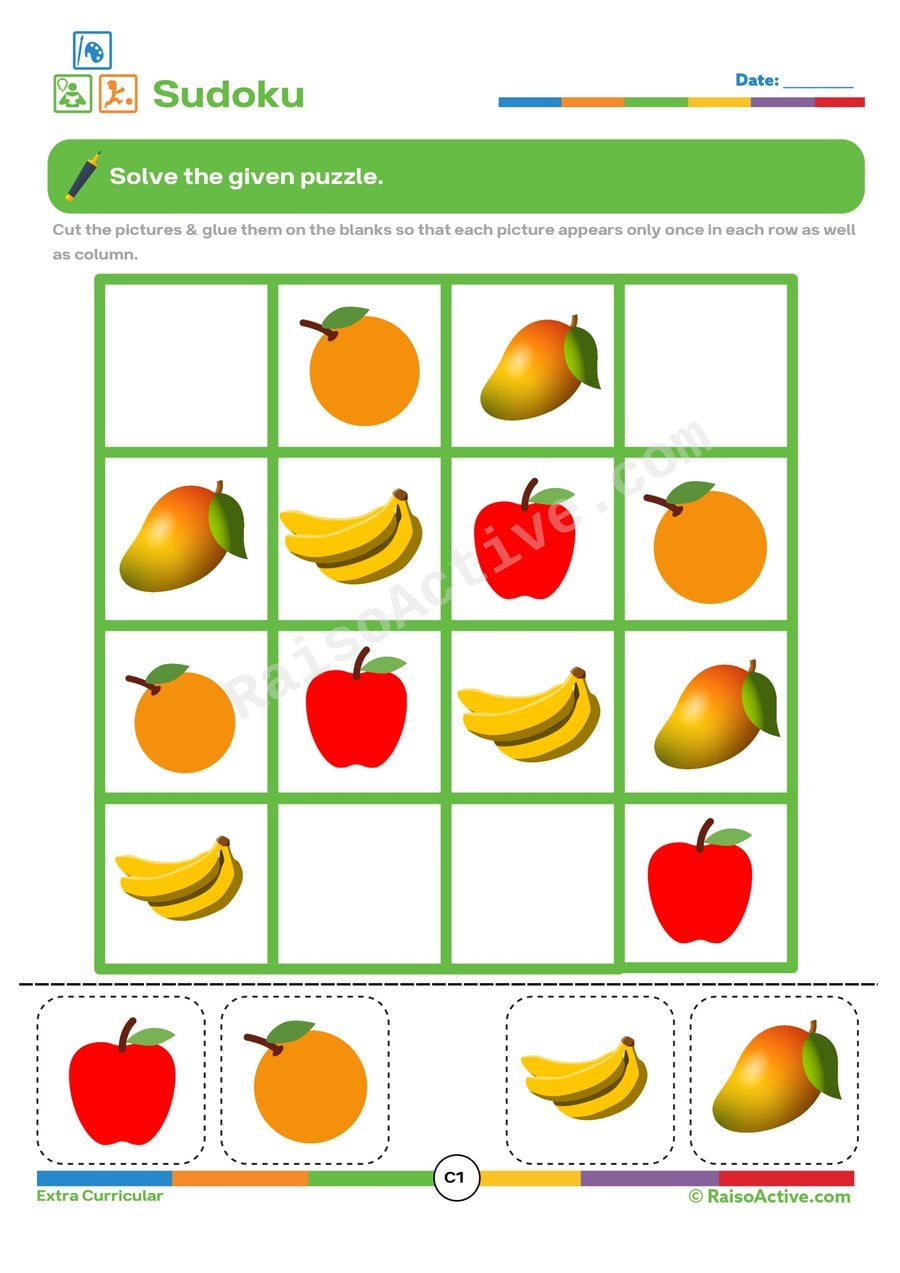
Fruit Sudoku Puzzle Worksheet for Kids
Completing a fruit-themed Sudoku grid builds early logical reasoning for children ages 4-6, requiring them to track which fruits are already placed in a row or column and deduce which one is missing — a foundational problem-solving skill.

Ordinal Numbers Worksheet: Cut and Paste the Community Helpers!
This worksheet introduces children ages 4-6 to ordinal numbers — first through tenth — by having them observe a line of community helpers and paste the correct ordinal label matching each one's position. Understanding position words like 'third' or 'seventh,' distinct from counting quantities, is an important early math and language skill used constantly in daily instructions and turn-taking.

Sequencing Worksheet: Count, Write, and Paste Numbers!
This worksheet combines three numeracy skills in one activity: counting a group of objects, writing the matching numeral, and then physically arranging number sets in the correct sequence. For four- to six-year-olds, connecting a quantity to its written symbol and then to its place in order builds the number sense that underlies later addition and subtraction work.

Dinosaur's Missing Numbers Worksheet: Cut and Paste Fun!
Children ages 4-6 practice number recognition and sequencing in a playful dinosaur theme, identifying which numbers are missing from a sequence and pasting them into the correct spots on a row of eggs. The dinosaur and egg imagery adds motivation and narrative context to what's otherwise a straightforward but important numeracy task — recognizing numerals and understanding their fixed order.
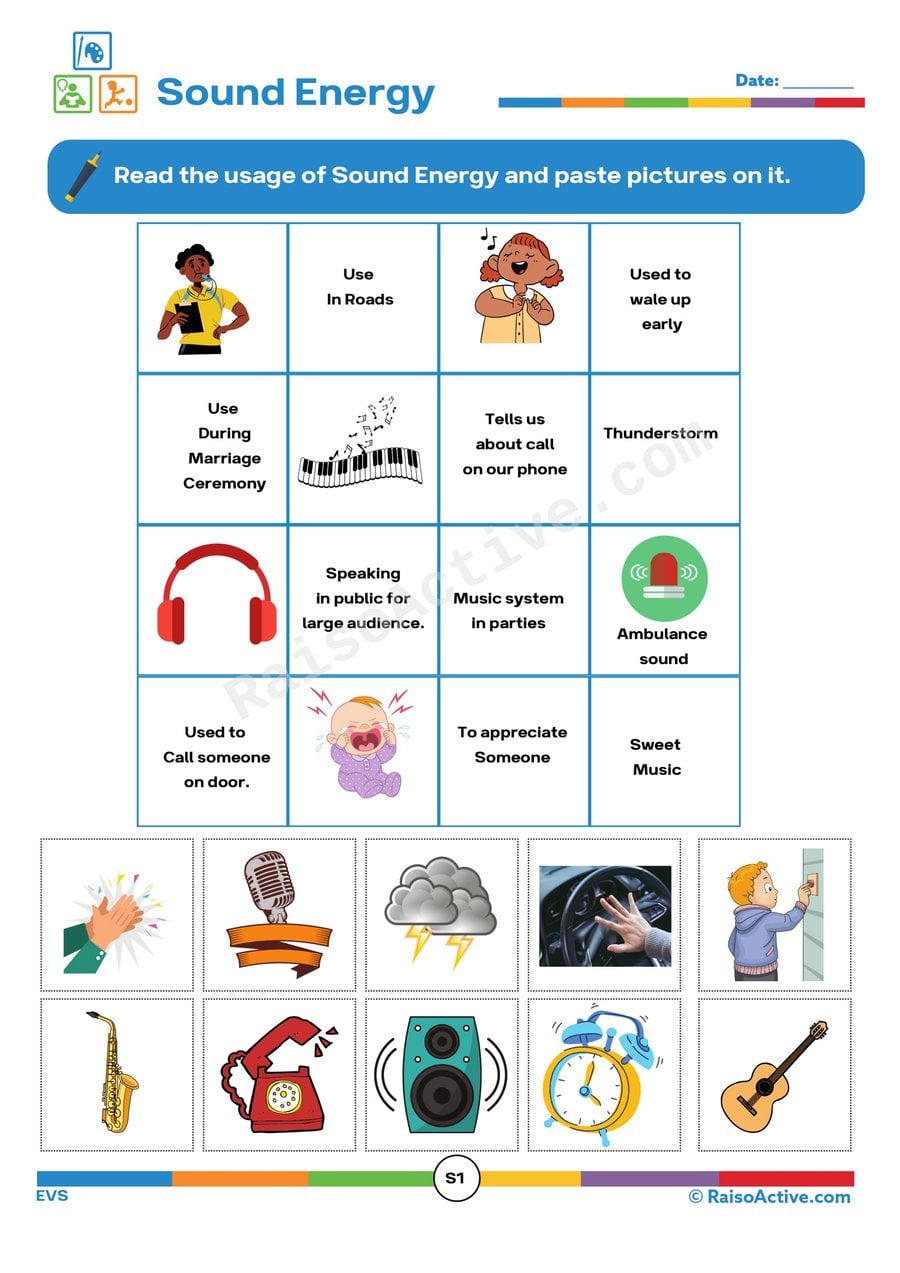
Sound Energy Matching Worksheet for Kids
This worksheet introduces children ages 4-6 to the science concept of sound energy by having them match short descriptions of sound sources to the correct picture. Reading or listening to a description and then identifying the matching image builds comprehension alongside early science reasoning, helping children understand that sound is produced by different actions and objects in the world around them.

Spring Sudoku Worksheet: Cut and Paste Puzzle for Kids
Placing cut-out pictures into a sudoku-style grid so that no image repeats in any row, column, or box teaches children ages 4-6 early logical reasoning and systematic thinking, since they must check multiple directions before deciding where each piece belongs. Cutting out the small picture squares beforehand also builds scissor control and hand-eye coordination. Together, this combines a pre-math logic puzzle with fine motor practice in a single spring-themed activity.
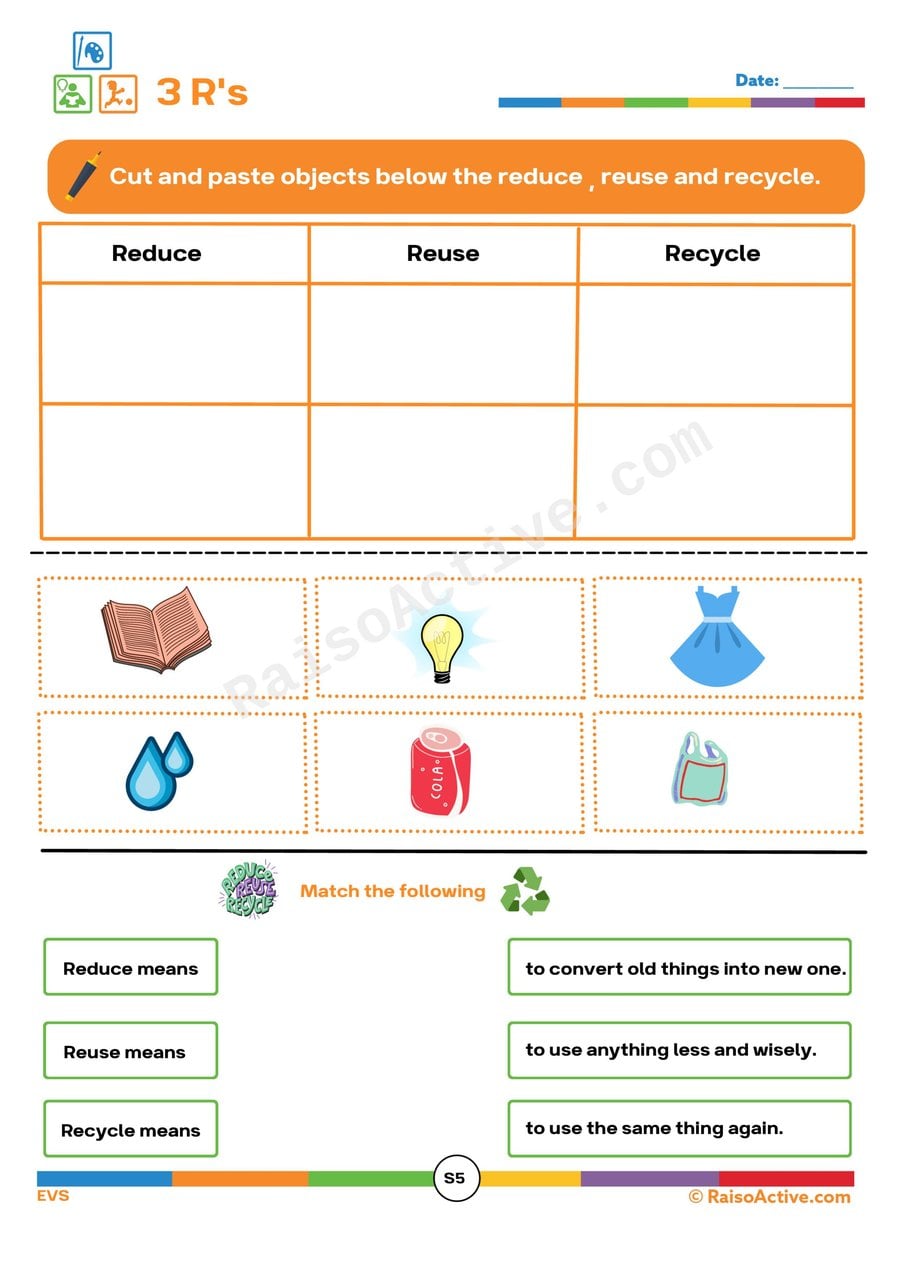
Reduce, Reuse, Recycle Worksheet for Kids
Children ages 4-6 learn the three pillars of environmental responsibility — reduce, reuse, and recycle — by sorting pictures of everyday items into the correct category and matching each term to its definition. This worksheet builds early environmental literacy and categorical thinking, asking children to consider not just what an item is, but what should happen to it once it's no longer needed. It's a concrete entry point into sustainability concepts that will expand in later grades.

Add and Subtract Worksheet: Fun Math Practice for Kids!
This worksheet pairs addition and subtraction practice with a cut-and-paste answer selection, asking children ages 4-6 to solve simple equations using pictured objects and then find and paste the matching numeral from a set of options. Choosing the correct answer from several options, rather than writing it freehand, adds a layer of number recognition practice alongside the arithmetic itself.

Informal Language Fun: Cut and Paste Worksheet for Kids
Sorting sentences as informal helps children ages 4-6 begin to notice that the same idea can be expressed differently depending on who's listening — a friend versus a teacher, for example — which is an early step toward social and audience awareness in language. The cutting and pasting also reinforces this recognition kinesthetically, since children must physically place each sentence where it belongs rather than just circling an answer.
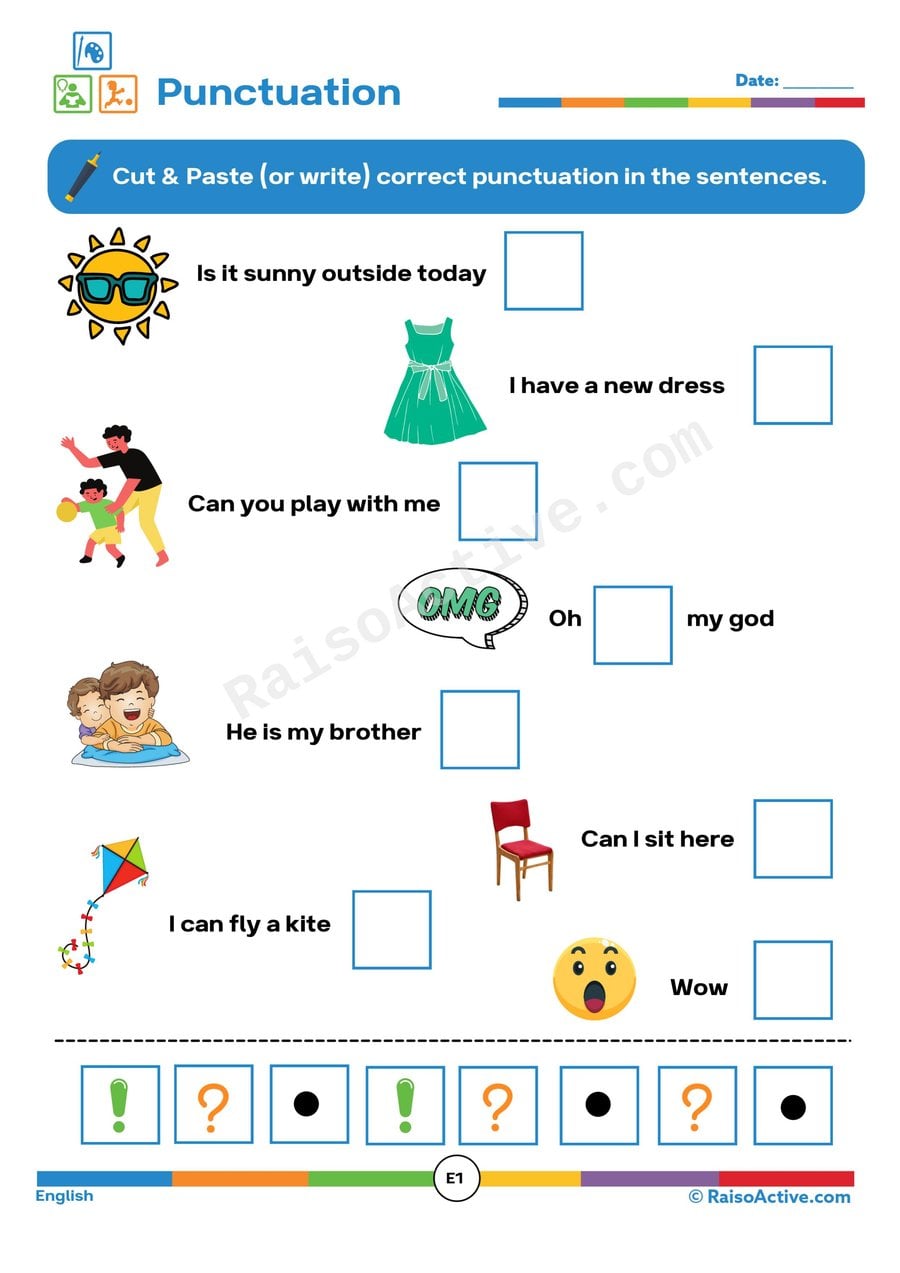
Punctuation Fun: Cut & Paste Punctuation Worksheet
This worksheet teaches children to recognize and apply correct end punctuation — periods, question marks, and exclamation points — by reading simple sentences and choosing the punctuation mark that fits each one's tone. For four- to six-year-olds, connecting a sentence's meaning (a statement, a question, an exclamation) to its correct punctuation mark is an early step toward understanding that punctuation changes how a sentence should be read and understood.

Long Vowel 'a-ay' Cut and Paste Worksheet for Early Readers
This worksheet helps children ages 4-6 identify the long 'a' sound as it's spelled with the 'ay' pattern — as in 'day' and 'play' — by cutting out and pasting pictures into the boxes that match this specific spelling. Learning that the same long 'a' sound can be written in different ways, including 'ay', is an important step toward flexible, accurate spelling as children encounter more complex words.
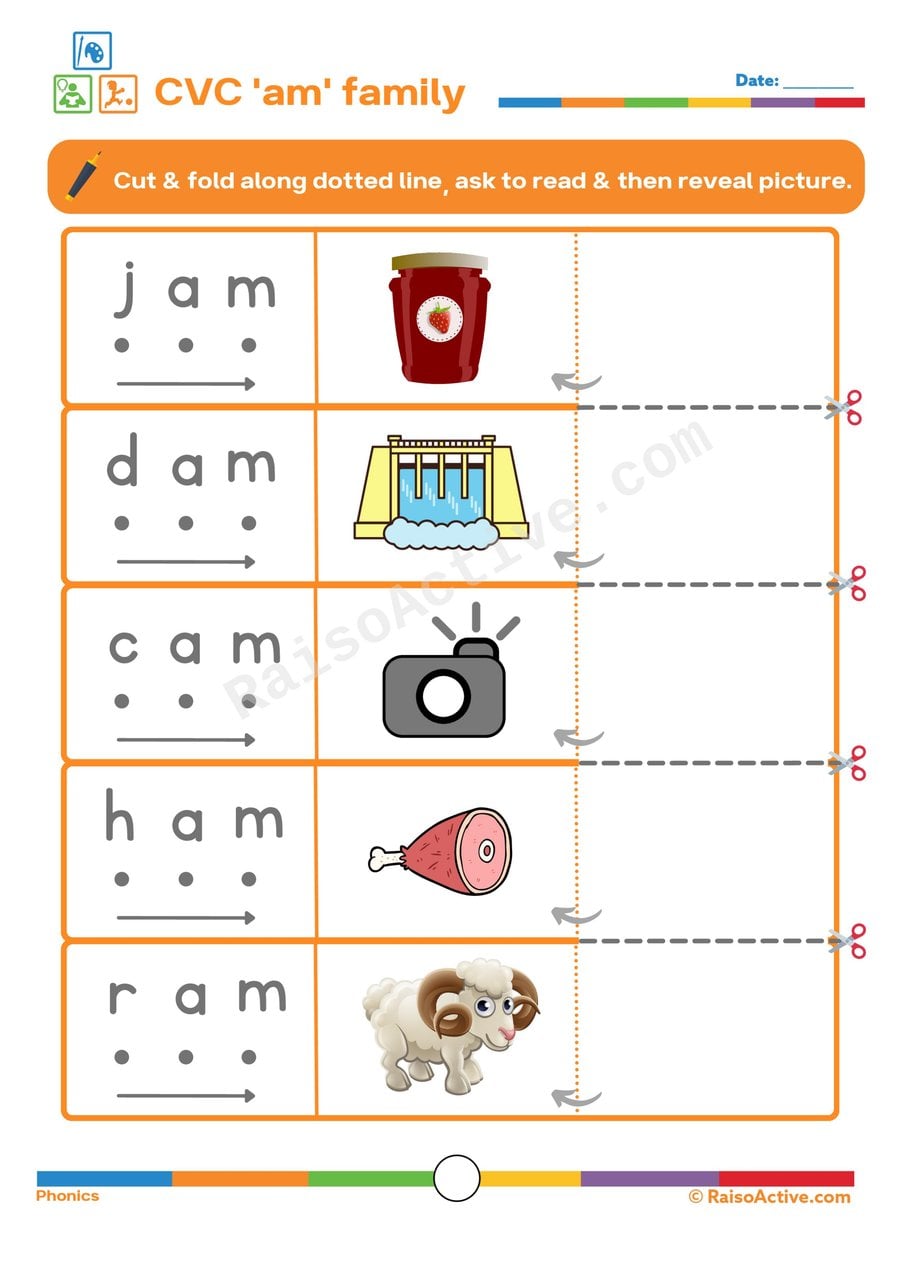
CVC 'am' Family Worksheet: Read, Cut, and Match!
This cut-and-paste worksheet gives children ages 4-6 practice reading CVC words from the 'am' family, like 'ham', 'jam', and 'ram', and matching them to their pictures. Beyond decoding practice, the cutting component strengthens the fine motor control and hand-eye coordination children need for handwriting, making this a dual-purpose literacy and motor-skills activity.

Identify Flags Worksheet: Cut and Paste Matching Activity
Children ages 4-6 practice identifying country flags and matching them to their correct names, continuing to build geography vocabulary and visual discrimination through this repeated worksheet format. Working through several similar flag-matching worksheets over time helps children build a broader mental library of recognizable flags rather than memorizing just one set.

Transport Worksheet: Cut and Paste the Correct Mode of Transport!
Reading a sentence and choosing the correct vehicle to complete it teaches children ages 4-6 to use context clues from text to guide a decision, an early reading comprehension skill that goes beyond simple word recognition. The cutting and pasting also reinforces vocabulary for different modes of transportation as children physically match each picture to its described purpose.
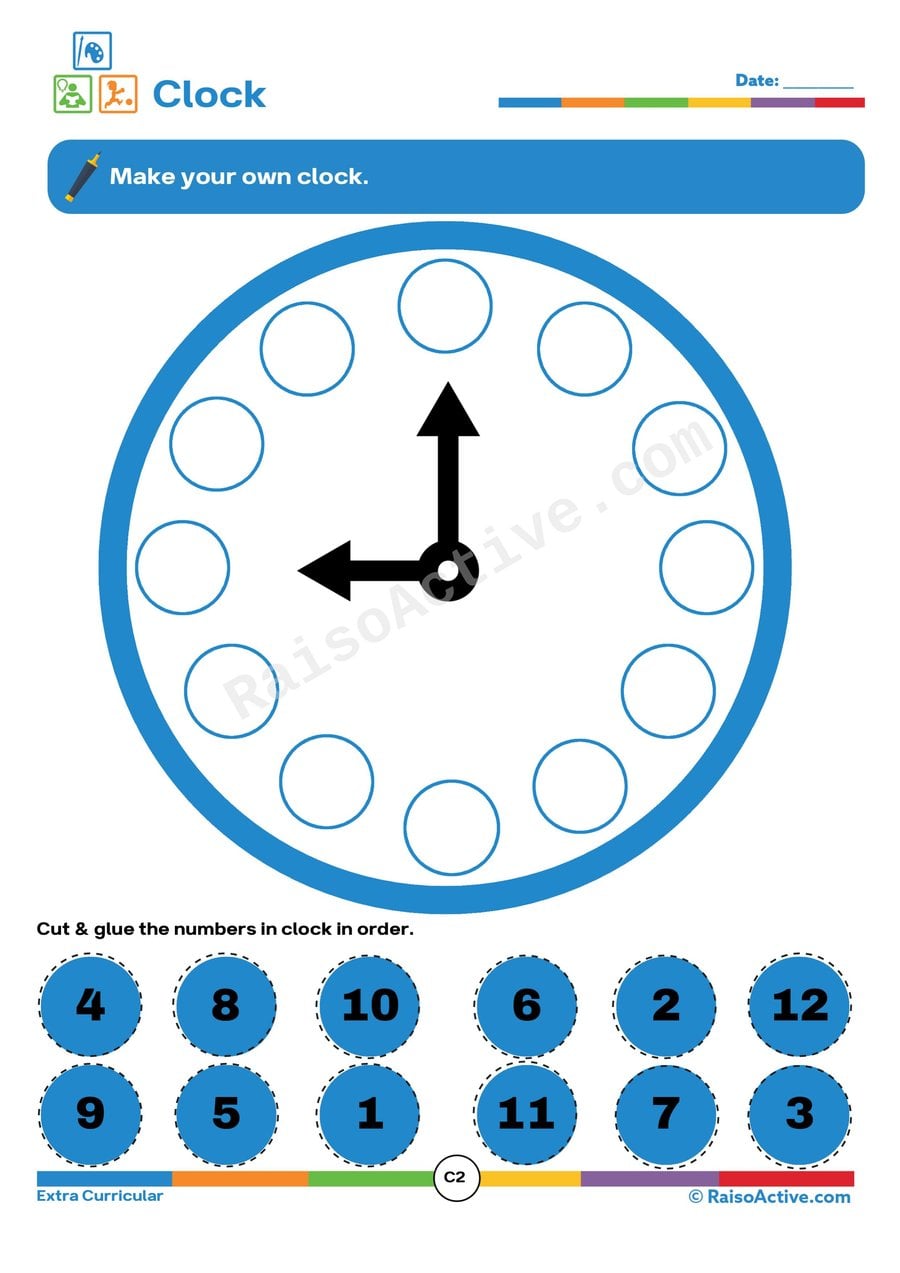
Make Your Own Clock Worksheet: Time Telling Fun!
This hands-on craft has children ages 4-6 cut out and glue numbers in order around a clock face, then draw hands to show different times, combining number sequencing with an introduction to how an analog clock is structured. Physically placing each number themselves, rather than reading a pre-printed clock, helps children internalize why the numbers 1 through 12 are arranged in that specific circular order. Drawing the hands afterward extends the activity from static number placement into functional time-telling practice.

Time Routine Cut and Paste Worksheet for Preschoolers
Matching a clock face showing a specific time to the daily activity that happens then — like breakfast or bedtime — connects the abstract skill of clock reading to concrete routines, helping children ages 4-6 build a real-world sense of how time structures a day.

Pronoun Power: Cut & Paste Matching Worksheet for Preschoolers
Children ages 4-6 practice recognizing and applying pronouns — he, she, it, they, and similar words — by reading a short sentence, deciding which pronoun fits the picture, and physically placing it in the right spot. Cutting and pasting adds a fine motor and sequencing component on top of the grammar skill, since children must locate, cut, and correctly position each pronoun piece. This hands-on format helps pronoun concepts stick better than reading alone.
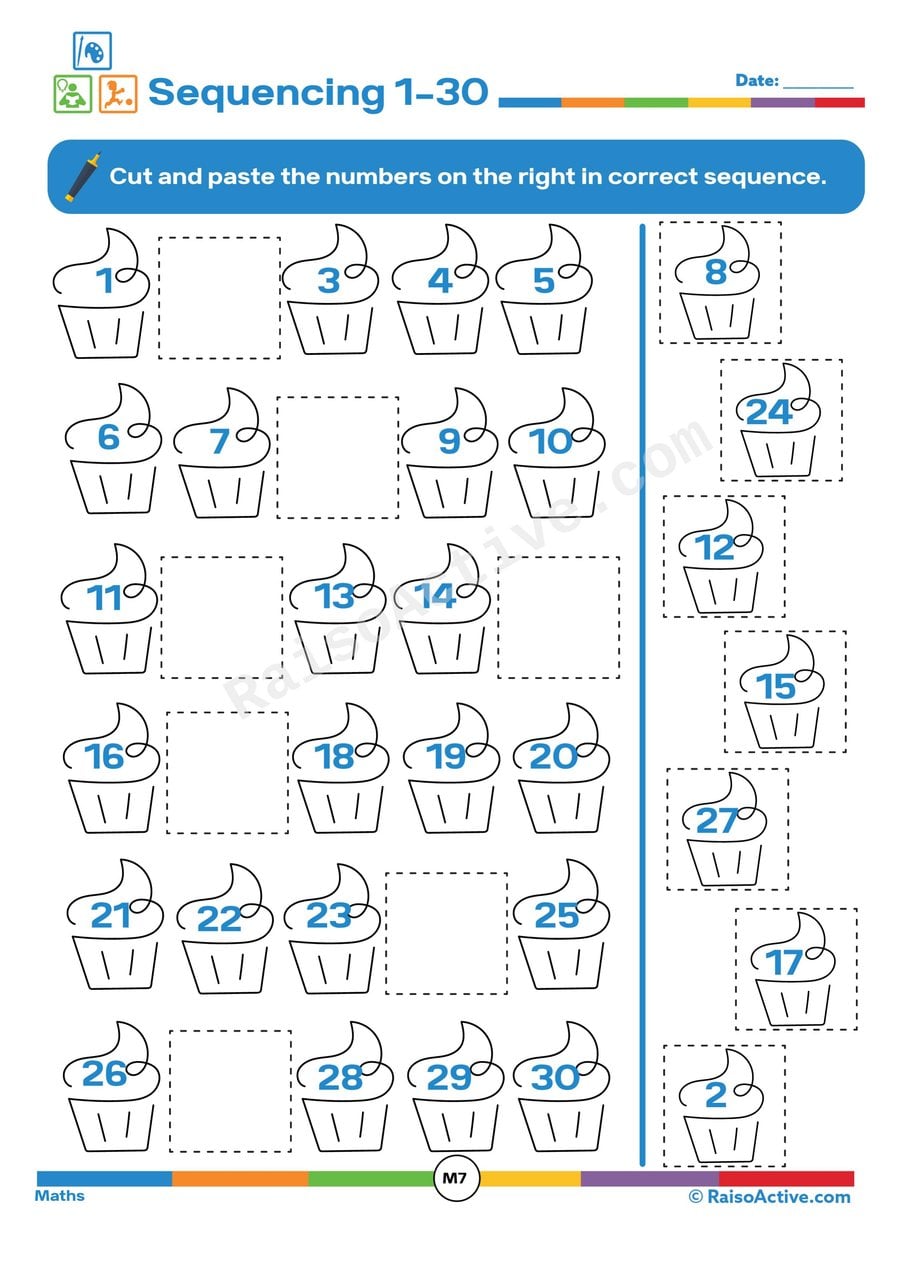
Cupcake Number Sequencing Worksheet 1-30
Children ages 4-6 practice number sequencing from 1 to 30 by cutting out numeral pieces and pasting them onto cupcakes in ascending order, reinforcing both number recognition and the logic of 'what comes next' in the counting sequence. This bridges the gap between counting by rote and truly understanding number order, an essential step before children can skip-count or do simple addition.
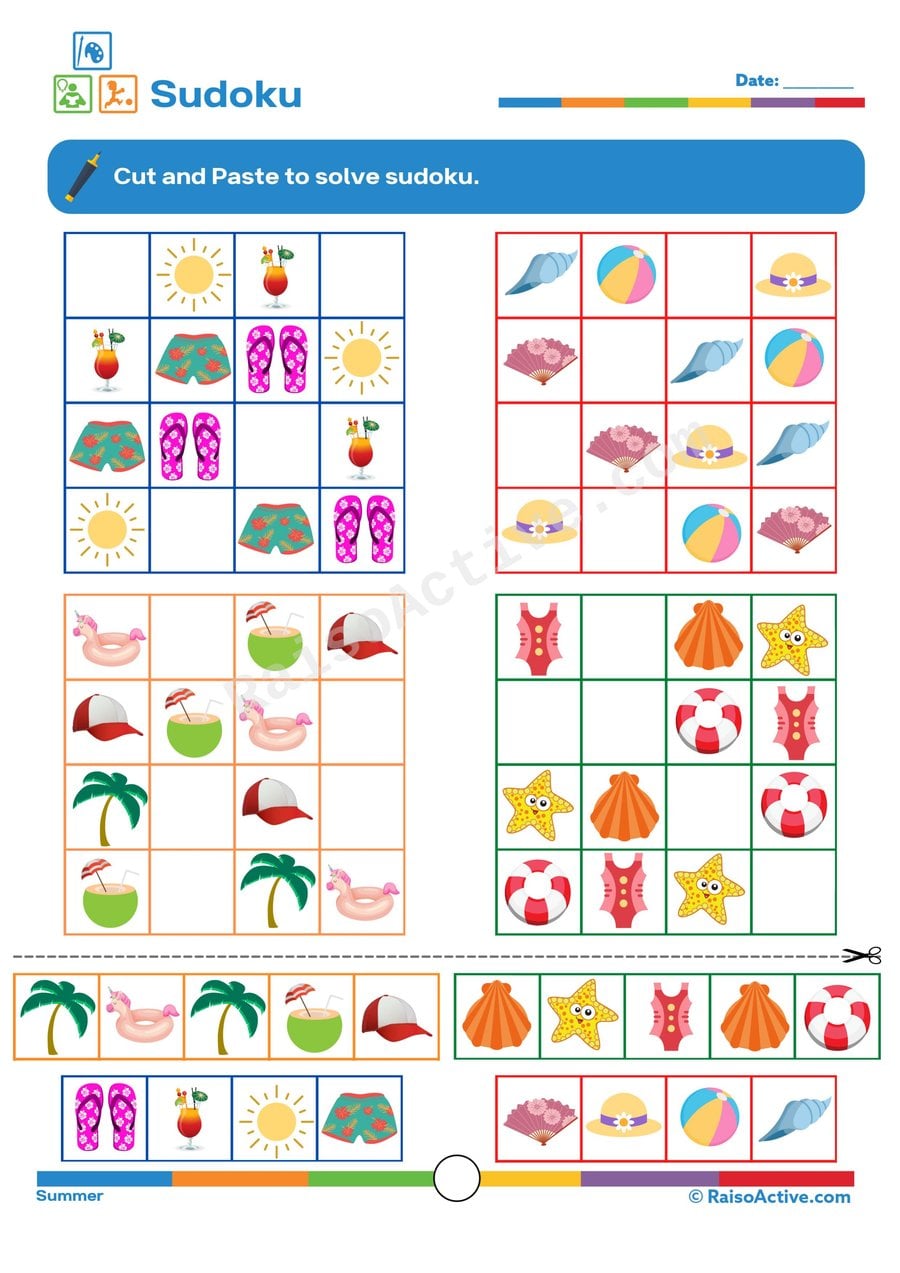
Summer Sudoku: Cut and Paste Worksheet for Kids
This worksheet combines cutting and pasting with logical puzzle-solving for children ages 4-6, who must cut out small summer images and paste each one into the correct empty square of a Sudoku grid so no image repeats in any row, column, or smaller square. Beyond the reasoning skills of a typical Sudoku, this version adds scissor practice and precise placement with glue, building fine motor coordination alongside logical thinking. Handling small cut-out pieces and placing them accurately also demands more spatial planning than simply coloring or drawing a picture.

Human Skeleton Cut and Join Worksheet for Preschoolers
This hands-on worksheet introduces children ages 4-6 to basic human anatomy as they cut out individual bone shapes, like the skull, ribs, arms, and legs, and assemble them into a complete skeleton. Beyond scissor control, the activity requires spatial reasoning, since children must figure out where each bone belongs relative to the others to build an accurate body shape.
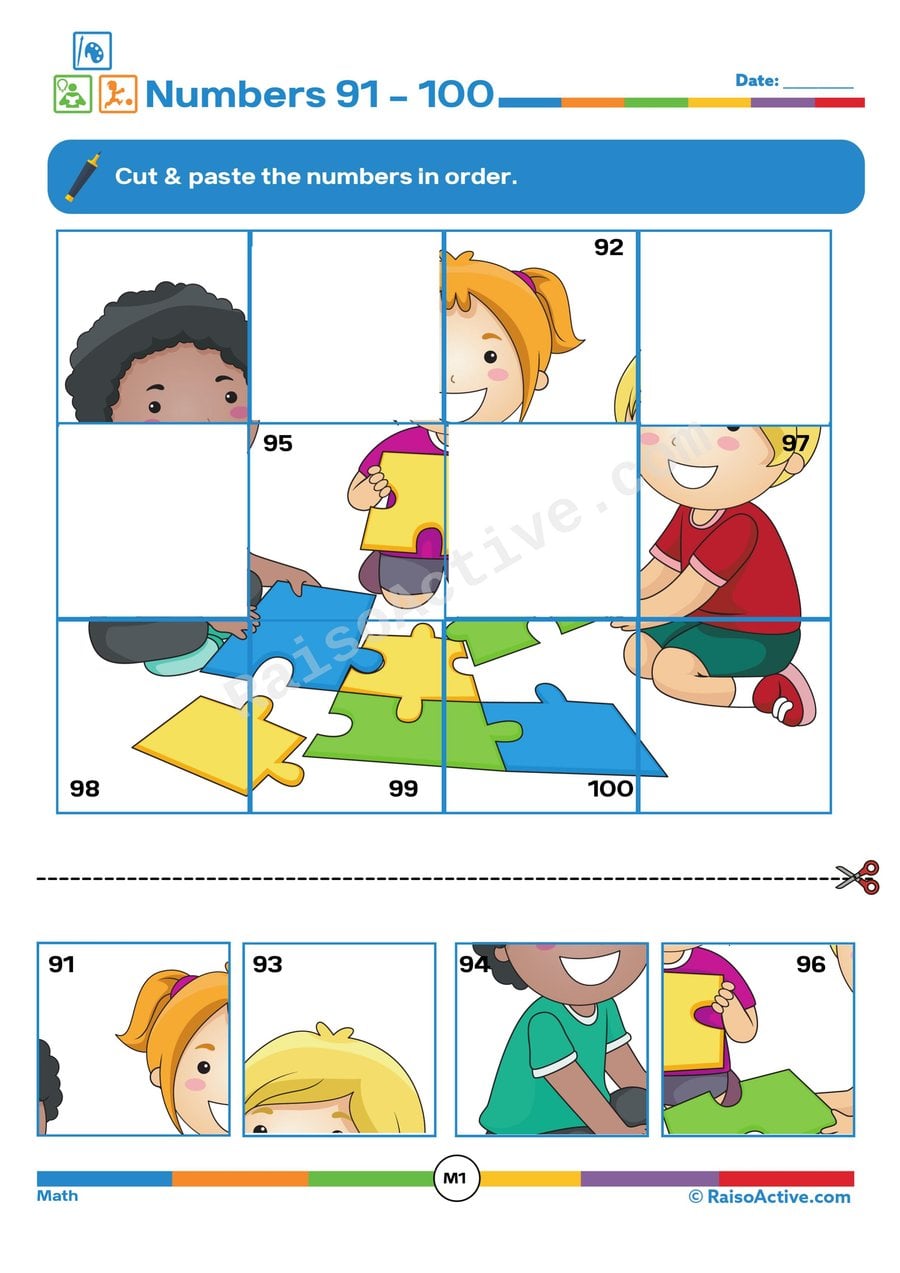
Numbers 91-100 Cut and Paste Worksheet
Working with the numbers 91 through 100 pushes children ages 4-6 into two-digit number recognition territory where patterns matter more than memorization, since recognizing that '9' stays constant while the second digit counts up helps children understand place value intuitively. Cutting apart number puzzle pieces and reassembling them in the correct order also demands careful sequencing and attention, since even one misplaced piece throws off the whole sequence. This hands-on, puzzle-based approach to number ordering makes practicing a fairly abstract skill much more concrete and engaging.
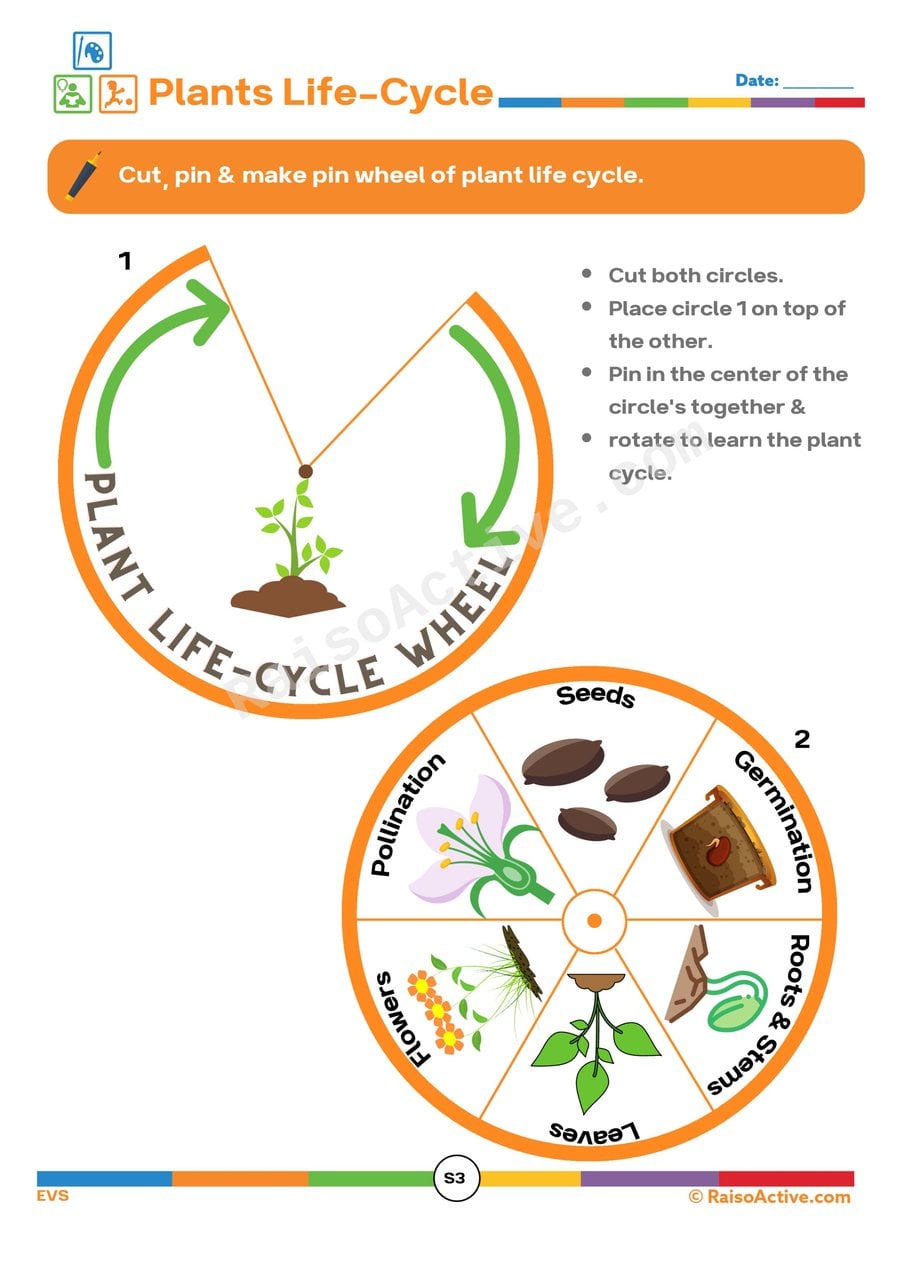
Plant Life Cycle Wheel: Cut, Pin & Learn!
Building a spinning wheel that shows a plant's life cycle helps children ages 4-6 understand that growth happens in a repeating sequence of stages — seed, sprout, growing plant, flower — rather than as a single instant event. This hands-on 3D craft turns an abstract scientific process into something children can physically rotate and observe, which suits how young learners grasp sequence and cause-and-effect best. Assembling the two-circle wheel with a paper fastener also builds fine motor precision beyond typical flat cut-and-paste tasks.
What KS1 cutting practice worksheets cover
Five-year-olds can cut out a circle by rotating the paper steadily, follow a spiral inward without crossing the coils, and cut around simple pictures closely enough to use them. That opens up cut-and-paste sheets: cut out four pictures, then sequence them into a story or sort them into two boxes. A worksheet should now combine the cutting with a thinking task. Fiddly inner corners and very small pieces are still hard.
- Cut out a circle by turning the paper, not the scissors
- Follow a spiral inward without cutting across the coils
- Cut out four pictures and paste them in story order
- Cut apart a set of pictures for a sorting task
- Cut along a wavy line across a full strip
How to use these worksheets at home or in class
Because this stage spans two years, match the sheet to what the classroom is doing rather than to age alone: decoding and number bonds for a Year 1 child, comprehension and times tables for a Year 2 child, in sessions of fifteen to twenty minutes.
Start with the sheet that matches what your child can already do, then move one step up. Keep finished sheets in a folder: KS1 teachers often ask for evidence of practice, and children like seeing their own progress.
Is your child ready for KS1 cutting practice work?
A child ready for the later half of this stage reads a short passage with reasonable fluency, writes several connected sentences, adds and subtracts within twenty and recalls the 2, 5 and 10 times tables with growing confidence.
- Cut apart word or number cards and paste them in order
- Cut out small pieces with tabs and inner corners neatly
- Build a paper craft from numbered written instructions
Frequently asked questions
My five-year-old still leaves jagged edges. Is that a problem?
Some raggedness at five is normal; the milestone is finishing the shape close to the line, not a perfect edge. Jagged cuts usually come from short, choppy snips, so ask the child to open the blades fully and take longer strokes. Check that the scissors actually cut rather than fold paper, and that a left-handed child has left-handed scissors. Five minutes of cutting a few times a week smooths the edge.
What should a KS1 child be able to do in cutting practice?
Five-year-olds can cut out a circle by rotating the paper steadily, follow a spiral inward without crossing the coils, and cut around simple pictures closely enough to use them. That opens up cut-and-paste sheets: cut out four pictures, then sequence them into a story or sort them into two boxes. A worksheet should now combine the cutting with a thinking task. Fiddly inner corners and very small pieces are still hard. A child ready for the later half of this stage reads a short passage with reasonable fluency, writes several connected sentences, adds and subtracts within twenty and recalls the 2, 5 and 10 times tables with growing confidence.
Do these worksheets follow the KS1 curriculum?
The sheets cover scissor grip and control, cutting along a straight line, cutting along a curved line and cutting out a shape in one piece, which sit inside the National Curriculum Key Stage 1 outcomes for KS1. Kindergarten to 1st Grade (US), UKG to Class 1 (India) use the same skills at this age, so the sheets also fit families following those programmes.
Are these KS1 cutting practice worksheets free?
Yes. Each worksheet downloads free as a watermarked PDF once you create an account, with a limit of five a day. An annual membership ($20) removes the watermark and the limit for the whole library of over 1,000 worksheets and every printable pack.

Written by
Hemsweta Jain · Teacher Cheena
MBA and Early Childhood Educator, teaching since 2014 · Founder of RaisoActive, Mumbai
Written and reviewed by Hemsweta Jain (Teacher Cheena), who designs every RaisoActive worksheet.
Last reviewed
Printable packs for ages 5–7
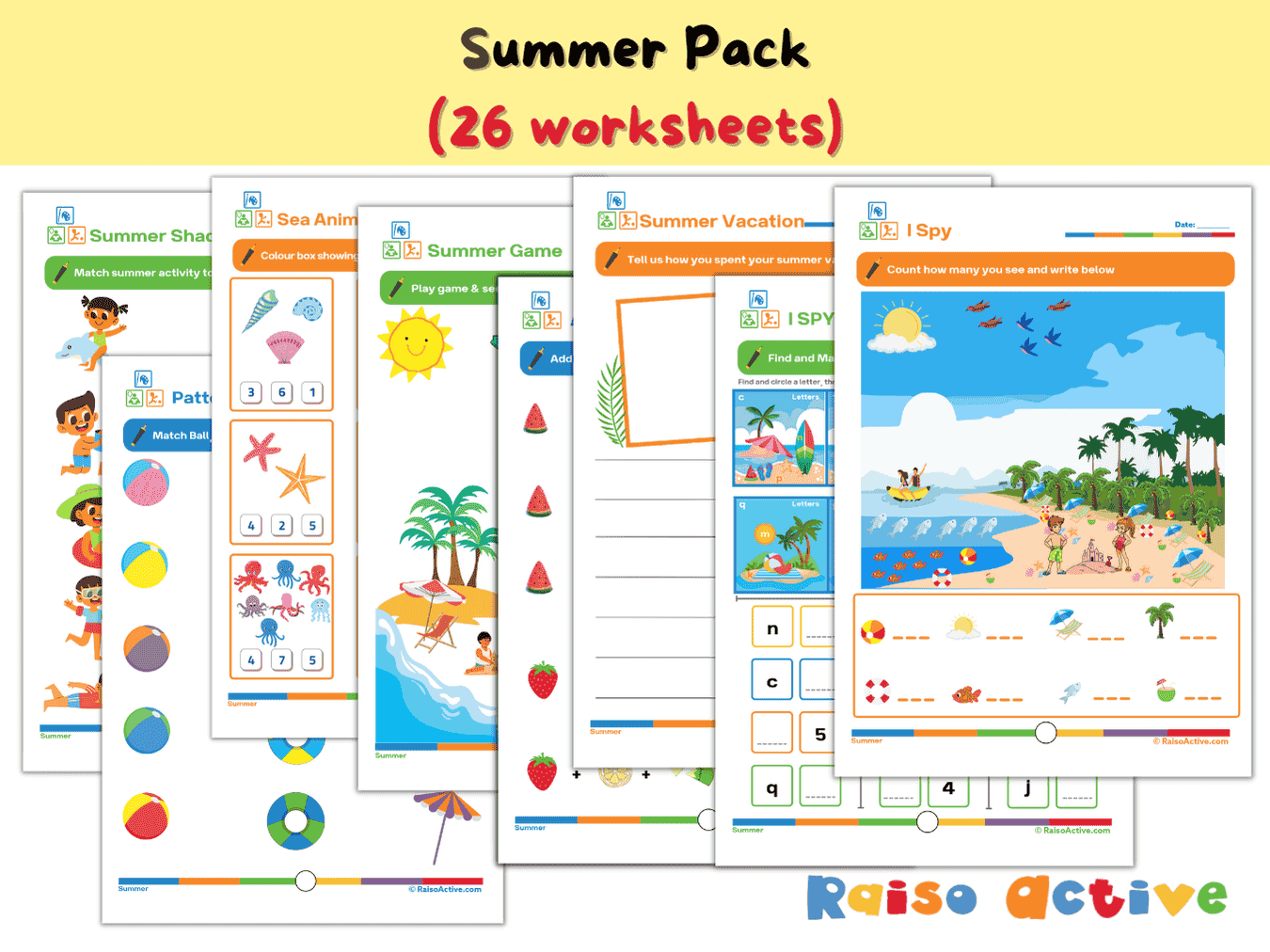
Summer Activity Pack: Math, Literacy, Puzzles & More for Preschool & Kindergarten
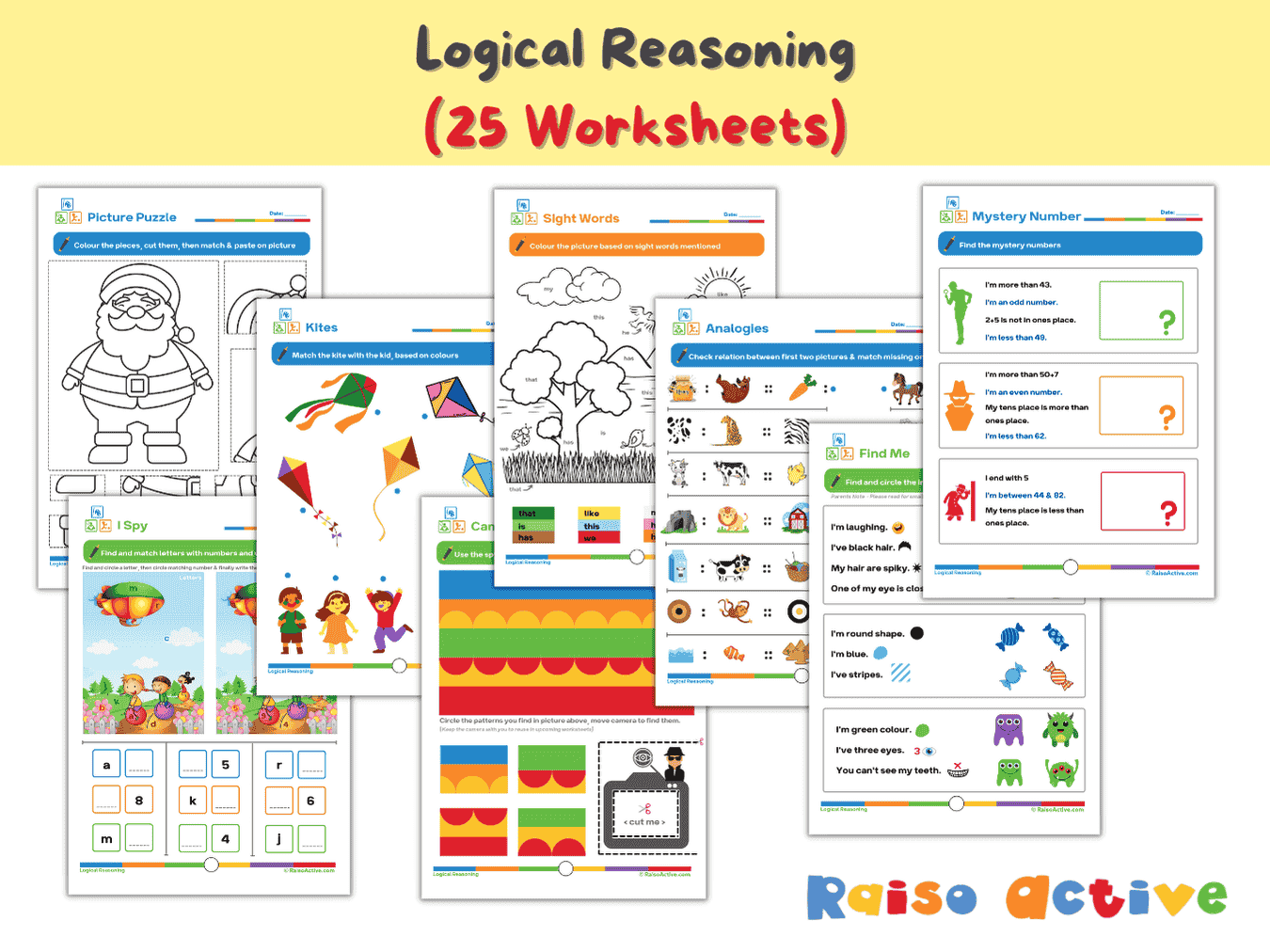
Logical Reasoning Activity Book for Preschool & Kindergarten | Patterns, Puzzles & Analogies
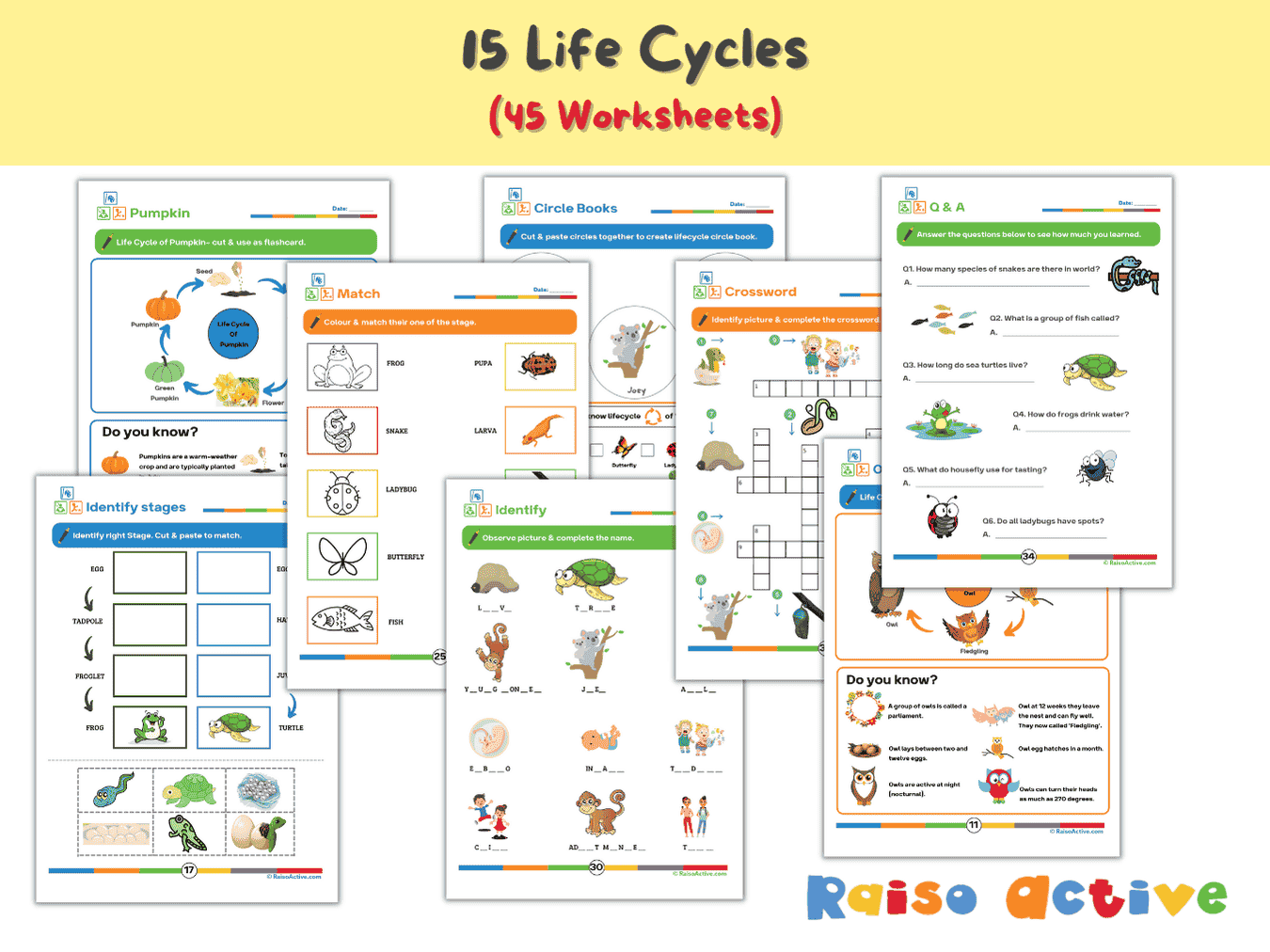
Lifecycles Activity Book & Flashcards for Preschool & Early Elementary
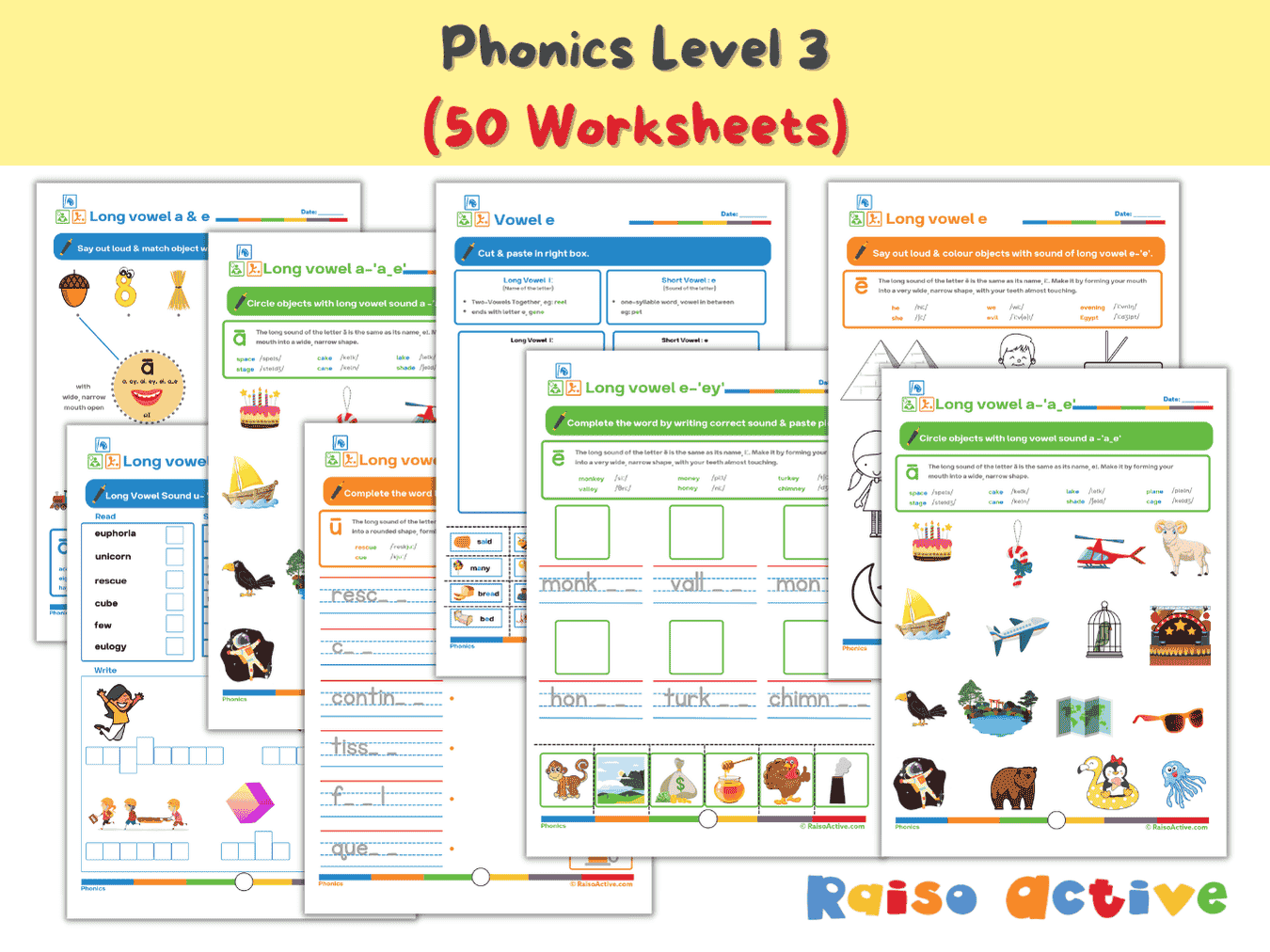
Phonics Level 3 Long Vowels Activity Book for Kindergarten & 1st Grade
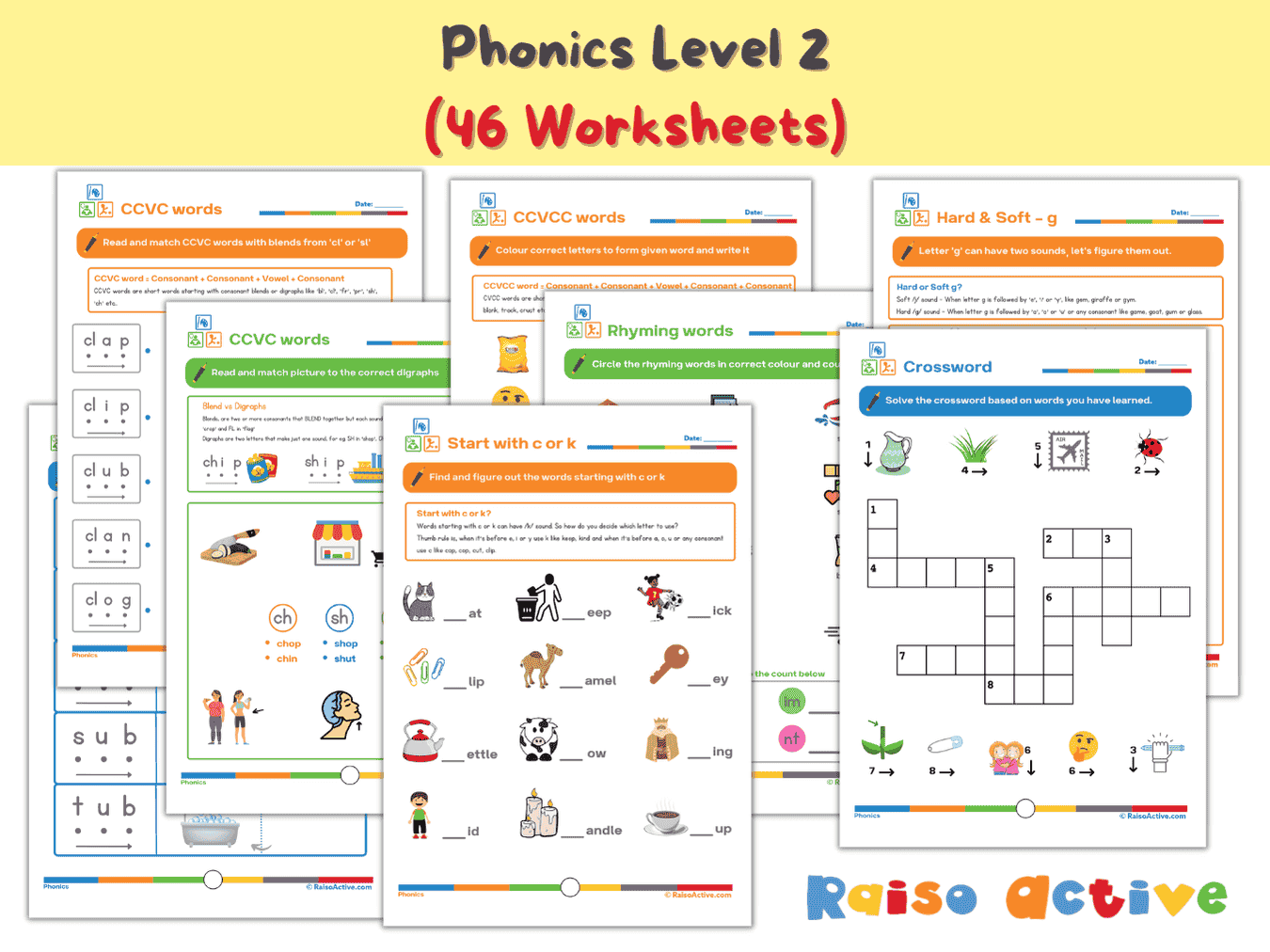
Phonics Level 2 Worksheets: CVC, CCVC, CVCC Word Families & Blends for Early Readers (Ages 4-7)
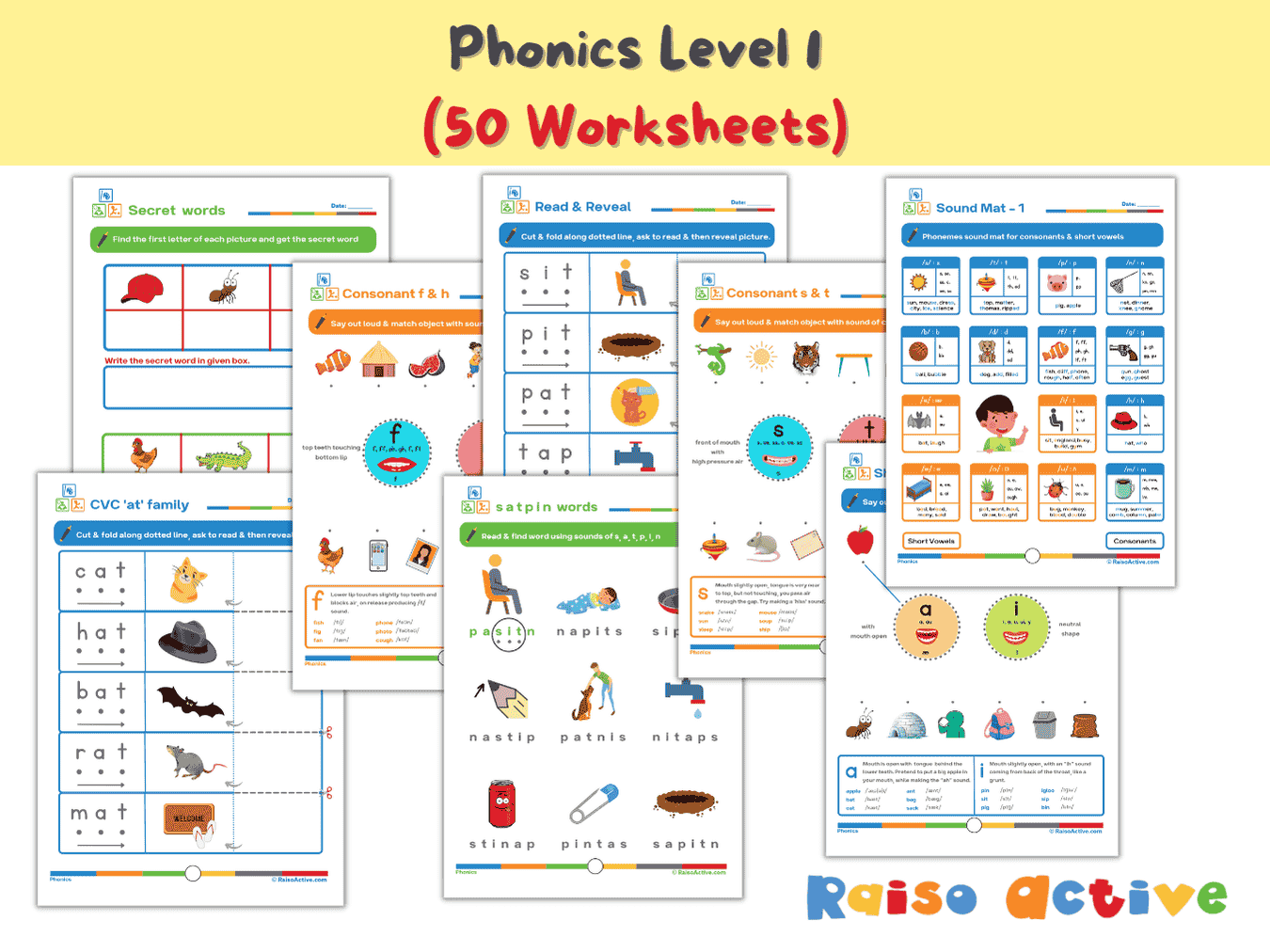
Phonics Level 1 Activity Book: Letter Sounds, Blending & CVC Words for Preschool & Kindergarten
Guides for parents and teachers
See all guides →Number Formation Rhymes 0–9 and How to Fix Reversals
Original number formation rhymes for 0–9, the correct stroke order for each digit, why 3, 5 and 7 get reversed most often, and multisensory fixes that work.
Pre-Writing Strokes in Order: From Standing Lines to Loops (With Printable Patterns)
The developmental order of pre-writing strokes, from vertical lines to loops, and why practicing them in sequence makes letter formation much easier to learn.
Kindergarten Readiness Checklist: 25 Skills to Practice Before the First Day
A kindergarten readiness checklist of 25 literacy, math, motor, self-regulation and self-help skills, with an 8-week summer plan and notes on when not to worry.
Best Worksheets for 3-Year-Olds: What Works and What to Avoid
What works on worksheets for 3-year-olds: short sessions, crayons, tracing lines, matching, cutting, a free weekly plan, and signs one is too advanced.
What Should a 4-Year-Old Know Before LKG? A Readiness Checklist
A calm, teacher-written LKG readiness checklist for 4-year-olds: language, pattern writing, numbers to 10, self-help and social skills, plus a 6-week plan.
Resources for Children with Multiple Disabilities: A Comprehensive Guide for Families
Discover essential resources for children with multiple disabilities. Therapies, inclusive learning, assistive technology, and printable activities for ages 1-8.
Canonical: https://raisoactive.com/worksheets/ks1-cutting-practice