Free printable worksheets · United States
Pre-K Phonics Worksheets (Ages 4–5)
Pre-K phonics worksheets are practice sheets for children aged 4–5 in Pre-Kindergarten in the US. Phonics is the practice of connecting letters to the sounds they represent, then blending those sounds together to decode and read words. The sheets on this page cover letter-sound correspondence, blending sounds into words, segmenting words into sounds and digraphs and consonant blends.
Pre-K is the bridge to kindergarten, so activities target the entry skills teachers consistently ask for: writing a first name, naming most uppercase and some lowercase letters, knowing a few letter sounds, counting to twenty, and managing scissors and a pencil comfortably. At four to five, a child learns the sound of most letters, not just the name, and starts blending sounds heard aloud into a word without seeing print. A worksheet should ask for the sound of a shown letter, matching a letter to a picture that starts with it, and oral blending tasks like "what word is m-a-p?" said slowly with gaps. Reading a printed word by sounding it out independently is the next stage, not this one.
980+ worksheets · free PDF download · print on A4 or Letter
Pre-K Phonics Worksheets to print
Browse all worksheets for ages 4–5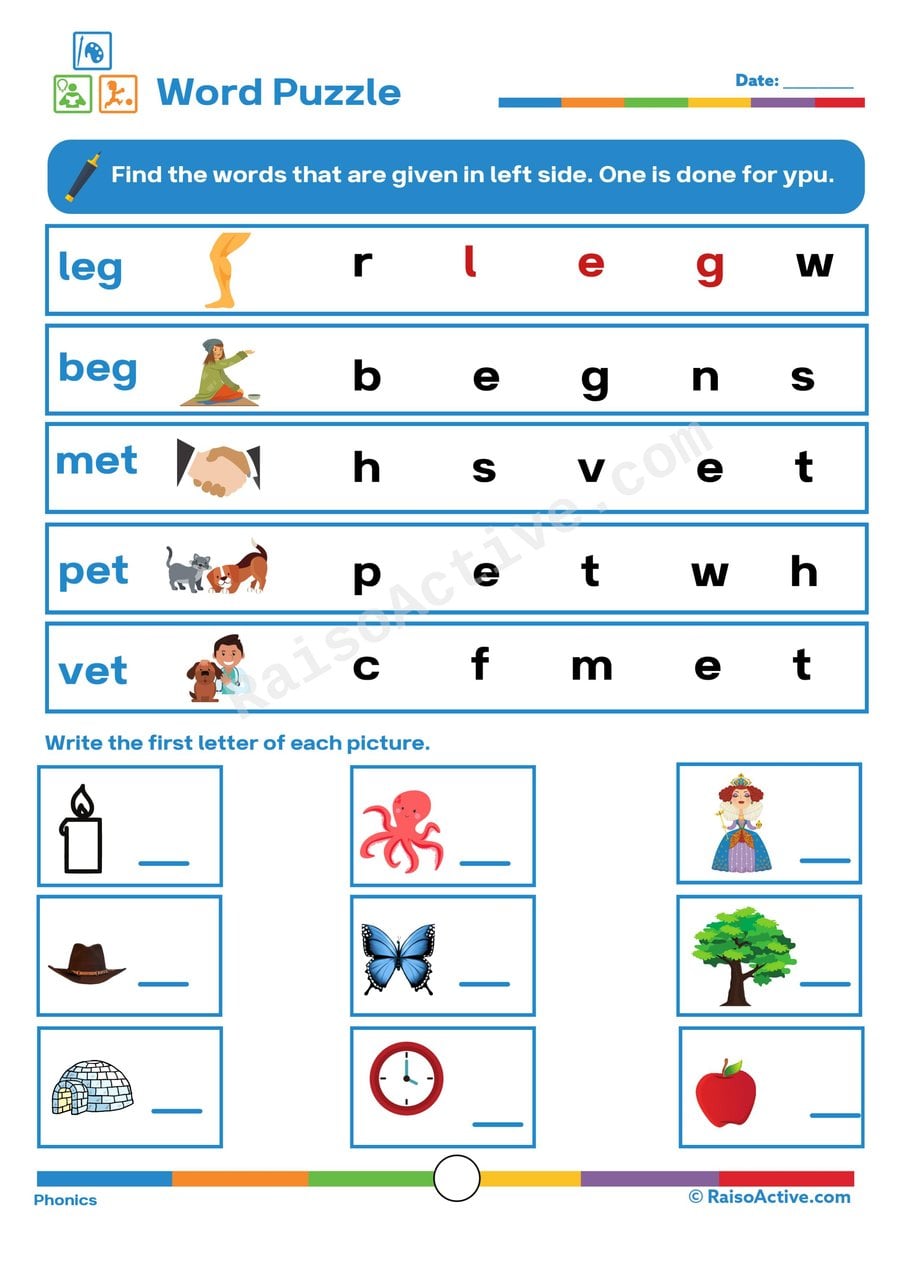
Word Puzzle Fun: Find and Write the First Letter!
This worksheet asks children ages 4-5 to locate hidden words in a picture puzzle and then identify and write the first letter of each corresponding picture, combining visual search skills with beginning-sound phonics. Searching a puzzle for target words builds visual scanning and attention, a skill that supports reading fluency later on, while writing the beginning letter reinforces the sound-to-symbol connection central to early spelling. Doing both together keeps young learners engaged while practicing two skills at once.

Lowercase Letter Matching Worksheet for Preschoolers
This worksheet trains children ages 4-5 to connect an uppercase letter to its lowercase counterpart, a skill that's genuinely tricky since many lowercase letters look quite different from their capital form (like G and g, or Q and q). Matching cases correctly is essential groundwork for reading real books and sentences, which are written mostly in lowercase.
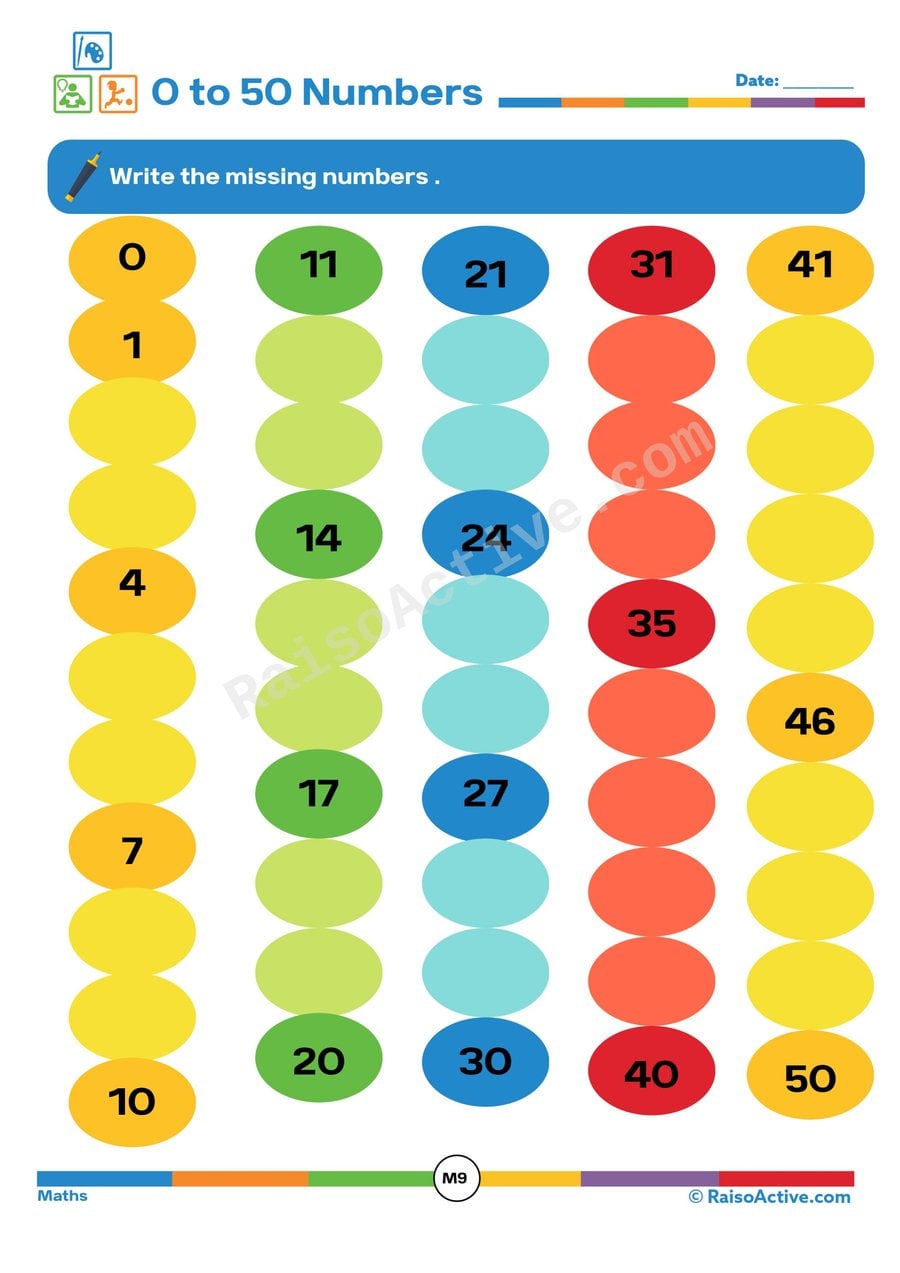
Missing Numbers Worksheet: 0 to 50
Filling in missing numbers across the 0-50 range asks children ages 4-5 to hold a much longer counting sequence in mind than typical 1-20 worksheets, strengthening both number recognition and the pattern sense needed to predict what comes next at any point in the range. This kind of extended practice also introduces children to the way numbers group into decades, like the 20s or 30s, which becomes important for later place-value understanding. Successfully completing a long sequence like this builds real counting stamina and confidence.

CVC 'ig' Family Worksheet: Read and Reveal the Pictures!
This worksheet builds reading fluency for children ages 4-5 around the 'ig' word family, such as 'pig' and 'big', combining phonics practice with a self-checking cut-and-reveal format. Repeated exposure to the same word ending across several words trains children to recognize that chunk automatically, which is a key step toward reading words in whole units rather than sound by sound. The hidden picture reveal gives children a built-in way to confirm their own reading accuracy.

Sequencing Numbers Train Worksheet for Preschoolers
Writing numbers 0-20 into a sequence of train cars pushes children ages 4-5 to internalize the full early counting range in fixed order, not just recite it aloud, which is a meaningfully different and more durable skill. Filling in the numbers by hand also builds numeral formation alongside sequencing, so children practice both remembering what comes next and writing it correctly. The train-car visual keeps a fairly long numeric range broken into manageable, engaging chunks rather than one intimidating list.

Tracing and Counting Fun: Number 5 Worksheet for Preschoolers
Children ages 4-5 practice tracing and writing the number 5 while reinforcing counting up to five through a picture-based matching task. Repeating the number in multiple formats — tracing, writing, and counting — helps cement both the shape of the numeral and the quantity it represents.
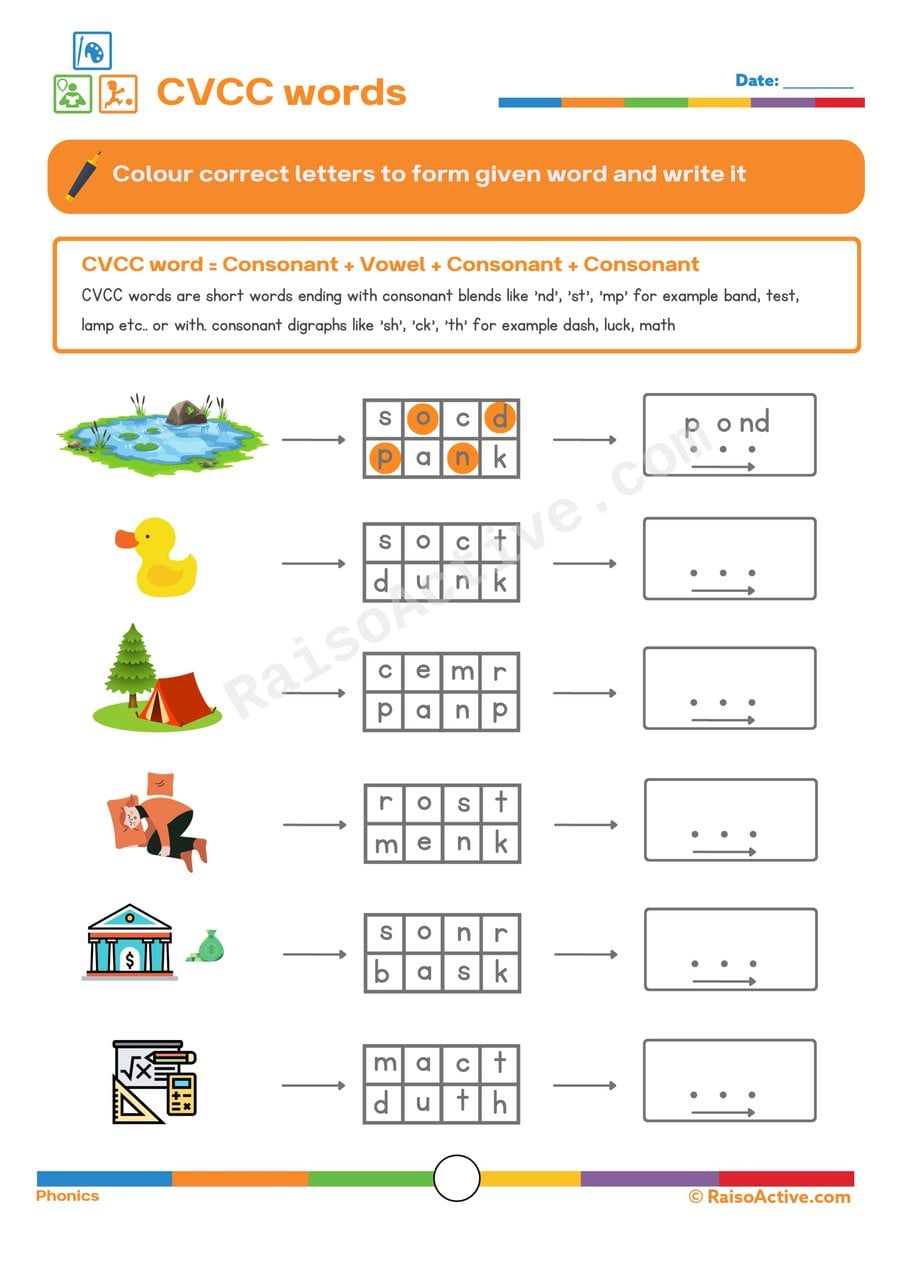
CVCC Word Fun: Color, Read, and Write!
This worksheet has children ages 4-5 identify and write CVCC words by coloring the correct letters shown in letter boxes and then writing the complete word based on a picture cue. Coloring specific letters before writing the whole word breaks decoding into a manageable first step, helping children build the word piece by piece rather than facing the whole spelling task all at once.
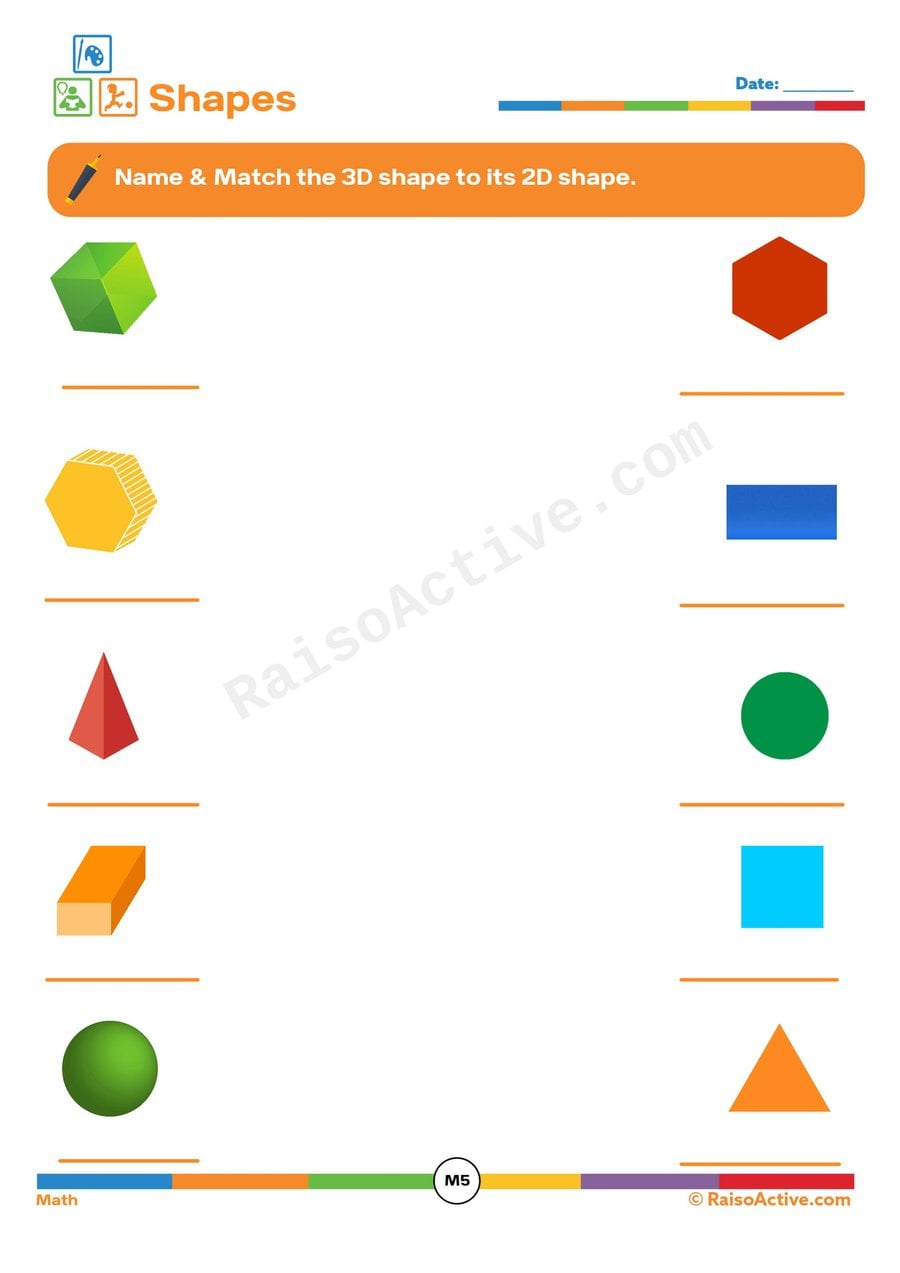
Shape Match: 3D to 2D Shapes Worksheet
This worksheet builds an important geometric connection by asking children to match 3D shapes, like a cube or sphere, to the 2D shape that appears on their flat faces, such as a square or circle. For ages 4-5, understanding that solid shapes are made up of flat shapes is a foundational geometry concept that bridges basic shape recognition with more advanced spatial reasoning.

Letter N Tracing Worksheet: Practice Uppercase and Lowercase!
N is built from two vertical lines connected by a diagonal stroke between them, a genuinely different pattern from letters like M that have four strokes, so tracing it at ages 4-5 sharpens a child's ability to notice and reproduce a specific number and order of strokes. This precision matters increasingly at this slightly older end of the preschool range, where handwriting expectations start to rise.
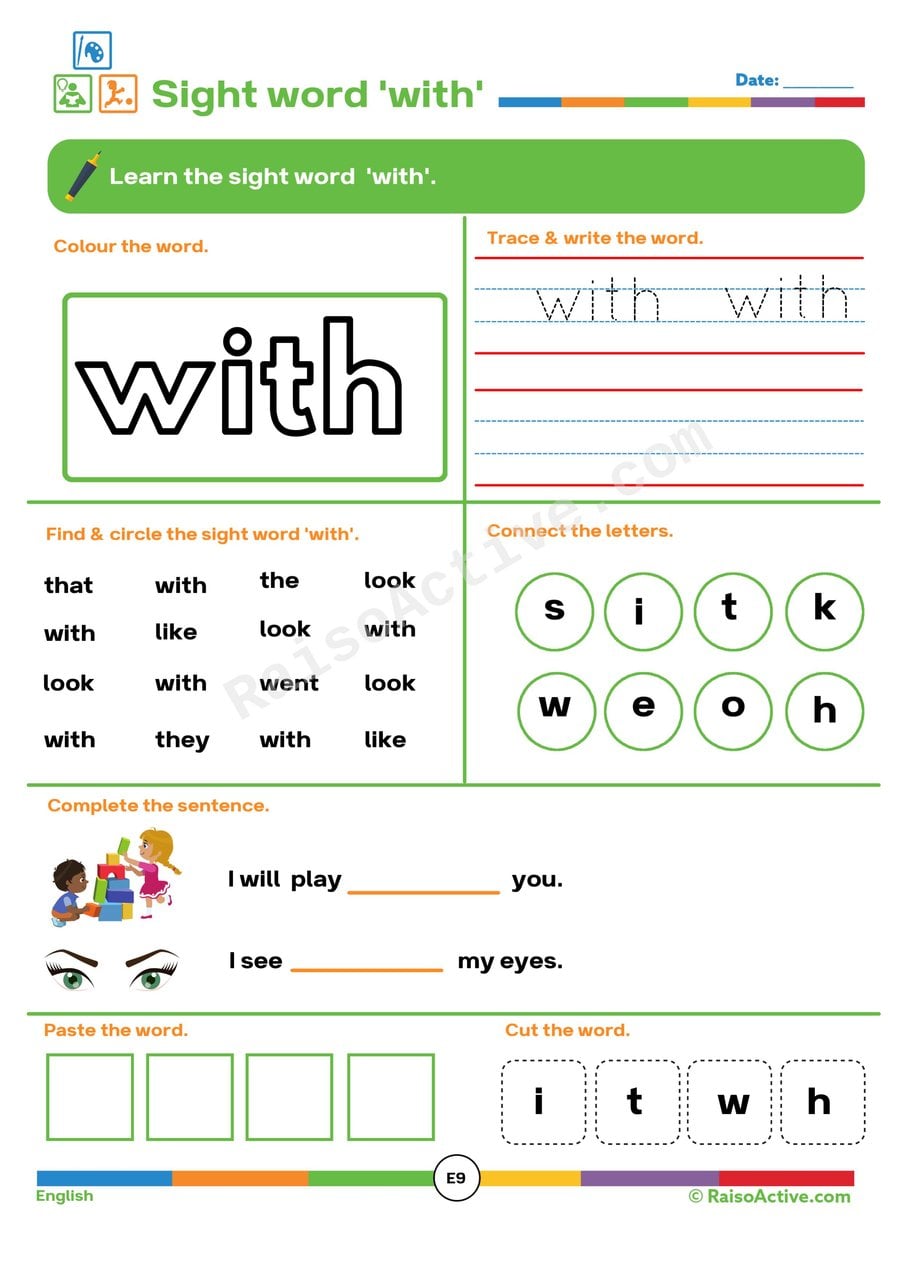
Sight Word 'With' Worksheet: Trace, Write, and Find!
This worksheet gives 4-5 year olds repeated, varied practice with the sight word 'with' — coloring it, tracing and writing it, finding it in a list, completing a sentence, and cutting and pasting it — because sight words like 'with' don't follow simple sound-out rules and need to be recognized instantly by sight rather than decoded each time. That instant recognition is what lets a young reader move smoothly through a sentence instead of stumbling on common connector words.
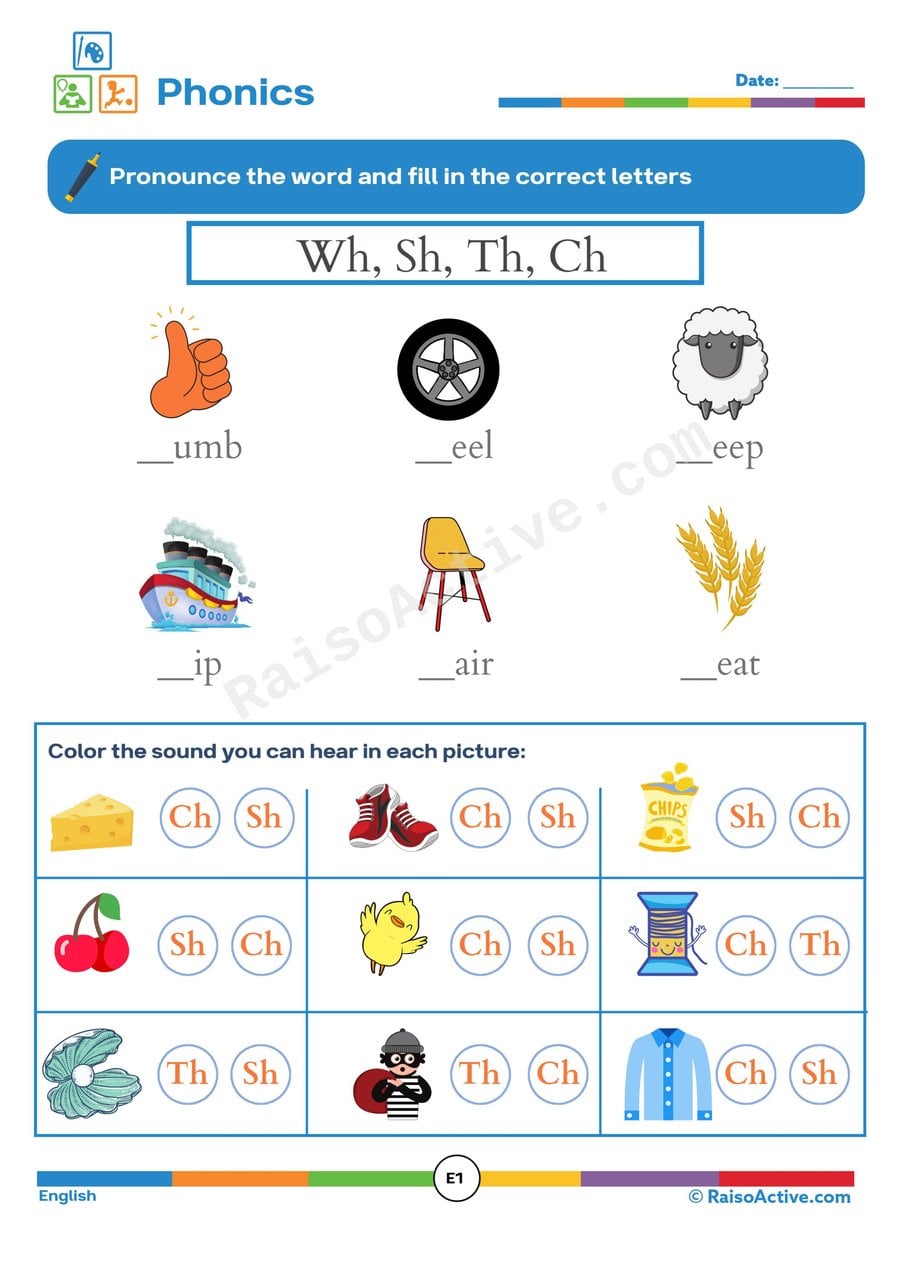
Wh, Sh, Th, Ch Sounds Worksheet for Preschoolers
Filling in missing letters to complete words with the digraphs wh, sh, th, and ch teaches children ages 4-5 to recognize these blended consonant sounds, which behave differently from single letter sounds and require dedicated practice to master. Coloring the picture that matches the correct sound afterward reinforces the connection between the blended sound and its spelling.

Number Names Matching Worksheet for Preschoolers
This worksheet layers two skills for children ages 4-5: unscrambling the letters of a number-name word and then matching that word to its correct numeral. Unscrambling requires children to recognize familiar letter sequences, an early word-recognition skill, while matching reinforces that written number words correspond to specific quantities. Together these tasks push number-word literacy a step further than simple copying or tracing.

First Letter Sound Worksheet: Beginning Sounds Practice
This worksheet asks children ages 4-5 to identify the beginning sound of pictured objects, write the missing first letter to complete each word, and then combine those first letters to form a brand-new word. Practicing beginning sounds in this layered way — first in isolation, then combined — helps children see letters as flexible building blocks rather than fixed, memorized shapes.
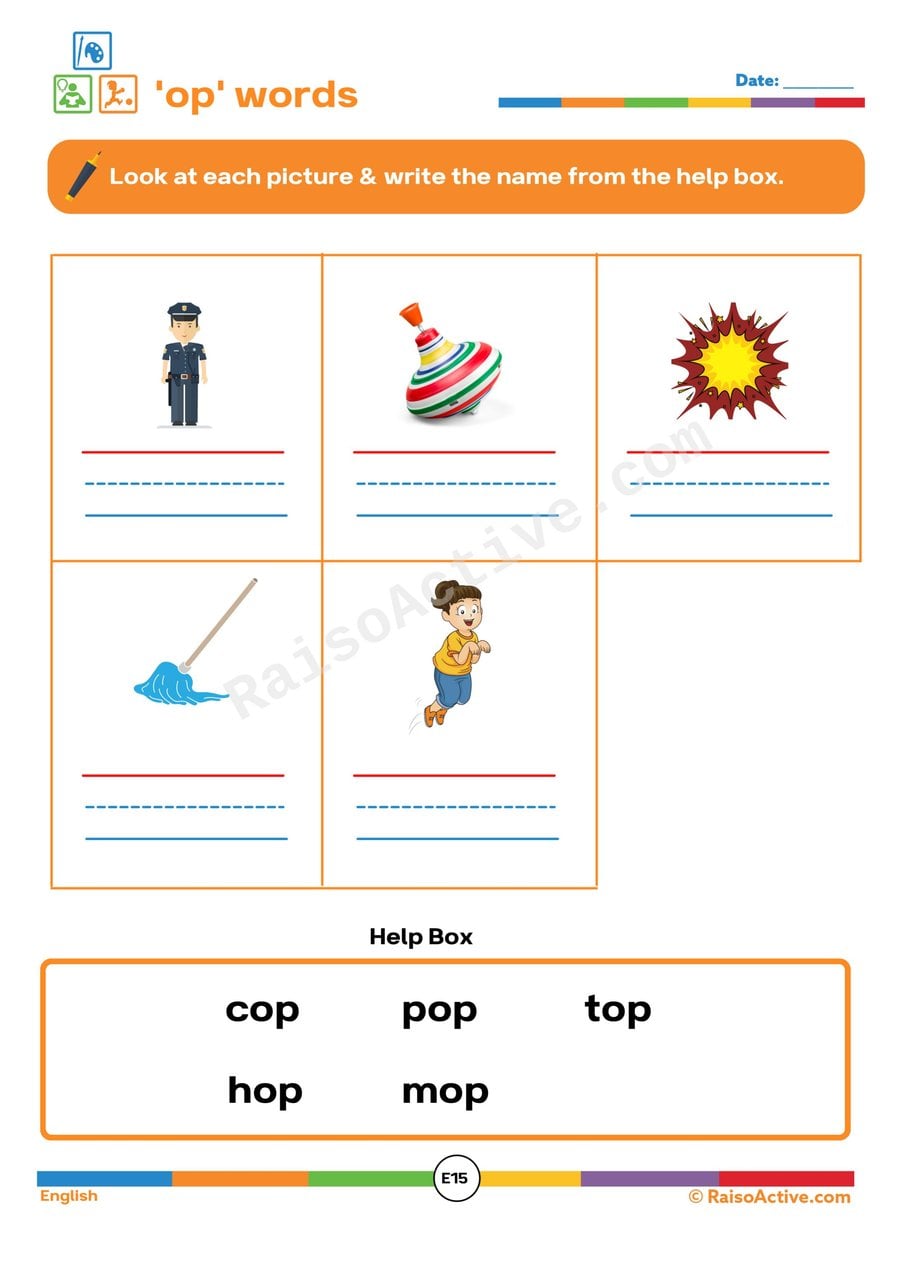
Op Word Worksheet: Read and Write 'op' Words!
This worksheet gives children ages 4-5 focused practice reading and writing CVC words in the 'op' family, like 'top', 'hop', and 'mop'. Recognizing the consistent '-op' ending across multiple words builds the pattern-recognition skill that lets early readers decode unfamiliar words more quickly. Writing each word after finding it in the help box also reinforces correct spelling and letter formation.

CCVC Digraphs Worksheet: Read and Match the Pictures!
This worksheet teaches children ages 4-5 to recognize consonant digraphs — two letters like 'ch', 'sh', and 'th' that combine to make one new sound — within CCVC-style words, then match each word to its picture. Digraphs are a common stumbling block because children must learn that these letter pairs don't sound like their individual letters, an important exception to the blending rules they've just learned. Matching to pictures checks that the sound-out leads to real understanding of the word.

Writing Number 6 Worksheet: Trace, Color, and Count!
This worksheet builds number 6 recognition for 4-5 year olds through tracing, coloring, and counting practice, connecting the written numeral to an actual quantity of objects your child counts aloud. Bringing formation, counting, and independent writing together in one page reinforces that '6' isn't just a shape to copy but represents a specific, countable amount, which is the real foundation of number sense.
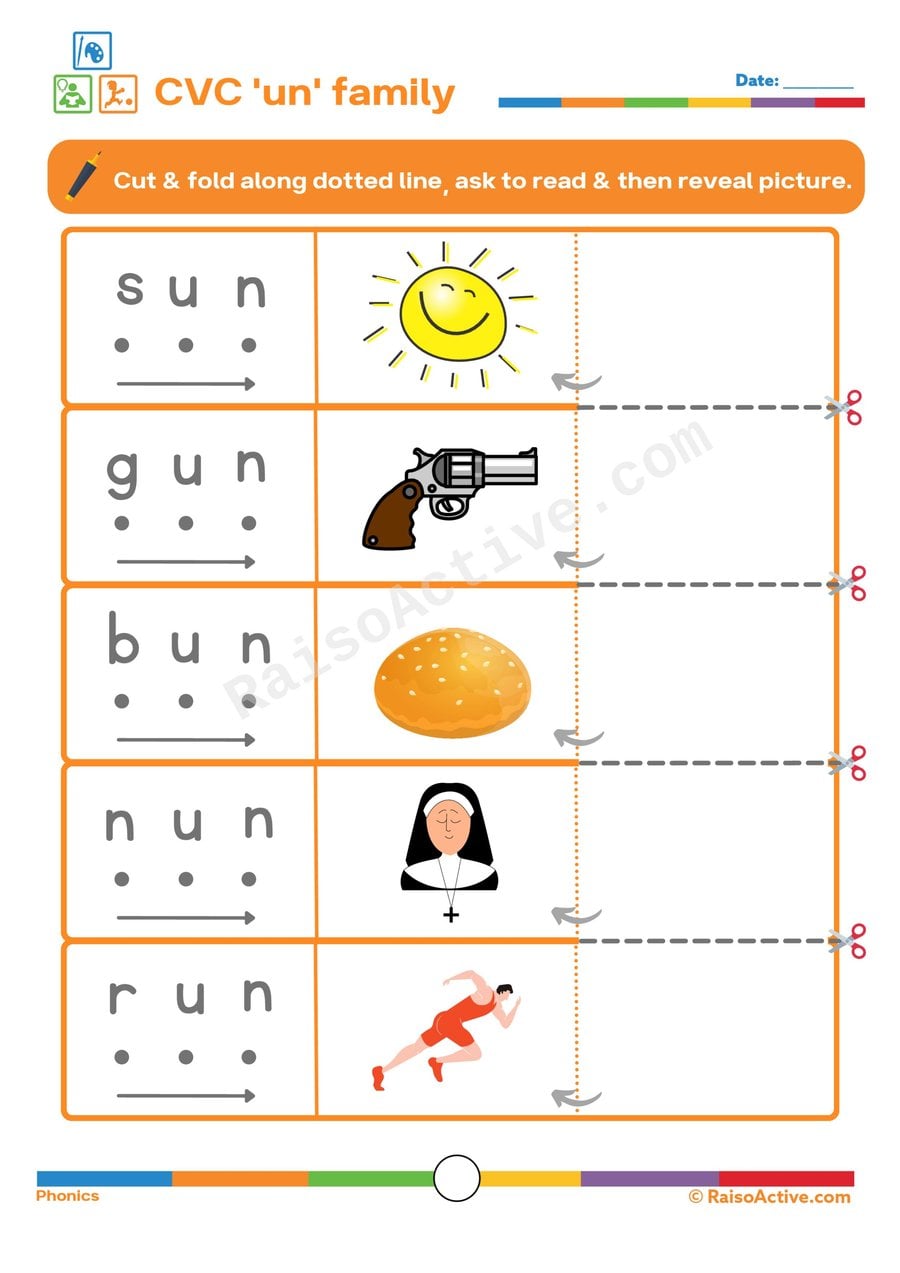
CVC Word Family 'un' Worksheet: Read, Cut, and Match!
This worksheet helps children ages 4-5 read words in the 'un' family, like 'sun' and 'run', while practicing a cut, fold, and reveal routine that turns decoding into a self-checking game. As with other word family worksheets, the goal is for children to notice that once they can read the shared ending, changing just the beginning letter unlocks a whole set of new words quickly. This builds both decoding accuracy and the confidence that comes from checking their own answers successfully.

Long Vowel 'ee' Sound Matching Worksheet for Preschoolers
This worksheet has children ages 4-5 complete long 'ee' words by writing missing letters, then draw lines matching each finished word to its picture. Focusing on the specific 'ee' spelling of the long 'e' sound, as in 'tree' and 'bee', helps children start noticing that vowel sounds can have several different letter patterns representing the same sound.

Trace and Write the Letter G Worksheet for Preschoolers
This worksheet isolates the uppercase G — a large curve with a small inward hook — so 4-5 year olds can build solid mastery of this one form before later tackling the more complex lowercase g with its descending tail. At this slightly older end of the preschool range, moving from traced copying to independent writing on the same page reflects a meaningful step up in handwriting expectations.

Lowercase Letter Matching Worksheet for Preschoolers
This worksheet gives children ages 4-5 practice connecting uppercase letters to their lowercase form by circling the correct match from a set of answer choices, a skill that's essential since most of the reading material children encounter is printed in lowercase. Many lowercase letters look quite different from their uppercase counterpart, so this matching task genuinely tests whether the connection has been learned rather than guessed.

Phonic Sounds Worksheet: Circle the Picture That Starts with the Alphabet Sound!
This worksheet reinforces beginning-sound recognition for children ages 4-5 by presenting a letter at the start of each row and asking them to find the one picture among several that begins with that same sound. Because each row contains multiple pictures, children must test several beginning sounds against the target letter before settling on the correct one, which builds more precise listening skills than simpler one-picture matching tasks. This process also strengthens the letter-sound mapping that underlies early decoding.
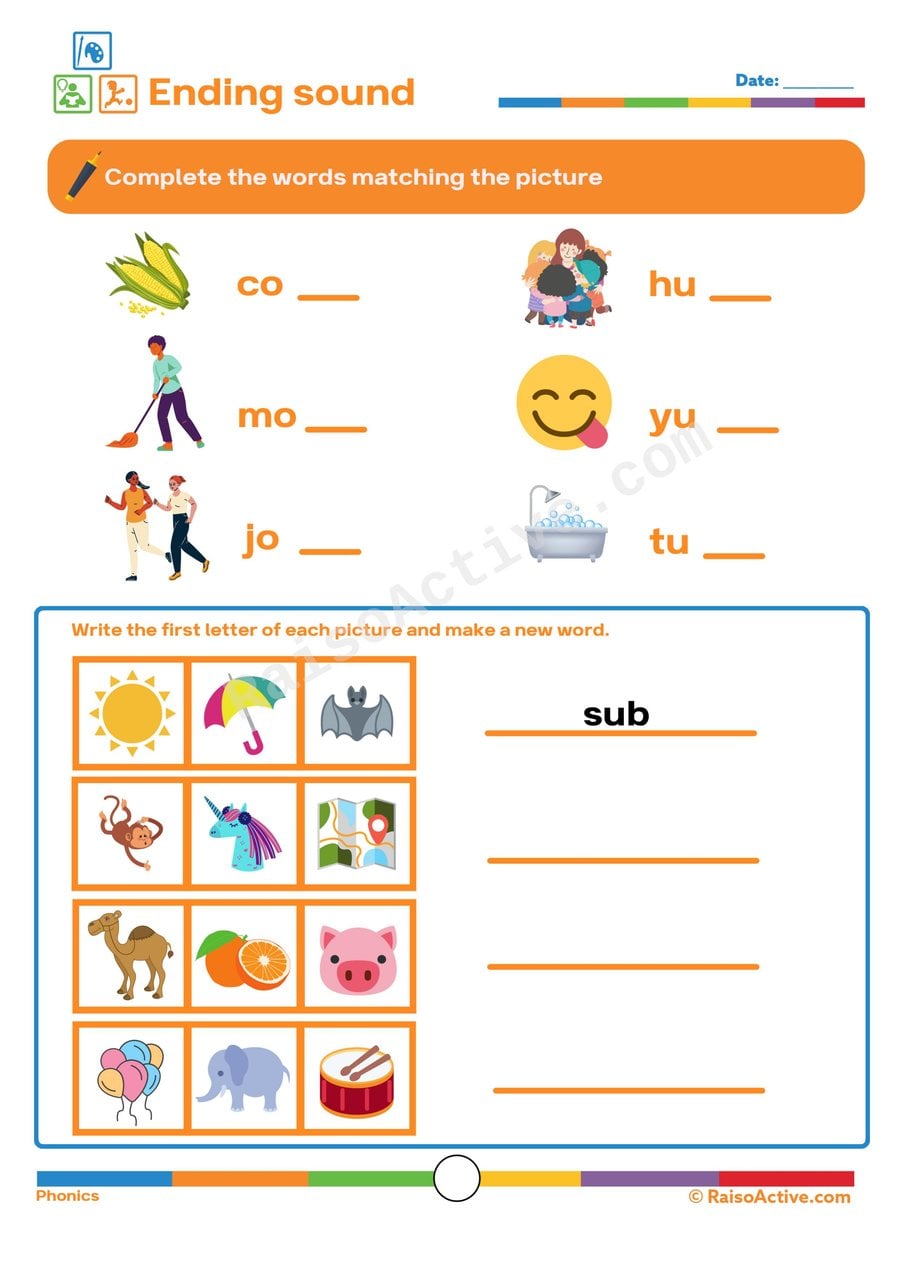
Ending Sound Worksheet: Complete the Words!
This worksheet builds on ending sound practice for children ages 4-5 by having them complete words based on pictures and then use the very first letter of each picture to build an entirely new word, adding a layer of creative word-building on top of straightforward phonics practice. Completing words by ending sound requires the same phonemic segmentation skill as beginning sound work, just applied to the trickier final position in a word. The second half of the worksheet, where beginning letters are strung together to form a new word, adds a satisfying puzzle element that rewards careful, accurate sounding-out in the first section.
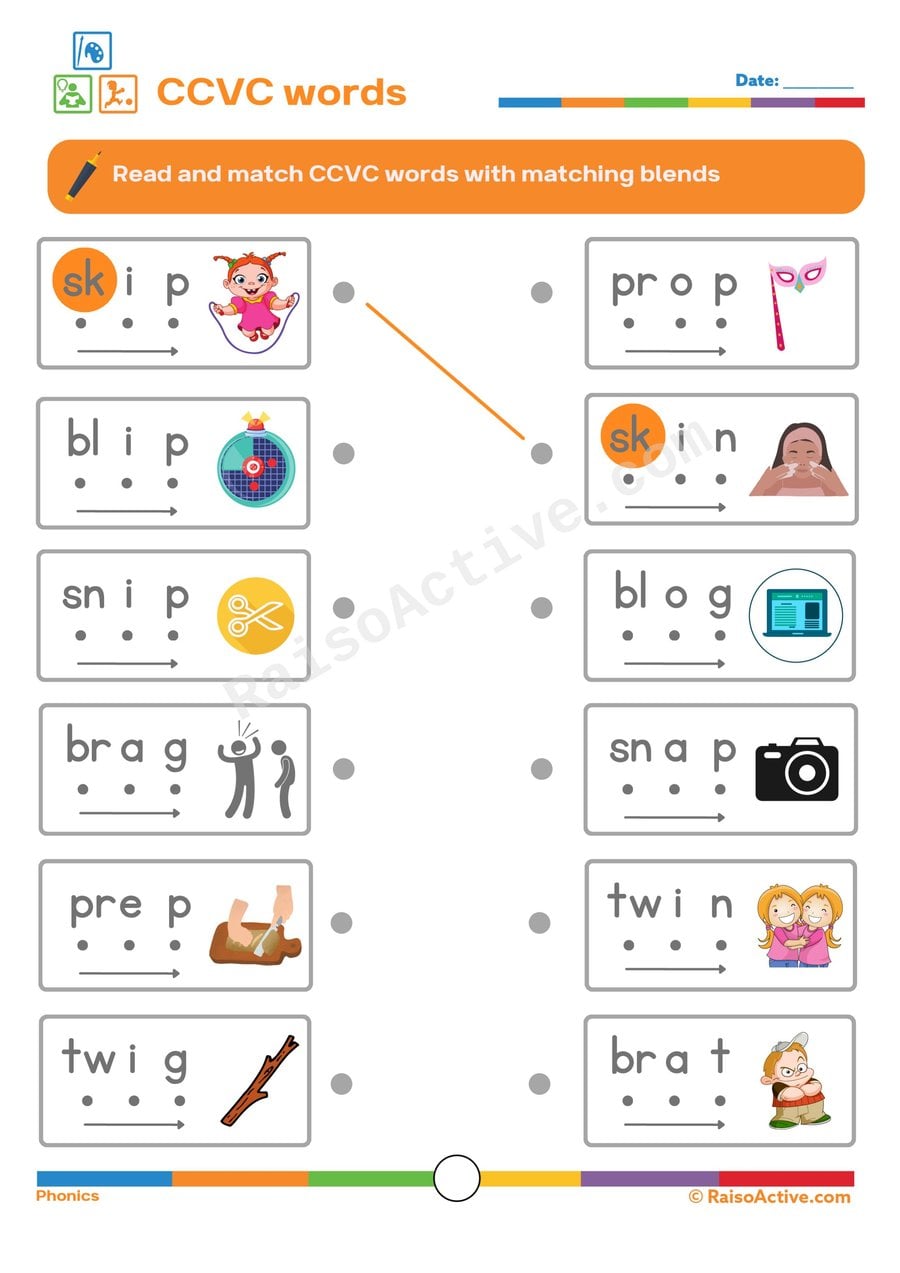
CCVC Word Matching Worksheet for Early Readers
This worksheet introduces children ages 4-5 to CCVC words — words that begin with a consonant blend followed by a vowel and consonant, like 'stop' or 'frog' — and asks them to match each word to its picture. Reading words with initial blends is more demanding than simple CVC words because two consonant sounds must be blended together before reaching the vowel, so this worksheet stretches decoding skills a step further. Matching words to pictures also confirms comprehension, not just sound-out ability.
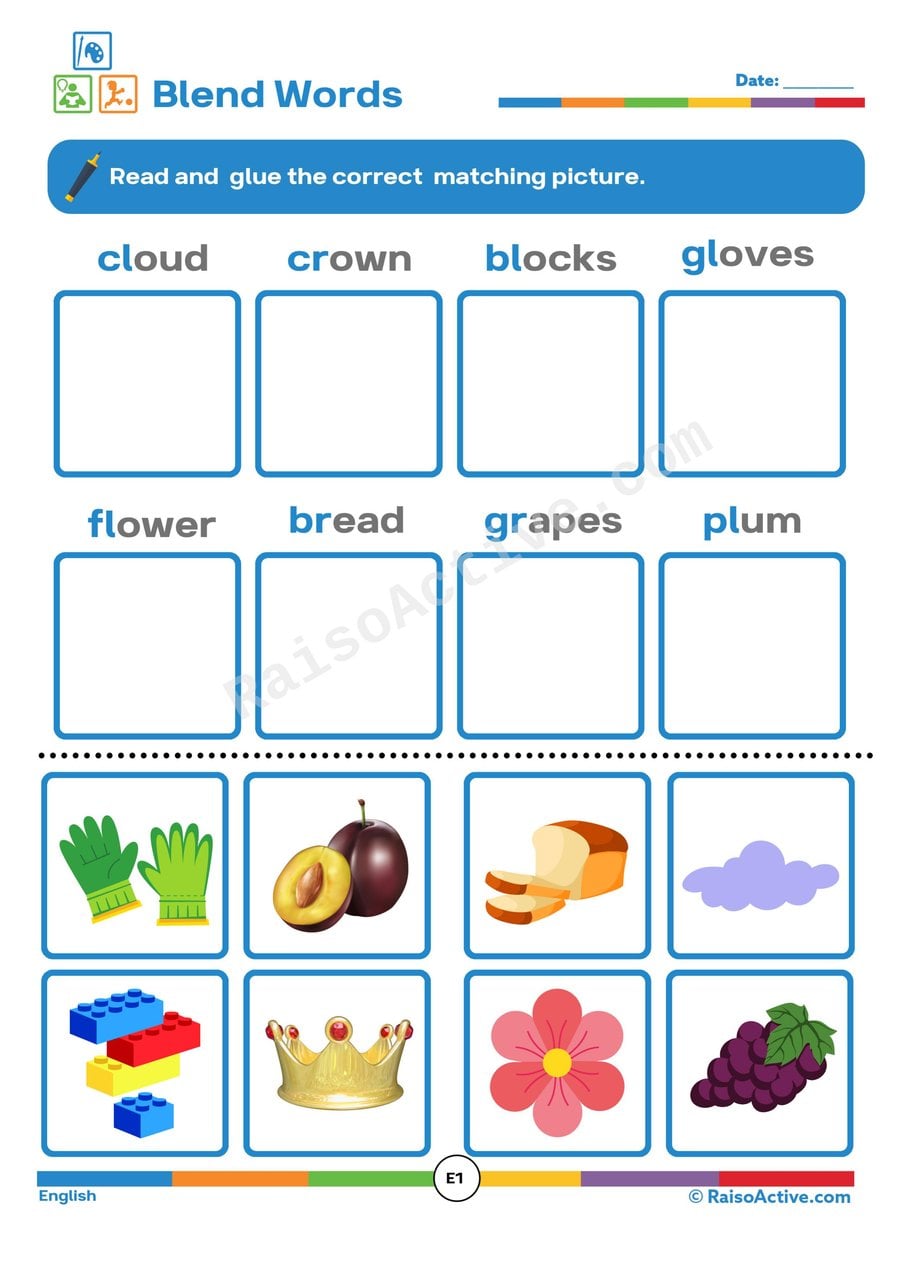
Blend Words Matching Worksheet for Preschoolers
Children ages 4-5 practice reading consonant blend words — words that start with two consonant sounds blended together, like 'bl' or 'st' — and connecting them to the correct picture through a cut-and-paste matching activity. Blends are a step up in difficulty from single beginning sounds, since children must hear and produce two consonant sounds smoothly together, an important milestone on the way to more advanced phonics.
What Pre-K phonics worksheets cover
At four to five, a child learns the sound of most letters, not just the name, and starts blending sounds heard aloud into a word without seeing print. A worksheet should ask for the sound of a shown letter, matching a letter to a picture that starts with it, and oral blending tasks like "what word is m-a-p?" said slowly with gaps. Reading a printed word by sounding it out independently is the next stage, not this one.
- Say the sound, not just the name, of a shown letter
- Match a letter to a picture starting with its sound
- Blend three sounds said slowly aloud into a spoken word
- Segment a short spoken word into its separate sounds
How to use these worksheets at home or in class
Ten minutes a day, starting with name tracing before moving to letters or numbers, builds the steady habit this stage rewards. Say a letter's sound alongside its name while tracing, and count out loud while touching each object in turn.
Start with the sheet that matches what your child can already do, then move one step up. Keep finished sheets in a folder: Pre-K teachers often ask for evidence of practice, and children like seeing their own progress.
Is your child ready for Pre-K phonics work?
Before this stage a child should trace basic shapes and lines, recognize a few letters from their own name, count a small set of objects by pointing to each one, and sustain a simple table task for several minutes.
Frequently asked questions
How can I tell if my four-year-old is ready to start blending sounds into words?
Say a short word slowly with a gap between each sound, such as "s...u...n", and ask what word it makes. A child who is ready will usually get this right most of the time once the idea is explained. If the gaps confuse rather than help, spend more time on hearing the first sound in words and on rhyming, since oral blending like this needs to work before blending from printed letters can.
What should a Pre-K child be able to do in phonics?
At four to five, a child learns the sound of most letters, not just the name, and starts blending sounds heard aloud into a word without seeing print. A worksheet should ask for the sound of a shown letter, matching a letter to a picture that starts with it, and oral blending tasks like "what word is m-a-p?" said slowly with gaps. Reading a printed word by sounding it out independently is the next stage, not this one. Before this stage a child should trace basic shapes and lines, recognize a few letters from their own name, count a small set of objects by pointing to each one, and sustain a simple table task for several minutes.
Do these worksheets follow the Pre-K curriculum?
The sheets cover letter-sound correspondence, blending sounds into words, segmenting words into sounds and digraphs and consonant blends, which sit inside the State pre-K early learning standards; Head Start ELOF outcomes for Pre-K. Reception (UK), LKG / Junior KG (India) use the same skills at this age, so the sheets also fit families following those programmes.
Are these Pre-K phonics worksheets free?
Yes. Each worksheet downloads free as a watermarked PDF once you create an account, with a limit of five a day. An annual membership ($20) removes the watermark and the limit for the whole library of over 1,000 worksheets and every printable pack.

Written by
Hemsweta Jain · Teacher Cheena
MBA and Early Childhood Educator, teaching since 2014 · Founder of RaisoActive, Mumbai
Written and reviewed by Hemsweta Jain (Teacher Cheena), who designs every RaisoActive worksheet.
Last reviewed
Printable packs for ages 4–5
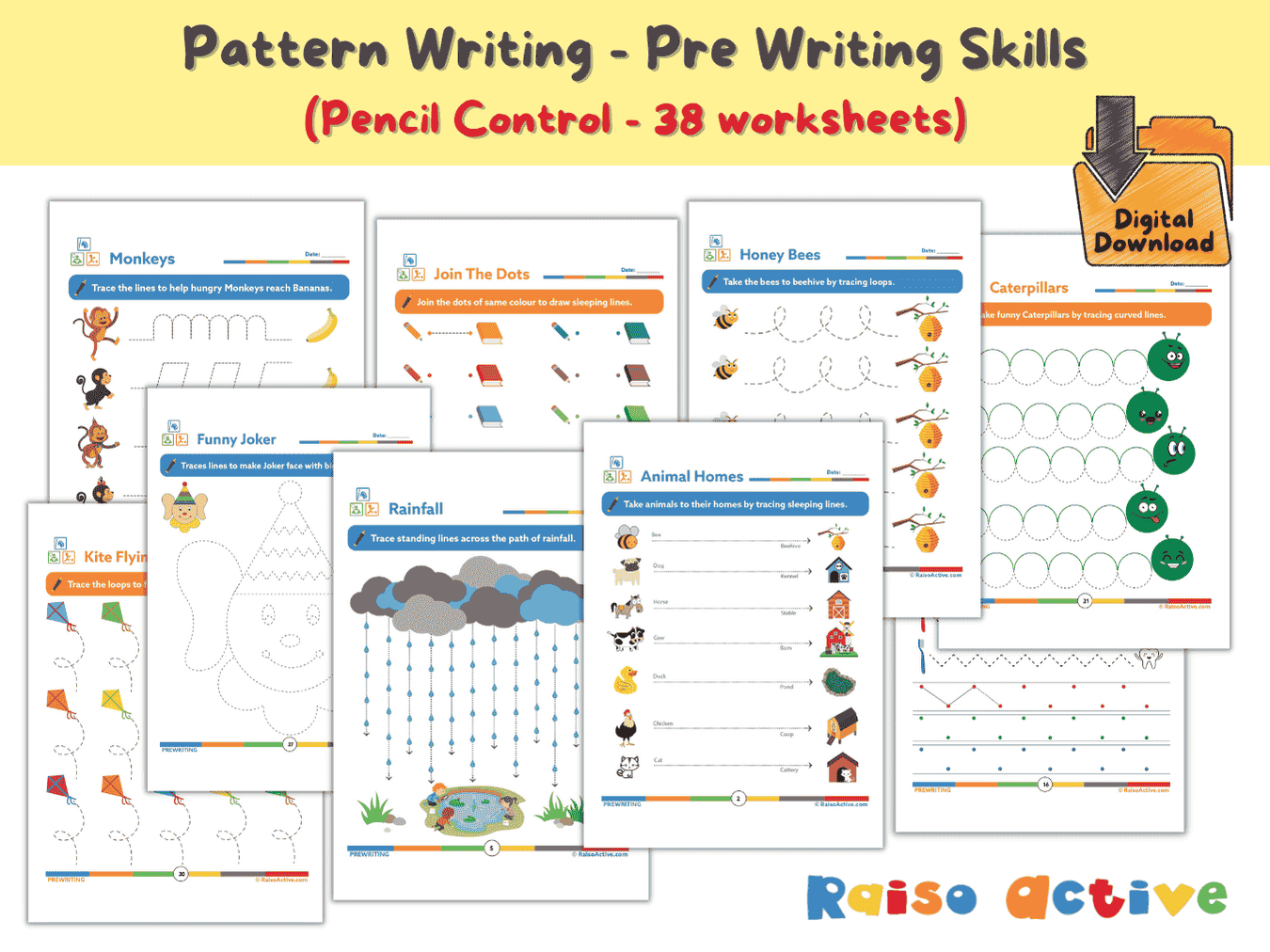
Pattern Writing Pre-writing Skills Activity Book for 3-4 Year Olds
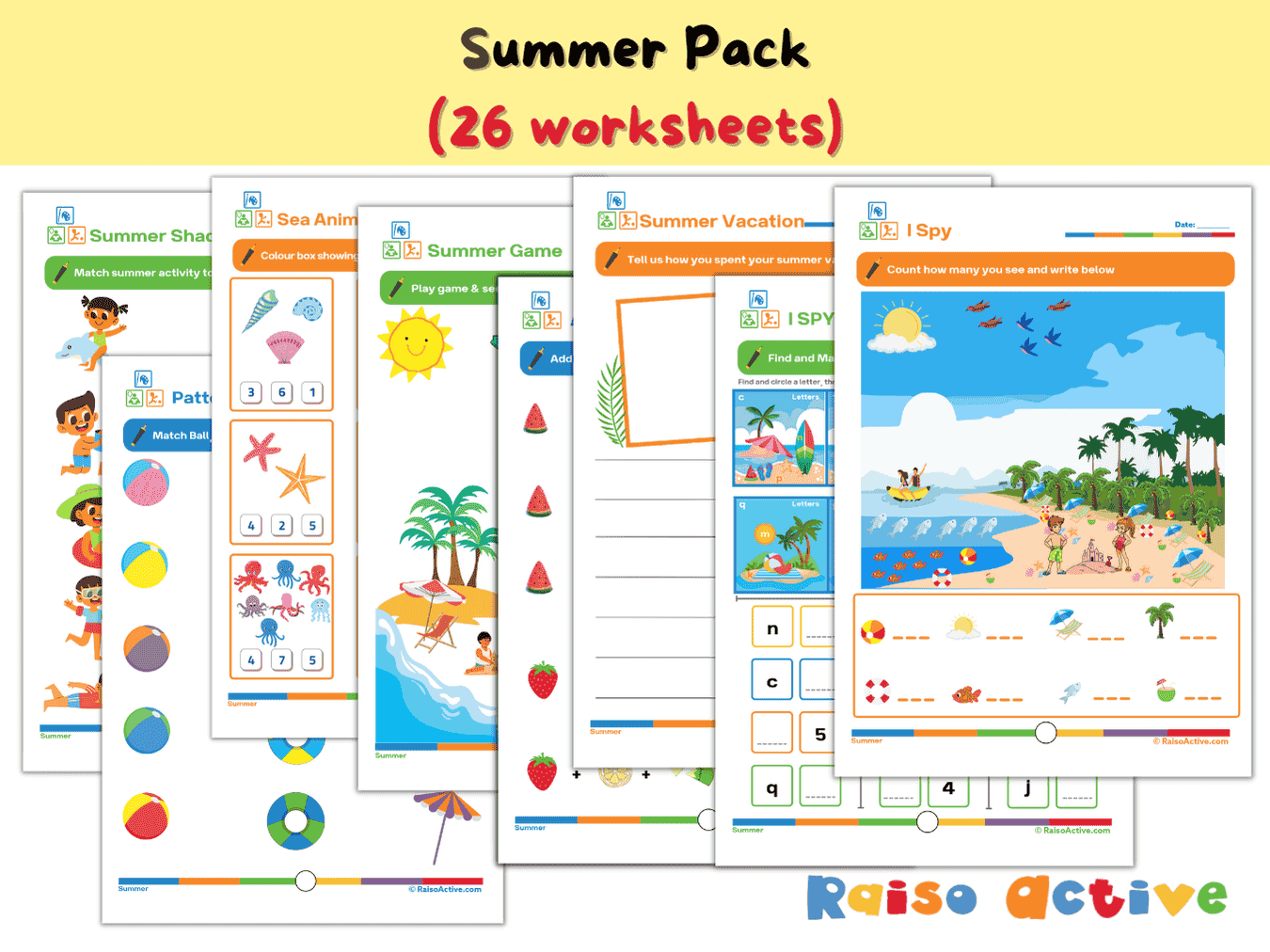
Summer Activity Pack: Math, Literacy, Puzzles & More for Preschool & Kindergarten
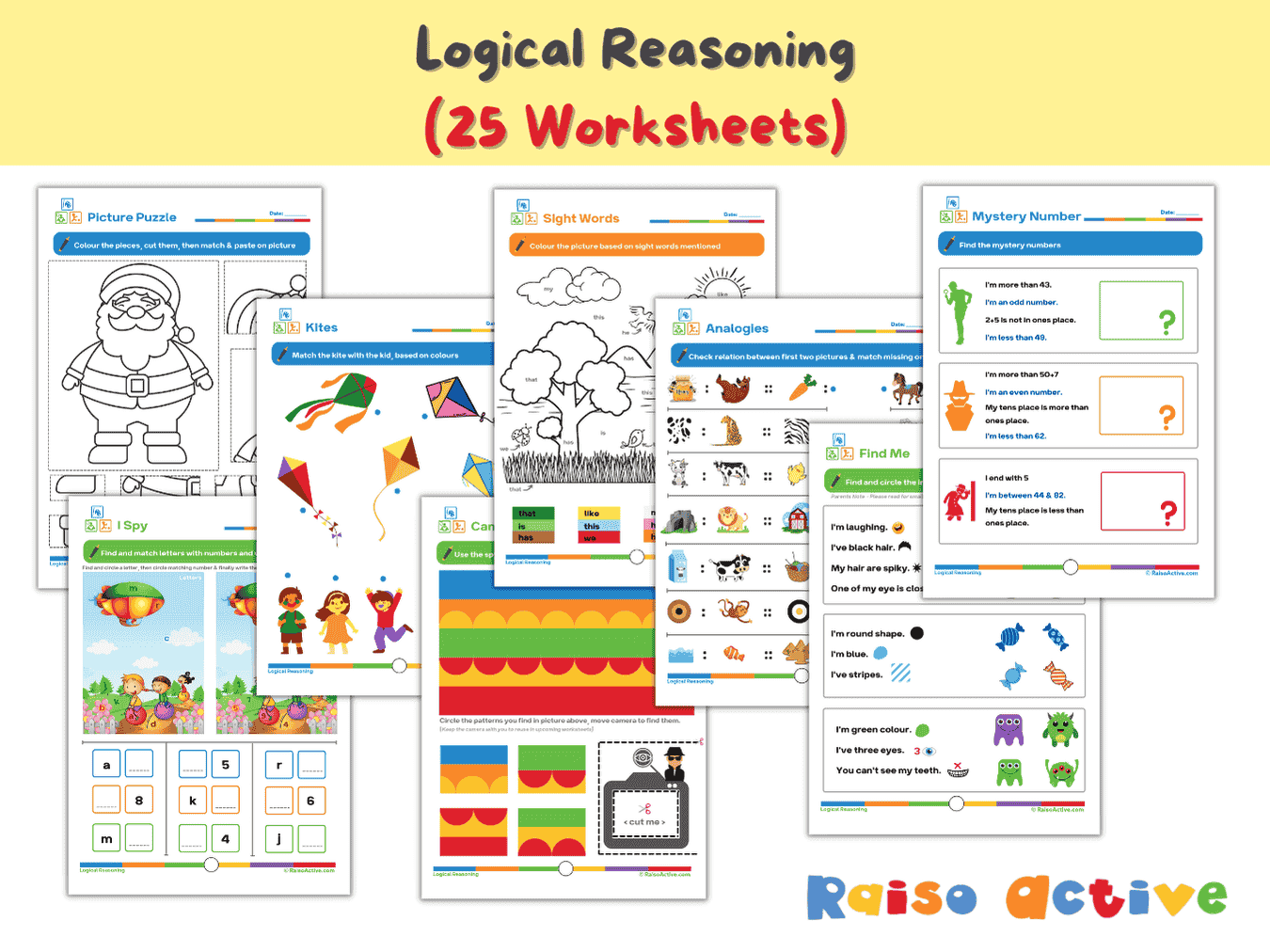
Logical Reasoning Activity Book for Preschool & Kindergarten | Patterns, Puzzles & Analogies
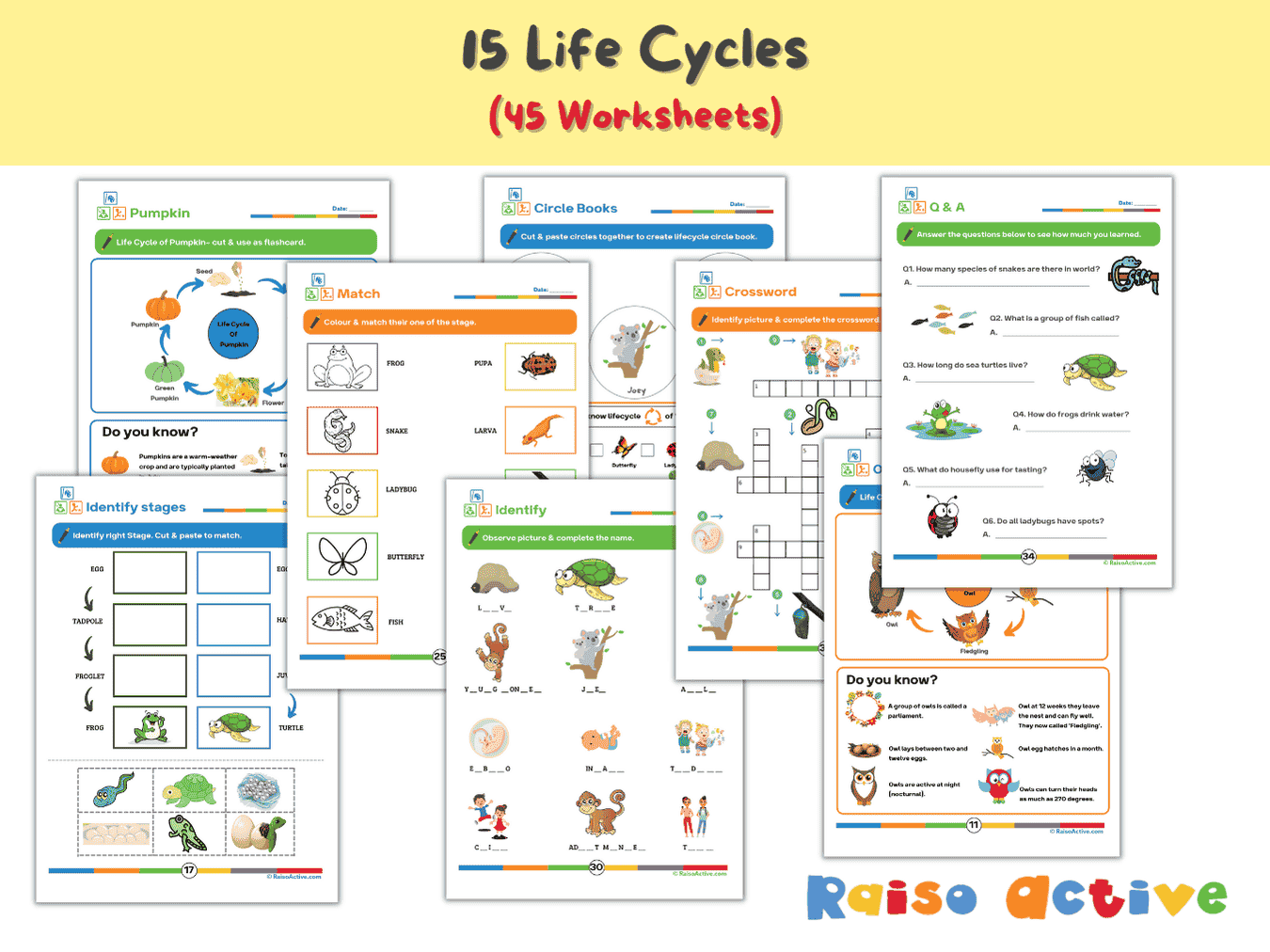
Lifecycles Activity Book & Flashcards for Preschool & Early Elementary
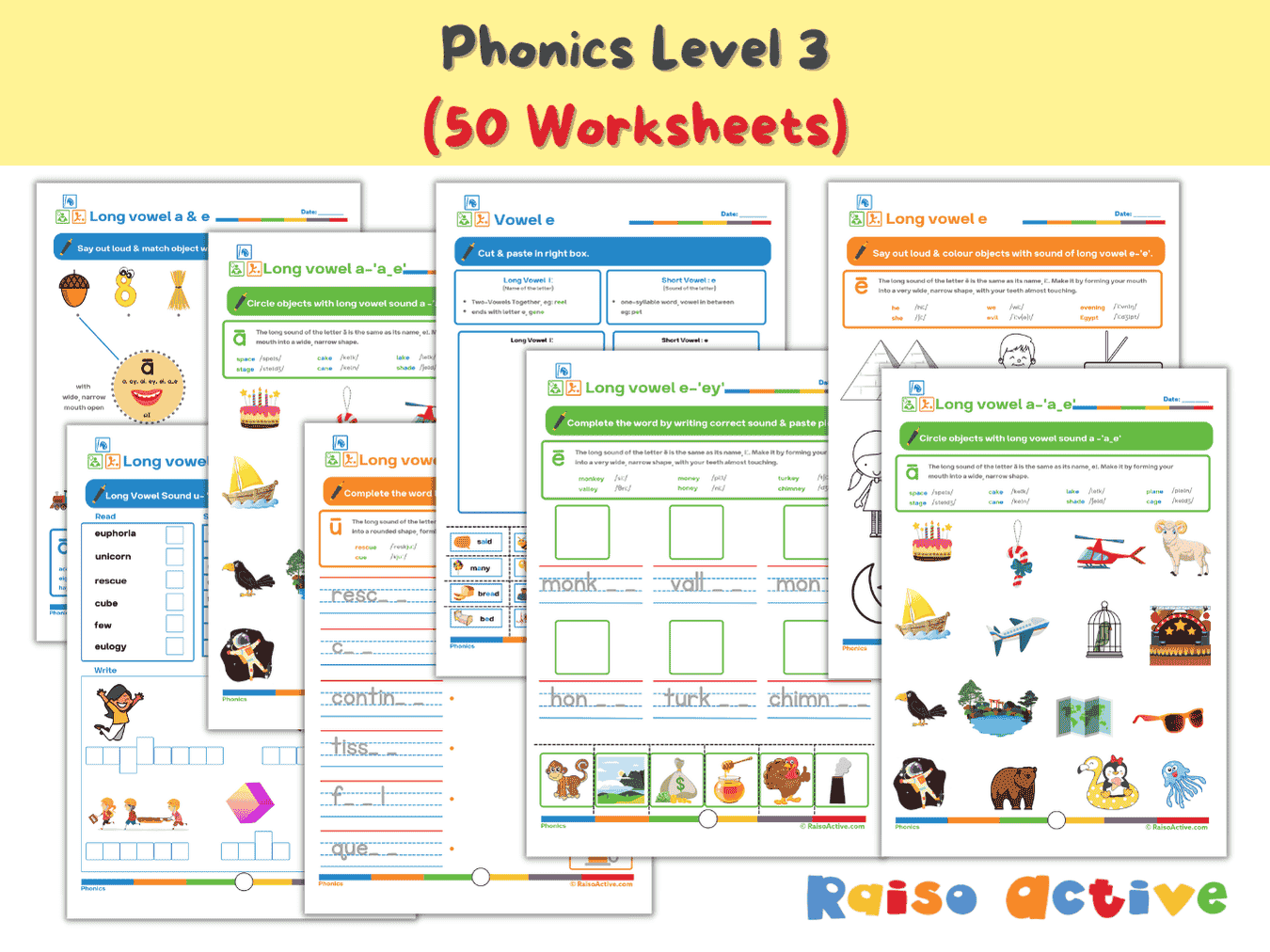
Phonics Level 3 Long Vowels Activity Book for Kindergarten & 1st Grade
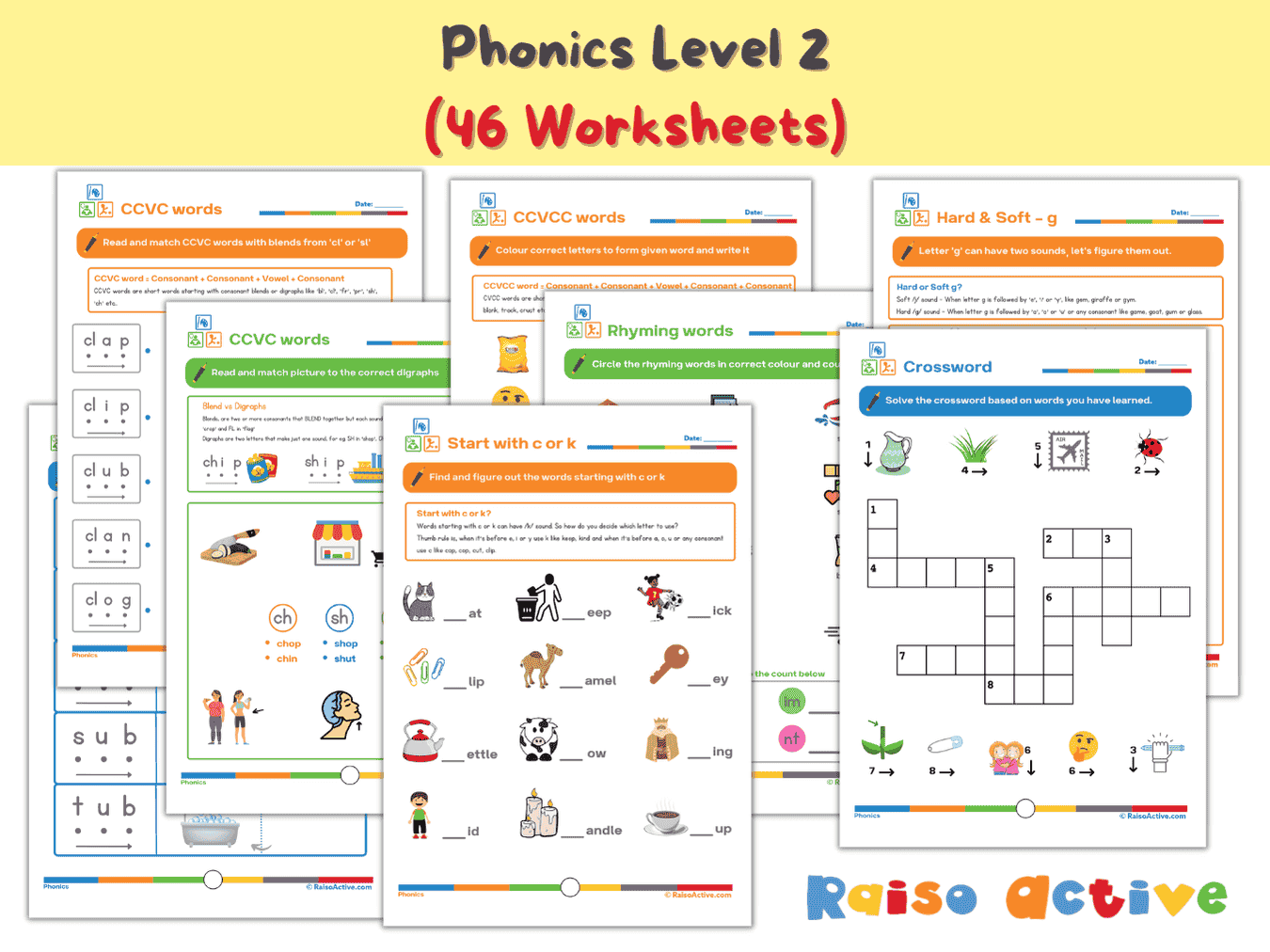
Phonics Level 2 Worksheets: CVC, CCVC, CVCC Word Families & Blends for Early Readers (Ages 4-7)
Guides for parents and teachers
See all guides →Sight Words by Age: The First 50 Words and How to Teach Them Without Flashcard Fatigue
Which sight words to teach first and why, the heart-word method, a read-trace-write-find routine, games, and a by-age table of typical sight-word progress.
How to Teach CVC Blending: A Step-by-Step Method That Works in Two Weeks
A step-by-step method for teaching CVC blending, covering continuous sounds, word families, common errors, and a 14-day plan that most children finish reading CVC words.
Phase 2 Phonics at Home: Sound Order, Blending Games, Worksheets
Phase 2 phonics at home: the five sound sets in order, oral blending, tricky words, a two-week routine, common mistakes, and free worksheets.
Reception Year Explained: EYFS Learning and How to Help at Home
A teacher's plain-English guide to the Reception Year: the seven areas of learning, Early Learning Goals, Phase 2/3 phonics, the RBA and home routines.
UKG Syllabus Explained: English, Maths and EVS Month by Month
What UKG classes typically cover in English, maths and EVS, month by month, aligned to NEP 2020, with ways to support at home and signs your child is behind.
Bridging Two Worlds: A Complete Guide to Teaching Heritage Languages Alongside English
A practical guide to raising bilingual children who speak both their heritage language and English with confidence. Research-backed strategies, activities, and tips for Indian families.