Free printable worksheets · United States
Preschool Coloring Worksheets (Ages 3–4)
Preschool coloring worksheets are practice sheets for children aged 3–4 in Preschool in the US. Coloring is filling a printed outline with color using a crayon or pencil, practicing pressure control, staying inside a line and naming colors. The sheets on this page cover staying inside an outline, crayon or pencil pressure control, color recognition and naming and filling a large area evenly.
Preschool builds readiness rather than academics: pre-writing strokes, uppercase letter recognition, counting objects to ten, naming shapes and colors, and cutting along a line, all introduced through short table activities inside a mostly play-based day. Grip is still forming, so most activities favor a thick crayon over a standard pencil. Three-year-olds begin to aim. The crayon is now held with fingers, strokes get shorter, and a child tries to keep color inside a large outline, mostly succeeding by the end of the year. Worksheets can introduce a simple key: color the circles red and the squares blue, or match a numeral 1 to 3 to a color. Around eight color names are usually known by four. Small regions and mystery-picture grids are still too fiddly.
324+ worksheets · free PDF download · print on A4 or Letter
Preschool Coloring Worksheets to print
Browse all worksheets for ages 3–4
Color by Number Snowman Worksheet for Preschoolers
This color-by-number worksheet helps children ages 3-5 practice number recognition and color matching simultaneously, using a snowman picture divided into numbered sections. Reading a number key and applying it consistently across an entire picture builds sustained attention and careful visual tracking, since a single mistake can be spotted easily against the intended design. This combination of numeracy and following directions makes color-by-number activities a favorite bridge between math and art.
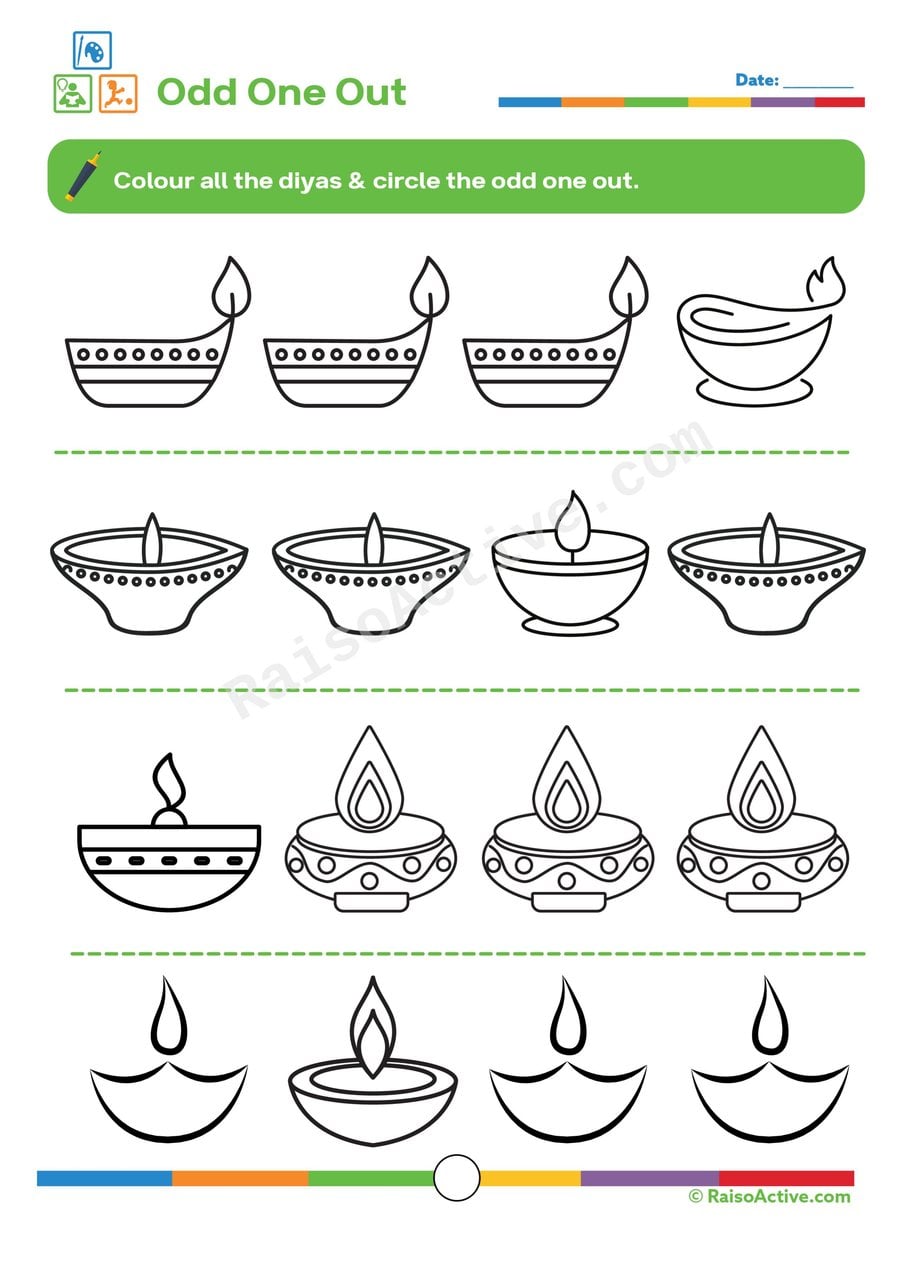
Diya Odd One Out Worksheet for Kids
This worksheet builds visual discrimination skills in children ages 3-5 as they compare a row of diyas and identify the one that differs from the rest. Spotting subtle differences in shape, color, or design is an early critical-thinking skill that lays groundwork for later pattern recognition and attention-to-detail tasks in reading and math.

Color the Teddy Bear Valentine's Day Worksheet for Kids
Coloring a teddy bear surrounded by Valentine's hearts gives children ages 3-5 practice with sustained hand control as they work to stay within an outline, a skill that develops gradually through repeated, low-pressure coloring practice rather than all at once. The holiday theme also builds simple color-word vocabulary and gives your child a chance to make deliberate color choices, an early form of creative decision-making.

Color Santa Claus for Christmas! A Fun Coloring Worksheet
This Santa Claus coloring page lets children ages 3-5 practice crayon control and color selection on a large, familiar holiday figure, building confidence with fine motor coloring skills before moving to smaller or more detailed pictures. Choosing colors for Santa's suit, hat, and beard also opens up conversation about the holiday season and familiar seasonal symbols.
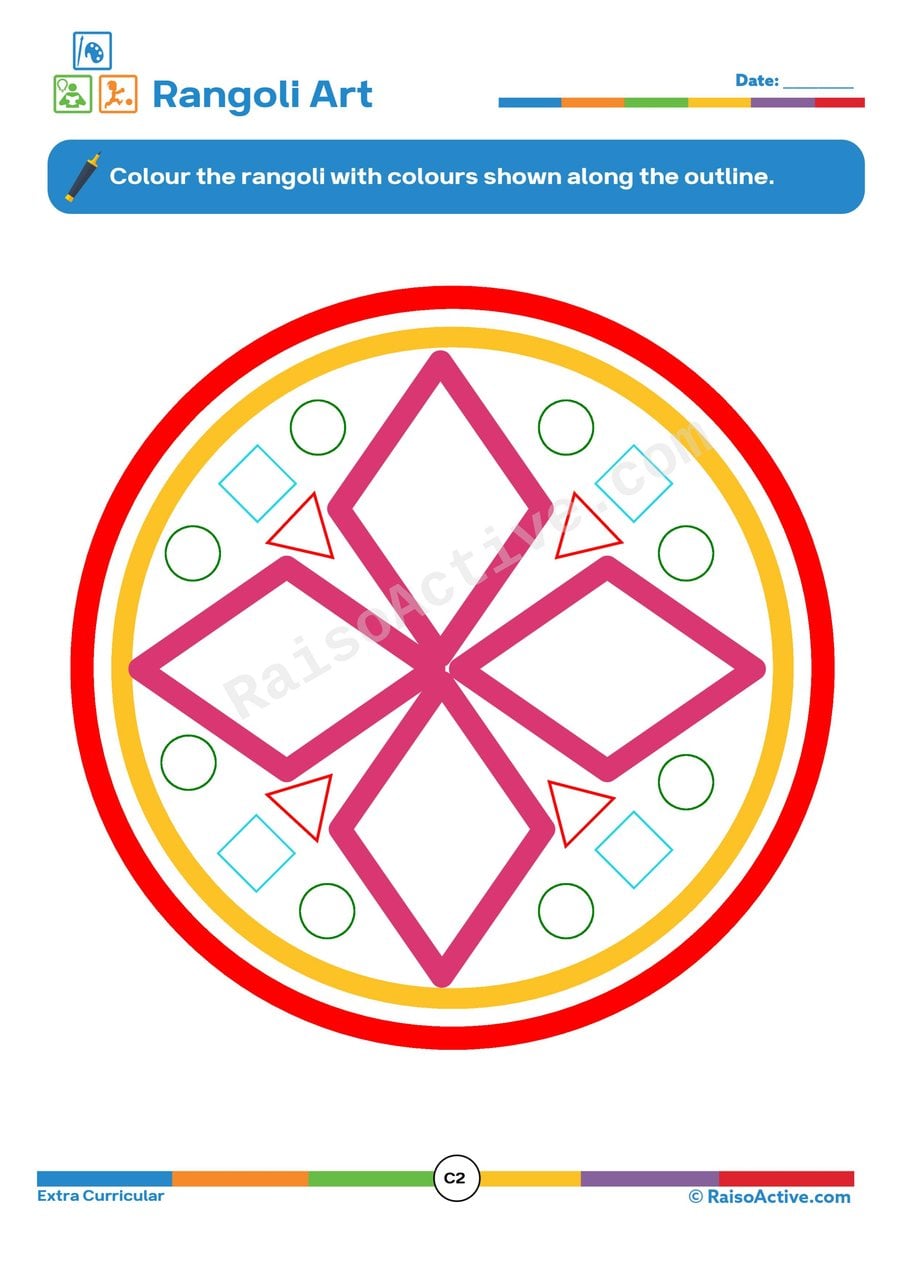
Rangoli Art Coloring Worksheet for Kids
This worksheet builds fine motor control and color-following precision as children color a traditional Rangoli design according to a color key along the outline, while also introducing them to a meaningful cultural art form. For ages 3-5, staying within intricate, symmetrical lines is more demanding than open coloring pages and helps develop the hand control needed for detailed schoolwork later on.

Underwater Adventure: Color the Aquatic Animals Worksheet
Coloring a scene full of aquatic animals gives children a low-pressure way to practice fine motor control and color choice while also building familiarity with ocean creature vocabulary as they look at and name each animal before coloring it. For ages three to five, an open coloring page like this also supports creativity, since there's no single 'correct' color for a fantasy-bright fish or coral.

Color the Sight Words! A Fun Coloring Worksheet for Preschoolers
This worksheet helps children ages 3-5 recognize common sight words by finding and coloring them within a brick-wall design according to a color key. Because sight words like 'the,' 'and,' or 'is' don't follow regular phonics rules, repeated visual exposure like this coloring task is one of the most effective ways for young children to memorize them by sight rather than sounding them out each time.

Find the Similar Objects! Coloring Worksheet for Preschoolers
Preschoolers ages 3-5 sharpen visual discrimination by scanning sets of objects to spot which ones are identical, a skill that underlies later letter and word recognition. Comparing shapes, colors, and small details strengthens attention to detail and careful observation. Coloring the matching pairs also reinforces the finding with a hands-on, satisfying finish.

Color the Snowman! A Fun Coloring Worksheet for Kids
This worksheet helps children ages 3-5 practice fine motor control and creative choice while coloring a winter snowman scene. Because the image invites open-ended color decisions rather than following a strict code, it also builds confidence in making independent artistic choices.

Transportation Coloring Worksheet for Preschoolers
This worksheet helps children ages 3-5 practice categorizing vehicles by where they travel — air, water, or land — while strengthening fine motor control through a color-coded coloring task. Following a color key adds a layer of symbolic thinking, since children must hold three rules in mind and apply the correct one to each vehicle. It's a natural bridge between science classification and hands-on art.
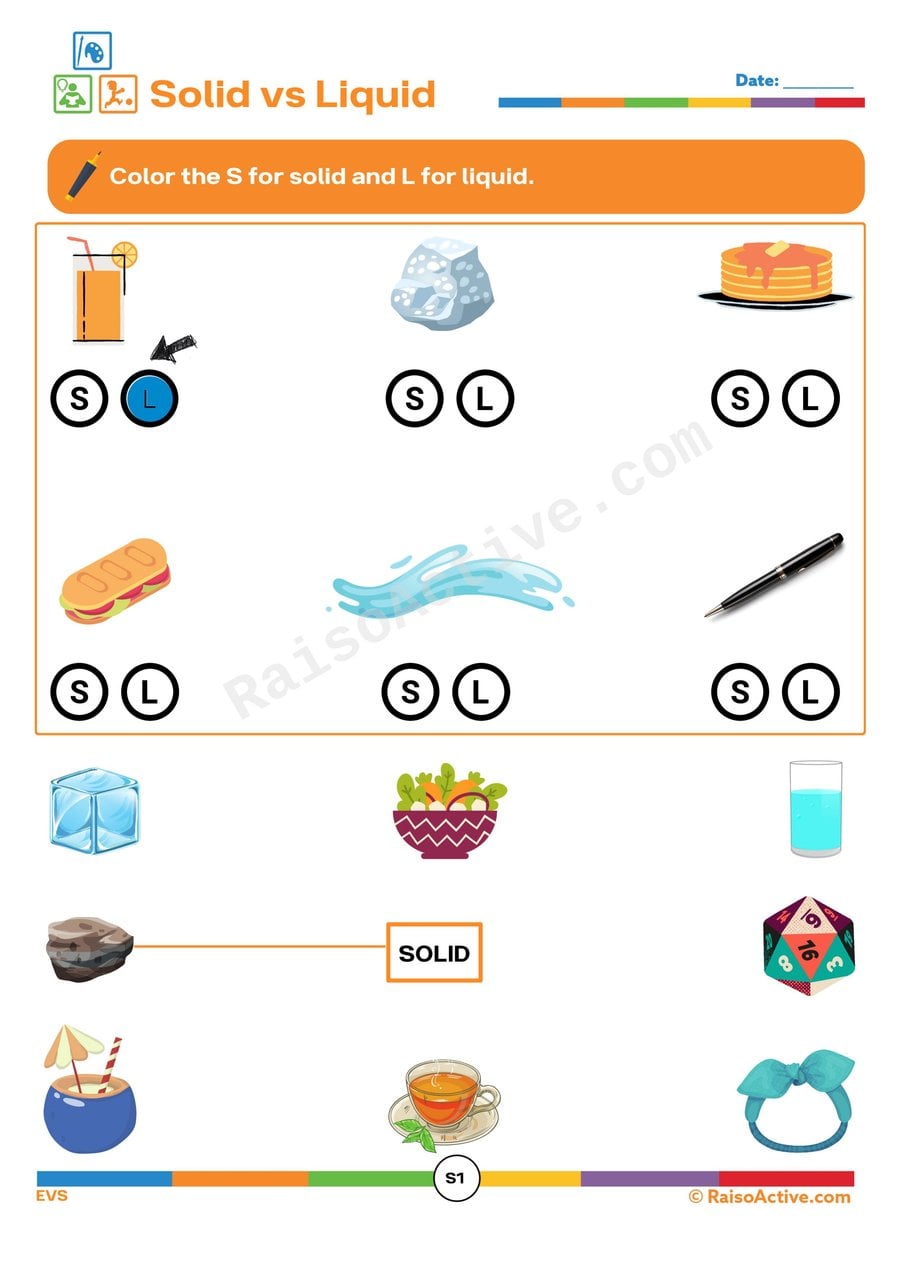
Solid vs. Liquid Worksheet: Color and Learn!
This worksheet introduces children ages 3-5 to the basic science concept of states of matter by having them sort pictured items into solids and liquids and color a corresponding letter, 'S' or 'L'. Early classification of the physical world — noticing that some things hold their shape while others flow and take the shape of their container — is an important first step in scientific thinking and observation.

Summer Symmetry Worksheet for Preschoolers: Complete and Color!
This worksheet introduces children ages 3-5 to the concept of symmetry by having them draw the missing half of a summer object, such as completing one side of a picture to mirror the other. This exercise builds an early sense of balance and proportion, an important visual-spatial skill that supports later geometry and art. Coloring the completed picture afterward adds fine motor practice while reinforcing the finished, whole shape they just created.
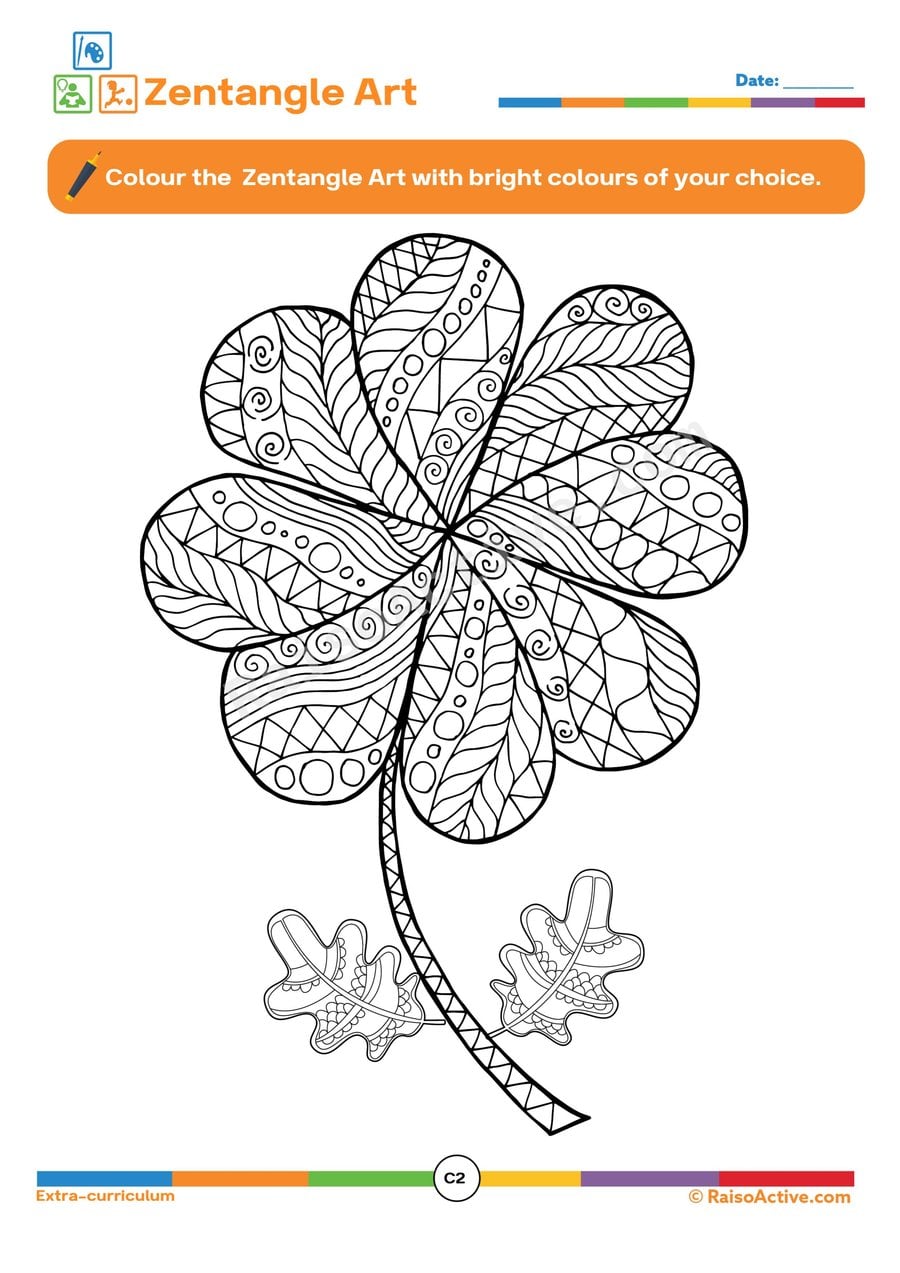
Color the Zentangle Art Worksheet for Kids
Coloring an intricate Zentangle-style pattern gives children ages 3-5 sustained practice with fine motor control in a lower-pressure format than a picture with a 'correct' outcome, since any color choice works within the repeating design. Staying within small, densely packed sections also builds the hand precision needed for later detailed handwriting and drawing tasks. Beyond the motor skill, this kind of open-ended, repetitive coloring supports focus and calm, giving children a chance to practice sustained attention on one task.
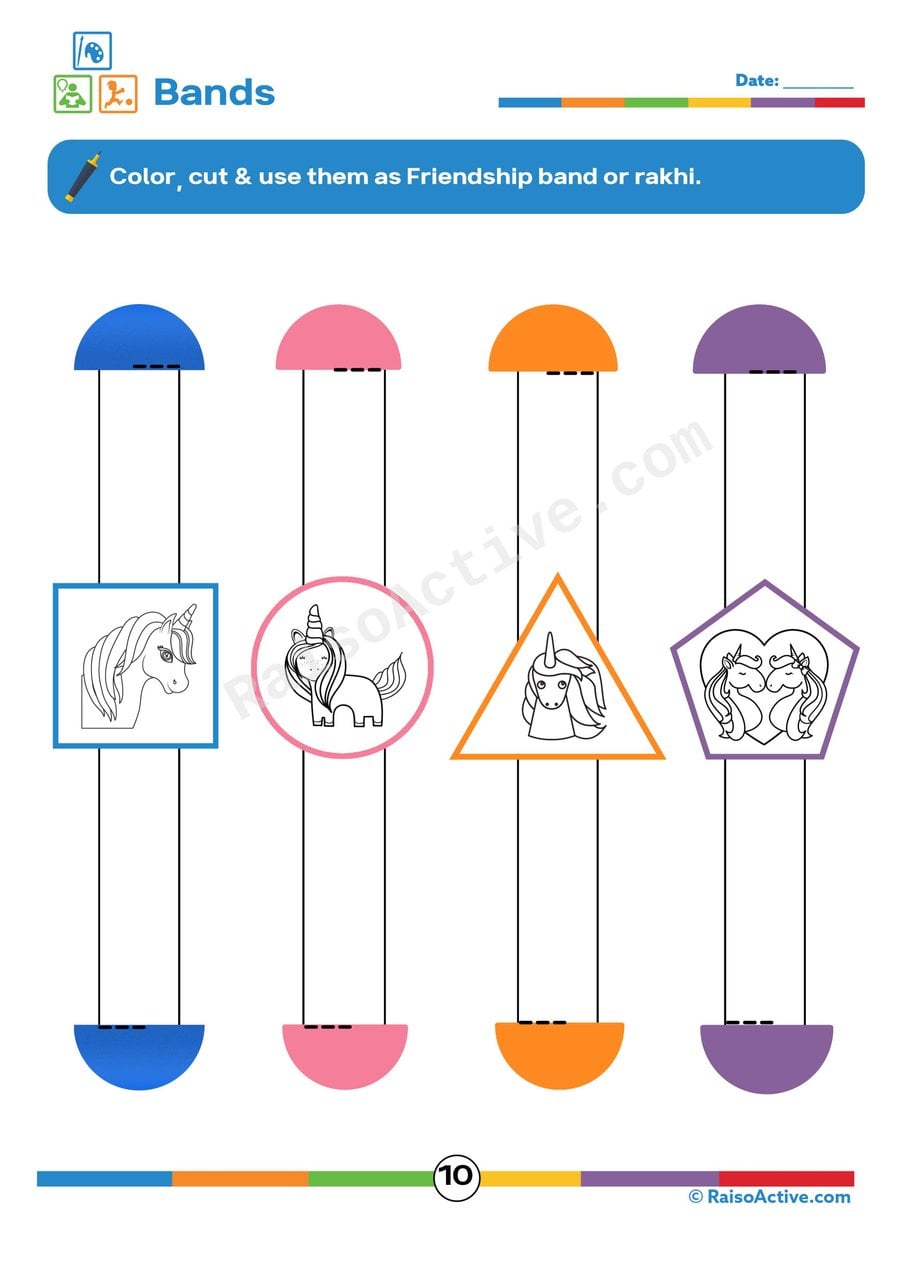
Unicorn Friendship Bands Worksheet for Kids
Children ages 3-5 practice coloring within defined shapes and controlled scissor cutting as they bring unicorn-themed friendship bands to life. The combination of coloring first and cutting second means they must track the same shape through two different fine motor tasks, reinforcing hand control and attention to detail.
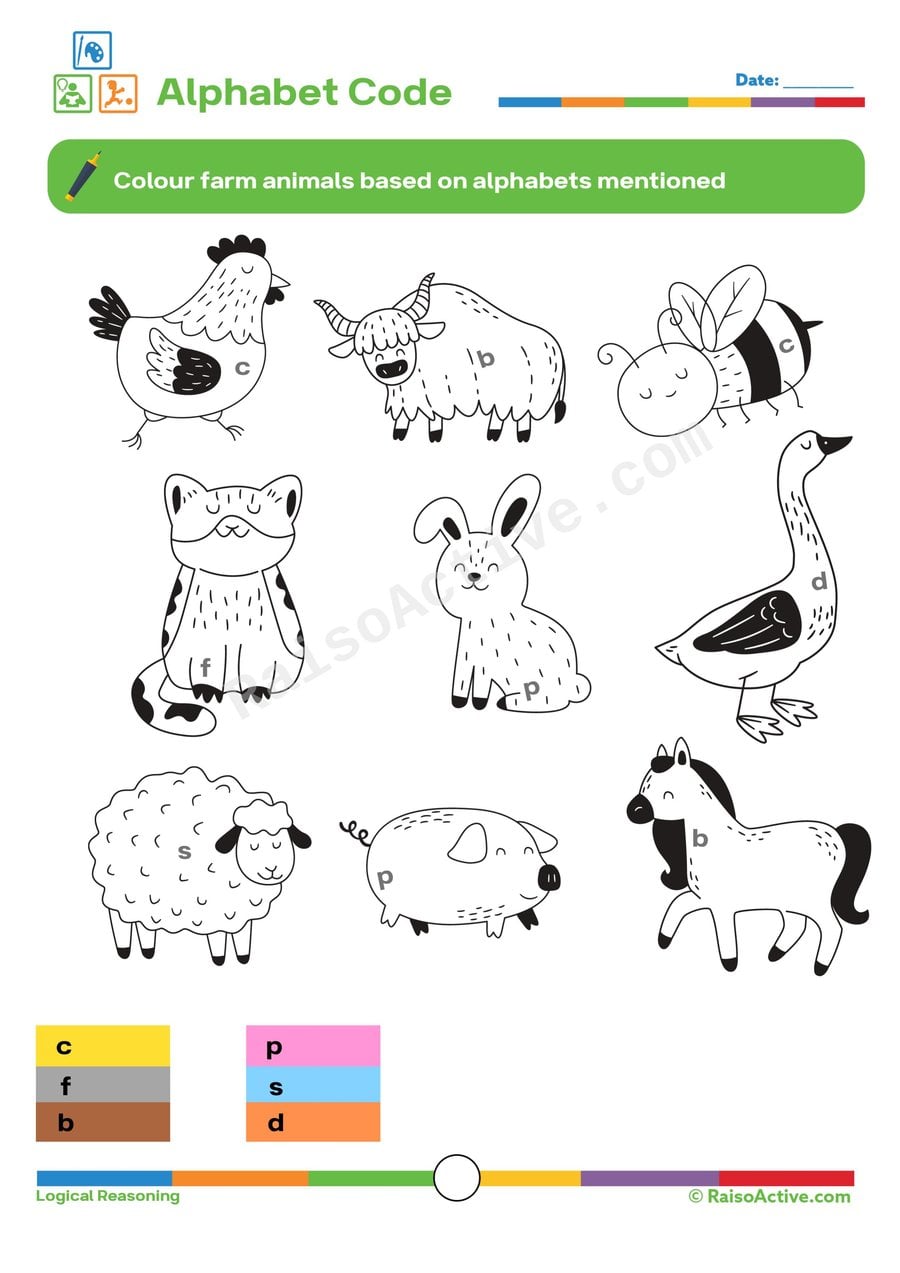
Color the Farm Animals! Alphabet Code Worksheet
Children ages 3-5 practice letter recognition and instruction-following by coloring farm animals according to a color code tied to specific letters. Matching a letter to its assigned color adds an extra layer of symbolic thinking beyond simple coloring, since children must hold both a letter and a color in mind at once.

Before and After Shapes Worksheet: Coloring and Identifying Shapes
This worksheet combines shape identification with sequencing for children ages 3-5, asking them to color shapes accurately and then determine which shape comes before or after a given one in a sequence. Applying 'before' and 'after' to shapes rather than pictures of events pushes children to think about order in a more abstract way. Coloring within defined shape outlines also builds hand control and attention to boundaries.
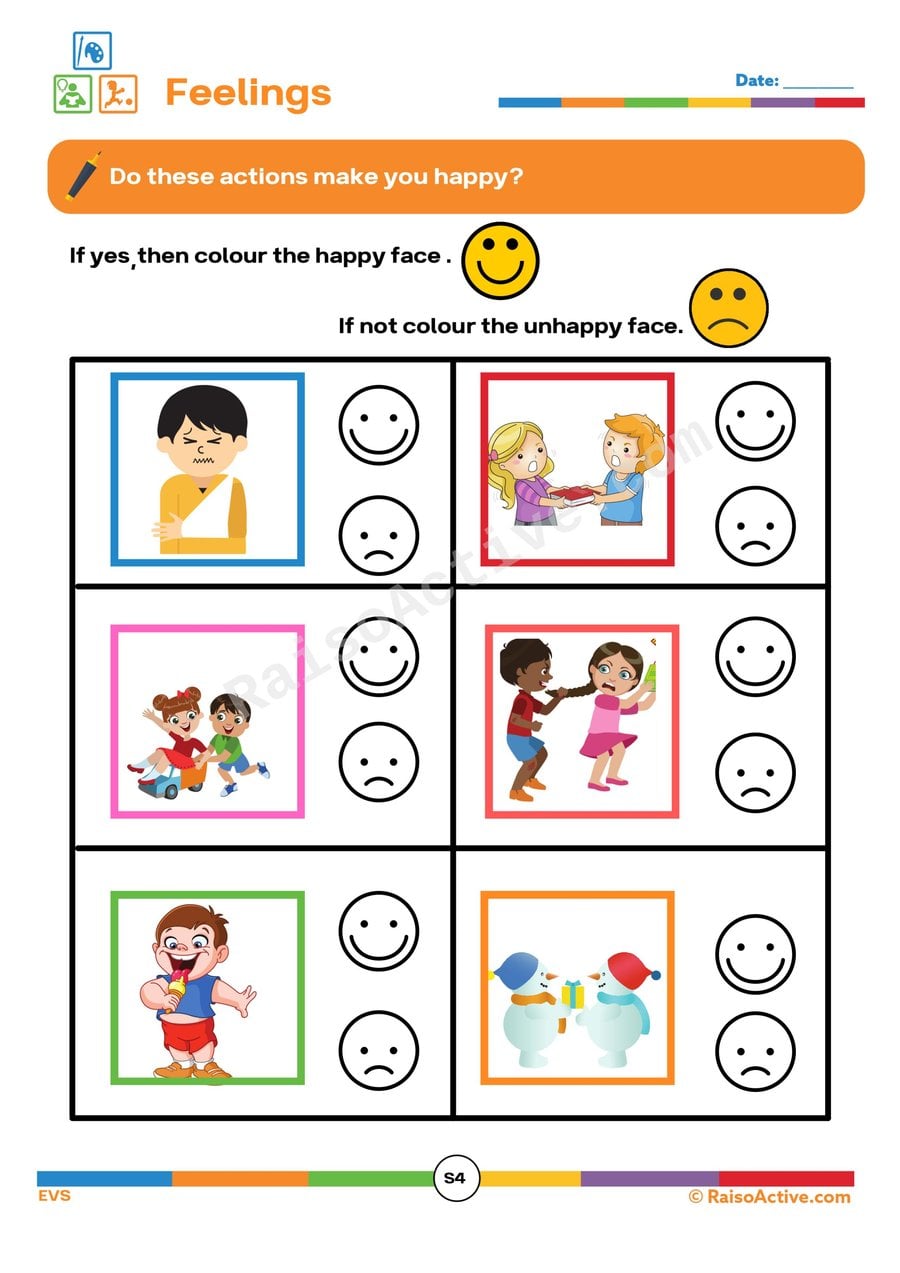
Feelings Worksheet: Happy or Sad?
Looking closely at faces and deciding whether they show happy or sad builds emotional literacy, the ability to read facial cues and put a name to a feeling, in children ages 3-5. This is an early and important social-emotional milestone, since recognizing emotions in others is a first step toward empathy and toward naming their own feelings instead of just acting them out.

Air Balloon Color by Sums Worksheet for Preschoolers
This color-by-sums worksheet combines basic addition practice with color-by-number skills, asking children ages 3-5 to solve simple addition problems within each section of an air balloon and then color that section according to a matching color key. Solving a math problem correctly before coloring turns each section into a small, self-checking task, since an incorrect sum would lead to the wrong color choice. This blend of math and art keeps repetitive addition practice feeling like a creative activity rather than a drill.

Spot the Spots! Spring Coloring Worksheet for Preschoolers
This worksheet pairs counting practice with coloring as children ages 3-5 look at a number written beside each picture and color exactly that many spots onto it, reinforcing one-to-one correspondence between a numeral and a matching quantity. Because the target number changes from picture to picture, children must check the number freshly each time rather than coloring on autopilot.

Color the Numbers: Sorting Worksheet for Preschoolers
This worksheet helps children ages 3-5 practice number recognition by reading a color key and coloring each numeral in the circle below according to its assigned color, combining early sorting logic with numeral identification. Applying a symbolic rule — 'this number means this color' — across a whole page trains children to hold and consistently apply an instruction, a skill that carries over into following multi-step directions elsewhere.
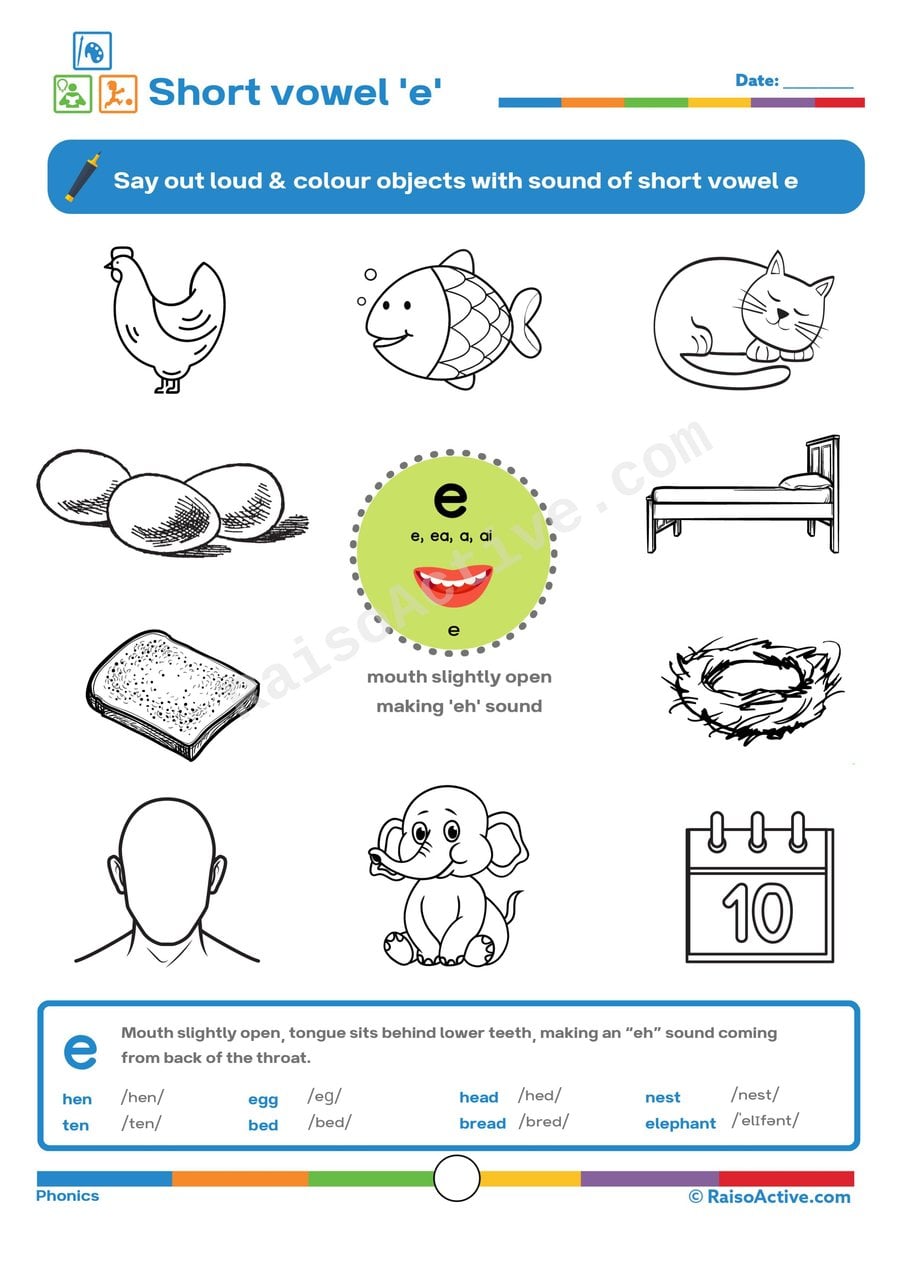
Short Vowel 'e' Worksheet: Say, Color, and Learn!
This worksheet helps children ages 3-5 tune their ears to the short vowel 'e' sound, as in 'bed' or 'net', by saying words aloud and coloring only the pictures that contain that sound. Focusing on a single vowel sound at a time, rather than comparing multiple vowels, lets younger children build a strong, specific auditory memory before they're asked to distinguish between several vowel sounds. Tracing the letter 'e' afterward links the sound they just practiced to its written form.
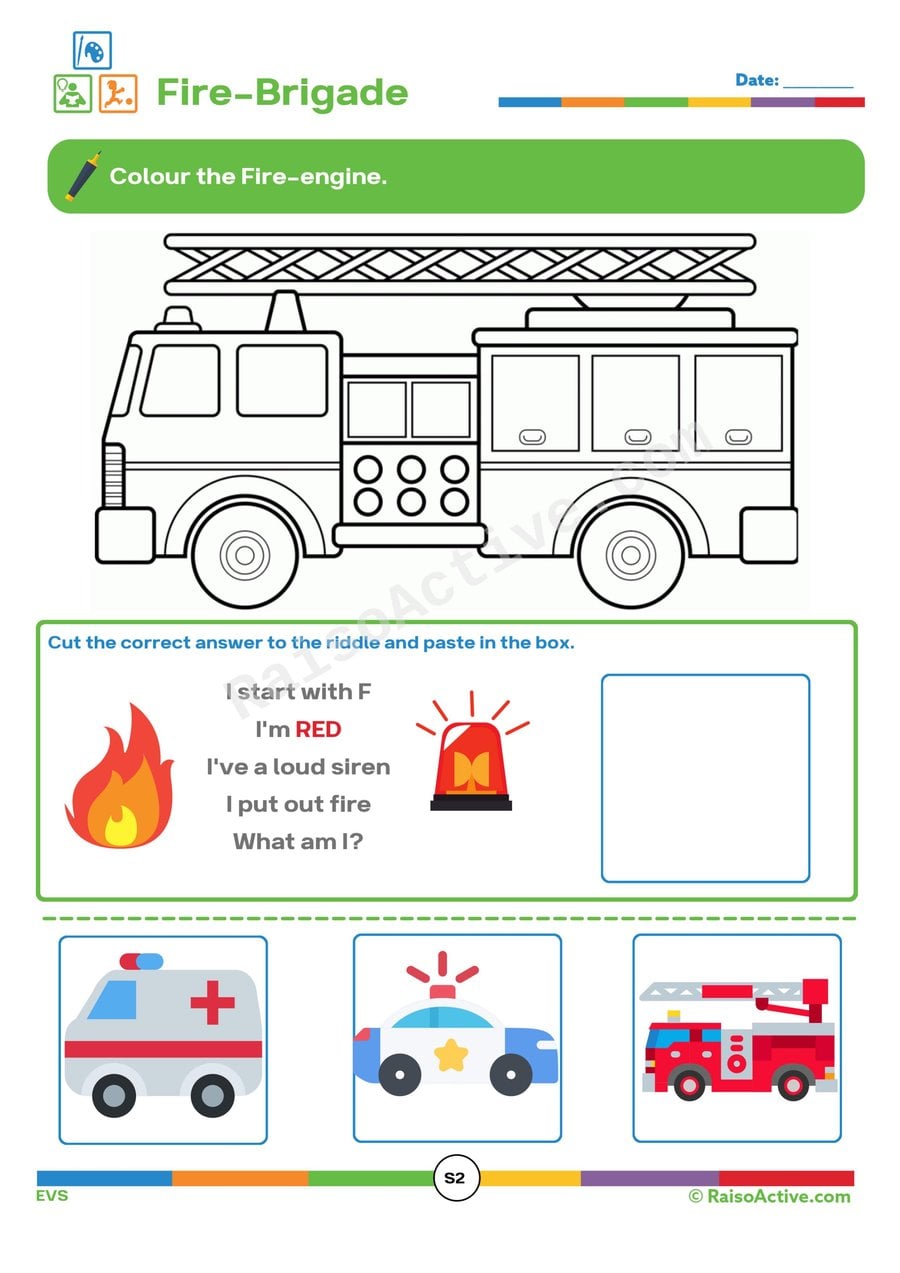
Fire Engine Fun: Color and Solve the Riddle!
This worksheet pairs creative coloring with a light dose of deductive reasoning — after coloring the fire engine, children have to solve a simple riddle and pick out the correct picture answer to paste in place. That riddle-solving step goes beyond coloring practice into comprehension and logical thinking, since your child has to listen to clues, consider a few possible answers, and choose the one that actually fits, all while learning about firefighters as community helpers.

Spot the Differences! Fun Coloring Worksheet for Kids
This spot-the-difference worksheet challenges children ages 3-5 to compare two nearly identical pictures and circle every visual difference they find, sharpening close observation and attention to detail. Coloring both images first, using slightly different choices between the two, adds an extra layer of visual comparison since children must notice both original design differences and any coloring variation. This kind of side-by-side visual analysis is a foundational skill for later proofreading and detail-oriented tasks.
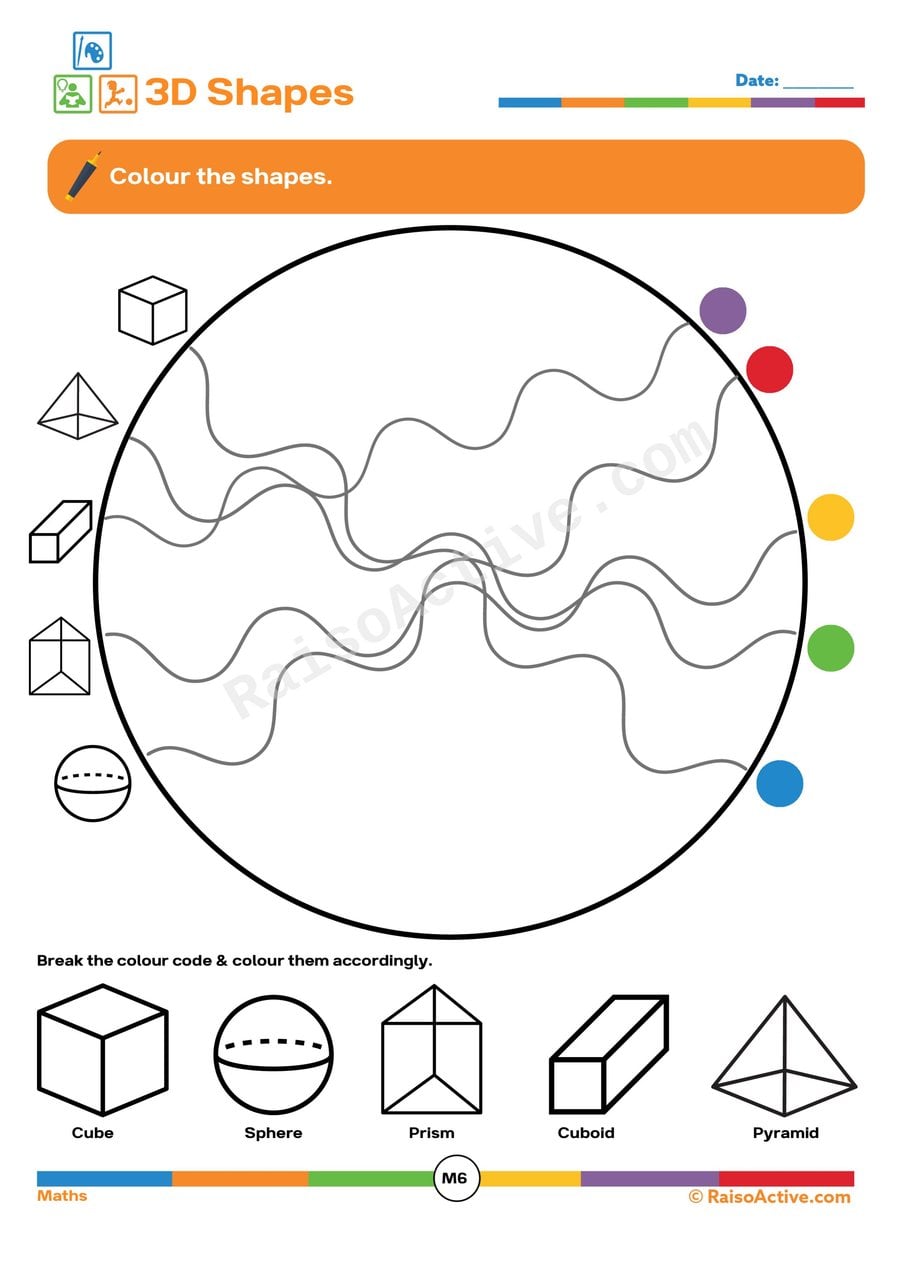
Color the 3D Shapes Worksheet for Kids
Children ages 3-5 build early geometry vocabulary by learning to name and visually recognize five 3D shapes — cube, sphere, prism, cuboid, and pyramid — a step beyond the flat 2D shapes most preschool worksheets cover. Following a color-code instruction while coloring also strengthens their ability to hold and apply a rule, and the repeated coloring motion builds hand strength and control useful for future writing.
What Preschool coloring worksheets cover
Three-year-olds begin to aim. The crayon is now held with fingers, strokes get shorter, and a child tries to keep color inside a large outline, mostly succeeding by the end of the year. Worksheets can introduce a simple key: color the circles red and the squares blue, or match a numeral 1 to 3 to a color. Around eight color names are usually known by four. Small regions and mystery-picture grids are still too fiddly.
- Color inside a large outline with strokes mostly staying in
- Color by shape: circles red, squares blue, triangles green
- Follow a color-by-number key using numerals 1 to 3
- Name eight colors and pick the matching crayon on request
How to use these worksheets at home or in class
Five minutes is a solid session for a three-year-old, ten minutes the practical ceiling. Offer a thick crayon or a short fat pencil, sit beside your child, and treat the sheet as one activity among blocks, stories and outdoor play rather than as schoolwork.
Start with the sheet that matches what your child can already do, then move one step up. Keep finished sheets in a folder: Preschool teachers often ask for evidence of practice, and children like seeing their own progress.
Is your child ready for Preschool coloring work?
A child ready for these activities holds a crayon and makes deliberate marks, sits at a table briefly, follows a single spoken instruction, and shows some interest in the letters of their own name or the numbers they hear counted aloud.
Frequently asked questions
Should I make my three-year-old color inside the lines?
No need to insist, and pushing it tends to make coloring a chore. Keeping color inside a border needs wrist control and patience, and both come with time and practice between three and four, not from being told. Give large pictures with thick borders so success is possible, comment when a stroke stays in, and let the rest go. By four most children keep most of the color in a big shape on their own.
What should a Preschool child be able to do in coloring?
Three-year-olds begin to aim. The crayon is now held with fingers, strokes get shorter, and a child tries to keep color inside a large outline, mostly succeeding by the end of the year. Worksheets can introduce a simple key: color the circles red and the squares blue, or match a numeral 1 to 3 to a color. Around eight color names are usually known by four. Small regions and mystery-picture grids are still too fiddly. A child ready for these activities holds a crayon and makes deliberate marks, sits at a table briefly, follows a single spoken instruction, and shows some interest in the letters of their own name or the numbers they hear counted aloud.
Do these worksheets follow the Preschool curriculum?
The sheets cover staying inside an outline, crayon or pencil pressure control, color recognition and naming and filling a large area evenly, which sit inside the Head Start Early Learning Outcomes Framework (ELOF) outcomes for Preschool. Nursery (UK), Nursery (India) use the same skills at this age, so the sheets also fit families following those programmes.
Are these Preschool coloring worksheets free?
Yes. Each worksheet downloads free as a watermarked PDF once you create an account, with a limit of five a day. An annual membership ($20) removes the watermark and the limit for the whole library of over 1,000 worksheets and every printable pack.

Written by
Hemsweta Jain · Teacher Cheena
MBA and Early Childhood Educator, teaching since 2014 · Founder of RaisoActive, Mumbai
Written and reviewed by Hemsweta Jain (Teacher Cheena), who designs every RaisoActive worksheet.
Last reviewed
Printable packs for ages 3–4
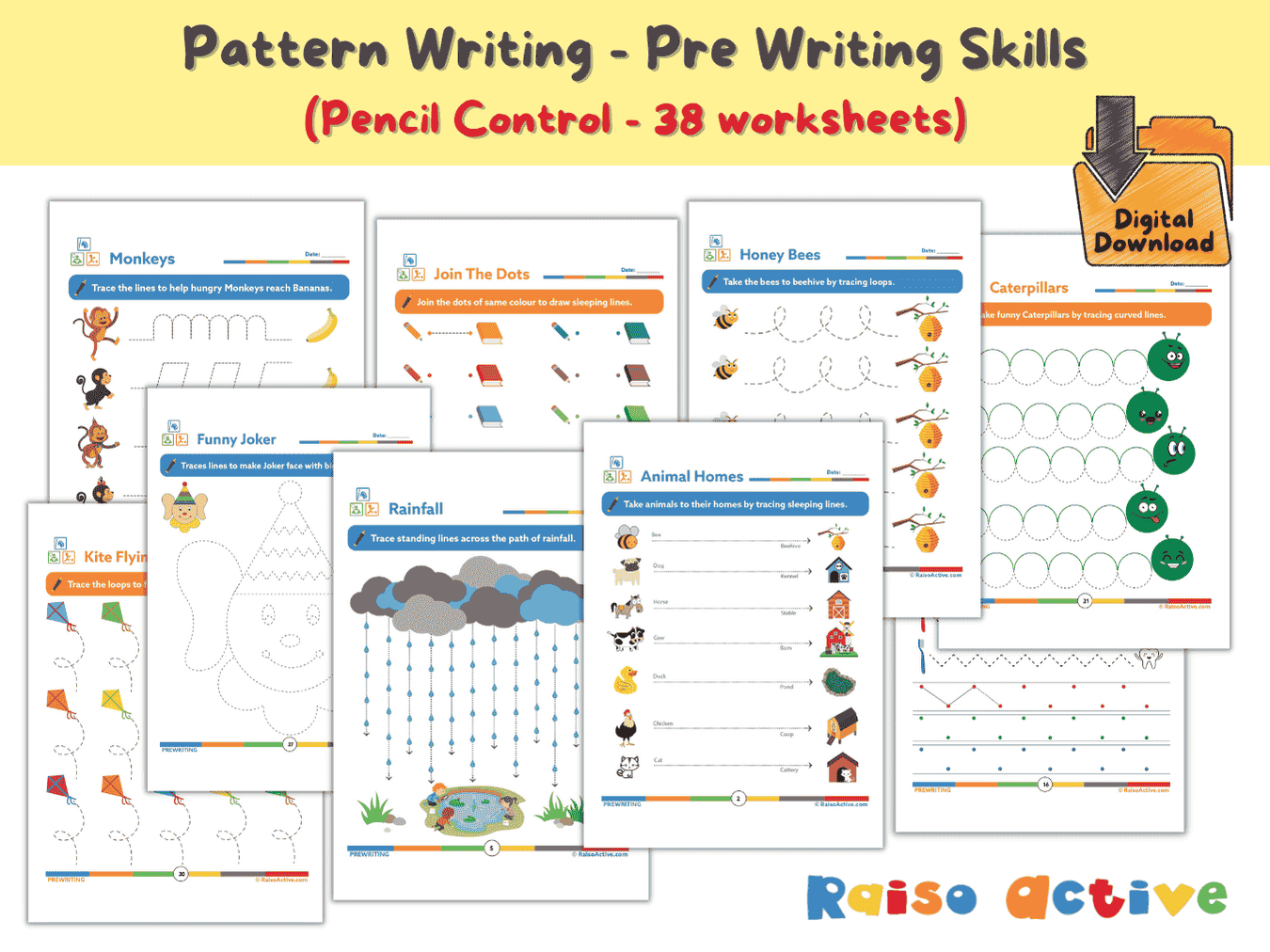
Pattern Writing Pre-writing Skills Activity Book for 3-4 Year Olds
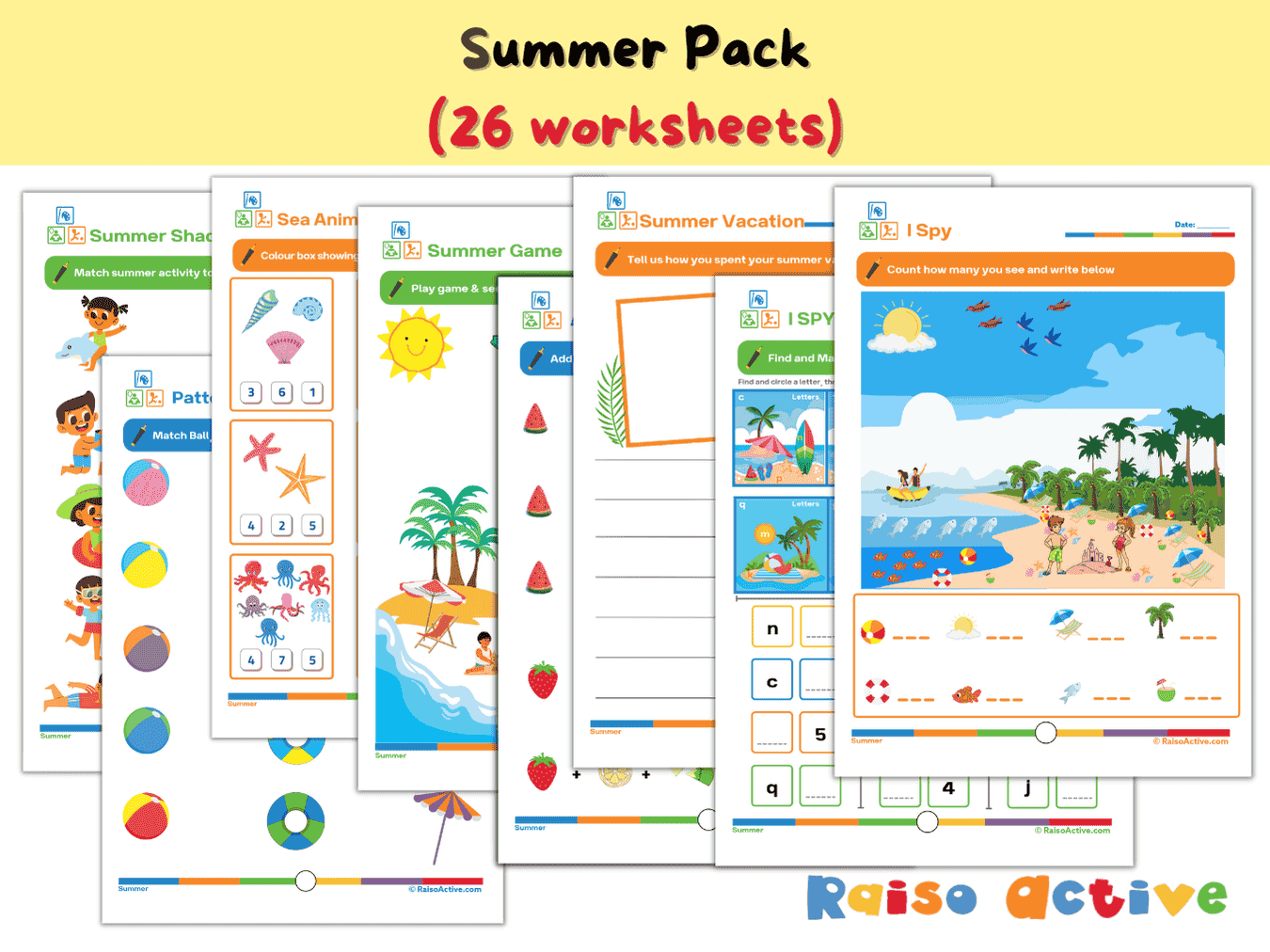
Summer Activity Pack: Math, Literacy, Puzzles & More for Preschool & Kindergarten
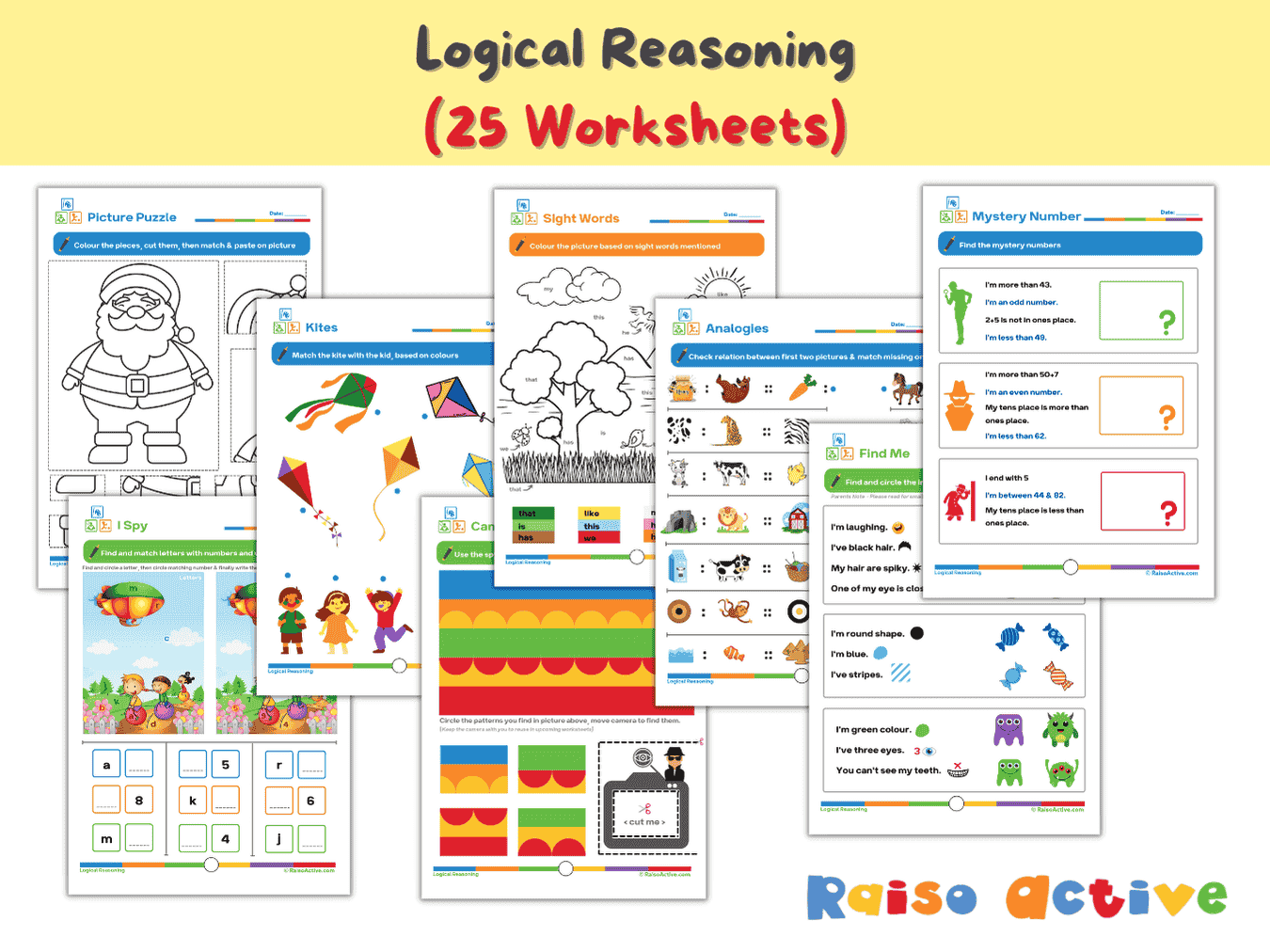
Logical Reasoning Activity Book for Preschool & Kindergarten | Patterns, Puzzles & Analogies
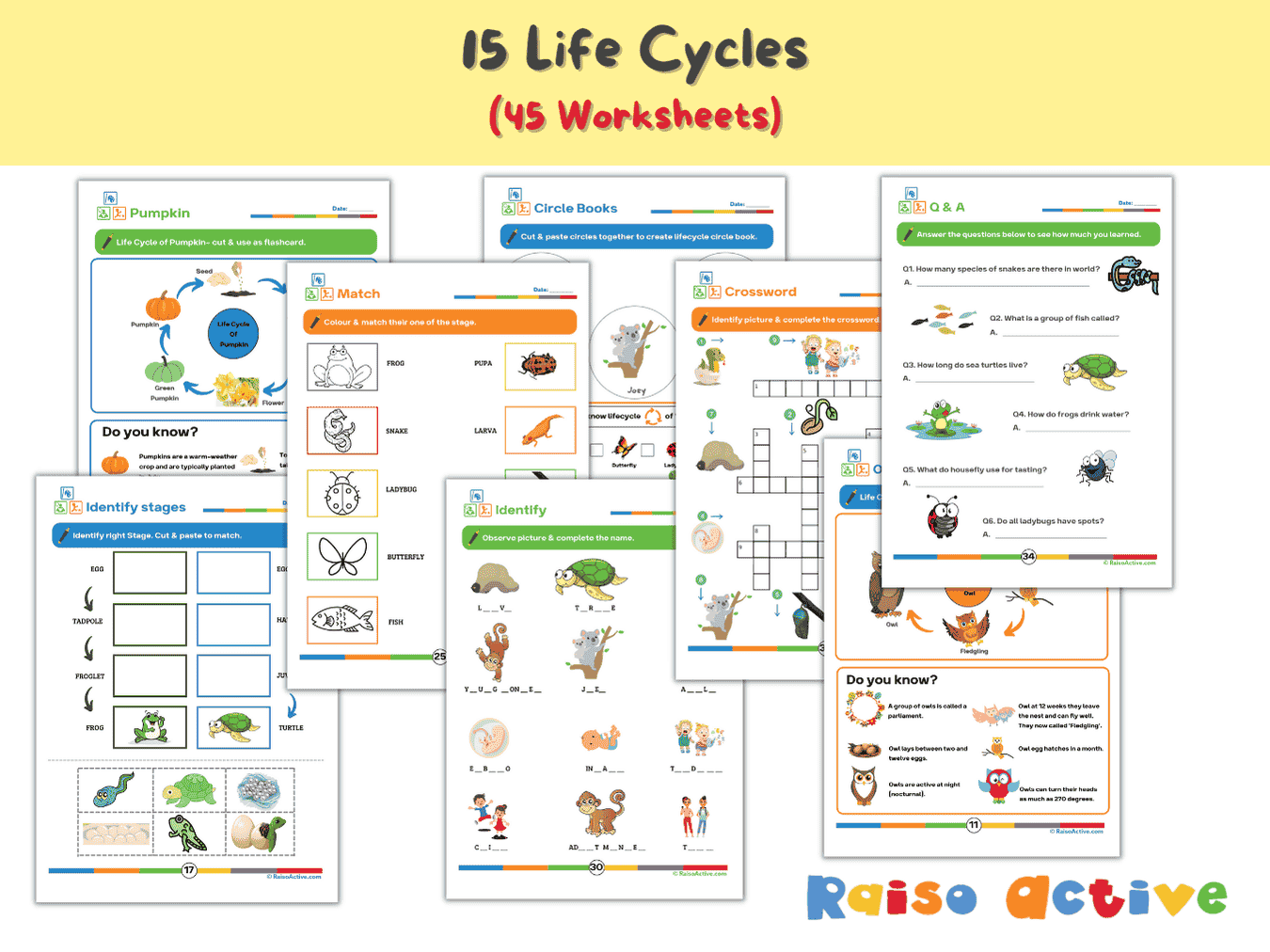
Lifecycles Activity Book & Flashcards for Preschool & Early Elementary
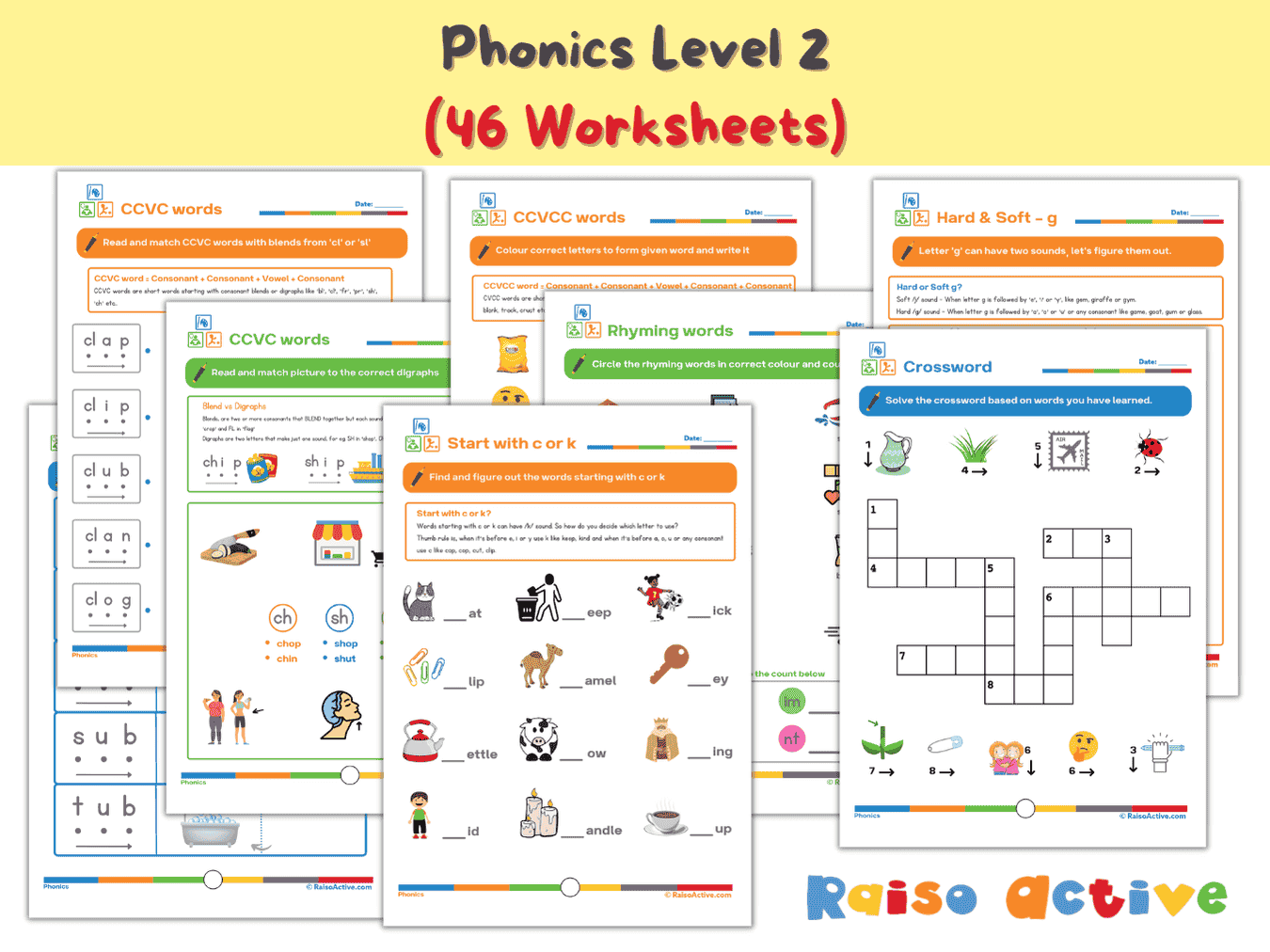
Phonics Level 2 Worksheets: CVC, CCVC, CVCC Word Families & Blends for Early Readers (Ages 4-7)
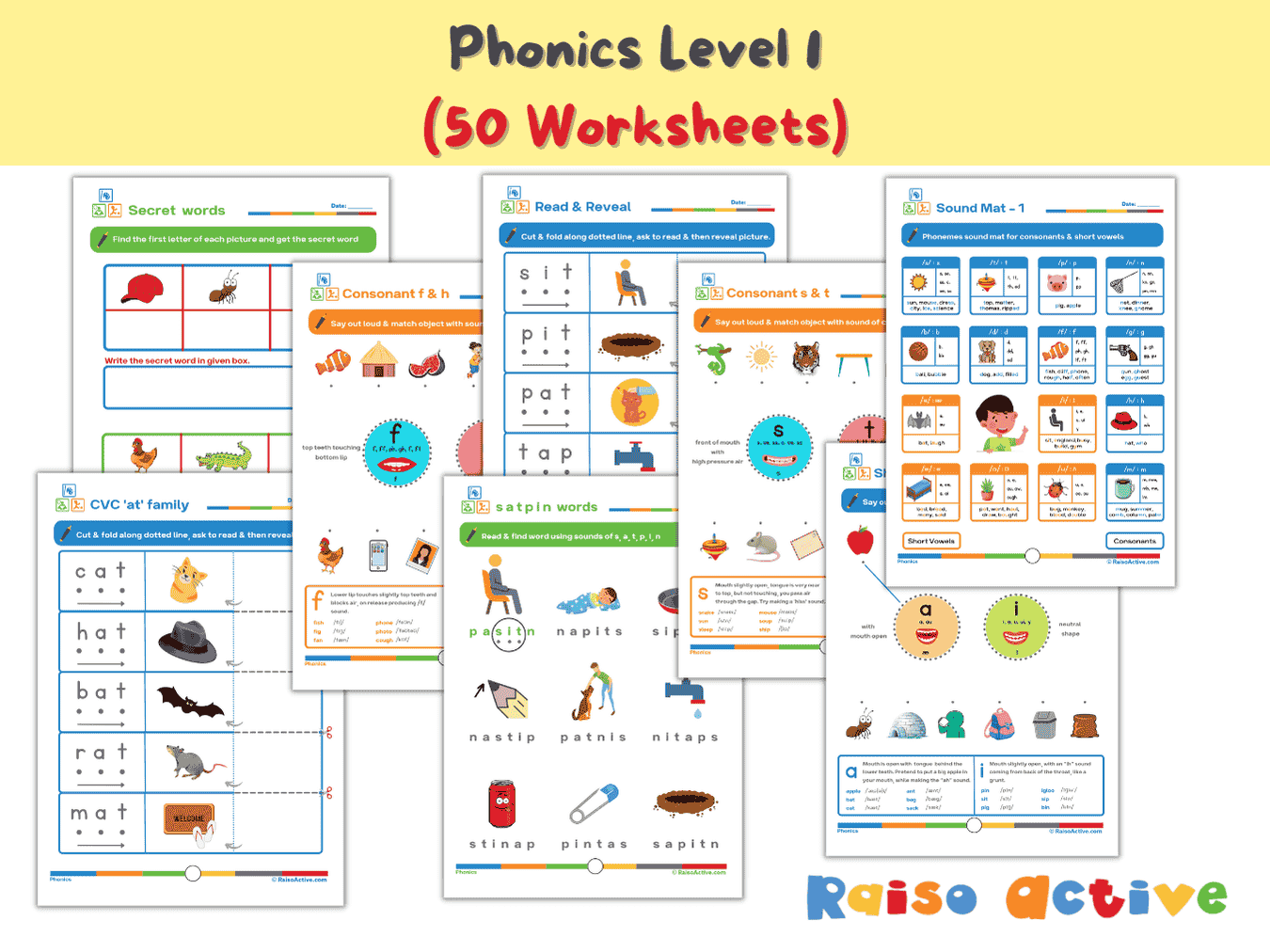
Phonics Level 1 Activity Book: Letter Sounds, Blending & CVC Words for Preschool & Kindergarten
Guides for parents and teachers
See all guides →Best Worksheets for 3-Year-Olds: What Works and What to Avoid
What works on worksheets for 3-year-olds: short sessions, crayons, tracing lines, matching, cutting, a free weekly plan, and signs one is too advanced.
Portfolio Assessment with Young Children: A Comprehensive Guide to Meaningful Documentation
Learn how portfolio assessment captures your child's growth through meaningful documentation. Practical tips, templates, and age-appropriate strategies for ages 1-8.
Fostering Creativity in Structured Learning: The Perfect Balance for Young Minds
Learn how to blend creativity with structured learning for children ages 1-8. Practical strategies, activities, and printable worksheets for parents and teachers.
Preparing Your Child for a Rapidly Changing World: Essential Skills for Future Success
Discover the essential 21st century skills your child needs for future success. Practical tips on creativity, critical thinking, digital literacy & emotional intelligence for ages 1-8.
Celebrating Diversity: How to Incorporate Cultural Awareness in Learning Activities for Young Children
Practical cultural awareness activities for young children aged 2-8. Explore Indian festivals, world cultures, food, music, and crafts to teach diversity and inclusion.
How to Balance Structured Learning with Free Play: A Complete Guide for Parents and Educators
Learn how much free play vs structured learning young children need by age, signs of over-scheduling, and practical tips for Indian parents to design a balanced day.
Canonical: https://raisoactive.com/worksheets/preschool-coloring