Free printable worksheets · United States
Preschool Pattern Writing Worksheets (Ages 3–4)
Preschool pattern writing worksheets are practice sheets for children aged 3–4 in Preschool in the US. Pattern writing is repeating a printed sequence of loops, waves or zigzags with a pencil to build the rhythm and control cursive letters require. The sheets on this page cover repeating loops and waves, curves that lead into cursive strokes, consistent rhythm and spacing and predicting what comes next in a sequence.
Preschool builds readiness rather than academics: pre-writing strokes, uppercase letter recognition, counting objects to ten, naming shapes and colors, and cutting along a line, all introduced through short table activities inside a mostly play-based day. Grip is still forming, so most activities favor a thick crayon over a standard pencil. Three-year-olds add direction and turns. Standing lines go top to bottom and sleeping lines left to right, then slanting lines in both directions, a circle started at the top, and the first zigzags. Worksheets should still use thick dotted paths with a start dot, but can now put three or four rows on a page. Saying "down", "across" or "round" while tracing links the movement to a word. Loops and waves are a stretch.
569+ worksheets · free PDF download · print on A4 or Letter
Preschool Pattern Writing Worksheets to print
Browse all worksheets for ages 3–4
Beehive Tracing Worksheet: Help the Bees Find Their Home!
Tracing a path from bees to their beehive gives children ages 3-5 pencil control practice while introducing simple vocabulary about bees and where they live, building on the same kind of animal-and-home concept found in other themed tracing worksheets, but with a specific and recognizable structure, the hive. Following a winding or curved path toward a clear destination also builds visual tracking, the ability to follow a line's direction with the eyes before the pencil catches up.

Trace and Color the Letter T Worksheet for Preschoolers
Tracing and writing the letter T gives children ages 3-5 practice with one simple vertical stroke crossed by one horizontal stroke, making it one of the more approachable uppercase letters to master, which builds confidence before moving on to more complex shapes. Coloring the finished letters afterward reinforces recognition of the letter's form independent of the writing motion itself.

My Name is: Sentence Building Worksheet for Early Learners
This sentence-building activity asks children ages 3-5 to cut apart puzzle pieces of words and arrange them in the correct order to form a complete sentence, giving hands-on practice with sentence structure before they write full sentences independently. Physically manipulating word pieces lets children experiment with word order and self-correct by reading the sentence aloud, which is more forgiving than committing straight to writing. Copying the assembled sentence onto lines afterward then bridges the gap from arranging words to writing them from scratch.
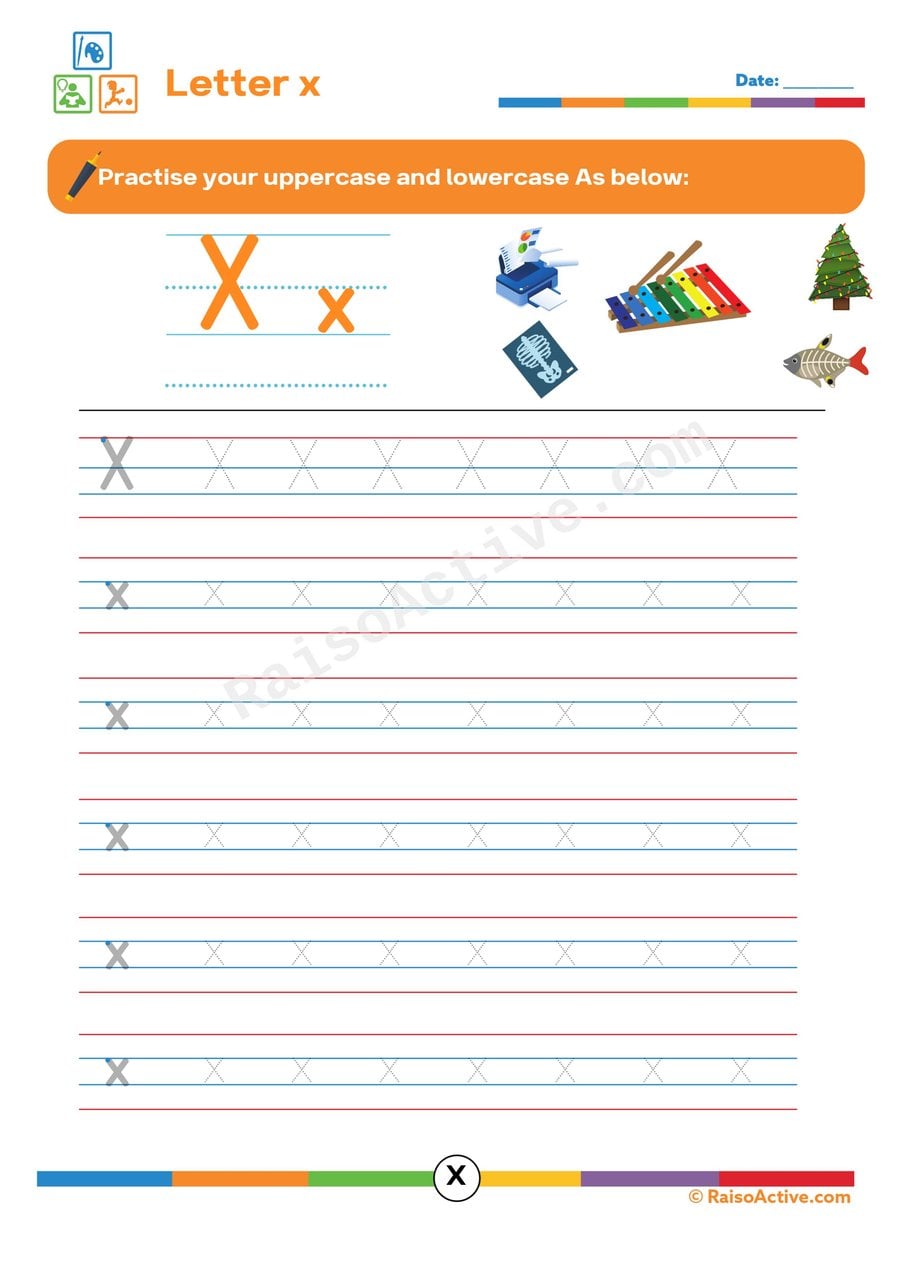
Letter X Tracing Worksheet for Preschoolers
X is formed by two diagonal lines crossing in the middle, which asks preschoolers to plan where a second line should intersect a first one already on the page — a genuinely different motor challenge from letters built with parallel or connected strokes. Because very few common English words start with X, this worksheet also gives a natural opening to talk about letter sounds appearing in the middle or end of words, like 'box' or 'fox'.

Learn the Letter U! Tracing, Matching, and Coloring Worksheet
Children ages 3-5 practice forming the letter U in both its capital and lowercase shapes, while also learning to spot U words among other pictures, building both handwriting control and letter-sound recognition together. The matching component adds a layer of visual scanning practice, since children must compare each picture's beginning sound against the target letter.
My Book: A Fun Worksheet for Early Learners
Writing their own name on the cover of something they made gives a 3-5 year old a real, motivating reason to practice name-writing — a very different feeling from tracing letters on a generic worksheet. It's often one of the first pieces of writing a child feels ownership over, which matters for building confidence around writing in general.
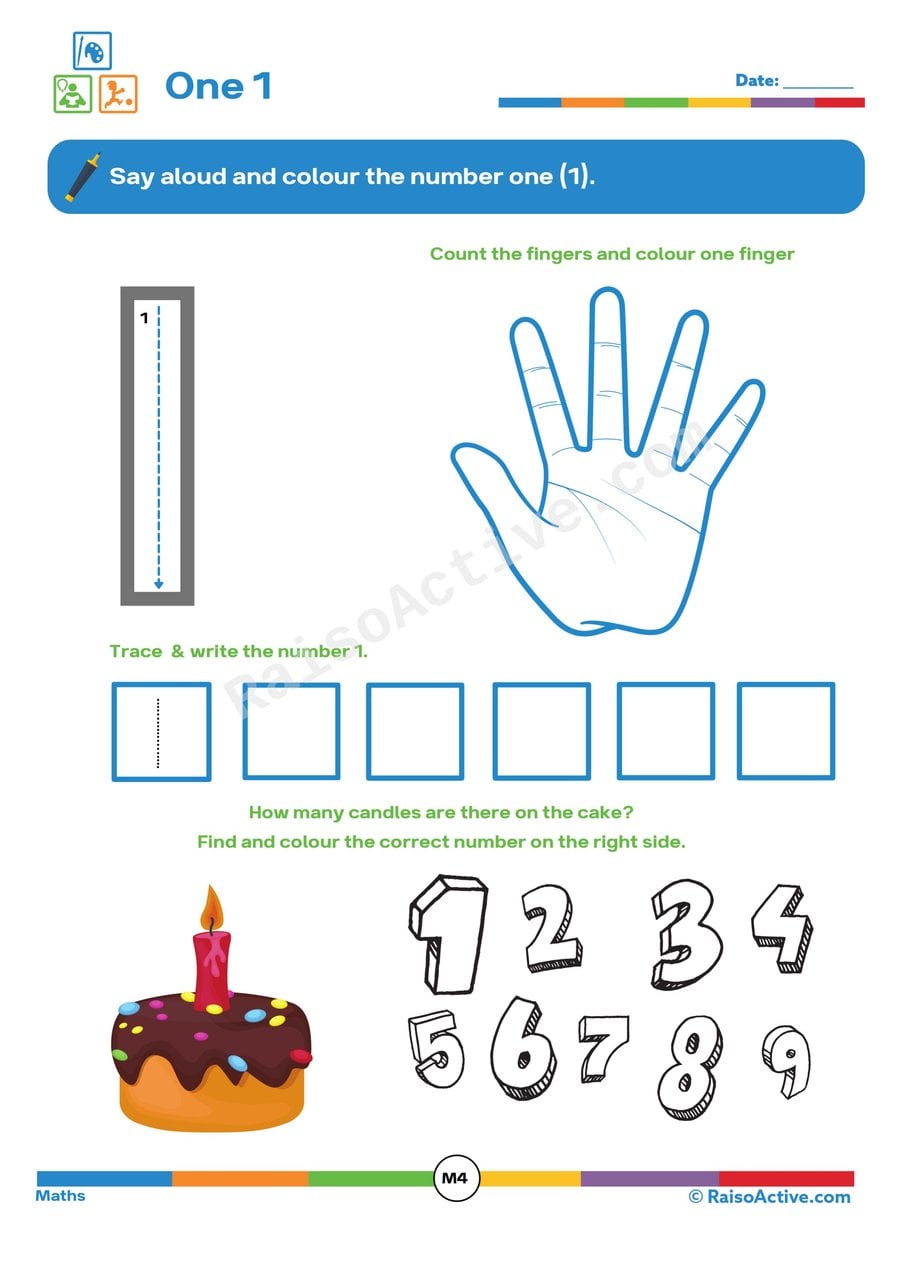
Number One Worksheet: Trace, Count, and Color!
Children ages 3-5 practice forming the number 1 through guided tracing while also reinforcing what the quantity 'one' represents by counting a single finger and a single candle. Linking the written symbol directly to a real quantity is a key early step in number sense before children move on to larger numbers.
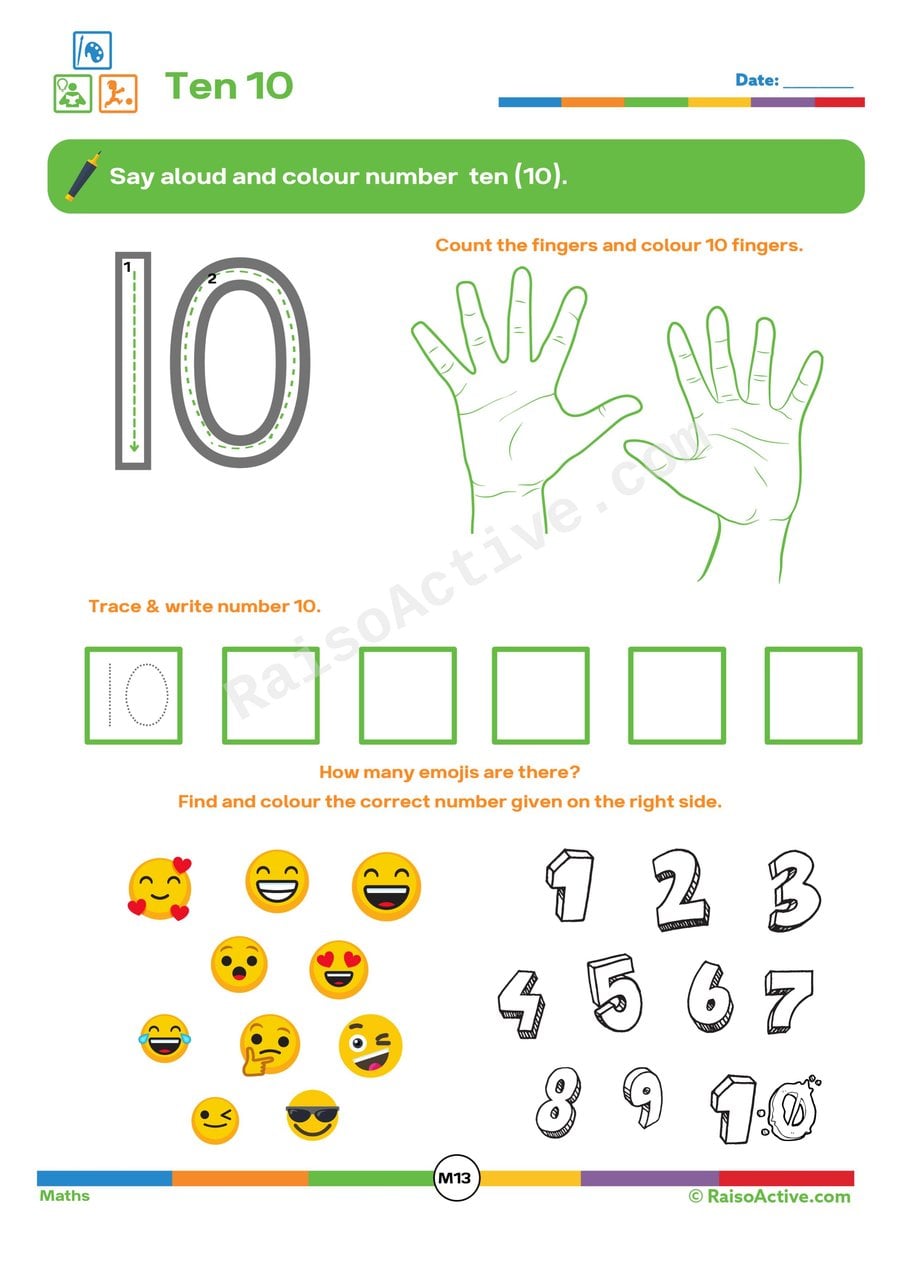
Number 10 Worksheet: Trace, Count, and Color!
Children ages 3-5 practice tracing and writing the two-digit number 10 while reinforcing counting to ten through a hands-based counting activity and a number-recognition search task. This worksheet layers several skills — tracing, counting, and visual recognition — to give children multiple ways to practice the same number.

First Letter Fun: Identify and Write! Vocabulary Worksheet
Naming everyday objects and writing their opening letter builds vocabulary alongside phonics for 3-5 year olds — each picture requires your child to first recall or recognize the object's name, then isolate just its first sound, and finally translate that sound into a written symbol. This vocabulary-first framing makes the worksheet especially useful for children who are still building the words for common objects, not just the letters that start them.

Secret Words Worksheet: Beginning Sounds Practice
Repeated practice identifying beginning sounds is exactly what children ages 3-5 need to move from recognizing letters in isolation to actually using them for reading and spelling, and this worksheet delivers that practice through a row-by-row secret word puzzle. Saying each picture's name aloud and isolating its first sound trains careful listening, while writing the matching letter connects that sound to its written form. The cumulative reveal of a secret word at the end gives children a clear, motivating sense of progress across the page.

Observe and Draw: Pattern Recognition Worksheet for Preschoolers
This worksheet challenges children ages 3-5 to identify decreasing patterns — sequences where shapes shrink or reduce in a predictable way — and draw the next shape in that sequence themselves. Decreasing patterns are more demanding than simple repeating patterns because children must track a changing rule, like shapes getting smaller, rather than a fixed repeating unit. Drawing the answer, rather than choosing from options, also requires stronger visual-motor planning to reproduce the shape accurately at the right size.

Letter L Tracing Worksheet for Preschoolers: Learn to Write!
This worksheet helps children ages 3-5 practice tracing the letter L's simple straight-line strokes while identifying words that start with the letter L, giving early success with one of the more approachable letters to write. Because L uses just two straight strokes, it's often a confidence-building letter for children still building fine motor control.

Learn the Sight Word 'My' - Tracing, Writing, and Matching Worksheet
This worksheet builds sight-word fluency for the word 'my' in children ages 3-5 through a combination of tracing, independent writing, fill-in-the-blank sentences, and a matching activity. Working with the same word across several different formats helps cement recognition, since 'my' is a high-frequency word that appears constantly in early reading material but doesn't follow simple phonics patterns. The matching component adds a visual-recognition check to confirm the word sticks even without tracing cues.

Letter C Tracing and Coloring Worksheet for Preschoolers
This worksheet builds handwriting readiness by having children trace the letter C multiple times, while the coloring and picture-matching elements connect the letter's shape to its sound through familiar C words. For ages 3-5, repeating the same letter across tracing and picture activities on one page reinforces recognition from multiple angles in a single sitting.
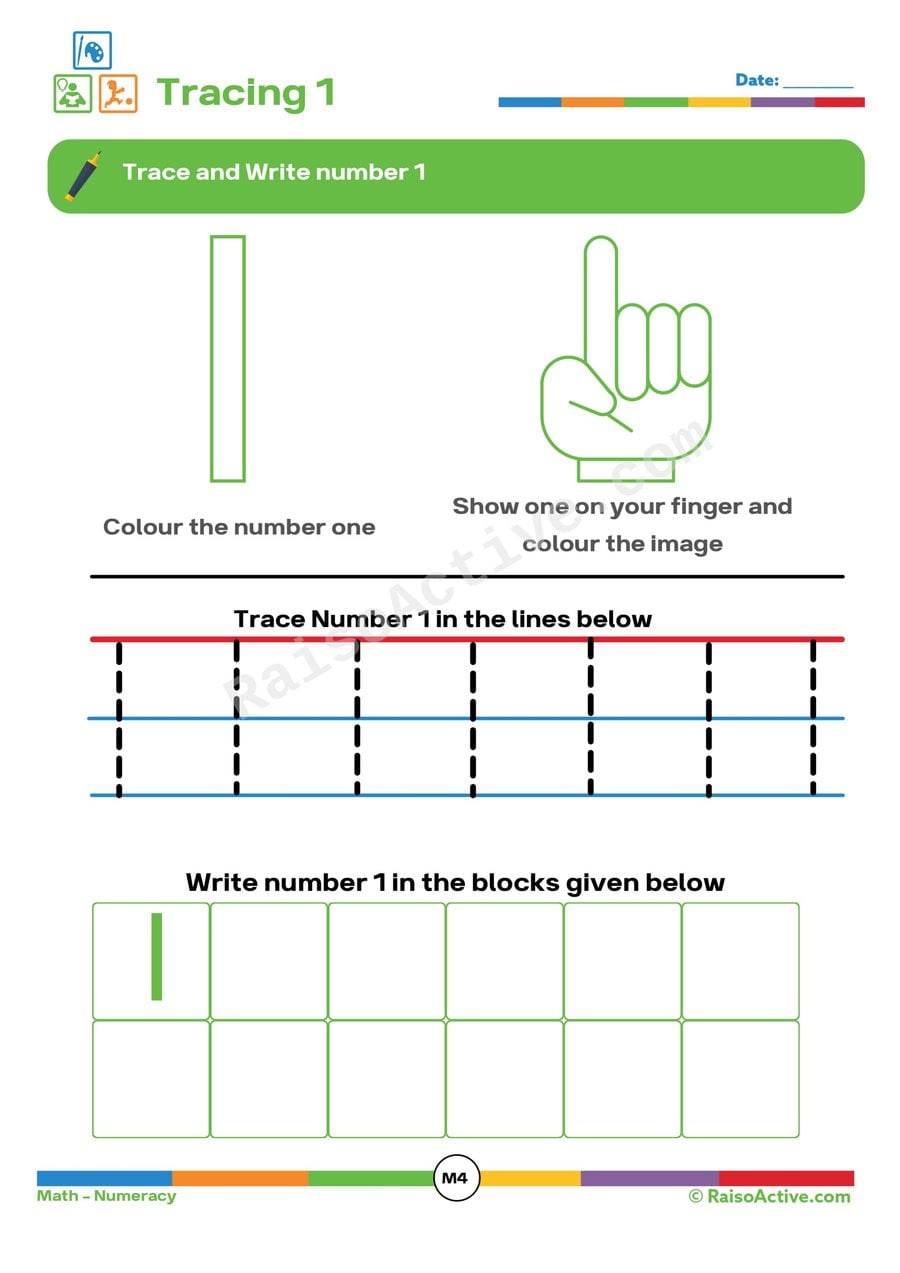
Tracing Number 1 Worksheet for Preschoolers
This tracing worksheet gives children ages 3-5 focused, repetitive practice forming the number 1 through tracing dotted lines, independent writing in provided boxes, and coloring an accompanying image, building the pencil control that precedes confident number writing. Because number 1 is typically the very first numeral children learn to write, getting the stroke direction and starting point correct here sets a strong foundation for writing higher numbers later. Repetition across multiple boxes on the page also builds the muscle memory needed for consistent, automatic number formation.

Trace and Write the Letter B Worksheet for Preschoolers
This worksheet isolates just the uppercase B, giving children focused repetition on its two stacked curves without the added complexity of switching to the differently-shaped lowercase form. At ages 3-5, this kind of single-case focus helps build real muscle memory for one letter shape before layering on a second version later.

Letter 't' Tracing and Matching Worksheet for Preschoolers
Tracing, matching, and writing the letter 't' gives children ages 3-5 repeated exposure to one of the more frequent letters in early reading vocabulary, building both the motor memory for its cross-stroke shape and the sound-to-symbol connection for its sharp /t/ sound. Matching pictures that start with 't' to the letter itself reinforces that recognition beyond just the written form, connecting it to real objects and words. This kind of combined tracing-and-matching practice suits how young children learn best: through repetition across slightly different tasks.
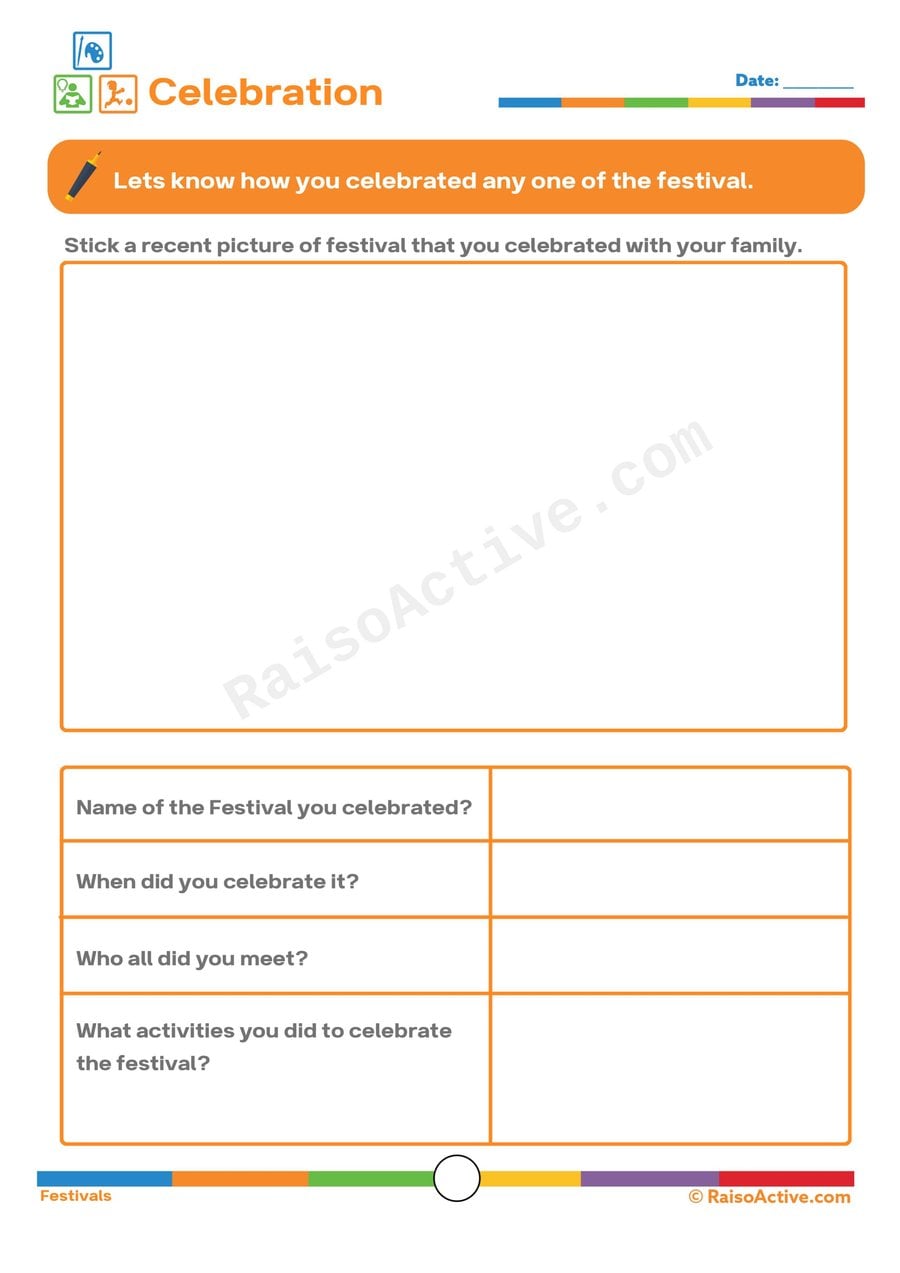
My Festival Celebration Worksheet for Kids
This worksheet invites children ages 3-5 to reflect on a festival they personally celebrated, practicing early writing and recall skills as they record the festival's name, who they spent it with, and what they did. Putting personal experience into words and pictures builds narrative thinking, an important precursor to storytelling and journaling, while also affirming their own cultural traditions.

Trace and Write the Letter Z Worksheet for Preschoolers
This letter Z tracing page asks children ages 3-5 to follow a horizontal-diagonal-horizontal zigzag, a stroke pattern that's different from the curves and straight lines used in most other capital letters. Practicing this shape builds the fine motor control needed for handwriting while reinforcing that Z makes the buzzing /z/ sound heard in 'zebra,' 'zipper,' and 'zoo.' Since Z is one of the last letters children usually master, this worksheet often marks a milestone in completing the full alphabet.

My Personal Details Worksheet: Fill in the Blanks!
This worksheet has children ages 3-5 write their own name, age, and other basic personal information into labeled blanks, building both early writing practice and a sense of personal identity. Learning to write and recognize one's own personal details is a genuinely meaningful, motivating writing task for young children, since it's about themselves rather than an abstract exercise.

My Family Worksheet: Learn About Family Members!
Writing the names of family members next to their pictures helps children ages 3-5 connect written words to real relationships in their own lives, combining early handwriting practice with meaningful, personal vocabulary. Because the content is about their own family, this worksheet tends to feel especially engaging and easy to talk about.

Letter I Tracing and Coloring Worksheet for Preschoolers
This worksheet helps children ages 3-5 build fine motor skills and letter recognition by tracing both the uppercase and lowercase forms of the letter I, then applying that recognition in a coloring task and a letter-hunt word search. Practicing a short, simple letter like I builds early writing confidence, while the letter-hunt component adds a visual-scanning challenge that pushes recognition beyond just copying a shape. Coloring pictures that start with I connects the shape to its beginning sound.
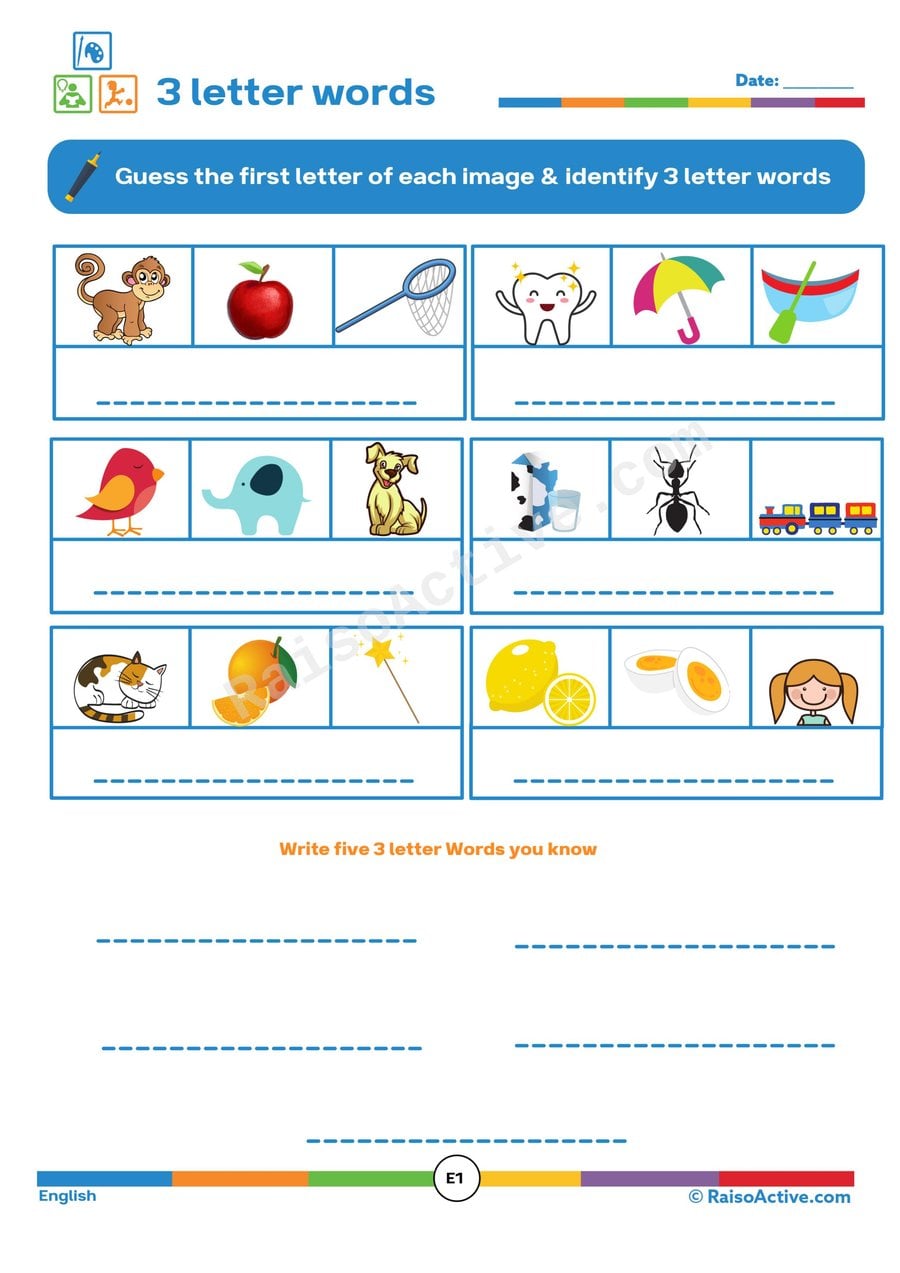
3-Letter Word Fun: Identify and Write! (Ages 3-5)
This worksheet asks children ages 3-5 to identify the beginning sound of a picture and use it to write a complete 3-letter word, moving them from single-letter sounds toward blending sounds into whole words — a key early step in phonics. The final task of writing five known 3-letter words independently also checks how much of this blending skill has transferred beyond the guided examples.

Unscramble the Words: A Fun Phonics Worksheet for Preschoolers!
Unscrambling letters to spell a simple word asks children ages 3-5 to apply their phonics knowledge in a more active, puzzle-like way than straightforward reading, since they have to mentally test different letter orders against the sounds they know a word should contain. This worksheet uses picture support to guide the unscrambling process, then adds a second missing-letter task to reinforce the same spelling pattern one more time. Working through a scrambled word forces genuine engagement with letter order and sound sequence, rather than passive word recognition.
What Preschool pattern writing worksheets cover
Three-year-olds add direction and turns. Standing lines go top to bottom and sleeping lines left to right, then slanting lines in both directions, a circle started at the top, and the first zigzags. Worksheets should still use thick dotted paths with a start dot, but can now put three or four rows on a page. Saying "down", "across" or "round" while tracing links the movement to a word. Loops and waves are a stretch.
- Trace slanting lines both ways along thick dotted paths
- Draw a circle starting at the top and going counterclockwise
- Trace a zigzag without lifting the crayon
- Copy a cross and a plus sign into an empty box
- Say "down" or "across" aloud while making each stroke
How to use these worksheets at home or in class
Five minutes is a solid session for a three-year-old, ten minutes the practical ceiling. Offer a thick crayon or a short fat pencil, sit beside your child, and treat the sheet as one activity among blocks, stories and outdoor play rather than as schoolwork.
Start with the sheet that matches what your child can already do, then move one step up. Keep finished sheets in a folder: Preschool teachers often ask for evidence of practice, and children like seeing their own progress.
Is your child ready for Preschool pattern writing work?
A child ready for these activities holds a crayon and makes deliberate marks, sits at a table briefly, follows a single spoken instruction, and shows some interest in the letters of their own name or the numbers they hear counted aloud.
Frequently asked questions
Which pre-writing strokes should a three-year-old practice first?
Standing lines first, pulled from top to bottom, then sleeping lines pushed left to right. Those two directions carry straight into letters, so they are worth getting right before anything else. Slanting lines come next, then a circle started at the top and drawn counterclockwise, which is the movement behind a, c, d, g and o. Zigzags can be added once slants are steady. Waves and loops usually wait until four.
What should a Preschool child be able to do in pattern writing?
Three-year-olds add direction and turns. Standing lines go top to bottom and sleeping lines left to right, then slanting lines in both directions, a circle started at the top, and the first zigzags. Worksheets should still use thick dotted paths with a start dot, but can now put three or four rows on a page. Saying "down", "across" or "round" while tracing links the movement to a word. Loops and waves are a stretch. A child ready for these activities holds a crayon and makes deliberate marks, sits at a table briefly, follows a single spoken instruction, and shows some interest in the letters of their own name or the numbers they hear counted aloud.
Do these worksheets follow the Preschool curriculum?
The sheets cover repeating loops and waves, curves that lead into cursive strokes, consistent rhythm and spacing and predicting what comes next in a sequence, which sit inside the Head Start Early Learning Outcomes Framework (ELOF) outcomes for Preschool. Nursery (UK), Nursery (India) use the same skills at this age, so the sheets also fit families following those programmes.
Are these Preschool pattern writing worksheets free?
Yes. Each worksheet downloads free as a watermarked PDF once you create an account, with a limit of five a day. An annual membership ($20) removes the watermark and the limit for the whole library of over 1,000 worksheets and every printable pack.

Written by
Hemsweta Jain · Teacher Cheena
MBA and Early Childhood Educator, teaching since 2014 · Founder of RaisoActive, Mumbai
Written and reviewed by Hemsweta Jain (Teacher Cheena), who designs every RaisoActive worksheet.
Last reviewed
Printable packs for ages 3–4
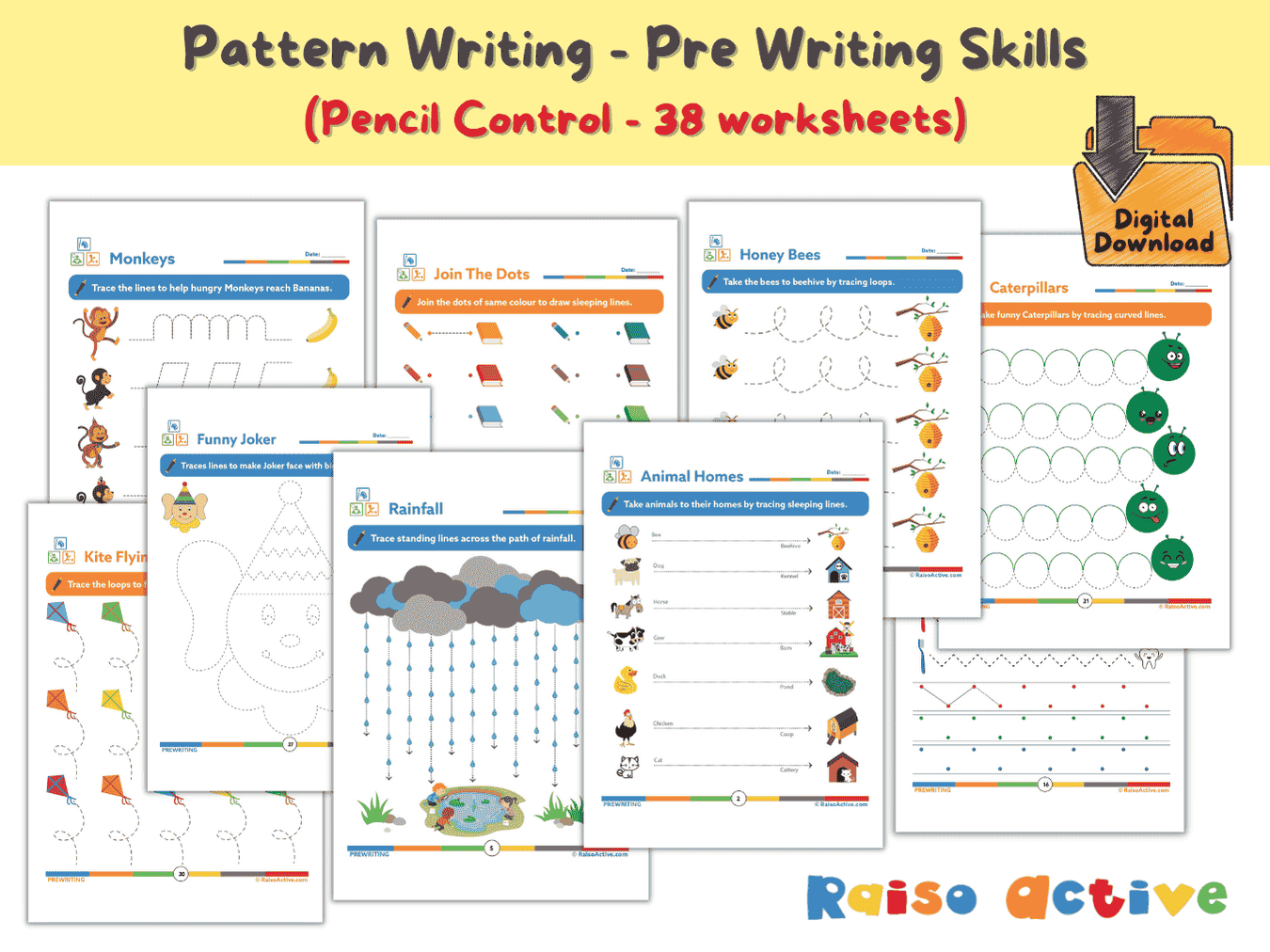
Pattern Writing Pre-writing Skills Activity Book for 3-4 Year Olds
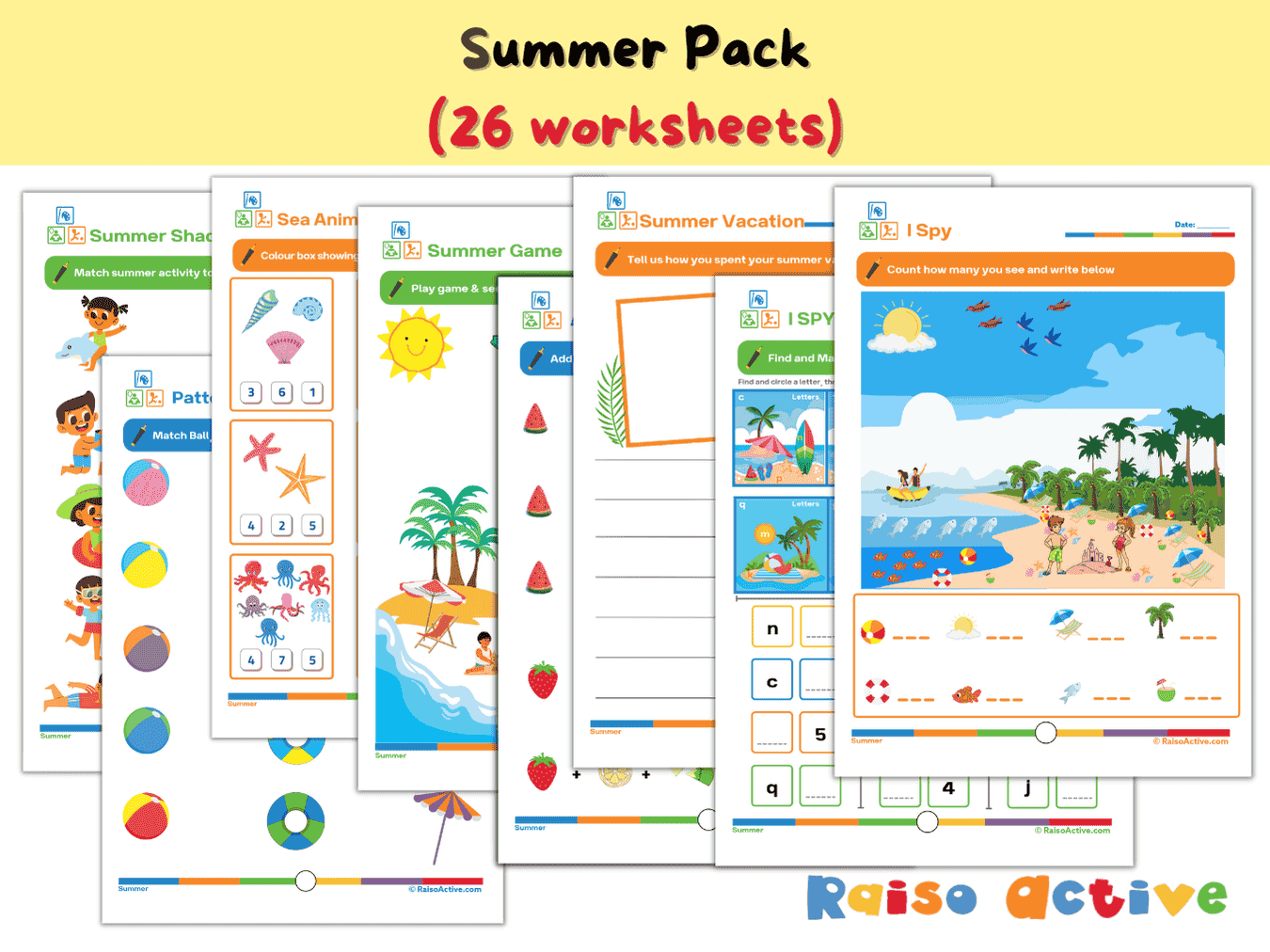
Summer Activity Pack: Math, Literacy, Puzzles & More for Preschool & Kindergarten
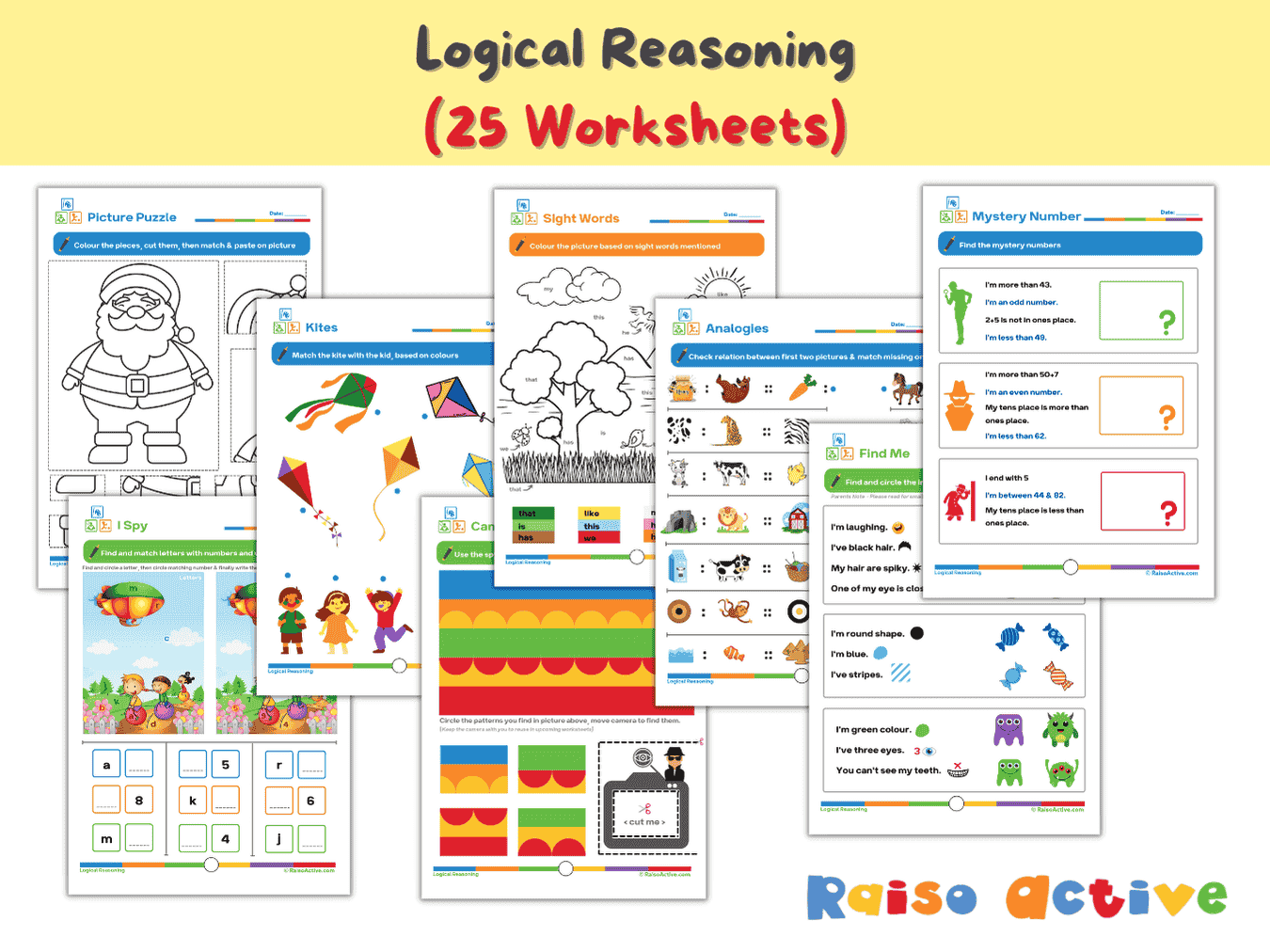
Logical Reasoning Activity Book for Preschool & Kindergarten | Patterns, Puzzles & Analogies
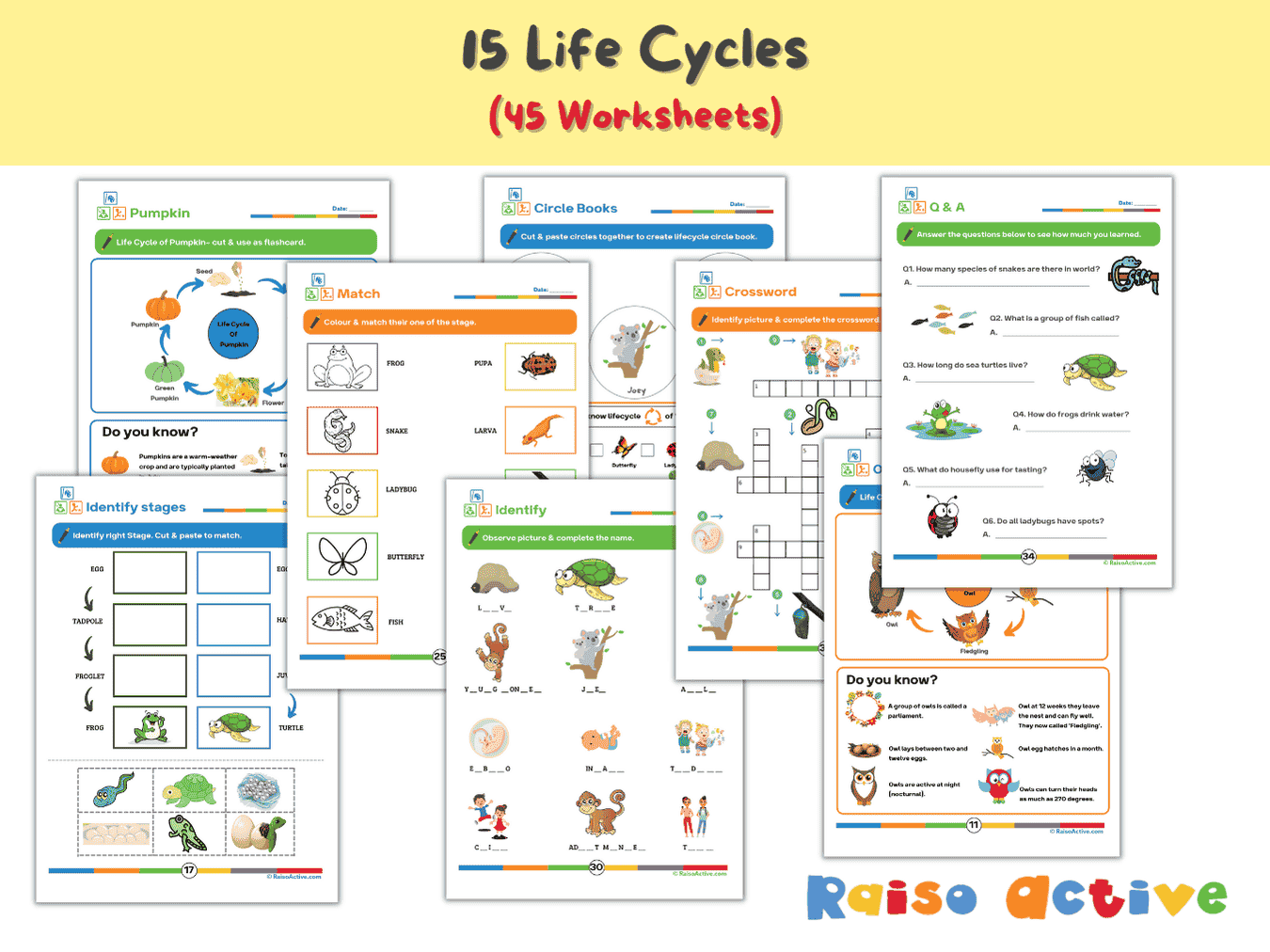
Lifecycles Activity Book & Flashcards for Preschool & Early Elementary
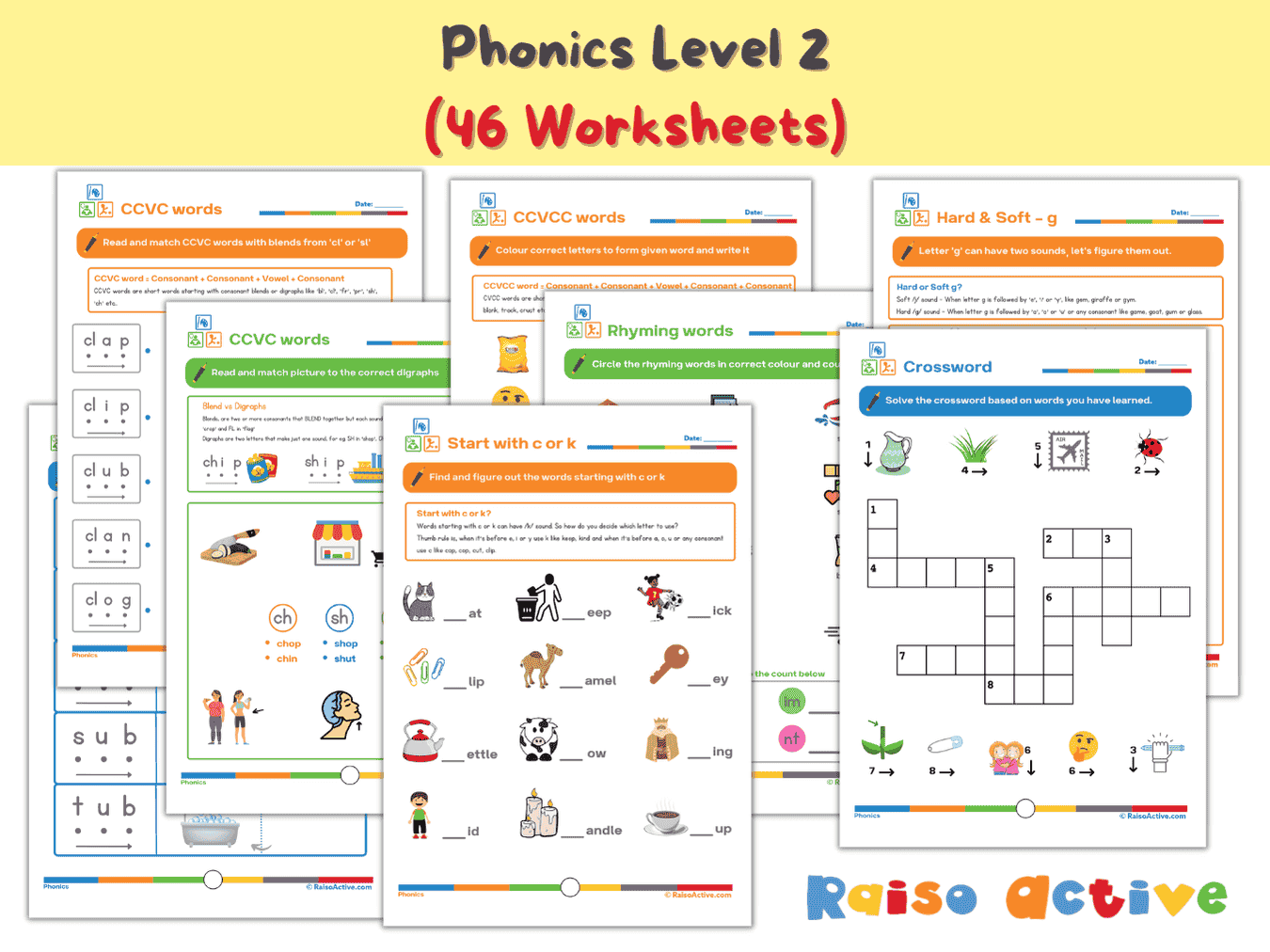
Phonics Level 2 Worksheets: CVC, CCVC, CVCC Word Families & Blends for Early Readers (Ages 4-7)
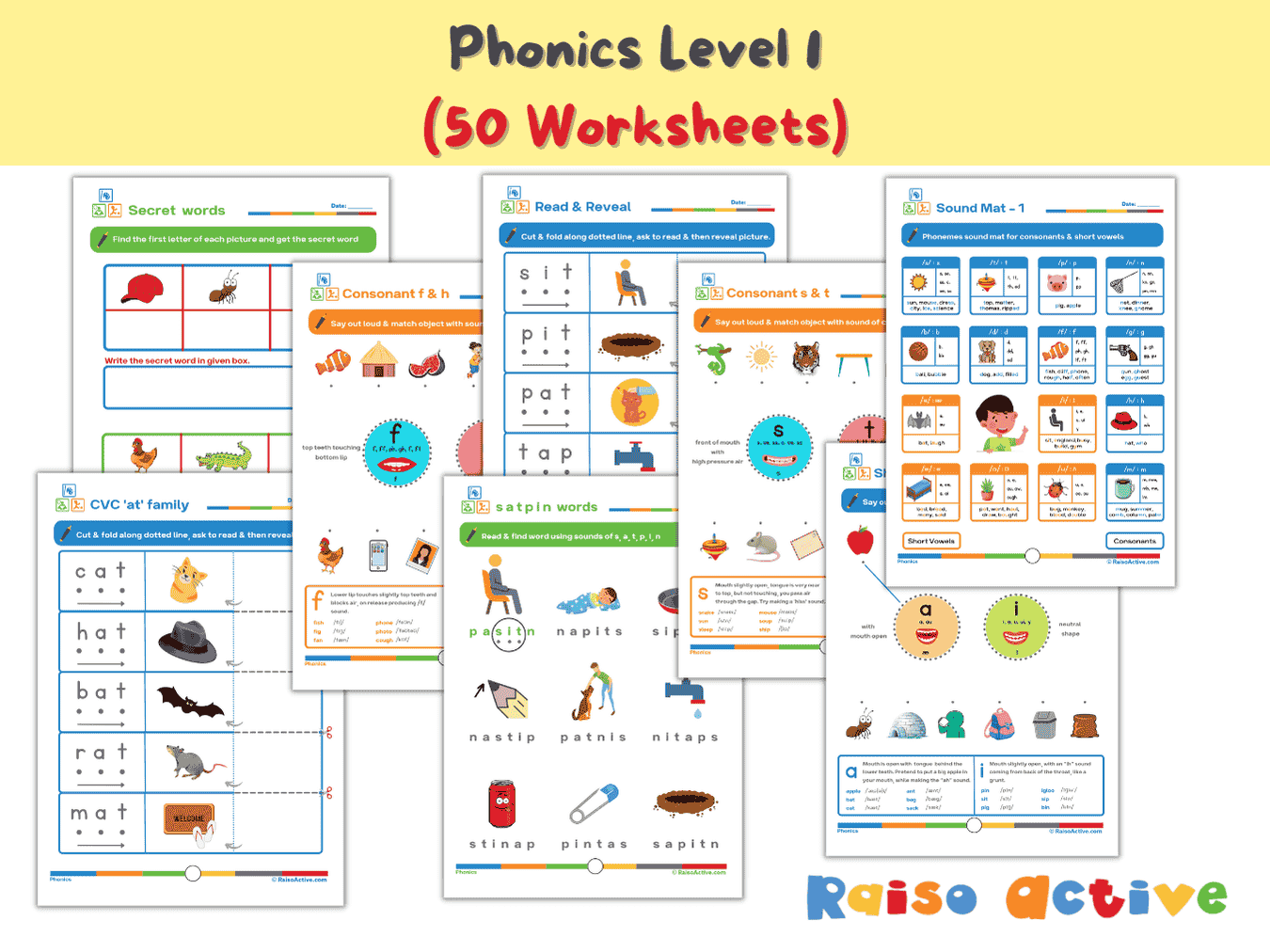
Phonics Level 1 Activity Book: Letter Sounds, Blending & CVC Words for Preschool & Kindergarten
Guides for parents and teachers
See all guides →Number Formation Rhymes 0–9 and How to Fix Reversals
Original number formation rhymes for 0–9, the correct stroke order for each digit, why 3, 5 and 7 get reversed most often, and multisensory fixes that work.
Pre-Writing Strokes in Order: From Standing Lines to Loops (With Printable Patterns)
The developmental order of pre-writing strokes, from vertical lines to loops, and why practicing them in sequence makes letter formation much easier to learn.
Kindergarten Readiness Checklist: 25 Skills to Practice Before the First Day
A kindergarten readiness checklist of 25 literacy, math, motor, self-regulation and self-help skills, with an 8-week summer plan and notes on when not to worry.
Best Worksheets for 3-Year-Olds: What Works and What to Avoid
What works on worksheets for 3-year-olds: short sessions, crayons, tracing lines, matching, cutting, a free weekly plan, and signs one is too advanced.
Reception Year Explained: EYFS Learning and How to Help at Home
A teacher's plain-English guide to the Reception Year: the seven areas of learning, Early Learning Goals, Phase 2/3 phonics, the RBA and home routines.
What Should a 4-Year-Old Know Before LKG? A Readiness Checklist
A calm, teacher-written LKG readiness checklist for 4-year-olds: language, pattern writing, numbers to 10, self-help and social skills, plus a 6-week plan.
Canonical: https://raisoactive.com/worksheets/preschool-pattern-writing